
Homeostasis in humans Homeostasis in humans Body fluid

Homeostasis in humans
Homeostasis in humans • Body fluid – intra – and extracellular fluid that surrounds all the cells : Forms internal environment • Composition of body fluids varies continuously and influences the functioning of the cells
Factors to be kept constant • • Glucose levels Ion/salt concentration Oxygen and carbon dioxide concentration Body temperature Metabolic waste Water content p. H/acidity
Homeostasis in humans • Different organs cooperate to maintain a constant internal environment • The maintenance of a constant environment in the body is known as homeostasis • Control mechanisms keep the above mentioned factors constant in body fluids to return any deviations back to normal
Negative feedback mechanisms • A negative feedback mechanism means the detection of a deviation from the normal state, resulting in a reaction that counteracts the change and returns it to normal • A negative feedback system includes the following: – A change in the normal levels of a specific factor takes place – The change is detected by receptors – The receptors transmit information by means of hormones in the blood or conduct it through nerve impulses via the brain, to the effectors – The effectors implement the reaction and correct the deviation, returning the levels to normal – The return to normal is detected by the receptors and the corrective action is switched off
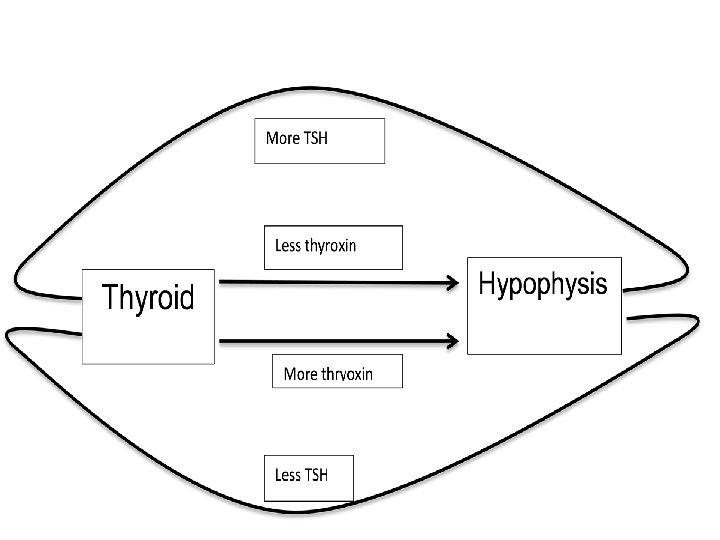
Example of negative feedback mechanism: Control of thyroxin levels in the blood • The amount of thyroxin in the blood is kept constant by a negative feedback mechanism between the hypothesis and the thyroid – As soon as the thyroxin levels in the blood drops below the normal value, the hypothesis secretes more TSH – The TSH stimulates the thyroid to secrete more thyroxin and the thyroxin levels in the blood increases – If the tryroxin levels rise above normal, it inhibitd the secreaion of TSH – The lowered TSH levels results in decreased thyroxin production
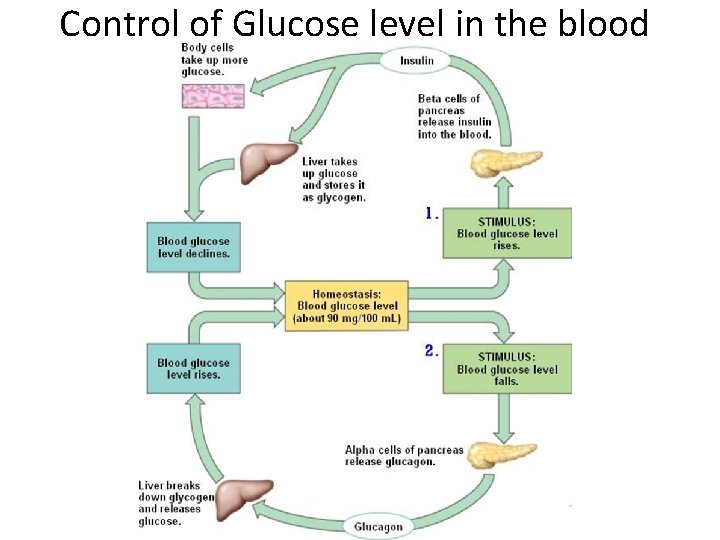
Control of Glucose level in the blood
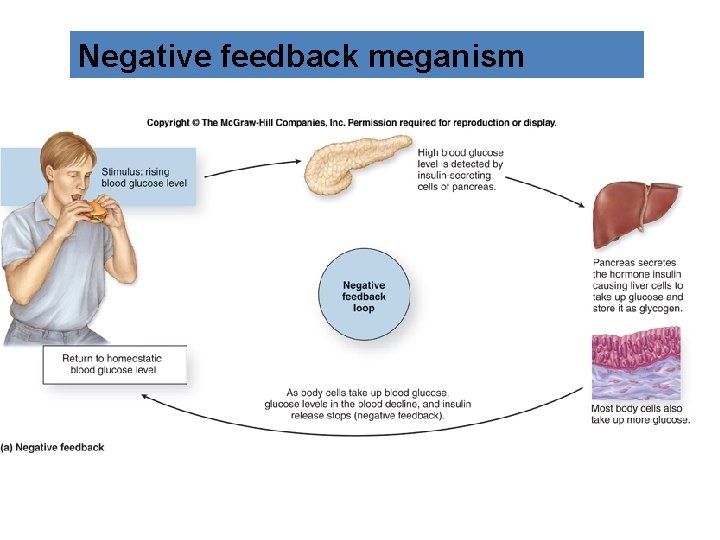
Negative feedback meganism
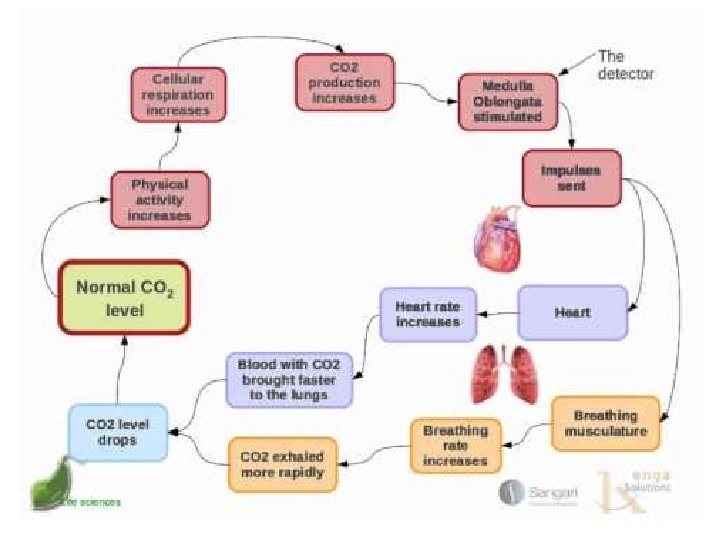
Control of CO 2 concentration in the blood
Regulation of water content in the blood
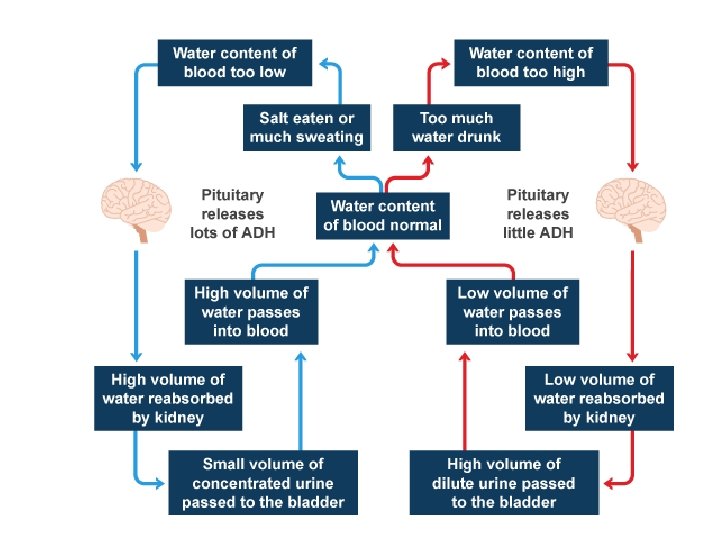
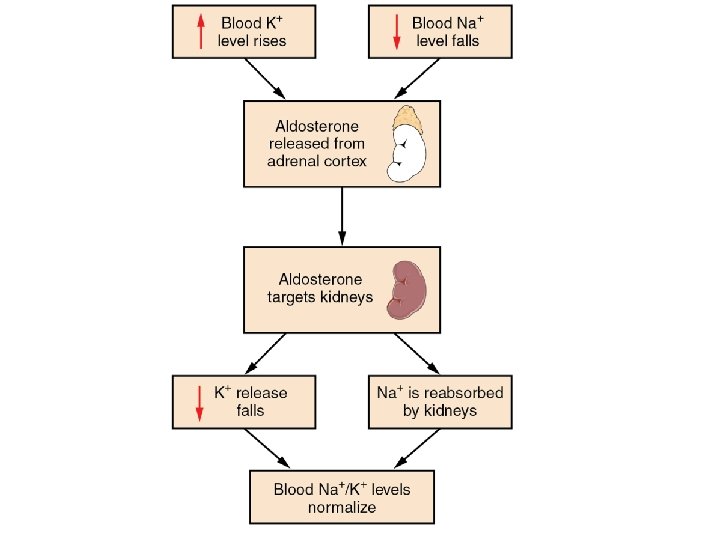
Regulation of the salt concentration in the blood
- Slides: 16