
Homeostasis How Does Your Body Stay in Balance
Homeostasis
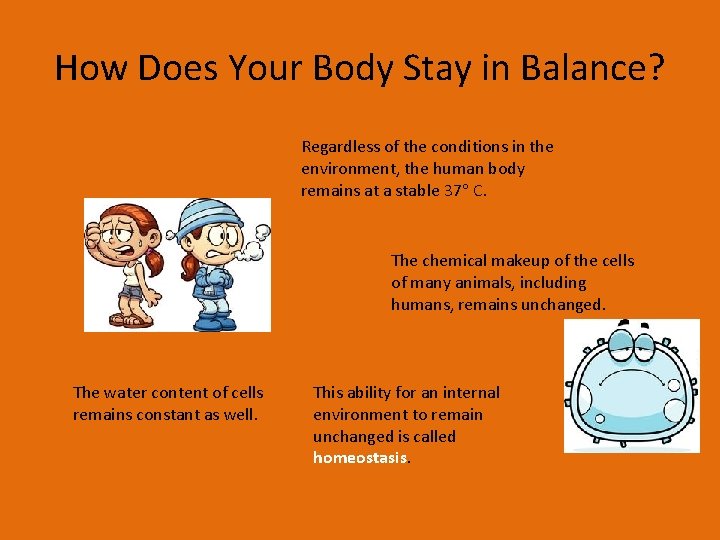
How Does Your Body Stay in Balance? Regardless of the conditions in the environment, the human body remains at a stable 37 C. The chemical makeup of the cells of many animals, including humans, remains unchanged. The water content of cells remains constant as well. This ability for an internal environment to remain unchanged is called homeostasis.
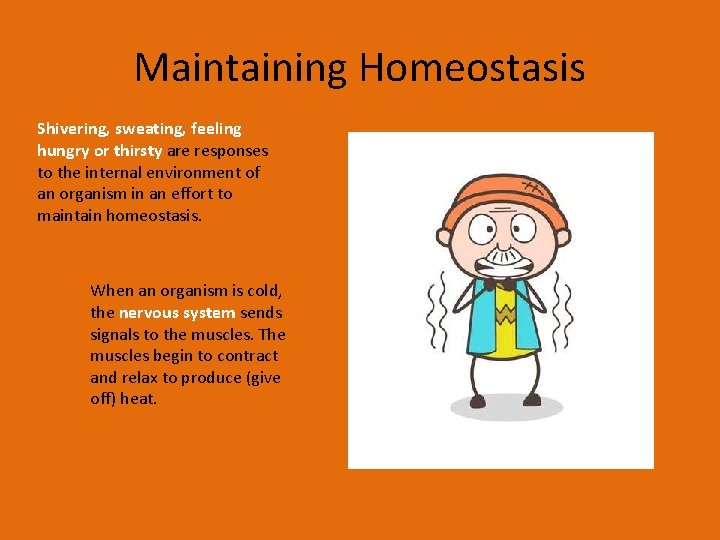
Maintaining Homeostasis Shivering, sweating, feeling hungry or thirsty are responses to the internal environment of an organism in an effort to maintain homeostasis. When an organism is cold, the nervous system sends signals to the muscles. The muscles begin to contract and relax to produce (give off) heat.
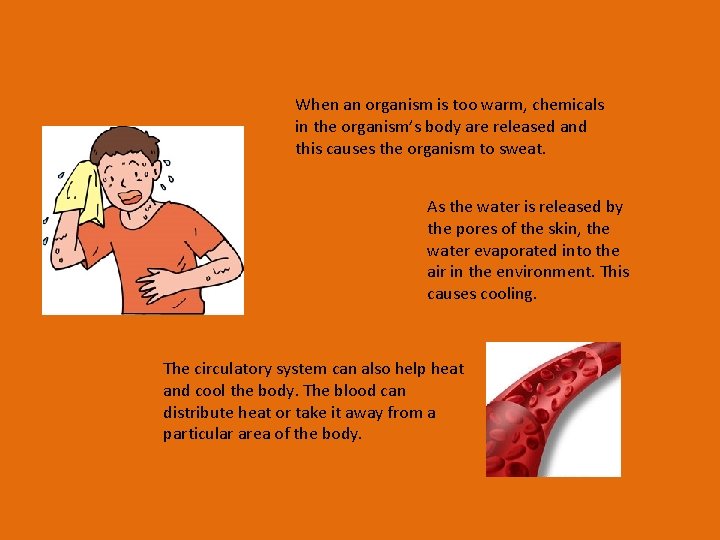
When an organism is too warm, chemicals in the organism’s body are released and this causes the organism to sweat. As the water is released by the pores of the skin, the water evaporated into the air in the environment. This causes cooling. The circulatory system can also help heat and cool the body. The blood can distribute heat or take it away from a particular area of the body.
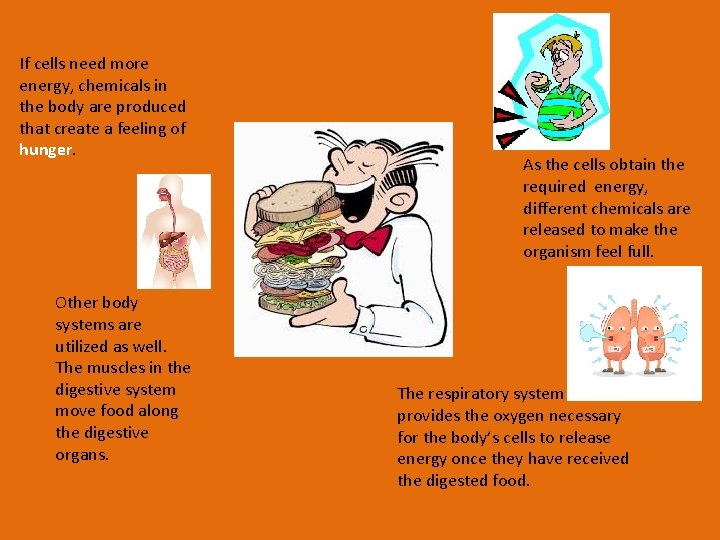
If cells need more energy, chemicals in the body are produced that create a feeling of hunger. Other body systems are utilized as well. The muscles in the digestive system move food along the digestive organs. As the cells obtain the required energy, different chemicals are released to make the organism feel full. The respiratory system provides the oxygen necessary for the body’s cells to release energy once they have received the digested food.
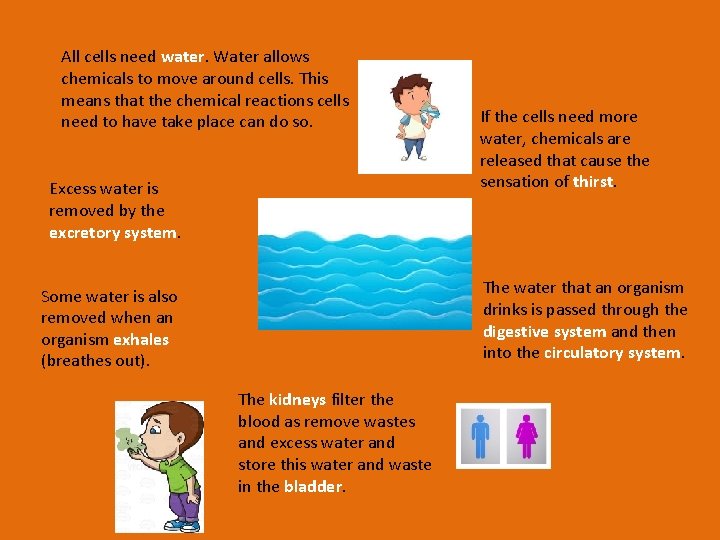
All cells need water. Water allows chemicals to move around cells. This means that the chemical reactions cells need to have take place can do so. Excess water is removed by the excretory system. If the cells need more water, chemicals are released that cause the sensation of thirst. The water that an organism drinks is passed through the digestive system and then into the circulatory system. Some water is also removed when an organism exhales (breathes out). The kidneys filter the blood as remove wastes and excess water and store this water and waste in the bladder.
Copy this slide, answer the questions and submit with your packet. Name: ________________ 1. What is homeostasis? ________________________________________________________________________ 2. Discuss two examples of how the body maintains homeostasis. ________________________________________________________________________ 3. Why is maintaining the proper hydration in the body so important? ________________________________________________________________________
- Slides: 7