
Homeostasis Homeostasismaintenance of a stable internal environment A
Homeostasis • Homeostasis—maintenance of a stable internal environment – A dynamic state of equilibrium – Necessary for normal body functioning and to sustain life • Homeostatic imbalance – A disturbance in homeostasis results in disease © 2015 Pearson Education, Inc.
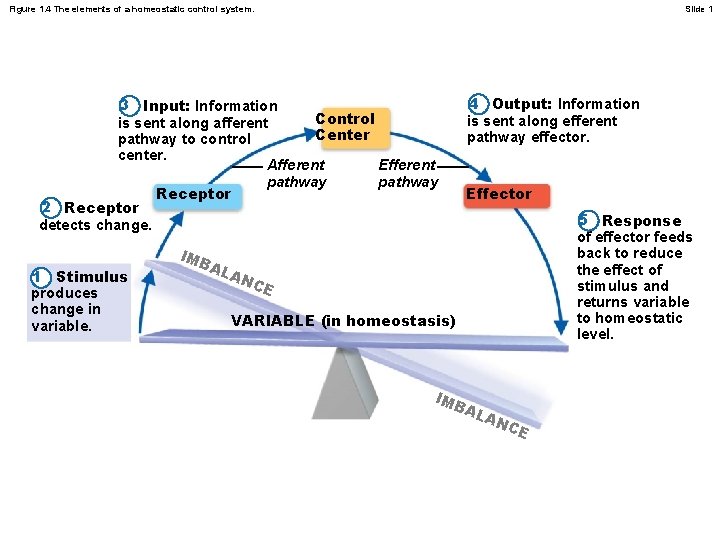
Figure 1. 4 The elements of a homeostatic control system. Slide 1 3 Input: Information Control is sent along afferent Center pathway to control center. Afferent Efferent pathway Receptor 2 Receptor detects change. 1 Stimulus produces change in variable. IMB 4 Output: Information is sent along efferent pathway effector. Effector 5 Response of effector feeds back to reduce the effect of stimulus and returns variable to homeostatic level. AL AN CE VARIABLE (in homeostasis) IMB AL AN C E

Figure 1. 4 The elements of a homeostatic control system. 1 Stimulus produces change in variable. IMB Slide 2 AL AN CE VARIABLE (in homeostasis) IMB AL AN C E
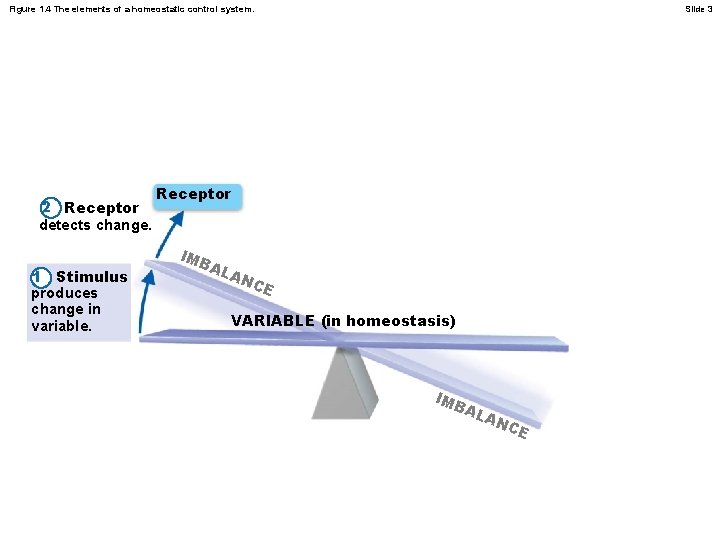
Figure 1. 4 The elements of a homeostatic control system. 2 Receptor detects change. 1 Stimulus produces change in variable. Slide 3 Receptor IMB AL AN CE VARIABLE (in homeostasis) IMB AL AN C E
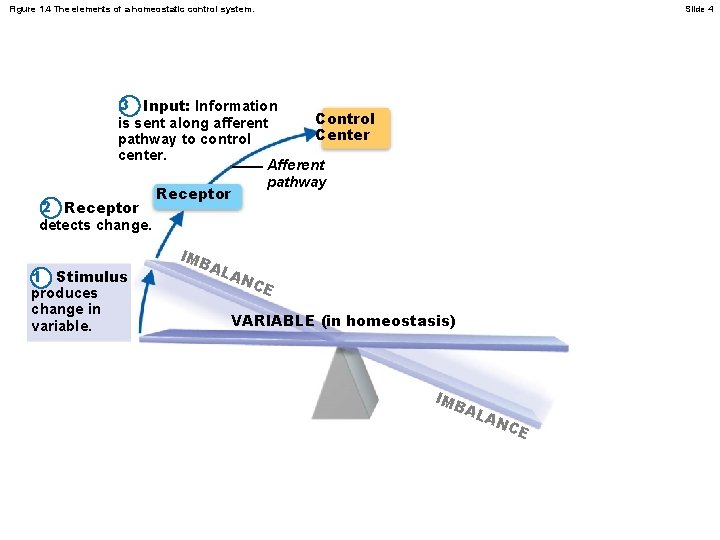
Figure 1. 4 The elements of a homeostatic control system. Slide 4 3 Input: Information Control is sent along afferent Center pathway to control center. Afferent pathway Receptor 2 Receptor detects change. 1 Stimulus produces change in variable. IMB AL AN CE VARIABLE (in homeostasis) IMB AL AN C E
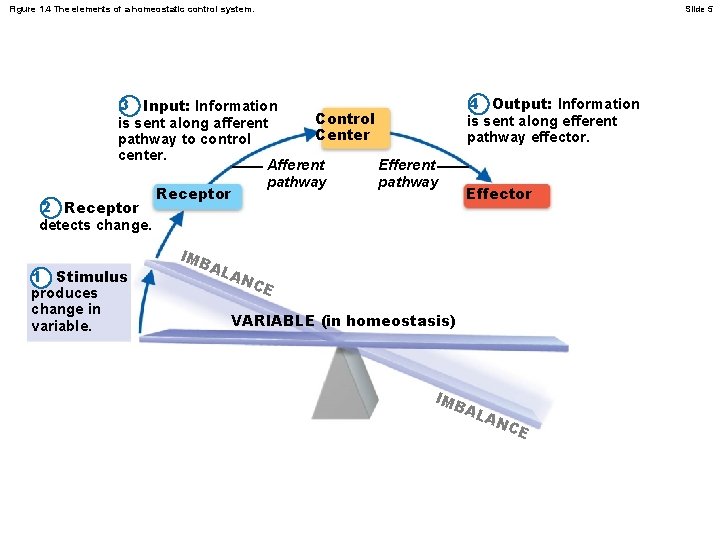
Figure 1. 4 The elements of a homeostatic control system. Slide 5 3 Input: Information Control is sent along afferent Center pathway to control center. Afferent Efferent pathway Receptor 2 Receptor detects change. 1 Stimulus produces change in variable. IMB 4 Output: Information is sent along efferent pathway effector. Effector AL AN CE VARIABLE (in homeostasis) IMB AL AN C E
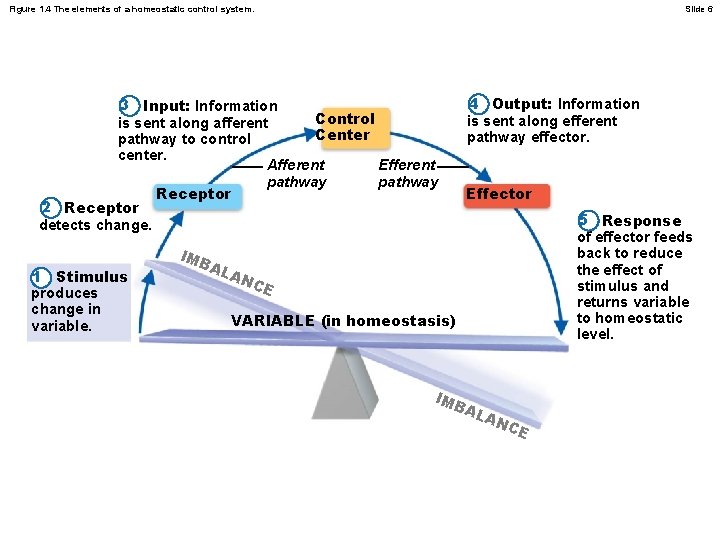
Figure 1. 4 The elements of a homeostatic control system. Slide 6 3 Input: Information Control is sent along afferent Center pathway to control center. Afferent Efferent pathway Receptor 2 Receptor detects change. 1 Stimulus produces change in variable. IMB 4 Output: Information is sent along efferent pathway effector. Effector 5 Response of effector feeds back to reduce the effect of stimulus and returns variable to homeostatic level. AL AN CE VARIABLE (in homeostasis) IMB AL AN C E
Maintaining Homeostasis • The body communicates through neural and hormonal control systems – Receptor • Responds to changes in the environment (stimuli) • Sends information to control center along an afferent pathway © 2015 Pearson Education, Inc.
Maintaining Homeostasis – Control center • Determines set point • Analyzes information • Determines appropriate response – Effector • Provides a means for response to the stimulus • Information flows from control center to effector along efferent pathway © 2015 Pearson Education, Inc.
Feedback Mechanisms • Negative feedback – Includes most homeostatic control mechanisms – Shuts off the original stimulus or reduces its intensity – Works like a household thermostat © 2015 Pearson Education, Inc.
Feedback Mechanisms • Positive feedback – Increases the original stimulus to push the variable farther – Reaction occurs at a faster rate – In the body positive feedback occurs in blood clotting and during the birth of a baby © 2015 Pearson Education, Inc.
- Slides: 11