
HOMEOSTASIS Homeostasis Maintaining stable internal conditions within an
HOMEOSTASIS

Homeostasis: • Maintaining stable internal conditions within an organism. • Process by which an organism maintains a constant internal environment despite changing external conditions. • Constant adjustment to change in the environment.
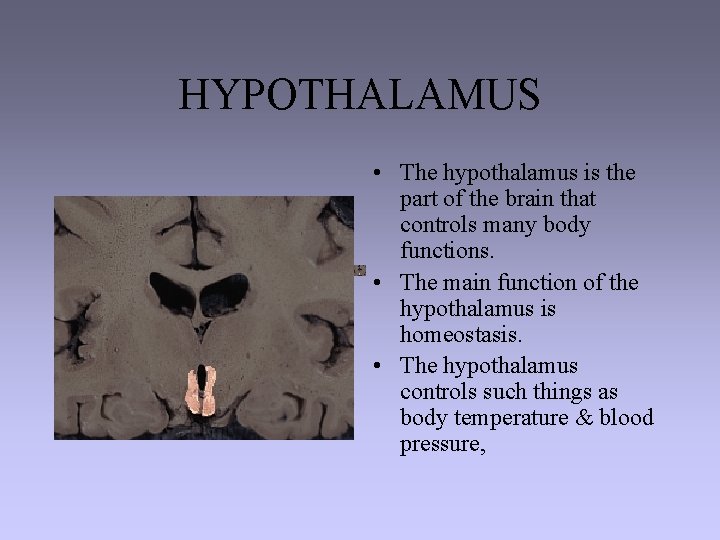
HYPOTHALAMUS • The hypothalamus is the part of the brain that controls many body functions. • The main function of the hypothalamus is homeostasis. • The hypothalamus controls such things as body temperature & blood pressure,

SWEAT GLANDS • Sweating is the primary way we lose body heat. • When sweat evaporates from your skin, you lose heat & cool down.
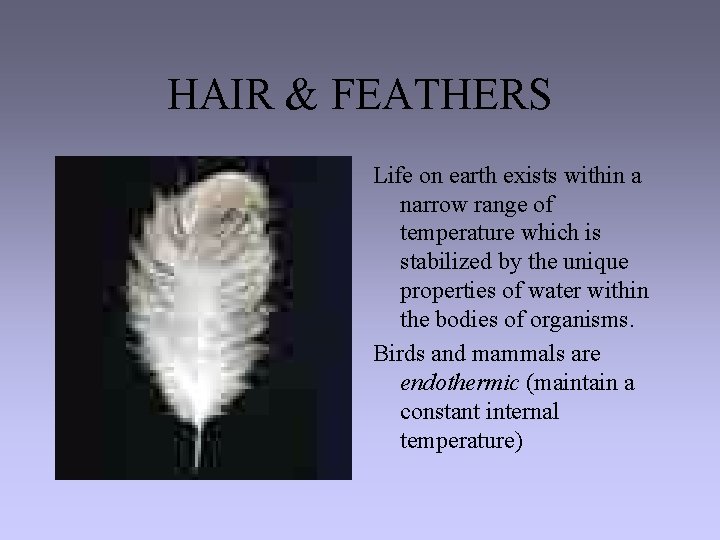
HAIR & FEATHERS Life on earth exists within a narrow range of temperature which is stabilized by the unique properties of water within the bodies of organisms. Birds and mammals are endothermic (maintain a constant internal temperature)
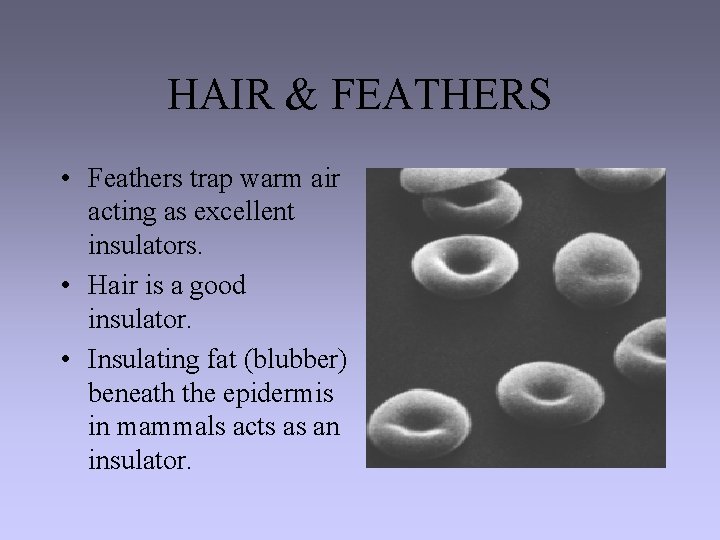
HAIR & FEATHERS • Feathers trap warm air acting as excellent insulators. • Hair is a good insulator. • Insulating fat (blubber) beneath the epidermis in mammals acts as an insulator.
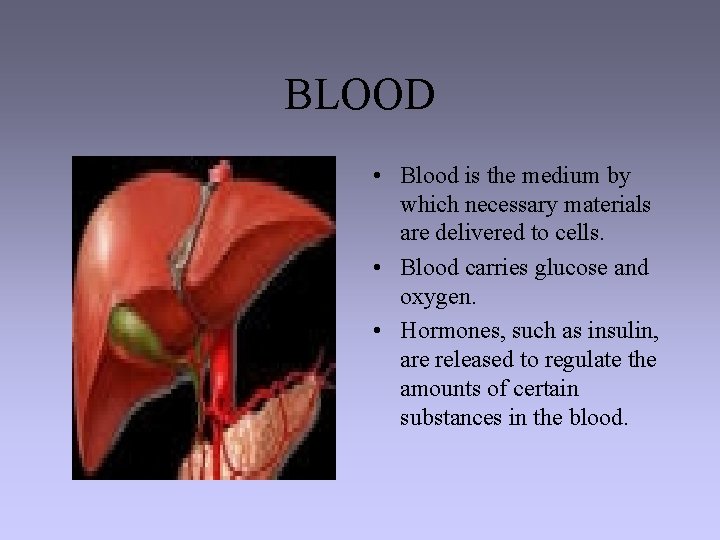
BLOOD • Blood is the medium by which necessary materials are delivered to cells. • Blood carries glucose and oxygen. • Hormones, such as insulin, are released to regulate the amounts of certain substances in the blood.
LIVER • The liver regulates the amount of glucose in the blood. • If the level of glucose is too high, the liver will store it as glycogen. • If the level of glucose is too low, the liver will break down some of the glycogen to release glucose into the blood.
KIDNEYS • The kidney is the organ most responsible for maintaining water balance in the body. • The kidney can excrete any substance in excess from the body.
GREEN PLANTS • Green plants maintain homeostasis of gases and water through structures called stomata. • The stomata open to allow an exchange of carbon dioxide and oxygen. • Water balance is also controlled through the stomata.
PARAMECIA • Paramecia and other single -celled organisms (protozoa) have a contractile vacuole. • This structure functions to pump excess water out of their cells so these organisms do not gain too much water.
SEA TURTLE • Sea turtles shed tears to remove salt. • Living in a salt water environment puts sea turtles in danger of losing water. • Sea turtles have salt glands in the corner of their eyes that excrete excess salt out of their bodies.
KANGAROO RAT • Kangaroo rats are small seed-eating rodents that live in arid climates. • Kangaroo rats have the ability to obtain water internally from the dry, starchy seeds they eat.
HONEY BEES • Honey bees are social insects. • Honey bees maintain a constant warm temperature by huddling in a large group. • Periodically, the bees switch places, with the inner most bees moving to the outside and rest moving inward.
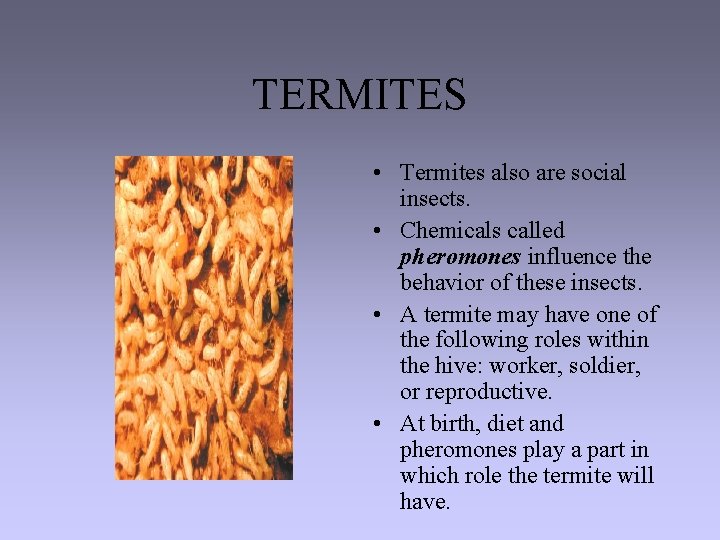
TERMITES • Termites also are social insects. • Chemicals called pheromones influence the behavior of these insects. • A termite may have one of the following roles within the hive: worker, soldier, or reproductive. • At birth, diet and pheromones play a part in which role the termite will have.
TERMITES • If there are too many soldiers and not enough workers, pheromones will be released to produce more workers and less soldiers. • The pheromones basically affect the numbers and kinds of individuals in the nest.
IN SUMMARY: • Homeostasis is a vital process among living things. • It allows living things to adjust and maintain a constant internal environment despite the changing external environment. • Living organisms cannot tolerate significant alterations in their environments. • Homeostasis allows organisms to adjust to short term changes which happen continuously.
- Slides: 17