
Homeostasis and Transport across membranes Ch 5 p
Homeostasis and Transport across membranes Ch 5 p 94
Types of Transport �Passive Transport �Diffusion �Osmosis �Facilitated diffusion �Active Transport �Cell membrane pumps �Endocytosis �Exocytosis Movement across a membrane depends on BOTH the concentrations of particles AND their size, shape and if they dissolve in lipids!
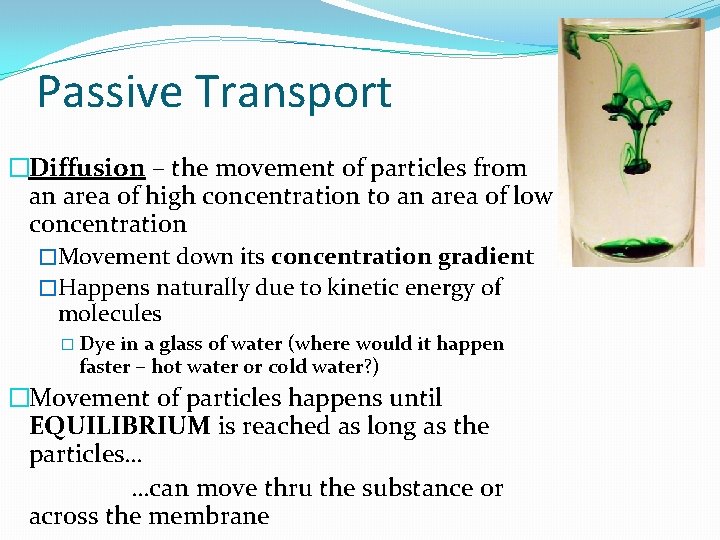
Passive Transport �Diffusion – the movement of particles from an area of high concentration to an area of low concentration �Movement down its concentration gradient �Happens naturally due to kinetic energy of molecules � Dye in a glass of water (where would it happen faster – hot water or cold water? ) �Movement of particles happens until EQUILIBRIUM is reached as long as the particles… …can move thru the substance or across the membrane
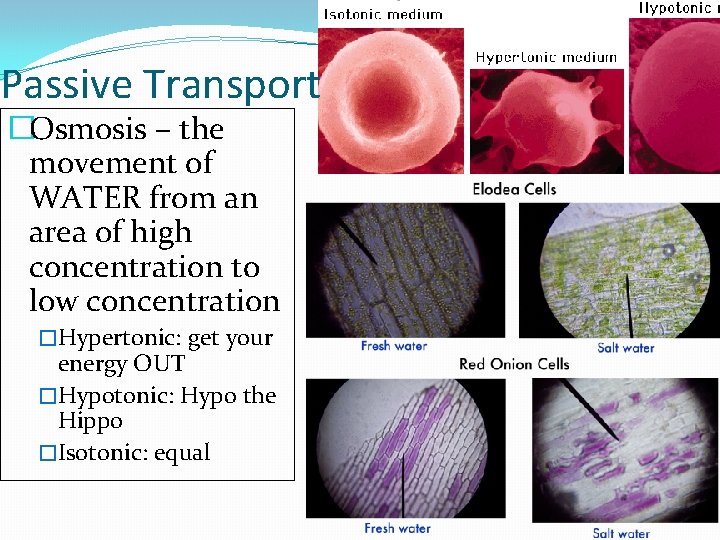
Passive Transport �Osmosis – the movement of WATER from an area of high concentration to low concentration �Hypertonic: get your energy OUT �Hypotonic: Hypo the Hippo �Isotonic: equal

� http: //www. youtube. com/watch? v=kk. Pi. RT 2 ew. VA&feature=related � http: //www. youtube. com/watch? v=i. G 6 Dd 3 COug 4&NR=1

Passive Transport �Facilitated Diffusion – the movement of particles is assisted by carrier proteins in the cell membrane.
Active Transport �Cell Membrane pumps �Sodium (Na)-potassium (K) pumps �“Na Na NAAA Na, Na Na NAAA Na HEY Good bye” �Our cells need the potassium in them. It doesn’t care if there isn’t a lot outside the cell, it just wants to bring in as much as it can. � Sodium sneaks in the cell, and isn’t needed. SO…the cell uses energy to kick out the Na and bring in the K
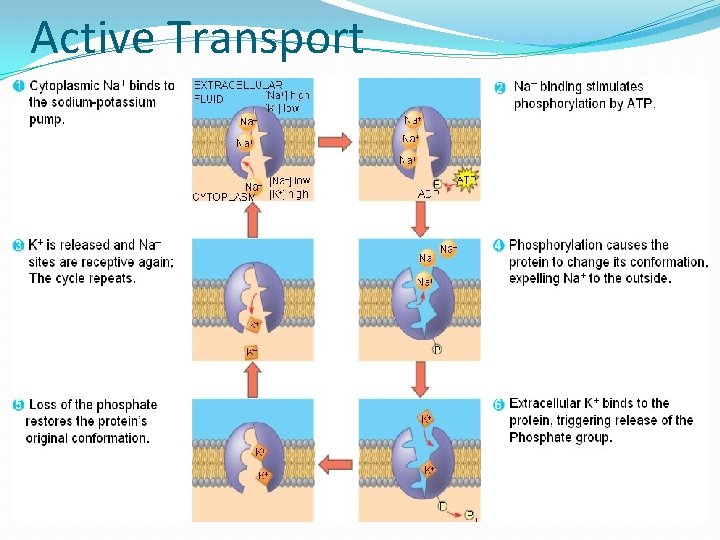
Active Transport
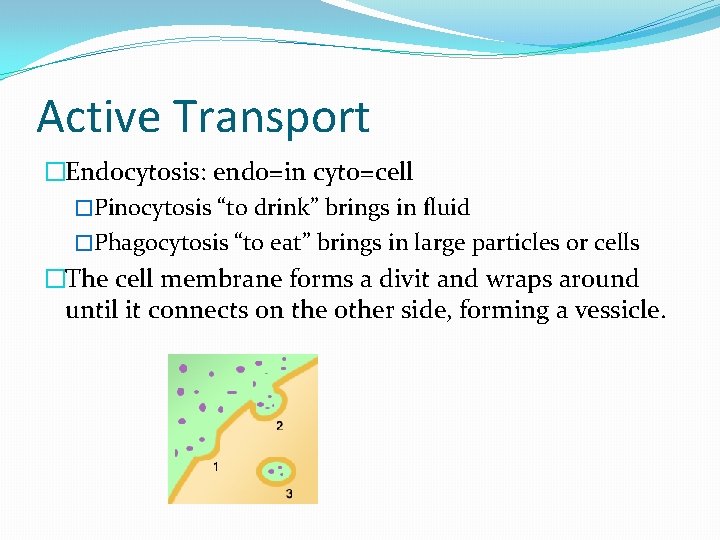
Active Transport �Endocytosis: endo=in cyto=cell �Pinocytosis “to drink” brings in fluid �Phagocytosis “to eat” brings in large particles or cells �The cell membrane forms a divit and wraps around until it connects on the other side, forming a vessicle.

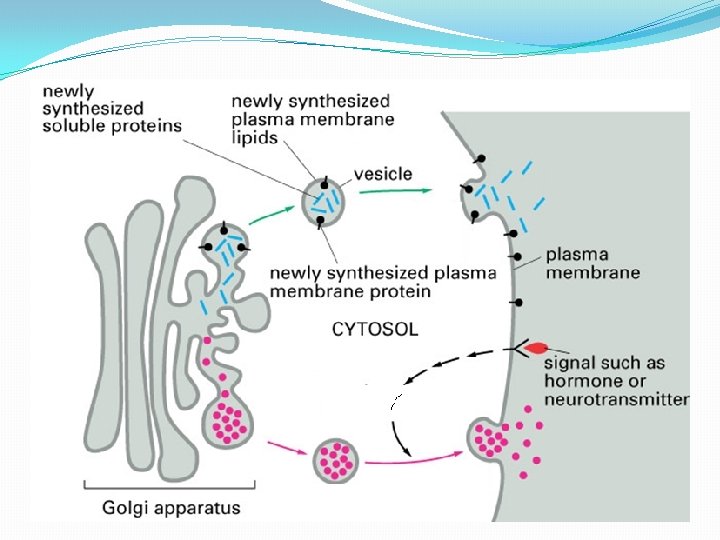
Active Transport �Exocytosis: Exo=exit cyto=cell �When a vesicle that has formed in the cell, attaches to the cell membrane and opens up, releasing its contents out of the cell.

�http: //www. youtube. com/watch? v=4 g. Ltk 8 Yc 1 Zc
- Slides: 12