
HOMEOSTASIS AND CELLTRANSPORT Mr Hamers Halophiles TRANSPORT THROUGH

- Slides: 28
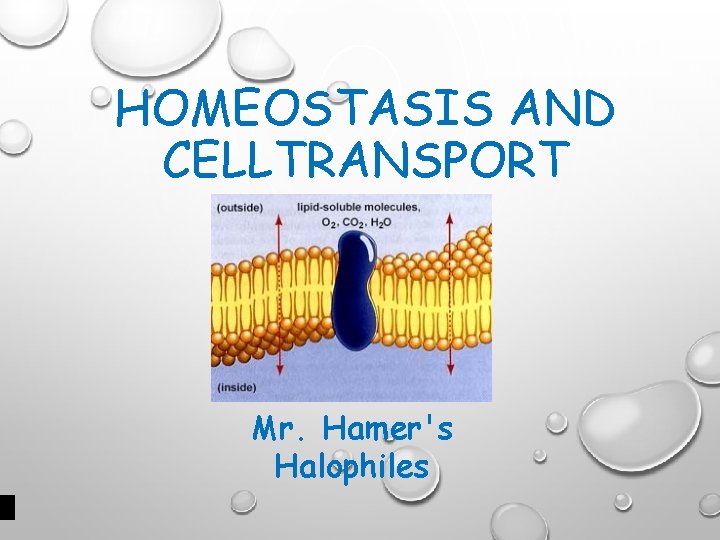
HOMEOSTASIS AND CELLTRANSPORT Mr. Hamer's Halophiles
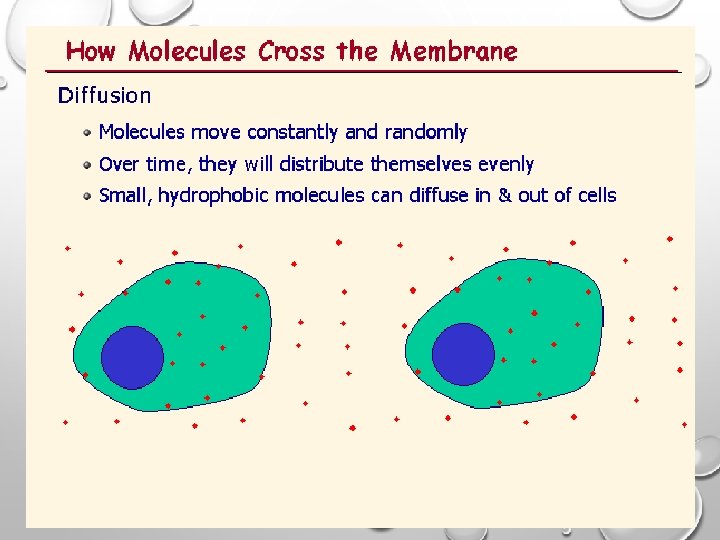
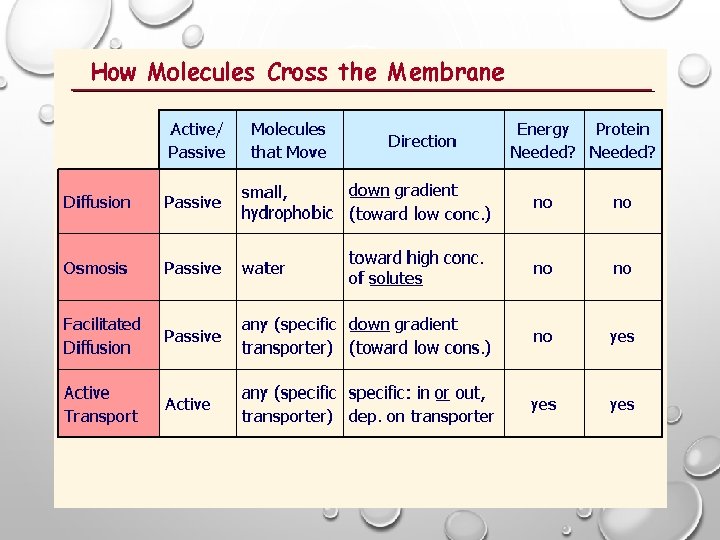
TRANSPORT THROUGH CELL MEMBRANES • • 1. The phospholipid bilayer is a great barrier around cells. However, for the cell to survive some materials need to be able to enter and leave the cell. There are 4 basic mechanisms: Diffusion 2. Osmosis 3. Facilitated diffusion 4. Active transport
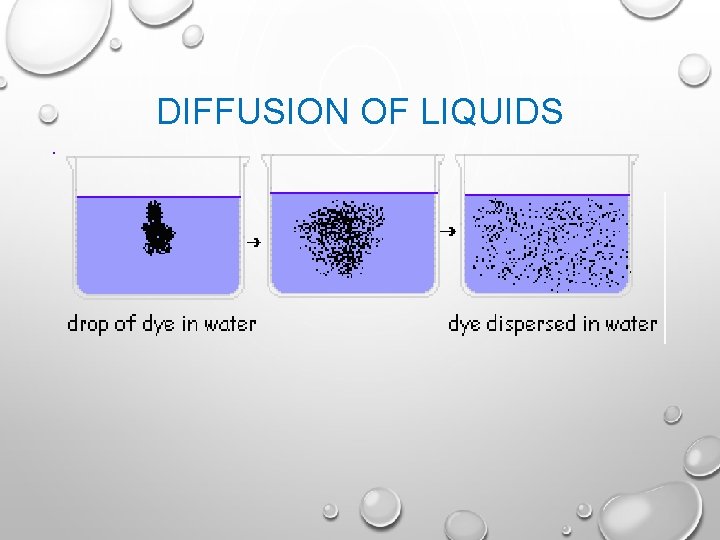
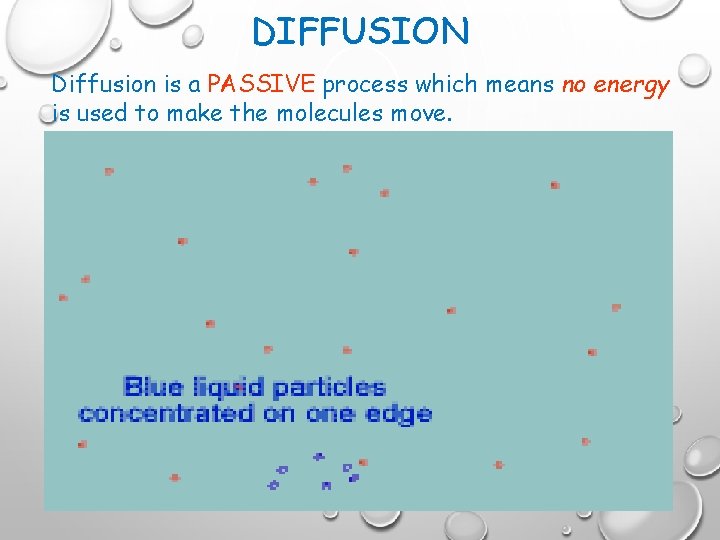
DIFFUSION OF LIQUIDS
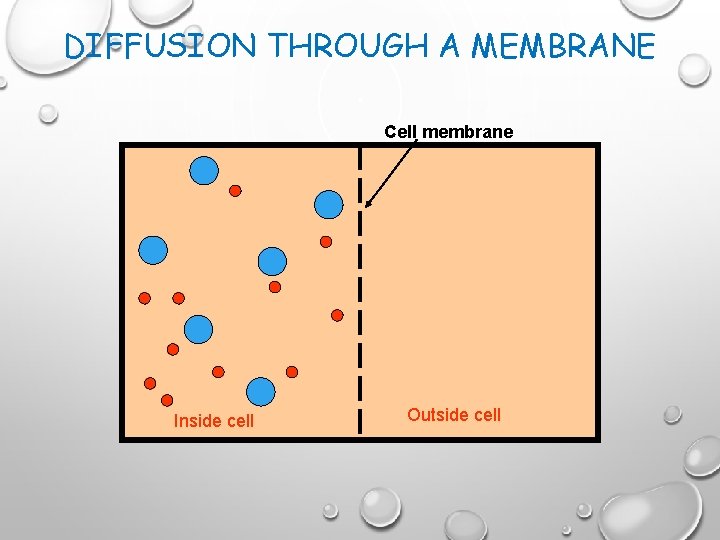
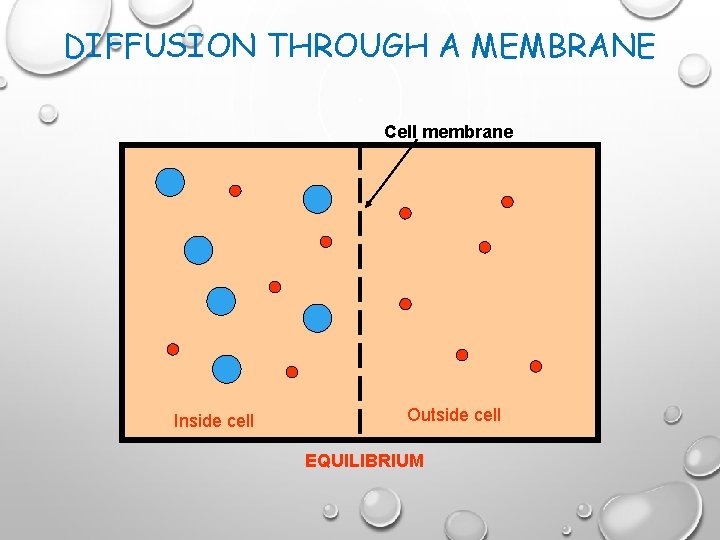
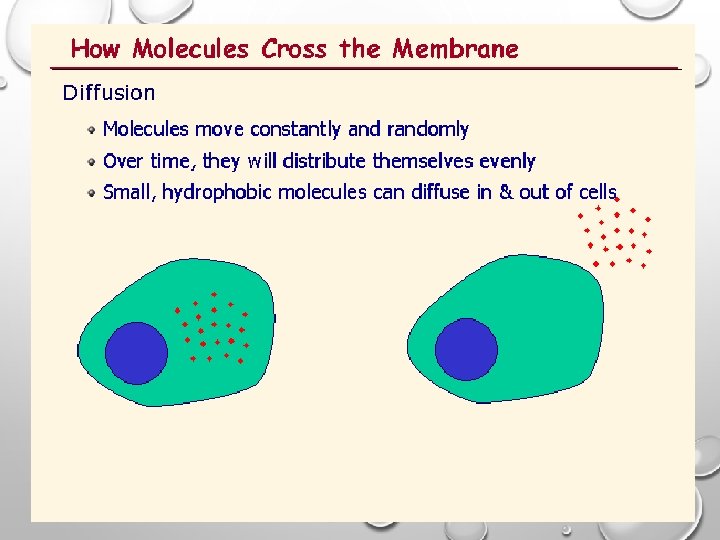
• Diffusion is the net movement of substances from a region of their high concentration to a region of their lower concentration. The molecules move down a concentration gradient. As a result of diffusion, molecules reach equilibrium This is where they are evenly spread out, and there is no net movement of molecules from either side.
DIFFUSION Diffusion is a PASSIVE process which means no energy is used to make the molecules move.
DIFFUSION THROUGH A MEMBRANE Cell membrane Inside cell Outside cell
DIFFUSION THROUGH A MEMBRANE Cell membrane diffusion Inside cell Outside cell
DIFFUSION THROUGH A MEMBRANE Cell membrane Inside cell Outside cell EQUILIBRIUM
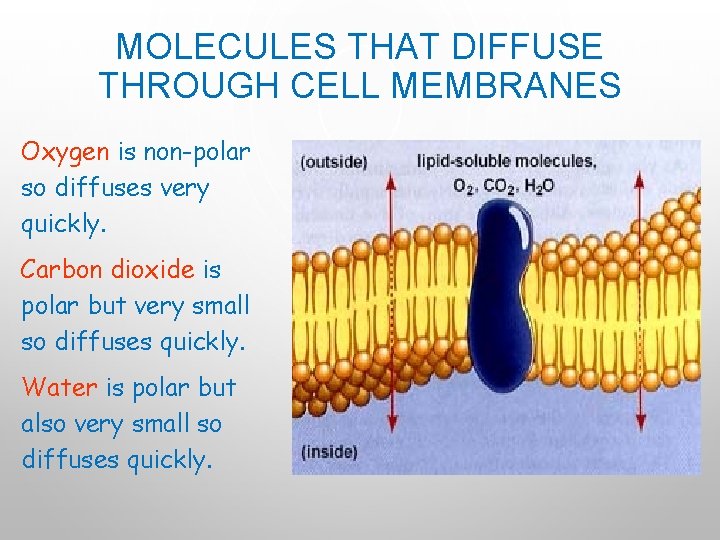
MOLECULES THAT DIFFUSE THROUGH CELL MEMBRANES Oxygen is non-polar so diffuses very quickly. Carbon dioxide is polar but very small so diffuses quickly. Water is polar but also very small so diffuses quickly.
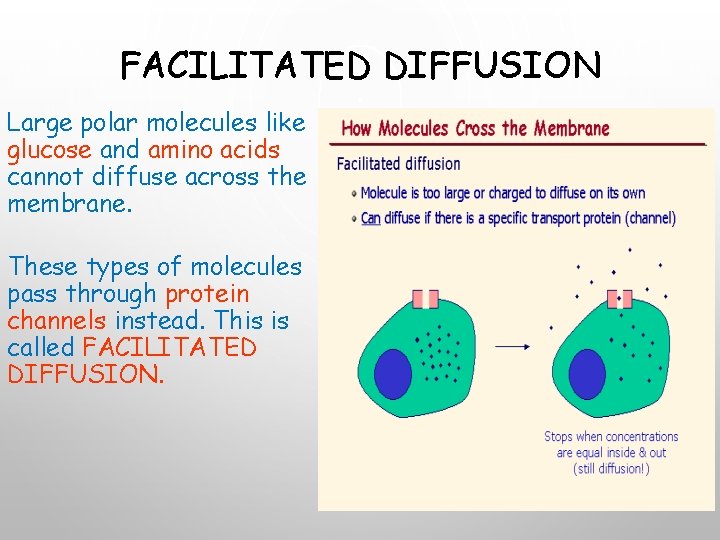
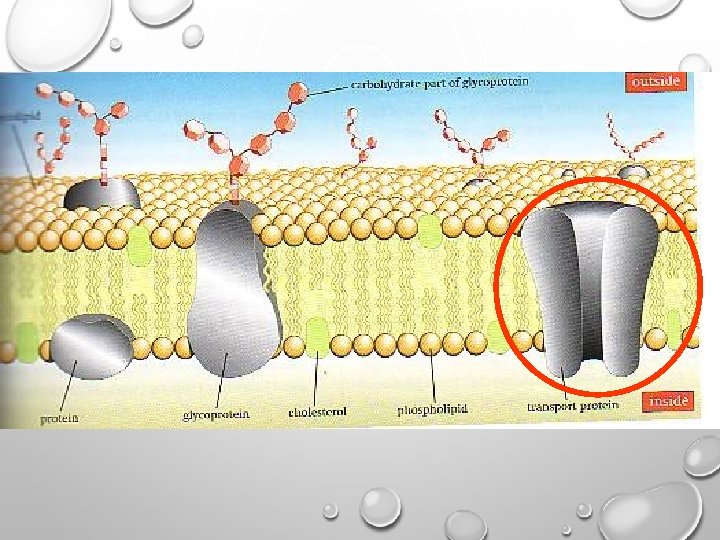
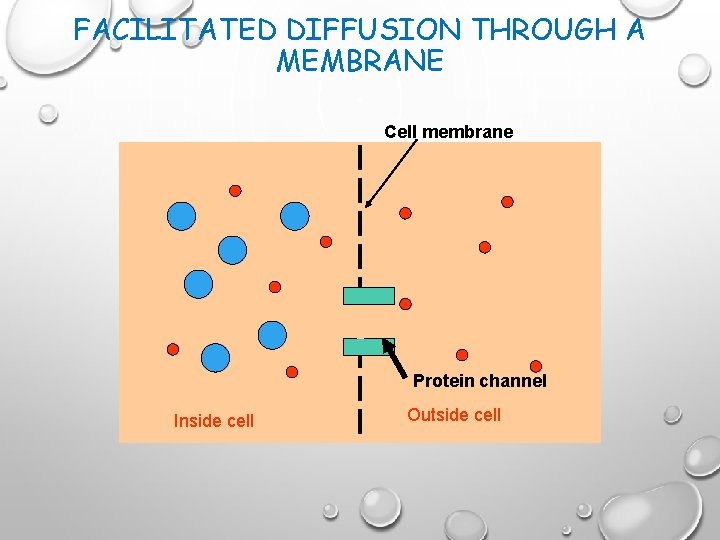
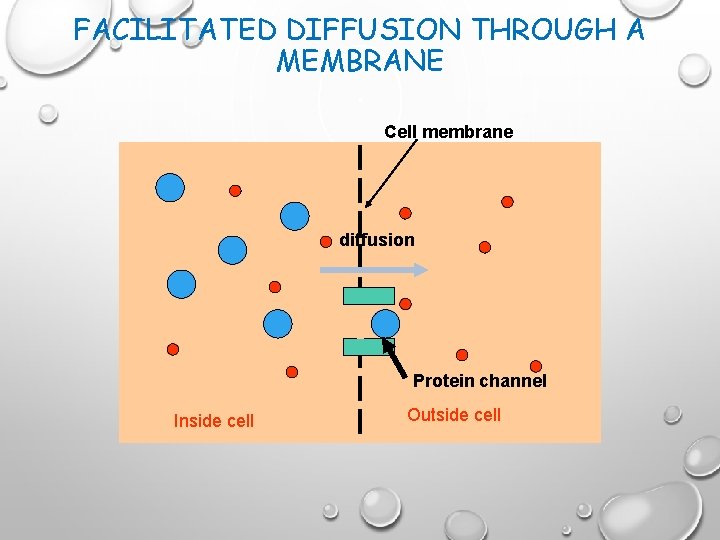
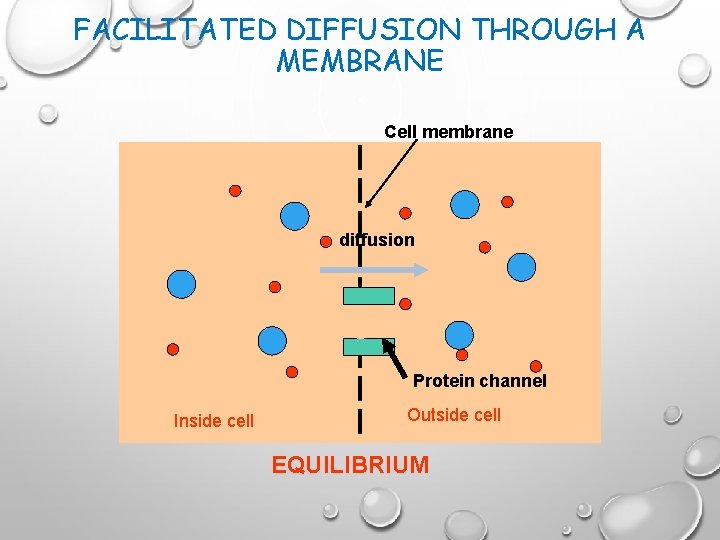
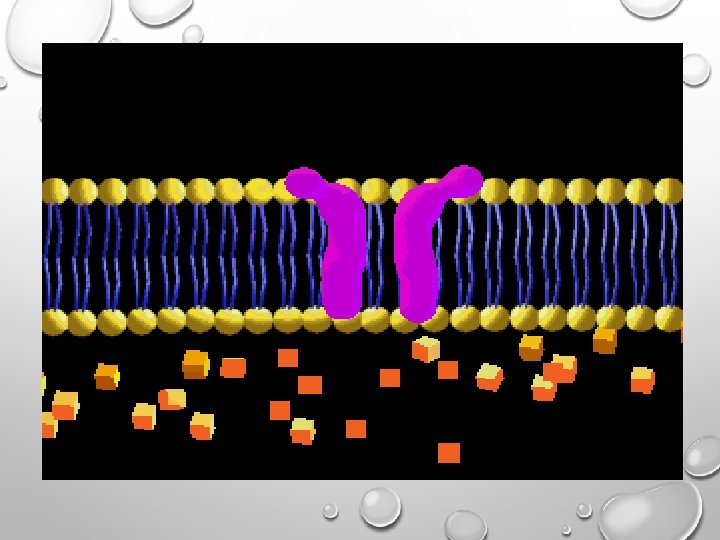
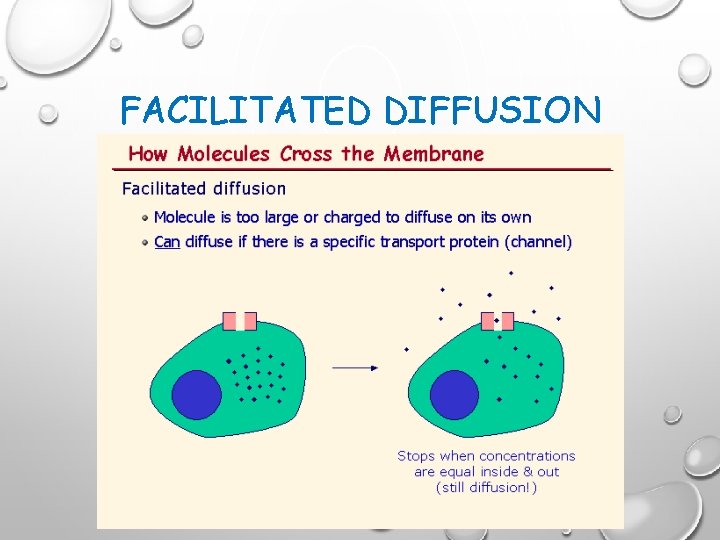
FACILITATED DIFFUSION Large polar molecules like glucose and amino acids cannot diffuse across the membrane. These types of molecules pass through protein channels instead. This is called FACILITATED DIFFUSION.
FACILITATED DIFFUSION THROUGH A MEMBRANE Cell membrane Protein channel Inside cell Outside cell
FACILITATED DIFFUSION THROUGH A MEMBRANE Cell membrane diffusion Protein channel Inside cell Outside cell
FACILITATED DIFFUSION THROUGH A MEMBRANE Cell membrane diffusion Protein channel Inside cell Outside cell EQUILIBRIUM
FACILITATED DIFFUSION
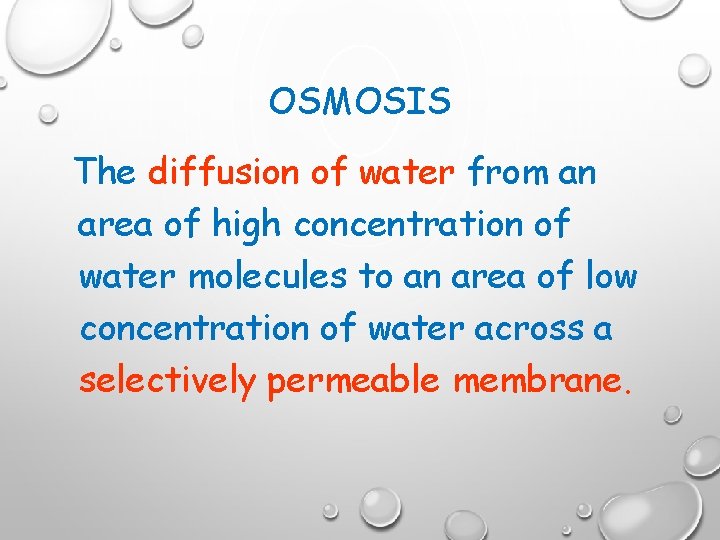
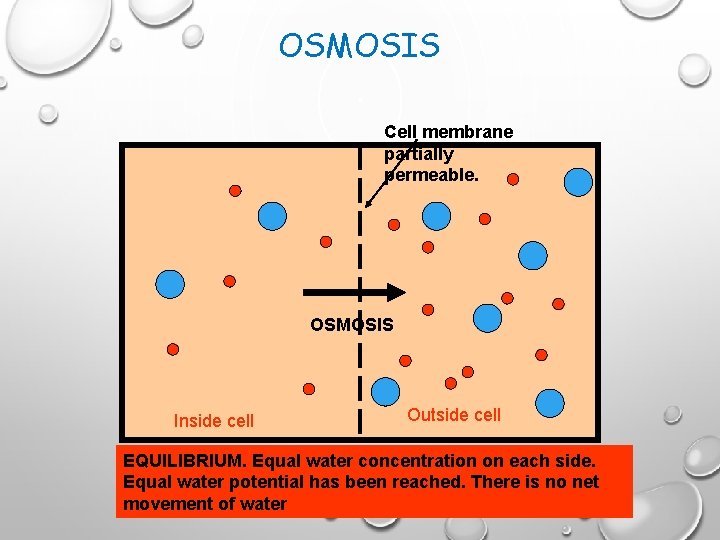
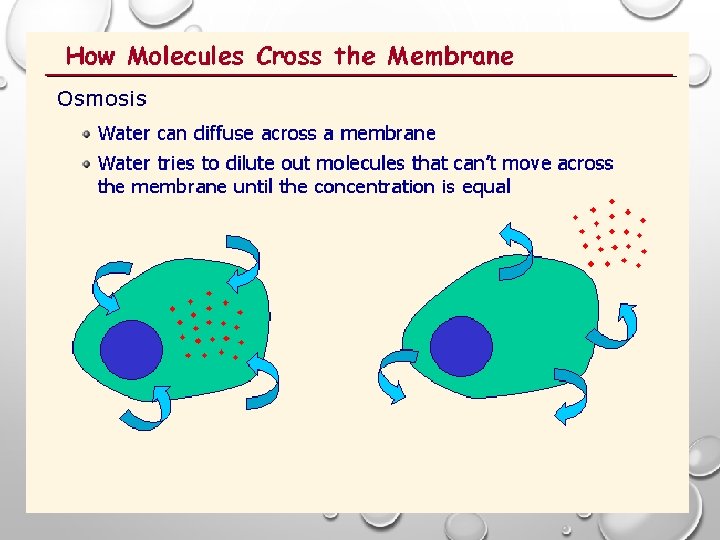
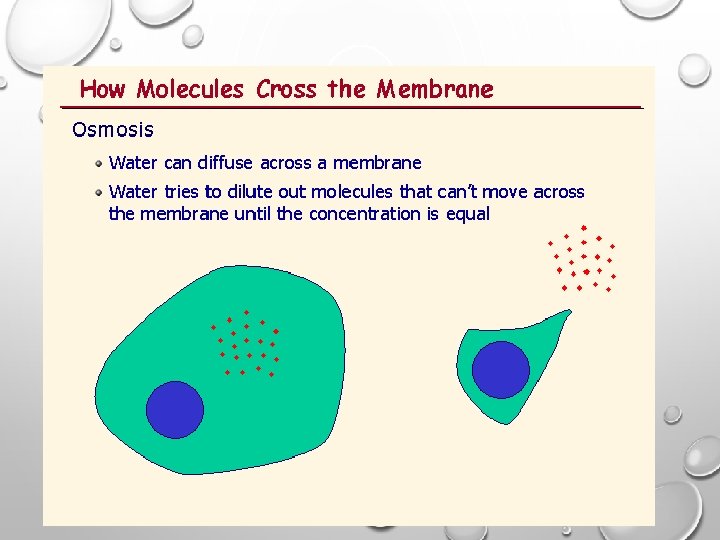
OSMOSIS The diffusion of water from an area of high concentration of water molecules to an area of low concentration of water across a selectively permeable membrane.
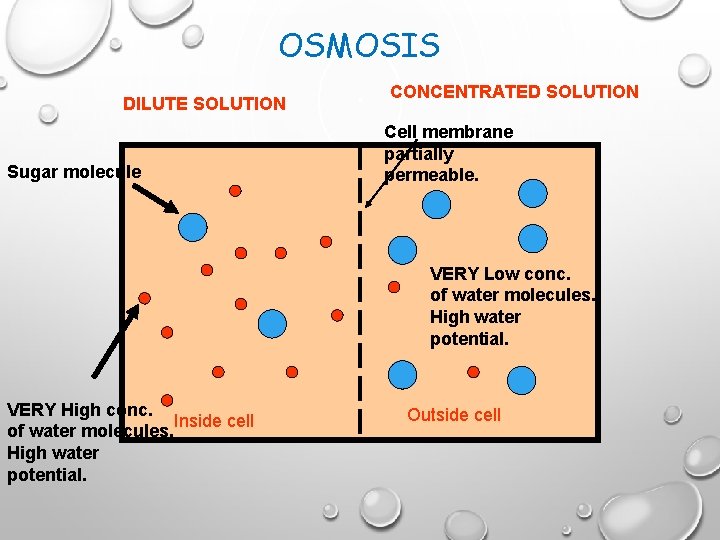
OSMOSIS DILUTE SOLUTION Sugar molecule CONCENTRATED SOLUTION Cell membrane partially permeable. VERY Low conc. of water molecules. High water potential. VERY High conc. Inside cell of water molecules. High water potential. Outside cell
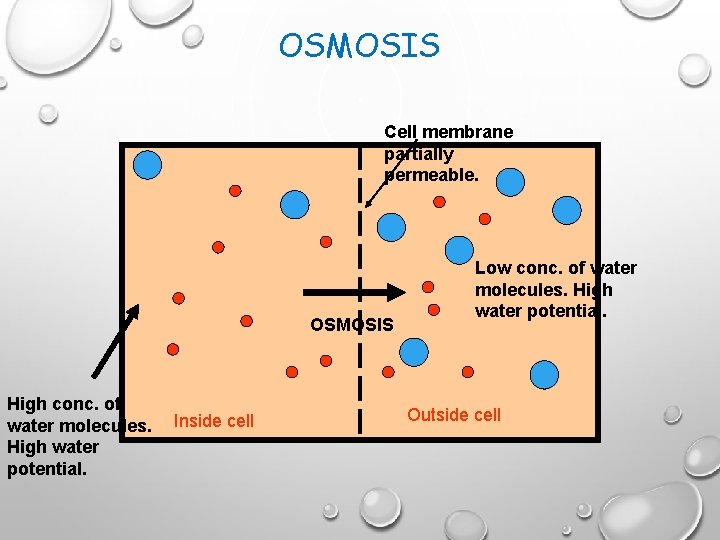
OSMOSIS Cell membrane partially permeable. OSMOSIS High conc. of water molecules. High water potential. Inside cell Low conc. of water molecules. High water potential. Outside cell
OSMOSIS Cell membrane partially permeable. OSMOSIS Inside cell Outside cell EQUILIBRIUM. Equal water concentration on each side. Equal water potential has been reached. There is no net movement of water