
Homeostasis and Cells Learning Objectives Explain how singlecelled
Homeostasis and Cells
Learning Objectives § Explain how single-celled organisms maintain homeostasis. § Describe how cells of a multicellular organism work together to maintain homeostasis. Vocabulary § Tissue-a group of similar cells that work together. § Animals have 4 Types: connective, epithelial, nerve & muscle. § Organ-groups of tissues form a structure for a specific purpose. § Ex. Heart, lungs, kidney, brain, etc. § Organ system-group of organs that work together. § 11 in humans: circulatory/cardiovascular, respiratory, nervous, urinary/excretory, endocrine, skeletal, muscular, digestive, reproductive, lymphatic/immune & integumentary. § Receptor-structure on cell membranes that receives chemical signals.
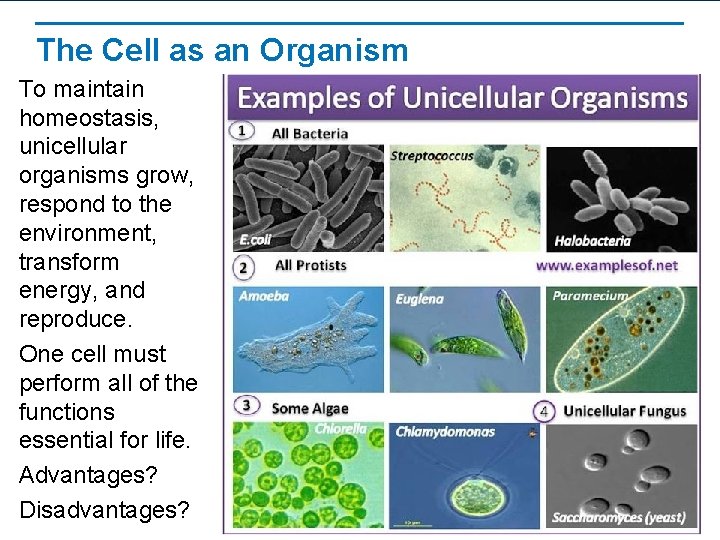
The Cell as an Organism To maintain homeostasis, unicellular organisms grow, respond to the environment, transform energy, and reproduce. One cell must perform all of the functions essential for life. Advantages? Disadvantages?
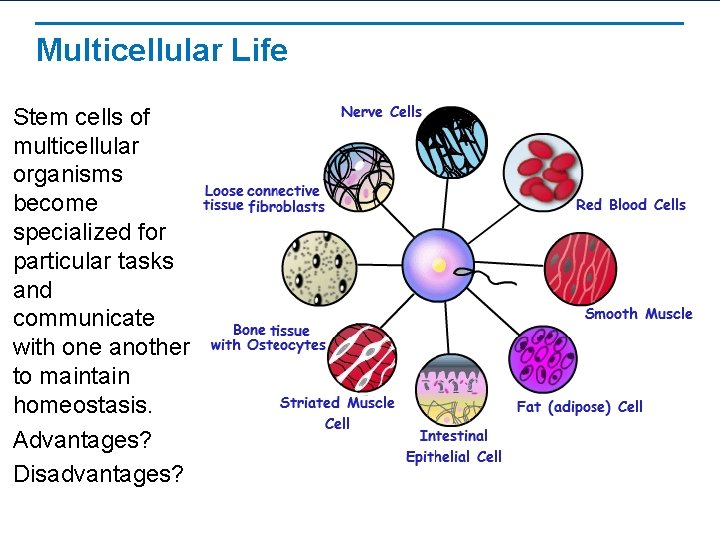
Multicellular Life Stem cells of multicellular organisms become specialized for particular tasks and communicate with one another to maintain homeostasis. Advantages? Disadvantages?
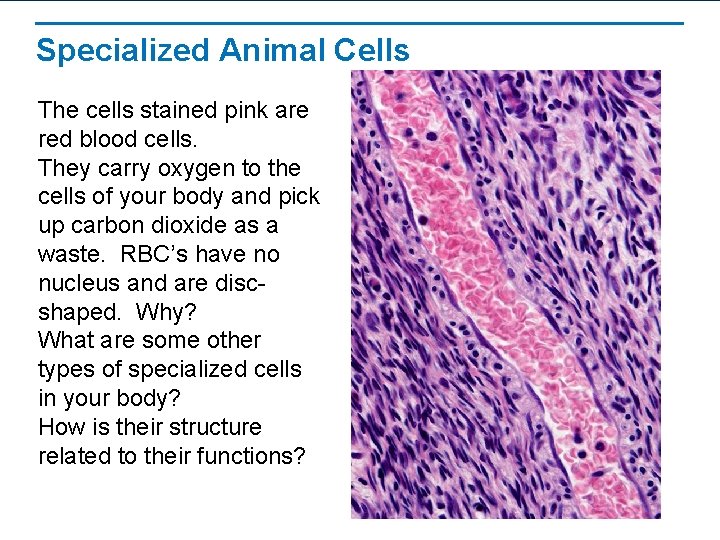
Specialized Animal Cells The cells stained pink are red blood cells. They carry oxygen to the cells of your body and pick up carbon dioxide as a waste. RBC’s have no nucleus and are discshaped. Why? What are some other types of specialized cells in your body? How is their structure related to their functions?

Specialized Plant Cells The green ovalshaped objects in the photo are chloroplasts—the place with photosynthesis occurs. What types of plant cells contain chloroplasts? What other types of specialized cells occur in plants?
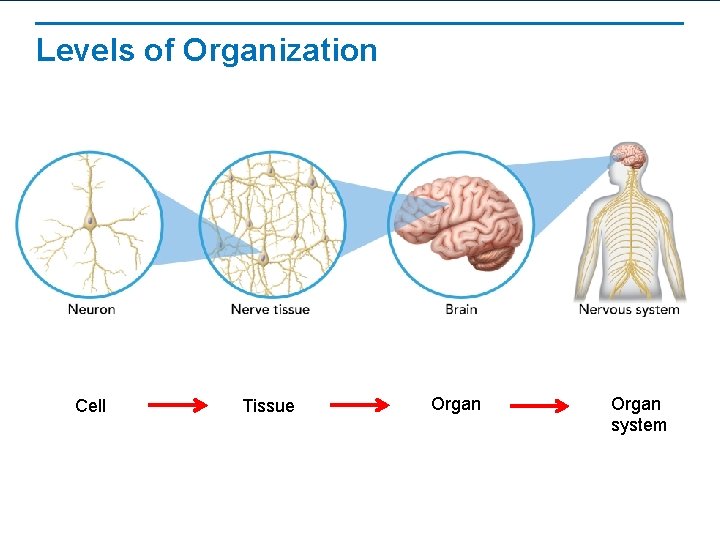
Levels of Organization Cell Tissue Organ system
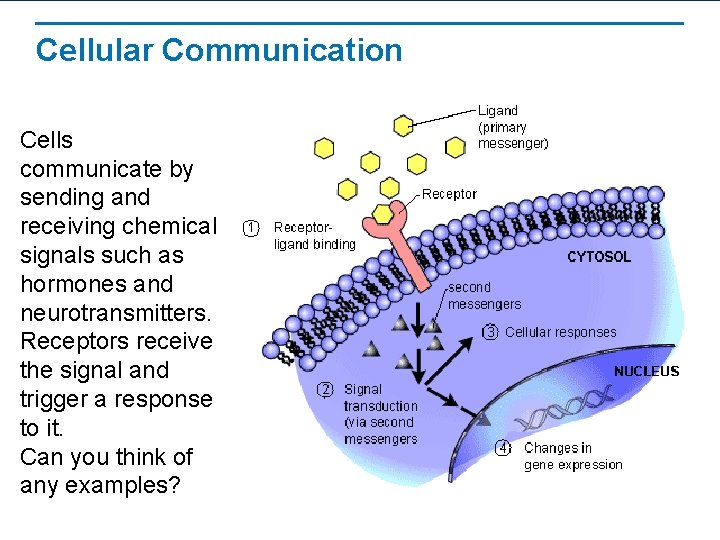
Cellular Communication Cells communicate by sending and receiving chemical signals such as hormones and neurotransmitters. Receptors receive the signal and trigger a response to it. Can you think of any examples?
- Slides: 8