
HOMEOSTASIS AND CELLS Homeostasis Cells are the basic
HOMEOSTASIS AND CELLS

Homeostasis ■ Cells are the basic unit of life. ■ Cells can be classified as an organism. ■ Just because an organism is only one cell, doesn’t mean it is “basic” ■ Cells must maintain a stable environment (homeostasis).

Multicellular Organisms and Homeostasis ■ How do the cells of multicellular organisms work together to maintain homeostasis?
■ Unlike most unicellular organisms, the cells of multicellular organisms do not live on their own. ■ They are interdependent; and must work together. (like a team) ■ Cells of multicellular organisms become specialized for particular tasks and communicate with one another to maintain homeostasis.
Cell Specialization ■ The cells of multicellular organisms are specialized, with different cell types playing different roles. ■ Some move to respond to the environment (RESPONSE) ■ No matter the role, each cell contributes to maintaining homeostasis.
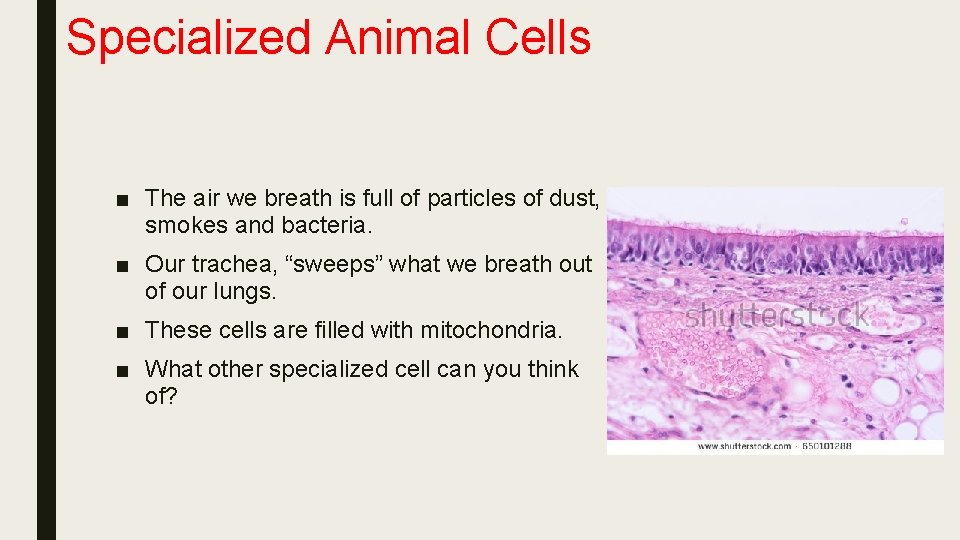
Specialized Animal Cells ■ The air we breath is full of particles of dust, smokes and bacteria. ■ Our trachea, “sweeps” what we breath out of our lungs. ■ These cells are filled with mitochondria. ■ What other specialized cell can you think of?
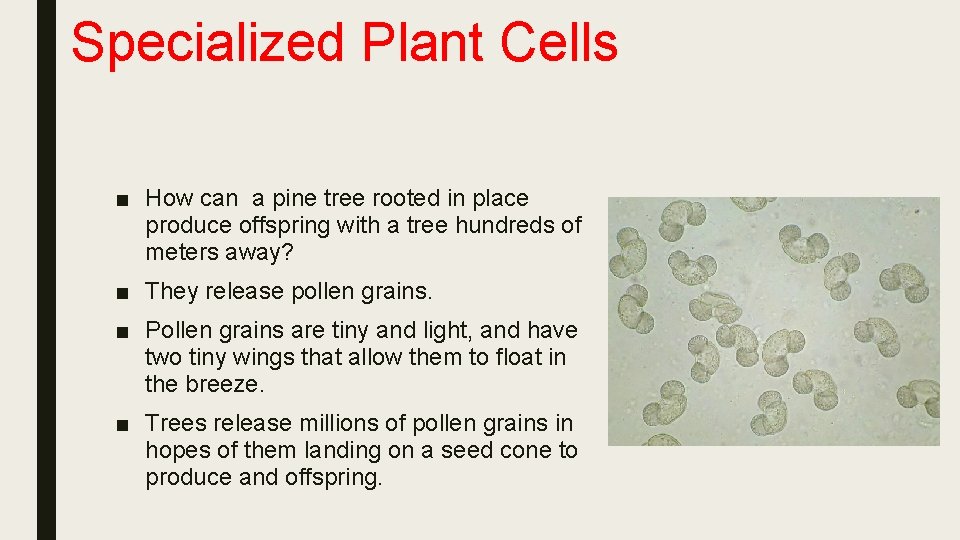
Specialized Plant Cells ■ How can a pine tree rooted in place produce offspring with a tree hundreds of meters away? ■ They release pollen grains. ■ Pollen grains are tiny and light, and have two tiny wings that allow them to float in the breeze. ■ Trees release millions of pollen grains in hopes of them landing on a seed cone to produce and offspring.
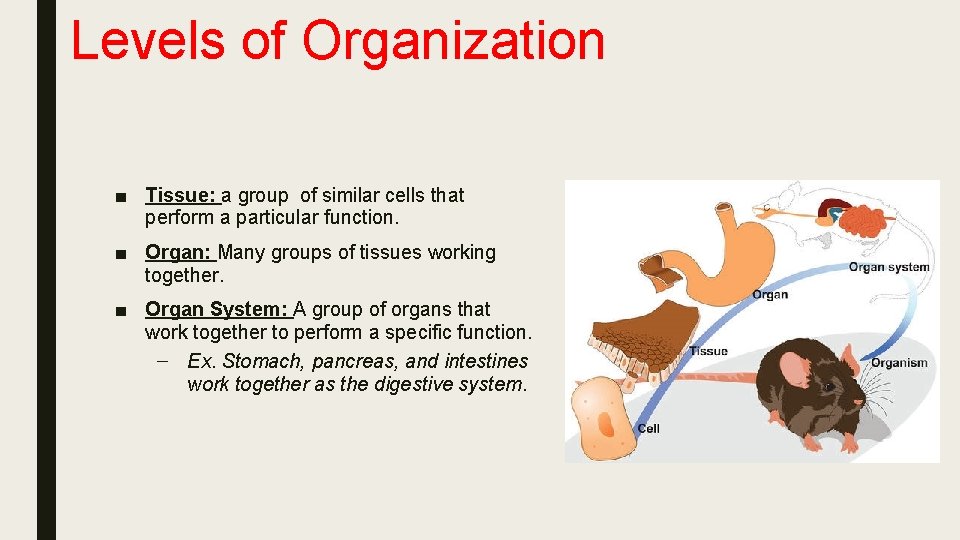
Levels of Organization ■ Tissue: a group of similar cells that perform a particular function. ■ Organ: Many groups of tissues working together. ■ Organ System: A group of organs that work together to perform a specific function. – Ex. Stomach, pancreas, and intestines work together as the digestive system.
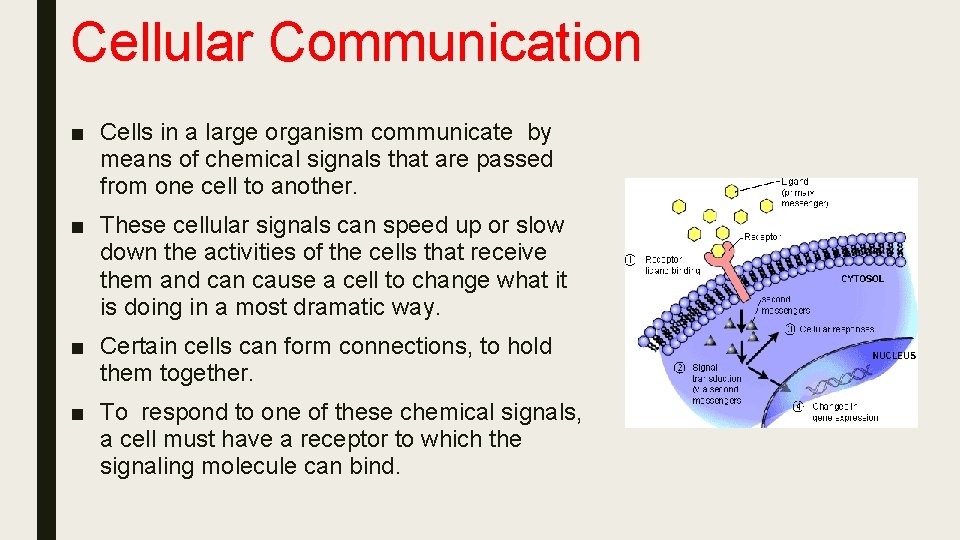
Cellular Communication ■ Cells in a large organism communicate by means of chemical signals that are passed from one cell to another. ■ These cellular signals can speed up or slow down the activities of the cells that receive them and can cause a cell to change what it is doing in a most dramatic way. ■ Certain cells can form connections, to hold them together. ■ To respond to one of these chemical signals, a cell must have a receptor to which the signaling molecule can bind.
- Slides: 9