
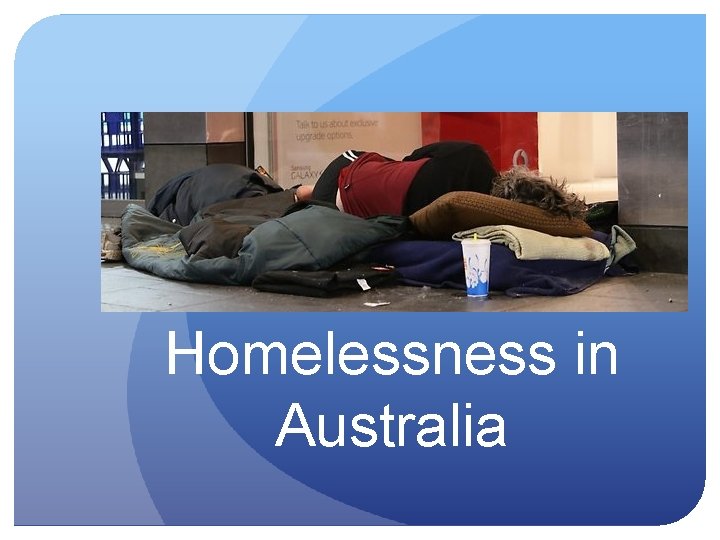
Homelessness in Australia Who Many assume homelessness means

- Slides: 44
Homelessness in Australia
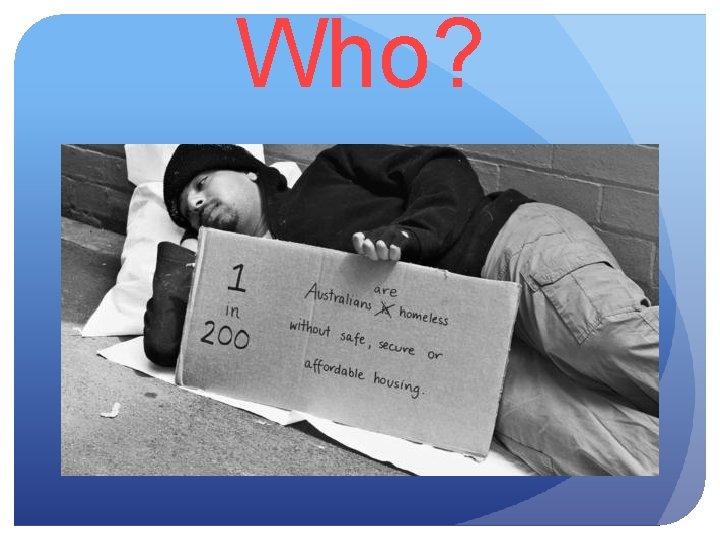
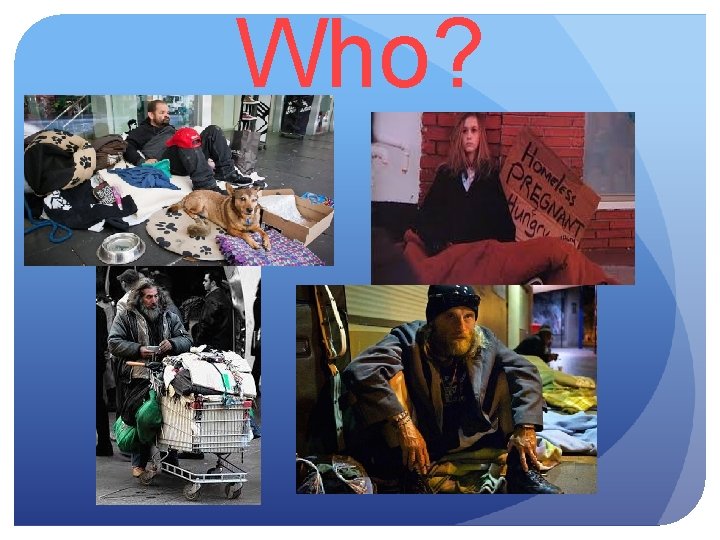
Who? Many assume homelessness means sleeping on the streets. In fact, homelessness means that you don’t have a permanent, safe or secure place to live.
Who?
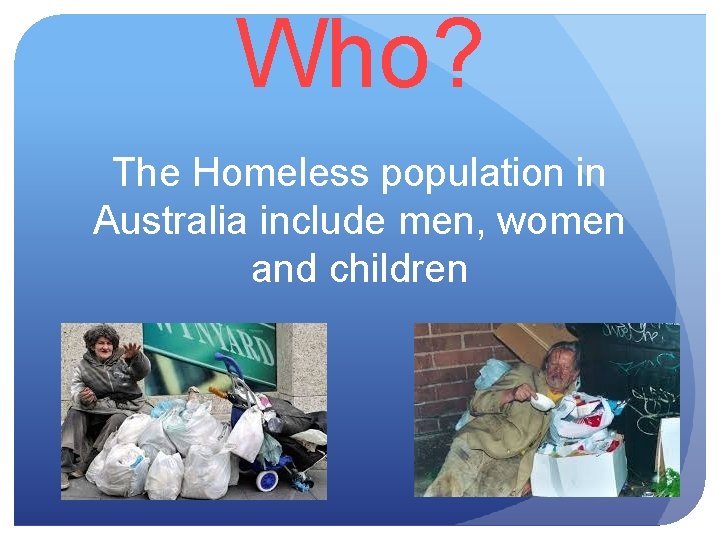
Who? The Homeless population in Australia include men, women and children
Who?
Who?
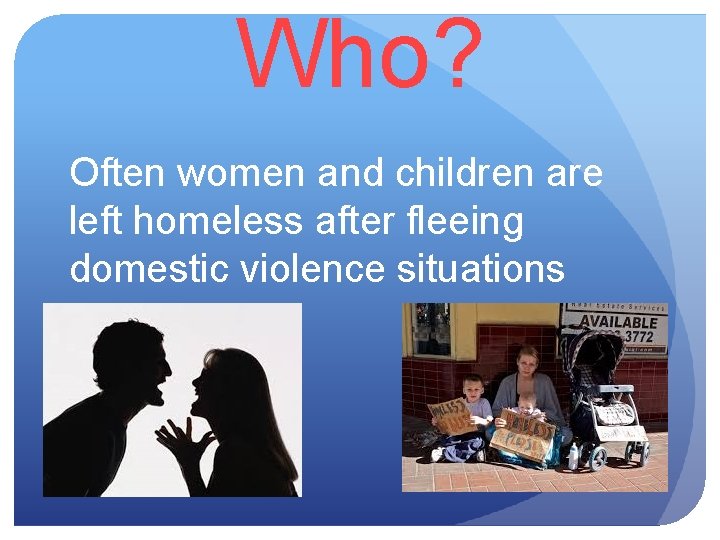
Who? Often women and children are left homeless after fleeing domestic violence situations
Who?
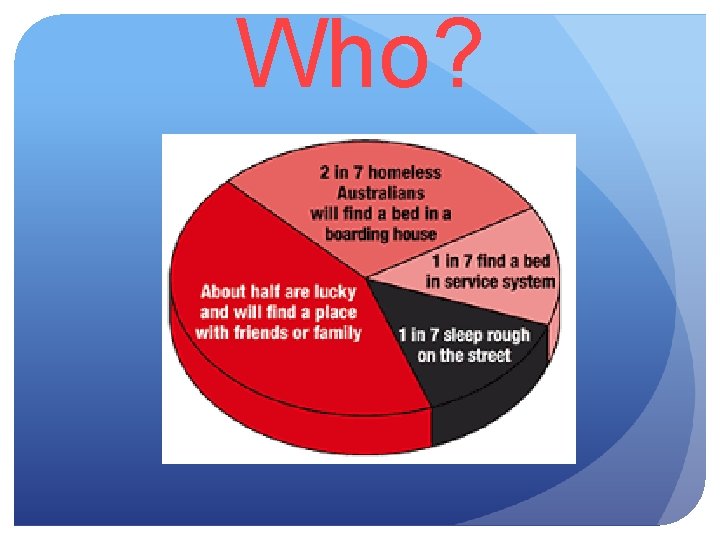
Who? Only 6% of the homeless population in Australia ‘sleep rough’ (on the streets, in parks etc. ) Two thirds of these are male.
Who? 75% of people in Australian boarding houses are men
Who? The current waiting list for public housing in Australia is 16 years long
Who? There also ‘invisible’ homeless, often young people who are ‘couch surfing’. These people have no fixed address and tend to stay with friends and others for short periods of time, taking advantage of anything given to them.
Who? There were over 7500 homeless youth in NSW in 2011 Only 1/3 of these find places in homeless shelters
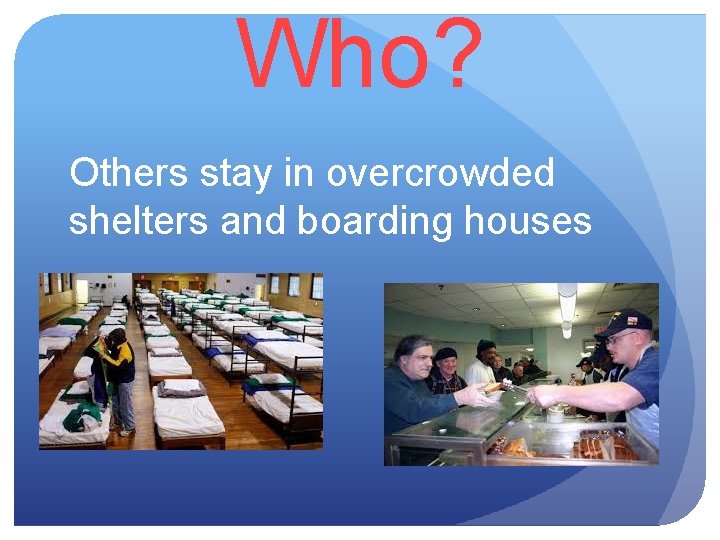
Who? Others stay in overcrowded shelters and boarding houses
How many? There are over 105 000 homeless people in Australia in 2015. Over 19 000 of these stay in emergency accommodation each night.
How many? Almost 18 000 children under 10 are homeless in Australia. Approximately 400 of these sleep rough each night.
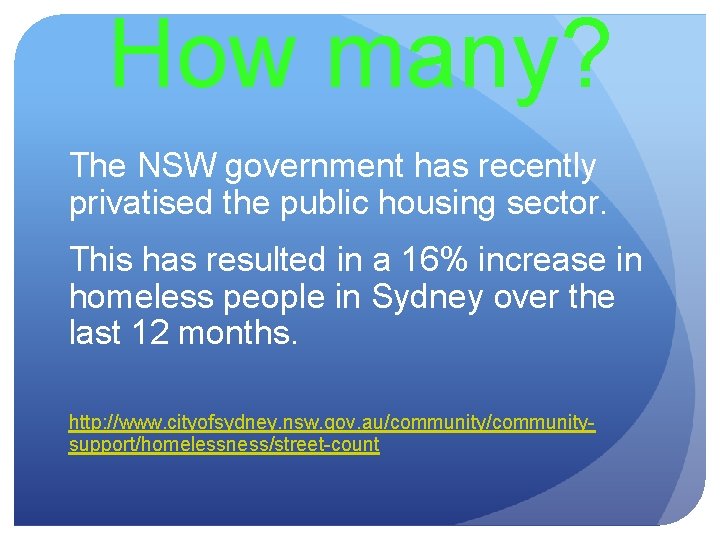
How many? The NSW government has recently privatised the public housing sector. This has resulted in a 16% increase in homeless people in Sydney over the last 12 months. http: //www. cityofsydney. nsw. gov. au/communitysupport/homelessness/street-count
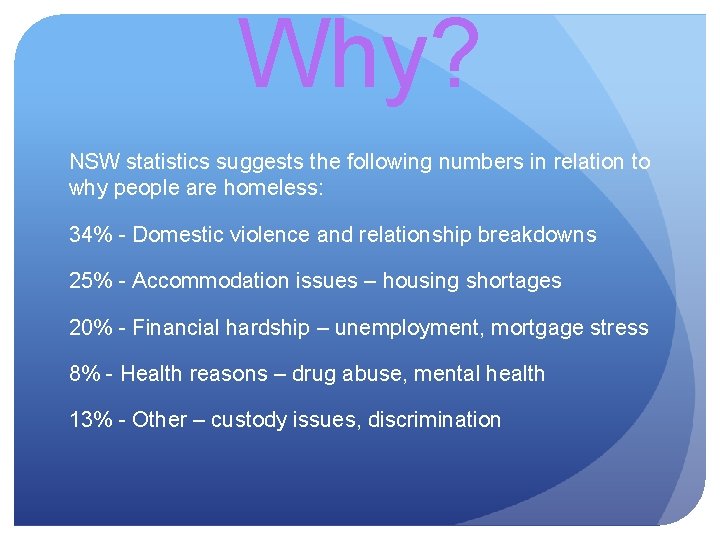
Why? NSW statistics suggests the following numbers in relation to why people are homeless: 34% - Domestic violence and relationship breakdowns 25% - Accommodation issues – housing shortages 20% - Financial hardship – unemployment, mortgage stress 8% - Health reasons – drug abuse, mental health 13% - Other – custody issues, discrimination
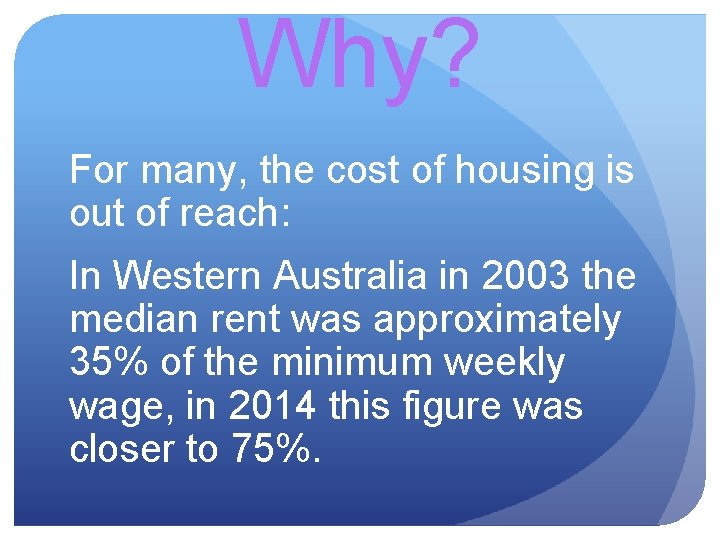
Why? For many, the cost of housing is out of reach: In Western Australia in 2003 the median rent was approximately 35% of the minimum weekly wage, in 2014 this figure was closer to 75%.
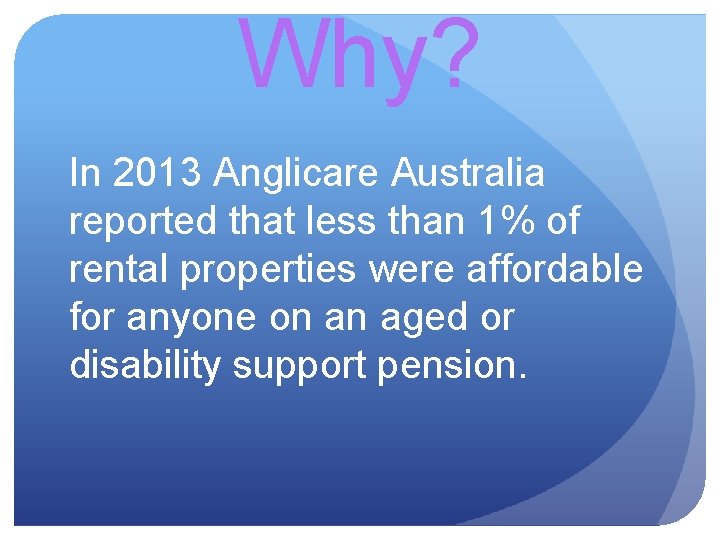
Why? In 2013 Anglicare Australia reported that less than 1% of rental properties were affordable for anyone on an aged or disability support pension.
Why? It is estimated 3000 returned soldiers sleep rough each night in Australia http: //www. abc. net. au/news/2014 -11 -05/vetrans-facinghomelessness-epidemic/5867028
Dangers and difficulties Homeless people who live ‘rough’ (on streets, in parks etc. ) face many challenges:
Dangers and difficulties Hunger – poverty ensures that, for a homeless person, every meal is a struggle. Many charity organisations work hard to aid these people using limited funds
Dangers and difficulties Violence – the homeless often stay in parks and on streets in areas that are dangerous and places them open to bashings, robberies etc.
Dangers and difficulties Victorian Statistics suggest that in 2013 “more than 75% of Melbourne homeless were victims of physical violence”
Dangers and difficulties Illness – living outdoors and having poor nutrition means that the homeless are susceptible to illness however they rarely have the ability to seek medical treatment or medication
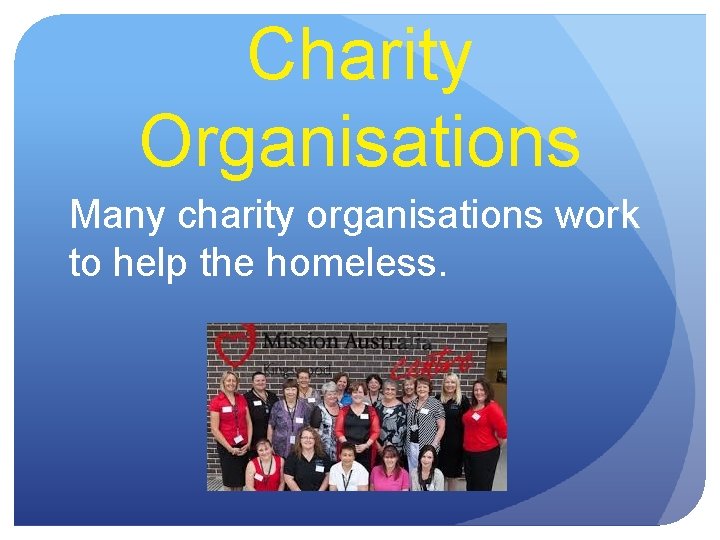
Charity Organisations Many charity organisations work to help the homeless.
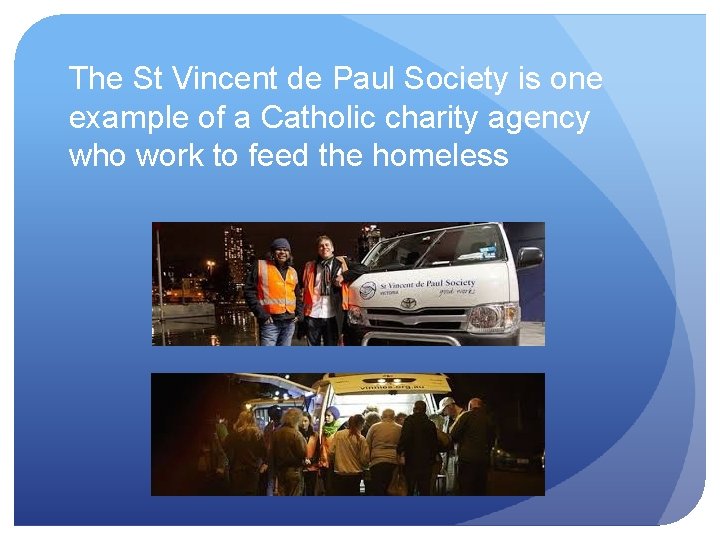
The St Vincent de Paul Society is one example of a Catholic charity agency who work to feed the homeless
Charity Organisations The CEO sleepout, organised by St Vincent De Paul society provides business people with the opportunity to raise awareness, fundraise and experience life on the street.
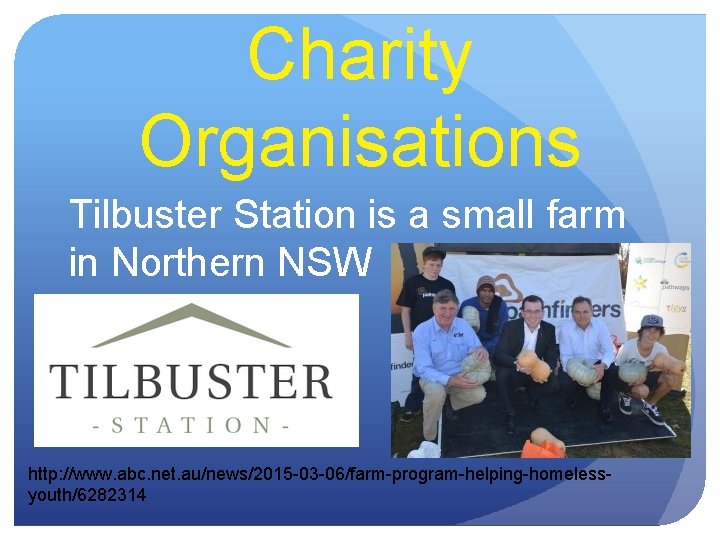
Charity Organisations Tilbuster Station is a small farm in Northern NSW http: //www. abc. net. au/news/2015 -03 -06/farm-program-helping-homelessyouth/6282314
Charity Organisations Tilbuster Station gives homeless young people a place to stay and an opportunity to gain skills whilst working on a rural property.
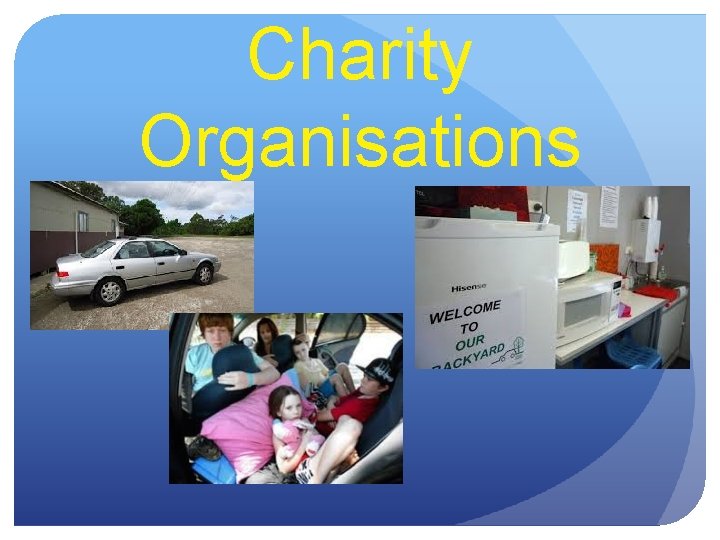
Charity Organisations The ‘Our Backyard’ project provides a safe carpark, toilets, hot showers, food, pillows and blankets for people who are living in their car.
Charity Organisations
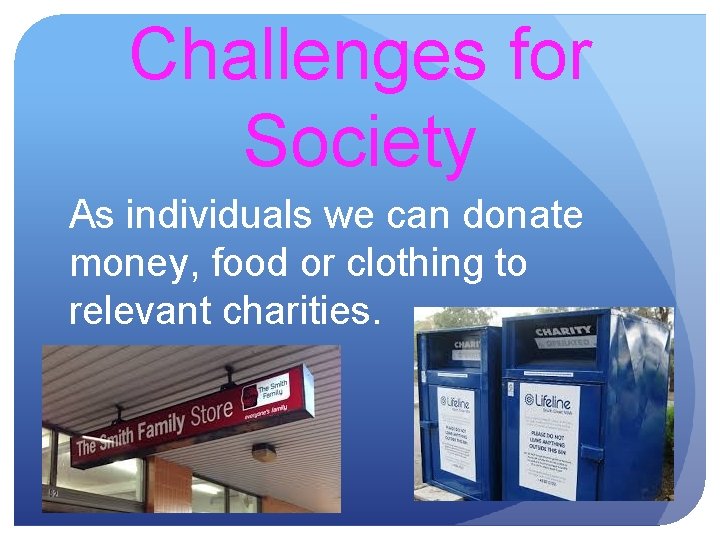
Challenges for Society As individuals we can donate money, food or clothing to relevant charities.
Challenges for Society We can also donate our time and assistance to such agencies
Challenges for Society COAG (Council of Australian Governments) provided over $1. 1 billion of Commonwealth and State resources over the four years up to 2013 to help fund new social housing and to target specialist homelessness projects across the country.
Help * Homeless people report feeling no self-worth and having no place in society * No homeless person set out for their life to turn out this way
Help “Walking by and turning your head is probably the worst thing to do to someone who really needs to just be acknowledged or smiled at” Nathan, 23
Help “I’m on my own. Because of this predicament, I don’t let my children know where I am. This is embarrassing…. . it’s degrading and embarrassing” Warren, 51
What can I do? As Catholics we are taught to share compassion. We all have an opportunity to assist the homeless in Australia
What can I do? Simple tasks such as: • Raising awareness • Fundraising • Donating will make a difference to the life of someone in our community
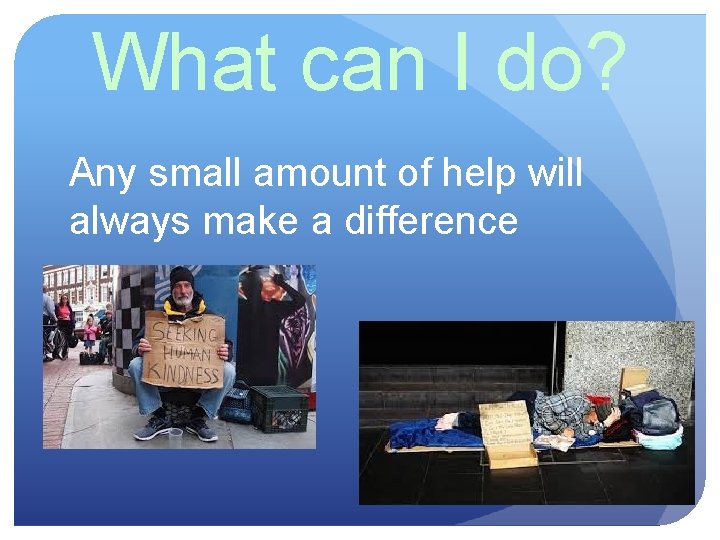
What can I do? Any small amount of help will always make a difference
More Info www. homelessnessaustralia. org. au www. pathfinders-aus. org www. redcross. org. au www. missionaustralia. com. au www. salvationarmy. org. au/Who-We-Are/ourwork/Homelessness/w. salvationarmy. org. au www. humanservices. gov. au