
Homelessness Globally What How Where Why Joanna Padgett
Homelessness Globally What? How? Where? Why? Joanna Padgett Herz - IGH UN Project Coordinator
How has homelessness been defined by the UN? It hasn’t. But some definition s have been implied. . . ● Those lacking shelter to live in because of poverty ● Refugees ● Diasporas ● Marginalized communities who have experienced historical atrocities ● Those whose shelter had been destroyed by natural disasters - “rendered homeless by. . ”
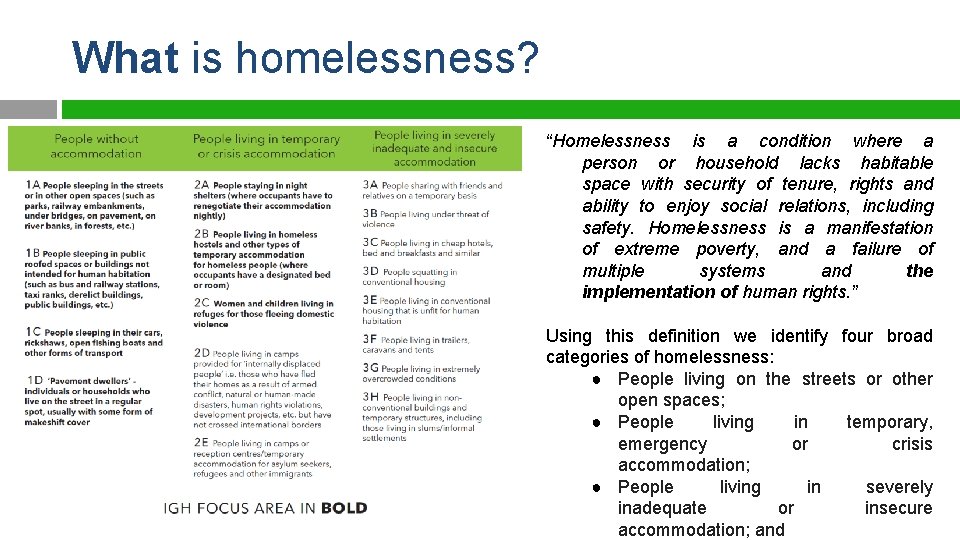
What is homelessness? “Homelessness is a condition where a person or household lacks habitable space with security of tenure, rights and ability to enjoy social relations, including safety. Homelessness is a manifestation of extreme poverty, and a failure of multiple systems and the implementation of human rights. ” Using this definition we identify four broad categories of homelessness: ● People living on the streets or other open spaces; ● People living in temporary, emergency or crisis accommodation; ● People living in severely inadequate or insecure accommodation; and
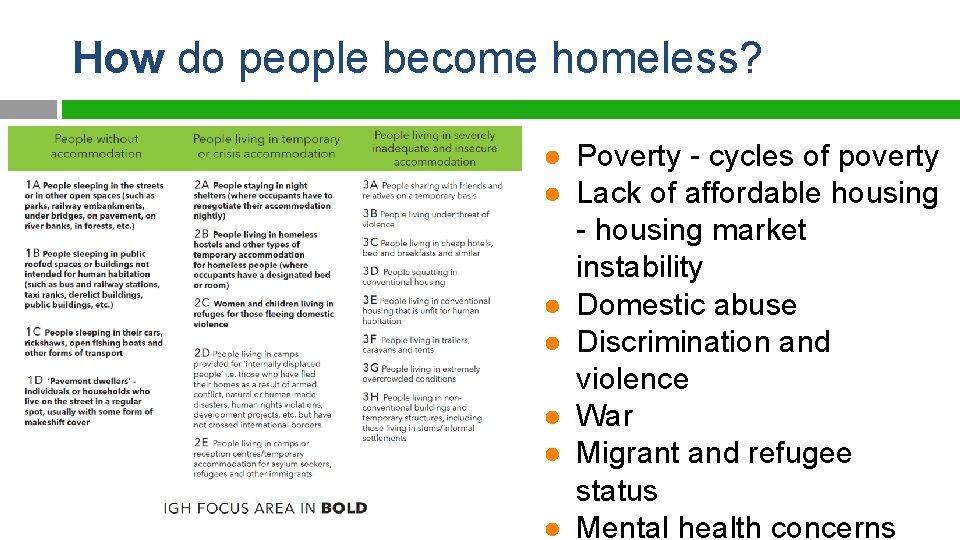
How do people become homeless? ● Poverty - cycles of poverty ● Lack of affordable housing - housing market instability ● Domestic abuse ● Discrimination and violence ● War ● Migrant and refugee status ● Mental health concerns

Where are people homeless? How many people are homeless? Current global data on homelessness is inconsistent and unreliable.
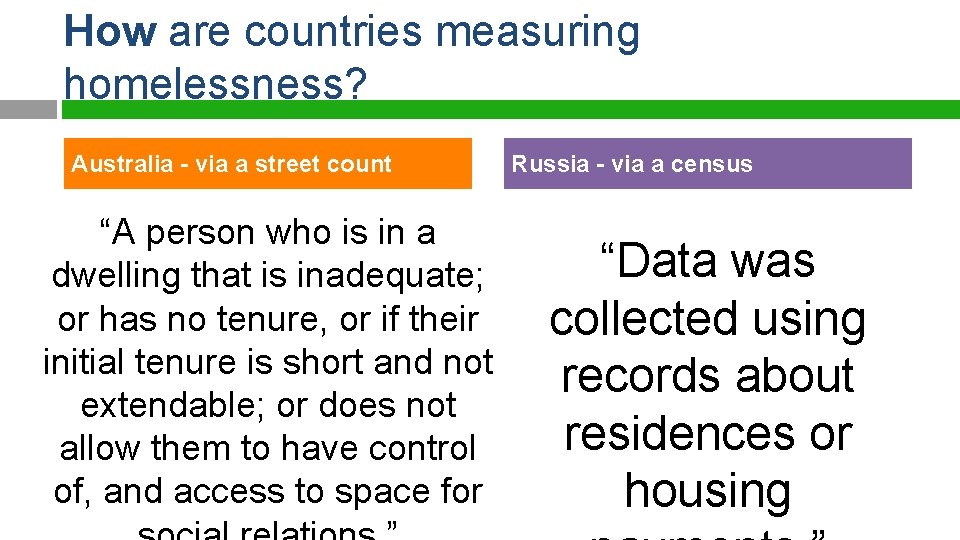
How are countries measuring homelessness? Australia - via a street count “A person who is in a dwelling that is inadequate; or has no tenure, or if their initial tenure is short and not extendable; or does not allow them to have control of, and access to space for Russia - via a census “Data was collected using records about residences or housing
Why is measurement and definition so important? Because we need to know. . . ● Which gender(s) are most likely to be homeless? ● Which races/ethnicities are most likely to be homeless? ● Are parents more or less likely to be homeless? Are they single or together? ● Are children often homeless without parents? ● What age group is most likely to be
Why is measurement and definition so important? Because without it, we can’t. . . - Identify trends in rates of homelessness - Identify what does and does not affect the rates of homelessness - Begin reducing homelessness globally - Determine necessary social protection systems to implement to
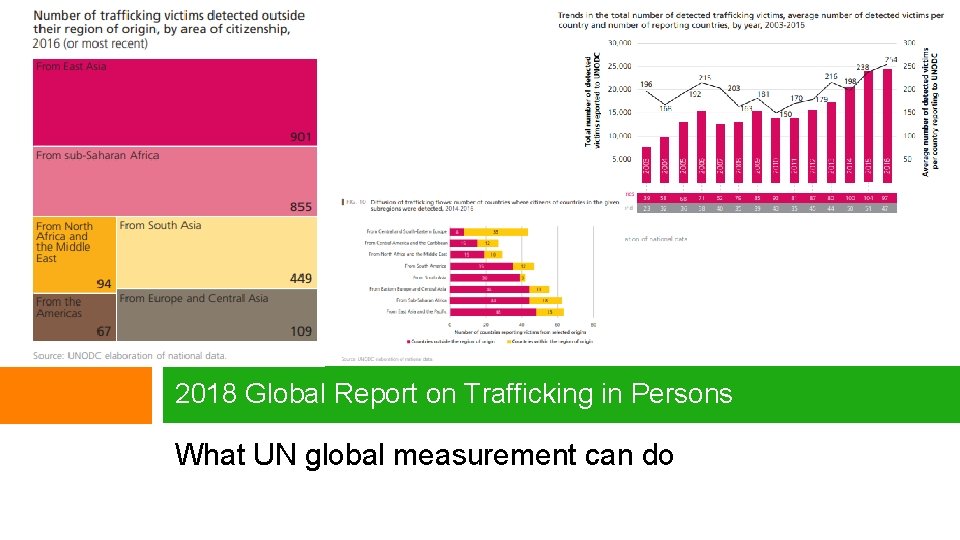
2018 Global Report on Trafficking in Persons What UN global measurement can do
- Slides: 9