
Homefront in World War II American History 2

- Slides: 27
Homefront in World War II American History 2
B. The Shock of War o. Ethnic loyalties not questioned in WWII- immigration had slowed n. Exception- Japanese Americans to internment camps (Exec. Order 9066) o. New Deal officially came to an end- Congress refused to fund & FDR focused on war o. Citizens focused on winning the war
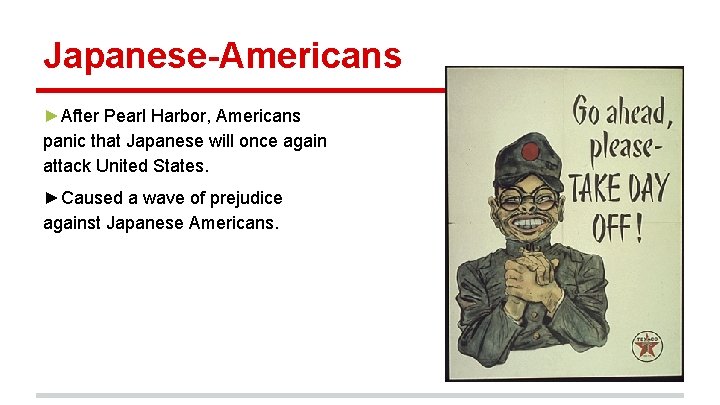
Japanese-Americans ►After Pearl Harbor, Americans panic that Japanese will once again attack United States. ►Caused a wave of prejudice against Japanese Americans.
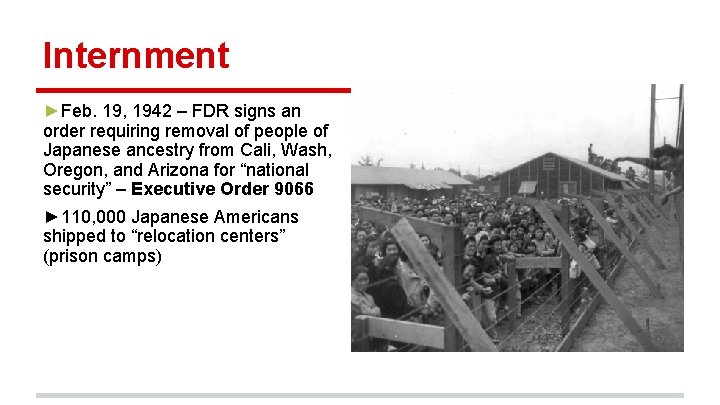
Internment ►Feb. 19, 1942 – FDR signs an order requiring removal of people of Japanese ancestry from Cali, Wash, Oregon, and Arizona for “national security” – Executive Order 9066 ► 110, 000 Japanese Americans shipped to “relocation centers” (prison camps)
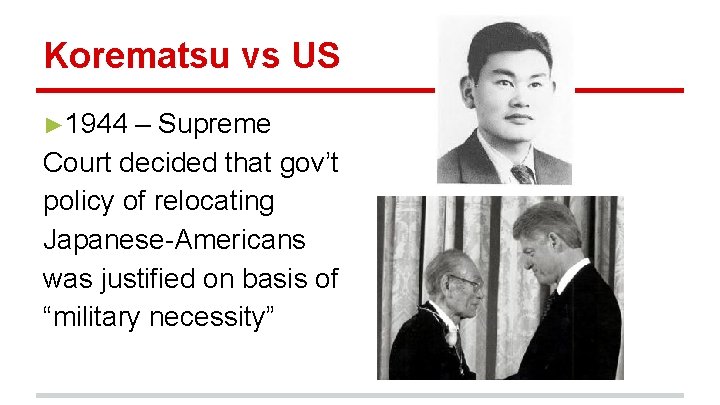
Korematsu vs US ► 1944 – Supreme Court decided that gov’t policy of relocating Japanese-Americans was justified on basis of “military necessity”
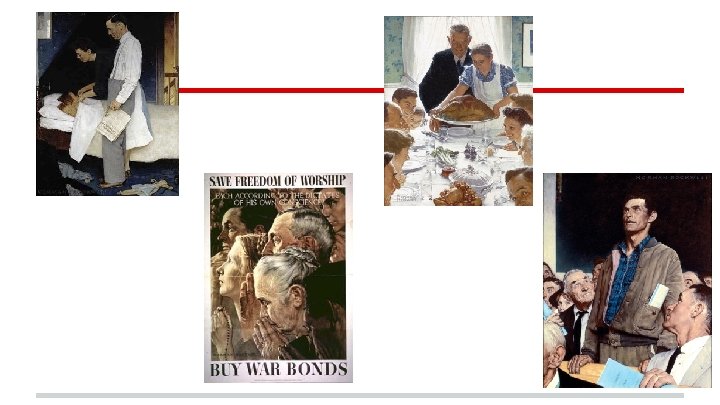
FDR’s Four Freedoms ►Freedom from fear, freedom from want, freedom of religion, freedom of speech – listed by FDR in January 1941 as guiding principles of US domestic and foreign policy.
C. Building the War Machine o. War Production Board- oversaw wartime industry n. Military orders ended depression n. Nonessential production stopped o. Office of Price Administration- held inflation to acceptable levels o. War Labor Board- oversaw labor issues (ceilings on wage increases) n. Strikes- Smith Connally Anti-Strike Act (June 1943)- fed. govt. could take over halted industries, stopping work was a federal violation
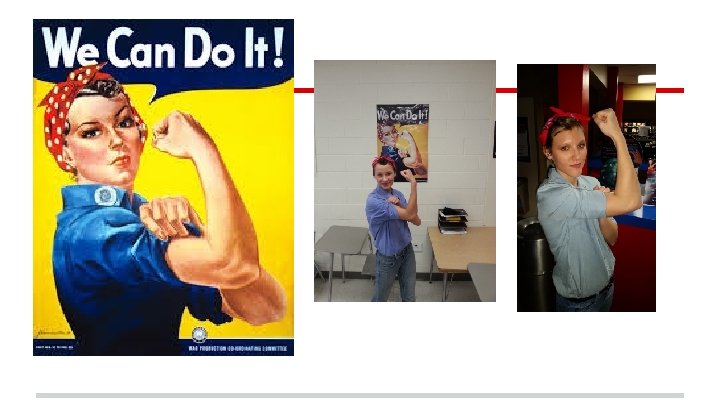
D. Manpower and Womanpower o 15 million men (GIs)- some exemptions from draft o 216, 000 women n. WAACs, WAVEs, SPARs o. Mexican labor agreement- 1942 - braceros o. Women workers (6 million)- Rosie the Riveter n. Most women didn’t work & 2/3 of those that did, left jobs at war’s end n. Govt. day care centers
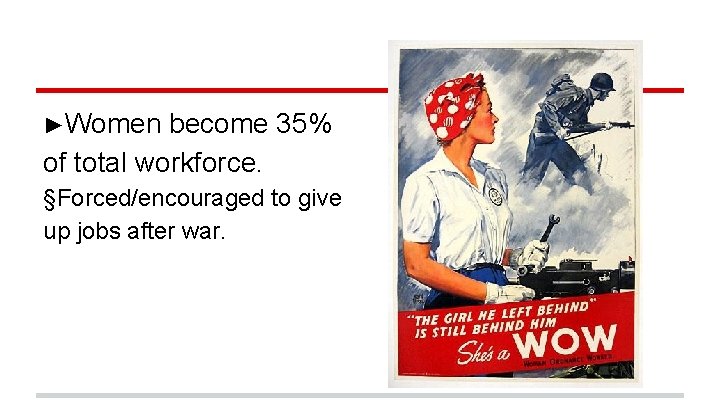
►Women become 35% of total workforce. §Forced/encouraged to give up jobs after war.
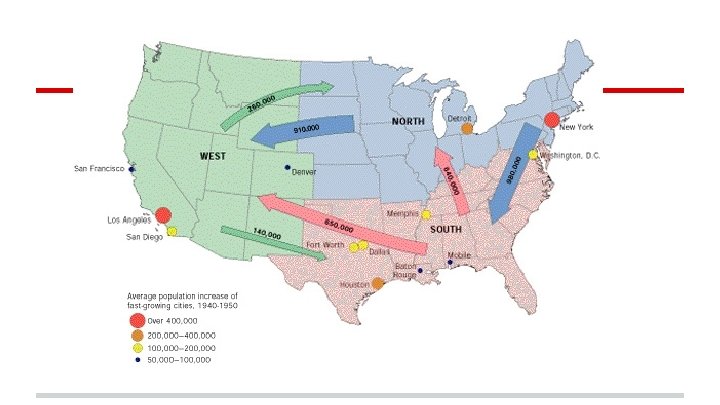
Population Shifts ►Towns with defense industries see a sharp increase in population. ►One of greatest mass migrations in U. S. history.
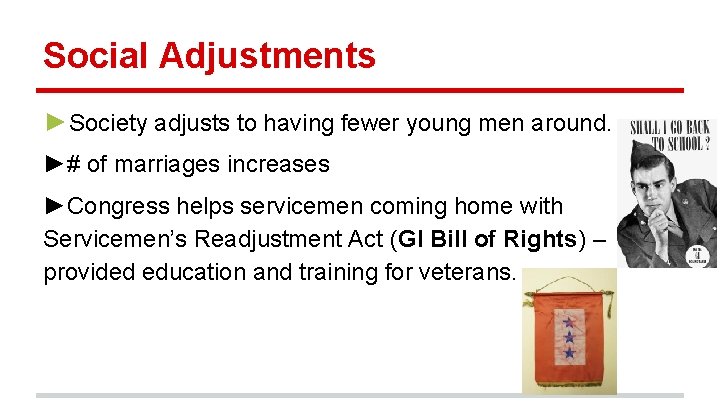
Social Adjustments ►Society adjusts to having fewer young men around. ►# of marriages increases ►Congress helps servicemen coming home with Servicemen’s Readjustment Act (GI Bill of Rights) – provided education and training for veterans.
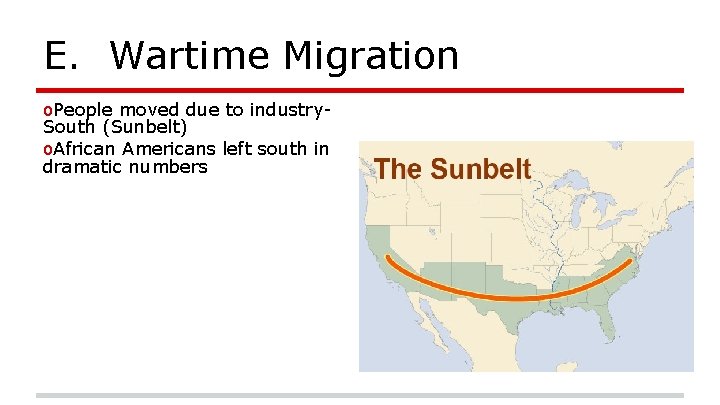
E. Wartime Migration o. People moved due to industry. South (Sunbelt) o. African Americans left south in dramatic numbers
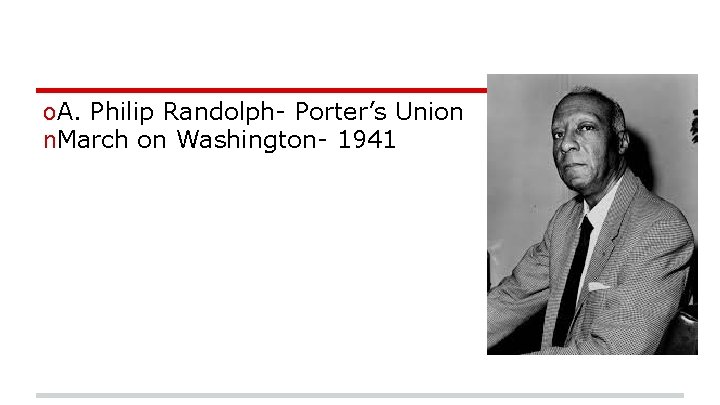
o. A. Philip Randolph- Porter’s Union n. March on Washington- 1941
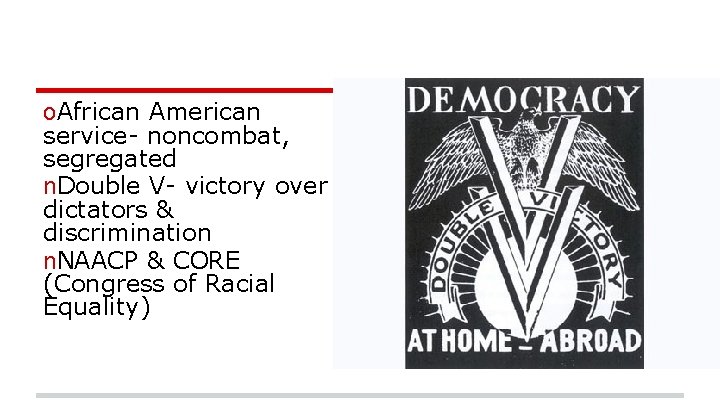
o. African American service- noncombat, segregated n. Double V- victory over dictators & discrimination n. NAACP & CORE (Congress of Racial Equality)
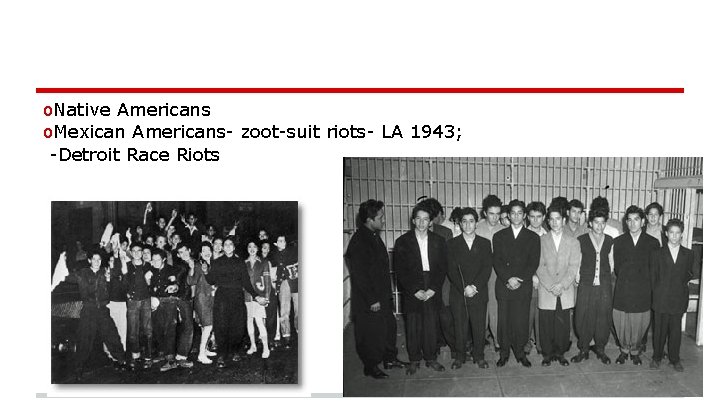
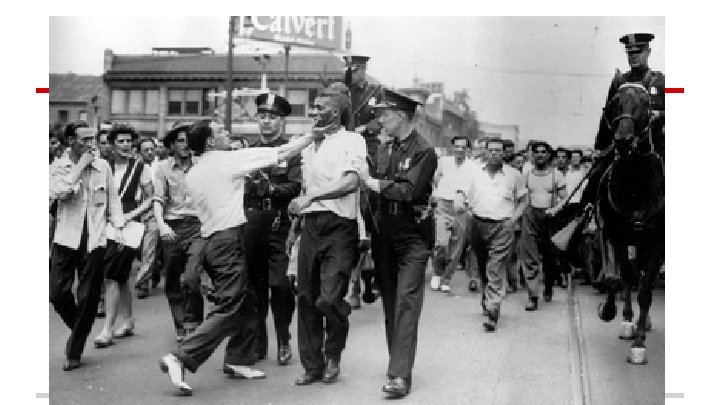
o. Native Americans o. Mexican Americans- zoot-suit riots- LA 1943; -Detroit Race Riots
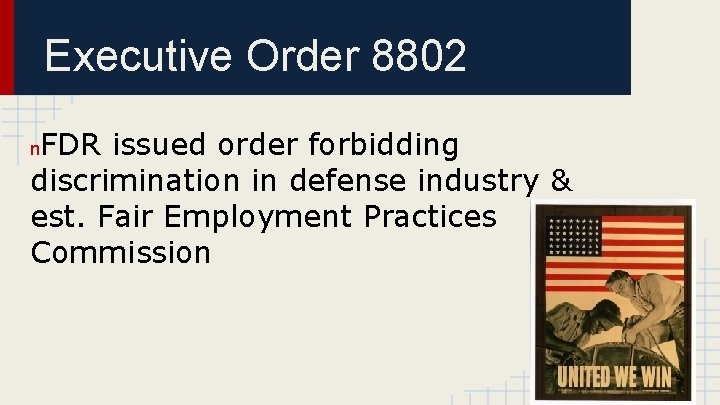
Executive Order 8802 FDR issued order forbidding discrimination in defense industry & est. Fair Employment Practices Commission n
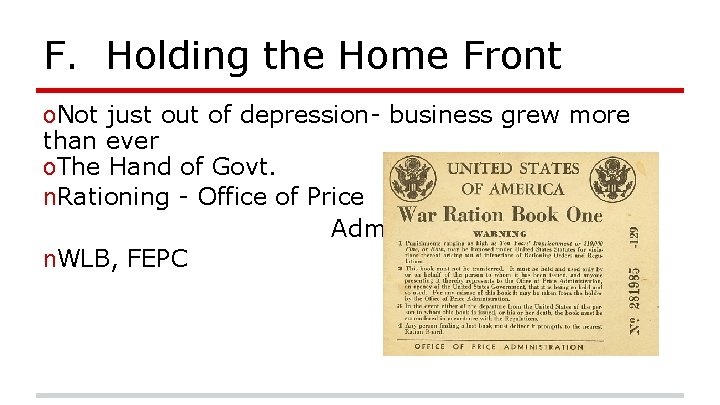
F. Holding the Home Front o. Not just out of depression- business grew more than ever o. The Hand of Govt. n. Rationing - Office of Price Administation n. WLB, FEPC
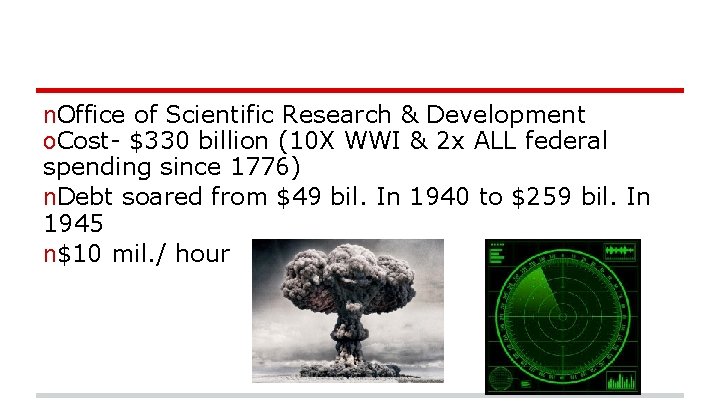
n. Office of Scientific Research & Development o. Cost- $330 billion (10 X WWI & 2 x ALL federal spending since 1776) n. Debt soared from $49 bil. In 1940 to $259 bil. In 1945 n$10 mil. / hour
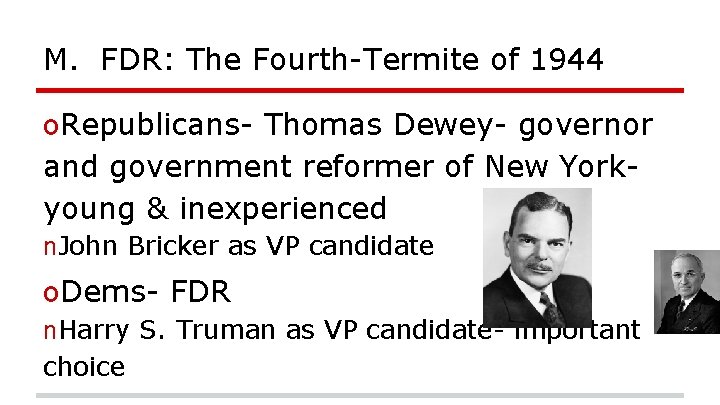
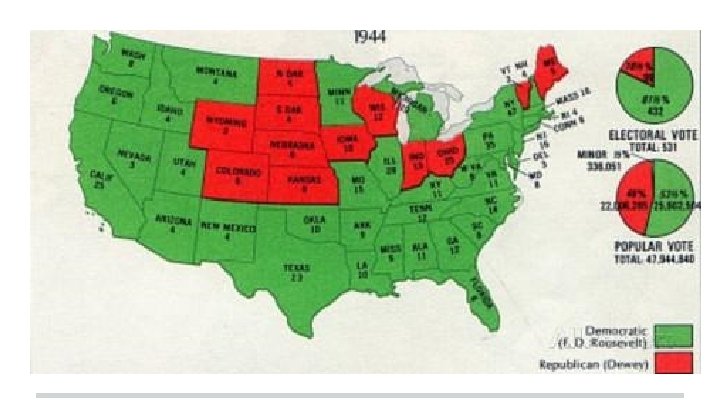
M. FDR: The Fourth-Termite of 1944 o. Republicans- Thomas Dewey- governor and government reformer of New Yorkyoung & inexperienced n. John Bricker as VP candidate o. Dems- FDR n. Harry S. Truman as VP candidate- important choice
R. The Allies Triumphant o. US human costs- over 1 million cas. n. New technology made survival easier o. Soviets lost 20 million o. US didn’t fight on its own land- industry boosted o. Organization showed US potential n. Leadership n. Ingenuity n. Production