
Home Orchard Care for Master Gardeners Jeff Schalau
- Slides: 35
Home Orchard Care for Master Gardeners Jeff Schalau Associate Agent, ANR University of Arizona Cooperative Extension, Yavapai County
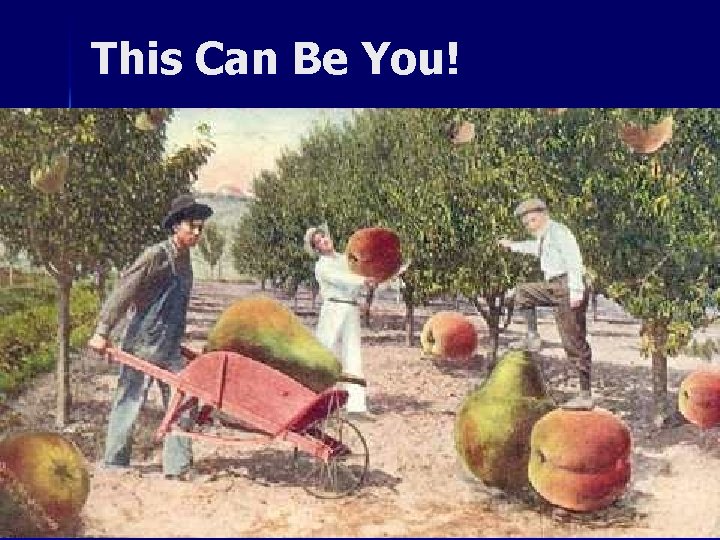
This Can Be You!
Growing Quality Fruit Requires planning and long-term commitment n Annual cultural practices n – Pruning, fertilization, irrigation, weed control, IPM, thinning, harvesting n Different fruits have different cultural requirements
Home Orchard Road Map n n n n n Site Selection Fruit Tree Propagation Tree Selection and Spacing Planting Irrigation Pruning Fertilization Thinning Harvest
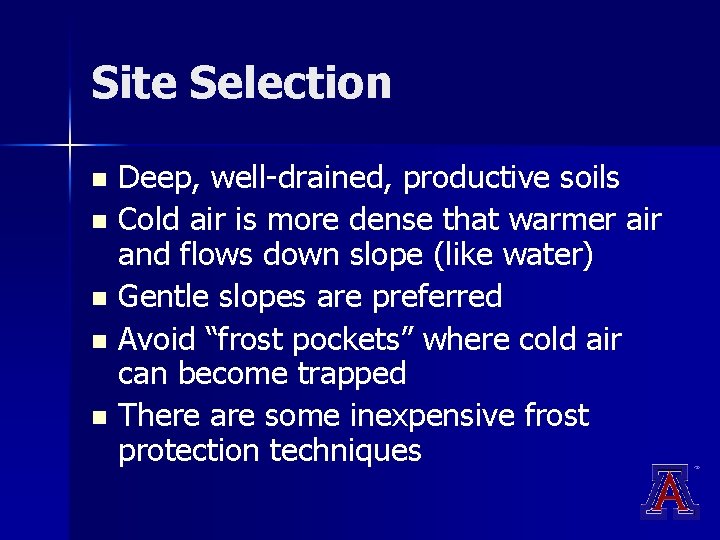
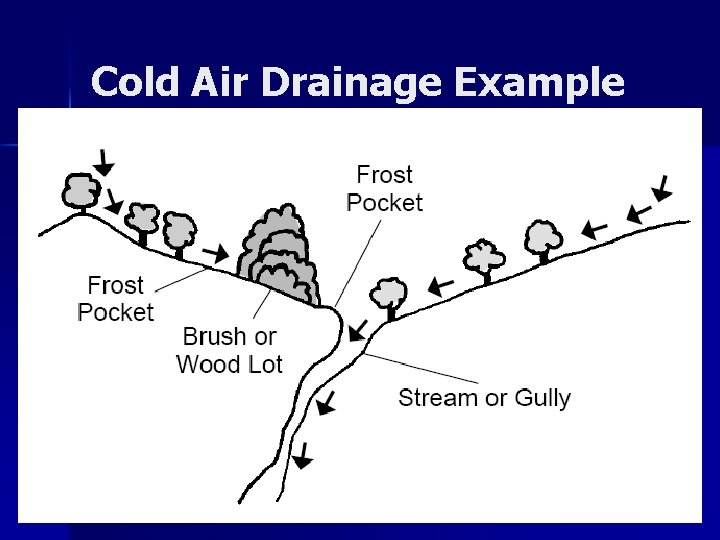
Site Selection Deep, well-drained, productive soils n Cold air is more dense that warmer air and flows down slope (like water) n Gentle slopes are preferred n Avoid “frost pockets” where cold air can become trapped n There are some inexpensive frost protection techniques n
Cold Air Drainage Example
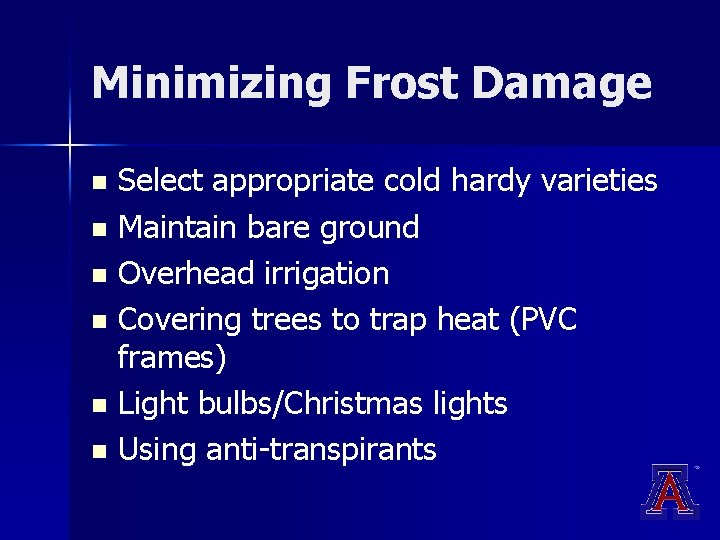
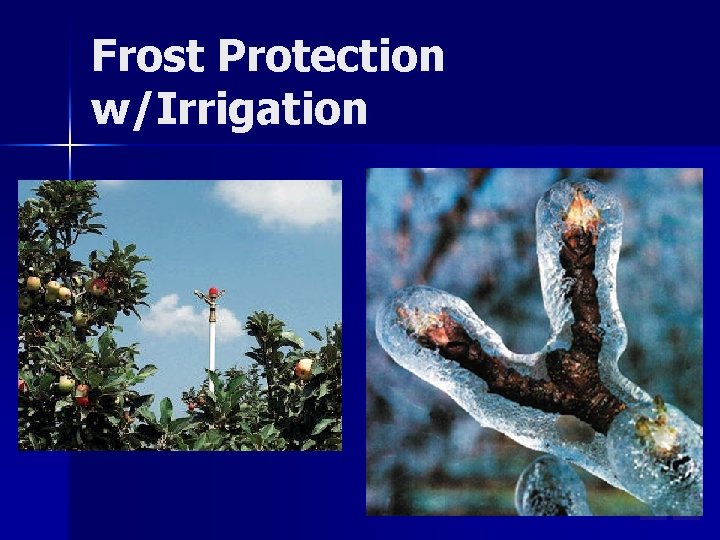
Minimizing Frost Damage Select appropriate cold hardy varieties n Maintain bare ground n Overhead irrigation n Covering trees to trap heat (PVC frames) n Light bulbs/Christmas lights n Using anti-transpirants n
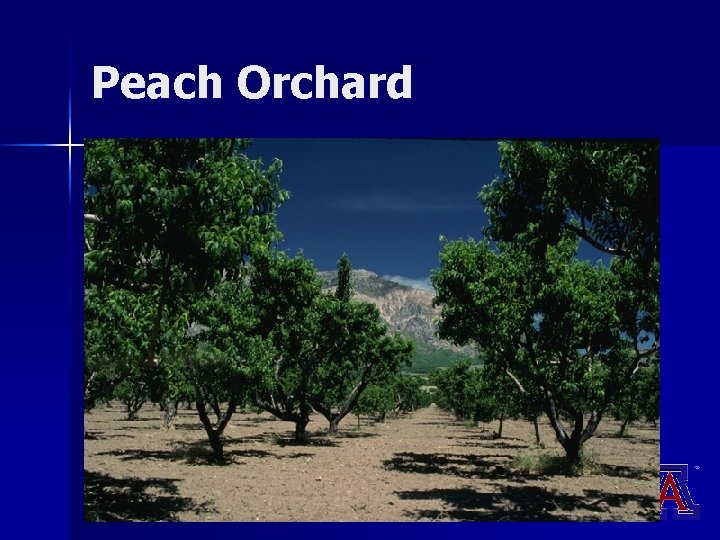
Peach Orchard
Frost Protection w/Irrigation
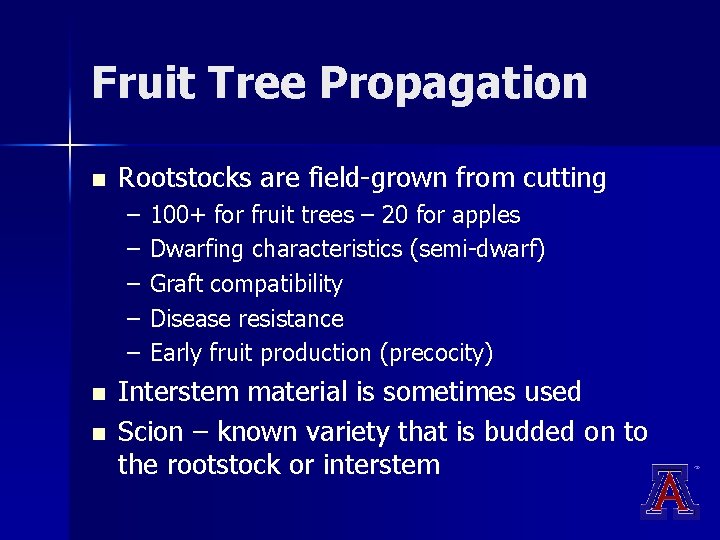
Fruit Tree Propagation n Rootstocks are field-grown from cutting – – – n n 100+ for fruit trees – 20 for apples Dwarfing characteristics (semi-dwarf) Graft compatibility Disease resistance Early fruit production (precocity) Interstem material is sometimes used Scion – known variety that is budded on to the rootstock or interstem
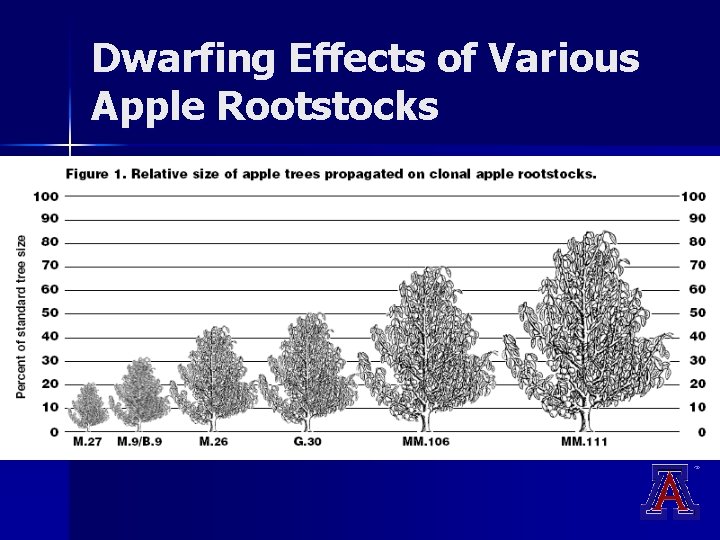
Dwarfing Effects of Various Apple Rootstocks
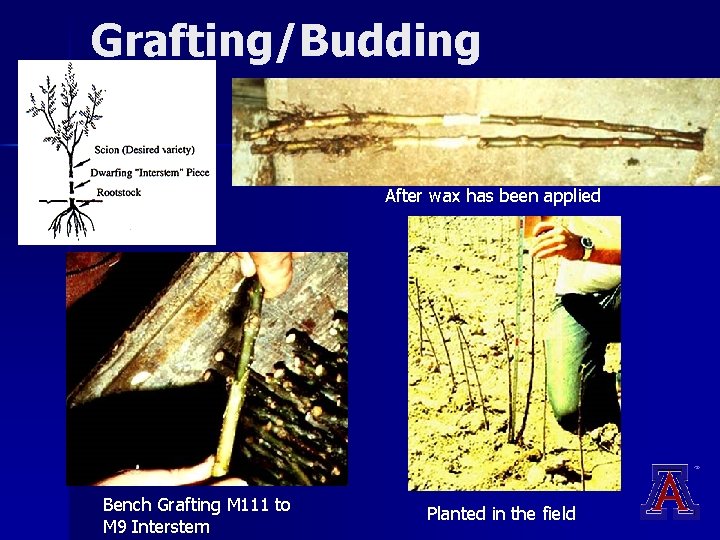
Grafting/Budding After wax has been applied Bench Grafting M 111 to M 9 Interstem Planted in the field
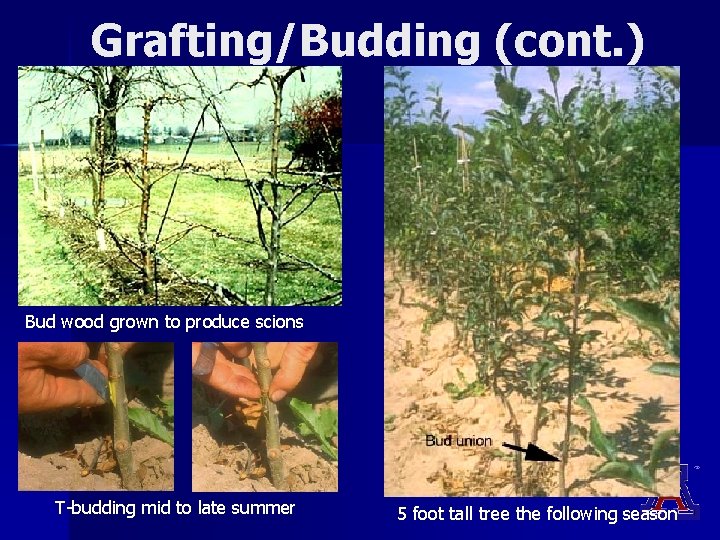
Grafting/Budding (cont. ) Bud wood grown to produce scions T-budding mid to late summer 5 foot tall tree the following season
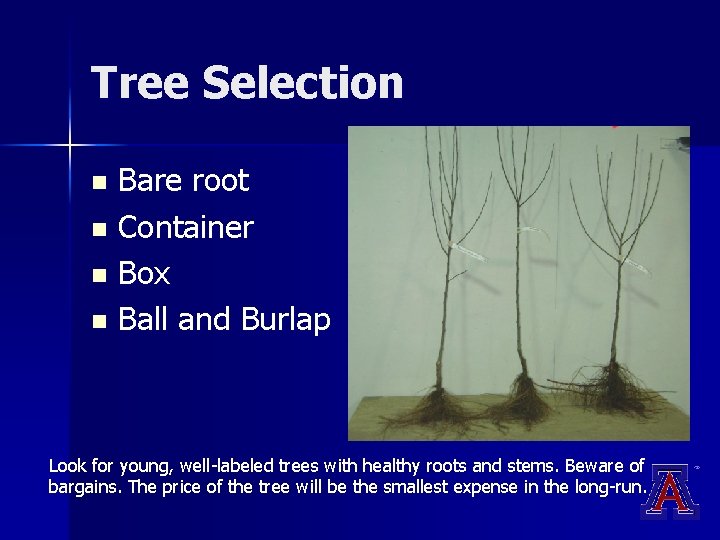
Tree Selection Bare root n Container n Box n Ball and Burlap n Look for young, well-labeled trees with healthy roots and stems. Beware of bargains. The price of the tree will be the smallest expense in the long-run.
Variety Selection n Know your climate – Sunset, USDA Plant Hardiness, U of A n Chilling Requirement – Accumulation of hours below 45ºF and above 32ºF – Each fruit variety has a corresponding chilling requirement n n Self fruitful vs. non-self fruitful (requiring cross pollination) Select varieties that bear at different times
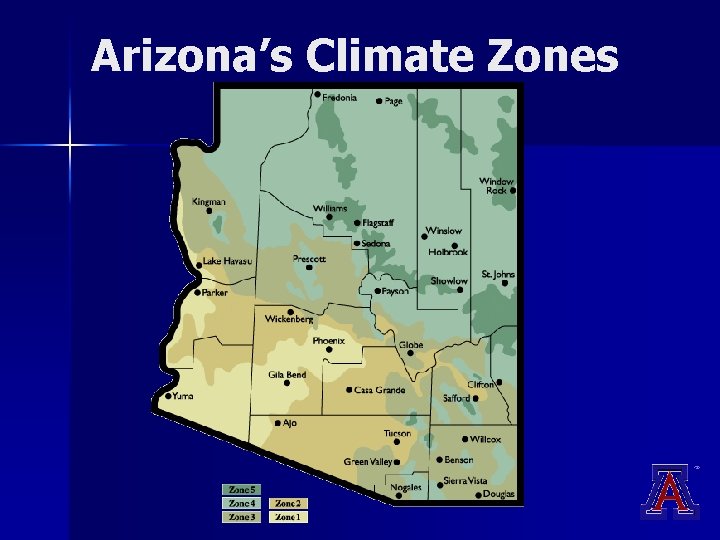
Arizona’s Climate Zones
Chilling Requirements for Yavapai County n Verde Valley (3, 000 to 4, 500 ft) – 600 to 750 chill hours n Prescott (4, 500 to 6, 000 ft) – 750 to 1, 000 chill hours n These numbers are approximate and some fruit varieties do not have chilling requirements high enough for our area
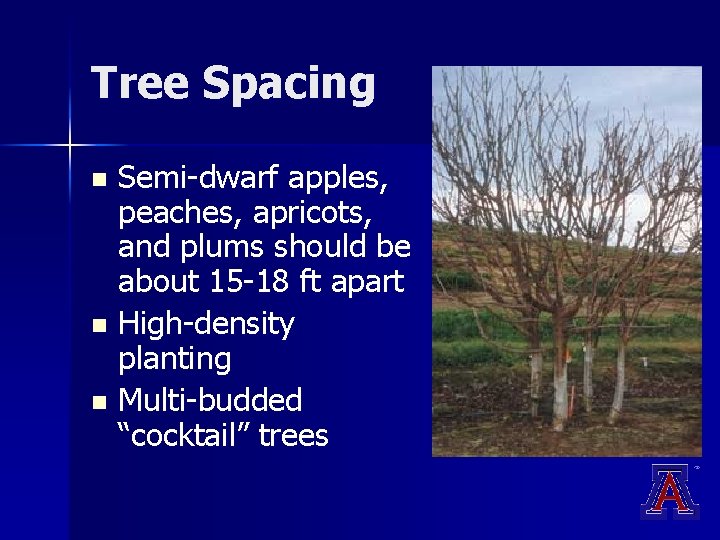
Tree Spacing Semi-dwarf apples, peaches, apricots, and plums should be about 15 -18 ft apart n High-density planting n Multi-budded “cocktail” trees n
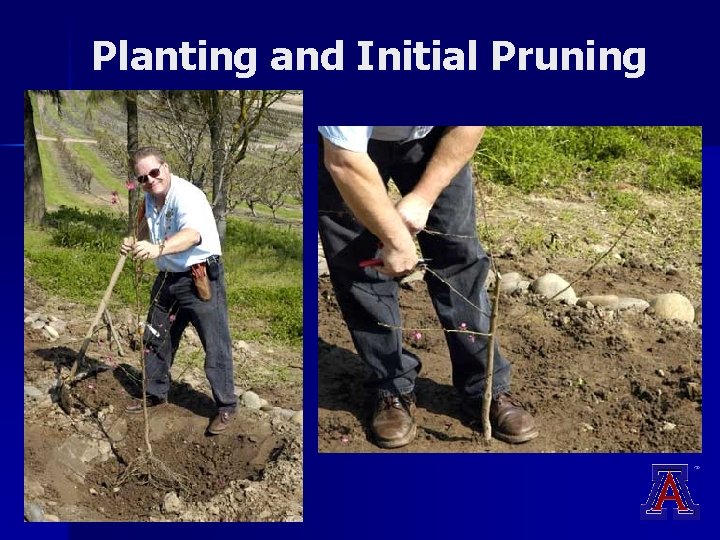
Planting n n n Prune out damaged roots with clean, sharp tools Plant trees in native, non-amended soil during the month of March Soak the bare root tree roots in a bucket of water before planting Add soil and water incrementally to prevent air pockets Plant at same depth as it was grown in the nursery – bud union should 2 -3 inches above the soil line Some people recommend the graft union face north
Planting and Initial Pruning
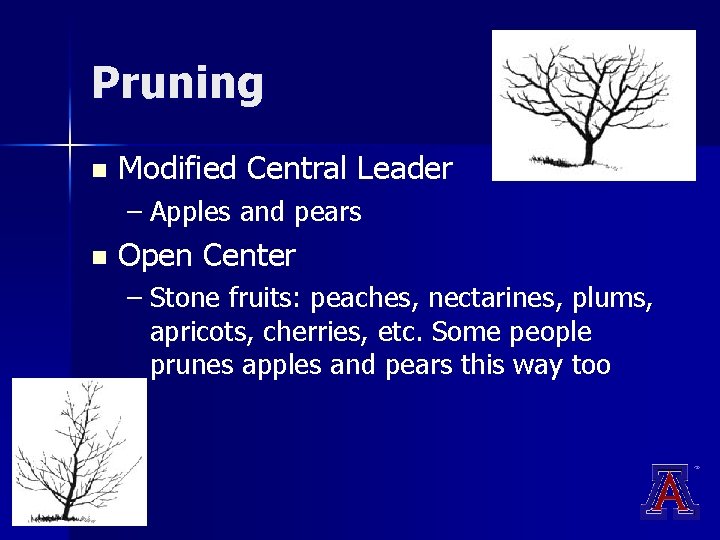
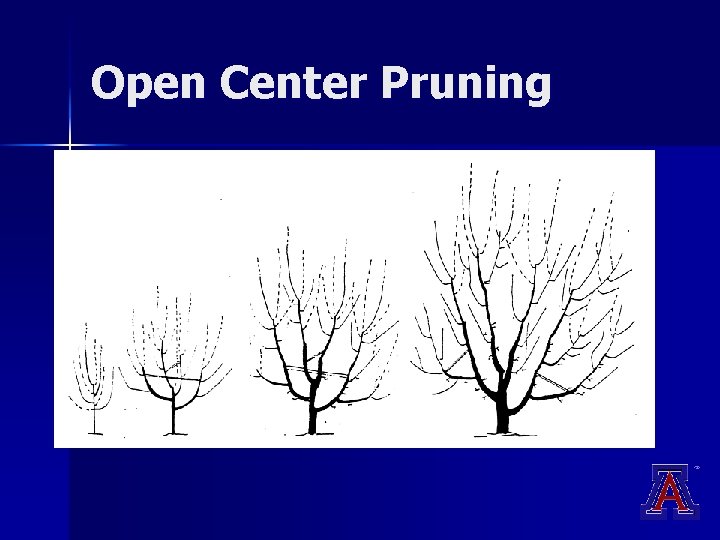
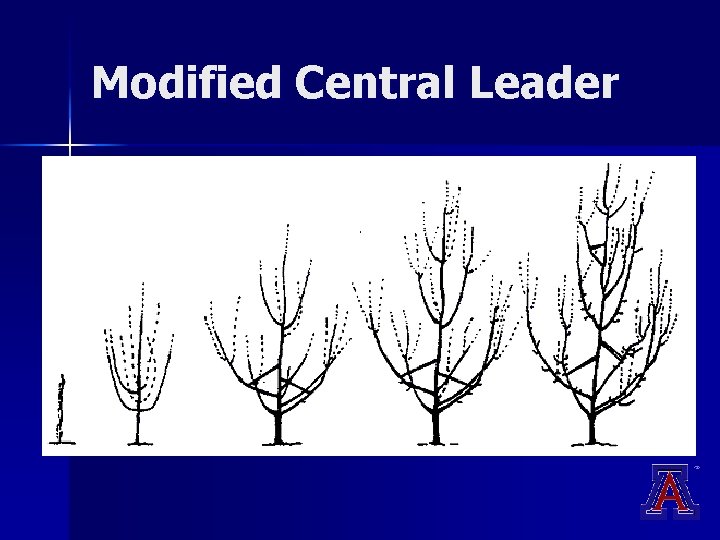
Pruning n Modified Central Leader – Apples and pears n Open Center – Stone fruits: peaches, nectarines, plums, apricots, cherries, etc. Some people prunes apples and pears this way too
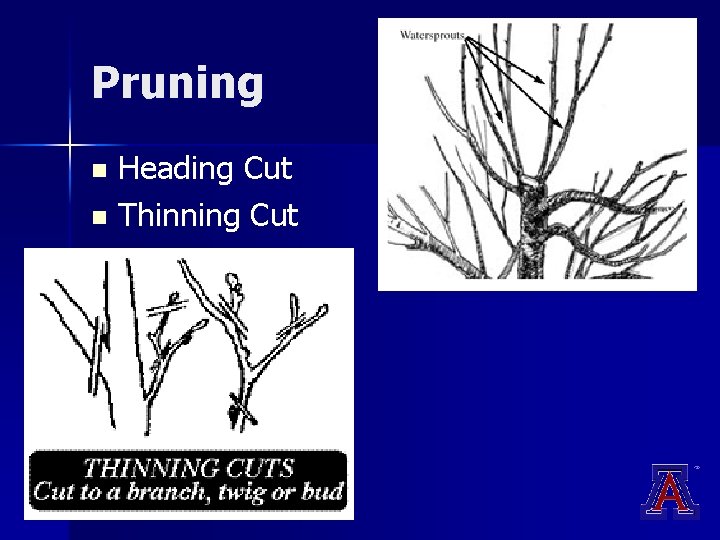
Pruning Heading Cut n Thinning Cut n
Open Center Pruning
Modified Central Leader
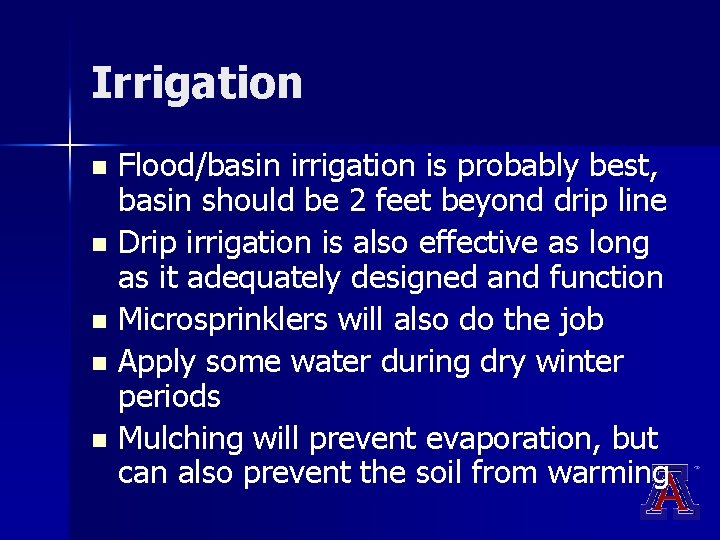
Irrigation Flood/basin irrigation is probably best, basin should be 2 feet beyond drip line n Drip irrigation is also effective as long as it adequately designed and function n Microsprinklers will also do the job n Apply some water during dry winter periods n Mulching will prevent evaporation, but can also prevent the soil from warming n
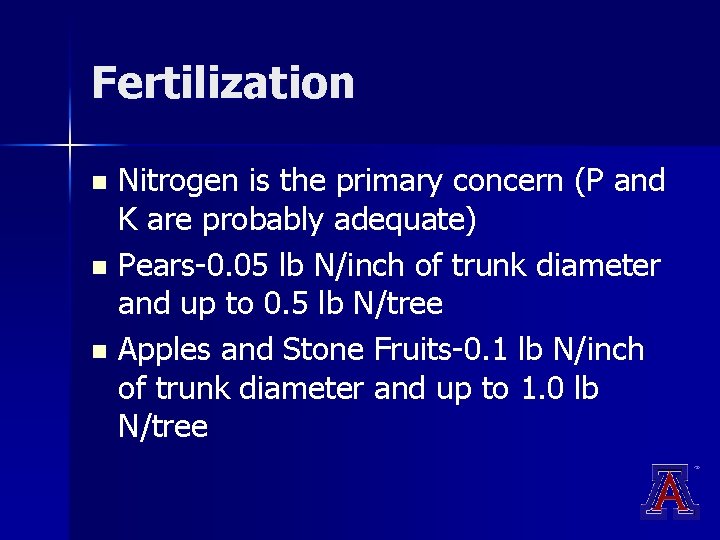
Fertilization Nitrogen is the primary concern (P and K are probably adequate) n Pears-0. 05 lb N/inch of trunk diameter and up to 0. 5 lb N/tree n Apples and Stone Fruits-0. 1 lb N/inch of trunk diameter and up to 1. 0 lb N/tree n
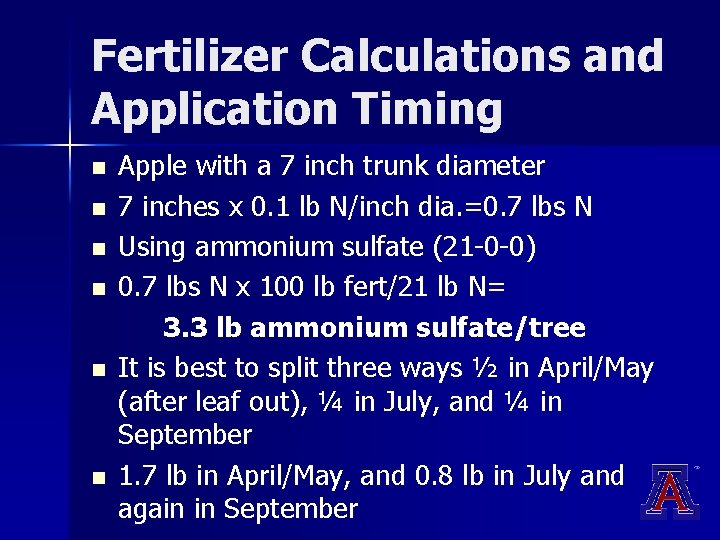
Fertilizer Calculations and Application Timing n n n Apple with a 7 inch trunk diameter 7 inches x 0. 1 lb N/inch dia. =0. 7 lbs N Using ammonium sulfate (21 -0 -0) 0. 7 lbs N x 100 lb fert/21 lb N= 3. 3 lb ammonium sulfate/tree It is best to split three ways ½ in April/May (after leaf out), ¼ in July, and ¼ in September 1. 7 lb in April/May, and 0. 8 lb in July and again in September
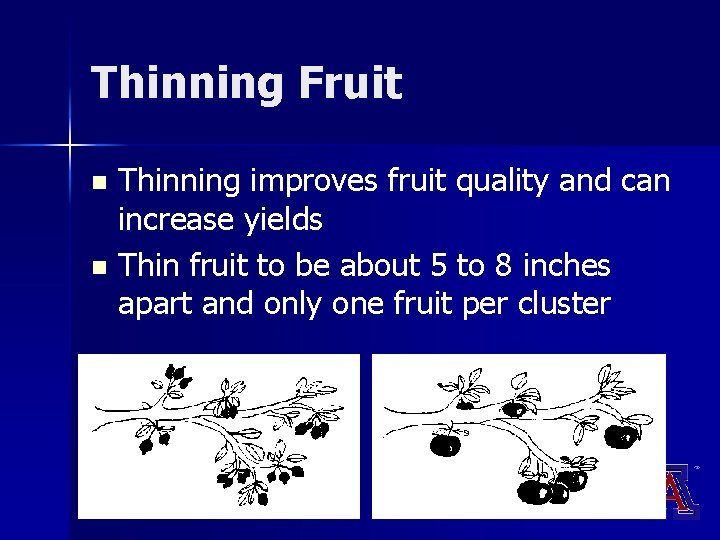
Thinning Fruit Thinning improves fruit quality and can increase yields n Thin fruit to be about 5 to 8 inches apart and only one fruit per cluster n
Harvesting Fruit n Apples – When normal, unblemished fruit begin to drop – Flesh color at the bottom of the fruit has changed from green to yellow-green – Taste it (the birds will also eat it) n Apricots – Softens slightly and easily separates from the stem
Harvesting Fruit (cont. ) n Cherry – Maximum sized and full-flavored – Will not ripen off the tree – Sweet cherries remain firm when ripe – Sour cherries pull off stem easily n Peaches/Nectarines – Fruit separates easily from the stems – Will ripen best on the tree
Harvesting Fruit (cont. ) n Pear – Should be picked slightly before ripe and will ripen further indoors – Change in fruit color from green to yellow n Plums – Sugar increases and color changes – Flesh softens somewhat
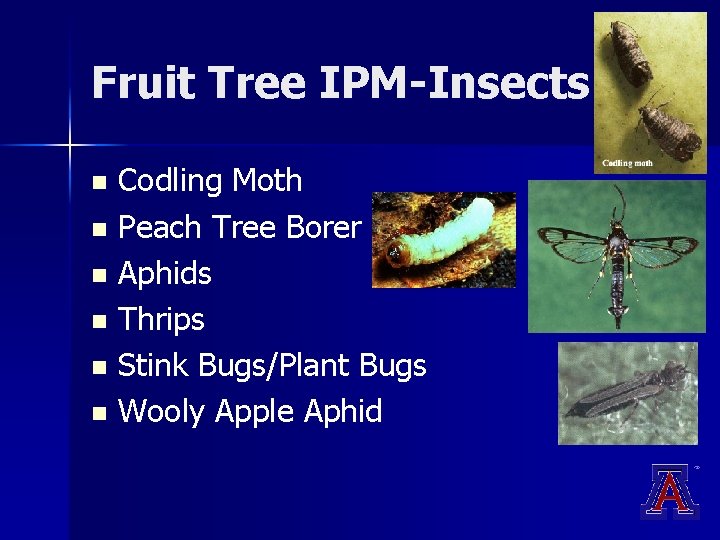
Fruit Tree IPM-Insects Codling Moth n Peach Tree Borer n Aphids n Thrips n Stink Bugs/Plant Bugs n Wooly Apple Aphid n
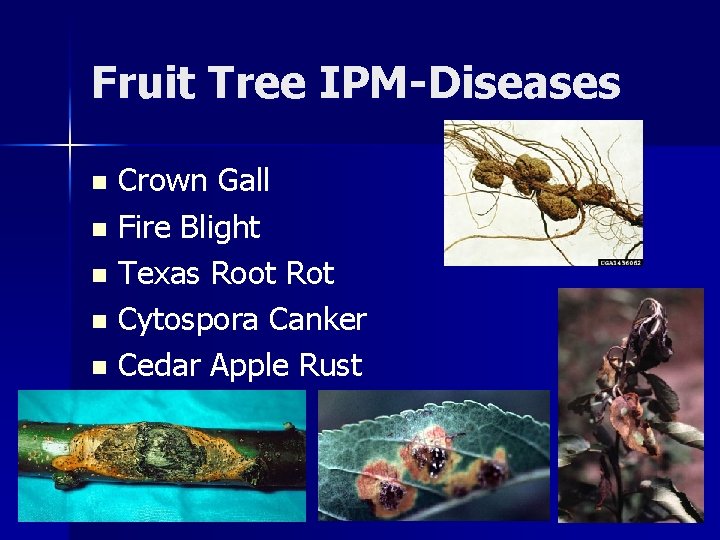
Fruit Tree IPM-Diseases Crown Gall n Fire Blight n Texas Root Rot n Cytospora Canker n Cedar Apple Rust n
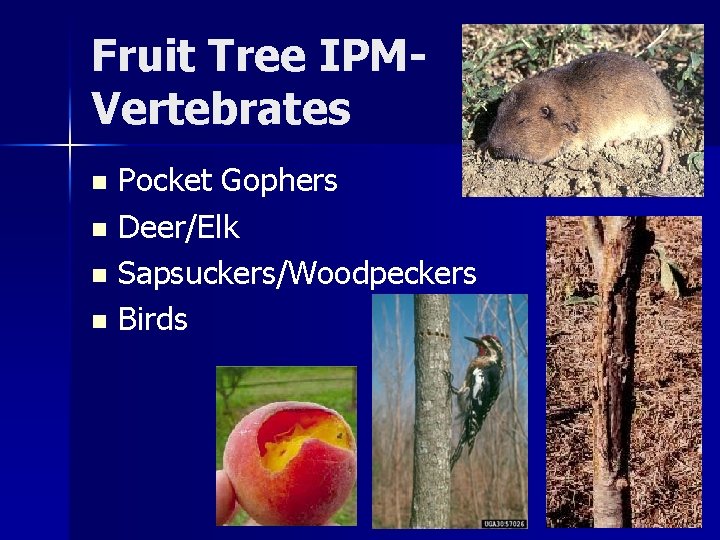
Fruit Tree IPMVertebrates Pocket Gophers n Deer/Elk n Sapsuckers/Woodpeckers n Birds n
Final Thoughts Choose appropriate varieties n Grow what you enjoy n When the trees get old, replace them n Keep good records (flavor, productivity, years of crops, etc. ) n Have Fun! n