
HOME ASSIGNMENT PART II SAND CASTING Prepared By
HOME ASSIGNMENT PART II SAND CASTING Prepared By- Sunil Sutar MTech (Design Engineering) Presented to- M P Gururajan Assistant Professor Applied Mechanics Department
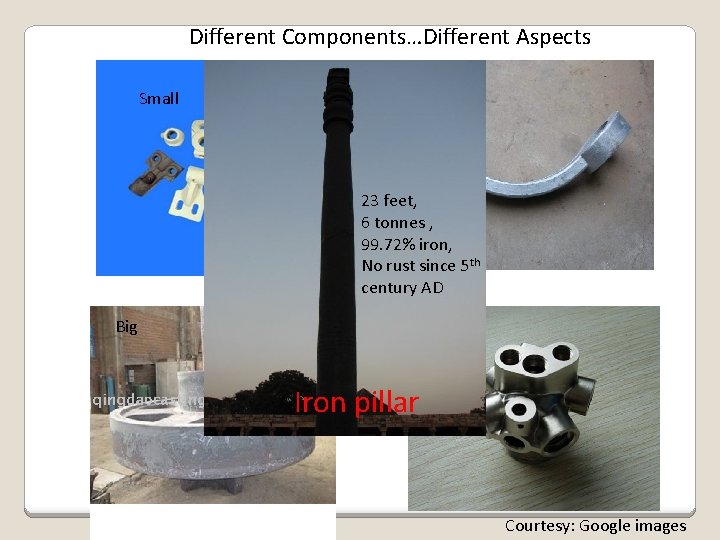
Different Components…Different Aspects Simple Small 23 feet, 6 tonnes , 99. 72% iron, No rust since 5 th century AD Big Complex Iron pillar Courtesy: Google images
Casting = Pattern making + Mold making + Pouring Molten Metal + Cooling + Removal + Inspection Types of Casting : Expendable Mold, Multiple Use Mold Sand Casting : Expendable Mold casting process uses sand as molding material
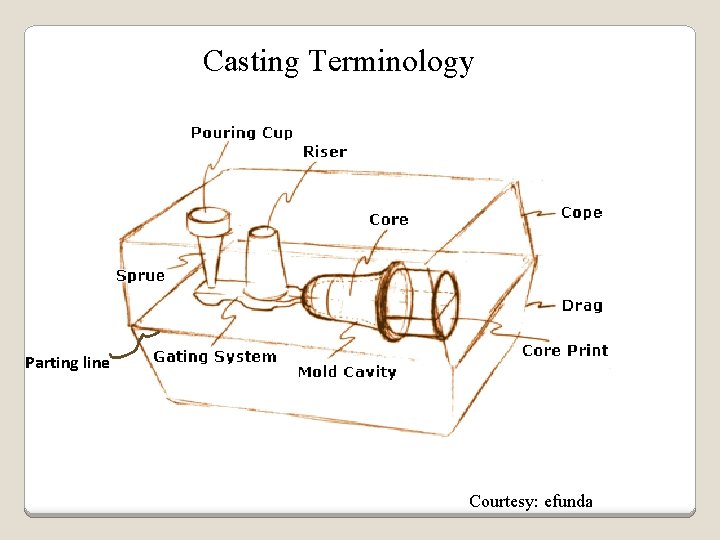
Casting Terminology Parting line Courtesy: efunda
Pattern Making What is pattern? Approximate duplicate of product Pattern material: Wood, Metals, Urethanes etc. Types of Patterns: One Piece or solid pattern, Split Pattern, Match-plate pattern, Drag & Cope Pattern Allowances: Shrinkage, Machining, Draft, Distortion

Pattern Making One piece or Solid Pattern Match Plate Pattern Split Pattern Cope & Drag Pattern
Mold Making Ø Consists : Sand Preparation and Mold Making Ø Sand Properties : Refractoriness, Cohesiveness, Permeability, Collapsibility Ø How to get these properties? Ø Mold Making Methods: Hand Ramming, Sand Slinger, Jolting, Squeezing, Combination
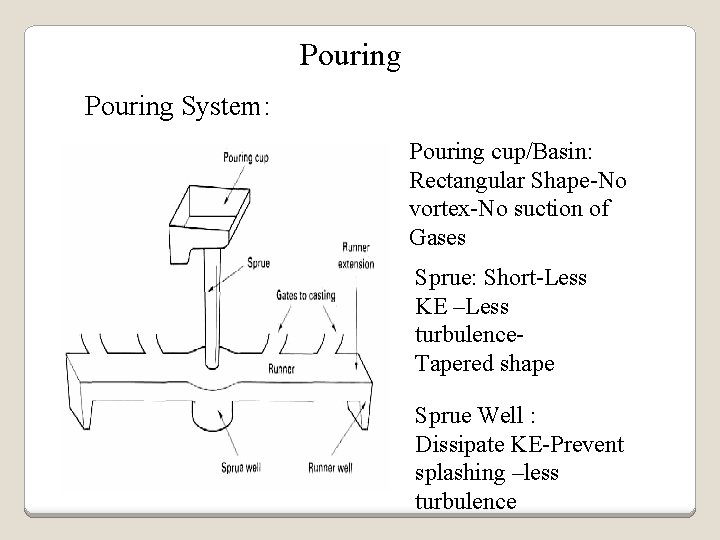
Pouring System: Pouring cup/Basin: Rectangular Shape-No vortex-No suction of Gases Sprue: Short-Less KE –Less turbulence. Tapered shape Sprue Well : Dissipate KE-Prevent splashing –less turbulence
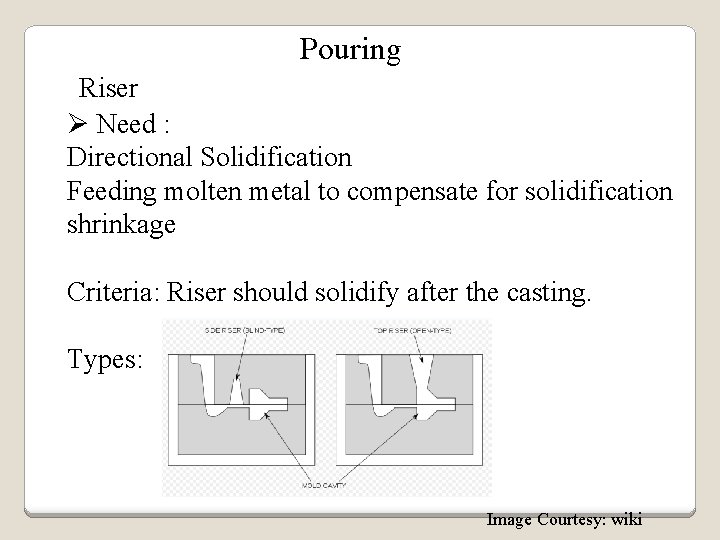
Pouring Riser Ø Need : Directional Solidification Feeding molten metal to compensate for solidification shrinkage Criteria: Riser should solidify after the casting. Types: Image Courtesy: wiki
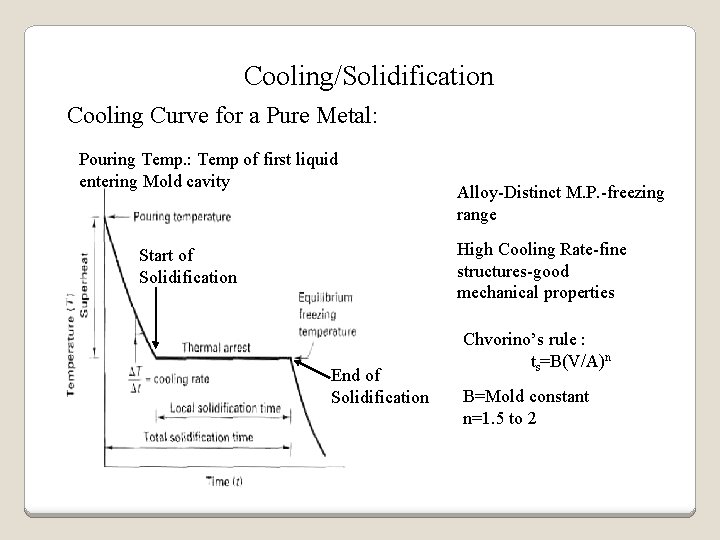
Cooling/Solidification Cooling Curve for a Pure Metal: Pouring Temp. : Temp of first liquid entering Mold cavity Alloy-Distinct M. P. -freezing range High Cooling Rate-fine structures-good mechanical properties Start of Solidification End of Solidification Chvorino’s rule : ts=B(V/A)n B=Mold constant n=1. 5 to 2
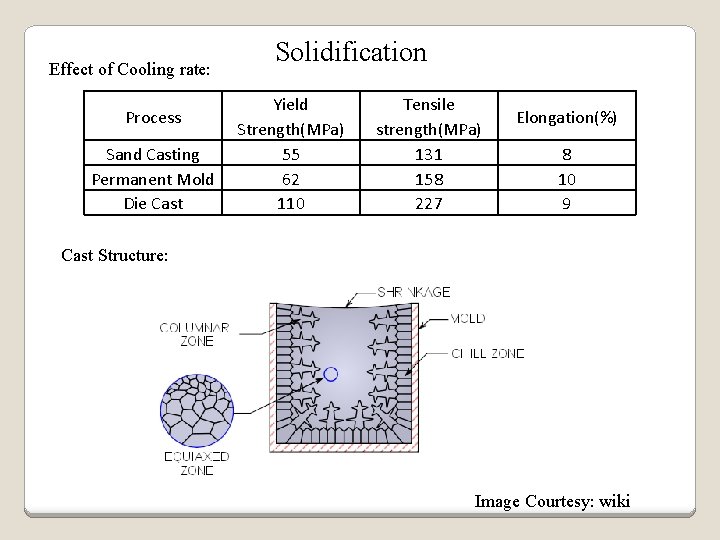
Effect of Cooling rate: Process Sand Casting Permanent Mold Die Cast Solidification Yield Strength(MPa) 55 62 110 Tensile strength(MPa) 131 158 227 Elongation(%) 8 10 9 Cast Structure: Image Courtesy: wiki
Removal of Casting: Shake out-vibrating machine Shot blasting-Removal of internal surface sand Trimming: Excess material-manual cutting, sawing. Trimming Press Inspection: Nobody is perfect…Sand Casting too…Defects…
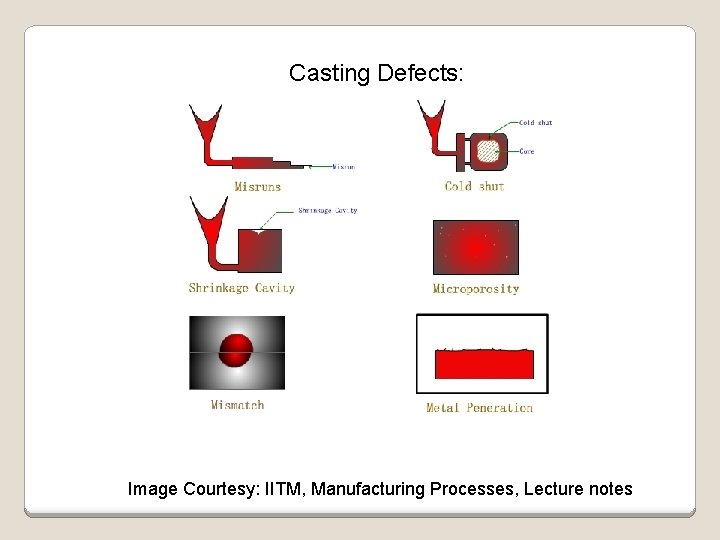
Casting Defects: Image Courtesy: IITM, Manufacturing Processes, Lecture notes
Different Sand Casting Processes: Green Sand Casting: 88% silica sand, 9% clay, 3% water CO 2 Molding: Sodium Silicate(3 -6%)-CO 2 flow- Strength Gain Shell Molding: Silica Sand + Thermo setting phenolic resin+ heat sensitive liquid catalystshot on preheated metal pattern-shell formation
Summary: Includes : Casting=PMPCRI Sand Casting -versatile process -produce almost all size & shape of components -poor surface finish and dimensional accuracy. Sand Casting Methods : Green Sand, CO 2 sand , Shell
Acknowledgements: 1. Materials and Processes in Manufacturing, J T Black and Ronald A Cohser, 10 th edition. 2. Assistant Professor M P Gururajan http: //mogadalai. wordpress. com/2006/01/14/somethoughts-on-making-presentations/

Thank you…
- Slides: 17