
HOLY DAYS Hinduism Hinduism marks its holy days
- Slides: 13
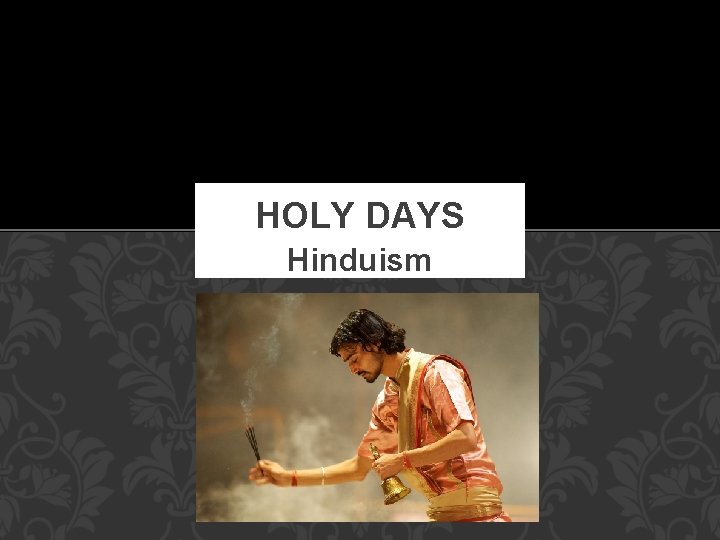
HOLY DAYS Hinduism
Hinduism marks its holy days by the months and years of the moon, as do many other world religions. Hindus follow two different calendars – the Vikram calendar, used in northern India, and the Shalivahana calendar, used in southern India. The calendars begin with different phases of the moon and therefore the New Year is calculated differently. In northern India New Year is celebrated around October/November, whereas in southern India the date falls around March/April. The variety and diversity within Hinduism is also reflected in the number of festivals that are celebrated.
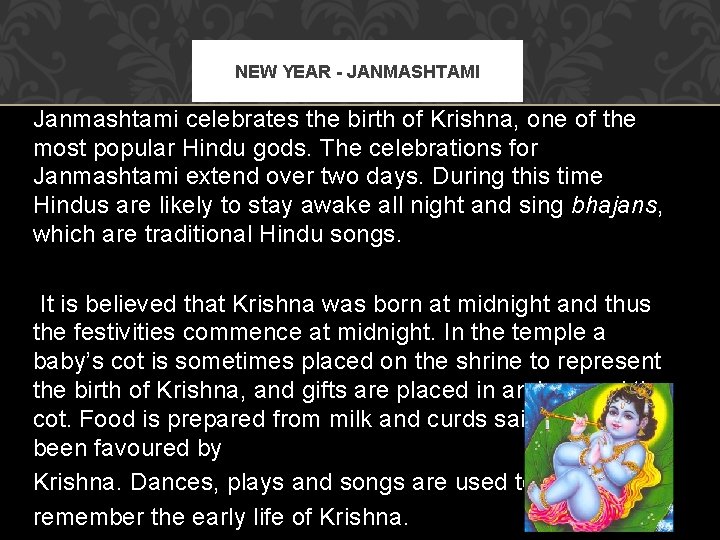
NEW YEAR - JANMASHTAMI Janmashtami celebrates the birth of Krishna, one of the most popular Hindu gods. The celebrations for Janmashtami extend over two days. During this time Hindus are likely to stay awake all night and sing bhajans, which are traditional Hindu songs. It is believed that Krishna was born at midnight and thus the festivities commence at midnight. In the temple a baby’s cot is sometimes placed on the shrine to represent the birth of Krishna, and gifts are placed in and around the cot. Food is prepared from milk and curds said to have been favoured by Krishna. Dances, plays and songs are used to remember the early life of Krishna.
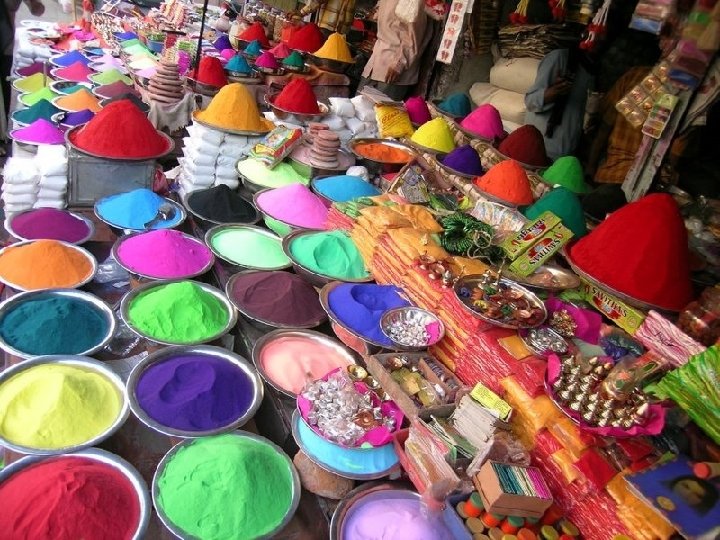
HOLI Holi celebrates the coming of spring, and is therefore a seasonal feast. The holy day celebrates family, happiness and friendship. Bonfires are lit the night before Holi and grains, chick peas and coconuts are roasted. The roasted grains are called ‘Holuk’, which is where the festival derives its name. Holi is also called the festival of colour because at this time people throw coloured powders on each other. The idea of throwing the powder is to break the usual rules and also the barriers between rank and caste. The festival thus unites families and the wider community, and celebrates the triumph of good over evil.
RAKSHA BANDAN Raksha Bandhan is the Hindu festival that celebrates loyalty and love. The word Raksha means protection, whilst Bandhan is the verb ‘to tie’. During the festival wives, sisters and girlfriends tie a rakhi, a bracelet made of interwoven red and gold threads, around the wrist of their brother, husband or boyfriend as a sign of spiritual protection. The protection is believed to last for the year. When a rakhi is tied to the arm of a male they are bound to care for the woman. The tying of the bracelet links to the myth of Indra’s wife Sachi who prayed over a thread and then tied it to Indra’s arm before he went into battle.
NAVARATRI Navaratri, or Nine Nights, is one of the greatest Hindu festivals. It symbolises the triumph of good over evil and takes place at the beginning of October around harvest time. Navratri is also known as Durga Puja. During this festival Durga, Lakshmi and Saraswati are worshipped as three different embodiments of Shakti, the Mother Goddess, or cosmic energy. Durga is the goddess of courage and strength, Lakshmi is the goddess of wealth, and Sarasvati is the goddess of learning and the arts. In many homes a special shrine is created and puja is performed twice daily. An oil lamp burns on the shrine for the
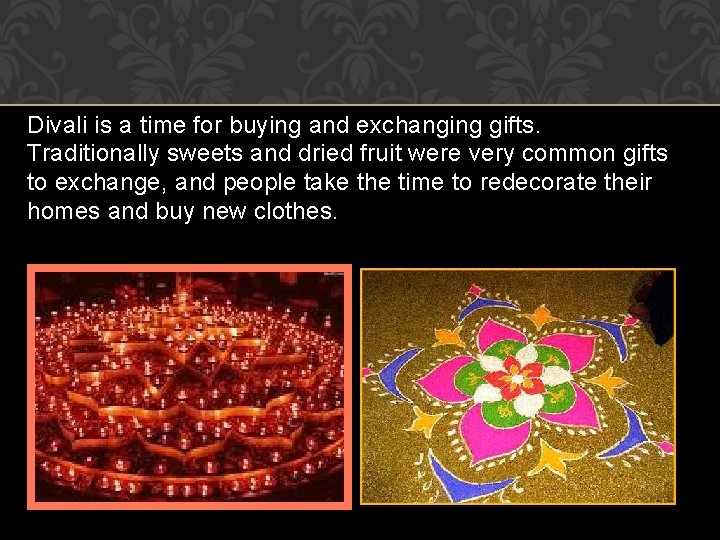
DIVALI Divali is one of the most popular festivals in Hinduism. It is known as the festival of light and is celebrated at the beginning of winter, around October/November. The festival celebrates the victory of good over evil, light over darkness and knowledge over ignorance, although the actual legends that go with the festival are different around the country. One legend commemorated at Divali is the safe return of Rama and Sita, a myth heard in the Ramayana, when people lit the way home for them. During the five day festival houses are decorated with thousands of oil lights (diwas) and rangoli floor patterns. At this time it is also believed that the goddess Lakshmi visits the earth to bring prosperity and success, so homes and cleaned and lamps lit so she knows which houses to bless.
Divali is a time for buying and exchanging gifts. Traditionally sweets and dried fruit were very common gifts to exchange, and people take the time to redecorate their homes and buy new clothes.
MAHASHIVRATRI Mahashivratri is a Hindu festival dedicated to Shiva, one of the deities of the Hindu Trinity. One of the myths or legends linked to the festival is the story of how demons were planning to use poison to kill the population of the world. Shiva drank the poison, which turned his neck blue, and thus humanity was saved. While most Hindu festivals are celebrated during the day, Mahashivratri is celebrated during the night and day that come just before the new moon. Night therefore represents evil, injustice, ignorance, sin, violence, and misfortune. Unmarried women keep a vigil during the night and repeat the name of Shiva. They also offer flowers and
FURTHER INFORMATION http: //hinduism. iskcon. org/ http: //www. holihangama. com/about/index. html http: //www. bbc. co. uk/schools/religion/hinduism/diwali. shtml http: //www. diwalifestival. org http: //www. raksha-bandhan. com http: //extranet. ealingclc. net/reresources/Days/Hindu/Krishna. htm http: //www. ochs. org. uk/
REFERENCES Goldburg, Peta. Investigating World Religions. Cambridge University Press, New York, 2009. http: //www. bbc. co. uk/religions/hinduism/