
Hollands RIASEC Theory Kajal and Nicolette Hollands RIASEC

- Slides: 6
Holland’s RIASEC Theory Kajal and Nicolette
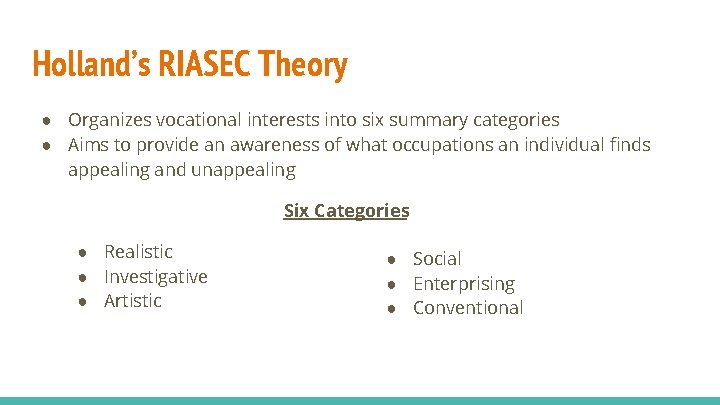
Holland’s RIASEC Theory ● Organizes vocational interests into six summary categories ● Aims to provide an awareness of what occupations an individual finds appealing and unappealing Six Categories ● Realistic ● Investigative ● Artistic ● Social ● Enterprising ● Conventional
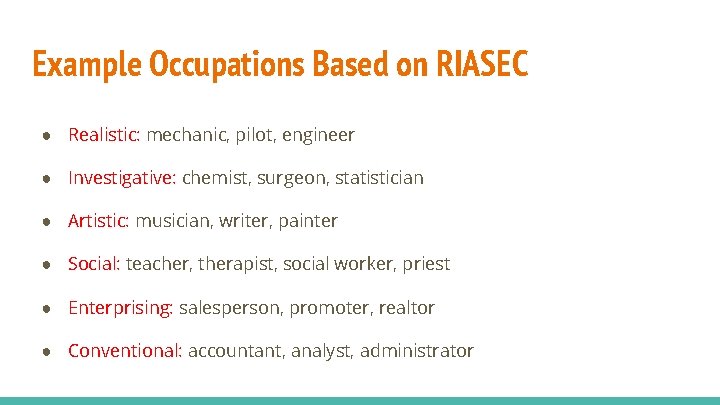
Example Occupations Based on RIASEC ● Realistic: mechanic, pilot, engineer ● Investigative: chemist, surgeon, statistician ● Artistic: musician, writer, painter ● Social: teacher, therapist, social worker, priest ● Enterprising: salesperson, promoter, realtor ● Conventional: accountant, analyst, administrator
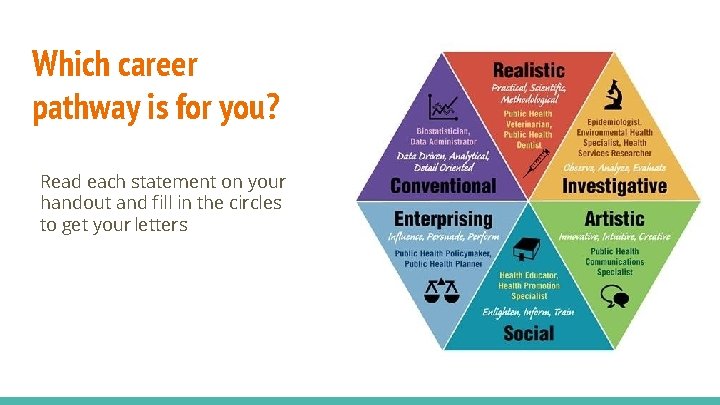
Which career pathway is for you? Read each statement on your handout and fill in the circles to get your letters
How dissimilar or similar are your letters in relation to the rest of the class?
What do your letters mean? ● These are Holland’s codes, and they are formed by rank-ordering the letters from highest to lowest response ○ Typically focus on three highest letters ● What do they tell us? ○ ○ People with similar codes show similar patterns of vocational preference and generally report better satisfaction and performance in similar occupational environments Illustrates the importance of congruence between Holland’s codes for the person and the job in question ■ Predictor: degree of fit between a person’s code and the job code ■ Criterion: satisfaction, performance