
Holistic Worker Model in the Social Care setting
- Slides: 15
Holistic Worker Model in the Social Care setting Julie Bowler Nottingham City. Care Holistic Worker Project Manager Shelley Aldridge Nottingham City. Care Team Manager – Health Reablement support team
Current Holistic Worker model • Health Education East Midlands (HEEM) funding awarded Dec 2016 to Dec 2017 • Recently awarded an additional year via STP funding • Part of integrated health and social care programme • Working across Nottingham City and Nottinghamshire County
Identified need for change Ø Services more cost effective Ø Cut down on amount of assessments by multiple staff Ø More timely interventions Ø Less fragmented care and more joined up working across Health and Social Care Ø Less visits as one person can do more within a visit Ø Less ‘telling their story’ for citizens
Aims The Holistic Worker aims to improve service user experience by providing a more seamless provision of care from a multi skilled workforce The model equips staff with a wider understanding of a range of disciplines outside of initial expertise where they can use their existing and new skills combined more effectively across health and social care needs Service users benefit from the improved confidence levels of staff who feel better equipped to manage unexpected situations and are able to undertake small procedures or quickly and effectively refer on
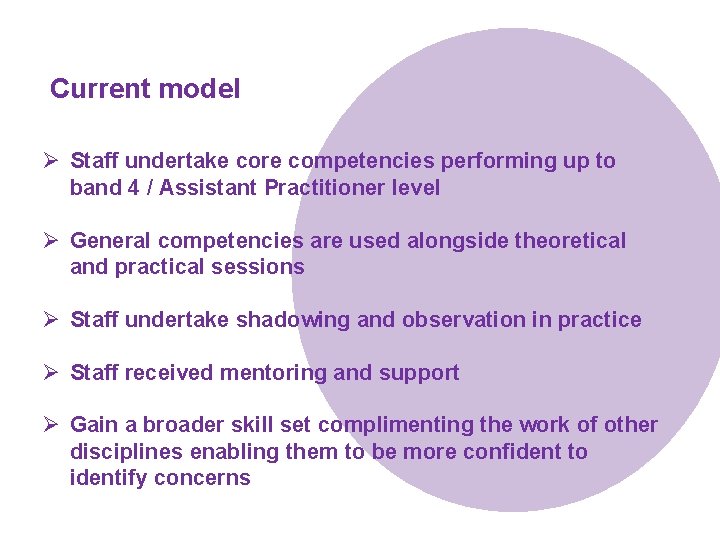
Current model Ø Staff undertake core competencies performing up to band 4 / Assistant Practitioner level Ø General competencies are used alongside theoretical and practical sessions Ø Staff undertake shadowing and observation in practice Ø Staff received mentoring and support Ø Gain a broader skill set complimenting the work of other disciplines enabling them to be more confident to identify concerns
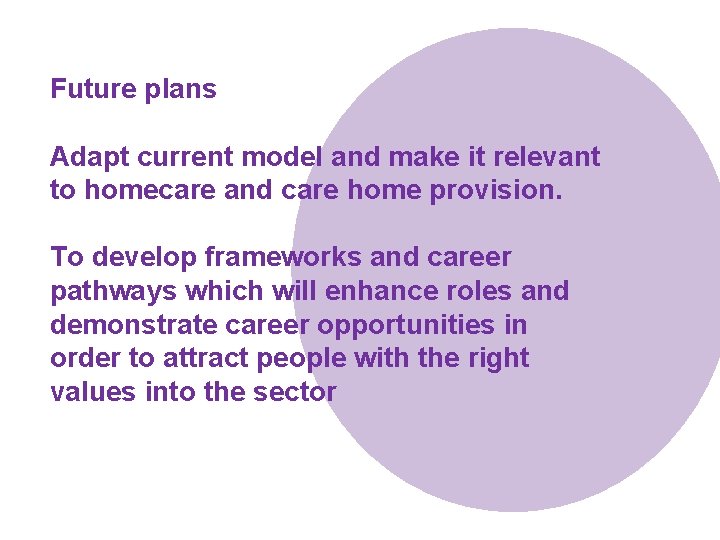
Future plans Adapt current model and make it relevant to homecare and care home provision. To develop frameworks and career pathways which will enhance roles and demonstrate career opportunities in order to attract people with the right values into the sector
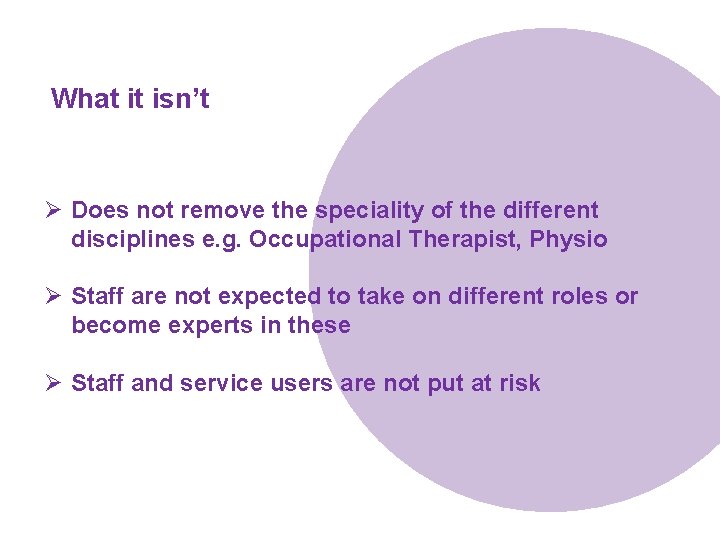
What it isn’t Ø Does not remove the speciality of the different disciplines e. g. Occupational Therapist, Physio Ø Staff are not expected to take on different roles or become experts in these Ø Staff and service users are not put at risk
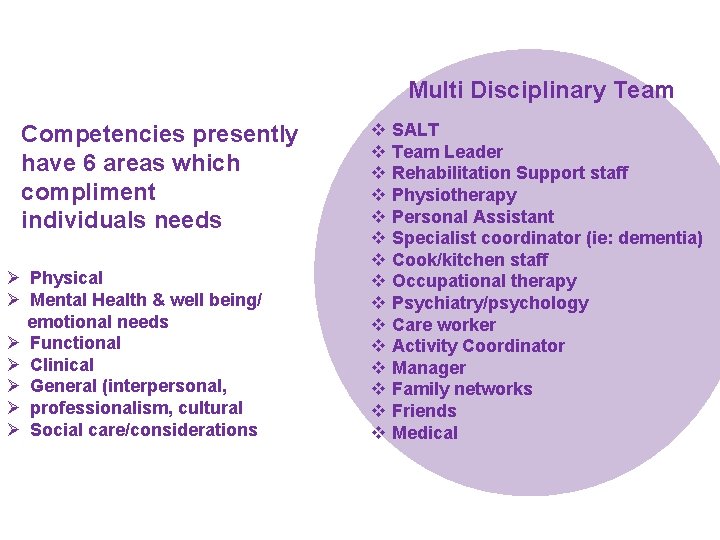
Multi Disciplinary Team Competencies presently have 6 areas which compliment individuals needs Ø Physical Ø Mental Health & well being/ emotional needs Ø Functional Ø Clinical Ø General (interpersonal, Ø professionalism, cultural Ø Social care/considerations v v v v SALT Team Leader Rehabilitation Support staff Physiotherapy Personal Assistant Specialist coordinator (ie: dementia) Cook/kitchen staff Occupational therapy Psychiatry/psychology Care worker Activity Coordinator Manager Family networks Friends Medical
CASE STUDY Mrs C is an elderly lady who previously lived with her husband in a 2 x storey house but has come directly from hospital. She is a frequent faller, has dementia and recently fractured her left wrist whilst falling at home; there were no carers involved although her husband was supported by family popping in occasionally. Mrs C has frequent urine infections identified and is on multiple medications
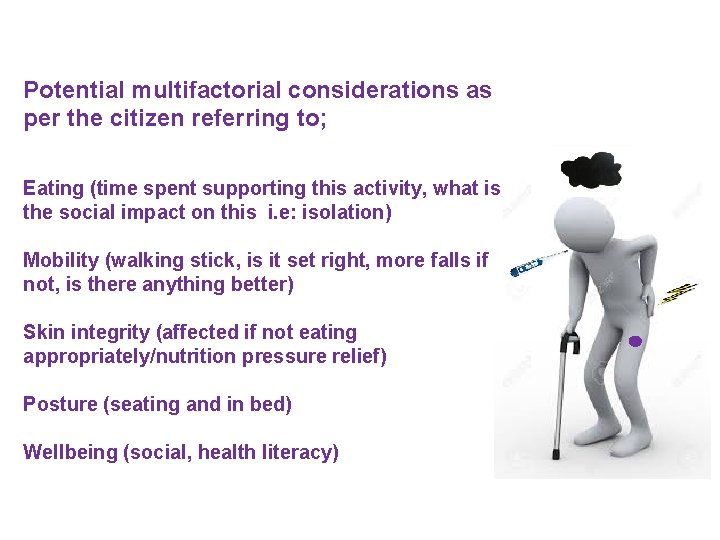
Potential multifactorial considerations as per the citizen referring to; Eating (time spent supporting this activity, what is the social impact on this i. e: isolation) Mobility (walking stick, is it set right, more falls if not, is there anything better) Skin integrity (affected if not eating appropriately/nutrition pressure relief) Posture (seating and in bed) Wellbeing (social, health literacy)
Outcomes Ø Better communication within the team Ø Greater skill range within teams and across organisations Ø Fewer interventions by less people leading to better outcomes and experience for all Ø Early recognition of any changes leading to earlier intervention Ø Preventing deterioration and possible hospital / care home admission Ø Identification of gaps in service delivery Ø Positive outcomes for staff, greater staff satisfaction
How could Holistic Worker work within the independent Social Care Sector to ensure services are responsive to need and make the best use of skills, maximise resources and increase partnership working. New ways of working
Questions to consider? v. How could the roles of home care / care home teams be developed to work more holistically? v. What would HW competencies look like with care homes / home care v. How would staff be mentored and undertake shadowing v. Benefits? v. Barriers?
When I know what you know I can do more!
Any questions? julie. bowler 4@nhs. net 0115 8839666 shelleyaldridge@nhs. net 0115 8838319