
Holistic SelfCare Managing Stress and Promoting Wellbeing Michael
Holistic Self-Care: Managing Stress and Promoting Wellbeing Michael J. Sheridan, MSW, Ph. D Special Advisor for Diversity & Wellness Programs michael. sheridan@nih. gov GPP & GSOAR June 17, 2017
Today, we’re going to… u Talk about components of Holistic Self-Care: u Short-term and Long-term Effects of Stress u Responding vs. Reacting to Stress u Role of Mindfulness in Self-Care u Holistic Self-Care Assessment & Self-Care Plan u Cultivating Self-Compassion u Do some exercises: u Brief Mindfulness Meditation u Self-Care Assessment and Plan u Self-Compassion Gesture
Impact of Stress & Stress Management
Impact of Stress u Stress is a part of life – but that doesn’t mean we should ignore it! u Affects every major body system we have (cardiovascular, nervous, gastrointestinal, endocrine, musculoskeletal, respiratory, reproductive). (See Handout #1) u Shows up as physical, emotional, cognitive, and behavioral stress symptoms and contributes to a myriad of physical & mental health problems.
Rethinking Our Approach to Stress u Need to start taking stress symptoms seriously – as valuable messages to pay attention to! u Have 3 highly tuned “messengers” that can help: u Body (physical sensations) u Mind (thoughts/beliefs/images) u Emotions (mood/feelings) u Can learn to respond vs. react to stress!
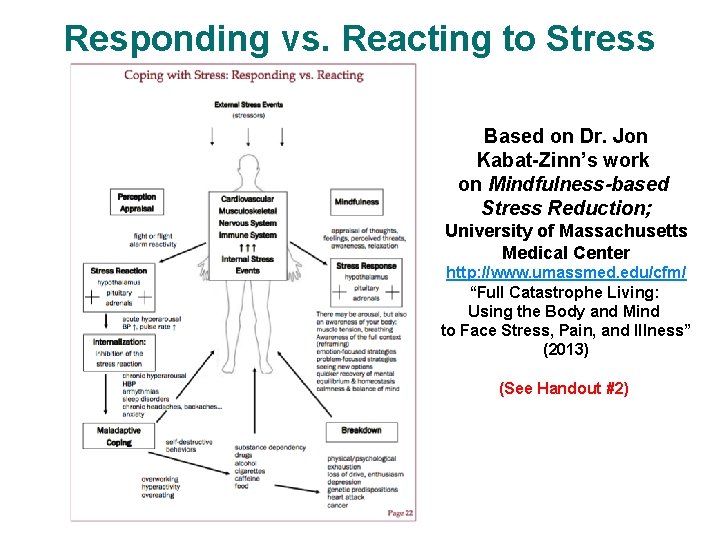
Responding vs. Reacting to Stress Based on Dr. Jon Kabat-Zinn’s work on Mindfulness-based Stress Reduction; University of Massachusetts Medical Center http: //www. umassmed. edu/cfm/ “Full Catastrophe Living: Using the Body and Mind to Face Stress, Pain, and Illness” (2013) (See Handout #2)
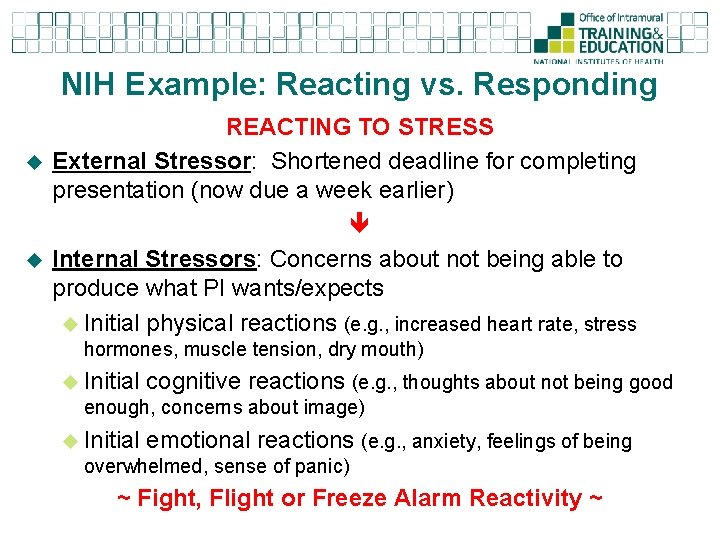
NIH Example: Reacting vs. Responding u u REACTING TO STRESS External Stressor: Shortened deadline for completing presentation (now due a week earlier) Internal Stressors: Concerns about not being able to produce what PI wants/expects u Initial physical reactions (e. g. , increased heart rate, stress hormones, muscle tension, dry mouth) u Initial cognitive reactions (e. g. , thoughts about not being good enough, concerns about image) u Initial emotional reactions (e. g. , anxiety, feelings of being overwhelmed, sense of panic) ~ Fight, Flight or Freeze Alarm Reactivity ~
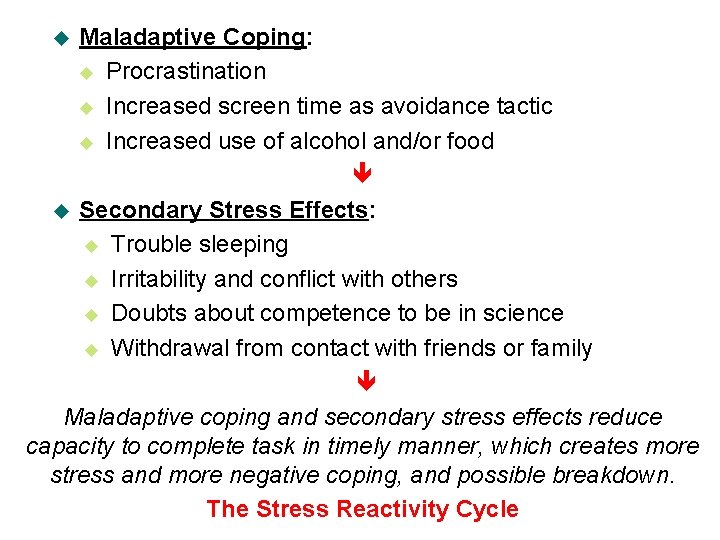
Maladaptive Coping: u Procrastination u Increased screen time as avoidance tactic u Increased use of alcohol and/or food u Secondary Stress Effects: u Trouble sleeping u Irritability and conflict with others u Doubts about competence to be in science u Withdrawal from contact with friends or family Maladaptive coping and secondary stress effects reduce capacity to complete task in timely manner, which creates more stress and more negative coping, and possible breakdown. The Stress Reactivity Cycle u
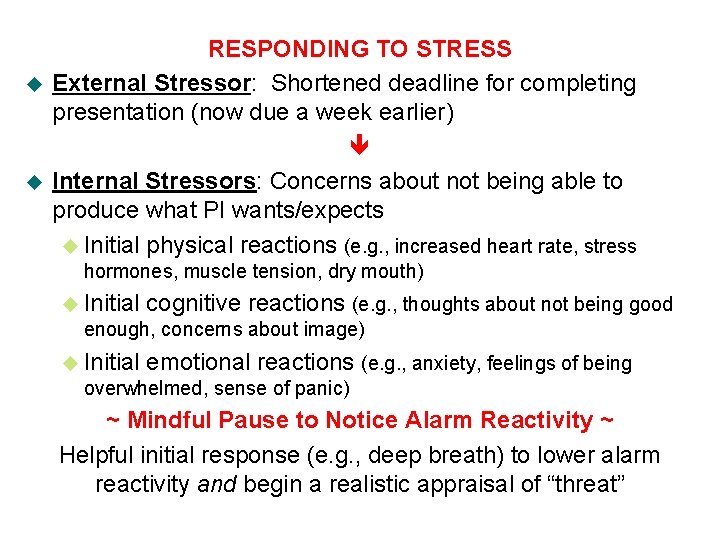
u u RESPONDING TO STRESS External Stressor: Shortened deadline for completing presentation (now due a week earlier) Internal Stressors: Concerns about not being able to produce what PI wants/expects u Initial physical reactions (e. g. , increased heart rate, stress hormones, muscle tension, dry mouth) u Initial cognitive reactions (e. g. , thoughts about not being good enough, concerns about image) u Initial emotional reactions (e. g. , anxiety, feelings of being overwhelmed, sense of panic) ~ Mindful Pause to Notice Alarm Reactivity ~ Helpful initial response (e. g. , deep breath) to lower alarm reactivity and begin a realistic appraisal of “threat”
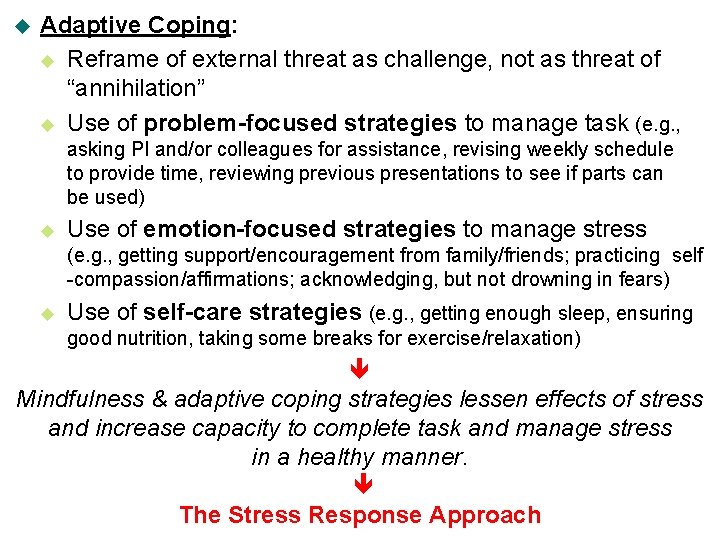
u Adaptive Coping: u Reframe of external threat as challenge, not as threat of “annihilation” u Use of problem-focused strategies to manage task (e. g. , asking PI and/or colleagues for assistance, revising weekly schedule to provide time, reviewing previous presentations to see if parts can be used) u Use of emotion-focused strategies to manage stress (e. g. , getting support/encouragement from family/friends; practicing self -compassion/affirmations; acknowledging, but not drowning in fears) u Use of self-care strategies (e. g. , getting enough sleep, ensuring good nutrition, taking some breaks for exercise/relaxation) Mindfulness & adaptive coping strategies lessen effects of stress and increase capacity to complete task and manage stress in a healthy manner. The Stress Response Approach
3 Quick Tips for Stress Prevention Throughout your day… u Stretch u Bre-e-athe u Get up and move! u Both stretching and breathing lower stress hormones & bring on the relaxation response. u Moving decreases negative effects of “sitting disease. ” http: //www. juststand. org/tabid/674/default. aspx
Mindfulness
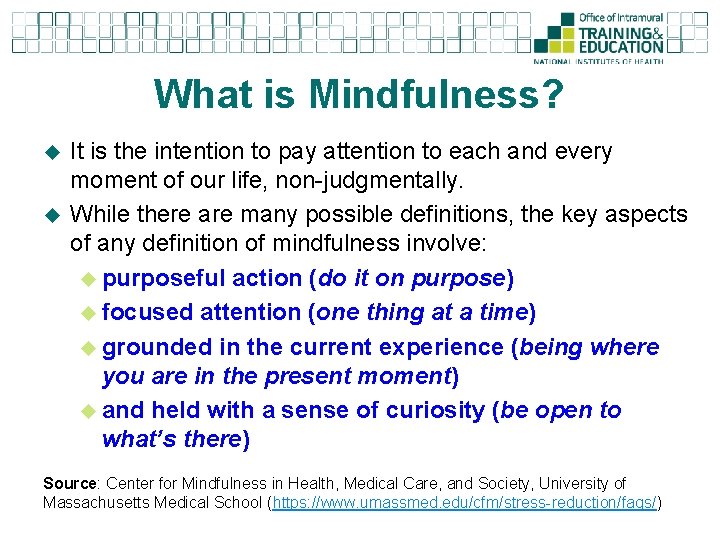
What is Mindfulness? u u It is the intention to pay attention to each and every moment of our life, non-judgmentally. While there are many possible definitions, the key aspects of any definition of mindfulness involve: u purposeful action (do it on purpose) u focused attention (one thing at a time) u grounded in the current experience (being where you are in the present moment) u and held with a sense of curiosity (be open to what’s there) Source: Center for Mindfulness in Health, Medical Care, and Society, University of Massachusetts Medical School (https: //www. umassmed. edu/cfm/stress-reduction/faqs/)
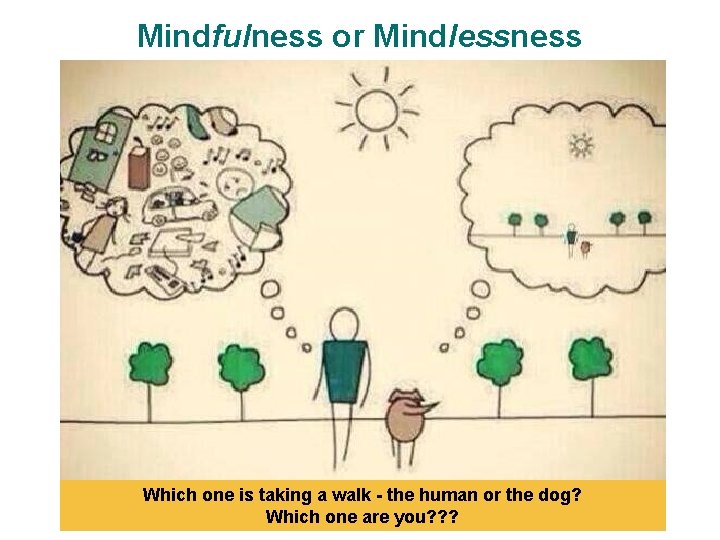
Mindfulness or Mindlessness Which one is taking a walk - the human or the dog? Which one are you? ? ?
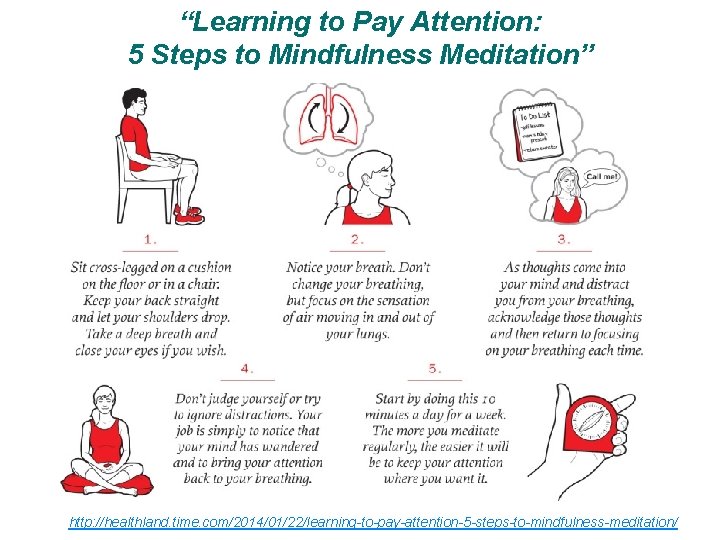
“Learning to Pay Attention: 5 Steps to Mindfulness Meditation” http: //healthland. time. com/2014/01/22/learning-to-pay-attention-5 -steps-to-mindfulness-meditation/
Brief Mindfulness Meditation Exercise (See Handout #3 for Everyday Mindfulness Exercises)
Holistic Self-Care
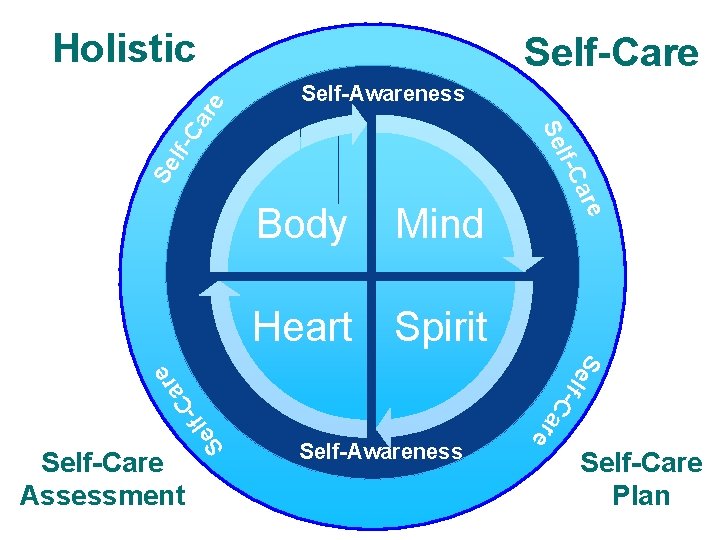
Self-Care Self-Awareness lf. Se Body Mind re a lf-C Se Ca re Holistic Heart Spirit l e S f-C e r a Se Self-Awareness lf. C a re Self-Care Assessment Self-Care Plan
Self-Care Assessment: “So How Am I Doing? ” Exercise u Complete the “So How Am I Doing? ” Assessment. u Then talk with your partner about the areas in which you think you are doing well and areas in which you could use some improvement.
Self-Care Plan: “My Self-Care Worksheet” Exercise u Choose one quadrant on the Self-Care Worksheet (Body, Mind, Heart, or Spirit) and fill in the activities for Current Practice and New Practice in this area. u Then flip the worksheet over to complete the 4 boxes on Barriers and Coping Strategies relative to your selected area. u Next, talk with your partner about what you’ve planned. u When you get home, complete the same process for the other three quadrants.
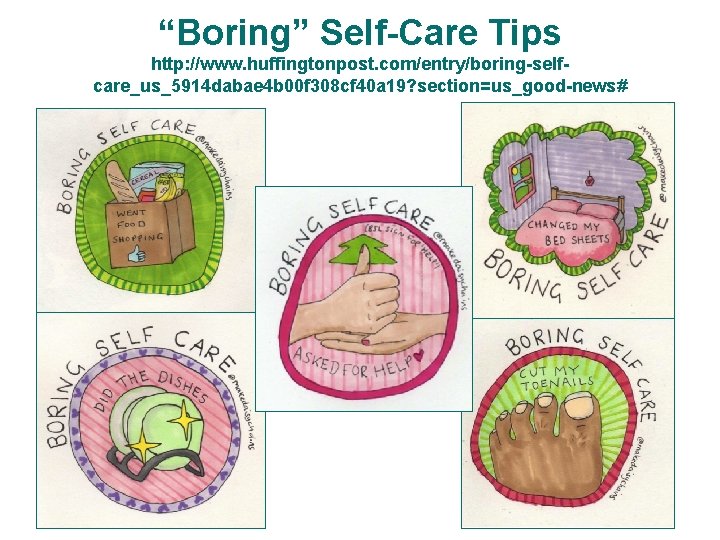
“Boring” Self-Care Tips http: //www. huffingtonpost. com/entry/boring-selfcare_us_5914 dabae 4 b 00 f 308 cf 40 a 19? section=us_good-news#
The Role of Self-Compassion
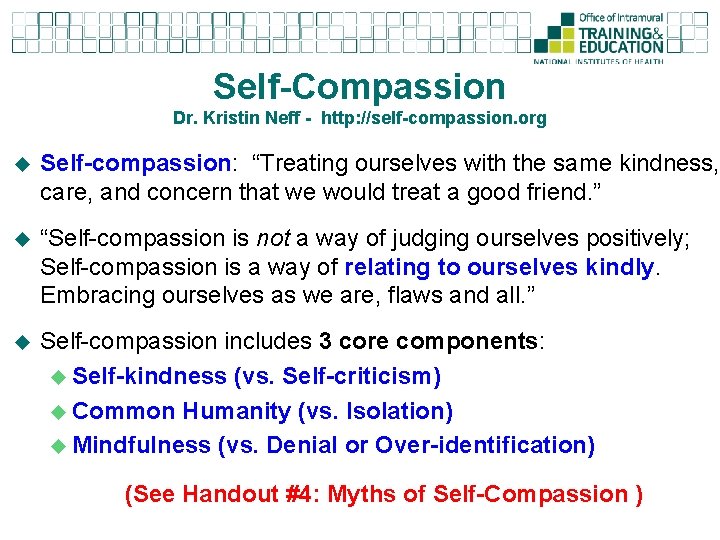
Self-Compassion Dr. Kristin Neff - http: //self-compassion. org u Self-compassion: “Treating ourselves with the same kindness, care, and concern that we would treat a good friend. ” u “Self-compassion is not a way of judging ourselves positively; Self-compassion is a way of relating to ourselves kindly. Embracing ourselves as we are, flaws and all. ” u Self-compassion includes 3 core components: u Self-kindness (vs. Self-criticism) u Common Humanity (vs. Isolation) u Mindfulness (vs. Denial or Over-identification) (See Handout #4: Myths of Self-Compassion )
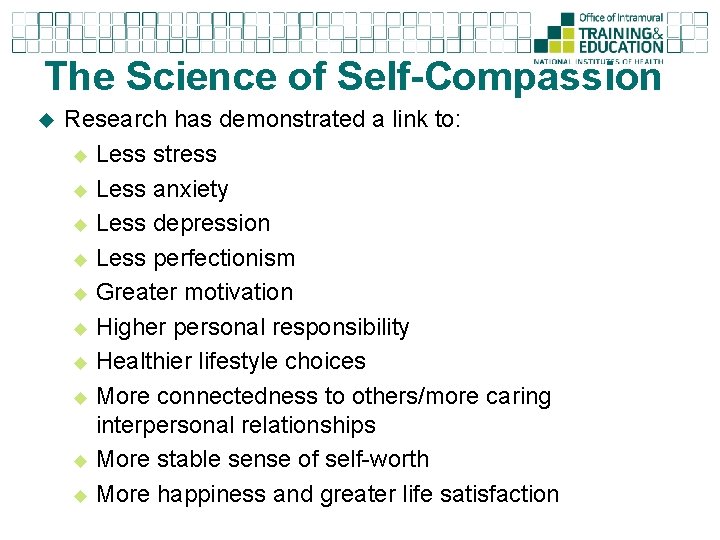
The Science of Self-Compassion u Research has demonstrated a link to: u Less stress u Less anxiety u Less depression u Less perfectionism u Greater motivation u Higher personal responsibility u Healthier lifestyle choices u More connectedness to others/more caring interpersonal relationships u More stable sense of self-worth u More happiness and greater life satisfaction
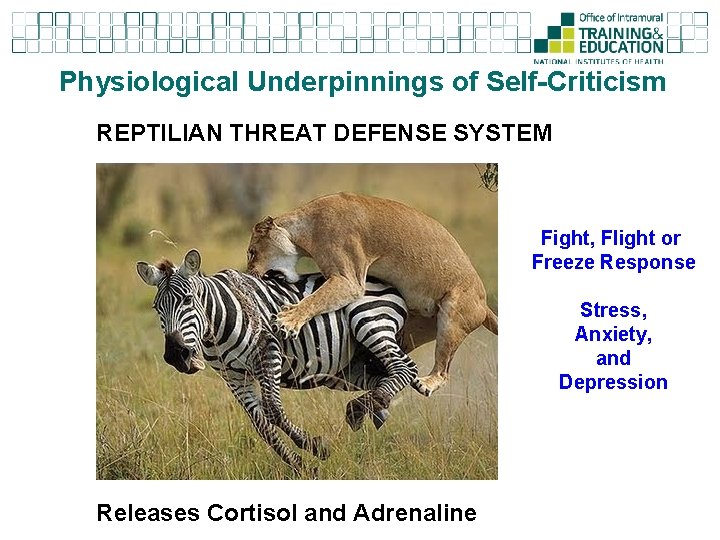
Physiological Underpinnings of Self-Criticism REPTILIAN THREAT DEFENSE SYSTEM Fight, Flight or Freeze Response Stress, Anxiety, and Depression Releases Cortisol and Adrenaline
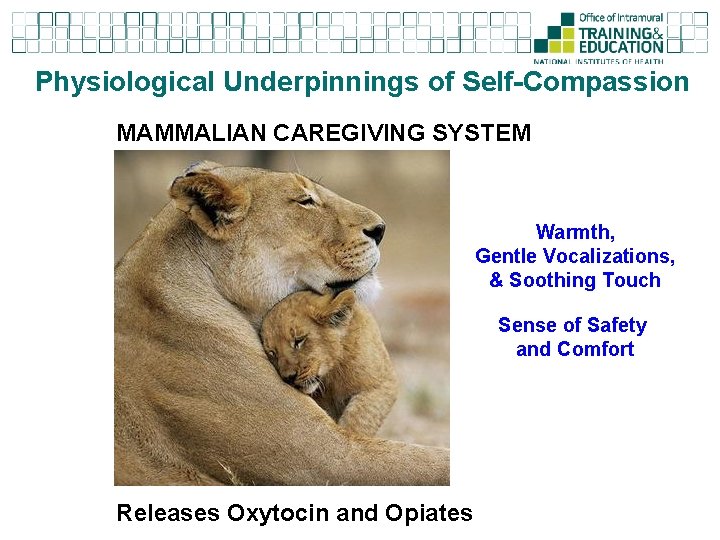
Physiological Underpinnings of Self-Compassion MAMMALIAN CAREGIVING SYSTEM Warmth, Gentle Vocalizations, & Soothing Touch Sense of Safety and Comfort Releases Oxytocin and Opiates
Self-Compassion Gesture Exercise
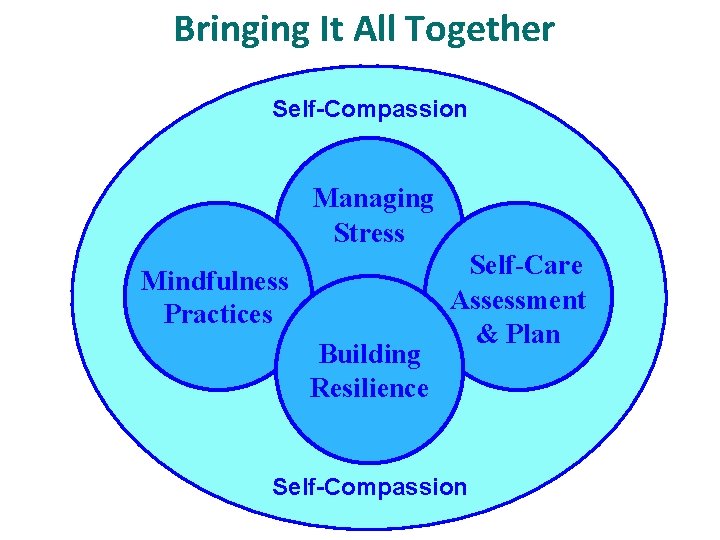
Bringing It All Together Self-Compassion Managing Stress Mindfulness Practices Building Resilience Self-Care Assessment & Plan Self-Compassion
OITE Wellness Resources OITE Library: Books on stress management and self-care Drop-in Mindfulness Meditation Group: Every Thursday, 5: 00 p. m. , Bldg. 10, Rm. 1 N 263 Blog Posts: https: //oitecareersblog. wordpress. com/ Wellness Advising: For information about individual consultation on wellness contact: michael. sheridan@nih. gov
Books & Online Resources for Stress Management & Wellbeing Center for Mindfulness in Medicine, Health Care, and Society, University of Massachusetts Medical School. http: //www. umassmed. edu/cfm/ u Graham, L. (2013). Bouncing back: Rewiring your brain for maximum resilience and wellbeing. Lovato, CA: World Library Press. u Hanson, R. (2013). Hardwiring happiness: The new brain science of contentment, calm, and confidence. New York, NY: Harmony. u Kabat-Zinn, J. (2013). Full catastrophe living: Using the body and mind to face stress, pain, and illness (2 nd ed. ). London, UK. Platkus. u Seligman, M. E. P. (1998). Learned optimism: How to change your mind and your life. New York, NY: Pocket Books/Simon & Schuster. u Free Online Mindfulness-Based Stress Reduction Program: http: //palousemindfulness. com/selfguided. MBSR_ataglance. html u “Mind Matters: 10 Tips for Handling Stress at Work” u http: //www. sciencemag. org/careers/2009/05/mind-matters-10 -minute-tools-managing-stress u Desk Stretches: www. webmd. com/fitness-exercise/stretching-exercises-at-your-desk-12 simple-tips? page=2 u u u Mindful Self-Compassion: http: //self-compassion. org Free Meditation APP: http: //www. calm. com Action for Happiness website: http: //www. actionforhappiness. org/
- Slides: 30