
HOL Blocking analysis based on Broadband Integrated Networks
HOL Blocking analysis based on: Broadband Integrated Networks by Mischa Schwartz. April 10, 2000 1
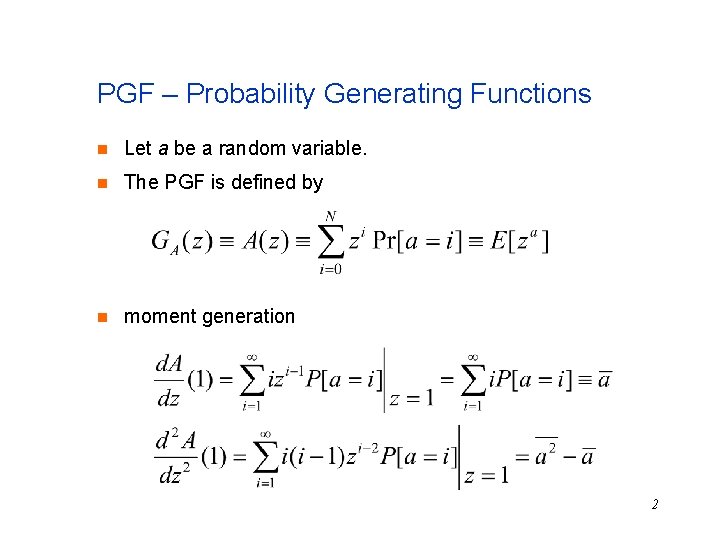
PGF – Probability Generating Functions n Let a be a random variable. n The PGF is defined by n moment generation 2
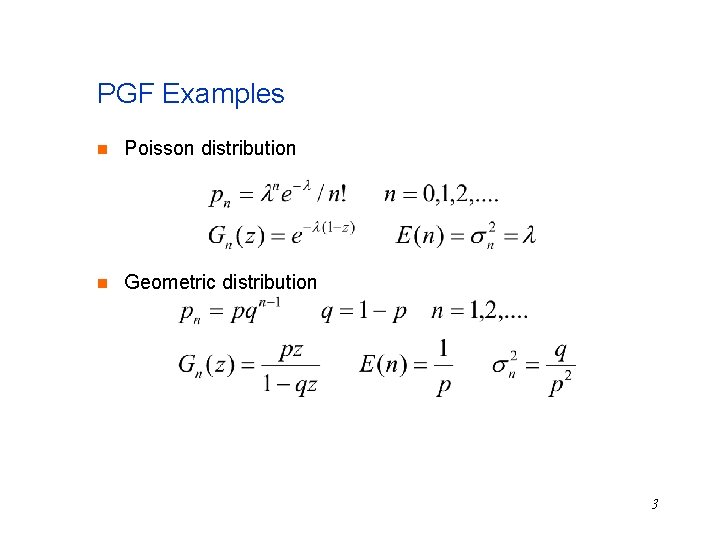
PGF Examples n Poisson distribution n Geometric distribution 3
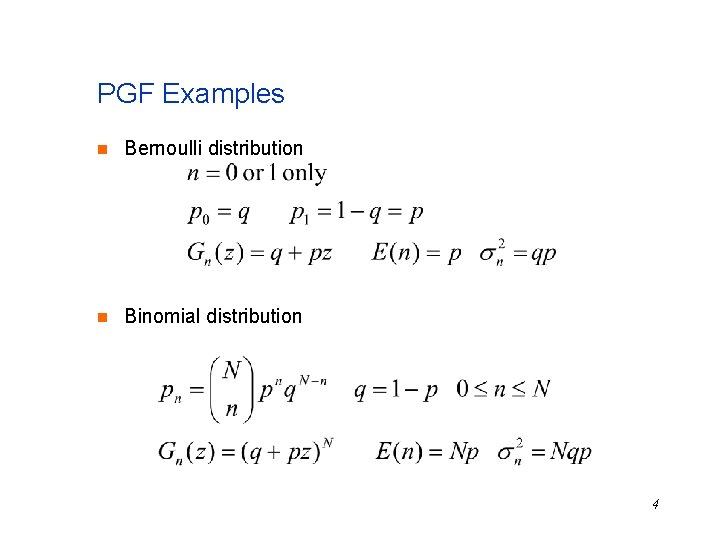
PGF Examples n Bernoulli distribution n Binomial distribution 4
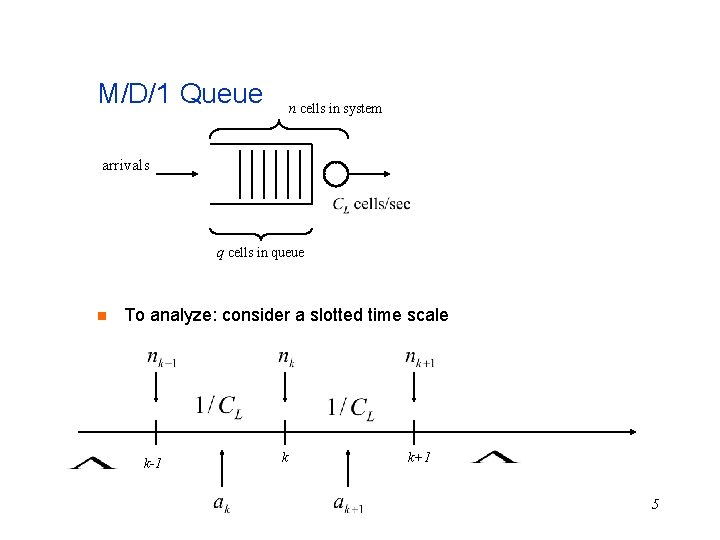
M/D/1 Queue n cells in system arrivals q cells in queue n To analyze: consider a slotted time scale k-1 k k+1 5
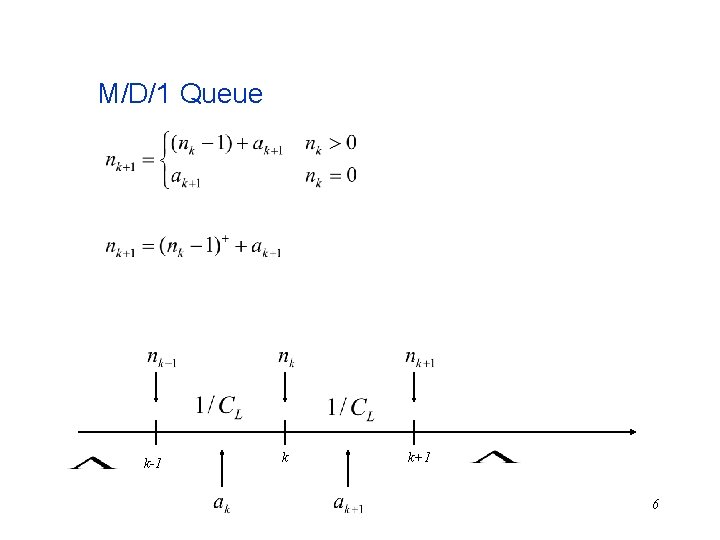
M/D/1 Queue k-1 k k+1 6
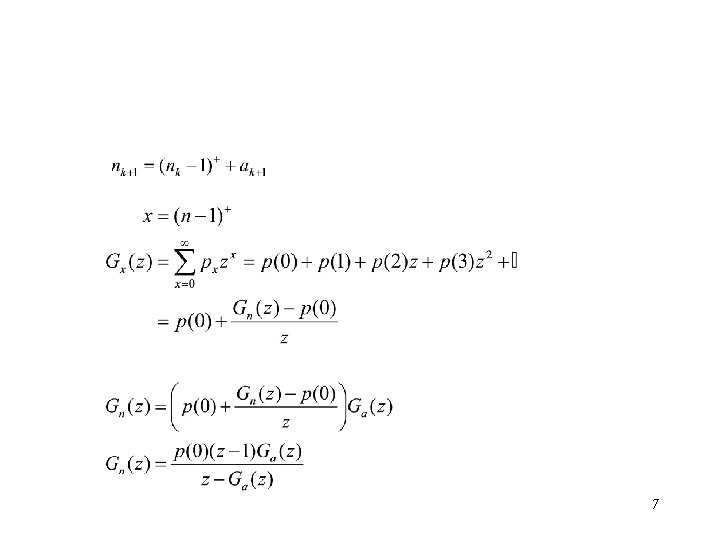
7
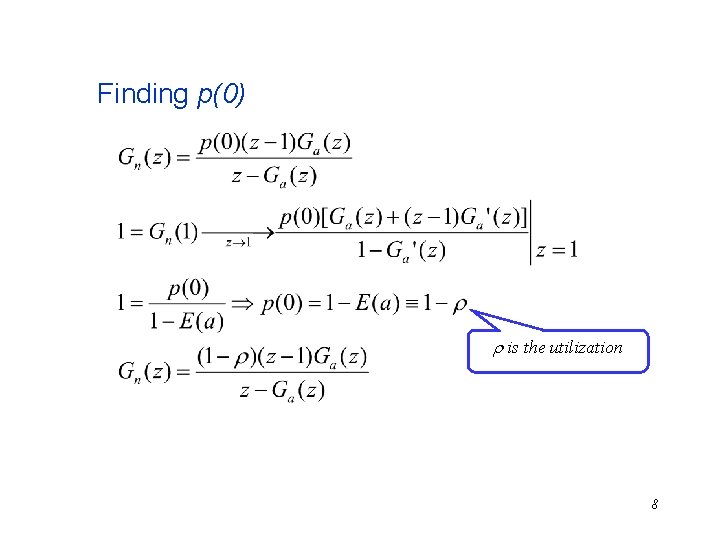
Finding p(0) is the utilization 8
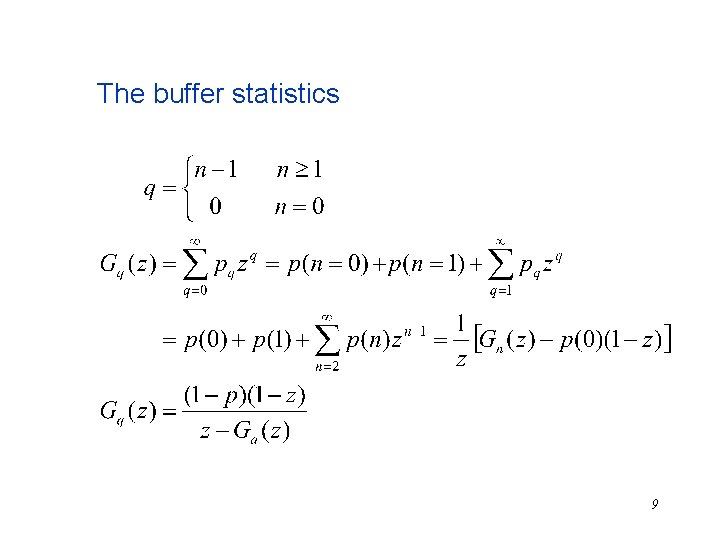
The buffer statistics 9
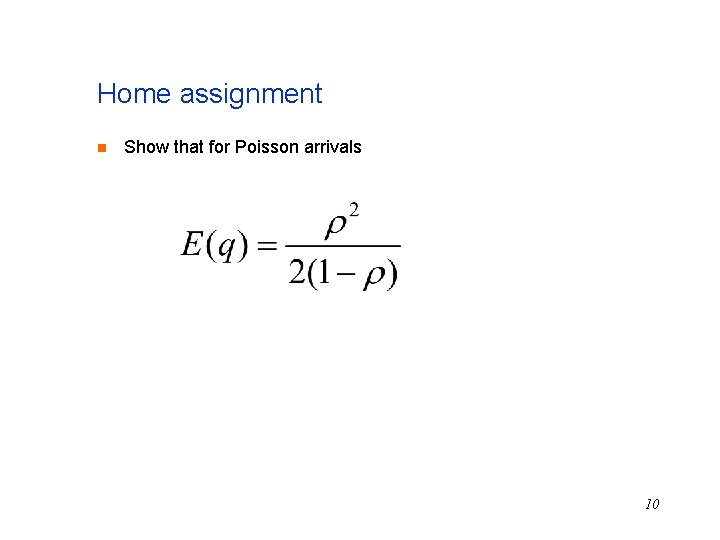
Home assignment n Show that for Poisson arrivals 10
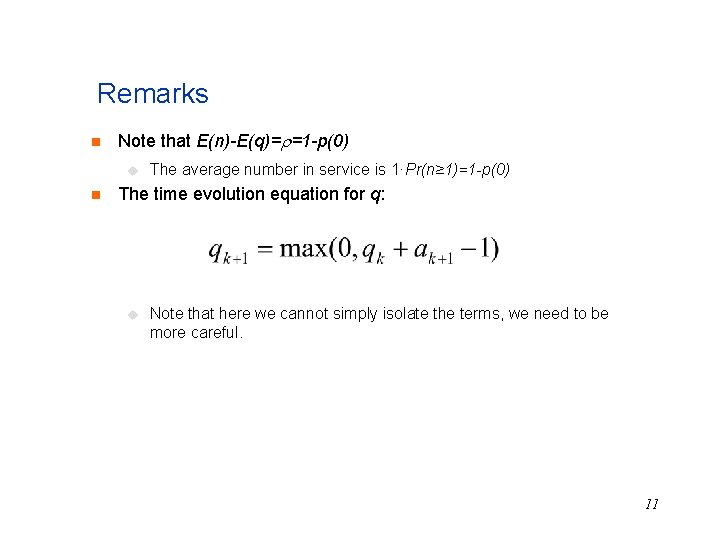
Remarks n Note that E(n)-E(q)= =1 -p(0) u n The average number in service is 1·Pr(n≥ 1)=1 -p(0) The time evolution equation for q: u Note that here we cannot simply isolate the terms, we need to be more careful. 11
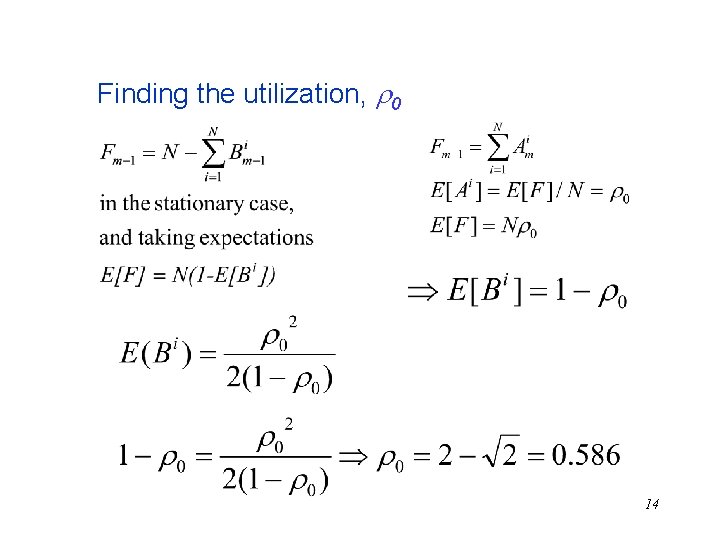
HOL blocking analysis at steady state n Assume Nx. N switch, destinations are uniformly distributed n Packet queues are always full. n Bim = number of packets at the end of time slot m that are blocked for input i. n Aim = number of packets destined to output i moving to the head of the line during the mth time slot at “free” input queues. n Fm = number of cells transmitted in time slot m. 12
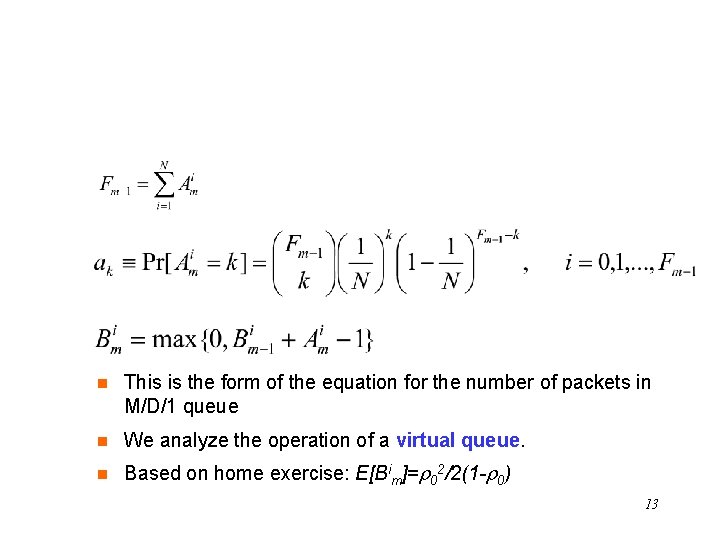
n This is the form of the equation for the number of packets in M/D/1 queue n We analyze the operation of a virtual queue. n Based on home exercise: E[Bim]= 02/2(1 - 0) 13
Finding the utilization, 0 14
- Slides: 14