
Hog Evaluation PARTS Top Hip Loin Blade Crest
Hog Evaluation
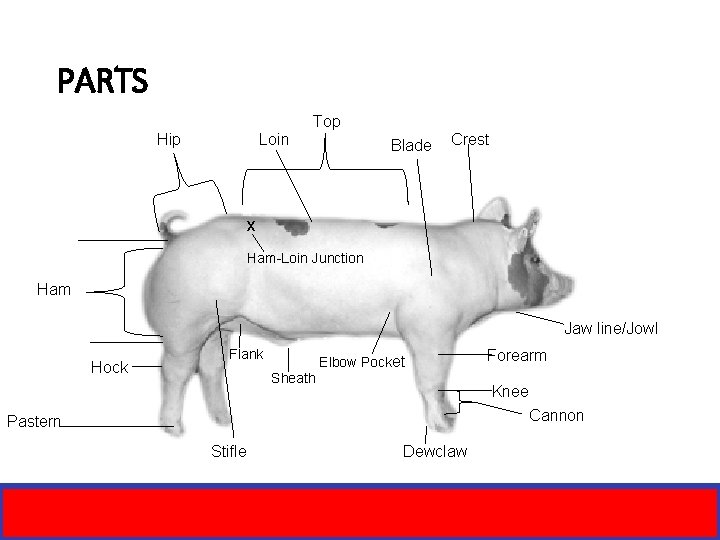
PARTS Top Hip Loin Blade Crest x Ham-Loin Junction Ham Jaw line/Jowl Hock Flank Elbow Pocket Sheath Forearm Knee Cannon Pastern Stifle Dewclaw
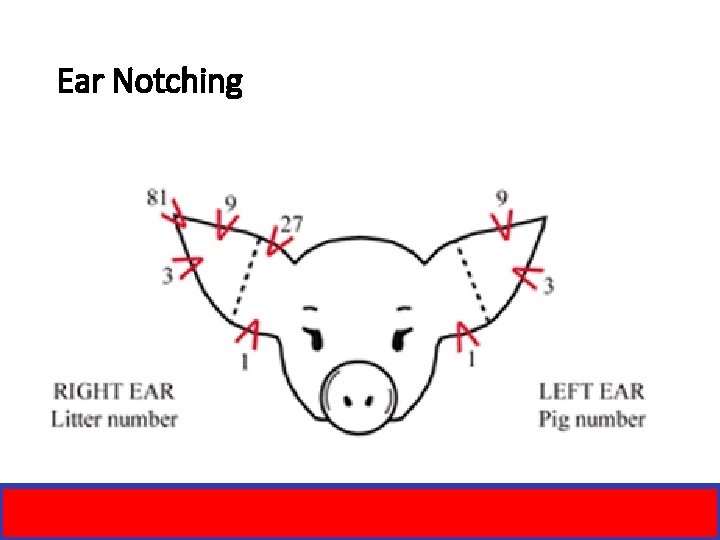
Ear Notching
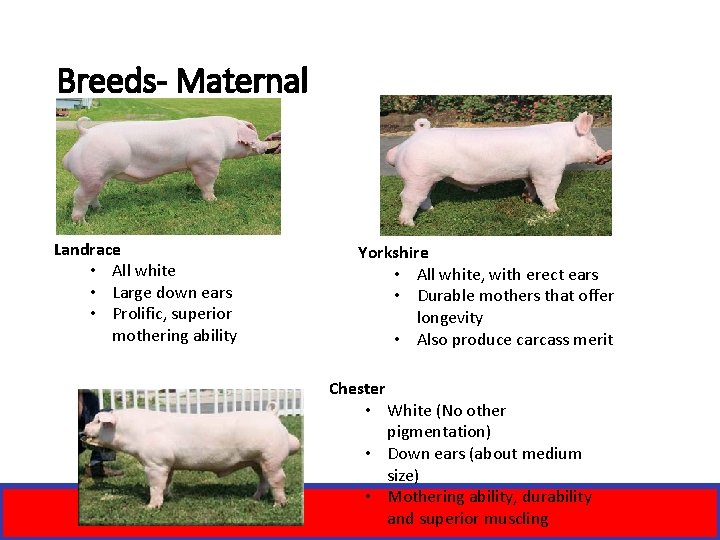
Breeds- Maternal Landrace • All white • Large down ears • Prolific, superior mothering ability Yorkshire • All white, with erect ears • Durable mothers that offer longevity • Also produce carcass merit Chester • White (No other pigmentation) • Down ears (about medium size) • Mothering ability, durability and superior muscling
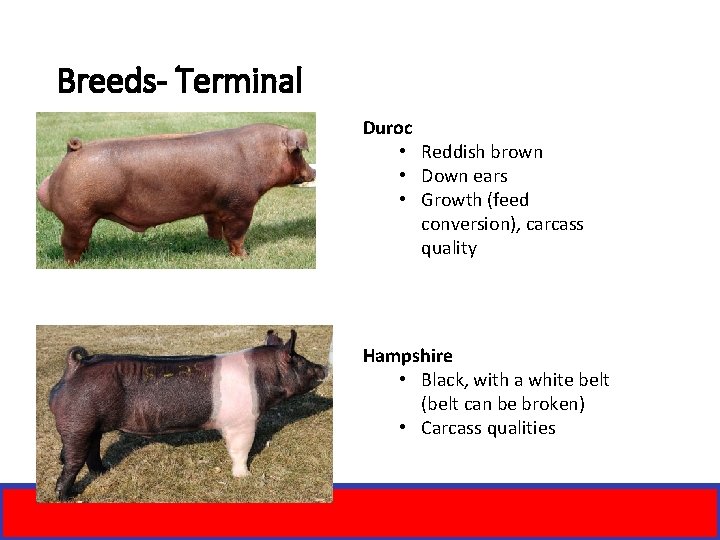
Breeds- Terminal Duroc • Reddish brown • Down ears • Growth (feed conversion), carcass quality Hampshire • Black, with a white belt (belt can be broken) • Carcass qualities
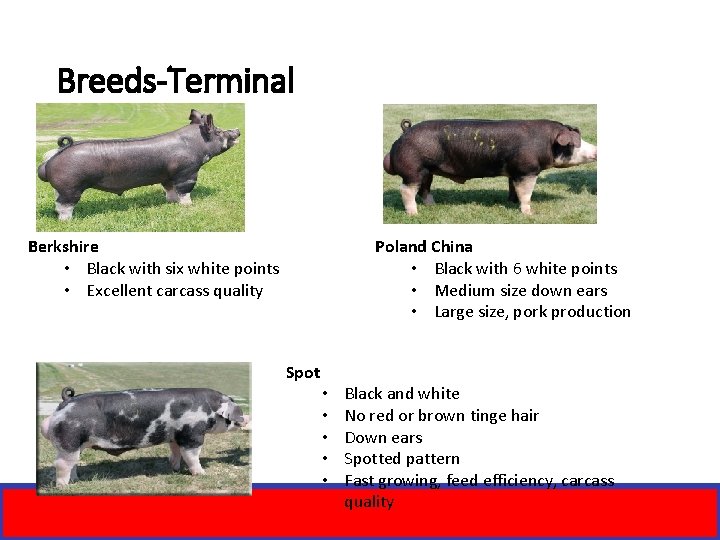
Breeds-Terminal Berkshire • Black with six white points • Excellent carcass quality Poland China • Black with 6 white points • Medium size down ears • Large size, pork production Spot • • • Black and white No red or brown tinge hair Down ears Spotted pattern Fast growing, feed efficiency, carcass quality
Market Hog Selection Criteria • Muscle • Optimal Leanness • Production Orientation/Weight • Skeletal width and dimension • Gain ability • Skeletal Correctness • Balance and Design
Product Merit • Areas to examine muscle: (front to back) • Forearm • Behind the blades • Loin • Ham-Loin Junction • Hip • Ham • Stifle • Base Width
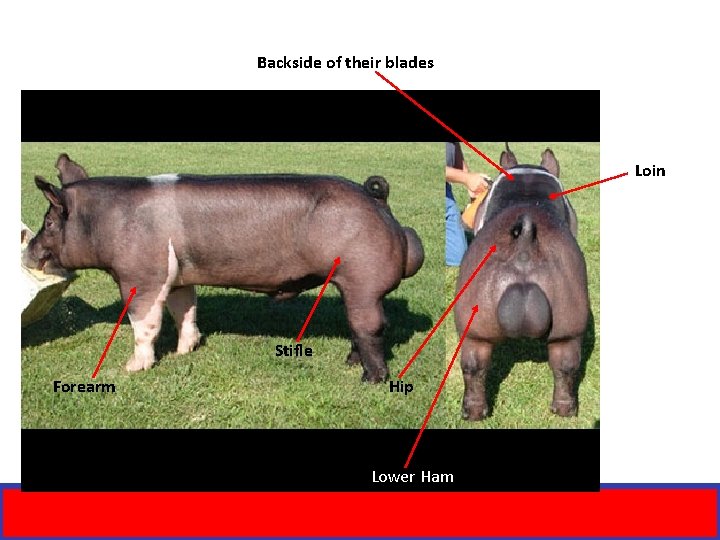
Backside of their blades Loin Insert 2 pictures of heavy muscled hogs Stifle Forearm Hip Lower Ham
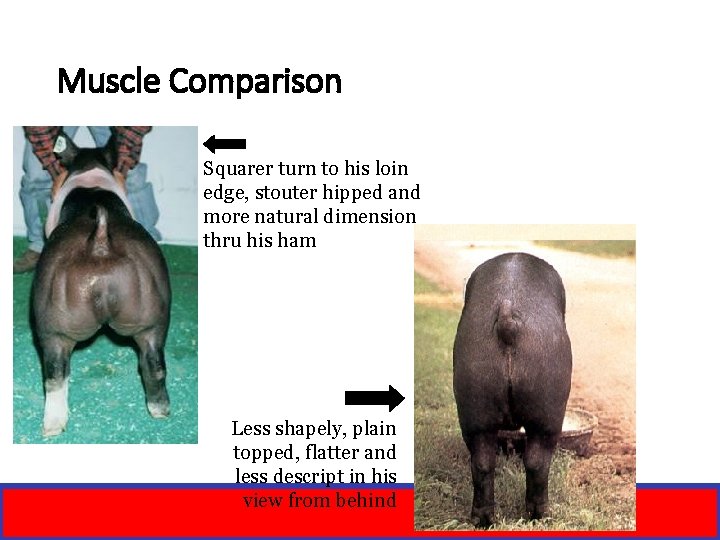
Muscle Comparison Squarer turn to his loin edge, stouter hipped and more natural dimension thru his ham Less shapely, plain topped, flatter and less descript in his view from behind
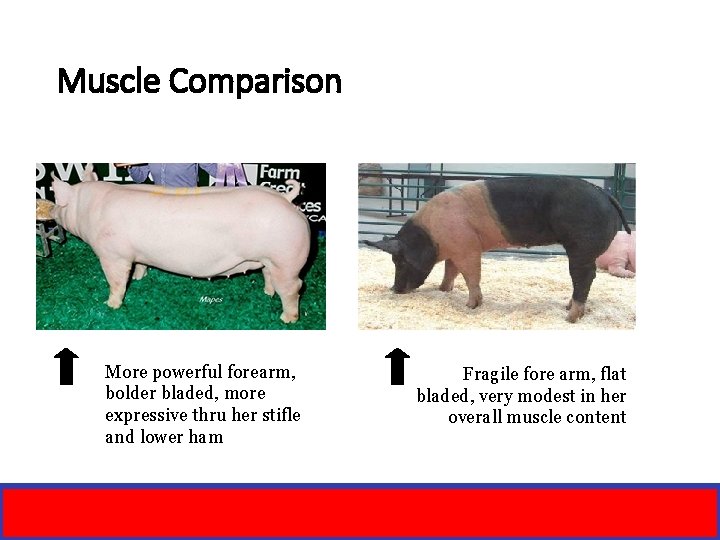
Muscle Comparison More powerful forearm, bolder bladed, more expressive thru her stifle and lower ham Fragile fore arm, flat bladed, very modest in her overall muscle content
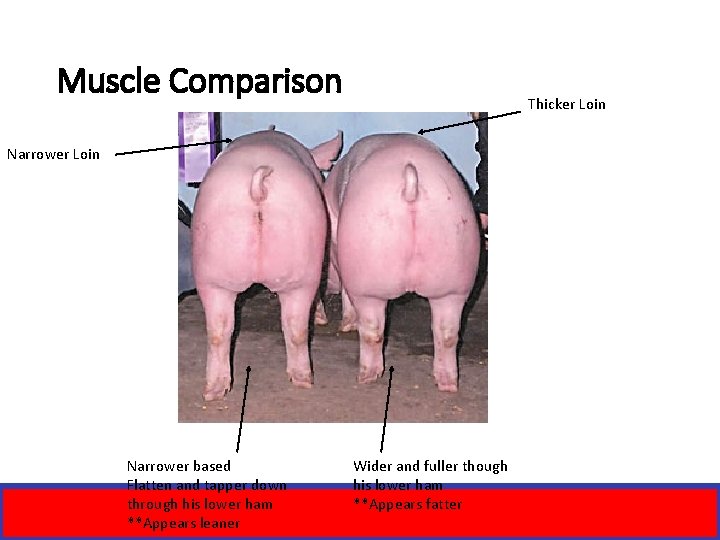
Muscle Comparison Thicker Loin Narrower based Flatten and tapper down through his lower ham **Appears leaner Wider and fuller though his lower ham **Appears fatter
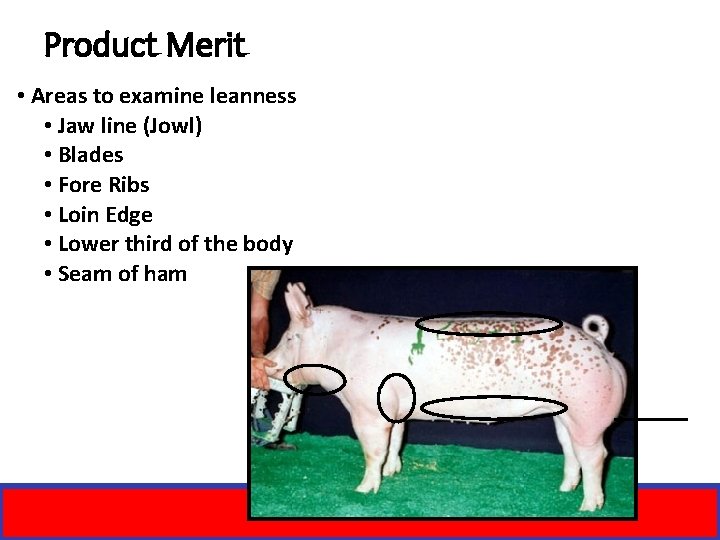
Product Merit • Areas to examine leanness • Jaw line (Jowl) • Blades • Fore Ribs • Loin Edge • Lower third of the body • Seam of ham
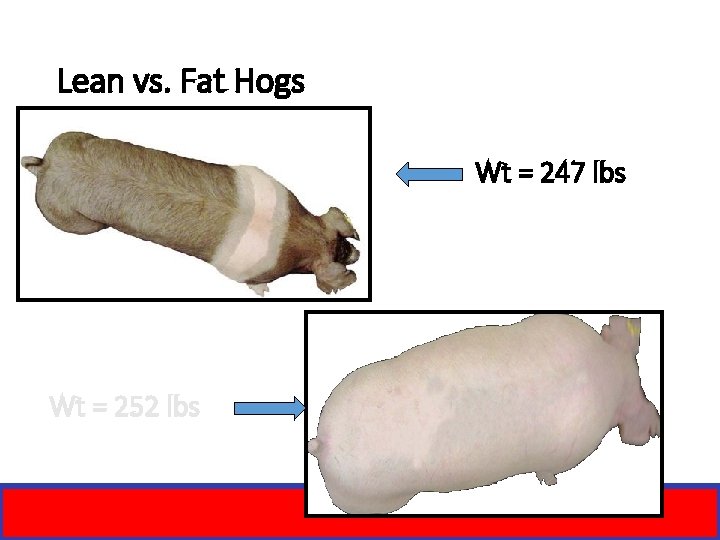
Lean vs. Fat Hogs Wt = 247 lbs Wt = 252 lbs
Optimal Leanness • Selection has shifted from picking the leanest and rawest designed market hogs to those with more production and in turn finish. • Judges are selecting hogs with more cover because typically those hogs are easier growing, more productive in their rib design, and sounder. *Note: Hogs must have muscle and an acceptable lean gain to be profitable. *Note: Market hogs must have at least 0. 6 of fat for bacon production
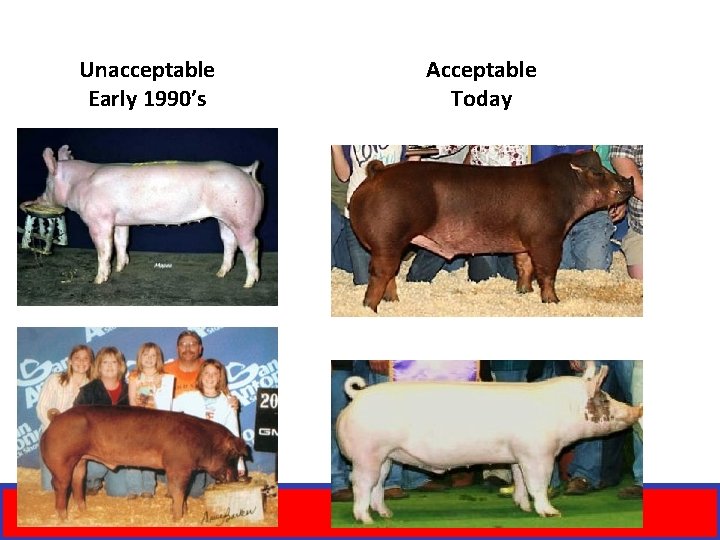
Unacceptable Early 1990’s Acceptable Today
Production • The trait most heavily selected for by the industry is production • Definition: • Easy-growing, wide skeleton hogs that are designed with more center body dimension and a more practical look from the side.
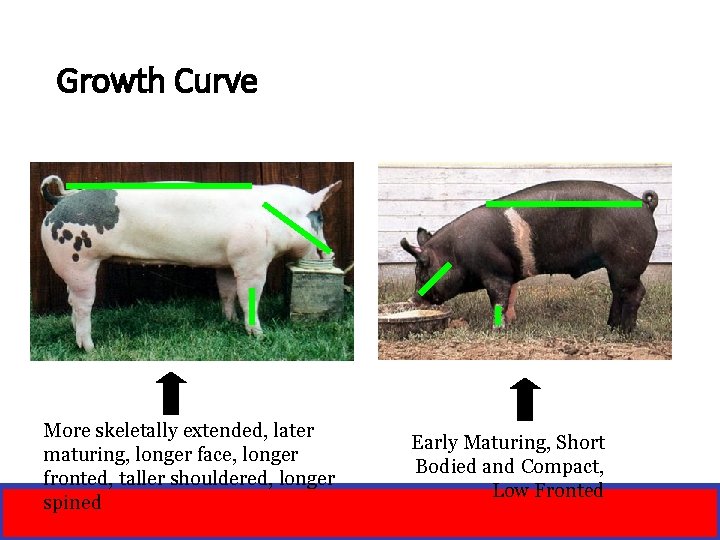
Growth Curve More skeletally extended, later maturing, longer face, longer fronted, taller shouldered, longer spined Early Maturing, Short Bodied and Compact, Low Fronted
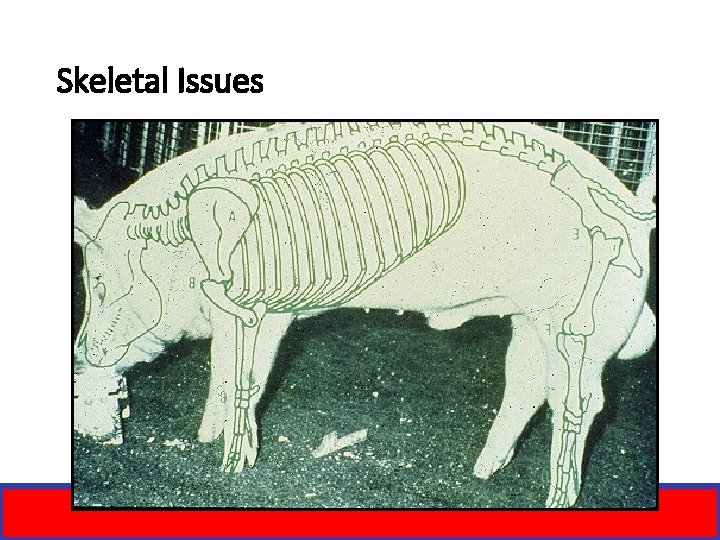
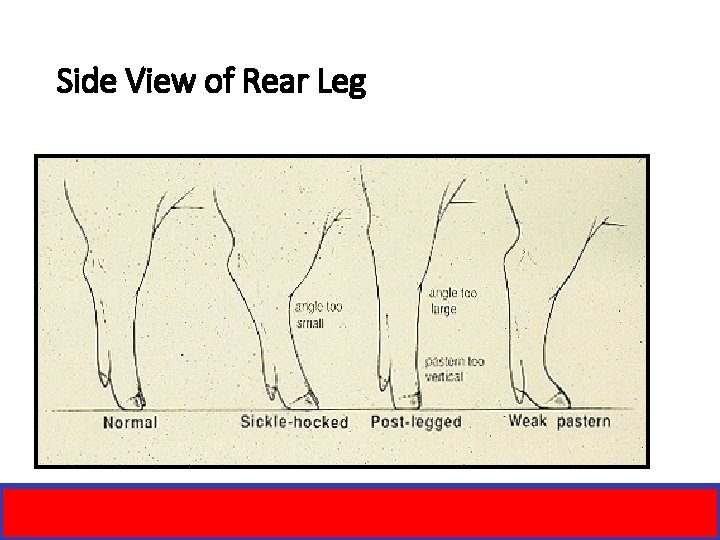
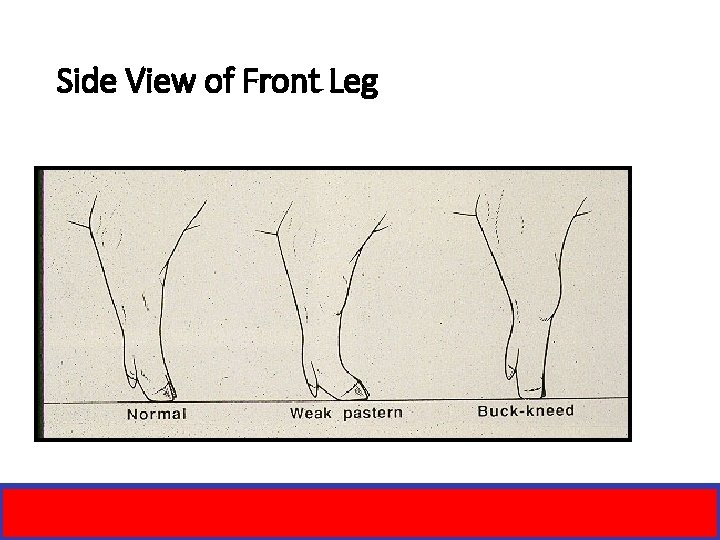
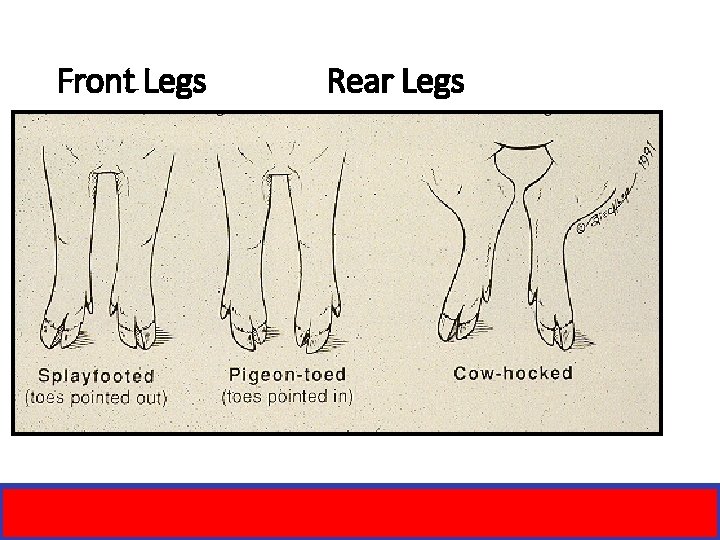
Structure • Obvious points: • Proper angle and cushion to their shoulder, knee, hock and pastern • Hip design – length and levelness • Tail Set • Specific details: • Uniformity of toe • Foot size • Heaviness of skeleton
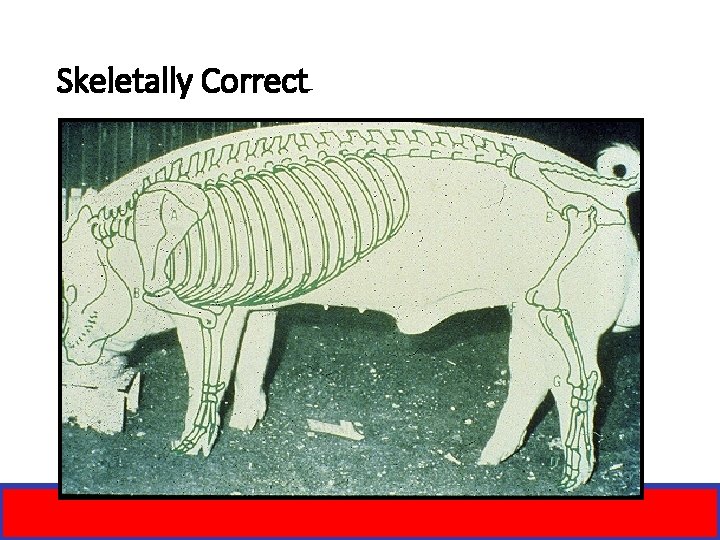
Skeletally Correct
Skeletal Issues
Side View of Rear Leg
Side View of Front Leg
Front Legs Rear Legs
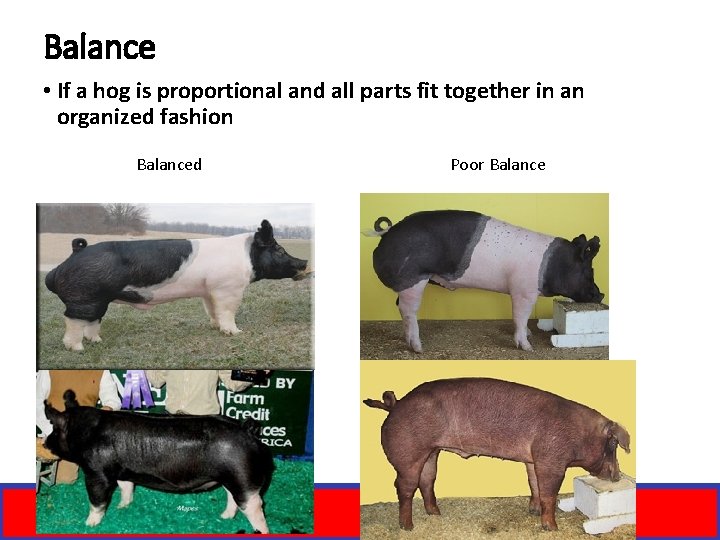
Balance • If a hog is proportional and all parts fit together in an organized fashion Balanced Poor Balance
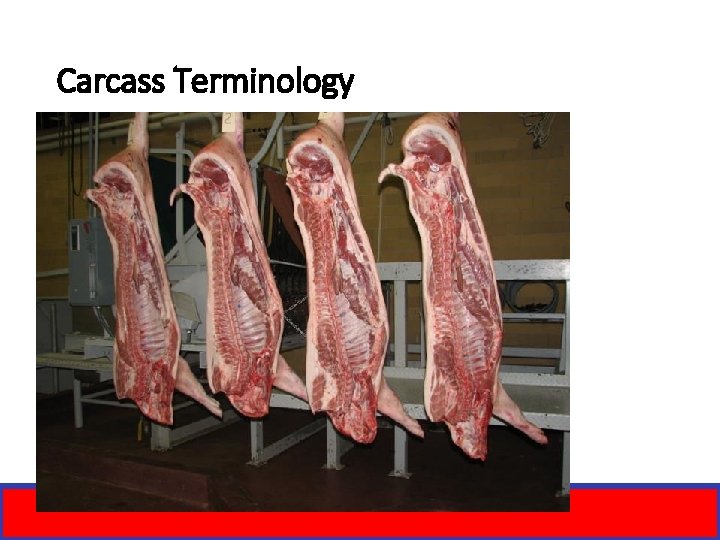
Carcass Terminology
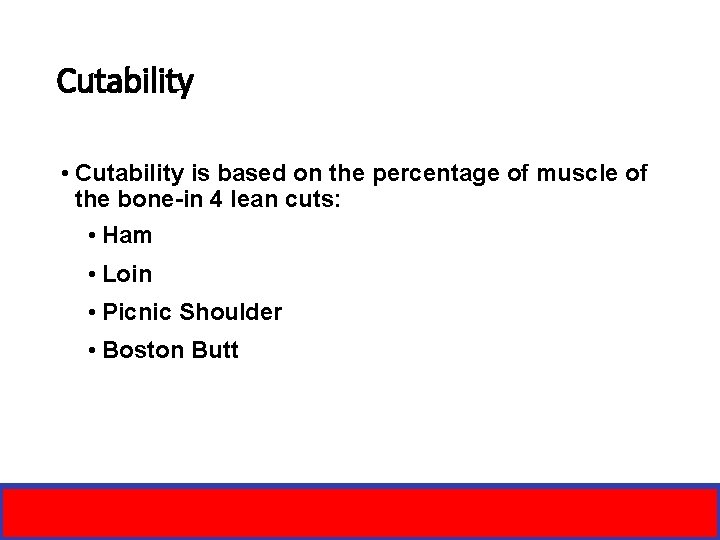
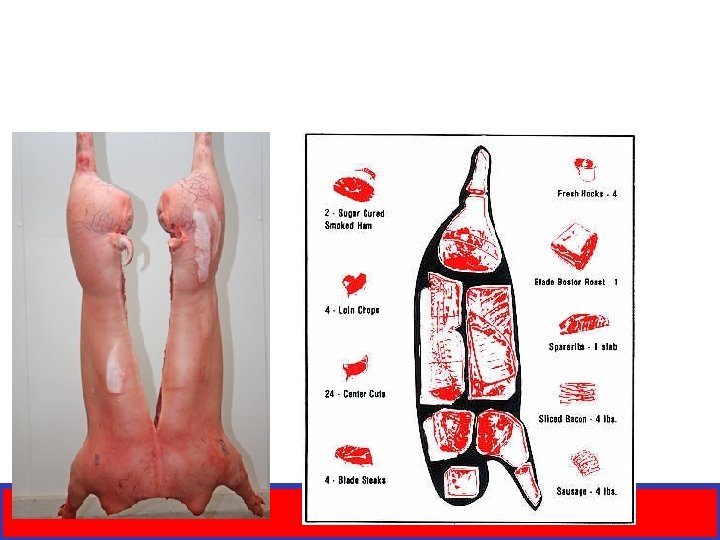
Cutability • Cutability is based on the percentage of muscle of the bone-in 4 lean cuts: • Ham • Loin • Picnic Shoulder • Boston Butt
Breeding Hog Criteria's • Soundness -Structural Correctness • Body -Skeletal Width and Volume • • Performance Balance/Design/Femininity(or Ruggedness) Muscle Underline Quality Functional Sheath (Penis) Vulva Testicles
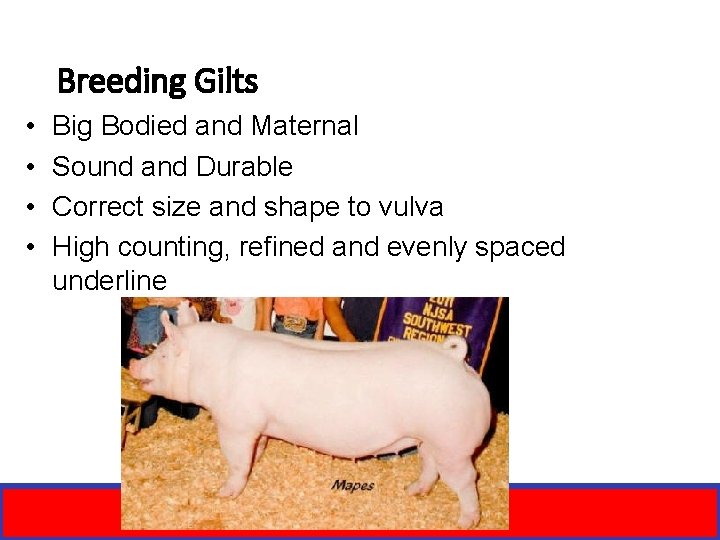
Breeding Gilts • • Big Bodied and Maternal Sound and Durable Correct size and shape to vulva High counting, refined and evenly spaced underline
- Slides: 30