
Hoarding and Older Adults Christina Nairn LCSW Los










- Slides: 38
Hoarding and Older Adults Christina Nairn LCSW Los Angeles County Department of Mental Health Older Adult System of Care Bureau GENESIS and FACTS Program
What is Hoarding? • The excessive and compulsive collection of items/animals (at times with little or no value) and having difficulties discarding them when no longer needed. Also, this behavior significantly impacts individuals day to day functioning and aspects of life: – Home – Work – Family – Health – Social Life – Emotions – Financial – legal – ….
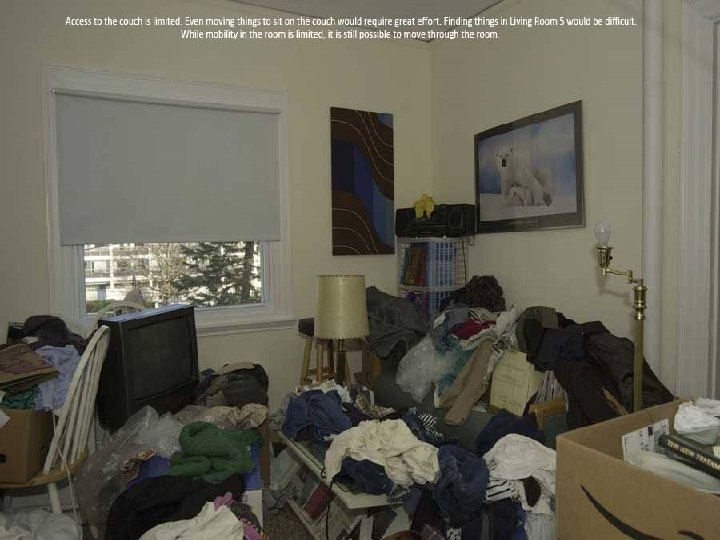
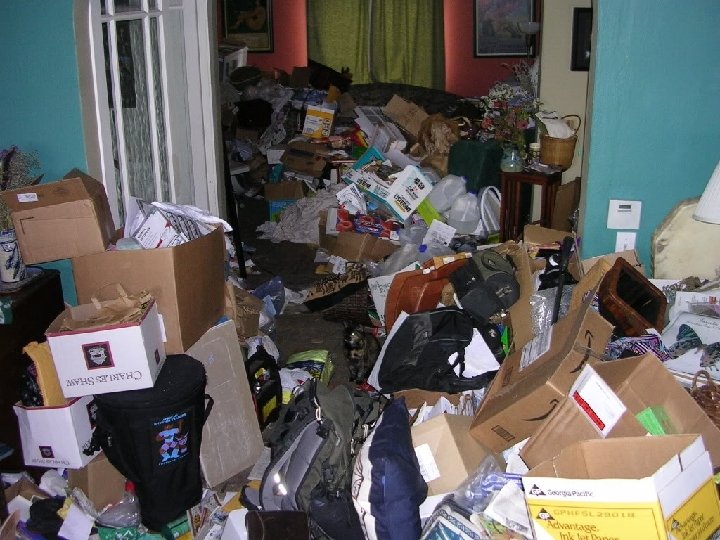
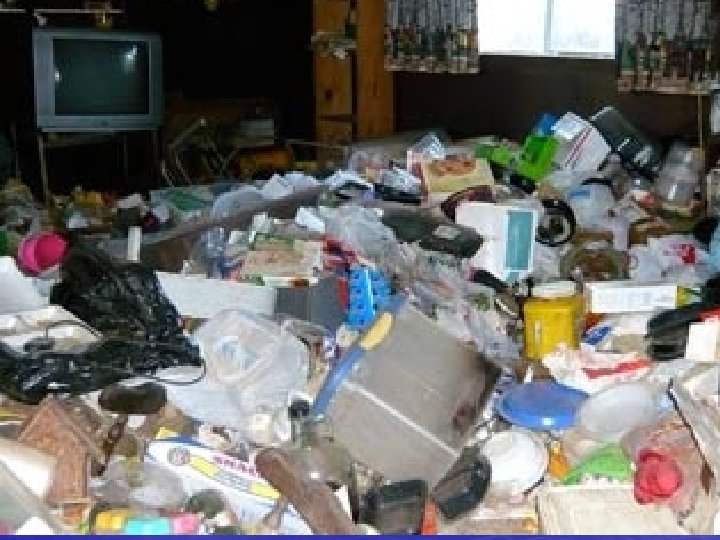
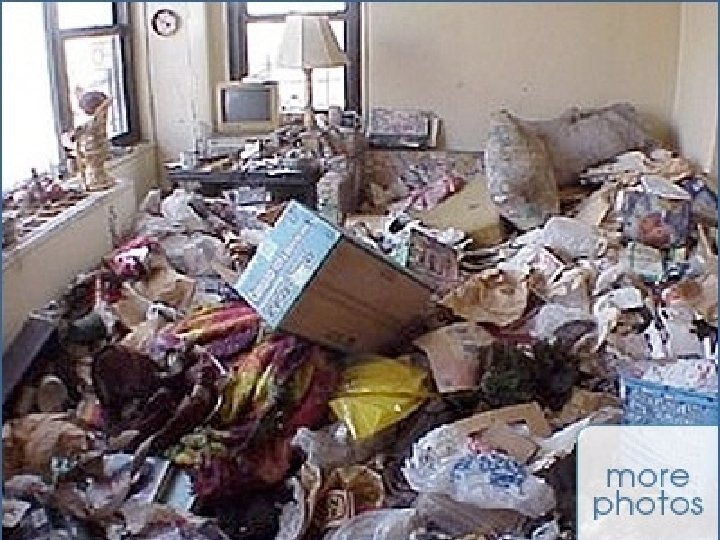
Hoarding • Rooms are no longer used for the intended purpose • Exits are blocked • Difficulty moving through the home/place.
What Causes Hoarding? • No clear cause; however, genetic and • • • environmental factors play significant roles. 85% of hoarders have a family member who hoards. Abnormal brain development. Brain damage: – – Stroke Surgery Infection injuries
National Study Group on Chronic Disorganization (NSGCD) • The NSGCD scale is an assessment tool with 5 levels: – Level III – Level IV – Level V
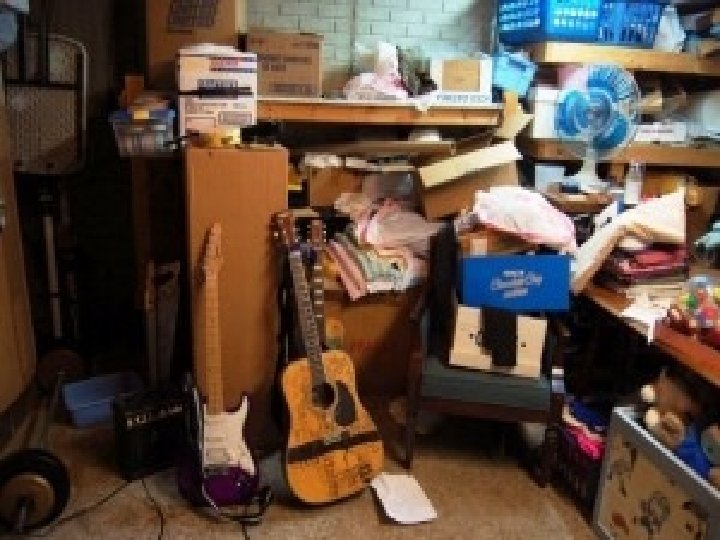
NSGCD Level I • All doors and stairways are accessible – Normal pet activities – No significant clutter – No odors – Normal housekeeping
NSGCD Level II • One exit is blocked; one major appliance (heating , cooling, . . ) not functioning for more than 6 months – – – – Some pet waste Light to moderate household rodents/insects Clutter inhibits use of more than 2 rooms Unclear function of rooms Small narrowing of the pathways Odors Over flowing garbage cans Mildew
NSGCD Level III • • • Visible clutter outdoors 2 or more appliances are broken or not functioning Light structural damage for less than 6 months Pets and animals exceed the local society limits (1 -3) Flea, rodents, bird droppings, spider webs Narrowed hallway One bedroom or bathroom not functioning Items stored in shower Excessive dust Obvious and irritating odor
NSGCD Level IV • • • Structural damage for longer than 6 months Mold and mildew on walls or floors Inappropriate use of appliances Pets exceed local humane society limits by 4 Obvious signs of animal wastes Bat, squirrels, raccoons in attic or room Flea infestation Hazardous materials stored inside of home Rotting food on counters Lice on bedding No clean dishes or utensils locatable in kitchen
NSGCD Level V • • • • Structural damage in the home Broken walls No electrical power No water connection No sewer Fire hazard Pets dangerous to occupants or guests Rodents in sight Mosquito Insect infestation Kitchen or bathroom unusable due to clutter Client sleeping elsewhere as house is not livable Human defecation Rotting food
What are the Effects of Hoarding? • Financial • Social • Physical & Mental Health • Not only the hoarder but also, the community!
Symptoms of Hoarding • Inability to throw items out • Severe anxiety when attempting to discard items • Loss of functioning and use in living spaces • Impacting family relationship • Indecisiveness regarding keeping an item
Hoarding • Over 1 million individuals in the United States hoard, and Older Adults represent a significant number of people who hoard.
Why Hoard? • Items are seen as valuable • Items provide sense of security • Constant need to collect • Fears that others will find their personal • • information Physical limitation Not able to organize Self-neglect Stressful life events
Hoarding • A 2008 study by John Hopkins University researchers estimated that about 4% of the population hoard. • Other researchers have found that many hoarders grew up with a parent who hoarded; they believe the disorder results from the interplay of genetic and environmental factors.
Feelings Associated with Hoarding • • • Shame Guilt Embarrassment Feeling out of control Anxiety Sadness Grief Fatigue Anger Rage Hostility Fear
Who Gets Involve? • • • • APS DCFS Mental Health Providers Law Enforcement Fire Dept. Family Friends Neighbors Vector Control Animal Control Public Health Code Enforcement Lawyers Physicians Other Professionals
Safety Issues • No Working toilets and sinks • No safe walkway • Insects and rodents • Excessive accumulation of garbage • Fire hazards • No working and accessible phone and/or utilities
Fire Standards (G. E. N. E. S. I. S. Hoarding Task Force) 1. Front Door must open fully to allow firefighters in full 2. 3. 4. 5. gear and a stretcher to every room. Three foot aisles to all rooms- measure with yardstick. No more than three foot high stacked boxes, clutter, etc. on the floor. Nothing within two feet of the ceiling, preferably three feet of open space. All bookcases, tall furniture, armoires, etc should be bolted to the wall. If tall, nothing stashed on top. (GENESIS Hoarding Task Force)
Fire Standards (G. E. N. E. S. I. S. Hoarding Task Force) 6. No windows covered with stacked boxes. 7. 8. 9. Need ventilation to rooms. In multi-story buildings, no more than 45 lbs per square foot of weight if boxes or bookcases are heavy and full. No storage of flammable liquids. No open flames. (GENESIS Hoarding Task Force)
Needs and Issues Facing Older Adults • Bio-Psychosocial Aspects of Aging – Health – Emotional /Mental Health – Support System • Resources • Advocacy
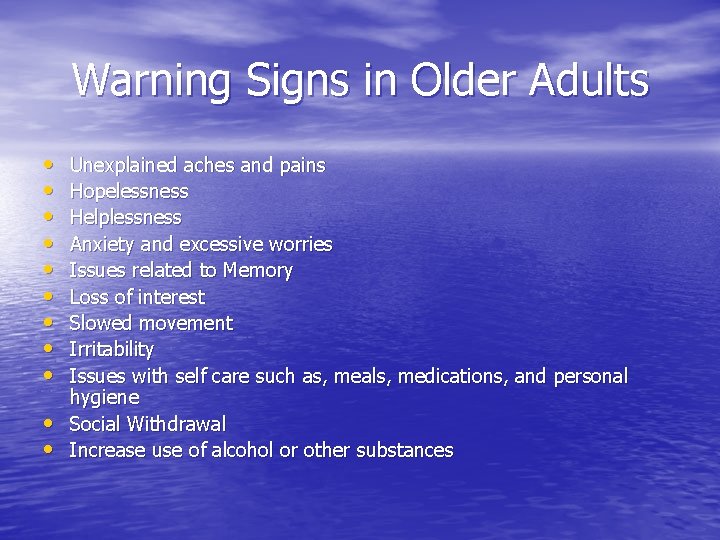
Warning Signs in Older Adults • • • Unexplained aches and pains Hopelessness Helplessness Anxiety and excessive worries Issues related to Memory Loss of interest Slowed movement Irritability Issues with self care such as, meals, medications, and personal hygiene Social Withdrawal Increase use of alcohol or other substances
What to Do? • • • Follow-up with primary care provider Exercise Get active in the community Healthy diet Volunteer Learn new skills or hobbies Have fun and incorporate laughter in life Aim for 8 hours of sleep Expose yourself to a little sunlight every day Keep stress in check Practice relaxation techniques
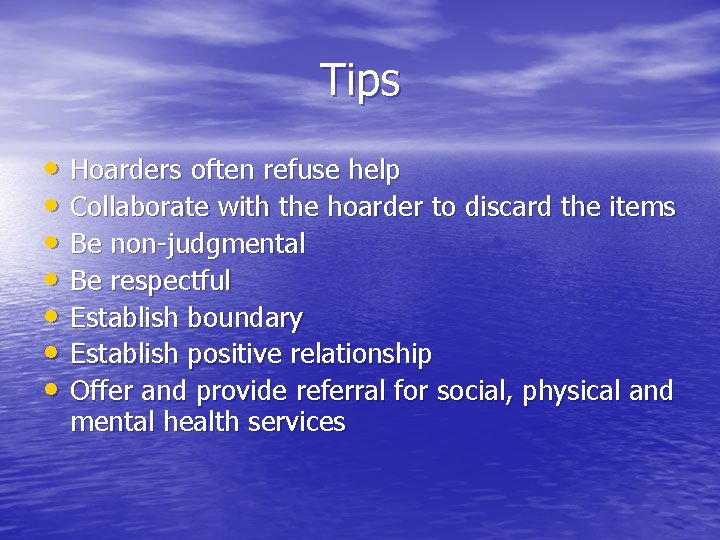
Tips • Hoarders often refuse help • Collaborate with the hoarder to discard the items • Be non-judgmental • Be respectful • Establish boundary • Establish positive relationship • Offer and provide referral for social, physical and mental health services
Treatment • On-going Psychotherapy • Medication • Groups • Psycho-education • Behavioral Modification • Skills Training
Resources & Helpful Contacts • 211 • ACCESS (Department of Mental Health) • 1(800) 854 -7771 (24/7) Adult Protective Services (APS) 1(888) 202 -4284 1(877) 477 -3646 – After Hours • G. E. N. E. S. I. S. 1(213) 351 -7284
Resources • HELPGUIDE. org • cdcinfo@cdc. gov