
HMD Low CTE High Modulusstiffness Thinwall design for
- Slides: 20
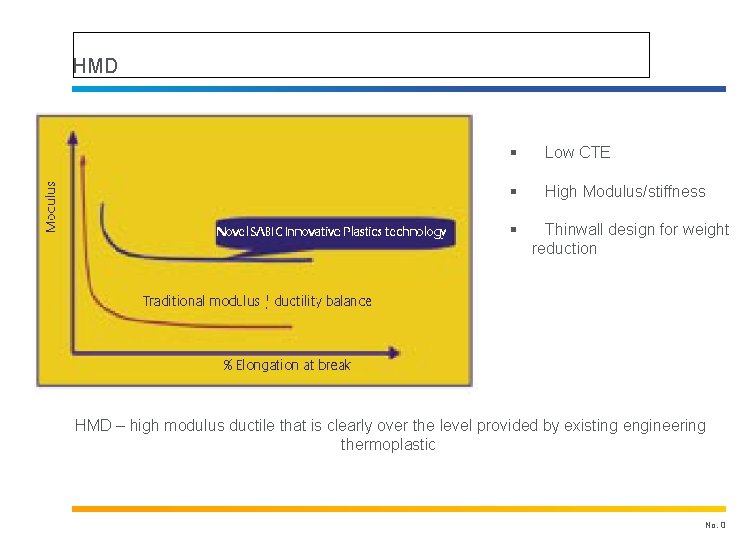
HMD § Low CTE § High Modulus/stiffness § Thinwall design for weight reduction HMD – high modulus ductile that is clearly over the level provided by existing engineering thermoplastic No. 0
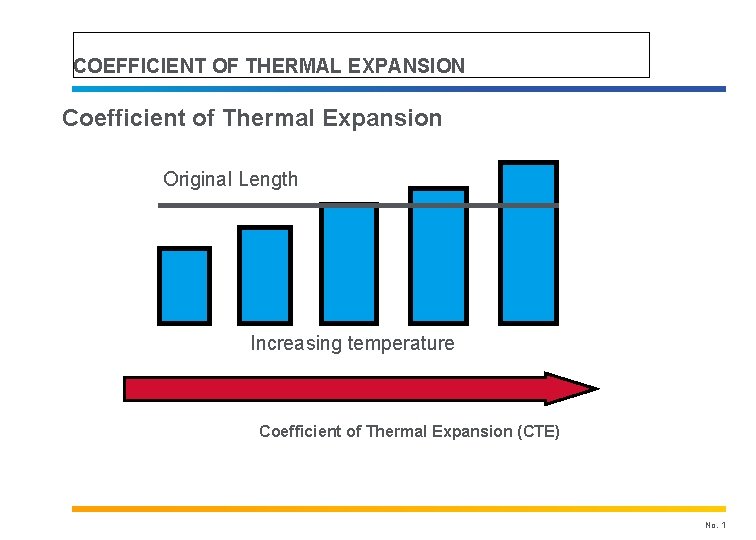
COEFFICIENT OF THERMAL EXPANSION Coefficient of Thermal Expansion Original Length Increasing temperature Coefficient of Thermal Expansion (CTE) No. 1
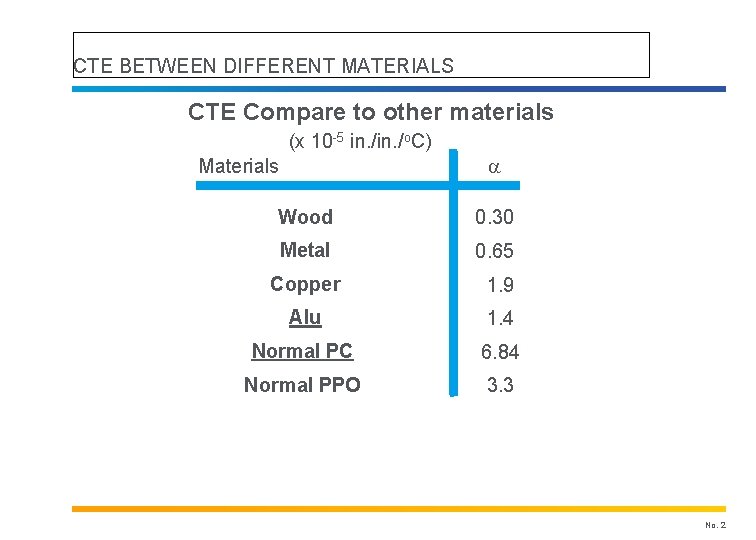
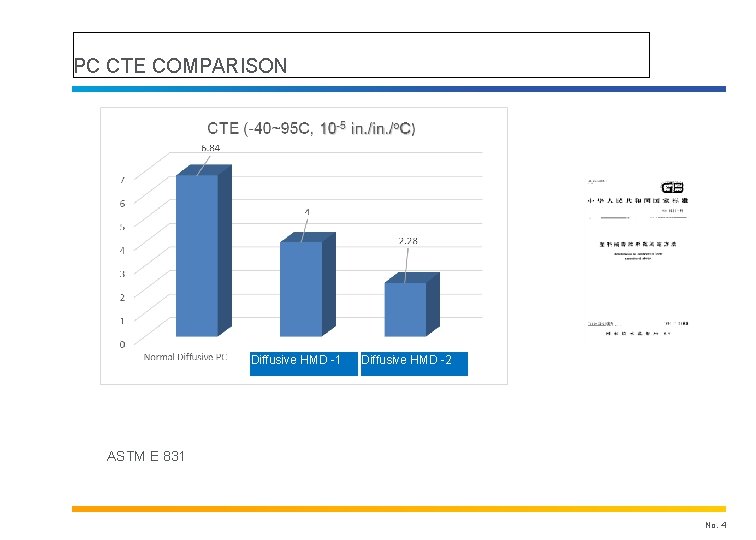
CTE BETWEEN DIFFERENT MATERIALS CTE Compare to other materials (x 10 -5 in. /o. C) Materials a Wood 0. 30 Metal 0. 65 Copper 1. 9 Alu 1. 4 Normal PC 6. 84 Normal PPO 3. 3 No. 2
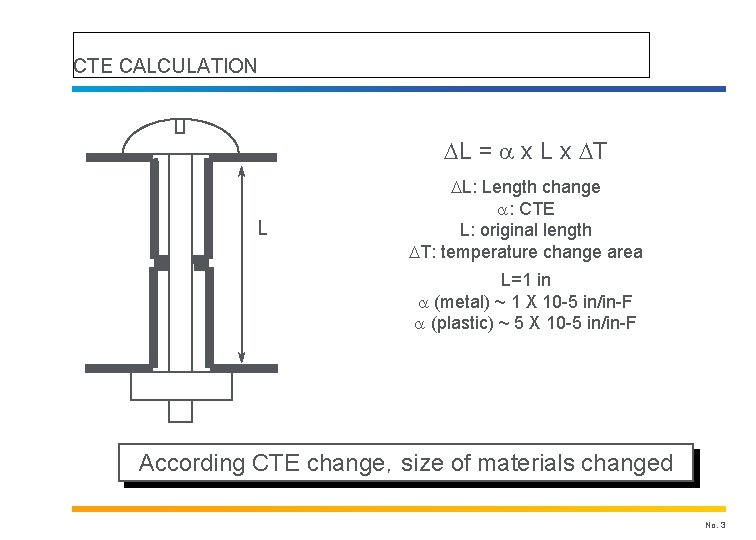
CTE CALCULATION DL = a x L x DT L DL: Length change a: CTE L: original length DT: temperature change area L=1 in a (metal) ~ 1 X 10 -5 in/in-F a (plastic) ~ 5 X 10 -5 in/in-F According CTE change,size of materials changed No. 3
PC CTE COMPARISON Diffusive HMD -1 Diffusive HMD -2 ASTM E 831 No. 4
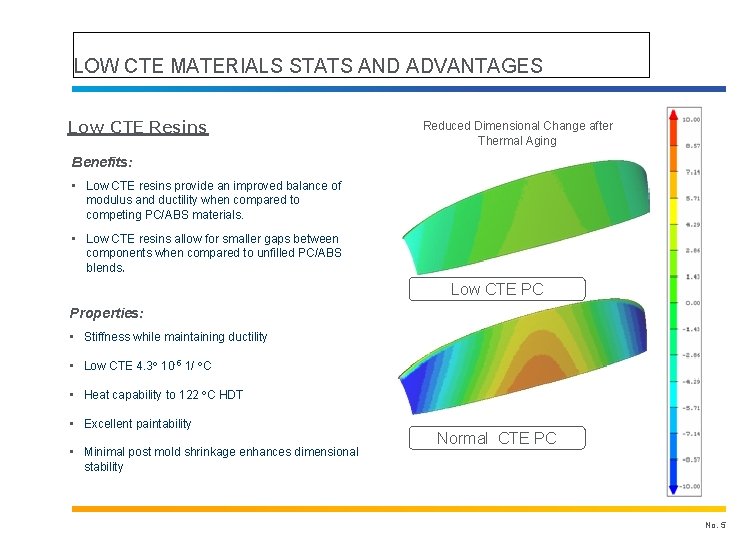
LOW CTE MATERIALS STATS AND ADVANTAGES Low CTE Resins Reduced Dimensional Change after Thermal Aging Benefits: • Low CTE resins provide an improved balance of modulus and ductility when compared to competing PC/ABS materials. • Low CTE resins allow for smaller gaps between components when compared to unfilled PC/ABS blends. Low CTE PC Properties: • Stiffness while maintaining ductility • Low CTE 4. 3 10 -5 1/ C • Heat capability to 122 C HDT • Excellent paintability • Minimal post mold shrinkage enhances dimensional stability Normal CTE PC No. 5
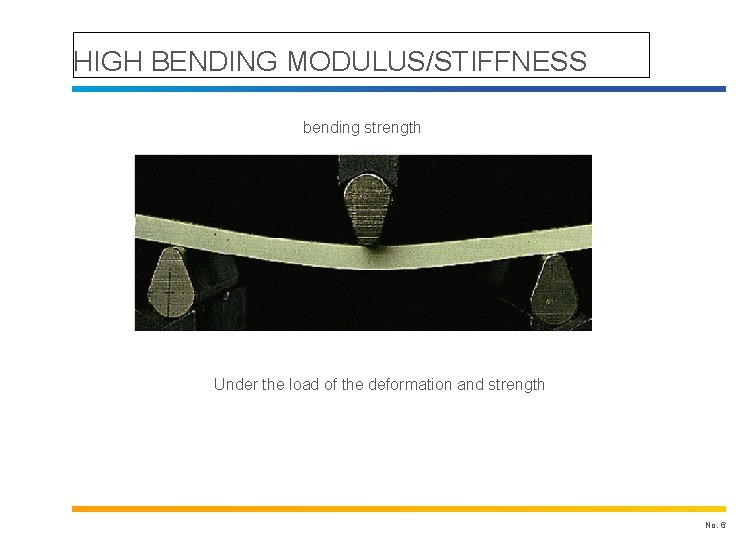
HIGH BENDING MODULUS/STIFFNESS bending strength Under the load of the deformation and strength No. 6
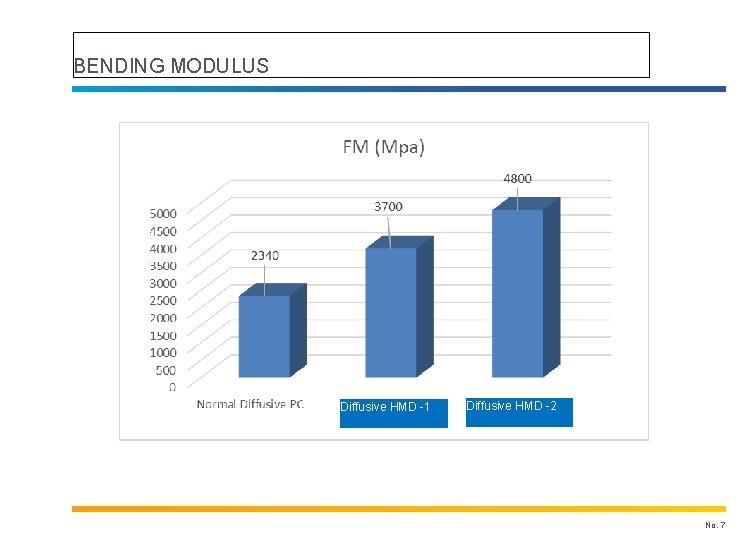
BENDING MODULUS Diffusive HMD -1 Diffusive HMD -2 No. 7
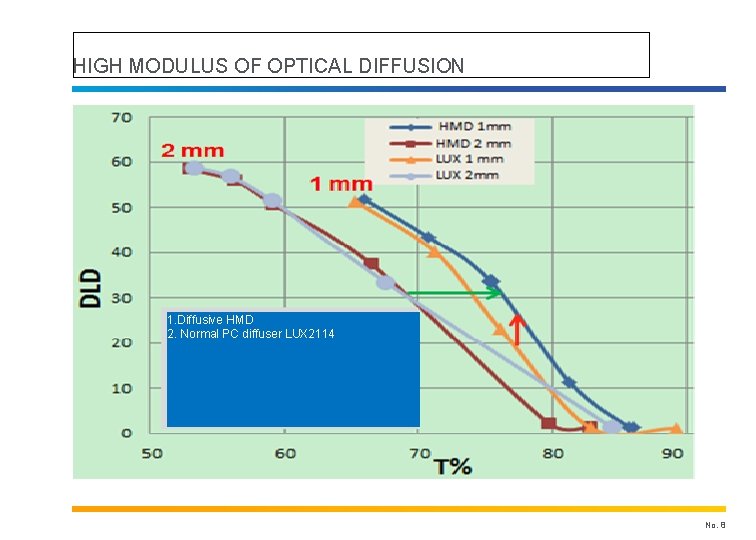
HIGH MODULUS OF OPTICAL DIFFUSION 1. Diffusive HMD 2. Normal PC diffuser LUX 2114 No. 8
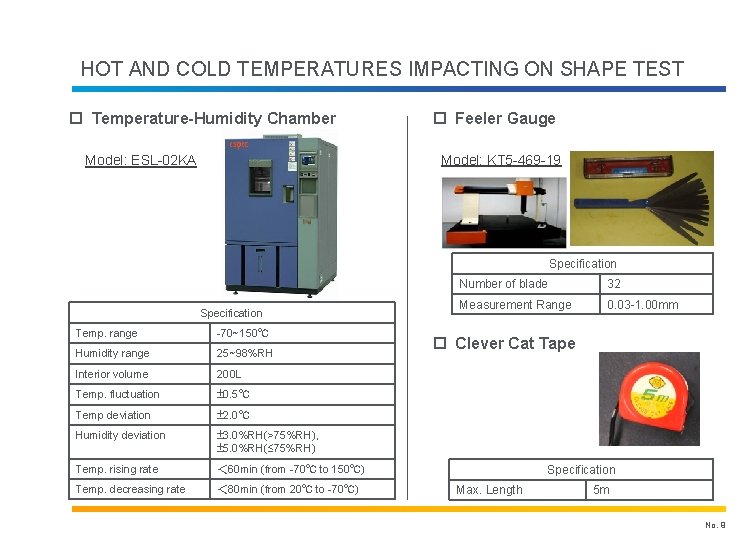
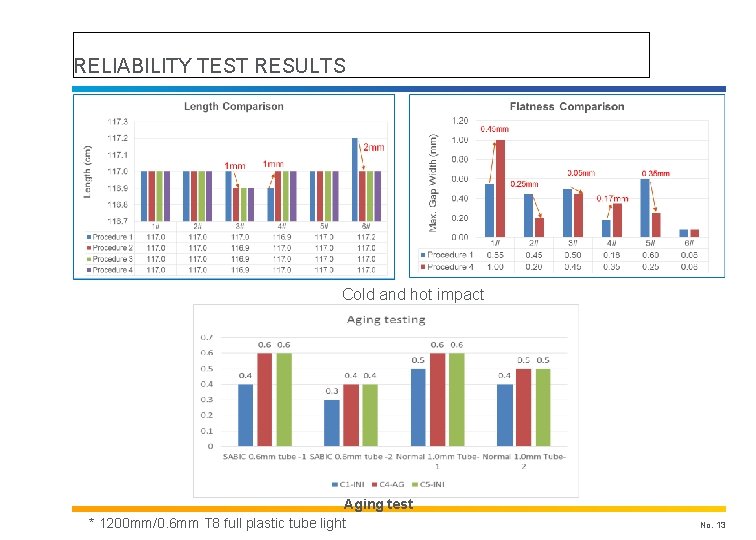
HOT AND COLD TEMPERATURES IMPACTING ON SHAPE TEST p Temperature-Humidity Chamber p Feeler Gauge Model: KT 5 -469 -19 Model: ESL-02 KA Specification Temp. range -70~150℃ Humidity range 25~98%RH Interior volume 200 L Temp. fluctuation 0. 5℃ Temp deviation 2. 0℃ Humidity deviation 3. 0%RH(>75%RH), 5. 0%RH( 75%RH) Temp. rising rate < 60 min (from -70℃ to 150℃) Temp. decreasing rate < 80 min (from 20℃ to -70℃) Number of blade 32 Measurement Range 0. 03 -1. 00 mm p Clever Cat Tape Specification Max. Length 5 m No. 9
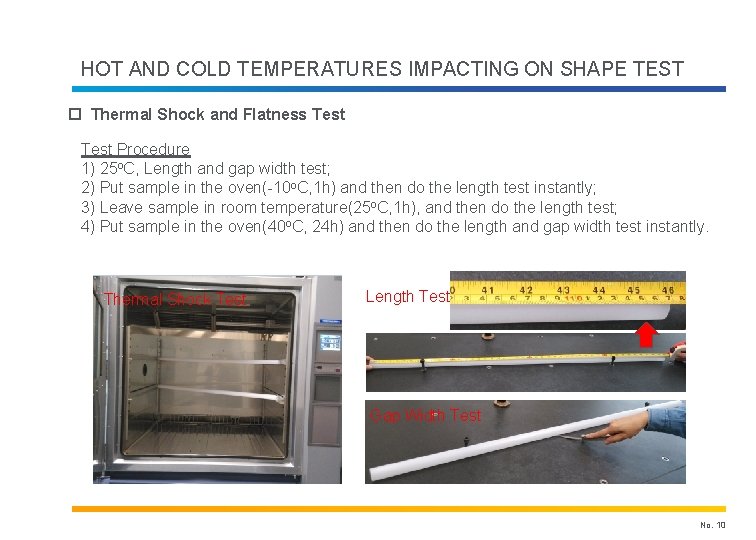
HOT AND COLD TEMPERATURES IMPACTING ON SHAPE TEST p Thermal Shock and Flatness Test Procedure 1) 25 o. C, Length and gap width test; 2) Put sample in the oven(-10 o. C, 1 h) and then do the length test instantly; 3) Leave sample in room temperature(25 o. C, 1 h), and then do the length test; 4) Put sample in the oven(40 o. C, 24 h) and then do the length and gap width test instantly. Thermal Shock Test Length Test Gap Width Test No. 10
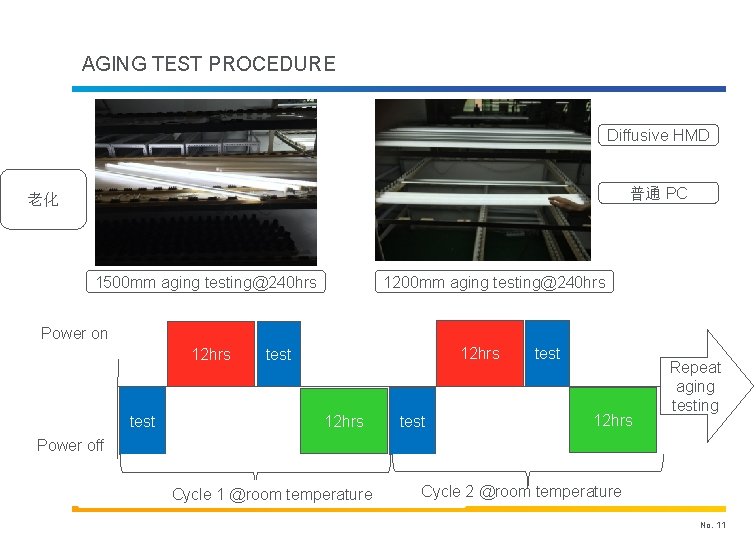
AGING TEST PROCEDURE Diffusive HMD 普通 PC 老化 1500 mm aging testing@240 hrs 1200 mm aging testing@240 hrs Power on 12 hrs test 12 hrs Repeat aging testing Power off Cycle 1 @room temperature Cycle 2 @room temperature No. 11
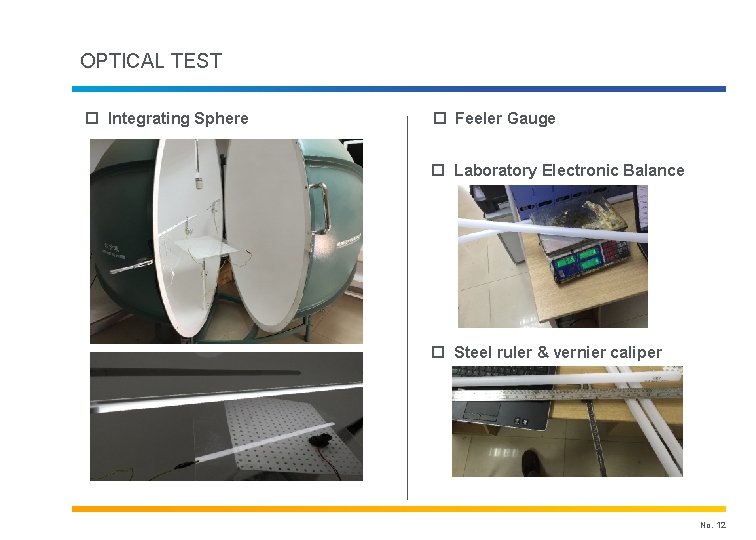
OPTICAL TEST p Integrating Sphere p Feeler Gauge p Laboratory Electronic Balance p Steel ruler & vernier caliper No. 12
RELIABILITY TEST RESULTS Cold and hot impact Aging test * 1200 mm/0. 6 mm T 8 full plastic tube light No. 13
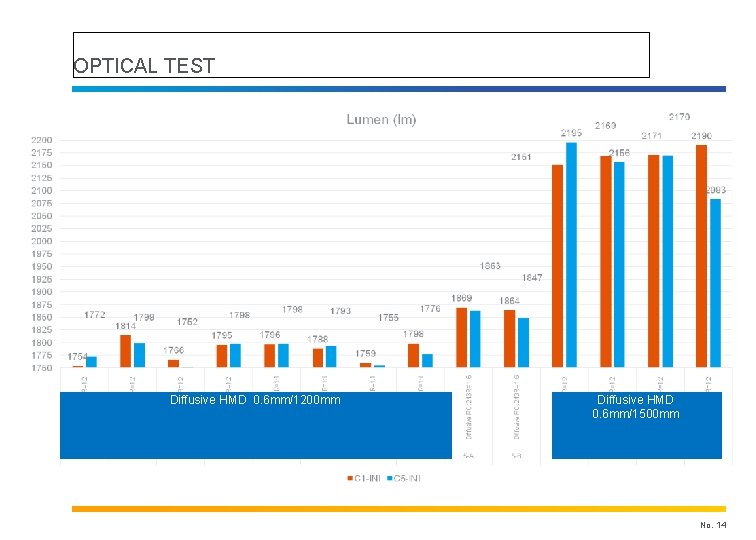
OPTICAL TEST Diffusive HMD 0. 6 mm/1200 mm Diffusive HMD 0. 6 mm/1500 mm No. 14
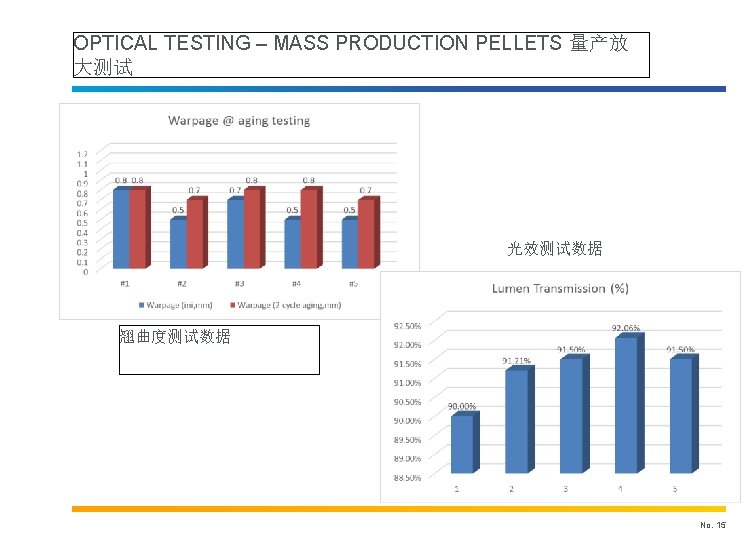
OPTICAL TESTING – MASS PRODUCTION PELLETS 量产放 大测试 光效测试数据 翘曲度测试数据 No. 15
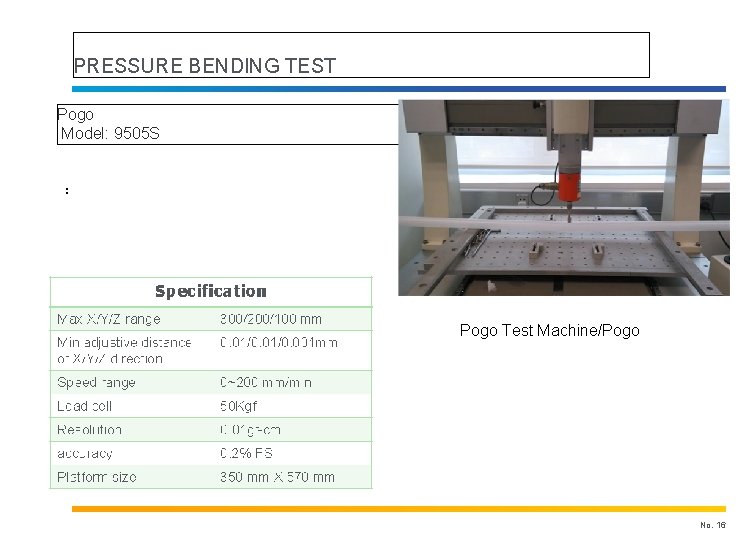
PRESSURE BENDING TEST Pogo Model: 9505 S : Pogo Test Machine/Pogo No. 16
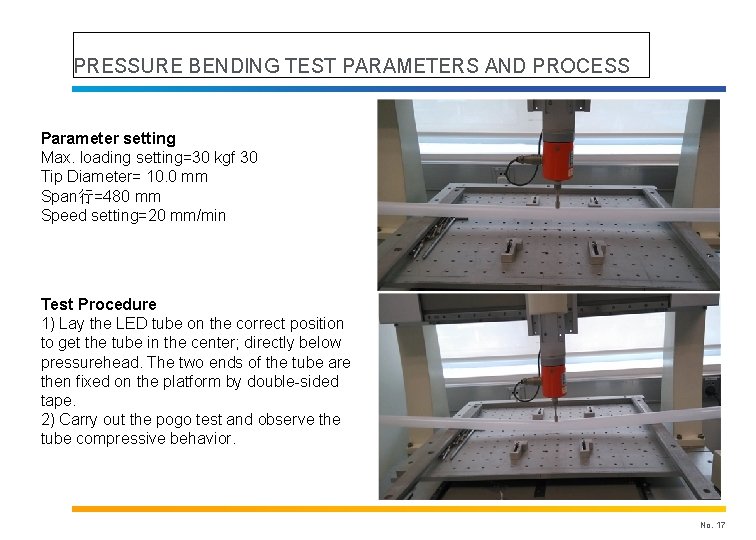
PRESSURE BENDING TEST PARAMETERS AND PROCESS Parameter setting Max. loading setting=30 kgf 30 Tip Diameter= 10. 0 mm Span行=480 mm Speed setting=20 mm/min Test Procedure 1) Lay the LED tube on the correct position to get the tube in the center; directly below pressurehead. The two ends of the tube are then fixed on the platform by double-sided tape. 2) Carry out the pogo test and observe the tube compressive behavior. No. 17
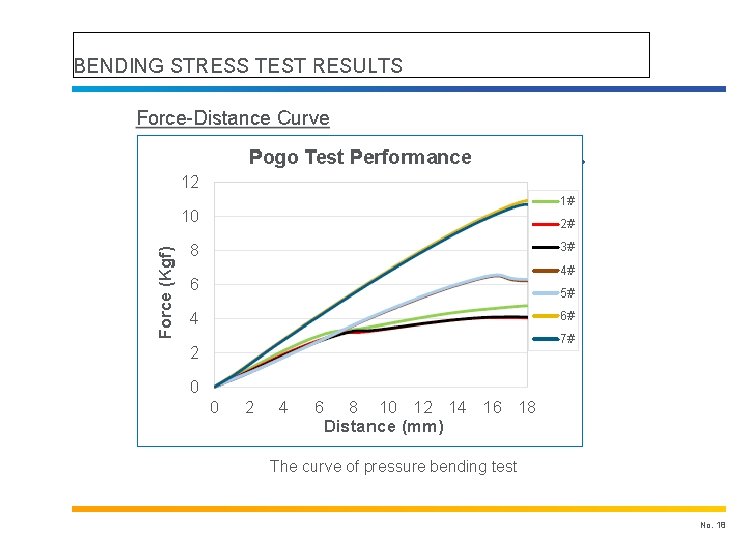
BENDING STRESS TEST RESULTS The curve of pressure bending test No. 18
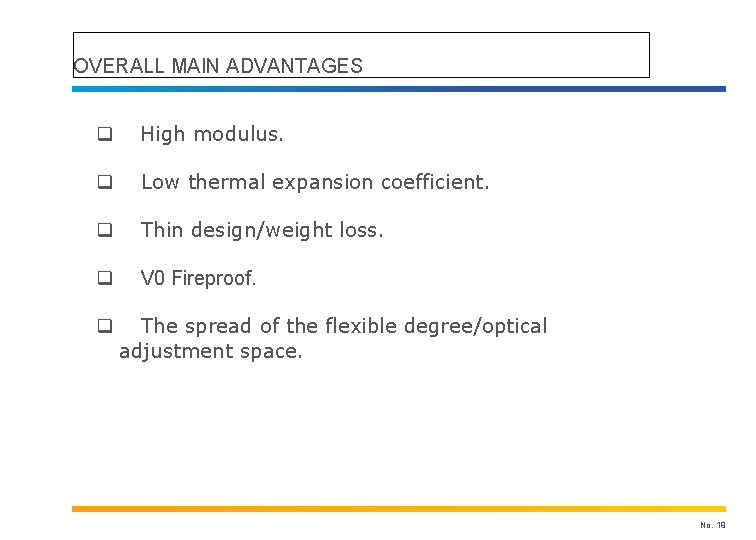
OVERALL MAIN ADVANTAGES q High modulus. q Low thermal expansion coefficient. q Thin design/weight loss. q V 0 Fireproof. q The spread of the flexible degree/optical adjustment space. No. 19