
HMA MATERIALS Background l Asphalt Soluble in petroleum

HMA MATERIALS
Background l Asphalt – Soluble in petroleum products – Generally a byproduct of petroleum distillation process – Can be naturally occurring l Tar – Resistant to petroleum products – Generally by-product of coke (from coal) production
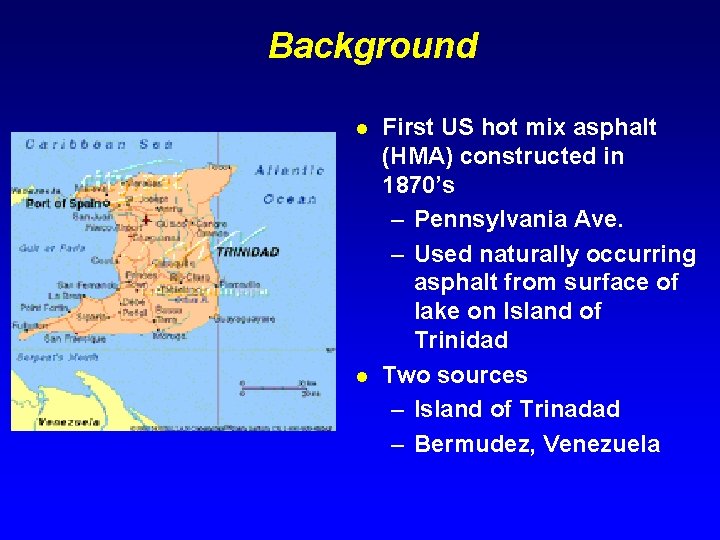
Background l l First US hot mix asphalt (HMA) constructed in 1870’s – Pennsylvania Ave. – Used naturally occurring asphalt from surface of lake on Island of Trinidad Two sources – Island of Trinadad – Bermudez, Venezuela
Background l Each lake asphalt source very consistent – Used solubility test to determine source » Insolubles differed substantially between sources l Demand for paved roads exceeded the supply of lake asphalts in late 1800’s – Led to use of petroleum asphalts
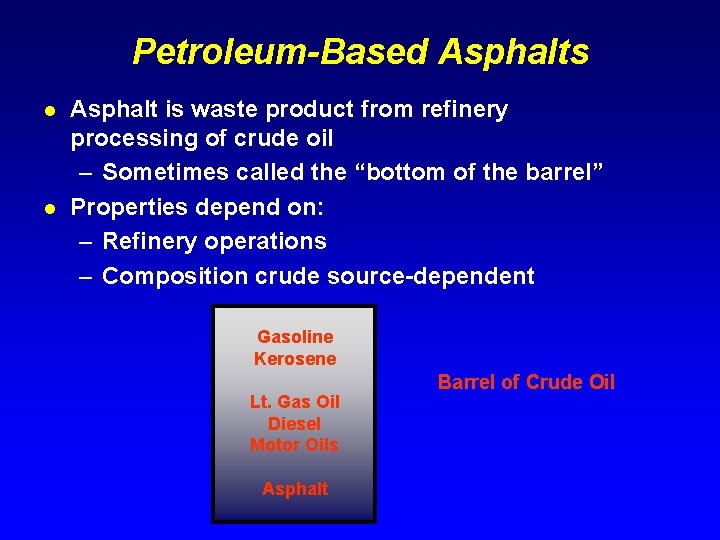
Petroleum-Based Asphalts l l Asphalt is waste product from refinery processing of crude oil – Sometimes called the “bottom of the barrel” Properties depend on: – Refinery operations – Composition crude source-dependent Gasoline Kerosene Lt. Gas Oil Diesel Motor Oils Asphalt Barrel of Crude Oil
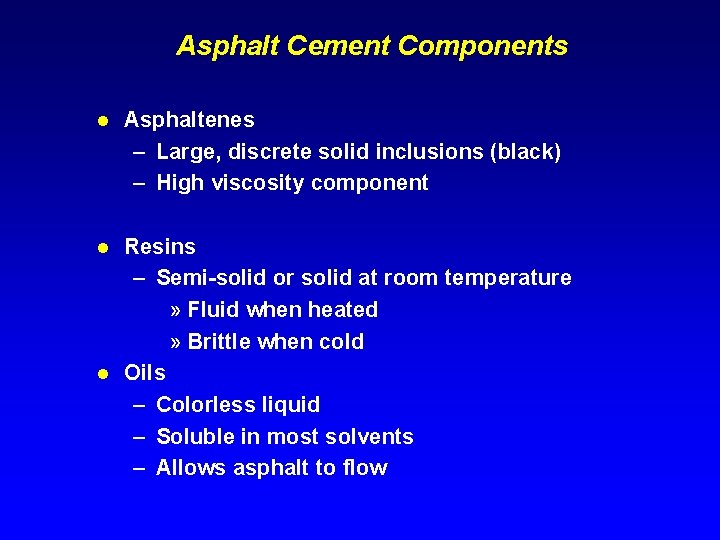
Asphalt Cement Components l Asphaltenes – Large, discrete solid inclusions (black) – High viscosity component l Resins – Semi-solid or solid at room temperature » Fluid when heated » Brittle when cold Oils – Colorless liquid – Soluble in most solvents – Allows asphalt to flow l
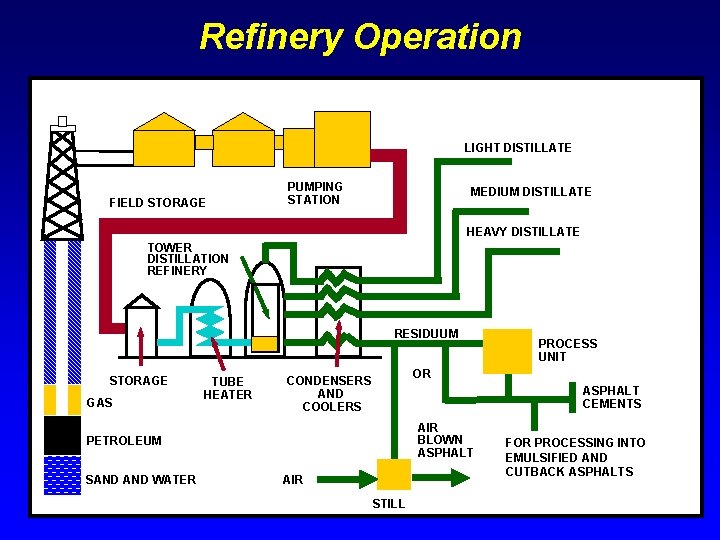
Refinery Operation LIGHT DISTILLATE FIELD STORAGE PUMPING STATION MEDIUM DISTILLATE HEAVY DISTILLATE TOWER DISTILLATION REFINERY RESIDUUM STORAGE GAS TUBE HEATER OR CONDENSERS AND COOLERS ASPHALT CEMENTS AIR BLOWN ASPHALT PETROLEUM SAND WATER PROCESS UNIT AIR STILL FOR PROCESSING INTO EMULSIFIED AND CUTBACK ASPHALTS
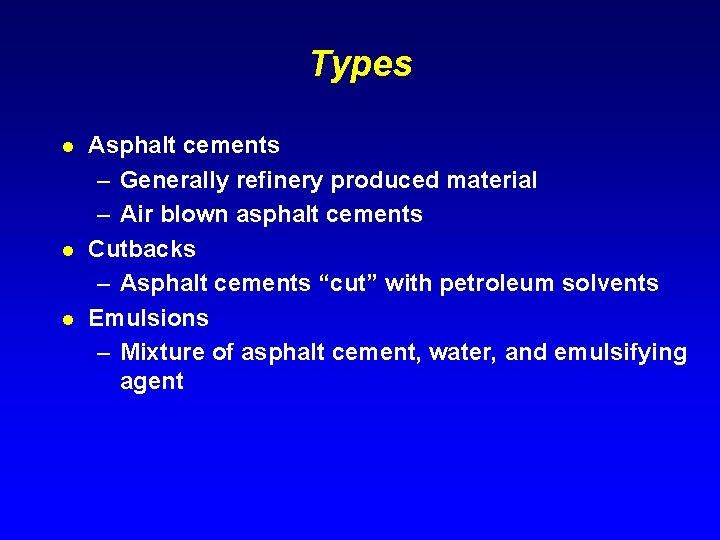
Types l l l Asphalt cements – Generally refinery produced material – Air blown asphalt cements Cutbacks – Asphalt cements “cut” with petroleum solvents Emulsions – Mixture of asphalt cement, water, and emulsifying agent
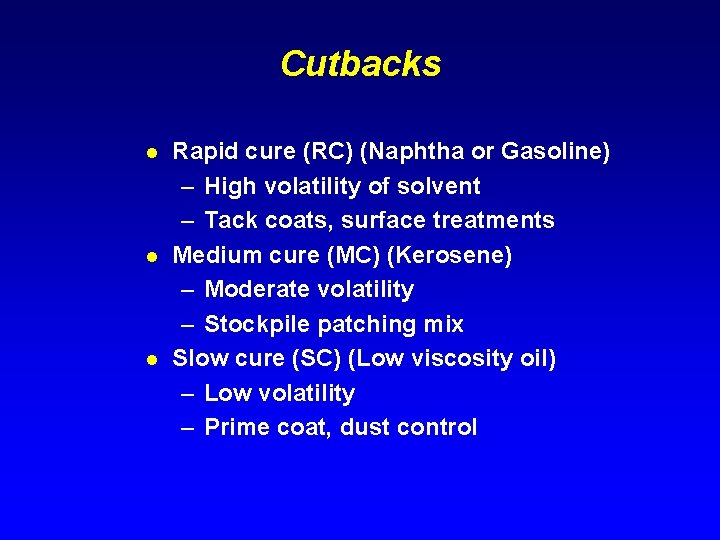
Cutbacks l l l Rapid cure (RC) (Naphtha or Gasoline) – High volatility of solvent – Tack coats, surface treatments Medium cure (MC) (Kerosene) – Moderate volatility – Stockpile patching mix Slow cure (SC) (Low viscosity oil) – Low volatility – Prime coat, dust control
Emulsions l Emulsifier gives surface charge to asphalt droplets suspended in water medium – Anionic » Negative charge » Alkaline » Good with limestones (positive charge) – Cationic » Positive charge » Acid » Good with silica gravels (negative charge)
Purchasing of Asphalt Cements l Need to be able to specify desirable characteristics “Desirable characteristics” have evolved over time and with increasing technological advances l Purchasing requires specifications l
Early Specifications l l Lake Asphalts – Appearance – Solubility in carbon disulfide Petroleum asphalts (early 1900’s) – Consistency » Chewing » Penetration machine l Measure consistency
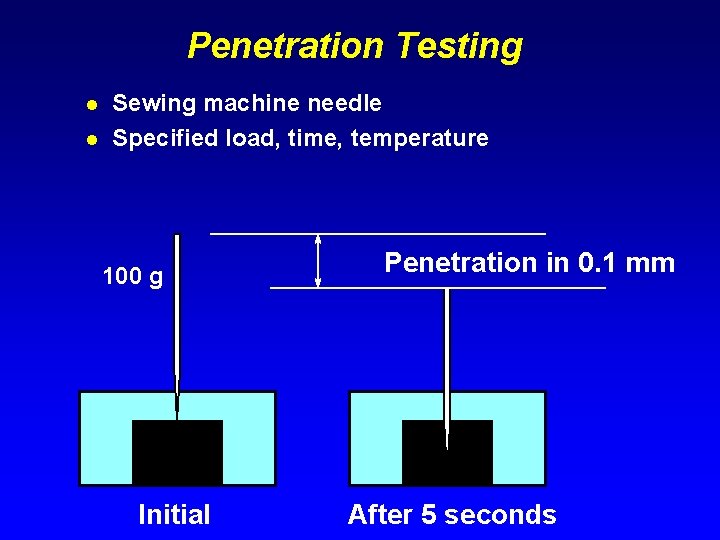
Penetration Testing l l Sewing machine needle Specified load, time, temperature 100 g Initial Penetration in 0. 1 mm After 5 seconds
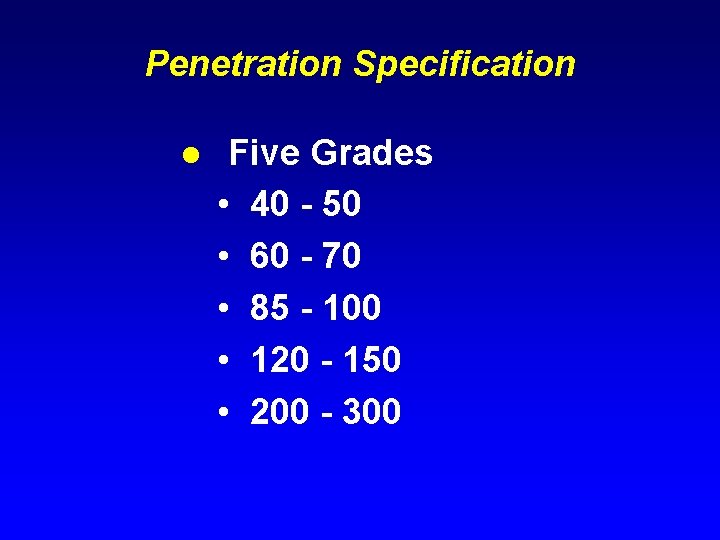
Penetration Specification l Five Grades • 40 - 50 • 60 - 70 • 85 - 100 • 120 - 150 • 200 - 300

Viscosity Graded Specifications
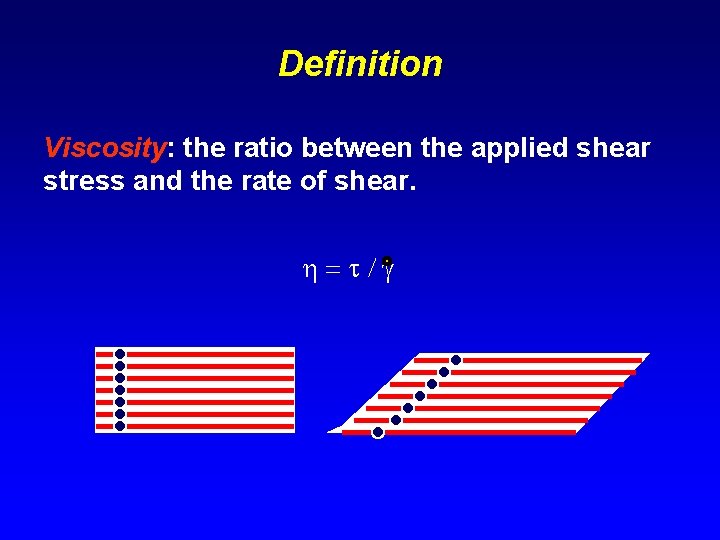
Definition Viscosity: the ratio between the applied shear stress and the rate of shear. h=t/g
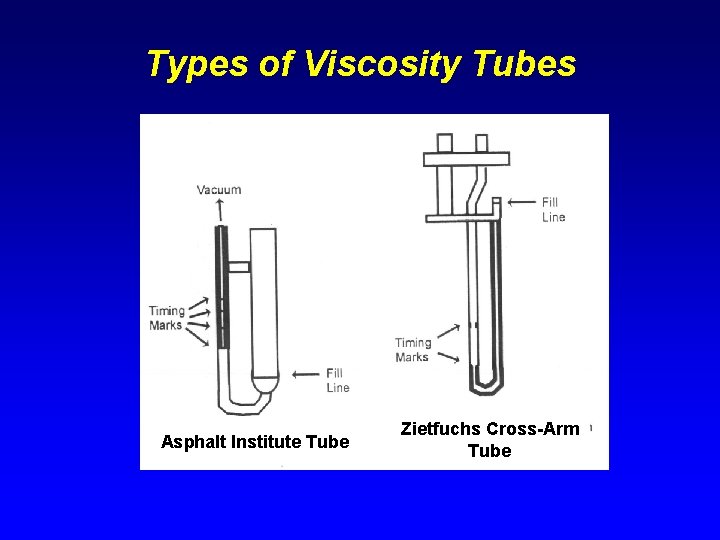
Types of Viscosity Tubes Asphalt Institute Tube Zietfuchs Cross-Arm Tube
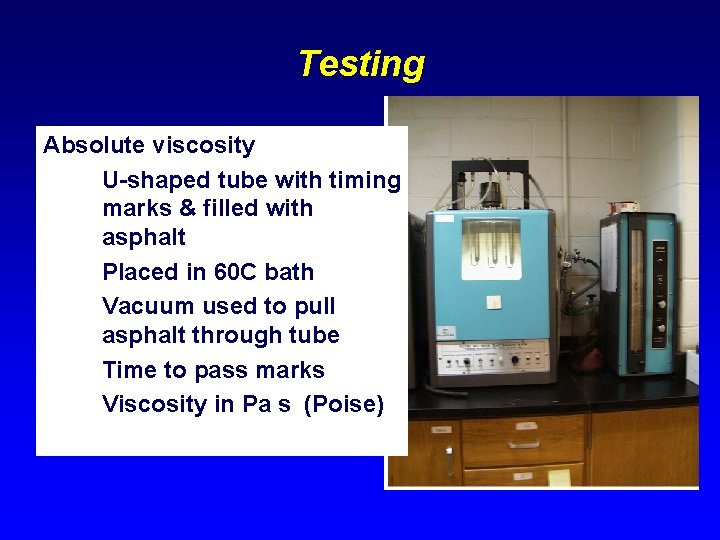
Testing Absolute viscosity – U-shaped tube with timing marks & filled with asphalt – Placed in 60 C bath – Vacuum used to pull asphalt through tube – Time to pass marks – Viscosity in Pa s (Poise)
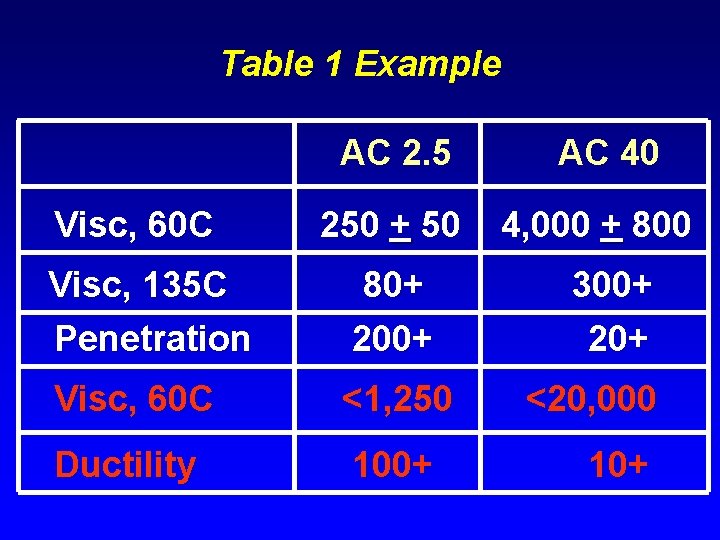
Table 1 Example AC 2. 5 Visc, 60 C 250 + 50 Visc, 135 C Penetration 80+ 200+ Visc, 60 C <1, 250 Ductility 100+ AC 40 4, 000 + 800 300+ 20+ <20, 000 10+
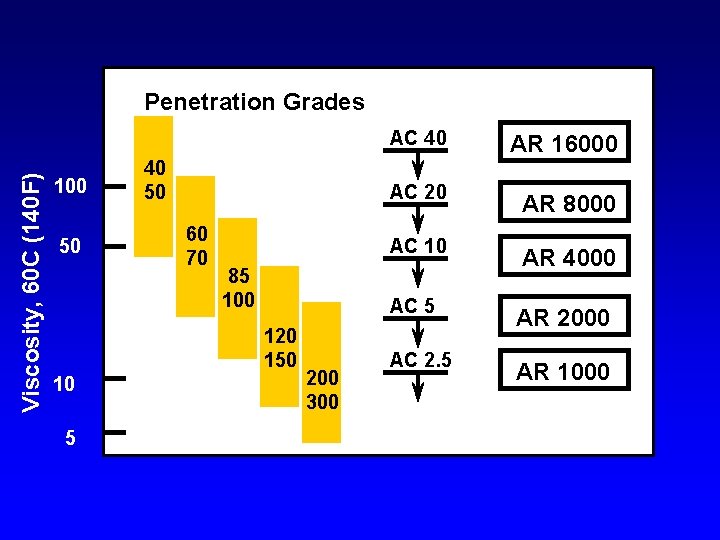
Viscosity, 60 C (140 F) Penetration Grades 100 50 40 50 60 70 85 100 120 150 10 5 200 300 AC 40 AR 16000 AC 20 AR 8000 AC 10 AR 4000 AC 5 AR 2000 AC 2. 5 AR 1000
Aggregates Usually refers to a soil that has in some way been processed or sorted.
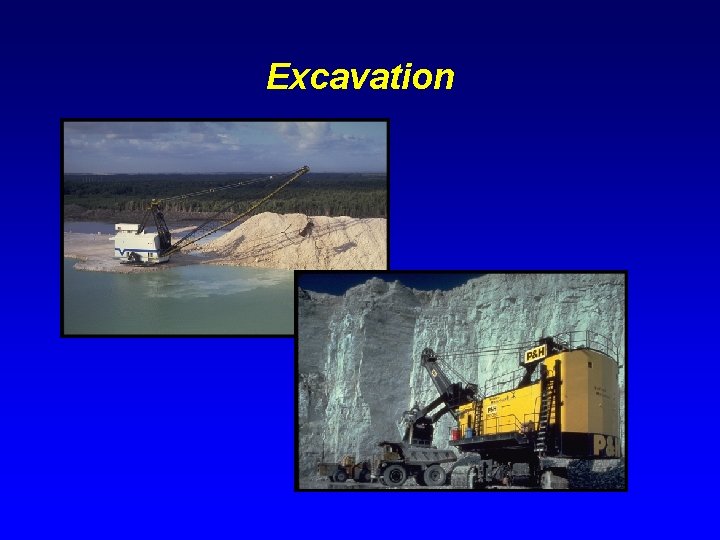
Excavation
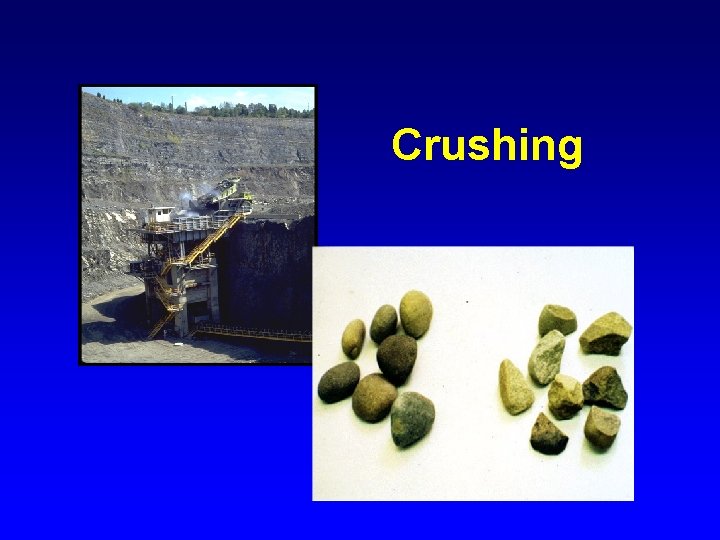
Crushing
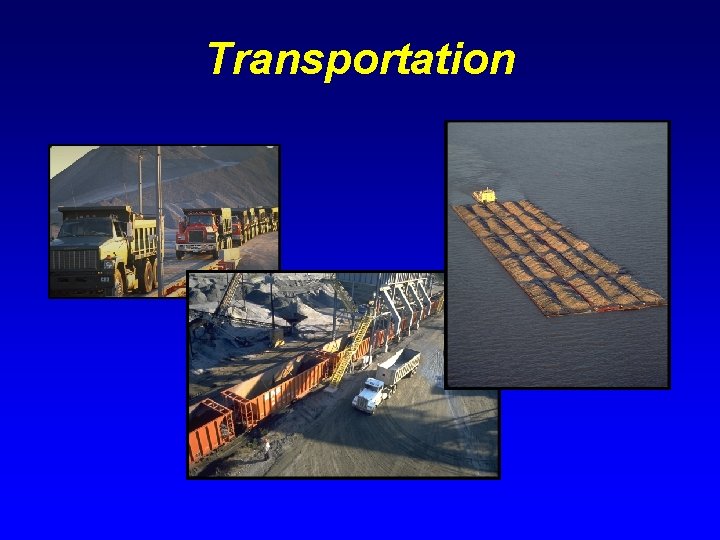
Transportation
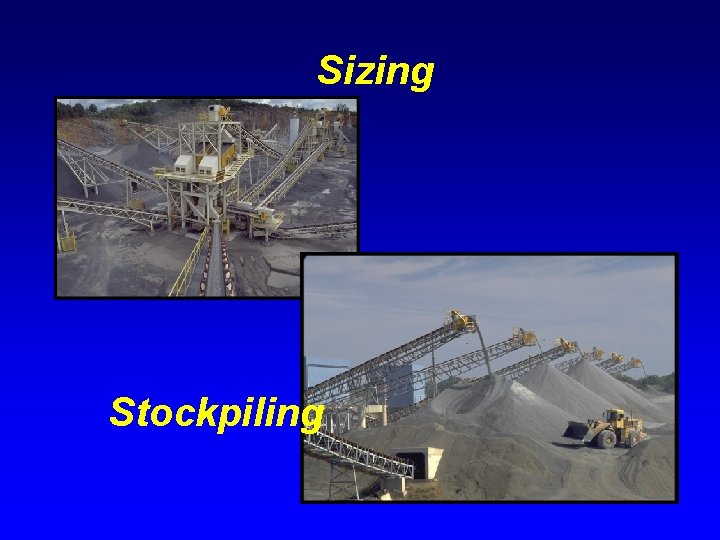
Sizing Stockpiling
Desired Aggregate Properties Toughness Soundness Deleterious Materials Gradation
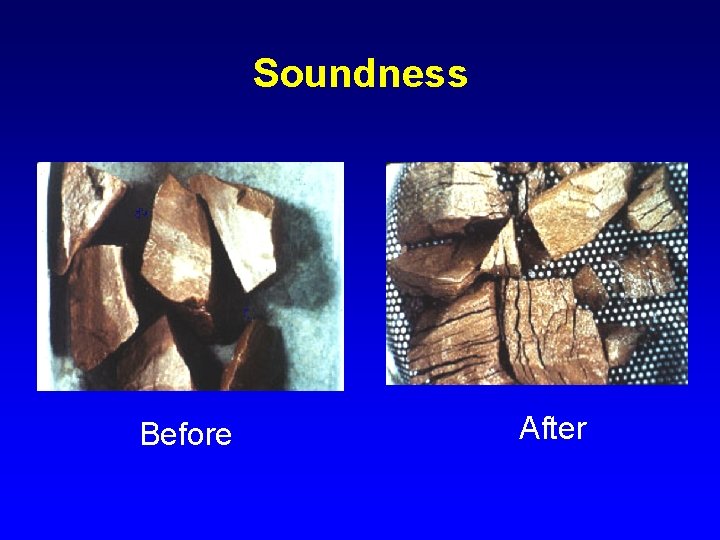
Soundness Before After
Gradations l Aggregate Gradation – The distribution of particle sizes expressed as a percent of total weight. – Determined by sieve analysis
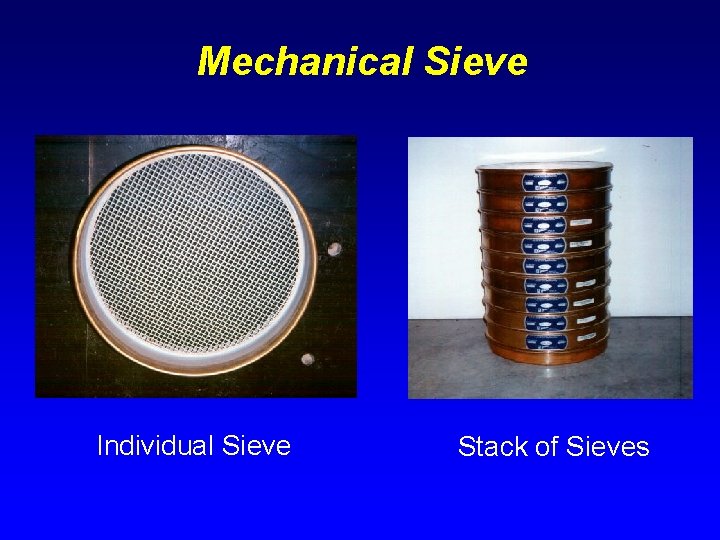
Mechanical Sieve Individual Sieve Stack of Sieves
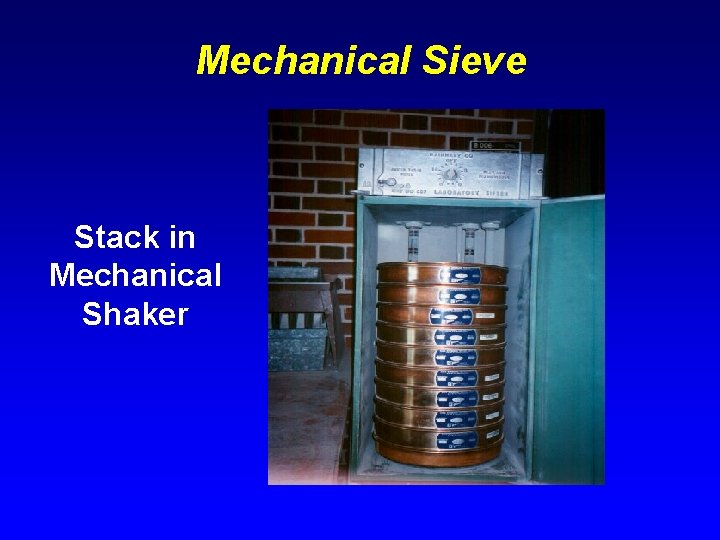
Mechanical Sieve Stack in Mechanical Shaker
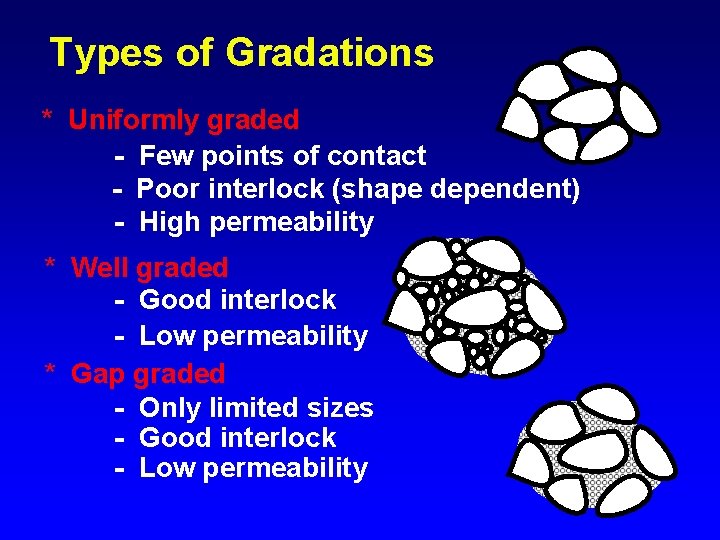
Types of Gradations * Uniformly graded - Few points of contact - Poor interlock (shape dependent) - High permeability * Well graded - Good interlock - Low permeability * Gap graded - Only limited sizes - Good interlock - Low permeability
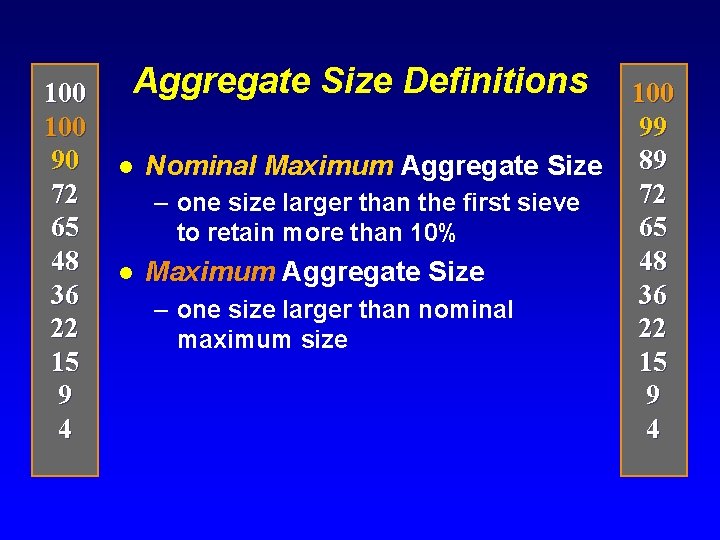
100 90 72 65 48 36 22 15 9 4 Aggregate Size Definitions l Nominal Maximum Aggregate Size – one size larger than the first sieve to retain more than 10% l Maximum Aggregate Size – one size larger than nominal maximum size 100 99 89 72 65 48 36 22 15 9 4
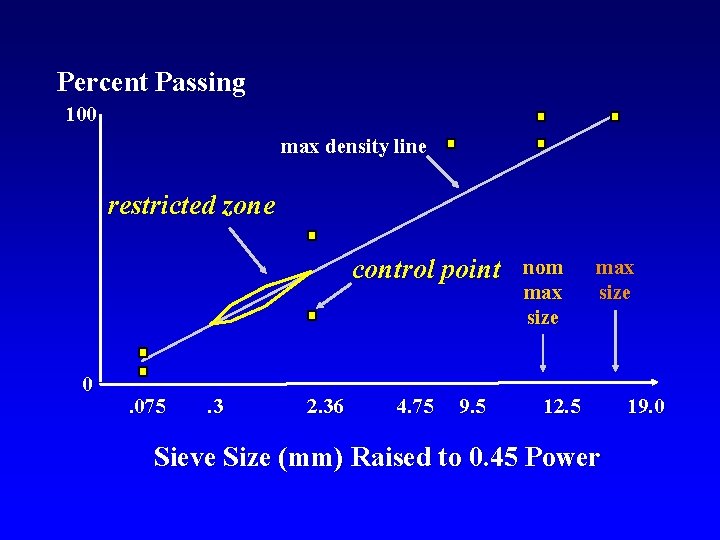
Percent Passing 100 max density line restricted zone control point 0 . 075 . 3 2. 36 4. 75 9. 5 nom max size 12. 5 Sieve Size (mm) Raised to 0. 45 Power 19. 0

Questions - ?
- Slides: 34