
HLTAAP 002 Confirm Physical Health Status Lesson 3
- Slides: 33
HLTAAP 002 Confirm Physical Health Status Lesson 3 Nervous System – Brain & Cranial Nerves
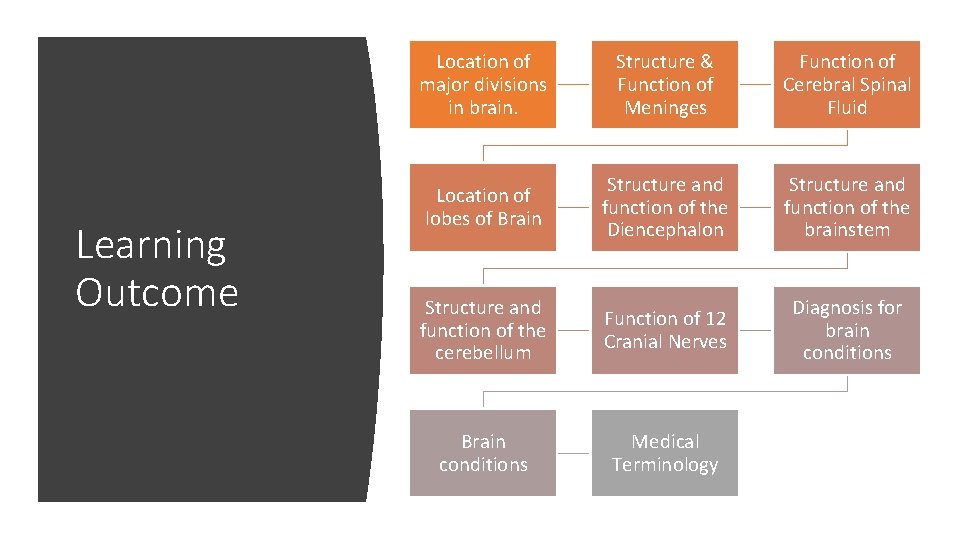
Learning Outcome Location of major divisions in brain. Structure & Function of Meninges Function of Cerebral Spinal Fluid Location of lobes of Brain Structure and function of the Diencephalon Structure and function of the brainstem Structure and function of the cerebellum Function of 12 Cranial Nerves Diagnosis for brain conditions Brain conditions Medical Terminology
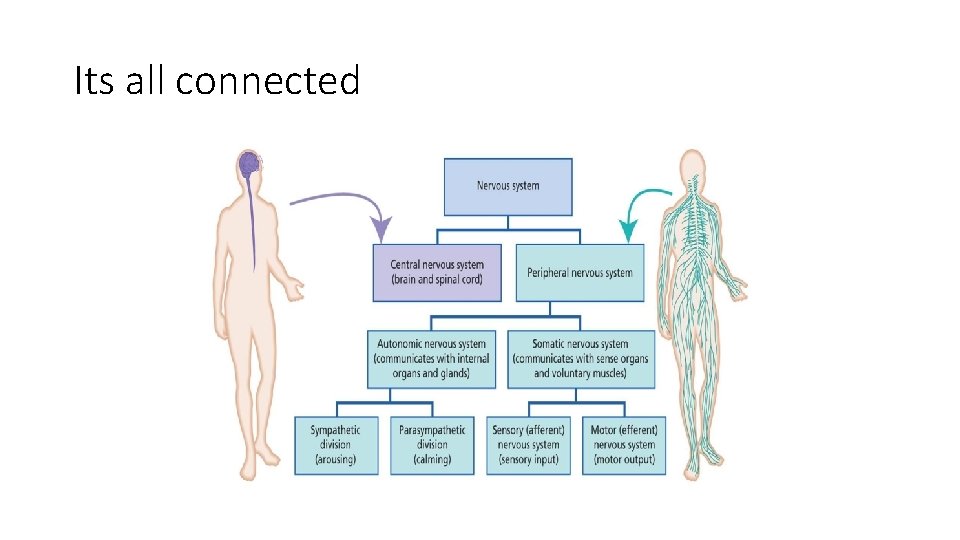
Its all connected
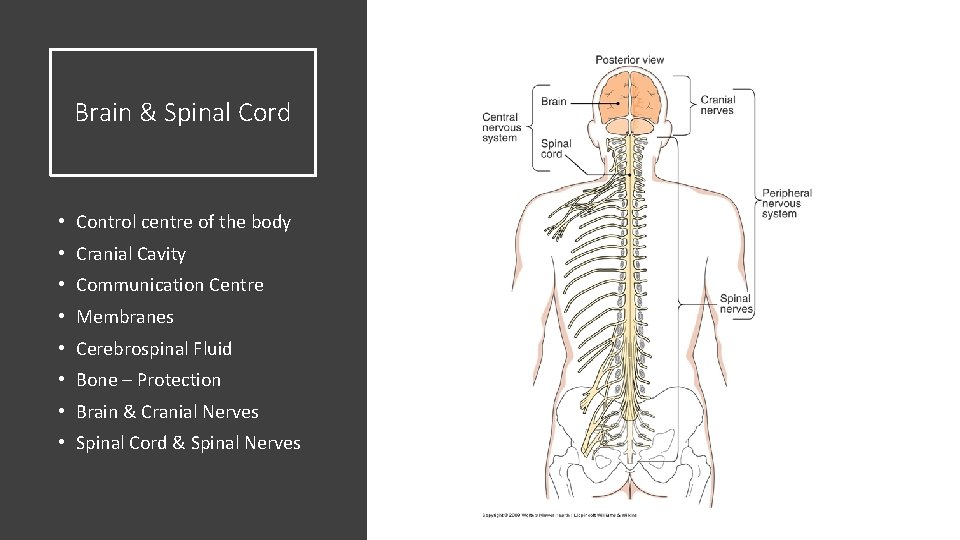
Brain & Spinal Cord • Control centre of the body • Cranial Cavity • Communication Centre • Membranes • Cerebrospinal Fluid • Bone – Protection • Brain & Cranial Nerves • Spinal Cord & Spinal Nerves
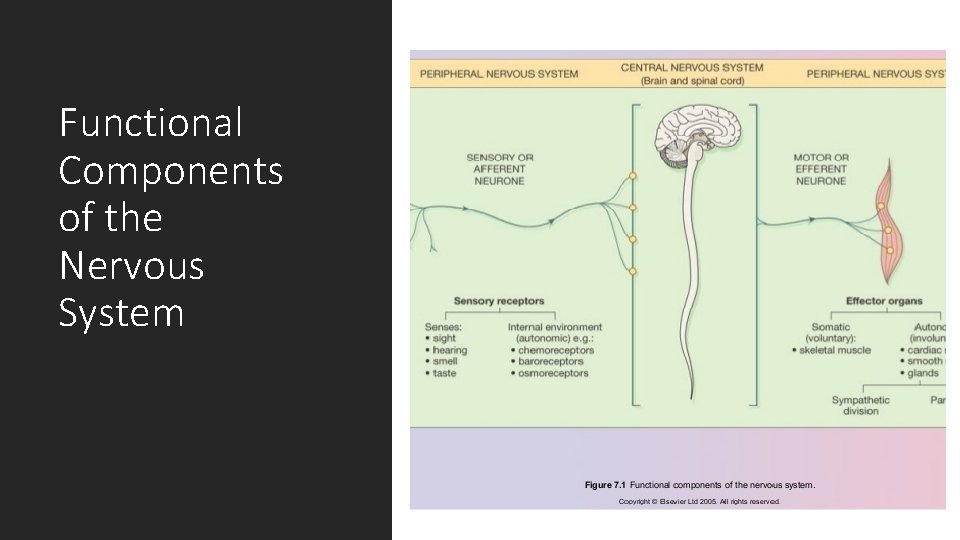
Functional Components of the Nervous System
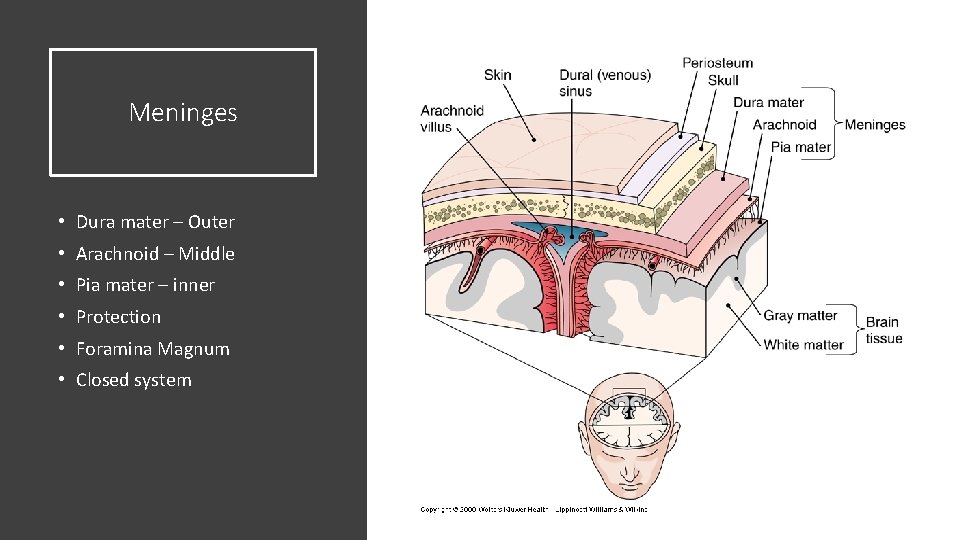
Meninges • Dura mater – Outer • Arachnoid – Middle • Pia mater – inner • Protection • Foramina Magnum • Closed system
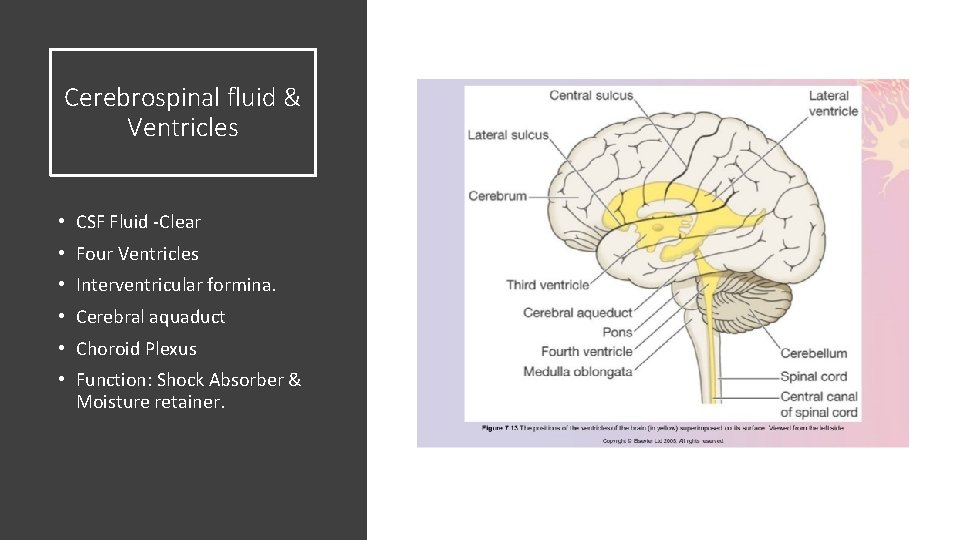
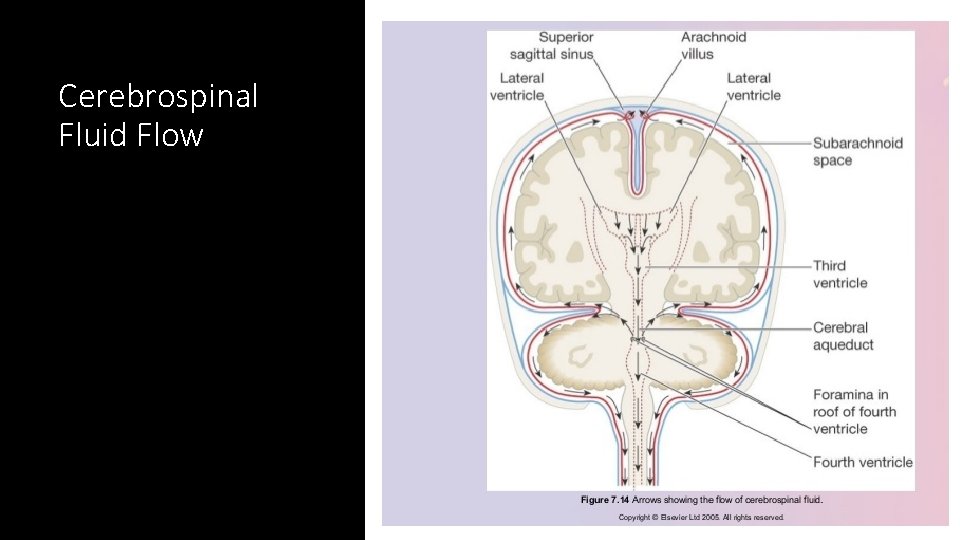
Cerebrospinal fluid & Ventricles • CSF Fluid -Clear • Four Ventricles • Interventricular formina. • Cerebral aquaduct • Choroid Plexus • Function: Shock Absorber & Moisture retainer.
Cerebrospinal Fluid Flow
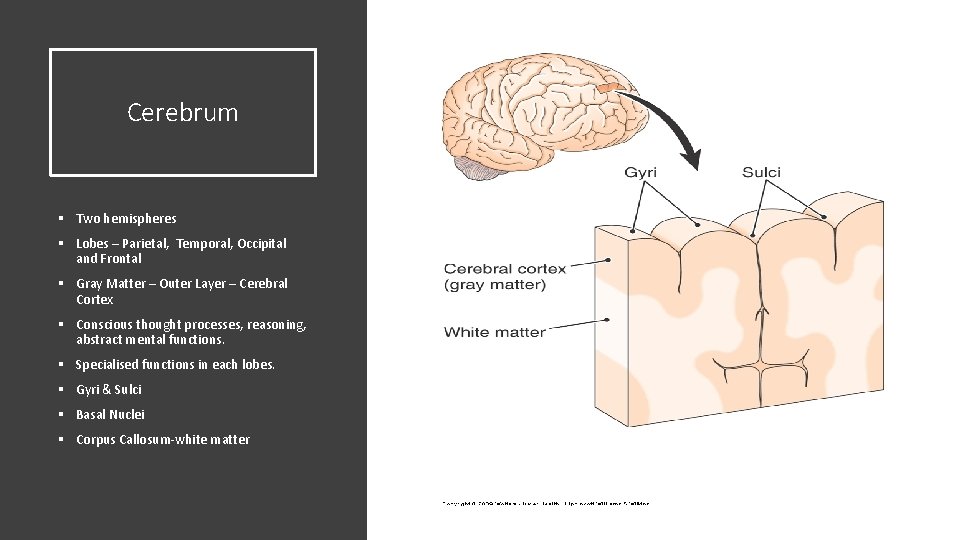
Cerebrum § Two hemispheres § Lobes – Parietal, Temporal, Occipital and Frontal § Gray Matter – Outer Layer – Cerebral Cortex § Conscious thought processes, reasoning, abstract mental functions. § Specialised functions in each lobes. § Gyri & Sulci § Basal Nuclei § Corpus Callosum-white matter
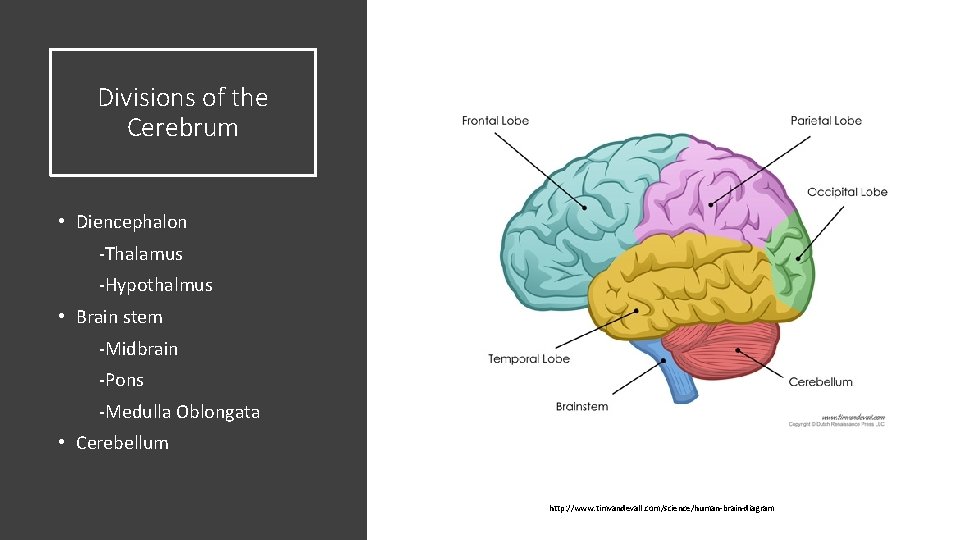
Divisions of the Cerebrum • Diencephalon -Thalamus -Hypothalmus • Brain stem -Midbrain -Pons -Medulla Oblongata • Cerebellum http: //www. timvandevall. com/science/human-brain-diagram
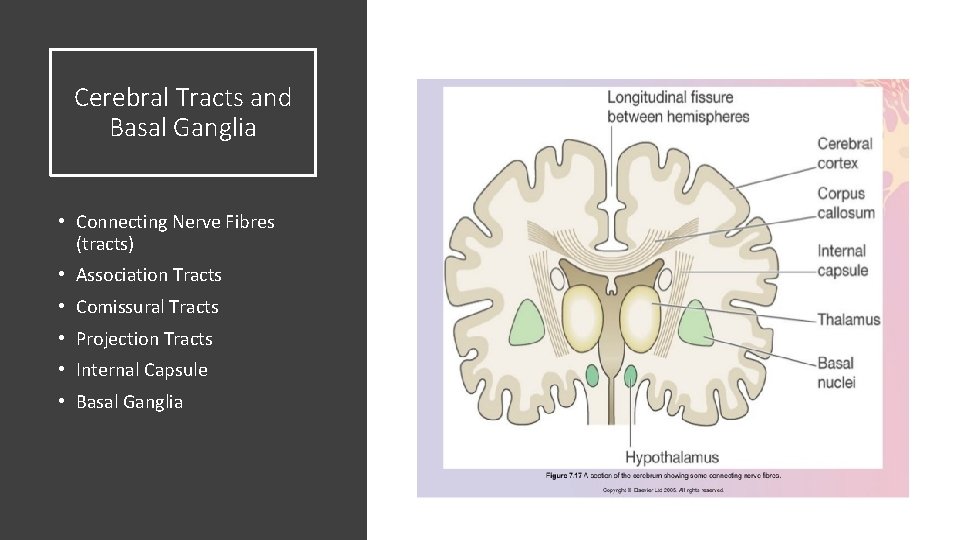
Cerebral Tracts and Basal Ganglia • Connecting Nerve Fibres (tracts) • Association Tracts • Comissural Tracts • Projection Tracts • Internal Capsule • Basal Ganglia
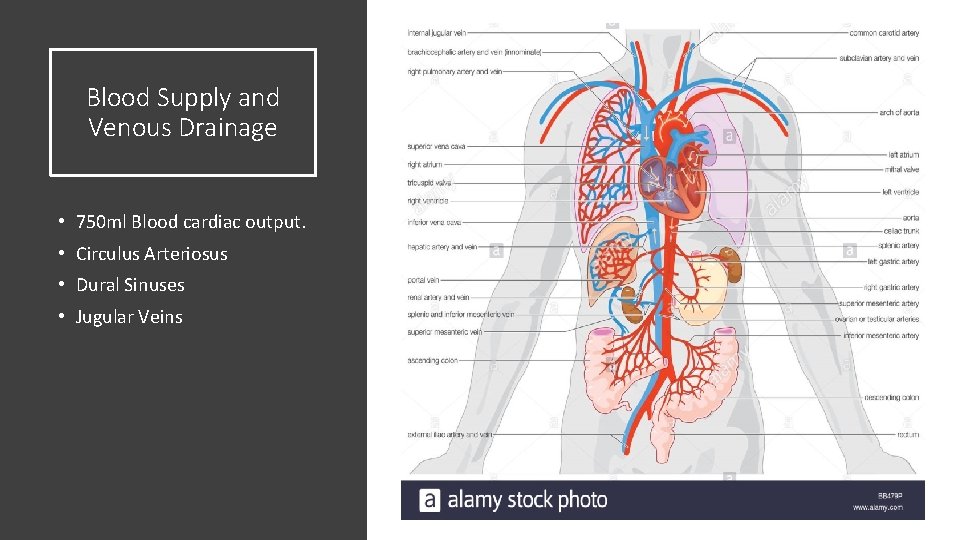
Blood Supply and Venous Drainage • 750 ml Blood cardiac output. • Circulus Arteriosus • Dural Sinuses • Jugular Veins
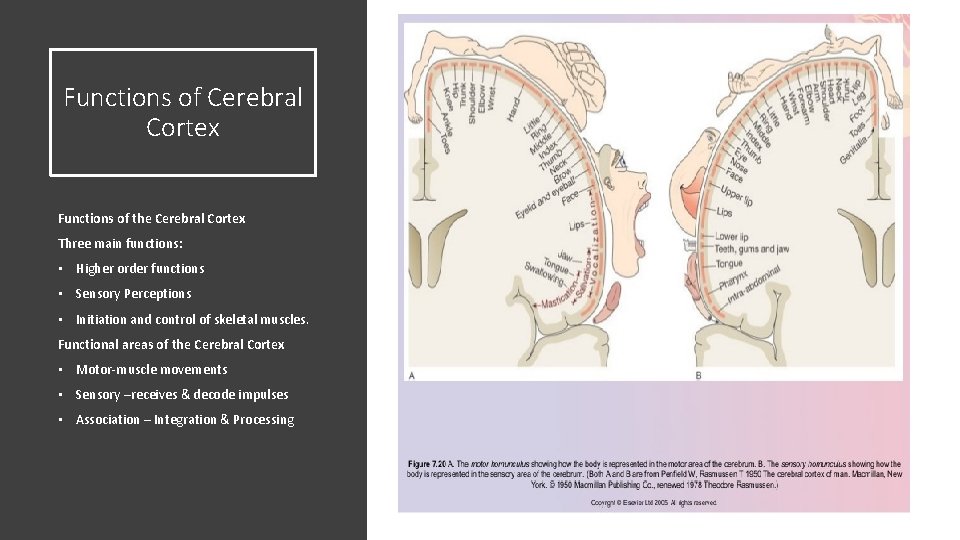
Functions of Cerebral Cortex Functions of the Cerebral Cortex Three main functions: • Higher order functions • Sensory Perceptions • Initiation and control of skeletal muscles. Functional areas of the Cerebral Cortex • Motor-muscle movements • Sensory –receives & decode impulses • Association – Integration & Processing
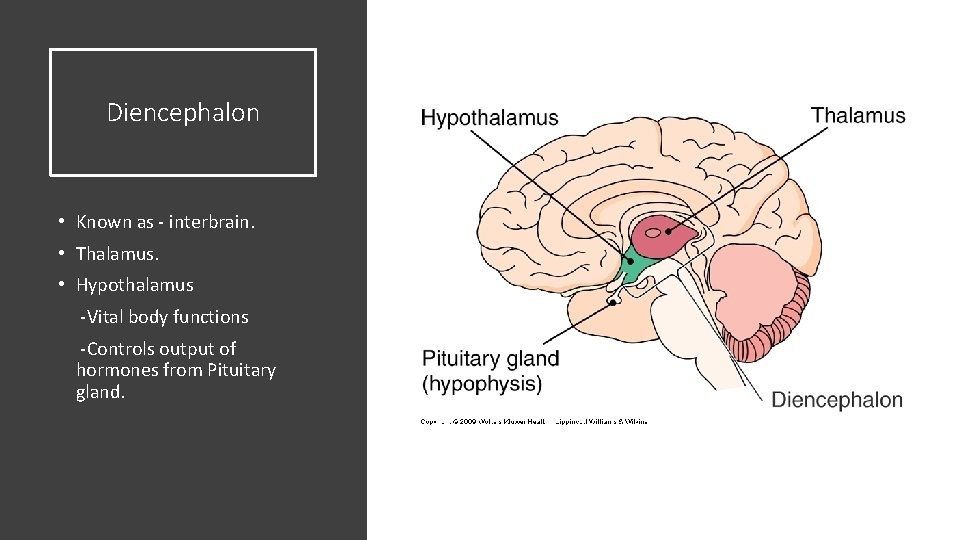
Diencephalon • Known as - interbrain. • Thalamus. • Hypothalamus -Vital body functions -Controls output of hormones from Pituitary gland.
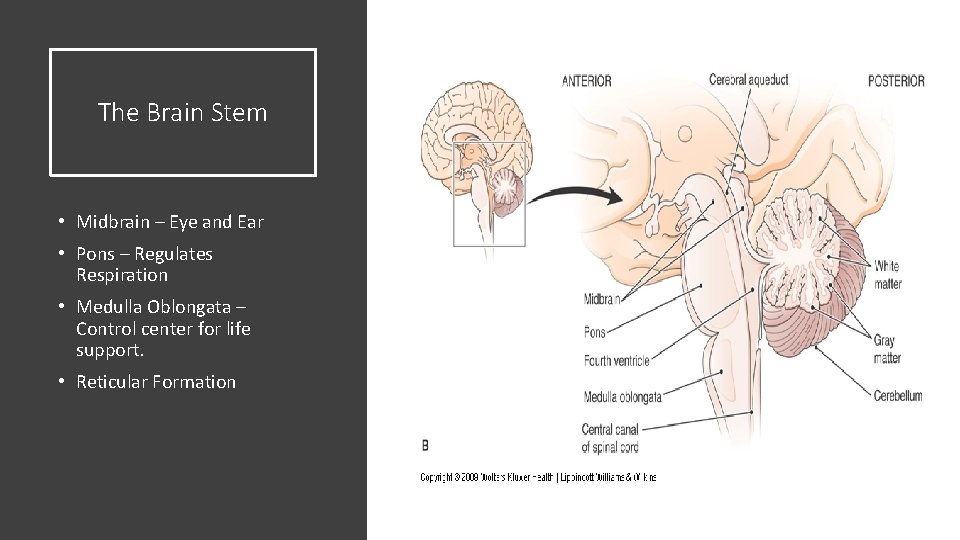
The Brain Stem • Midbrain – Eye and Ear • Pons – Regulates Respiration • Medulla Oblongata – Control center for life support. • Reticular Formation
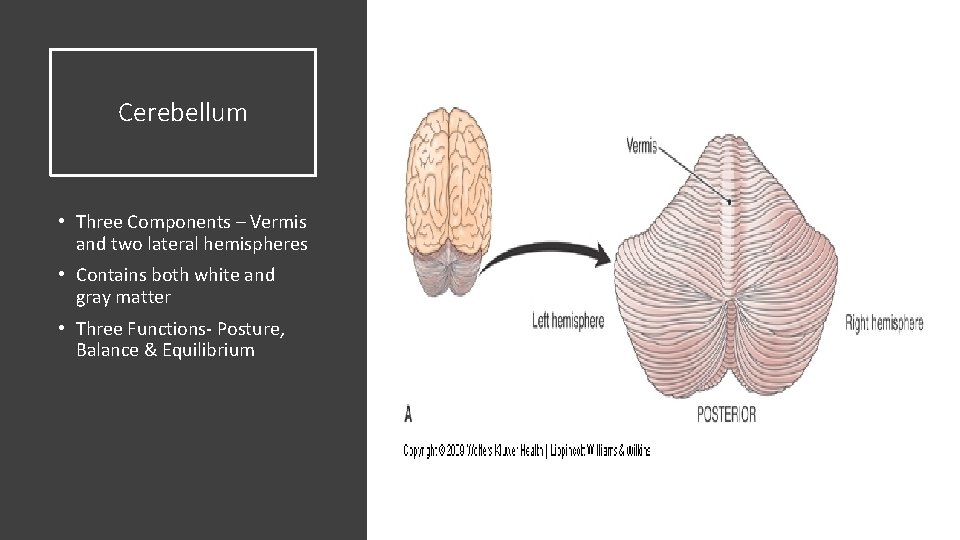
Cerebellum • Three Components – Vermis and two lateral hemispheres • Contains both white and gray matter • Three Functions- Posture, Balance & Equilibrium
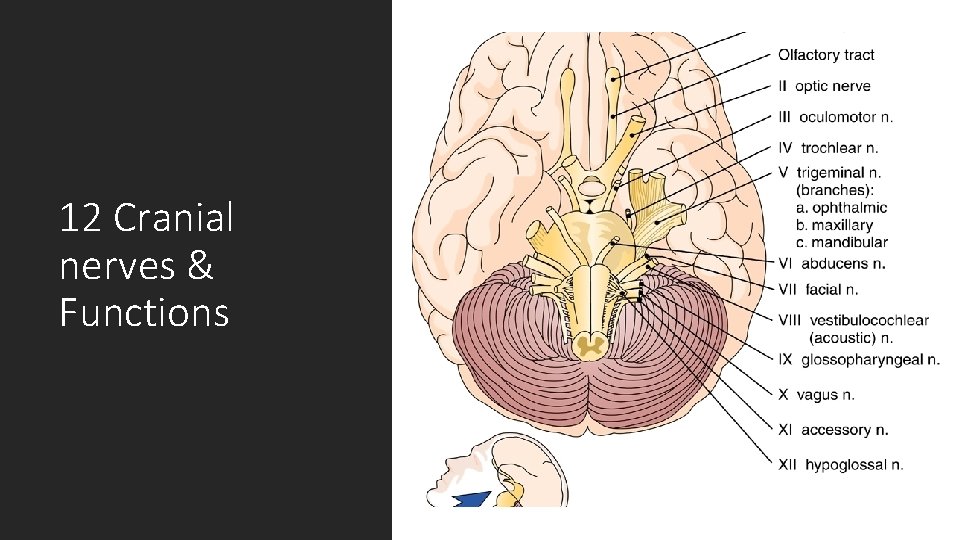
12 Cranial nerves & Functions
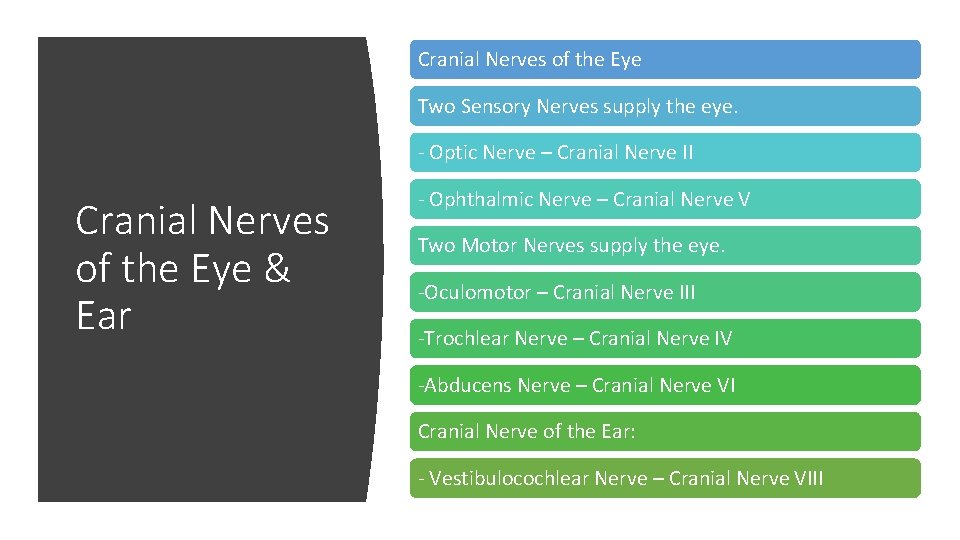
Cranial Nerves of the Eye Two Sensory Nerves supply the eye. - Optic Nerve – Cranial Nerve II Cranial Nerves of the Eye & Ear - Ophthalmic Nerve – Cranial Nerve V Two Motor Nerves supply the eye. -Oculomotor – Cranial Nerve III -Trochlear Nerve – Cranial Nerve IV -Abducens Nerve – Cranial Nerve VI Cranial Nerve of the Ear: - Vestibulocochlear Nerve – Cranial Nerve VIII
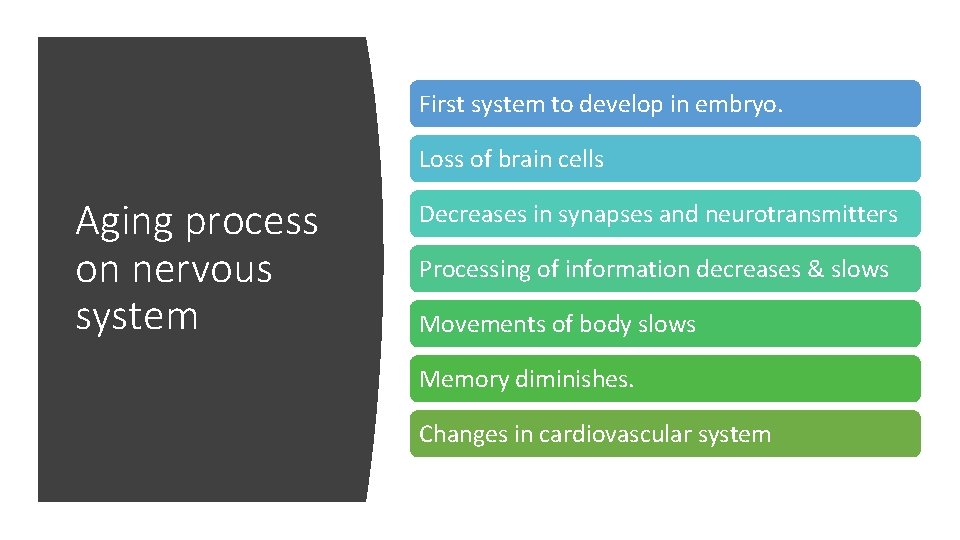
First system to develop in embryo. Loss of brain cells Aging process on nervous system Decreases in synapses and neurotransmitters Processing of information decreases & slows Movements of body slows Memory diminishes. Changes in cardiovascular system
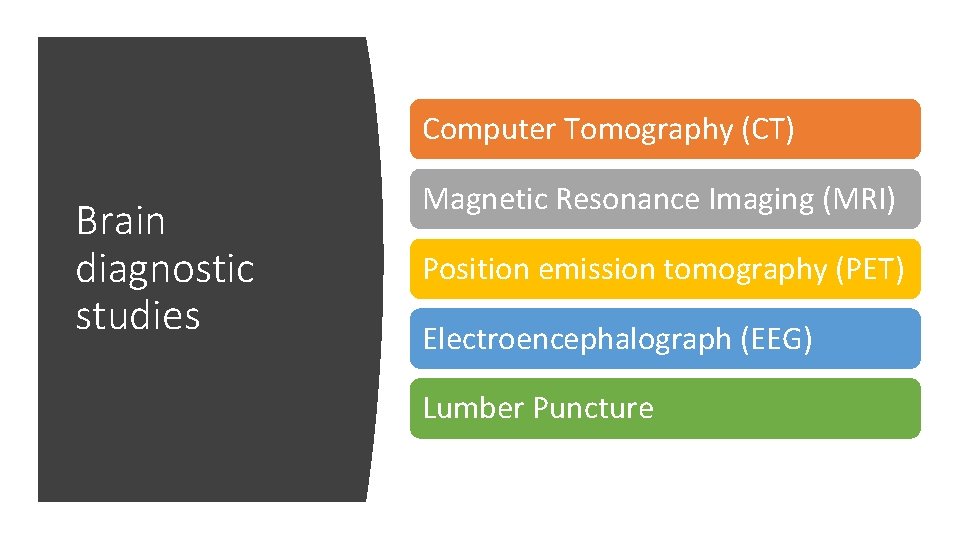
Computer Tomography (CT) Brain diagnostic studies Magnetic Resonance Imaging (MRI) Position emission tomography (PET) Electroencephalograph (EEG) Lumber Puncture
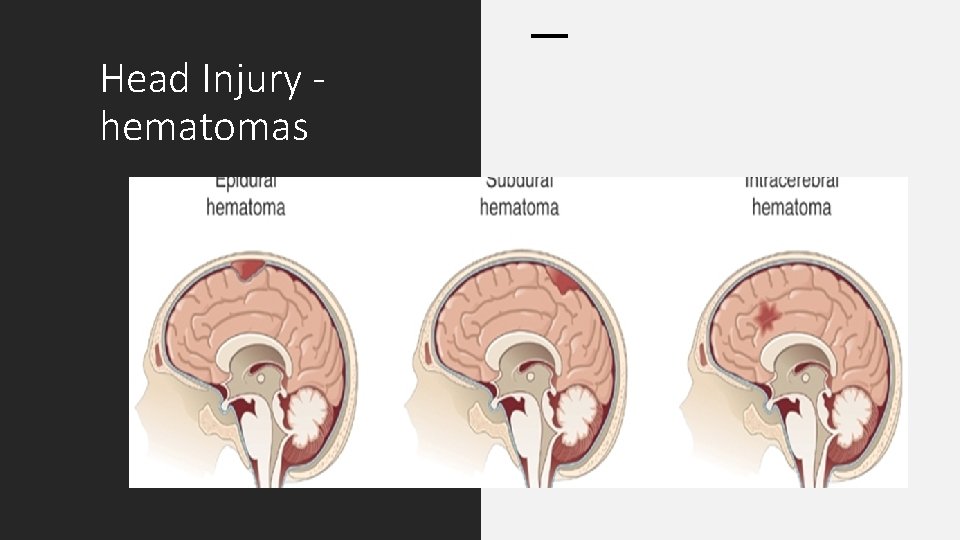
Head Injury hematomas
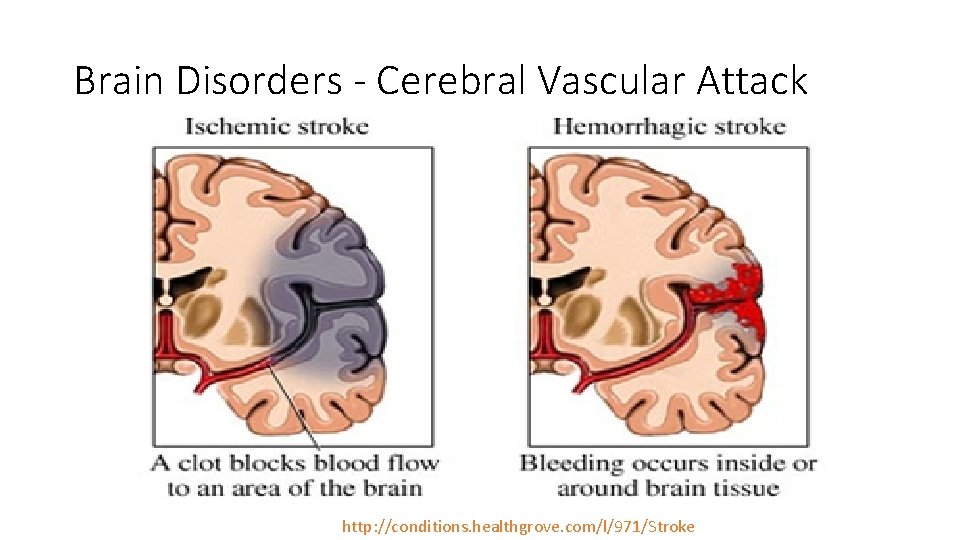
Brain Disorders - Cerebral Vascular Attack http: //conditions. healthgrove. com/l/971/Stroke
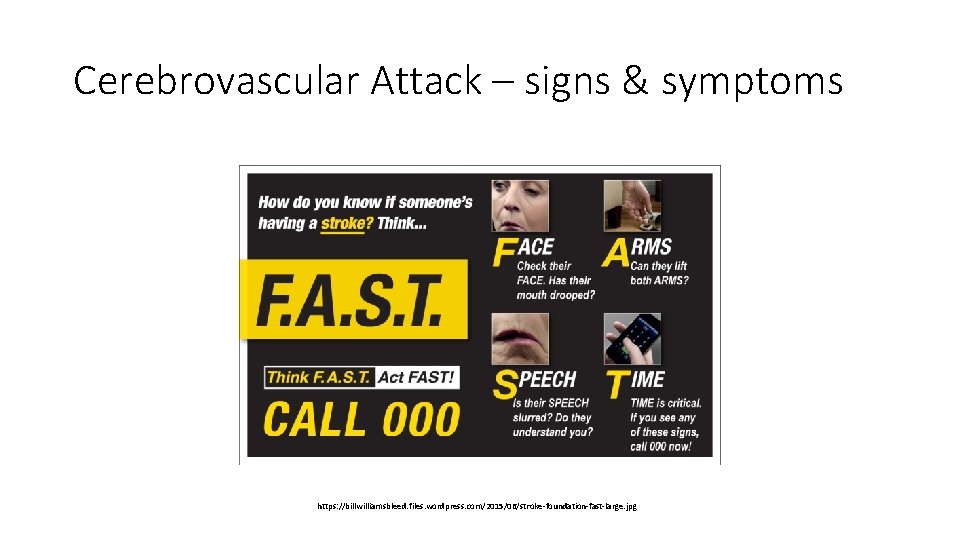
Cerebrovascular Attack – signs & symptoms https: //billwilliamsbleed. files. wordpress. com/2015/06/stroke-foundation-fast-large. jpg
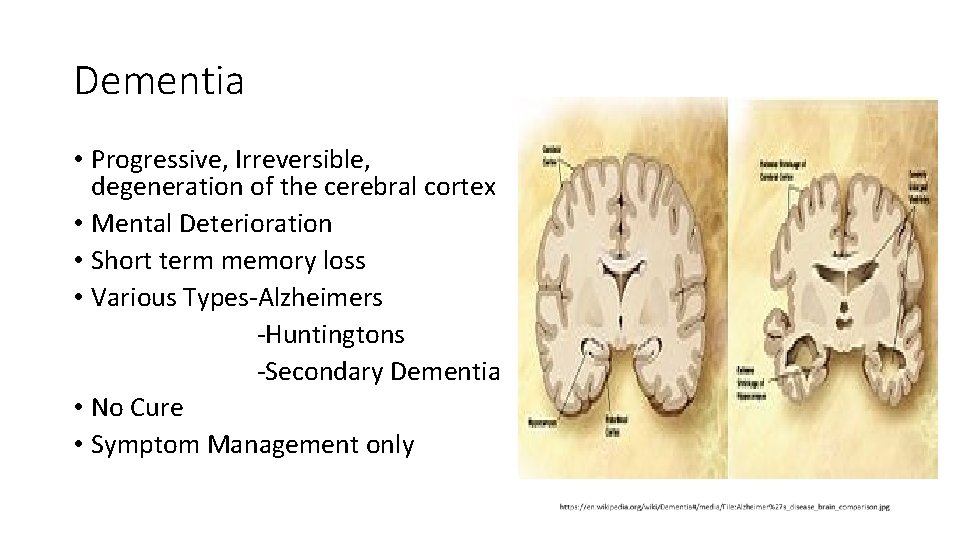
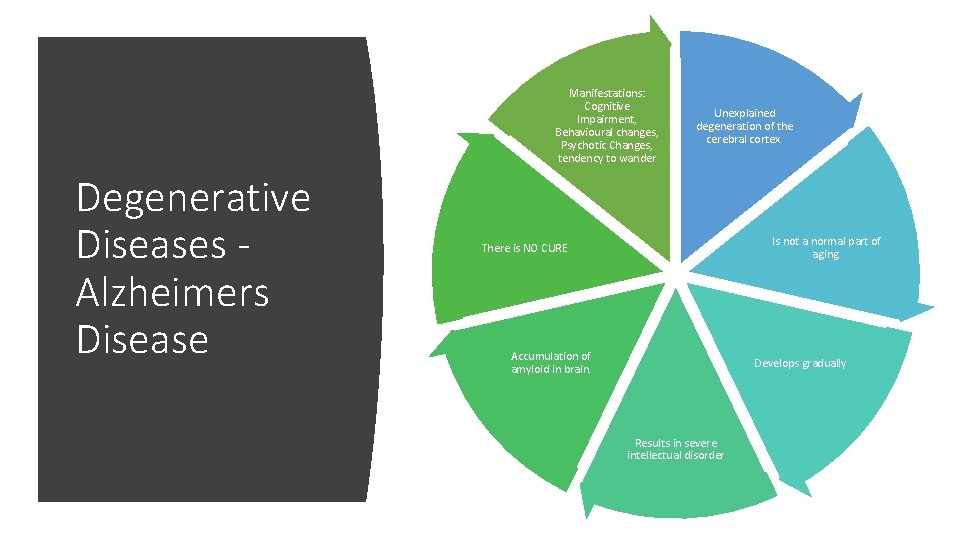
Dementia • Progressive, Irreversible, degeneration of the cerebral cortex • Mental Deterioration • Short term memory loss • Various Types-Alzheimers -Huntingtons -Secondary Dementia • No Cure • Symptom Management only
Manifestations: Cognitive Impairment, Behavioural changes, Psychotic Changes, tendency to wander Degenerative Diseases Alzheimers Disease Unexplained degeneration of the cerebral cortex. Is not a normal part of aging. There is NO CURE Accumulation of amyloid in brain. Develops gradually Results in severe intellectual disorder
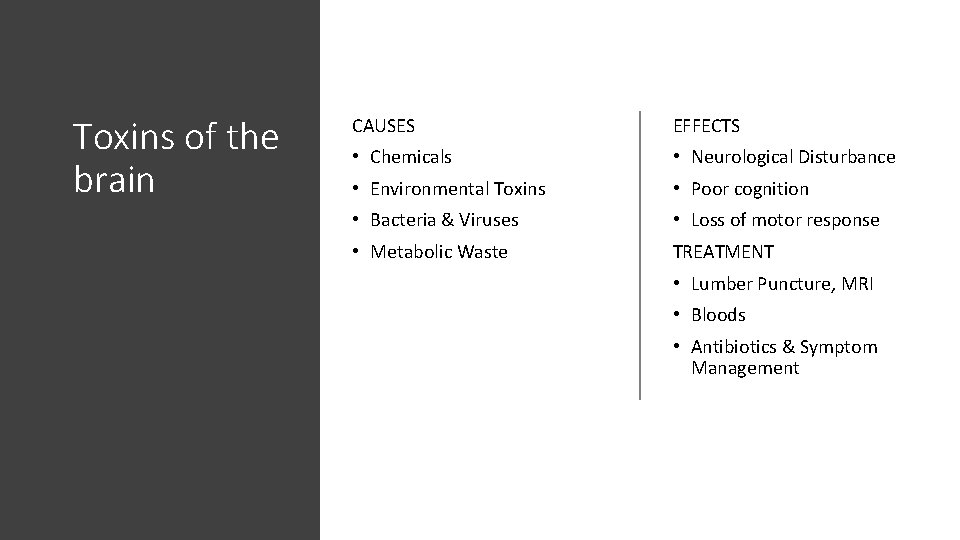
Toxins of the brain CAUSES EFFECTS • Chemicals • Neurological Disturbance • Environmental Toxins • Poor cognition • Bacteria & Viruses • Loss of motor response • Metabolic Waste TREATMENT • Lumber Puncture, MRI • Bloods • Antibiotics & Symptom Management
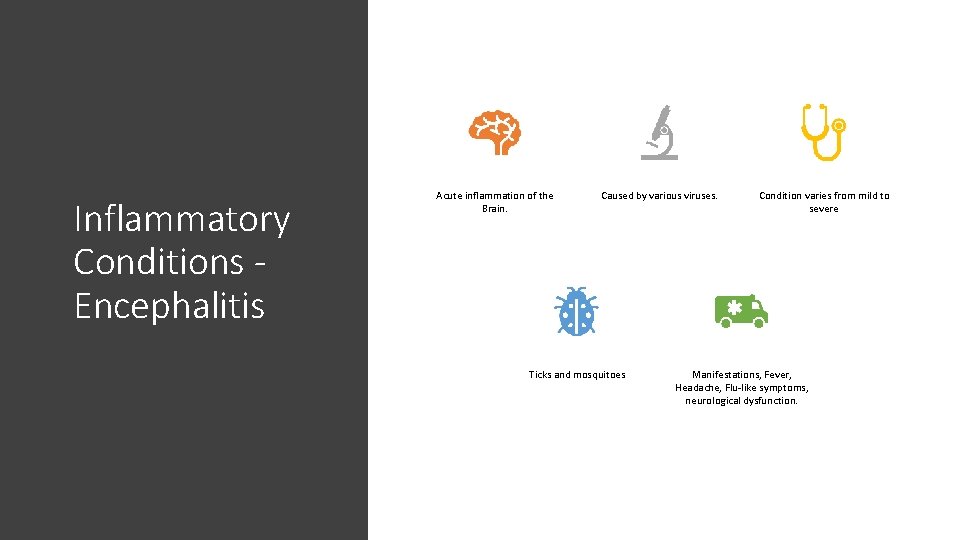
Inflammatory Conditions Encephalitis Acute inflammation of the Brain. Caused by various viruses. Ticks and mosquitoes Condition varies from mild to severe Manifestations, Fever, Headache, Flu-like symptoms, neurological dysfunction.
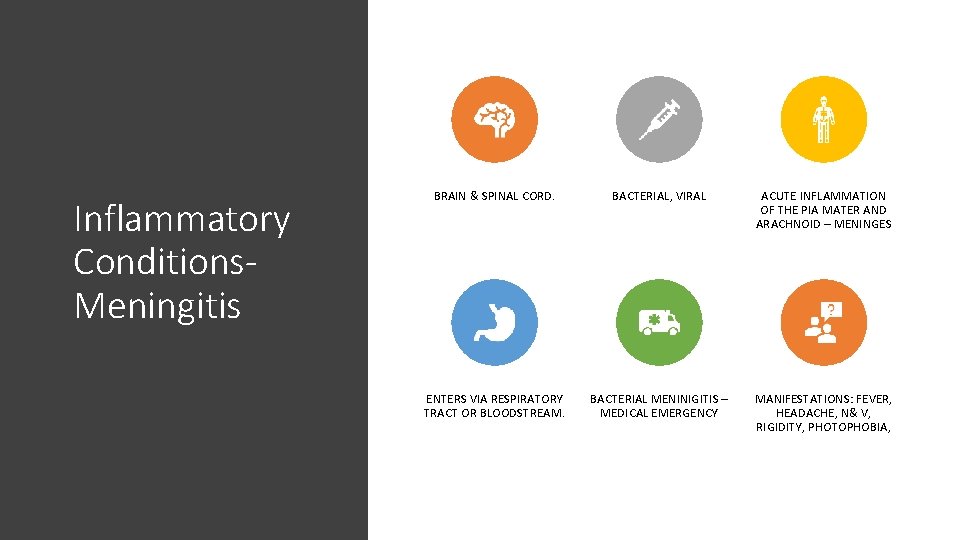
Inflammatory Conditions. Meningitis BRAIN & SPINAL CORD. BACTERIAL, VIRAL ACUTE INFLAMMATION OF THE PIA MATER AND ARACHNOID – MENINGES ENTERS VIA RESPIRATORY TRACT OR BLOODSTREAM. BACTERIAL MENINIGITIS – MEDICAL EMERGENCY MANIFESTATIONS: FEVER, HEADACHE, N& V, RIGIDITY, PHOTOPHOBIA,
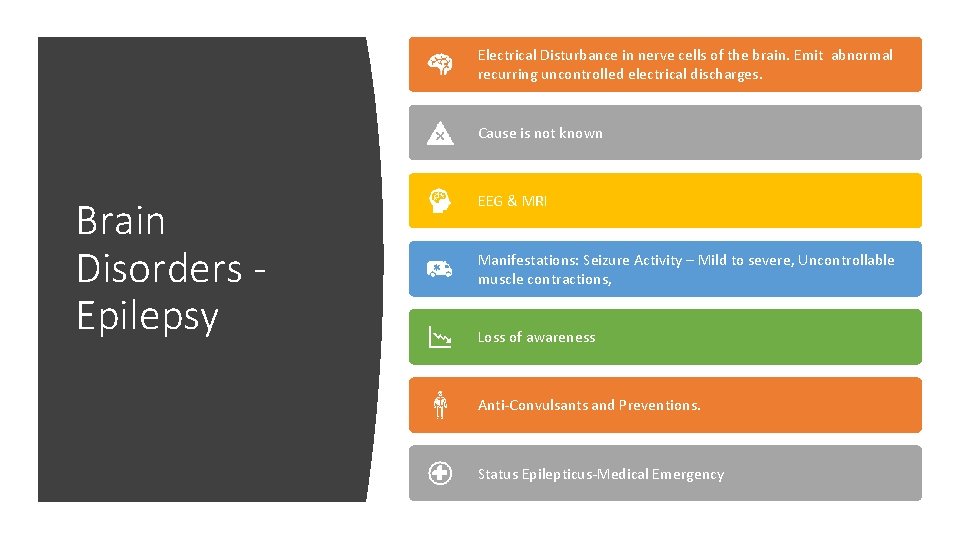
Electrical Disturbance in nerve cells of the brain. Emit abnormal recurring uncontrolled electrical discharges. Cause is not known Brain Disorders Epilepsy EEG & MRI Manifestations: Seizure Activity – Mild to severe, Uncontrollable muscle contractions, Loss of awareness Anti-Convulsants and Preventions. Status Epilepticus-Medical Emergency
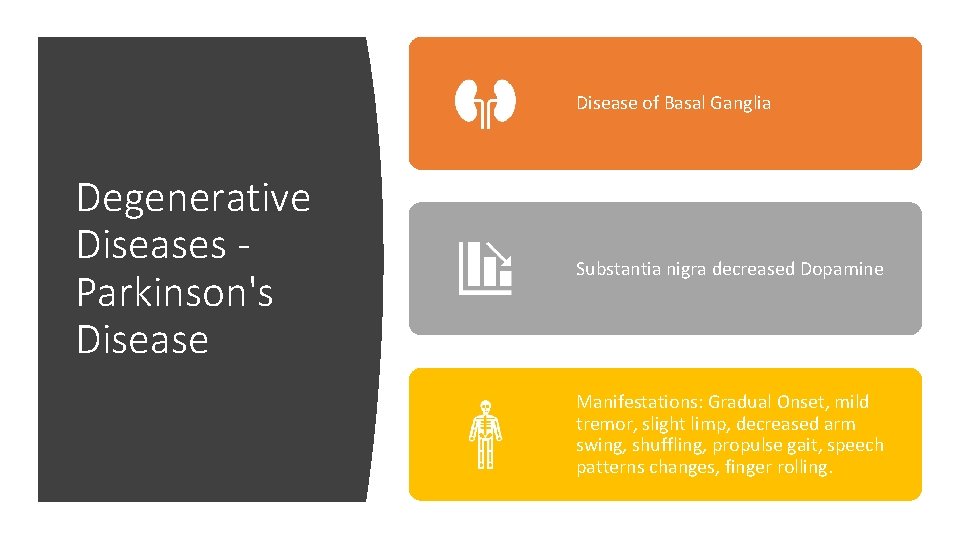
Disease of Basal Ganglia Degenerative Diseases Parkinson's Disease Substantia nigra decreased Dopamine Manifestations: Gradual Onset, mild tremor, slight limp, decreased arm swing, shuffling, propulse gait, speech patterns changes, finger rolling.
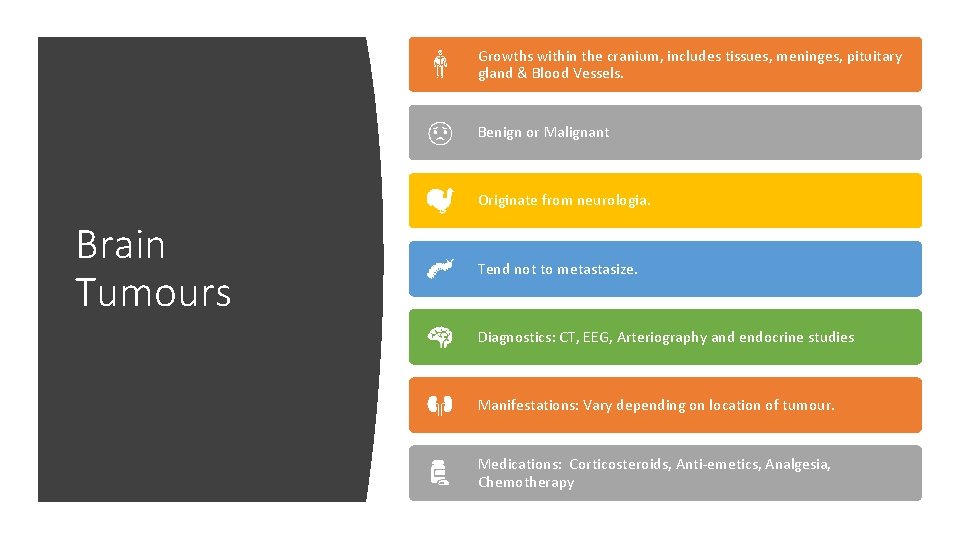
Growths within the cranium, includes tissues, meninges, pituitary gland & Blood Vessels. Benign or Malignant Originate from neurologia. Brain Tumours Tend not to metastasize. Diagnostics: CT, EEG, Arteriography and endocrine studies Manifestations: Vary depending on location of tumour. Medications: Corticosteroids, Anti-emetics, Analgesia, Chemotherapy
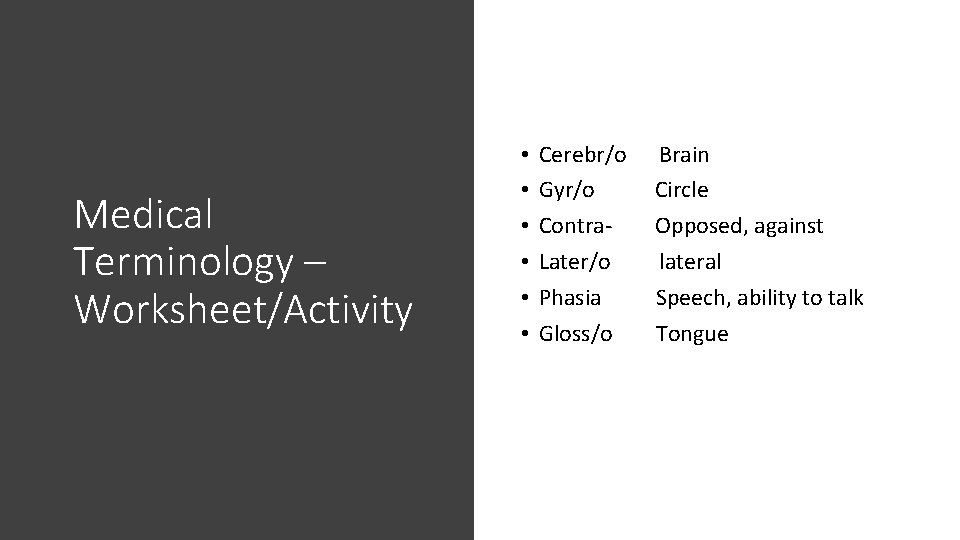
Medical Terminology – Worksheet/Activity • • • Cerebr/o Gyr/o Contra. Later/o Phasia Gloss/o Brain Circle Opposed, against lateral Speech, ability to talk Tongue
References • Ross & Wilson Anatomy & Physiology (2014) 12 th ed. A, & Grant A. , Churchill Livingstone Elsevier • Memmlers The Human Body In Health and Disease (2013) 12 th Lippincott Williams & Wilkins • Andrew Huttons – An Introduction to Medical Terminology for Health Care-Self teaching package – (2017) 5 th ed.