
HIVAIDS The Basics Structure of presentation What is
HIV/AIDS: The Basics
Structure of presentation -What is HIV -What is AIDS -How does HIV spread (and does not!) -What happens after HIV enters body § The HIV test § AIDS -Treatment
Structure of presentation -What is HIV -What is AIDS -How does HIV spread (and does not!) -What happens after HIV enters body § The HIV test § AIDS -Treatment
HIV: Human Immunodeficiency Virus
HIV: Human Immunodeficiency Virus -How are Virus Unique? § Virus are microorganisms § They are considered to be a connecting link between living and nonliving § Virus are fragile. Destroys rapidly out side cell

HIV: Human Immunodeficiency Virus
Structure of presentation -What is HIV -What is AIDS -How does HIV spread (and does not!) -What happens after HIV enters body § The HIV test § AIDS -Treatment
What is AIDS A - Acquired (to get from someone) I - Immune (body's defense or resistance) D - Deficiency (lack of resistance) S - Syndrome (signs and symptoms of disease)
Structure of presentation -What is HIV -What is AIDS -How does HIV spread (and does not!) -What happens after HIV enters body § The HIV test § AIDS -Treatment
HIV transmission -Requirements for transmission to occur § HIV must be present… • Transmission can’t occur from one non-infected individual to another § In sufficient quantity… • A small amount of blood is enough to infect. A larger amount of other fluids would be needed § And it must get into the bloodstream • Healthy, unbroken skin does not allow HIV to get into the body
HIV transmission -HIV Survival Outside The Body § Length of time HIV can survive outside the body • HIV is very fragile, and many common substances, including hot water, soap, bleach and alcohol, will kill it § Exposure to air • Air does not "kill" HIV, but exposure to air dries the fluid that contained the virus, and that will destroy or break up much of the virus very quickly § Needles • HIV can survive for several days in the small amount of blood that remains in a needle after use
HIV transmission -Infectious fluids in the body § Blood (including menstrual blood) § Semen § Vaginal secretions § Breast milk § Pre-seminal fluid -Non-Infectious fluids in the body § § § Saliva Tears Sweat Feces Urine
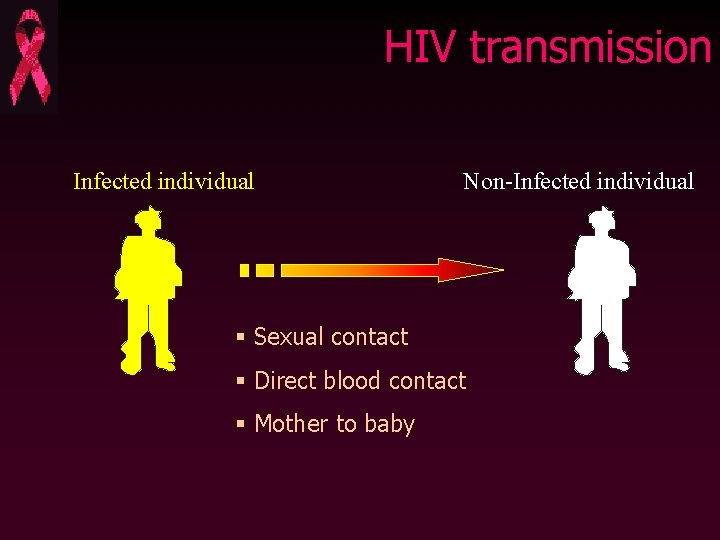
HIV transmission Infected individual Non-Infected individual § Sexual contact § Direct blood contact § Mother to baby
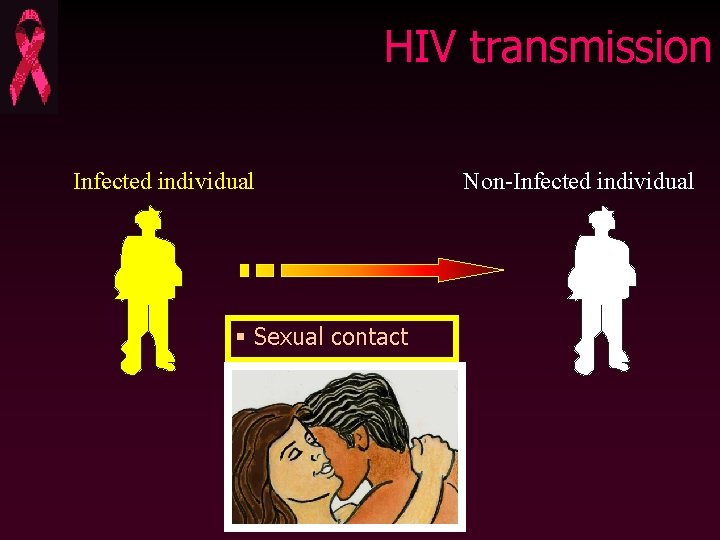
HIV transmission Infected individual Non-Infected individual § Sexual contact § Direct blood contact § Mother to baby
HIV transmission -Sexual Transmission: Risks § § Peno-Anal Peno-Vaginal Male to Female More in presence > Peno-Vaginal > Oral sex > Female to Male of injuries • Hence risk more in coercive / violent sex § More in presence of STIs
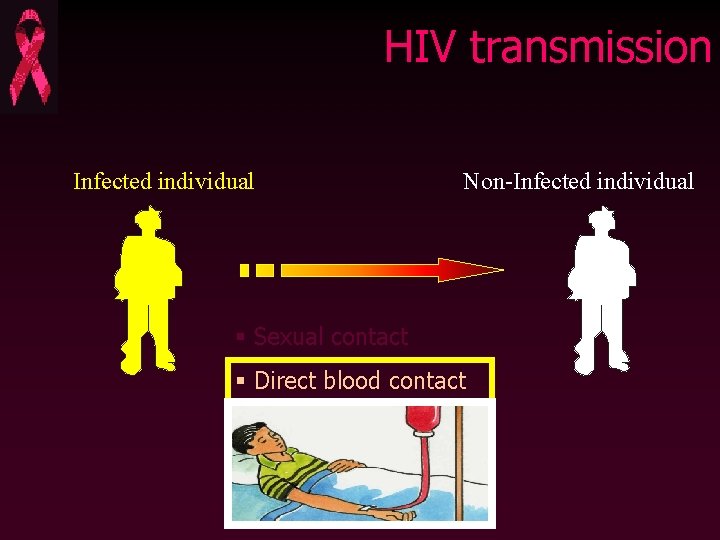
HIV transmission Infected individual Non-Infected individual § Sexual contact § Direct blood contact § Mother to baby
HIV transmission -Direct Blood Transmission: Risks § Blood Transfusion • Also includes blood-product transfusion § Sharing of Needles • Intravenous > Intamuscular § ‘Needle sticks’: Accidental transmission in health care settings § Shaving, ‘Blade Injury’, Tattooing, and Piercing: Low but present
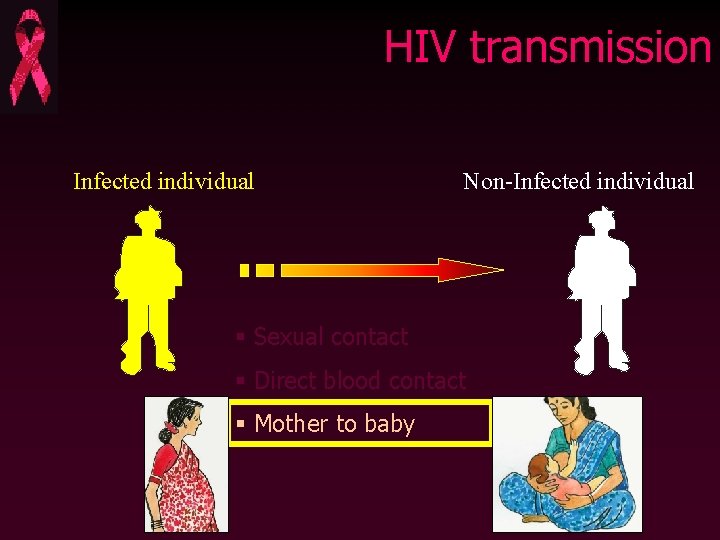
HIV transmission Infected individual Non-Infected individual § Sexual contact § Direct blood contact § Mother to baby
HIV transmission -Mother to Baby § Before Birth: Baby shares mother’s blood § During Birth § Through Breast Feeding: Though quantity of virus is small in breast milk, enough to cause infection in the baby.
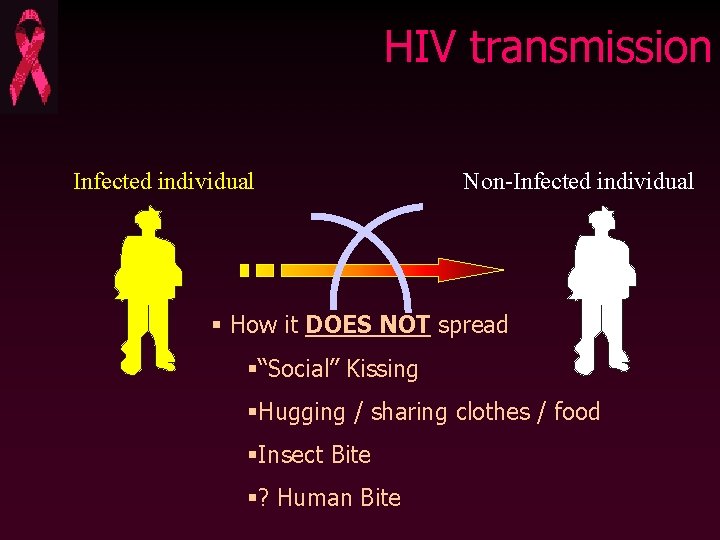
HIV transmission Infected individual Non-Infected individual § How it DOES NOT spread §“Social” Kissing §Hugging / sharing clothes / food §Insect Bite §? Human Bite
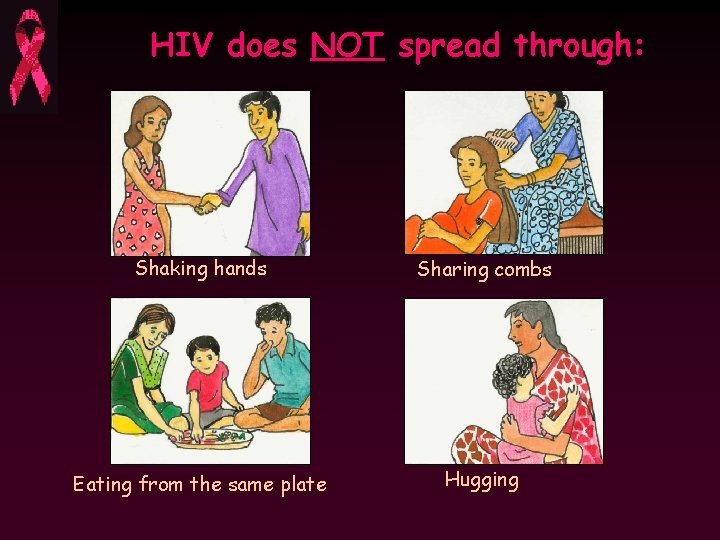
HIV does NOT spread through: Shaking hands Sharing combs Eating from the same plate Hugging
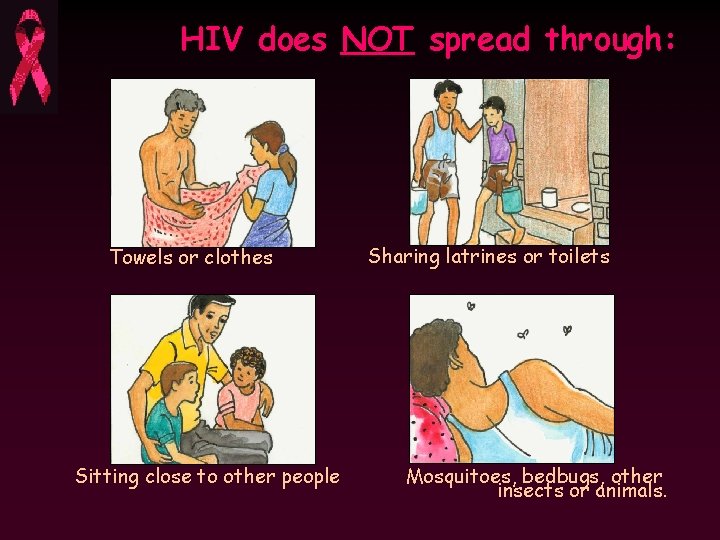
HIV does NOT spread through: Towels or clothes Sitting close to other people Sharing latrines or toilets Mosquitoes, bedbugs, other insects or animals.
Structure of presentation -What is HIV -What is AIDS -How does HIV spread (and does not!) -What happens after HIV enters body § The HIV test § AIDS -Treatment
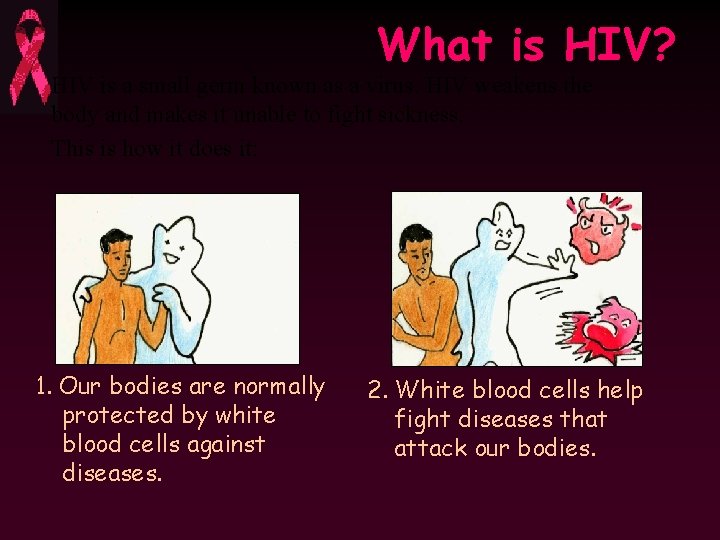
What is HIV? HIV is a small germ known as a virus. HIV weakens the body and makes it unable to fight sickness. This is how it does it: 1. Our bodies are normally protected by white blood cells against diseases. 2. White blood cells help fight diseases that attack our bodies.
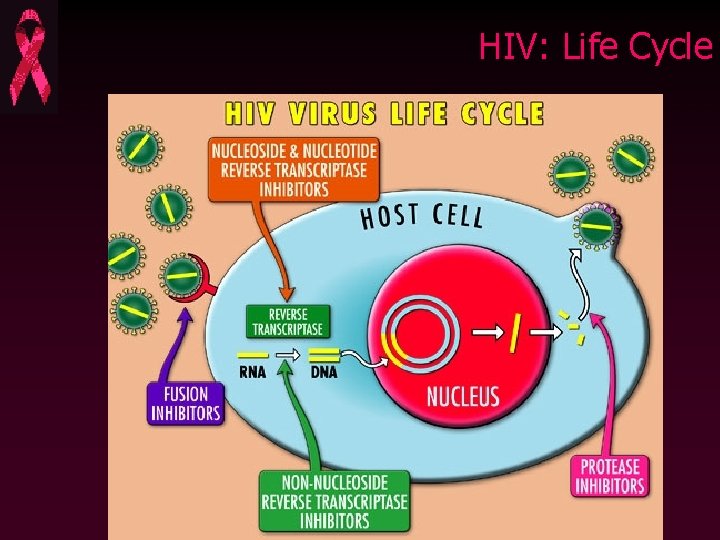
HIV: Life Cycle
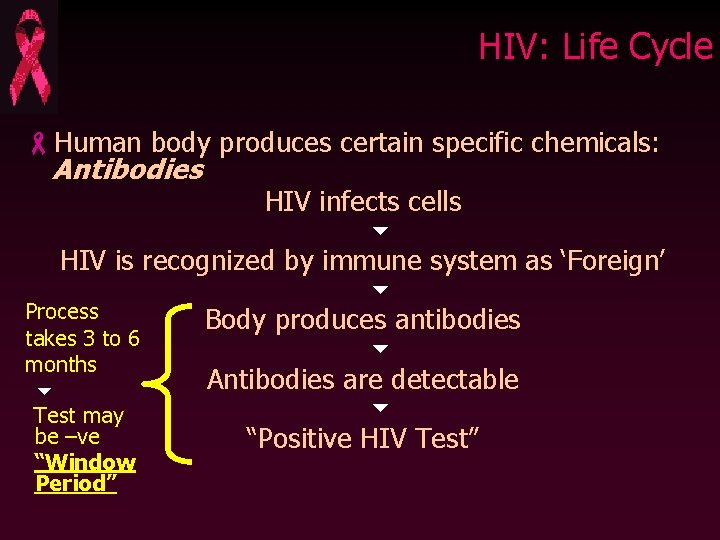
HIV: Life Cycle -Human body produces certain specific chemicals: Antibodies HIV infects cells HIV is recognized by immune system as ‘Foreign’ Process takes 3 to 6 months Test may be –ve “Window Period” Body produces antibodies Antibodies are detectable “Positive HIV Test”
HIV infection: Symptoms -Significant weight loss -Persistent fever -Persistent diarrhea -Persistent cough -Persistent generalized swelling of lymph glands
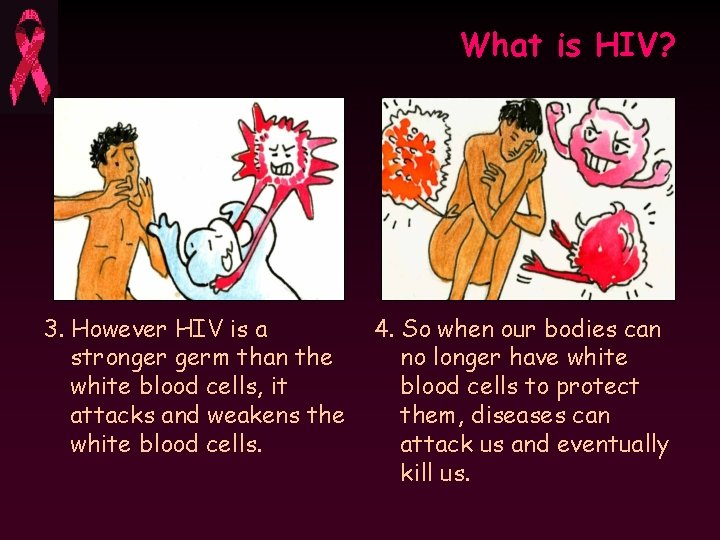
What is HIV? 3. However HIV is a stronger germ than the white blood cells, it attacks and weakens the white blood cells. 4. So when our bodies can no longer have white blood cells to protect them, diseases can attack us and eventually kill us.
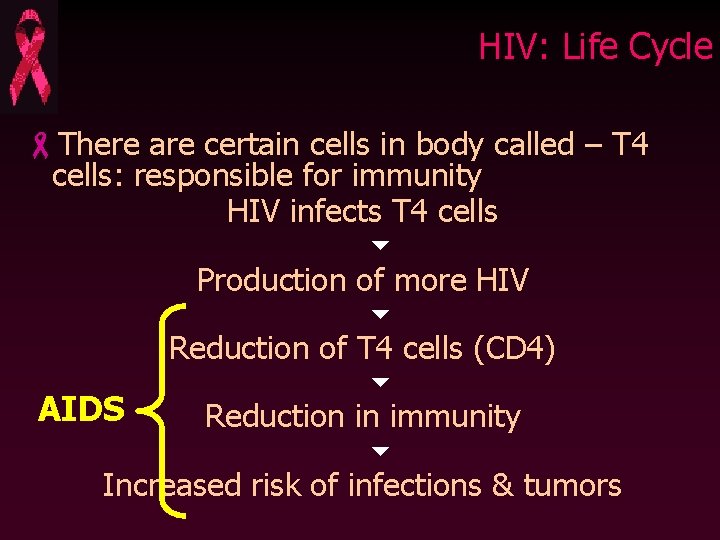
HIV: Life Cycle -There are certain cells in body called – T 4 cells: responsible for immunity HIV infects T 4 cells Production of more HIV Reduction of T 4 cells (CD 4) AIDS Reduction in immunity Increased risk of infections & tumors
What is AIDS A - Acquired (to get from someone) I - Immune (body's defense or resistance) D - Deficiency (lack of resistance) S - Syndrome (signs and symptoms of disease)
What is AIDS -Main feature of AIDS is increased susceptibility to infections: ‘Opportunistic infections’ § § § Tuberculosis * Candidiasis Cryptococcal meningitis Neuro Toxoplasmosis CMV retinitis -Kaposi’s Sarcoma
Structure of presentation -What is HIV -What is AIDS -How does HIV spread (and does not!) -What happens after HIV enters body § The HIV test § AIDS -Treatment
Treatment -“Treatment is available; Cure is elusive” -Treatment: § Prolongs life § Reduces infectivity § Reduces likelihood of opportunistic infections § Improves quality of life § Is costly § Needs to be long-term and sustained § Is associated with side effects / resistance
Prevention is better than cure !
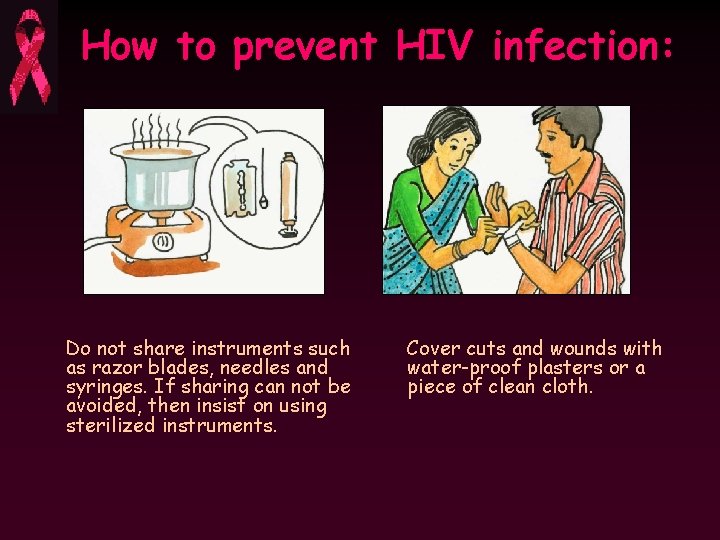
How to prevent HIV infection: Do not share instruments such as razor blades, needles and syringes. If sharing can not be avoided, then insist on using sterilized instruments. Cover cuts and wounds with water-proof plasters or a piece of clean cloth.
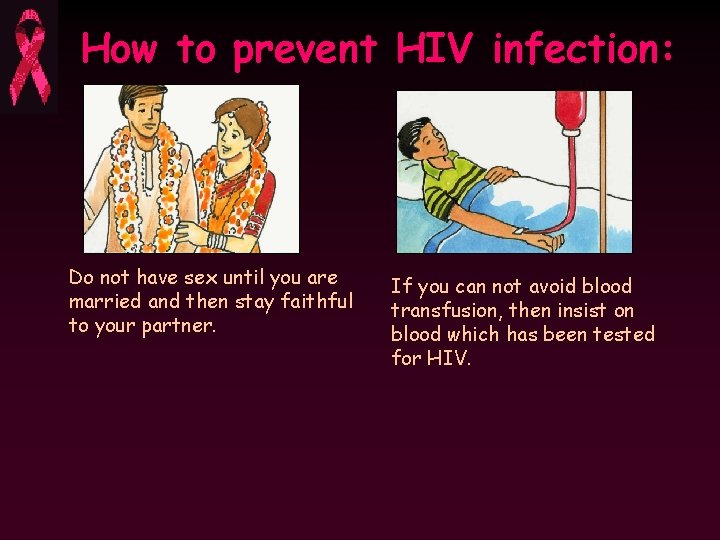
How to prevent HIV infection: Do not have sex until you are married and then stay faithful to your partner. If you can not avoid blood transfusion, then insist on blood which has been tested for HIV.
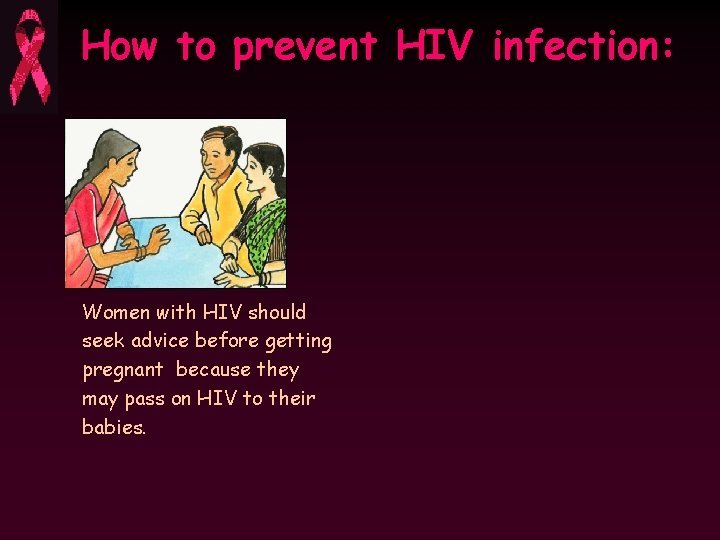
How to prevent HIV infection: Women with HIV should seek advice before getting pregnant because they may pass on HIV to their babies.
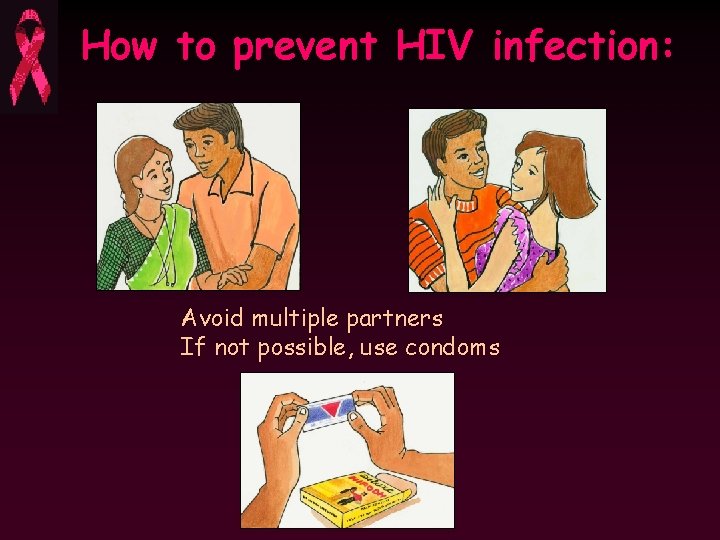
How to prevent HIV infection: Avoid multiple partners If not possible, use condoms
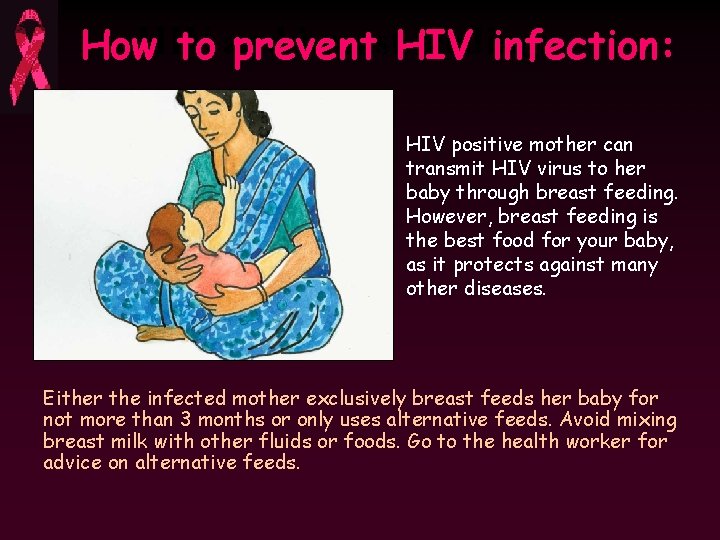
HIV breast. HIV feeding: How to and prevent infection: HIV positive mother can transmit HIV virus to her baby through breast feeding. However, breast feeding is the best food for your baby, as it protects against many other diseases. Either the infected mother exclusively breast feeds her baby for not more than 3 months or only uses alternative feeds. Avoid mixing breast milk with other fluids or foods. Go to the health worker for advice on alternative feeds.
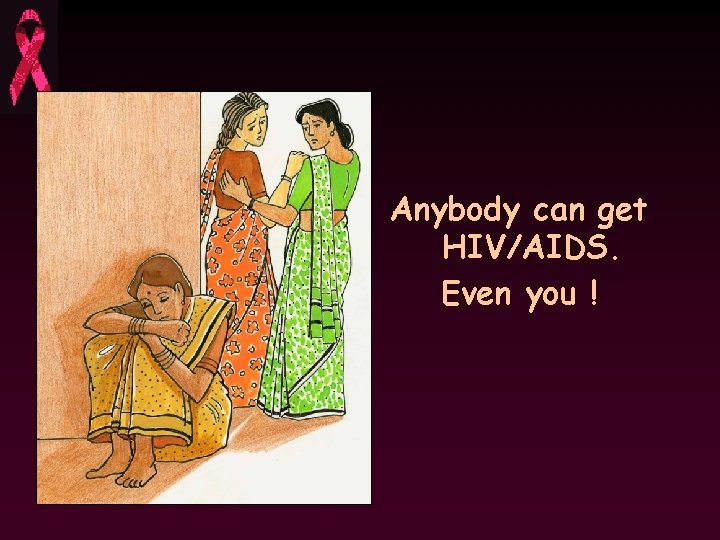
Anybody can get HIV/AIDS. Even you !
Who is more vulnerable for HIV? Men or Women?
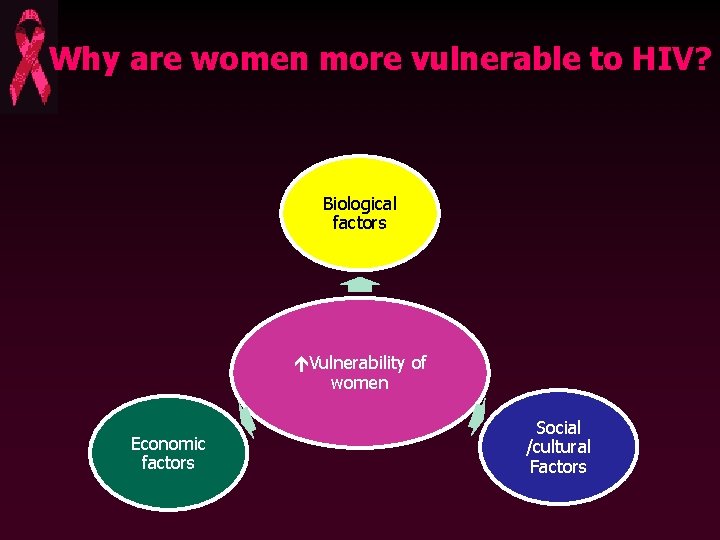
Why are women more vulnerable to HIV? Biological factors Vulnerability of women Economic factors Social /cultural Factors
Vulnerability of women Biological factors -The shape of female sexual organs – like a receptacle -More area of contact -Higher concentration of HIV in Semen than Vaginal fluids -Less physical power than males, hence vulnerability to forced sex
Vulnerability of women Social / Cultural factors -Position of women in society § Lesser bargaining power § Lower levels of education and literacy -The age difference between couples and trend of earlier marriage -Social values regarding sexual behaviour between men and women
Vulnerability of women Economic factors -Women have lesser say in economic matters § Hence lesser bargaining power -Sex trade (women as sellers and men as buyers)
Thank you
- Slides: 46