
HIV1 Rapid Test for Recent Infection QUALITY ASSURANCE

- Slides: 41
HIV-1 Rapid Test for Recent Infection QUALITY ASSURANCE MEASURES FOR RTRI International Laboratory Branch Division of Global HIV/AIDS & Tuberculosis Centers for Disease Control and Prevention
2 Learning Objectives At the end of this module, you will be able to: • Understand the importance and components of quality assurance • Identify quality elements throughout testing • Recognize key factors that may affect the quality of RTRI testing • Describe your responsibilities in preventing and detecting errors • Describe the importance of using quality control (QC) specimens • Understand how to ensure proper storage and cycling of stock
3 What is “Quality” ? • Clients receive accurate test results within a reasonable time period based on: • Availability of test kits & supplies • Condition of test kits • Collection and handling of specimens (type & amount) • Standard test procedures followed • Interpretation and reporting of results
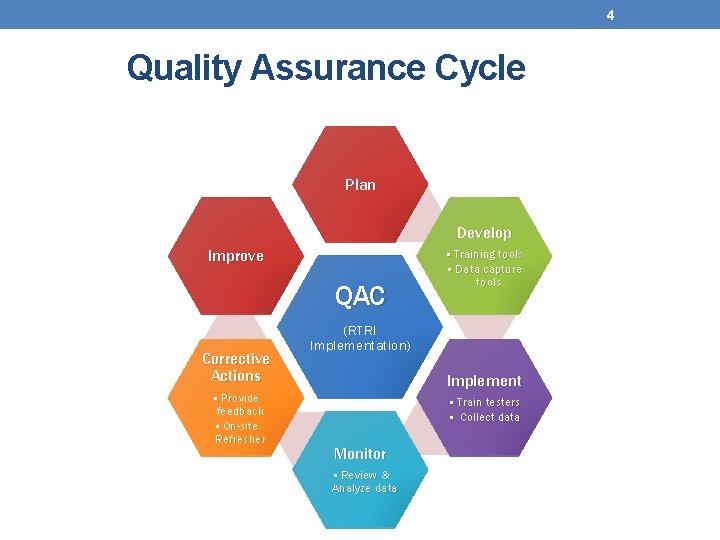
4 Quality Assurance Cycle Plan Develop Improve QAC Corrective Actions • Provide feedback • On-site Refresher • Training tools • Data capture tools (RTRI Implementation) Implement • Train testers • Collect data Monitor • Review & Analyze data
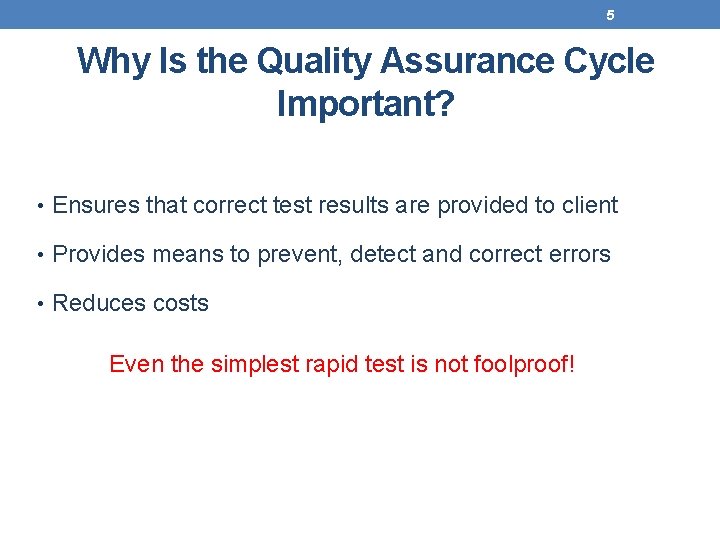
5 Why Is the Quality Assurance Cycle Important? • Ensures that correct test results are provided to client • Provides means to prevent, detect and correct errors • Reduces costs Even the simplest rapid test is not foolproof!
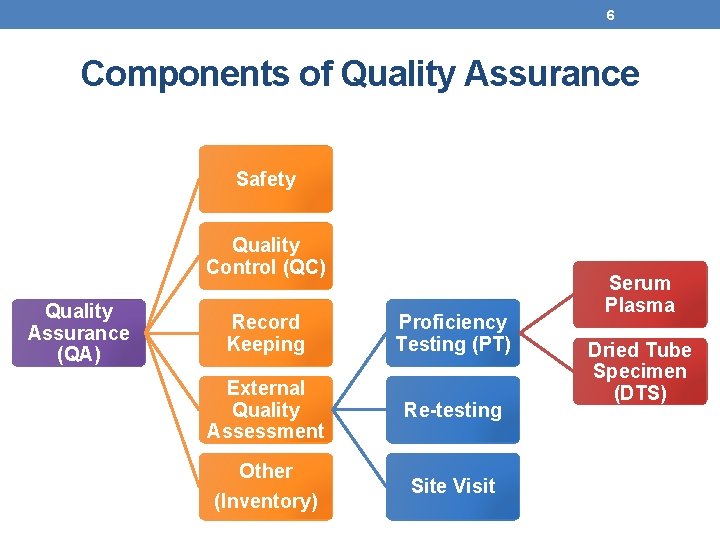
6 Components of Quality Assurance Safety Quality Control (QC) Quality Assurance (QA) Record Keeping Proficiency Testing (PT) External Quality Assessment Re-testing Other (Inventory) Site Visit Serum Plasma Dried Tube Specimen (DTS)
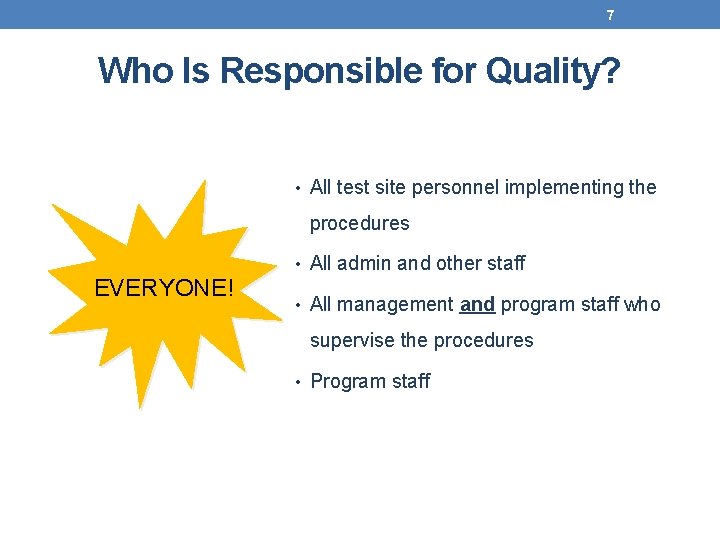
7 Who Is Responsible for Quality? • All test site personnel implementing the procedures EVERYONE! • All admin and other staff • All management and program staff who supervise the procedures • Program staff
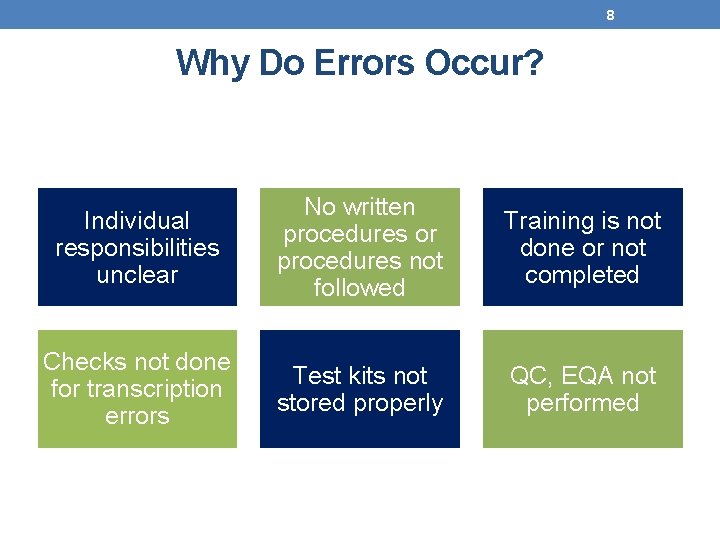
8 Why Do Errors Occur? Individual responsibilities unclear No written procedures or procedures not followed Training is not done or not completed Checks not done for transcription errors Test kits not stored properly QC, EQA not performed
QUALITY ASSURANCE MEASURES COMPREHENSIVE TRAINING AND COMPETENCY
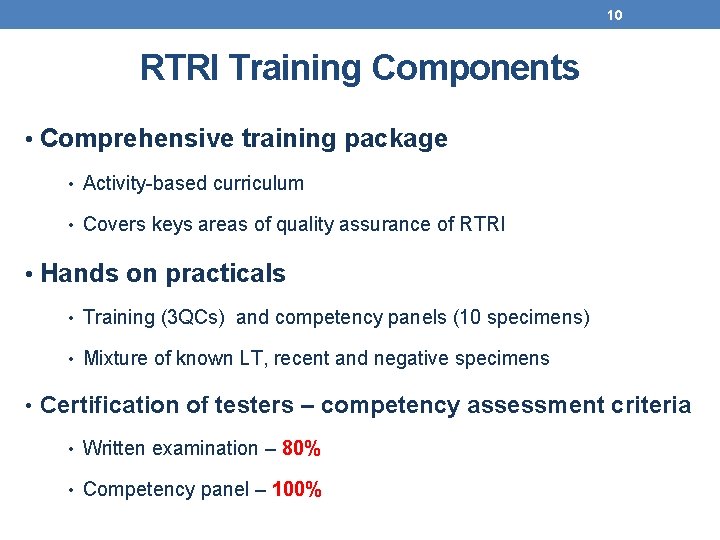
10 RTRI Training Components • Comprehensive training package • Activity-based curriculum • Covers keys areas of quality assurance of RTRI • Hands on practicals • Training (3 QCs) and competency panels (10 specimens) • Mixture of known LT, recent and negative specimens • Certification of testers – competency assessment criteria • Written examination – 80% • Competency panel – 100%
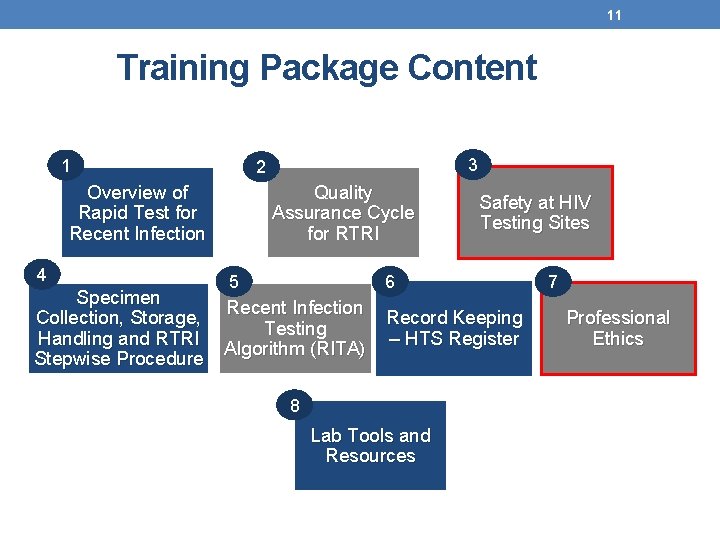
11 Training Package Content 1 Overview of Rapid Test for Recent Infection 4 Specimen Collection, Storage, Handling and RTRI Stepwise Procedure 3 2 Quality Assurance Cycle for RTRI Safety at HIV Testing Sites 5 6 Recent Infection Testing Algorithm (RITA) Record Keeping – HTS Register 8 Lab Tools and Resources 7 Professional Ethics
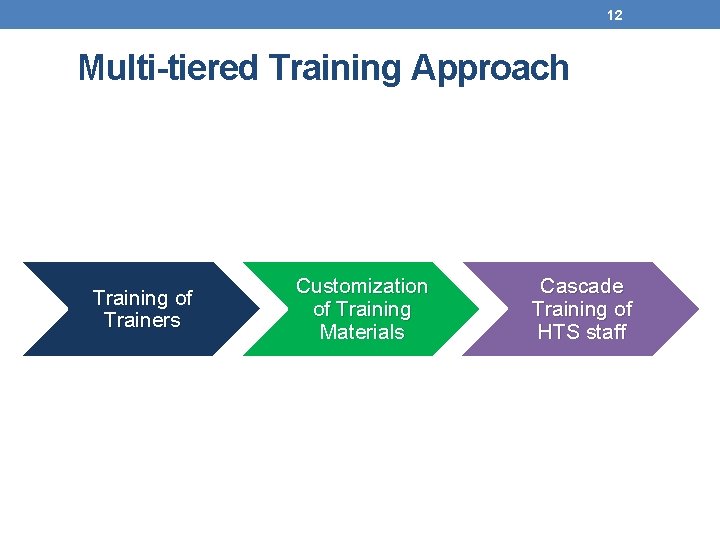
12 Multi-tiered Training Approach Training of Trainers Customization of Training Materials Cascade Training of HTS staff
QUALITY ASSURANCE MEASURES PREVENTING ERRORS DURING 3 PHASES OF TESTING
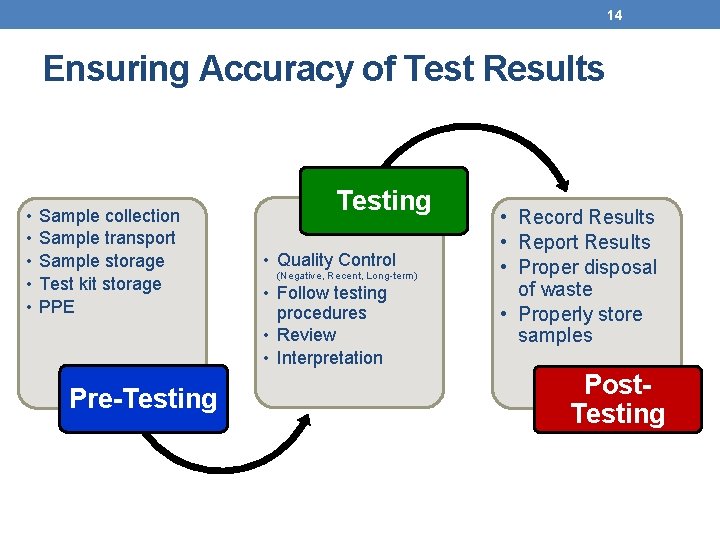
14 Ensuring Accuracy of Test Results • • • Sample collection Sample transport Sample storage Test kit storage PPE Pre-Testing • Quality Control (Negative, Recent, Long-term) • Follow testing procedures • Review • Interpretation • Record Results • Report Results • Proper disposal of waste • Properly store samples Post. Testing
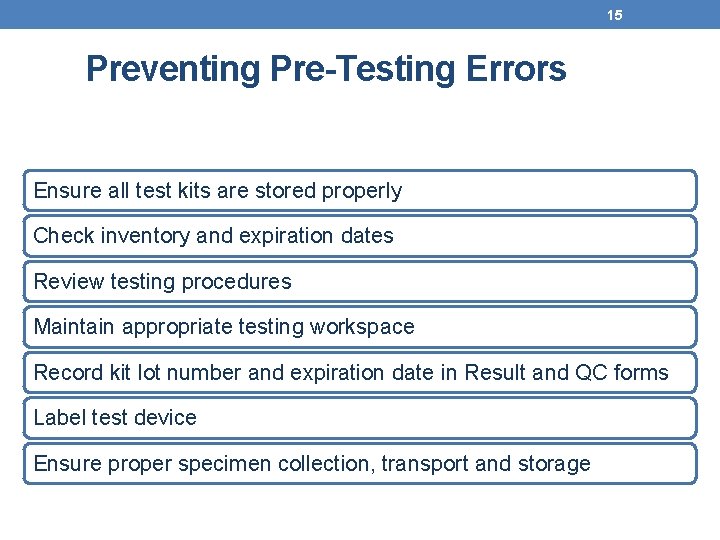
15 Preventing Pre-Testing Errors Ensure all test kits are stored properly Check inventory and expiration dates Review testing procedures Maintain appropriate testing workspace Record kit lot number and expiration date in Result and QC forms Label test device Ensure proper specimen collection, transport and storage
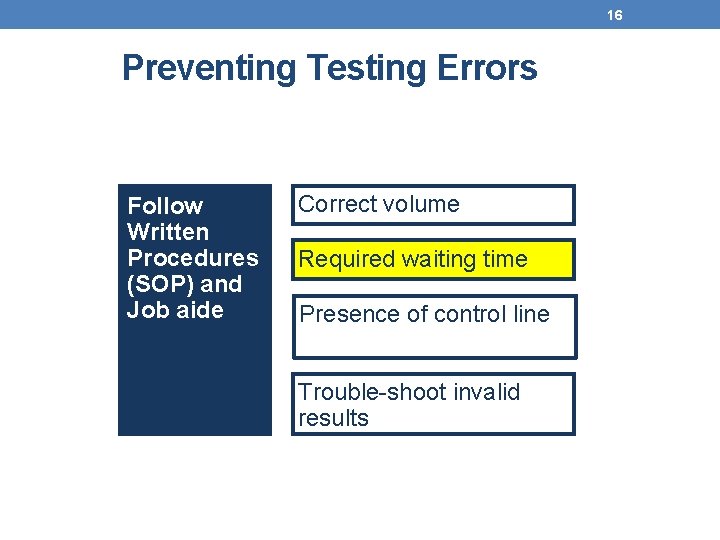
16 Preventing Testing Errors Follow Written Procedures (SOP) and Job aide Correct volume Required waiting time Presence of control line Trouble-shoot invalid results
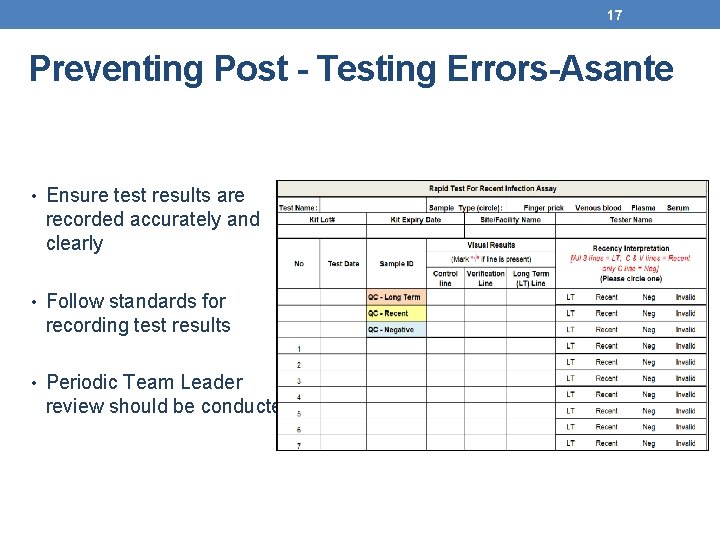
17 Preventing Post - Testing Errors-Asante • Ensure test results are recorded accurately and clearly • Follow standards for recording test results • Periodic Team Leader review should be conducted
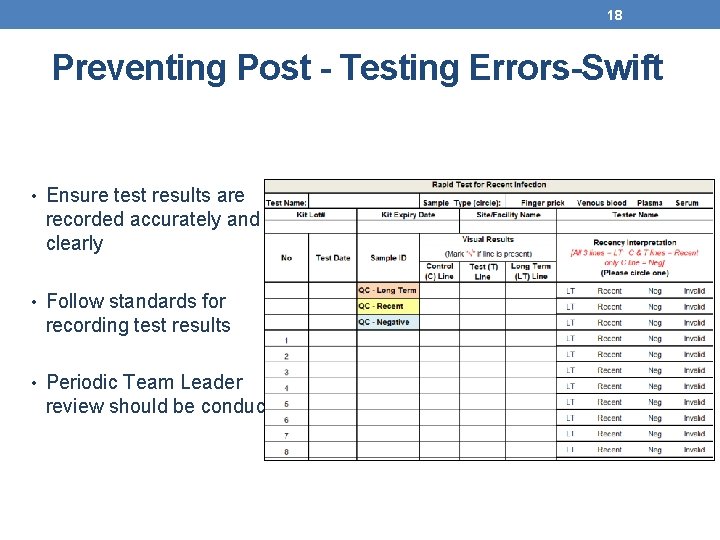
18 Preventing Post - Testing Errors-Swift • Ensure test results are recorded accurately and clearly • Follow standards for recording test results • Periodic Team Leader review should be conducted
QUALITY ASSURANCE MEASURES EXTERNAL QUALITY CONTROLS
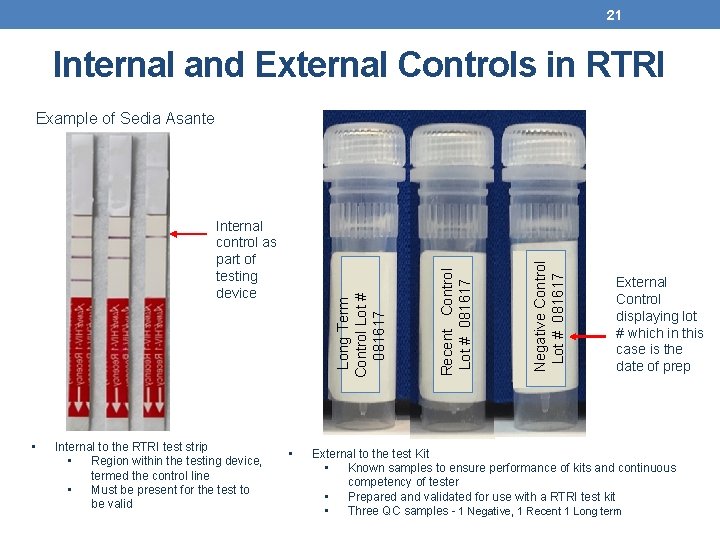
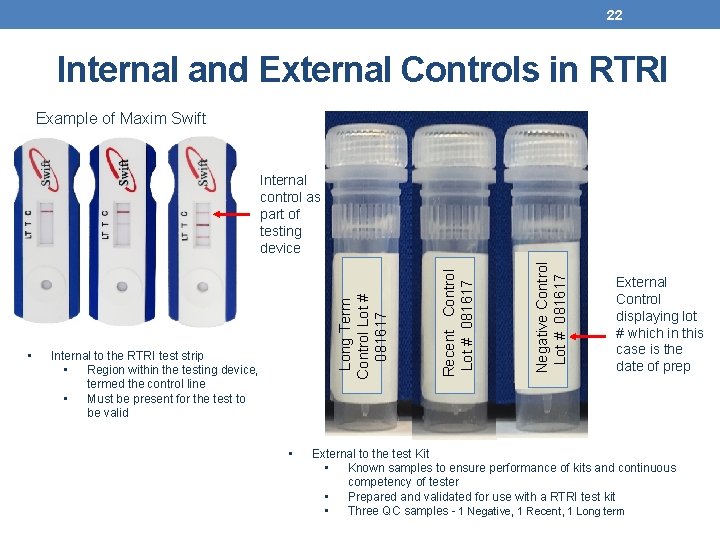
20 What is Quality Control (QC) • Measures taken to monitor the quality of the test kit • QC for HIV Rapid Test for Recent Infection (RTRI) includes: • Interpreting the presence or absence of control lines within the device itself • Testing of samples with known results to verify if the test is working properly • If an error occurs, investigate and know the source of the error
21 Internal and External Controls in RTRI • Internal to the RTRI test strip • Region within the testing device, termed the control line • Must be present for the test to be valid • Negative Control Lot # 081617 Long Term Control Lot # 081617 Internal control as part of testing device Recent Control Lot # 081617 Example of Sedia Asante External Control displaying lot # which in this case is the date of prep External to the test Kit • Known samples to ensure performance of kits and continuous competency of tester • Prepared and validated for use with a RTRI test kit • Three QC samples - 1 Negative, 1 Recent 1 Long term
22 Internal and External Controls in RTRI Example of Maxim Swift • Negative Control Lot # 081617 Internal to the RTRI test strip • Region within the testing device, termed the control line • Must be present for the test to be valid Recent Control Lot # 081617 • Long Term Control Lot # 081617 Internal control as part of testing device External Control displaying lot # which in this case is the date of prep External to the test Kit • Known samples to ensure performance of kits and continuous competency of tester • Prepared and validated for use with a RTRI test kit • Three QC samples - 1 Negative, 1 Recent, 1 Long term
23 Frequency of Quality Control Runs • Site Level • Each site will run QC specimens once per month • When kit storage conditions exceed range specified by manufacturer (normal range is 2°C-30°C) • QC runs should be rotated in sites where there are multiple testers • NRL • With receipt of new shipment of test kits • At beginning of a new lot of QC specimens
24 Appropriate use and Storage of Plasma QC Specimens • Remove QC specimens from freezer and thaw at room temperature • Maximum of up to 5 freeze – thaw cycles are allowed • Discard leftover specimens after the 5 th thaw • Follow same testing procedure (see job aide) • Once thawed, samples can be kept at 4°C (2°C-8°C) for up to 7 days, discard after 7 days • Dried Tube Specimen (DTS) will be validated for use as an alternative to plasma QC
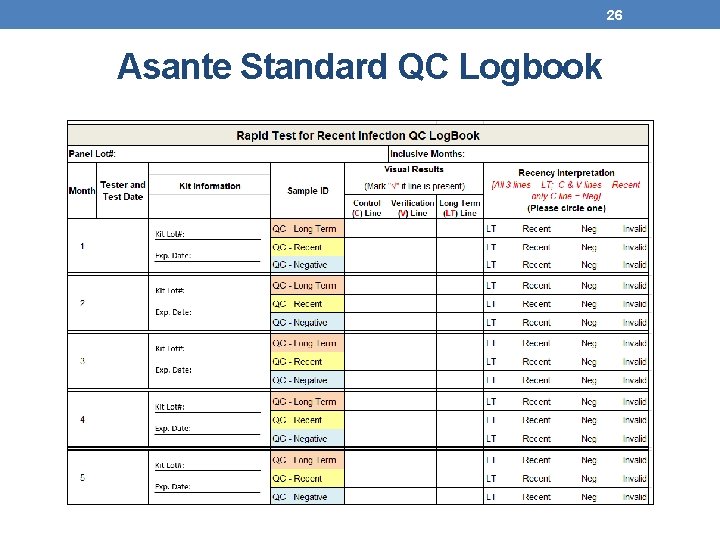
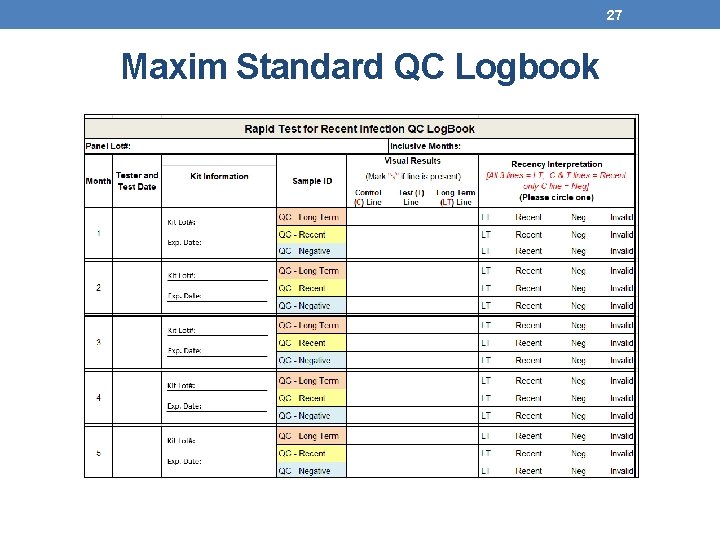
25 Maintaining QC Records • Results should be recorded in appropriate QC Logbook and/or HTS register • Review by site supervisor is required • Record all valid and invalid results • For invalid results ensure appropriate follow up and inform supervisor • Document if the invalid result is likely linked to test device, specimen, or tester • A new QC page should be used if the panel lot changes
26 Asante Standard QC Logbook
27 Maxim Standard QC Logbook
28 Invalid Results – What Do You Do? • Repeat test using a new strip/cassette • Inform site lead, if invalid again • Take corrective actions • If unable to resolve, contact central Lab
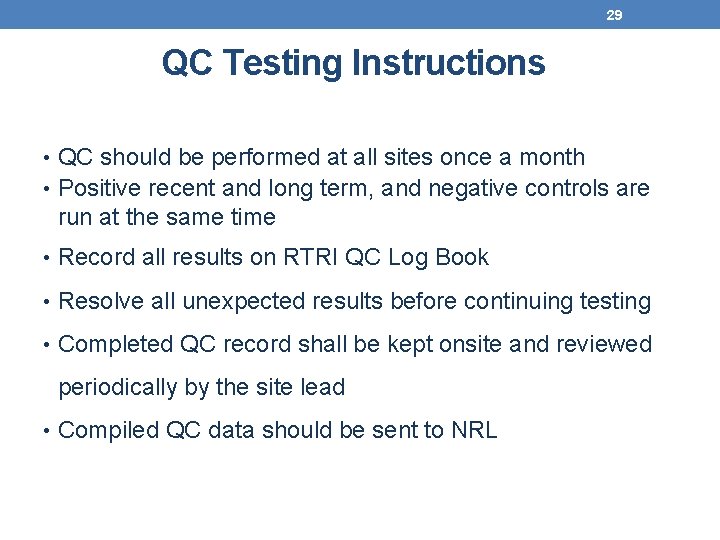
29 QC Testing Instructions • QC should be performed at all sites once a month • Positive recent and long term, and negative controls are run at the same time • Record all results on RTRI QC Log Book • Resolve all unexpected results before continuing testing • Completed QC record shall be kept onsite and reviewed periodically by the site lead • Compiled QC data should be sent to NRL
QUALITY ASSURANCE MEASURES EXTERNAL QUALITY ASSESSMENT
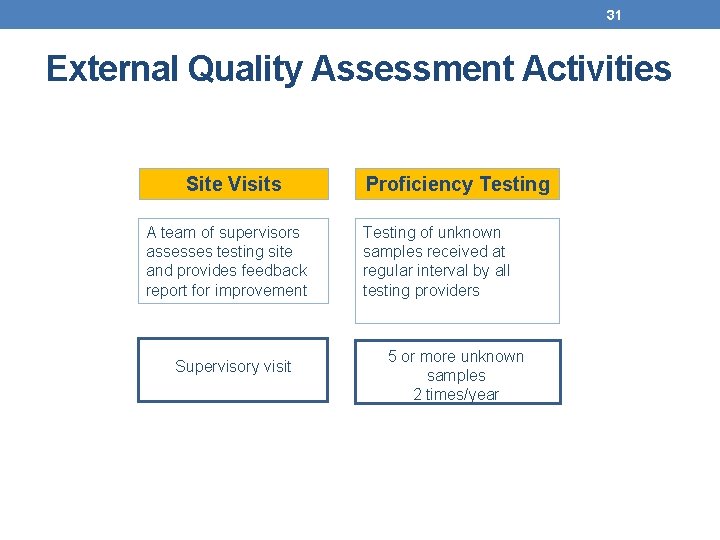
31 External Quality Assessment Activities Site Visits A team of supervisors assesses testing site and provides feedback report for improvement Supervisory visit Proficiency Testing of unknown samples received at regular interval by all testing providers 5 or more unknown samples 2 times/year
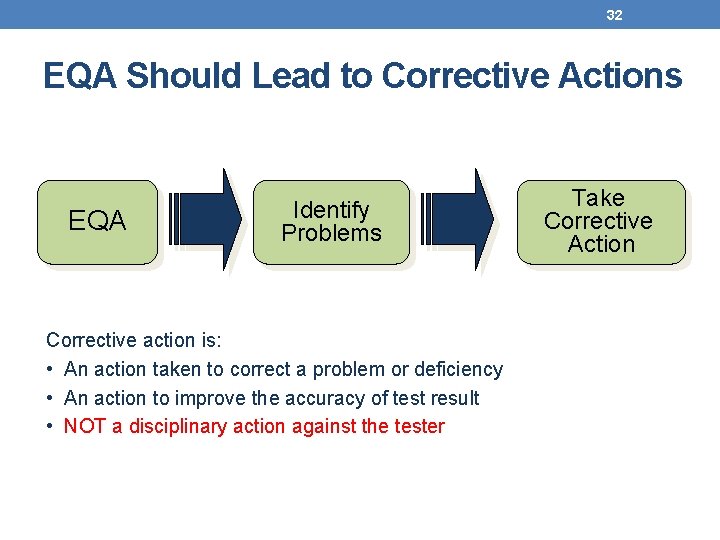
32 EQA Should Lead to Corrective Actions EQA Identify Problems Corrective action is: • An action taken to correct a problem or deficiency • An action to improve the accuracy of test result • NOT a disciplinary action against the tester Take Corrective Action
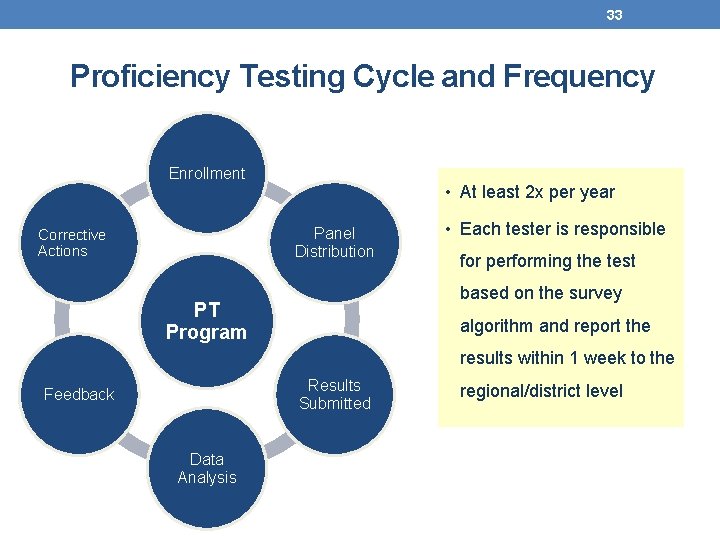
33 Proficiency Testing Cycle and Frequency Enrollment • At least 2 x per year Panel Distribution Corrective Actions • Each tester is responsible for performing the test based on the survey PT Program algorithm and report the results within 1 week to the Results Submitted Feedback Data Analysis regional/district level
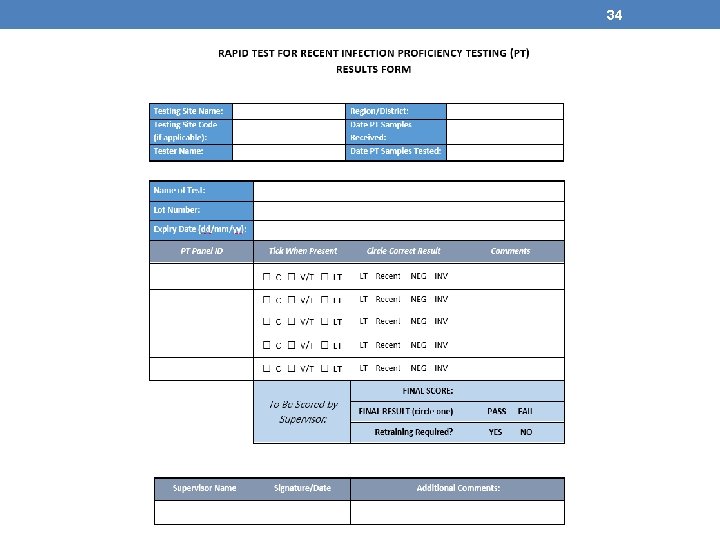
34
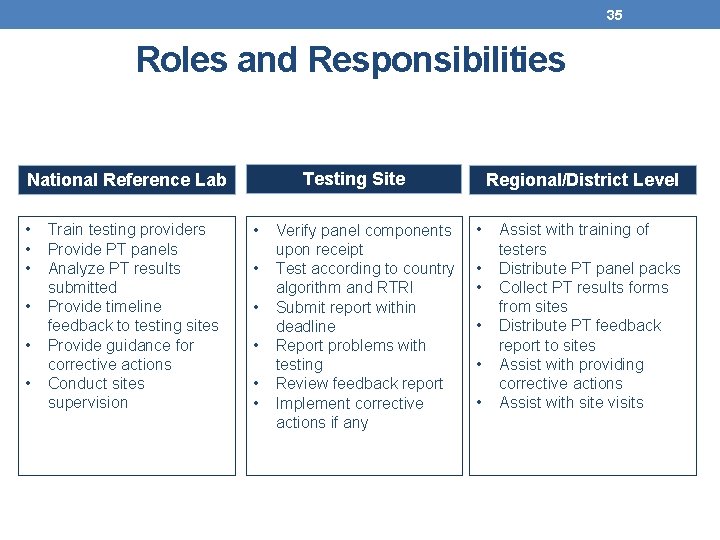
35 Roles and Responsibilities Testing Site National Reference Lab • • • Train testing providers Provide PT panels Analyze PT results submitted Provide timeline feedback to testing sites Provide guidance for corrective actions Conduct sites supervision • • • Verify panel components upon receipt Test according to country algorithm and RTRI Submit report within deadline Report problems with testing Review feedback report Implement corrective actions if any Regional/District Level • • • Assist with training of testers Distribute PT panel packs Collect PT results forms from sites Distribute PT feedback report to sites Assist with providing corrective actions Assist with site visits
QUALITY ASSURANCE MEASURES STOCK MANAGEMENT AND INVENTORY
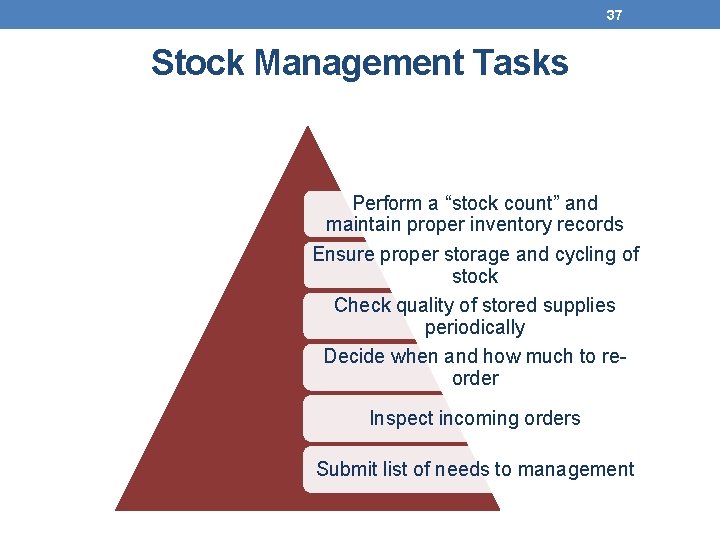
37 Stock Management Tasks Perform a “stock count” and maintain proper inventory records Ensure proper storage and cycling of stock Check quality of stored supplies periodically Decide when and how much to reorder Inspect incoming orders Submit list of needs to management
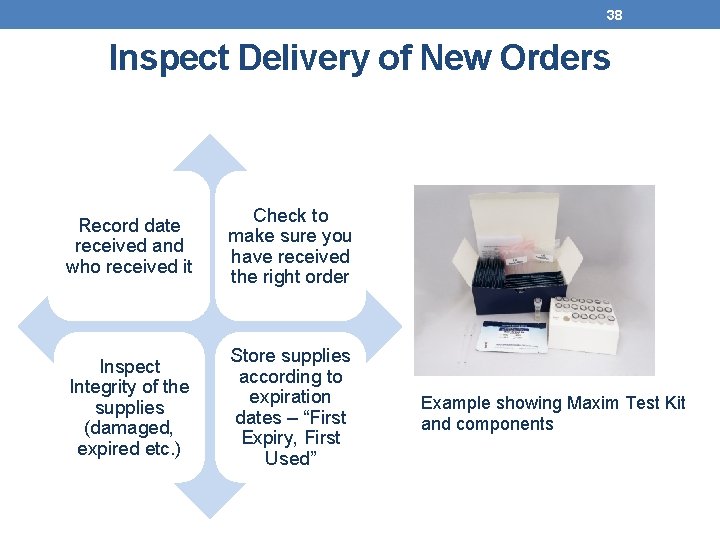
38 Inspect Delivery of New Orders Record date received and who received it Check to make sure you have received the right order Inspect Integrity of the supplies (damaged, expired etc. ) Store supplies according to expiration dates – “First Expiry, First Used” Example showing Maxim Test Kit and components
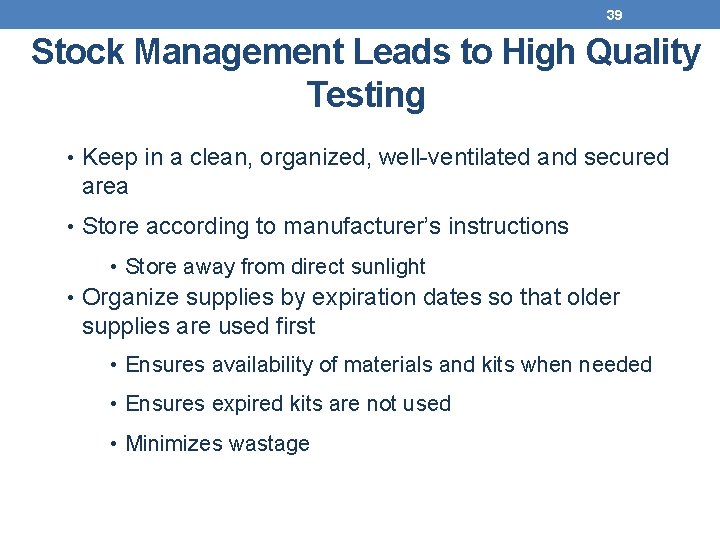
39 Stock Management Leads to High Quality Testing • Keep in a clean, organized, well-ventilated and secured area • Store according to manufacturer’s instructions • Store away from direct sunlight • Organize supplies by expiration dates so that older supplies are used first • Ensures availability of materials and kits when needed • Ensures expired kits are not used • Minimizes wastage
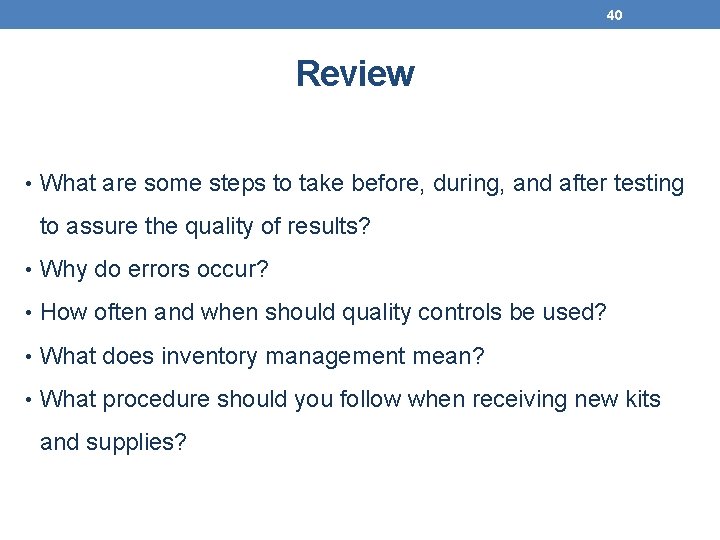
40 Review • What are some steps to take before, during, and after testing to assure the quality of results? • Why do errors occur? • How often and when should quality controls be used? • What does inventory management mean? • What procedure should you follow when receiving new kits and supplies?
Thank You