
HIV Prevention Training Package Session 1 Introduction to
![[Country] HIV Prevention Outcomes and Indicators § Post adaptation – include outcomes and indicators](https://slidetodoc.com/presentation_image/b670d9fdf0e47db6dc7a5f19ae46f487/image-5.jpg "[Country] HIV Prevention Outcomes and Indicators § Post adaptation – include outcomes and indicators")
- Slides: 11
HIV Prevention Training Package Session 1: Introduction to HIV Prevention Office of Global Health and HIV (OGHH) Office of Overseas Programming & Training Support (OPATS)
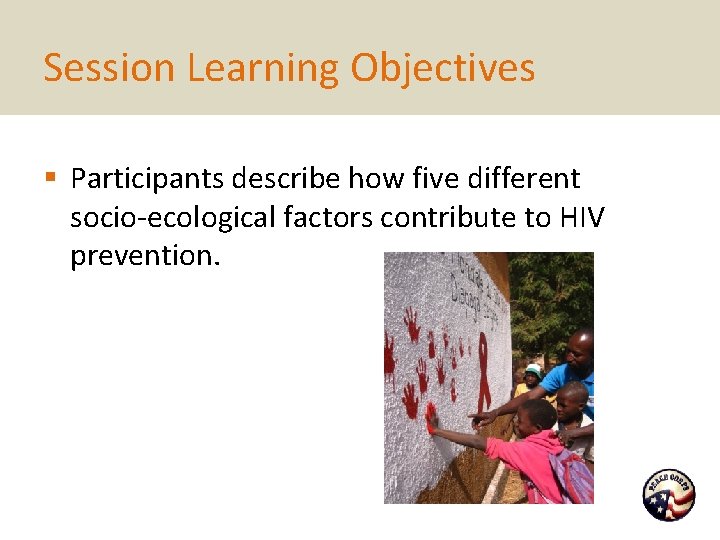
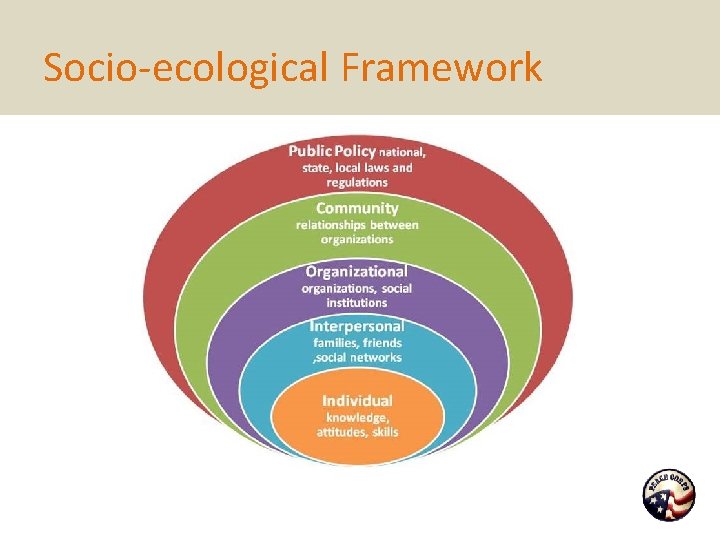
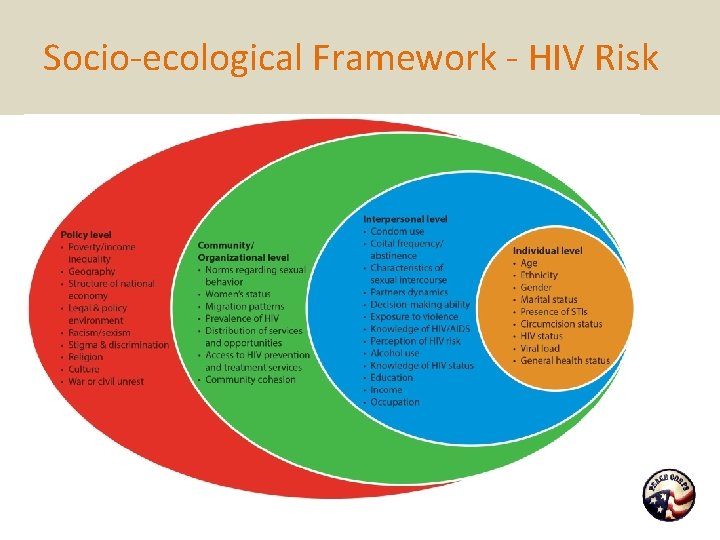
Session Learning Objectives § Participants describe how five different socio-ecological factors contribute to HIV prevention.
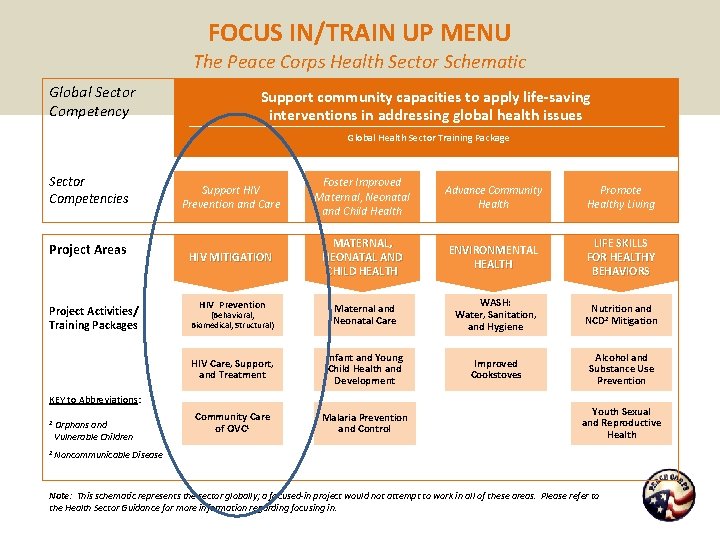
FOCUS IN/TRAIN UP MENU The Peace Corps Health Sector Schematic Global Sector Competency Support community capacities to apply life-saving interventions in addressing global health issues Global Health Sector Training Package Sector Competencies Project Areas Project Activities/ Training Packages Support HIV Prevention and Care Foster Improved Maternal, Neonatal and Child Health Advance Community Health Promote Healthy Living HIV MITIGATION MATERNAL, NEONATAL AND CHILD HEALTH ENVIRONMENTAL HEALTH LIFE SKILLS FOR HEALTHY BEHAVIORS Maternal and Neonatal Care WASH: Water, Sanitation, and Hygiene Nutrition and NCD 2 Mitigation HIV Care, Support, and Treatment Infant and Young Child Health and Development Improved Cookstoves Alcohol and Substance Use Prevention Community Care of OVC 1 Malaria Prevention and Control HIV Prevention (Behavioral, Biomedical, Structural) KEY to Abbreviations: 1 Orphans and Vulnerable Children 2 Noncommunicable Youth Sexual and Reproductive Health Disease Note: This schematic represents the sector globally; a focused-in project would not attempt to work in all of these areas. Please refer to the Health Sector Guidance for more information regarding focusing in.
HIV Prevention Terminal Learning Objective § Based on assessed HIV prevention needs and risk factors at the individual and community level, participants will develop a strategy that uses evidence-based combination prevention (behavioral, biomedical, structural) approaches, national prevention priorities, and Peace Corps project frameworks to promote behaviors and services that prevent HIV infection and contribute to a reduction of community HIV incidence rates.
[Country] HIV Prevention Outcomes and Indicators § Post adaptation – include outcomes and indicators from project framework. Suggest the following format: § OUTCOME 1 – Indicator 2 § OUTCOME 2 – Indicator 1 – Indicator 2
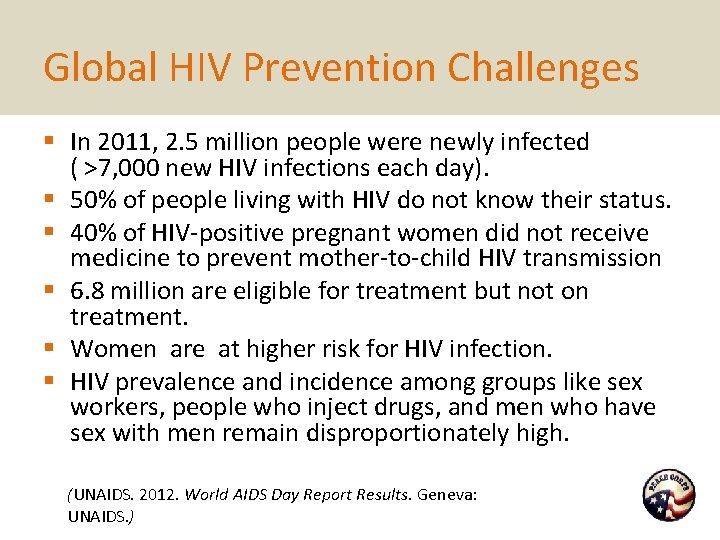
Global HIV Prevention Challenges § In 2011, 2. 5 million people were newly infected ( >7, 000 new HIV infections each day). § 50% of people living with HIV do not know their status. § 40% of HIV-positive pregnant women did not receive medicine to prevent mother-to-child HIV transmission § 6. 8 million are eligible for treatment but not on treatment. § Women are at higher risk for HIV infection. § HIV prevalence and incidence among groups like sex workers, people who inject drugs, and men who have sex with men remain disproportionately high. (UNAIDS. 2012. World AIDS Day Report Results. Geneva: UNAIDS. )
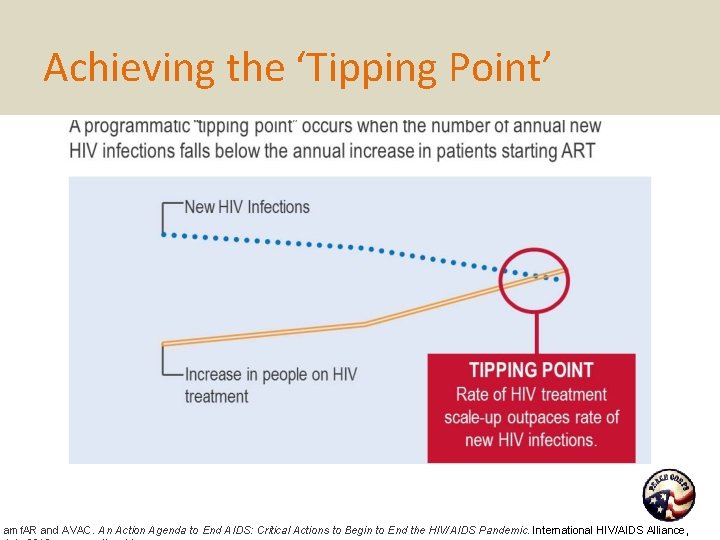
Achieving the ‘Tipping Point’ amf. AR and AVAC. An Action Agenda to End AIDS: Critical Actions to Begin to End the HIV/AIDS Pandemic. International HIV/AIDS Alliance,
National Prevention Goals § Insert here
Socio-ecological Framework
Socio-ecological Framework - HIV Risk
Project Framework § Insert HIV-related goals/activities from country project framework