
histria da mdia social anja pratschke histria da
![história da mídia [social] anja pratschke](https://slidetodoc.com/presentation_image/8e67109694d2fd95900ef01f9fdb87a2/image-1.jpg "história da mídia [social] anja pratschke")
![process rather then product controle [-] _ coletividade [+] sistemas cibernéticas – complexidade –](https://slidetodoc.com/presentation_image/8e67109694d2fd95900ef01f9fdb87a2/image-40.jpg "process rather then product controle [-] _ coletividade [+] sistemas cibernéticas – complexidade –")
![aegis hyposurface_ 1999 -2001_exposição, arch: decoi [Mark Gulthorpe] tornar o invisível](https://slidetodoc.com/presentation_image/8e67109694d2fd95900ef01f9fdb87a2/image-45.jpg "aegis hyposurface_ 1999 -2001_exposição, arch: decoi [Mark Gulthorpe] tornar o invisível")

- Slides: 55
história da mídia [social] anja pratschke
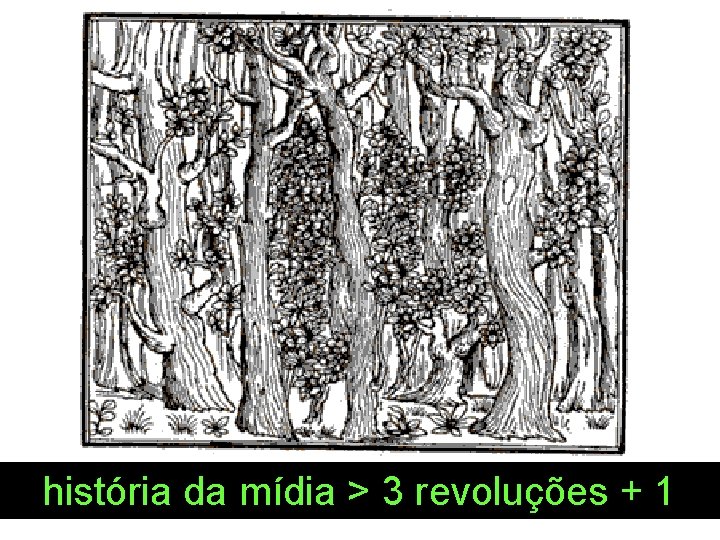
história da mídia > 3 revoluções + 1
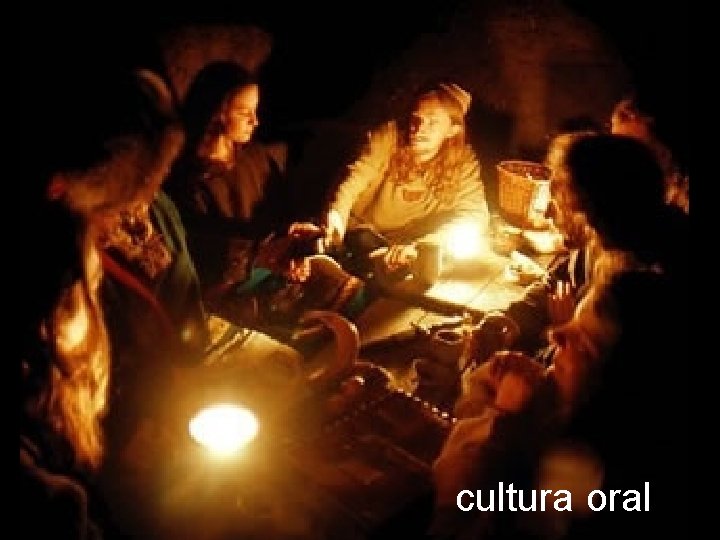
cultura oral
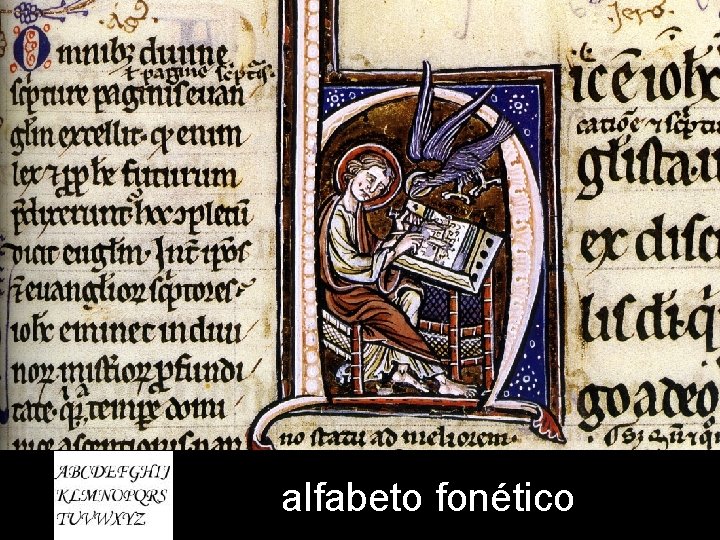
alfabeto fonético
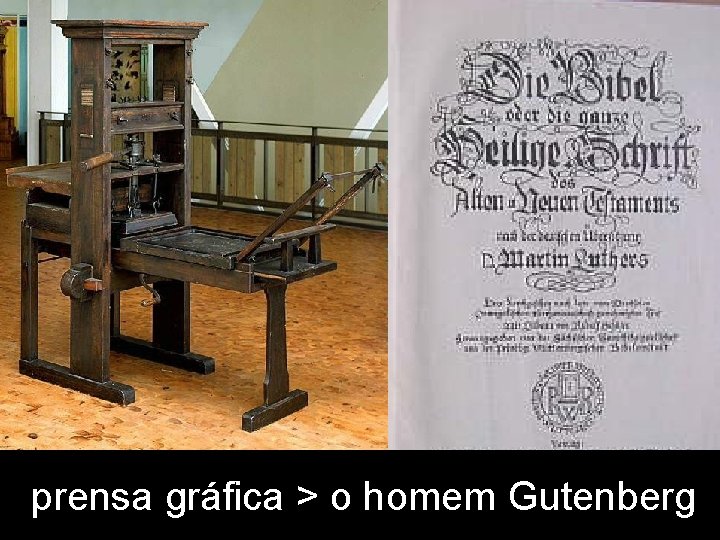
prensa gráfica > o homem Gutenberg
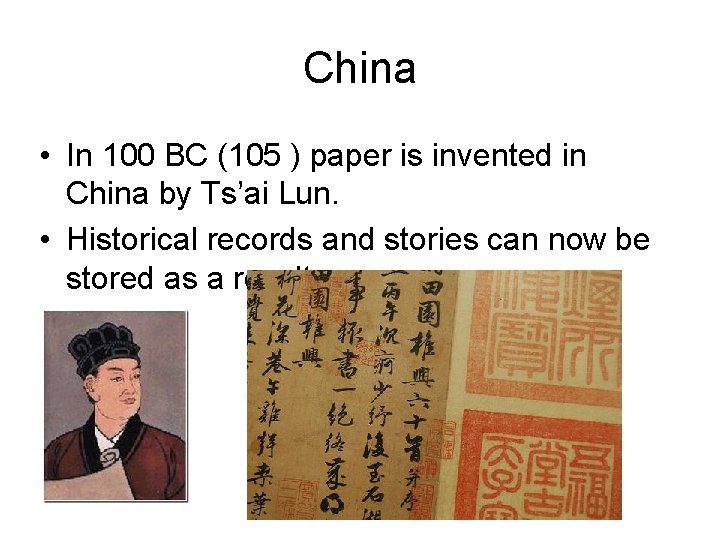
China • In 100 BC (105 ) paper is invented in China by Ts’ai Lun. • Historical records and stories can now be stored as a result.
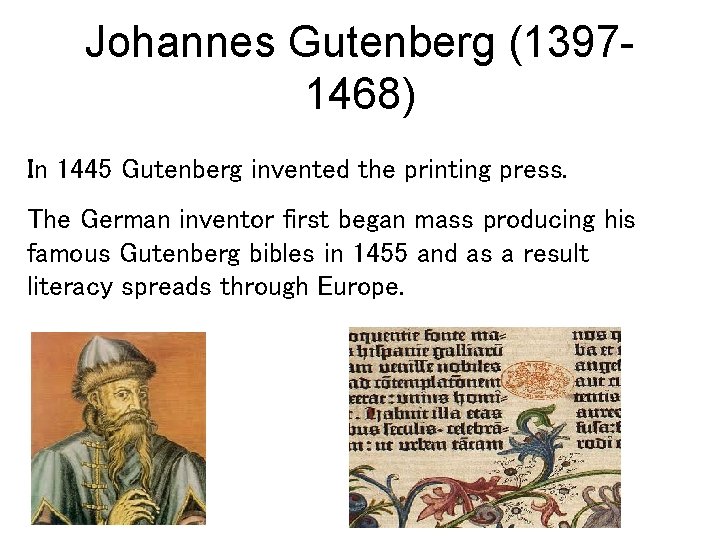
Johannes Gutenberg (13971468) In 1445 Gutenberg invented the printing press. The German inventor first began mass producing his famous Gutenberg bibles in 1455 and as a result literacy spreads through Europe.
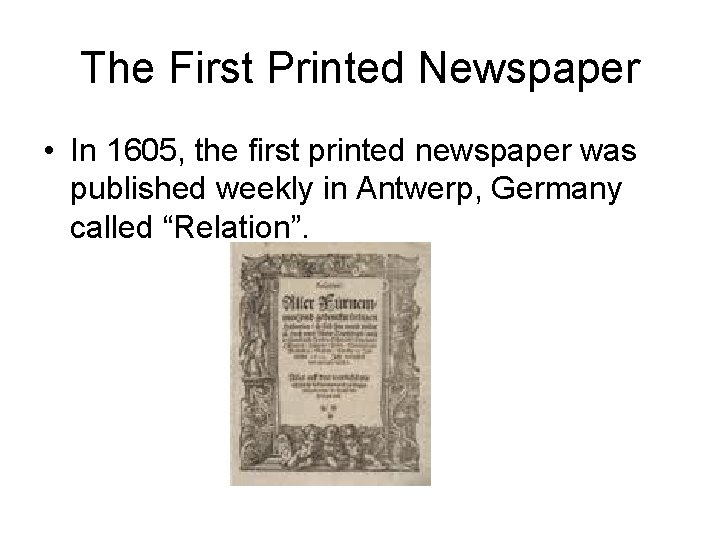
The First Printed Newspaper • In 1605, the first printed newspaper was published weekly in Antwerp, Germany called “Relation”.
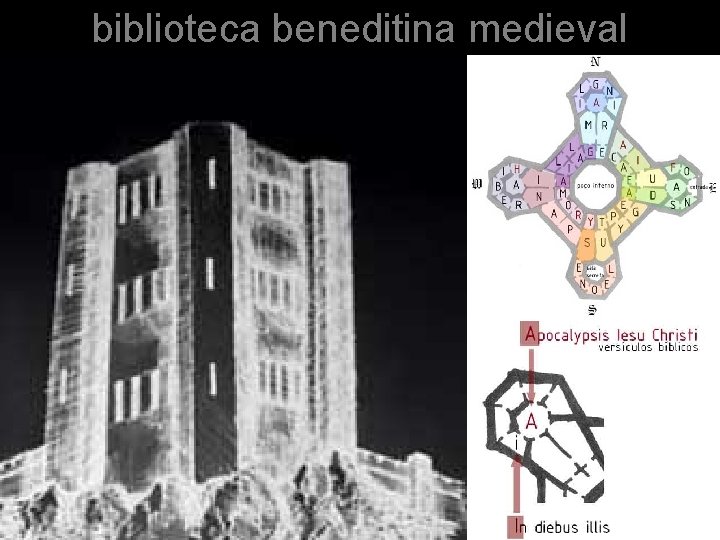
biblioteca beneditina medieval
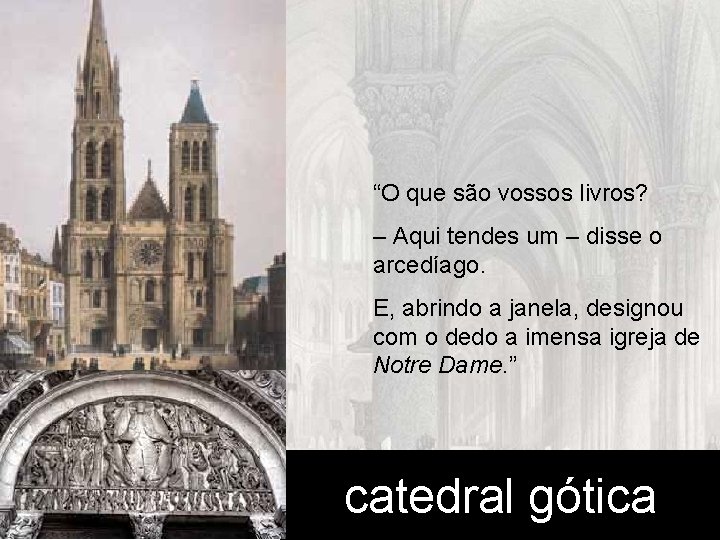
“O que são vossos livros? – Aqui tendes um – disse o arcedíago. E, abrindo a janela, designou com o dedo a imensa igreja de Notre Dame. ” catedral gótica
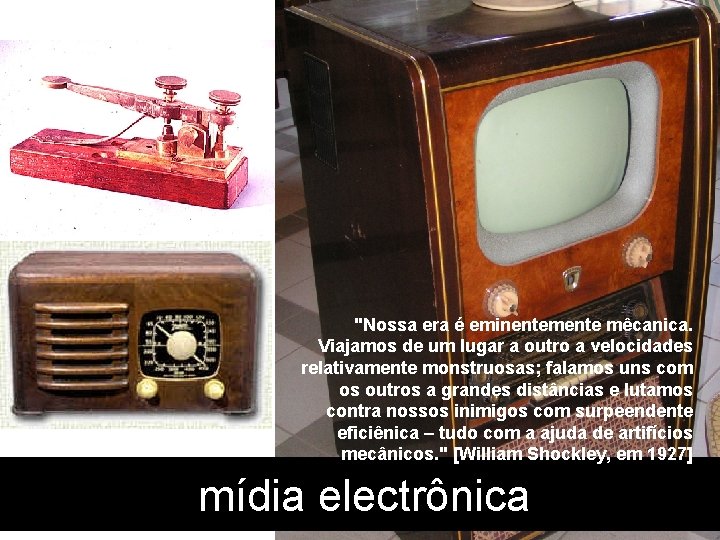
"Nossa era é eminentemente mêcanica. Viajamos de um lugar a outro a velocidades relativamente monstruosas; falamos uns com os outros a grandes distâncias e lutamos contra nossos inimigos com surpeendente eficiênica – tudo com a ajuda de artifícios mecânicos. " [William Shockley, em 1927] mídia electrônica
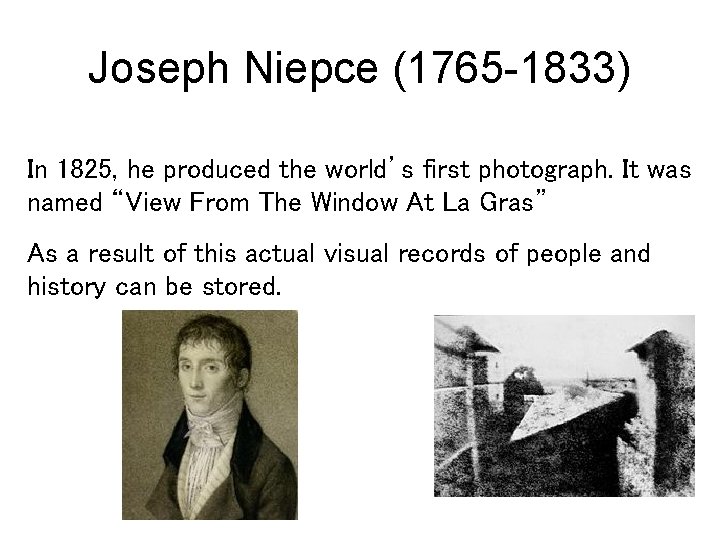
Joseph Niepce (1765 -1833) In 1825, he produced the world’s first photograph. It was named “View From The Window At La Gras” As a result of this actual visual records of people and history can be stored.
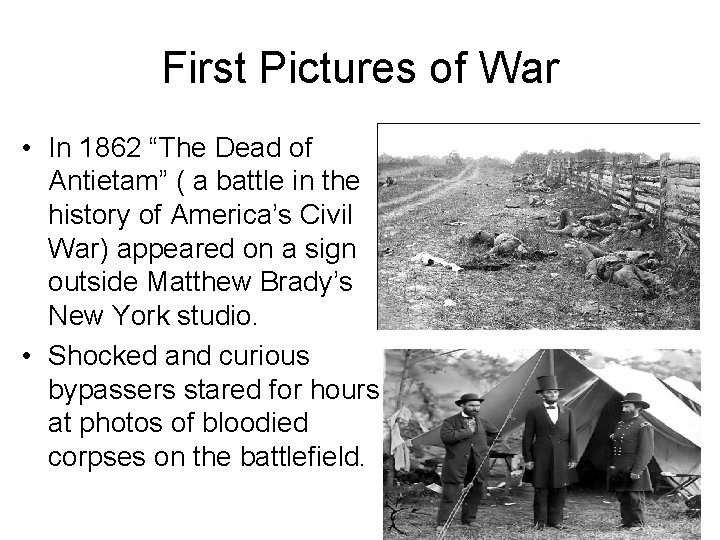
First Pictures of War • In 1862 “The Dead of Antietam” ( a battle in the history of America’s Civil War) appeared on a sign outside Matthew Brady’s New York studio. • Shocked and curious bypassers stared for hours at photos of bloodied corpses on the battlefield.
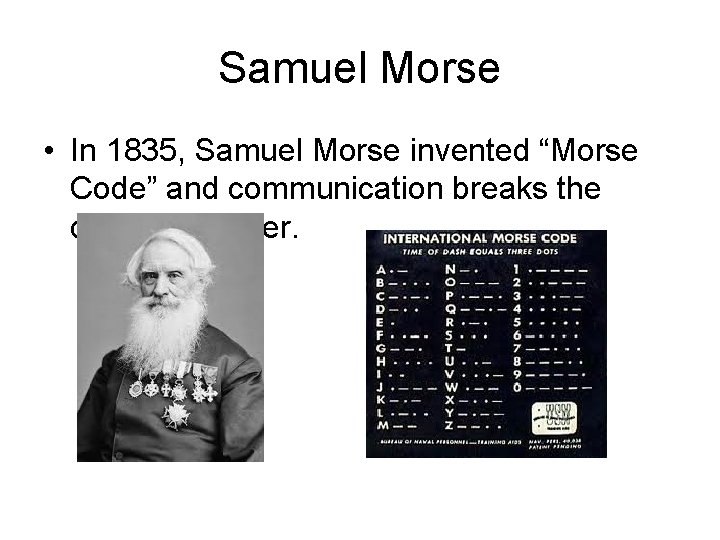
Samuel Morse • In 1835, Samuel Morse invented “Morse Code” and communication breaks the distance barrier.
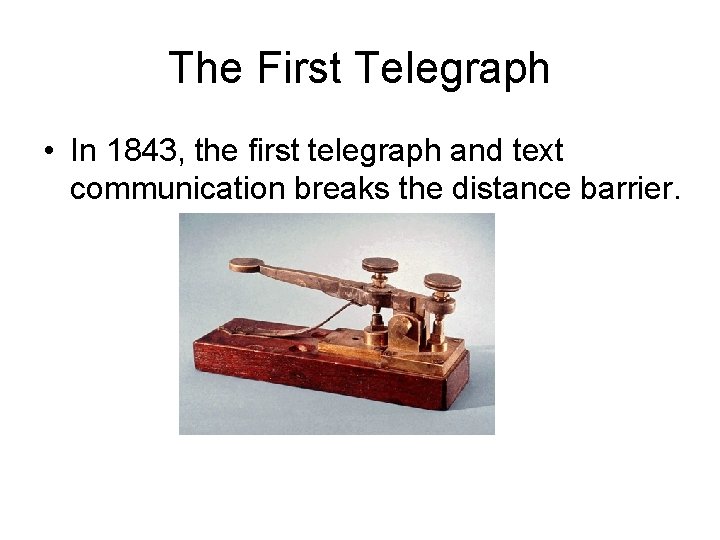
The First Telegraph • In 1843, the first telegraph and text communication breaks the distance barrier.
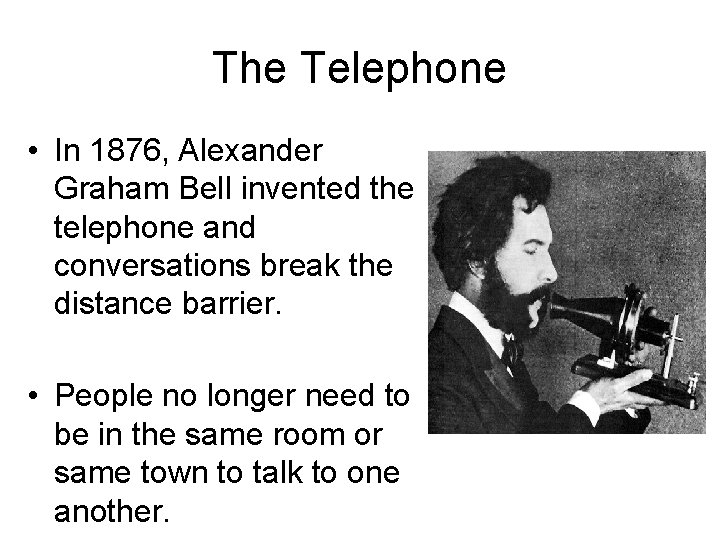
The Telephone • In 1876, Alexander Graham Bell invented the telephone and conversations break the distance barrier. • People no longer need to be in the same room or same town to talk to one another.
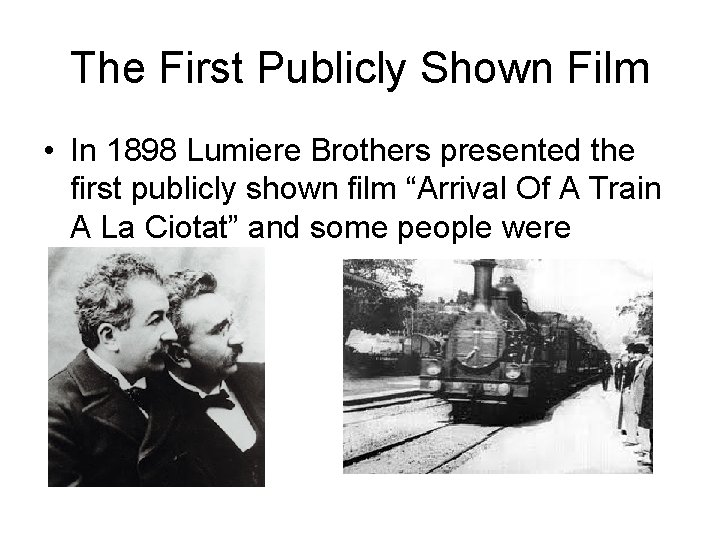
The First Publicly Shown Film • In 1898 Lumiere Brothers presented the first publicly shown film “Arrival Of A Train A La Ciotat” and some people were frightened.
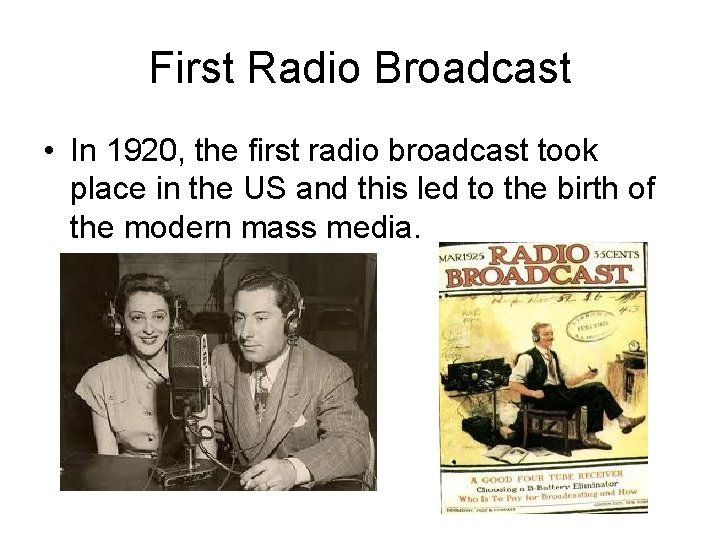
First Radio Broadcast • In 1920, the first radio broadcast took place in the US and this led to the birth of the modern mass media.
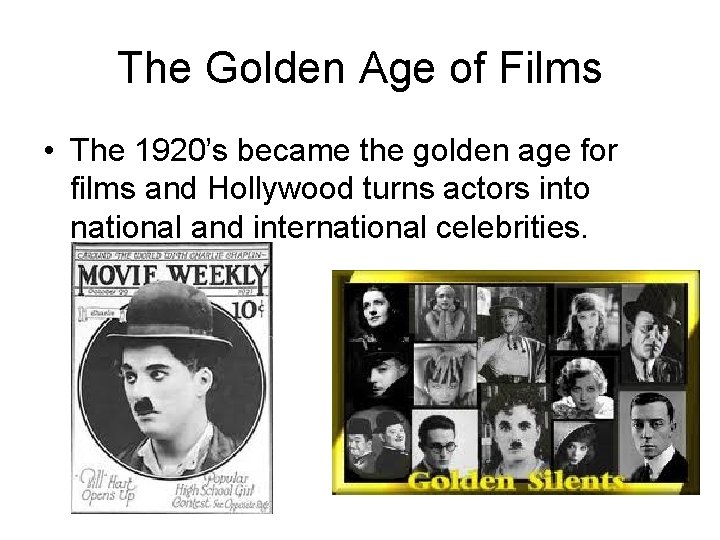
The Golden Age of Films • The 1920’s became the golden age for films and Hollywood turns actors into national and international celebrities.
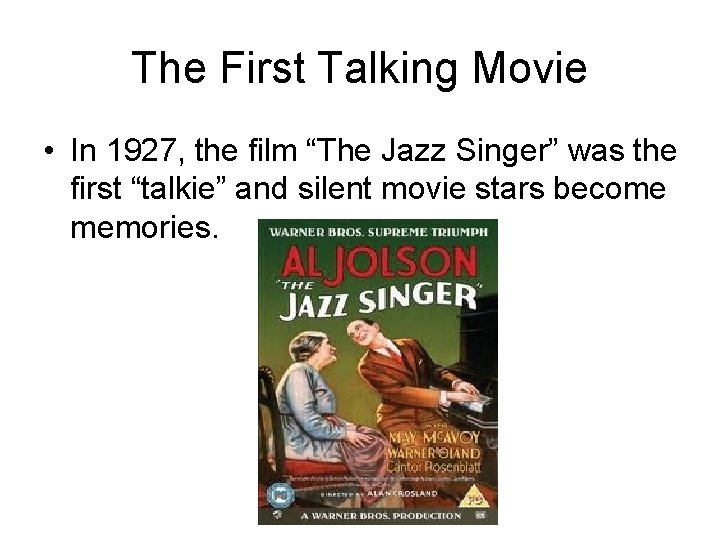
The First Talking Movie • In 1927, the film “The Jazz Singer” was the first “talkie” and silent movie stars become memories.
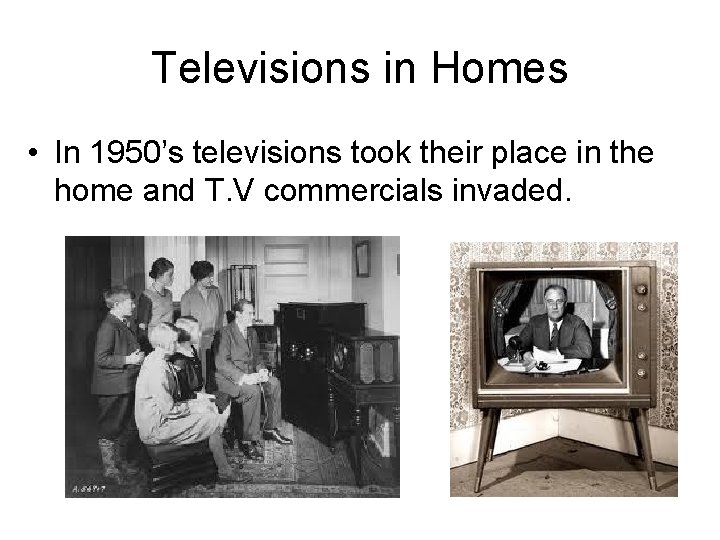
Televisions in Homes • In 1950’s televisions took their place in the home and T. V commercials invaded.
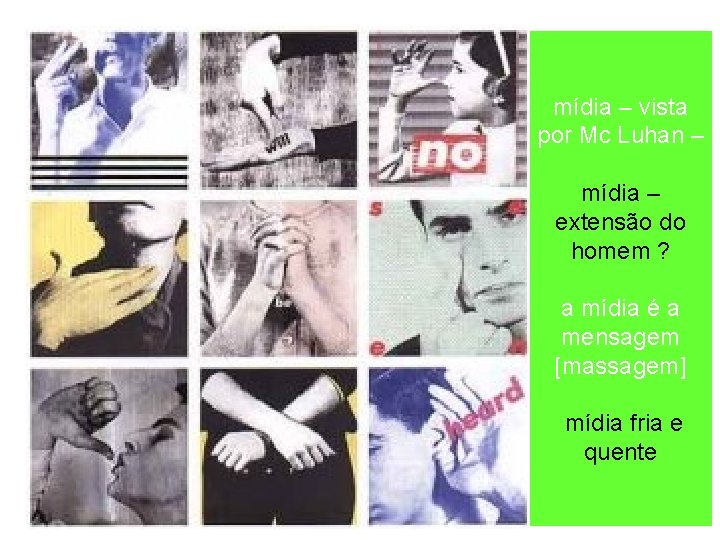
mídia – vista por Mc Luhan – mídia – extensão do homem ? a mídia é a mensagem [massagem] mídia fria e quente
terceira revolução > cultura digital • referências teóricas – mídia da era elétrica • Escola de Frankfurt [Europa] / Marshall Mc Luhan [Estados Unidos] – mídia da era digital • Pierre Lévy: Internet, Tecnologias de Informação e Comunicação > educação, produção de arte, pensamento, trabalho
"A convergência da mídia transformou as comunicações…À medida que novos serviços se tornam facilmente disponíveis, eles estão mudando a maneira como vivemos e trabalhamos, e alterando nossas percepções, crenças e instituições. É essencial entendermos esses efeitos para desenvolver nossos recursos eletrônicos em benefício da sociedade. " American Markle Foundation, 1989
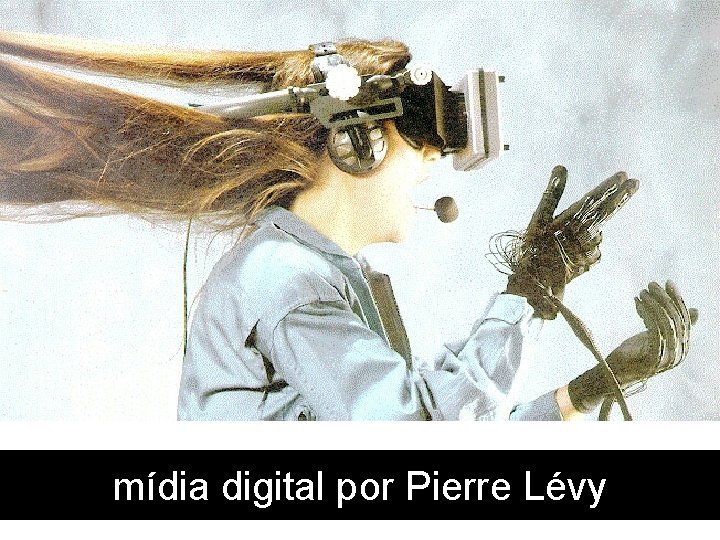
mídia digital por Pierre Lévy
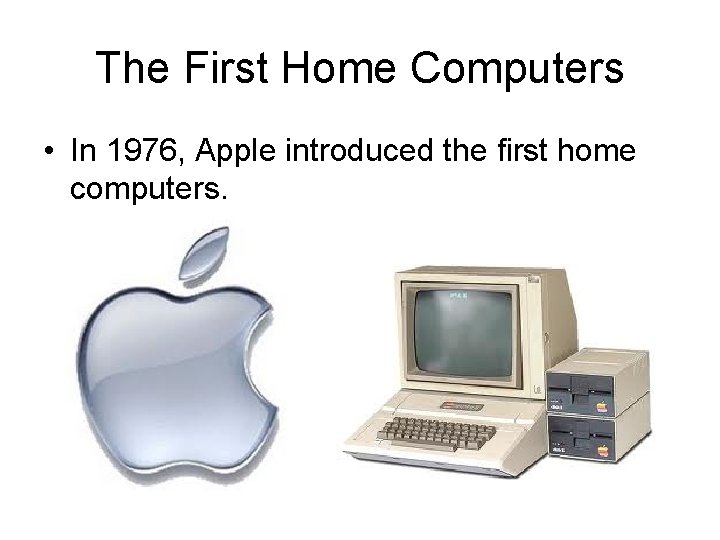
The First Home Computers • In 1976, Apple introduced the first home computers.
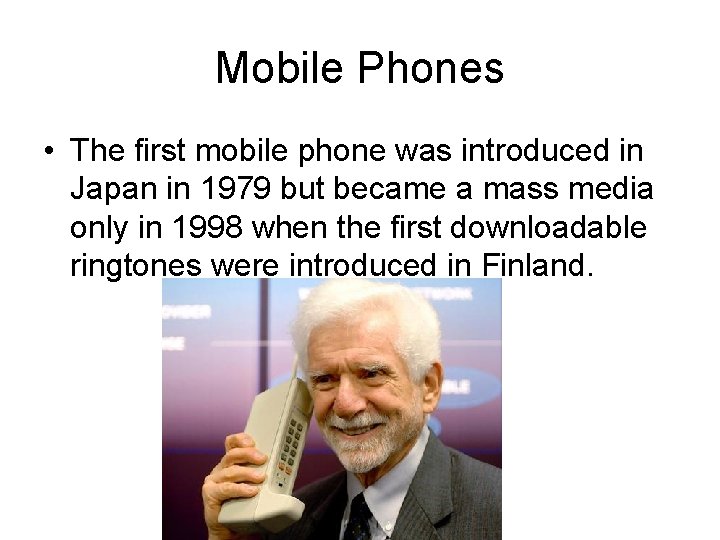
Mobile Phones • The first mobile phone was introduced in Japan in 1979 but became a mass media only in 1998 when the first downloadable ringtones were introduced in Finland.
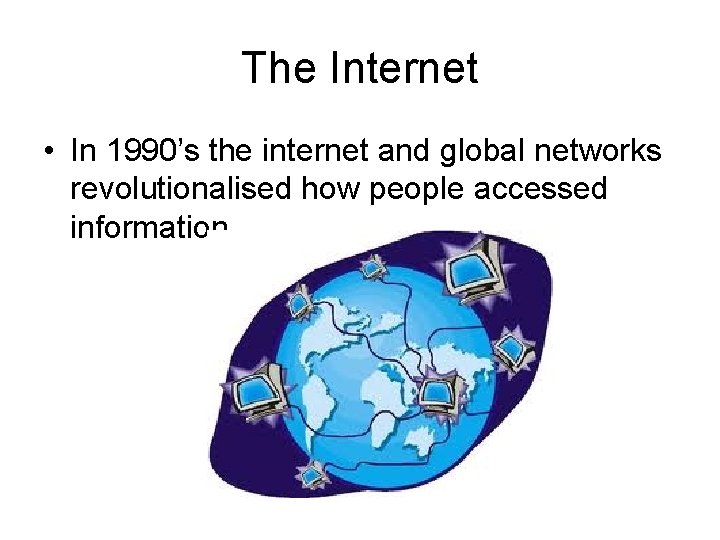
The Internet • In 1990’s the internet and global networks revolutionalised how people accessed information.
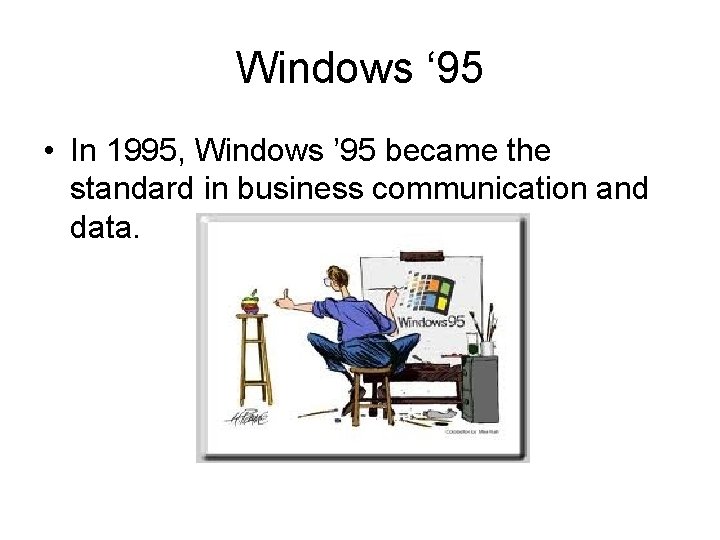
Windows ‘ 95 • In 1995, Windows ’ 95 became the standard in business communication and data.
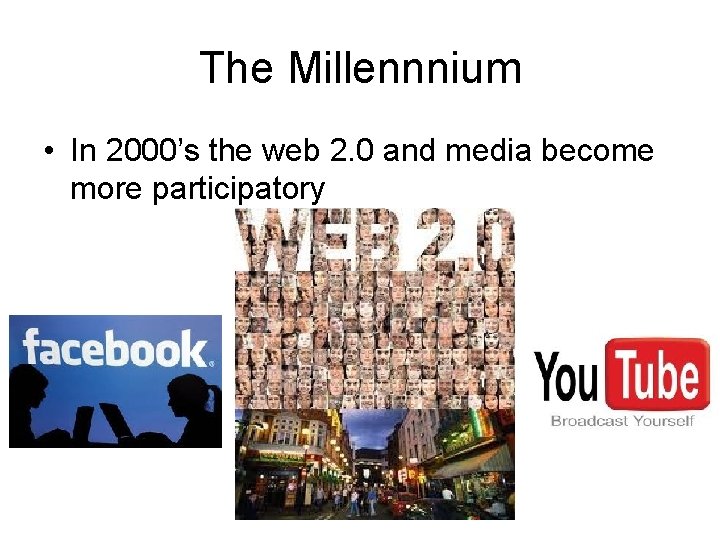
The Millennnium • In 2000’s the web 2. 0 and media become more participatory
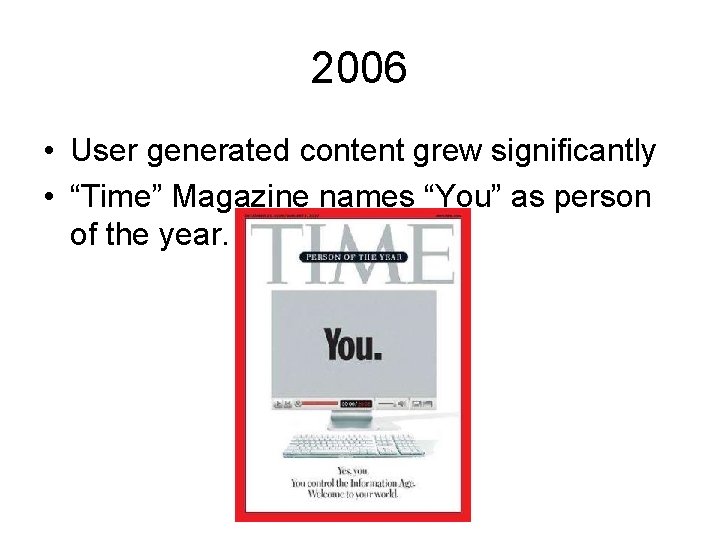
2006 • User generated content grew significantly • “Time” Magazine names “You” as person of the year.
• Informática ? não é uma técnica definida! > processo de numerização da comunicação > processo de interconexão de todos os suportes de memória > processo de artificialização geral da rede global de comunicação > computador não = coisa, mas conjunto de elementos de um processo Pierre Lévy, filósofo mídia na era digital
“Quando existe uma mudança na base do pensamento, deveria existir uma transferência na arquitetura porque essa, como outras formas de expressão cultural, está inserida nos paradigmas mentais reinantes. ” [JENKS, 1997] arquitetura e mídia, interfaces
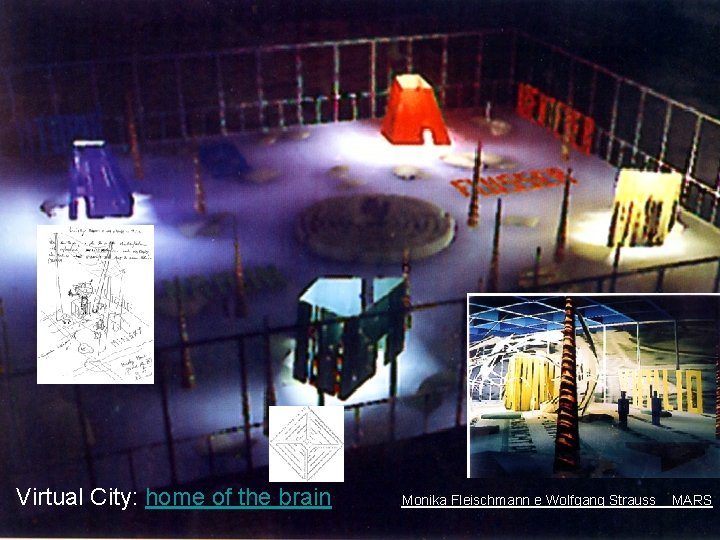
Virtual City: home of the brain Monika Fleischmann e Wolfgang Strauss _ MARS
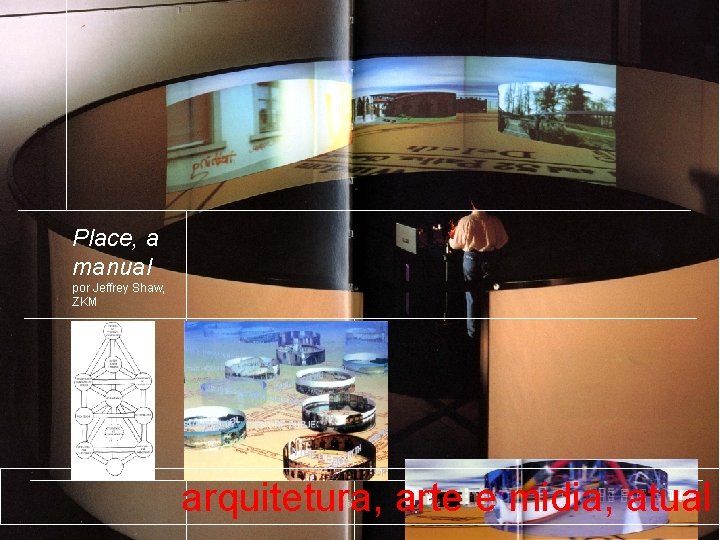
Place, a manual por Jeffrey Shaw, ZKM arquitetura, arte e midia, atual
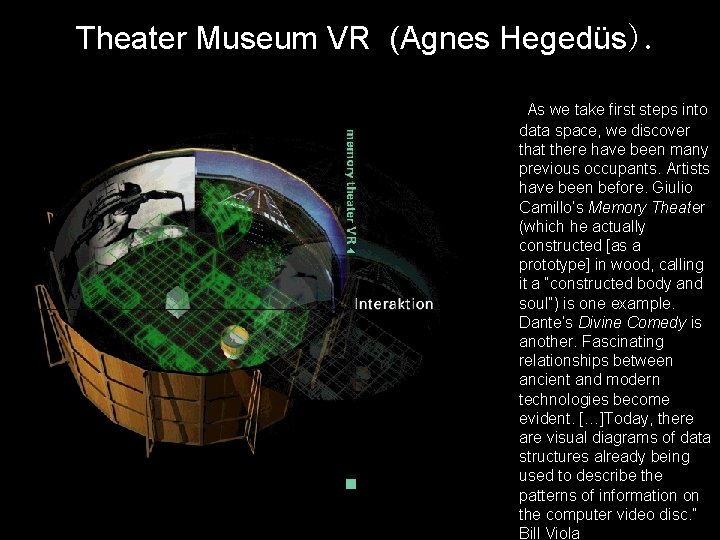
Theater Museum VR (Agnes Hegedüs). “As we take first steps into • casos data space, we discover that there have been many previous occupants. Artists have been before. Giulio Camillo’s Memory Theater (which he actually constructed [as a prototype] in wood, calling it a “constructed body and soul”) is one example. Dante’s Divine Comedy is another. Fascinating relationships between ancient and modern technologies become evident. […]Today, there are visual diagrams of data structures already being used to describe the patterns of information on the computer video disc. ” Bill Viola
MIT Media. Lab > Nicholas Negroponte “ O que faz do designer humano um “bom” arquiteto? Sabemos que de uma certa maneira ele deve contribuir aos ambientes físicos que recebem e estimulam uma boa vida. Mas nos não sabemos realmente o que é uma boa vida [ não existe ´função utilitária´ e isso não pode ser otimizada ]. Sabemos que deve ter uma compreensão da forma física. Mas não sabemos como nossos processos cognitivos visualizam as formas e a geometria. Sabemos que ele deve interpretar os desejos e as necessidades humanas. Mas não sabemos como descrever as necessidades e os desejos. ” Conclui em seguida: “ O que diferencia certamente um designer competente é a sua capacidade de fornecer informações ausentes. Toda concepção de um ambiente se caracteriza para uma quantidade assustadora de informações nem disponível, nem determinável. Uma parte do processo de design é de procurar a informação. ”
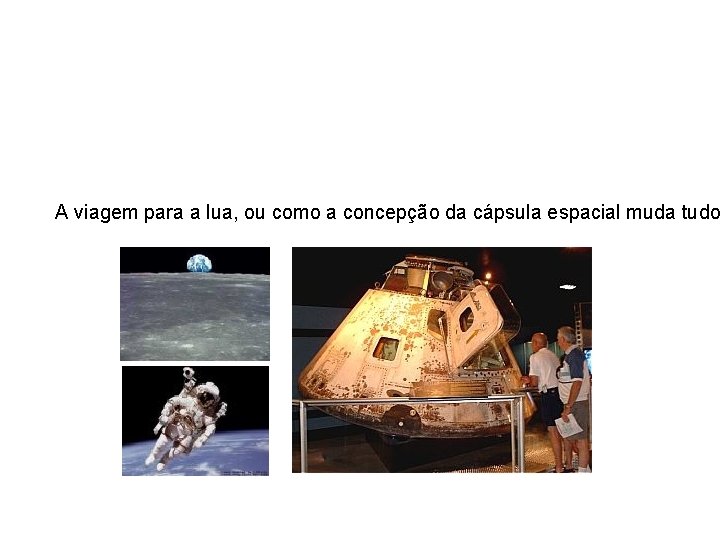
A viagem para a lua, ou como a concepção da cápsula espacial muda tudo
process rather then product controle [-] _ coletividade [+] sistemas cibernéticas – complexidade – transdisciplinaridade - interação economia e produção natureza da arte [ do fazer] categorias de percepção
Edifício como Interface, ou como mesclar realidades? Mediabuilding, Hyperarchitecture, Hybrid Space, Augmented Reality, Interactive Environment, Immersive Reality, Hyper Surface, Virtual Reality, Generative Architecture, Fluid Architecture, Morphogenesis, Blob Architecture, Genetic Space, Abstract Machine, Diagrams, Forces, Vectors, Layers, Transarchitecture, Evolutionary Architecture, Parametric Architecture………. Qual é o papel da Técnologia de Informação na Arquitetura?
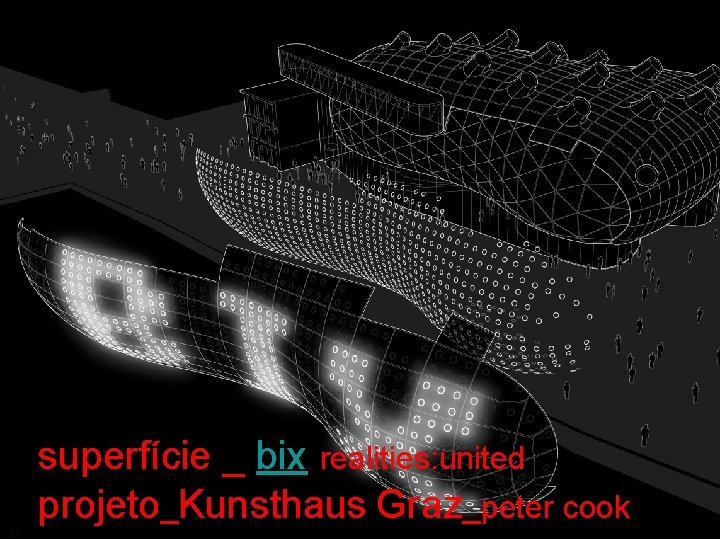
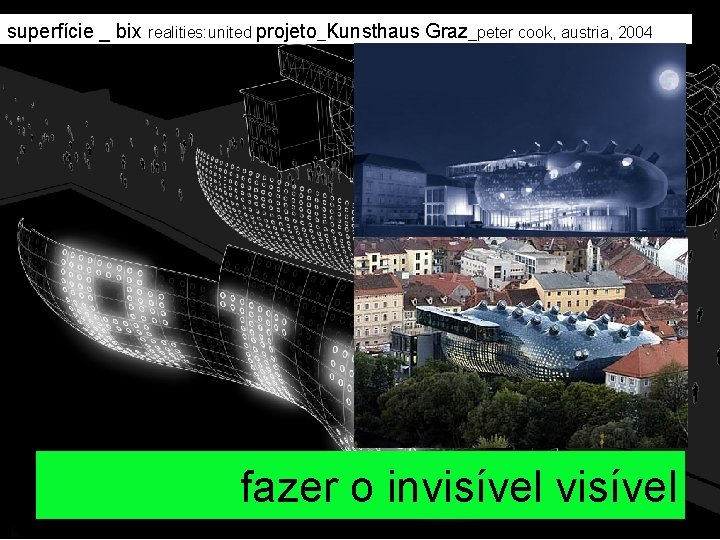
kunsthaus Graz _ Projeto BIX superfície _ bix realities: united projeto_Kunsthaus Graz_peter cook
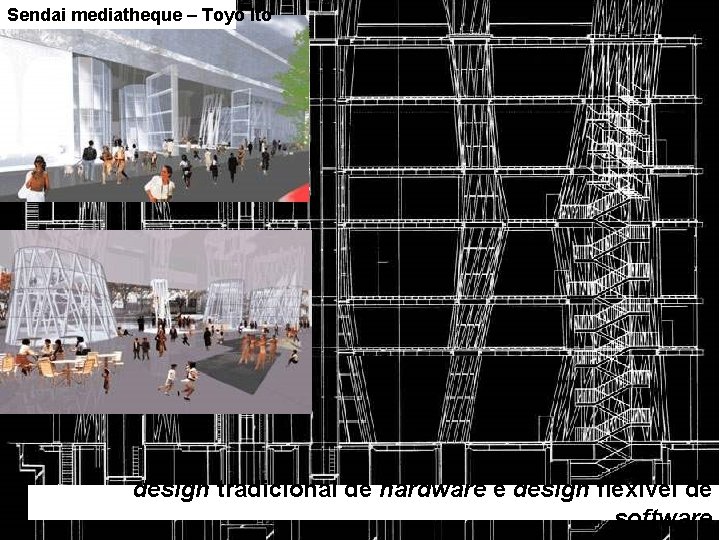
Sendai mediatheque – Toyo Ito design tradicional de hardware e design flexível de software
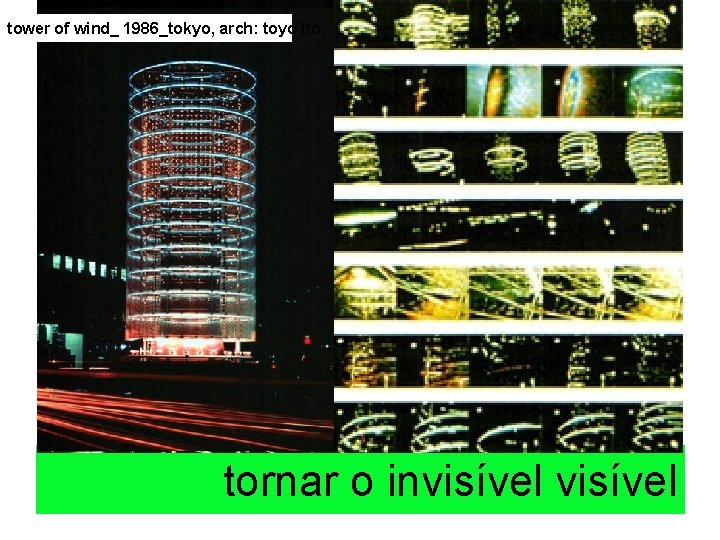
tower of wind_ 1986_tokyo, arch: toyo ito, tornar o invisível
aegis hyposurface_ 1999 -2001_exposição, arch: decoi [Mark Gulthorpe] tornar o invisível
superfície _ bix realities: united projeto_Kunsthaus Graz_peter cook, austria, 2004 kunsthaus Graz _ Projeto BIX fazer o invisível
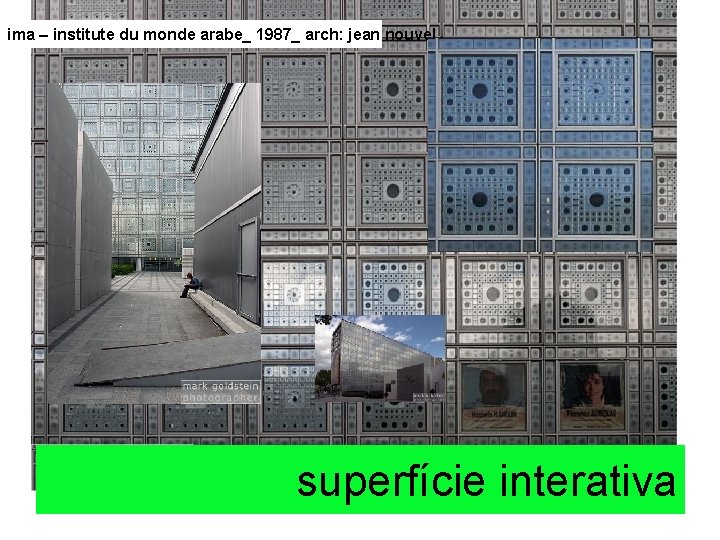
ima – institute du monde arabe_ 1987_ arch: jean nouvel superfície interativa
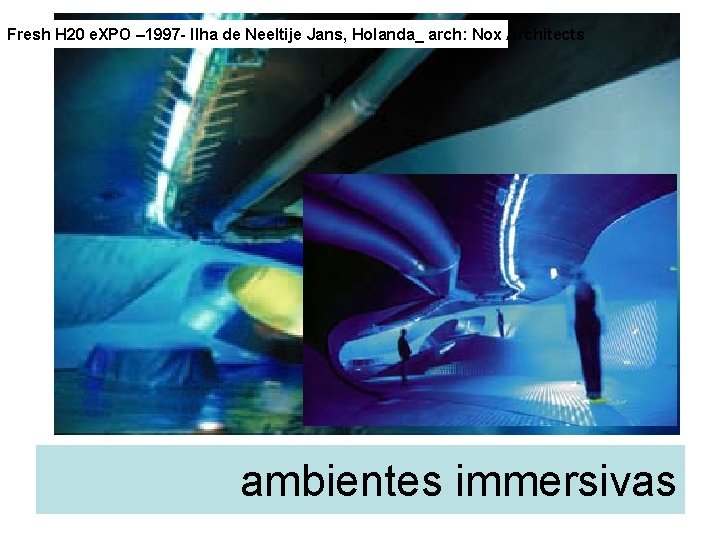
Fresh H 20 e. XPO – 1997 - Ilha de Neeltije Jans, Holanda_ arch: Nox Architects ambientes immersivas
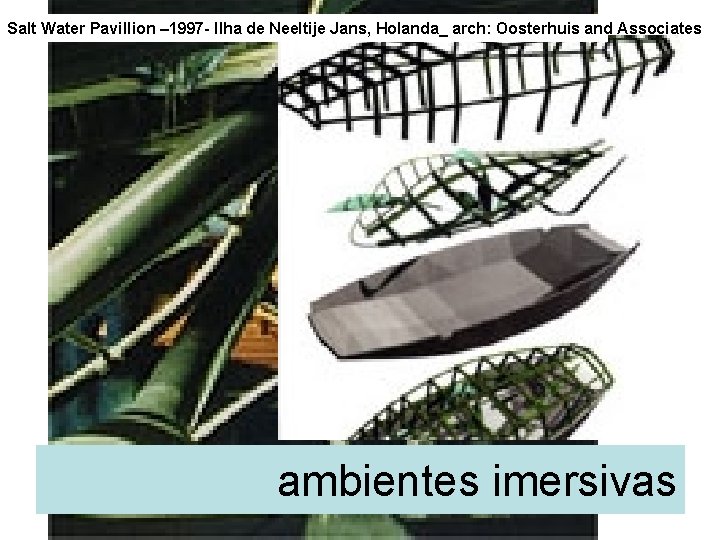
Salt Water Pavillion – 1997 - Ilha de Neeltije Jans, Holanda_ arch: Oosterhuis and Associates ambientes imersivas
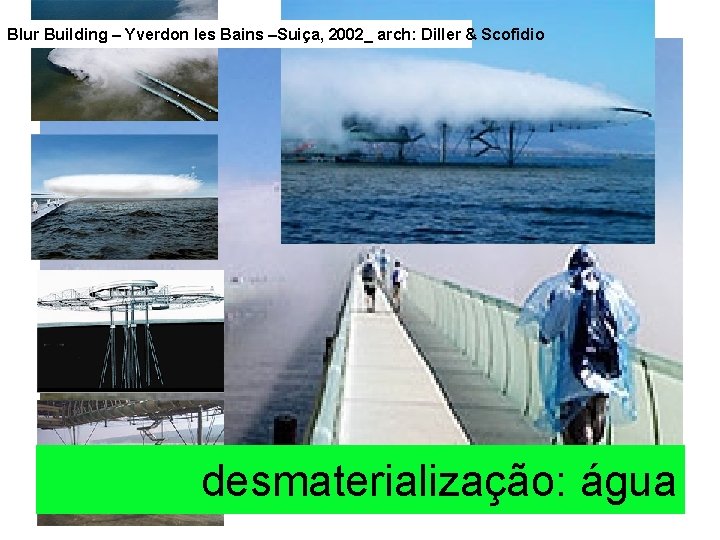
Blur Building – Yverdon les Bains –Suiça, 2002_ arch: Diller & Scofidio desmaterialização: água
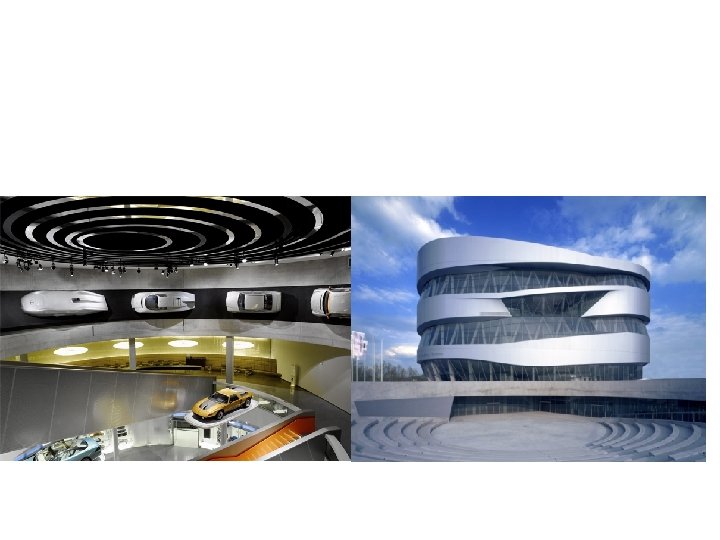
Museu Mercedes Benz, Stuttgart Design paramétrico Un-Studio
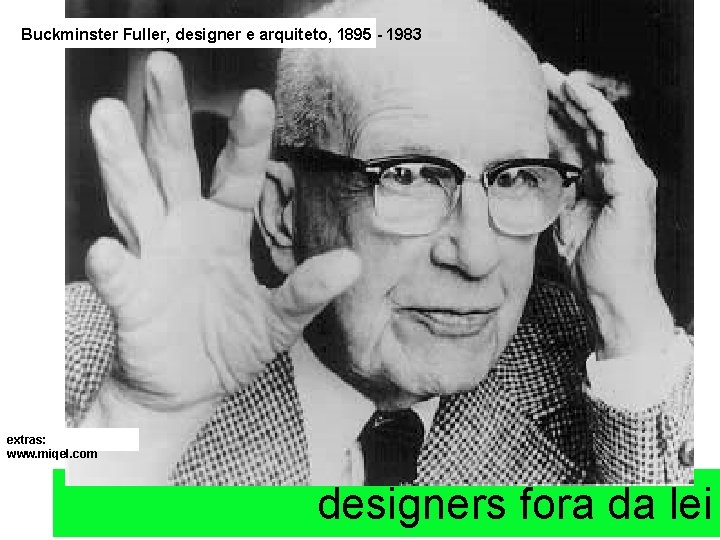
Buckminster Fuller, designer e arquiteto, 1895 - 1983 extras: www. miqel. com designers fora da lei
• REF: Key concepts in new media • Social media history
síntese e leituras adicionais Bibliografia básica BRIGGS, A. , BURKE, P. Uma História social da Mídia: de Gutenberg à Internet. Rio de Janeiro: Jorge Zahar, 2002. Bibliografia adicional LEVY, P. As formas do saber: Tecnologia. Transcrição de vídeo. São Carlos: Nomads. usp, 2001. [online] MC LUHAN, M. Os meios de comunicação como extensão do homem. São Paulo: Cultrix, 1971. [encontra-se na biblioteca da eesc] DEBRAY, R. What is Mediology, http: //www. mondediplomatique. fr/1999/08/DEBRAY/12314 [acessado em 15 de outubro 2005] MC LUHAN, M. , The Playboy Interview: A candid conversation with the high priest of popcult and metaphysician of media. [acessado em 10 de março 2005] ZUMTHOR, P. , A letra e a voz, São Paulo: Companhia das Letras, 2001 Powerpoint 2 Ars electronica cluster Edifícios catedral gótica; biblioteca beneditina medieval; user's manual, de jeffrey shaw,
história da mídia e referências teóricas anja pratschke