
History Weimar and Nazi Germany Lesson 13 Worksheet

- Slides: 8
History, Weimar and Nazi Germany Lesson 13 Worksheet: Who were the SA and what was their role? Mr Mc. Nally
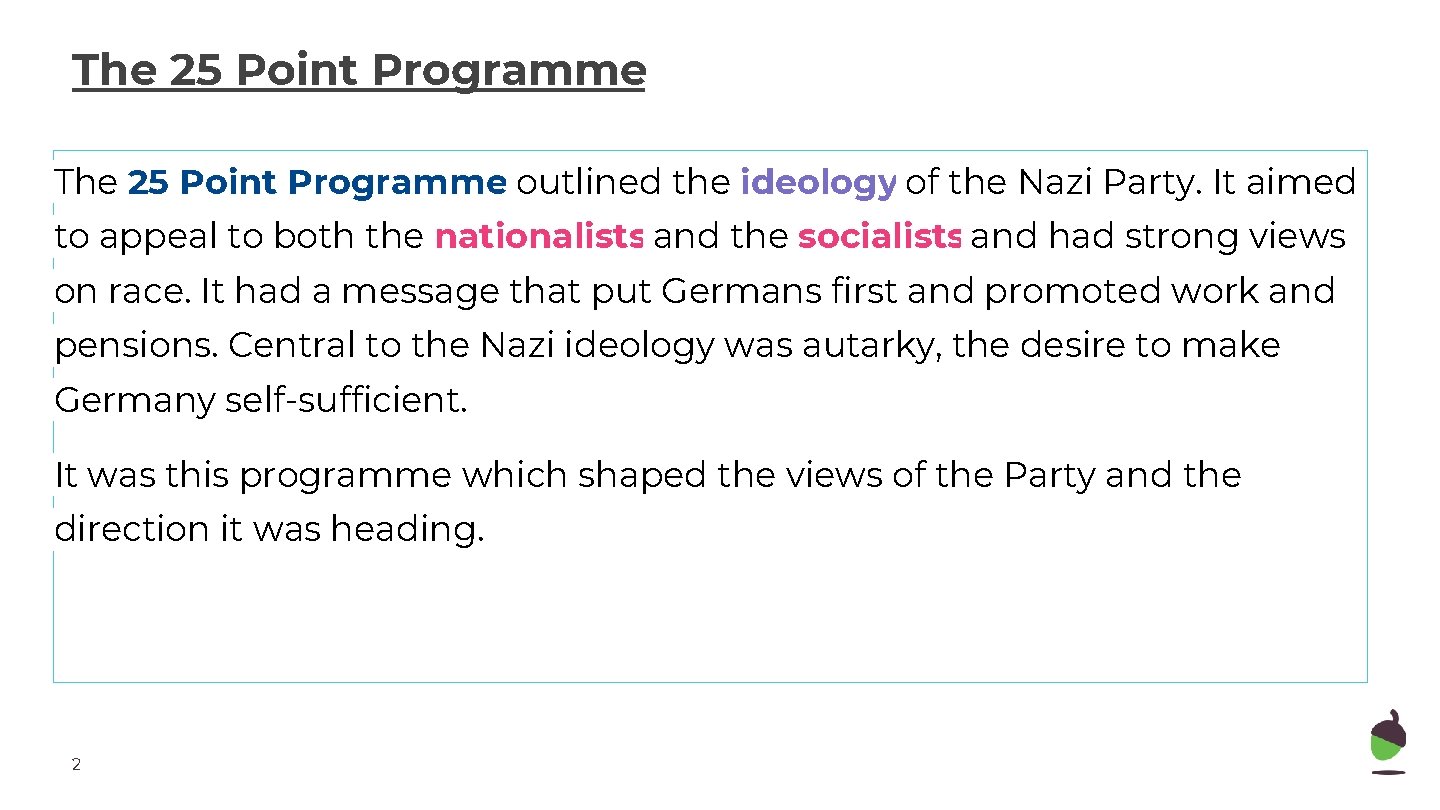
The 25 Point Programme outlined the ideology of the Nazi Party. It aimed to appeal to both the nationalists and the socialists and had strong views on race. It had a message that put Germans first and promoted work and pensions. Central to the Nazi ideology was autarky, the desire to make Germany self-sufficient. It was this programme which shaped the views of the Party and the direction it was heading. 2
The 25 Point Programme - Socialism is about the government distributing wealth to the people to provide greater equality. This was aimed at winning the vote of the left-wing workers, and even the unemployed. The 25 -Point Programme included the following socialist policies: 7. The state to provide employment to the people 11. To get rid of unearned income 13. The nationalisation of businesses that have become corporations 14. Profits from wholesale trade to be shared out 15. An expansion to pensions and old-age welfare 3
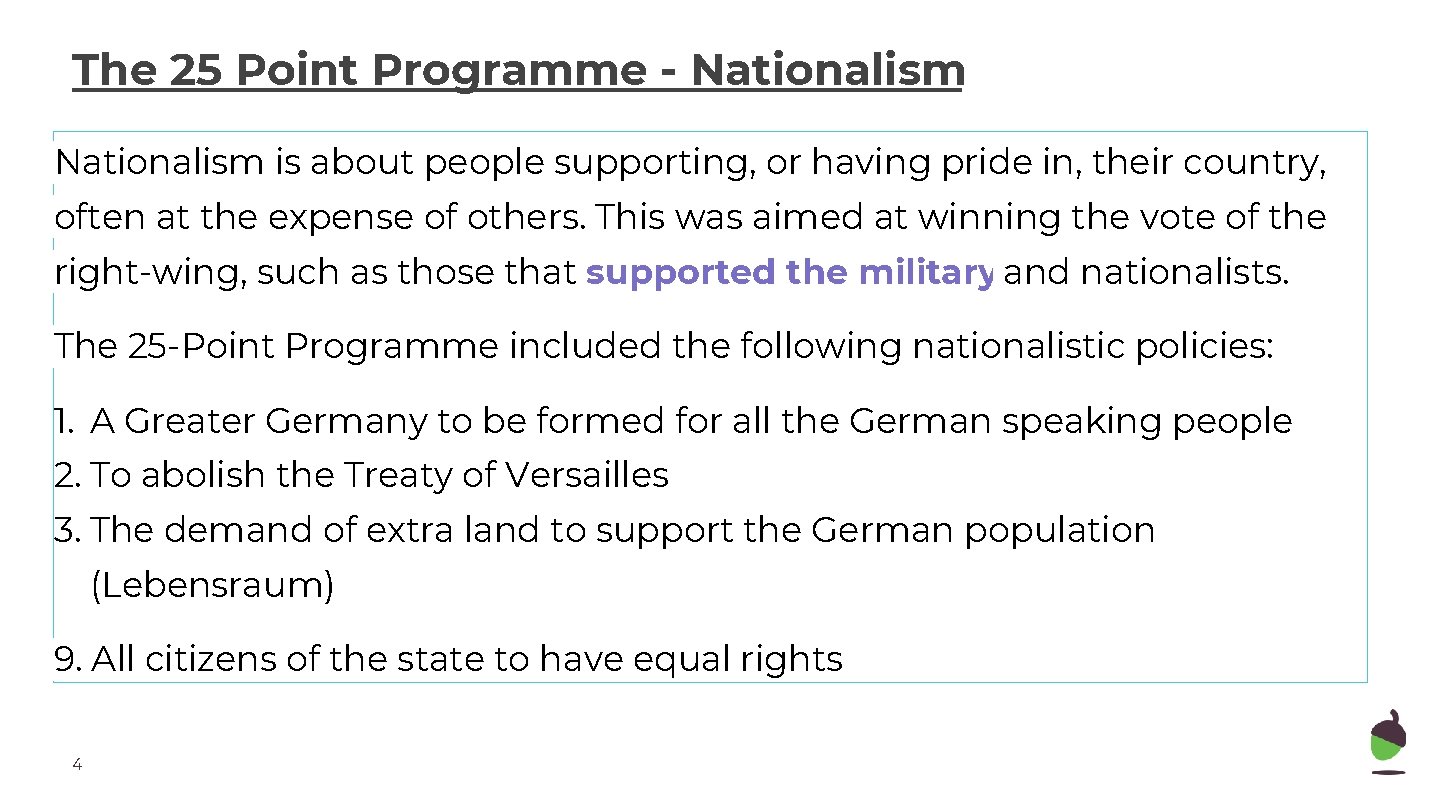
The 25 Point Programme - Nationalism is about people supporting, or having pride in, their country, often at the expense of others. This was aimed at winning the vote of the right-wing, such as those that supported the military and nationalists. The 25 -Point Programme included the following nationalistic policies: 1. A Greater Germany to be formed for all the German speaking people 2. To abolish the Treaty of Versailles 3. The demand of extra land to support the German population (Lebensraum) 9. All citizens of the state to have equal rights 4
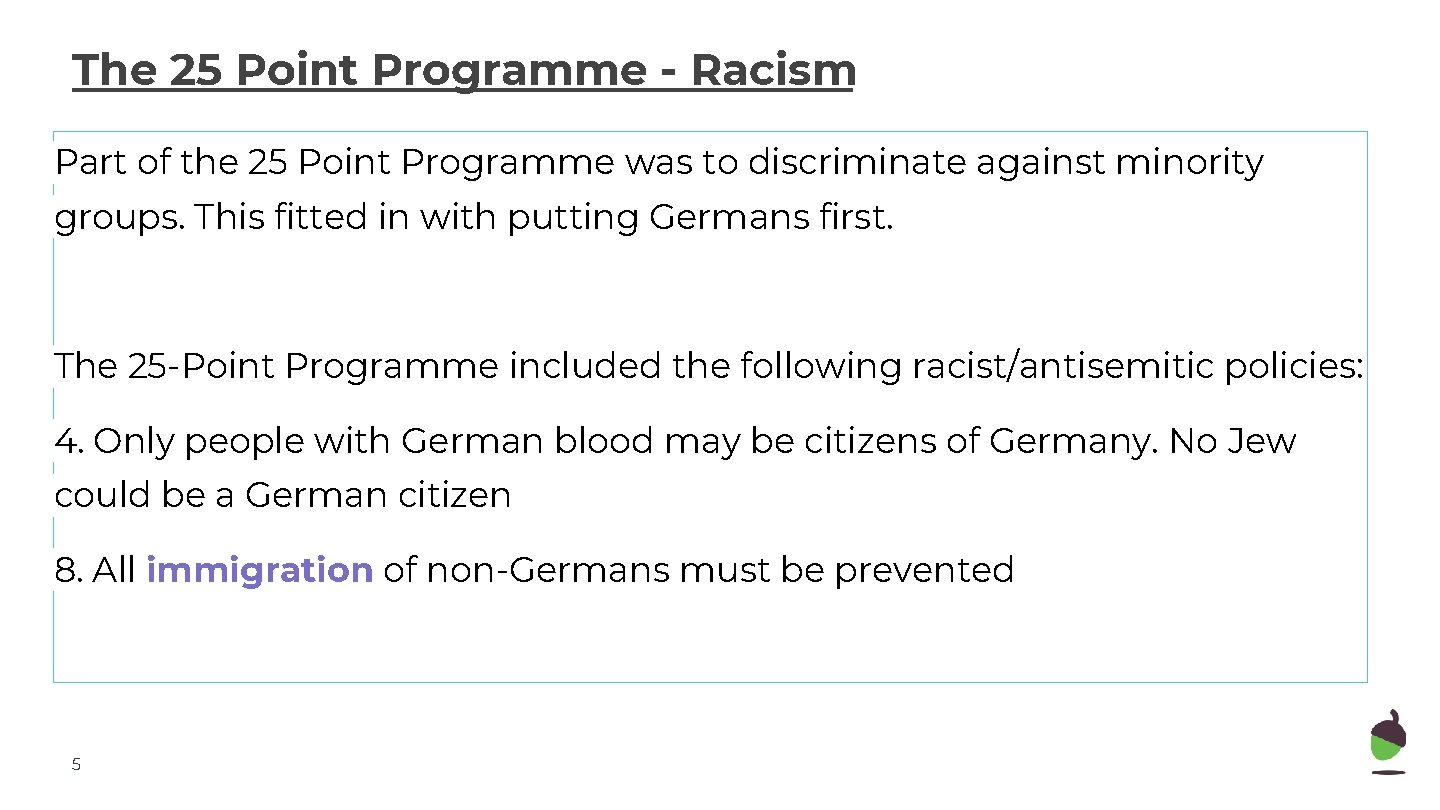
The 25 Point Programme - Racism Part of the 25 Point Programme was to discriminate against minority groups. This fitted in with putting Germans first. The 25 -Point Programme included the following racist/antisemitic policies: 4. Only people with German blood may be citizens of Germany. No Jew could be a German citizen 8. All immigration of non-Germans must be prevented 5
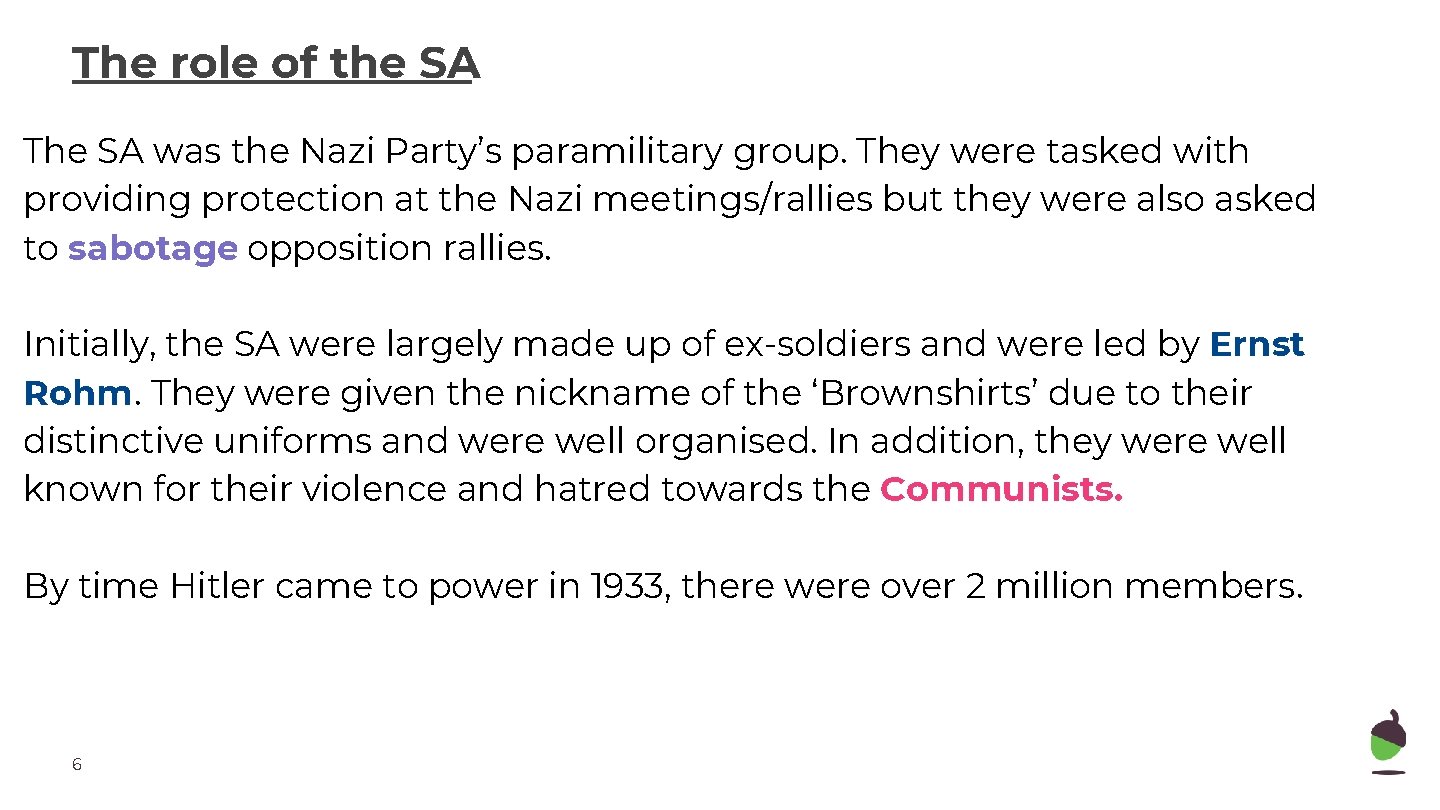
The role of the SA The SA was the Nazi Party’s paramilitary group. They were tasked with providing protection at the Nazi meetings/rallies but they were also asked to sabotage opposition rallies. Initially, the SA were largely made up of ex-soldiers and were led by Ernst Rohm. They were given the nickname of the ‘Brownshirts’ due to their distinctive uniforms and were well organised. In addition, they were well known for their violence and hatred towards the Communists. By time Hitler came to power in 1933, there were over 2 million members. 6
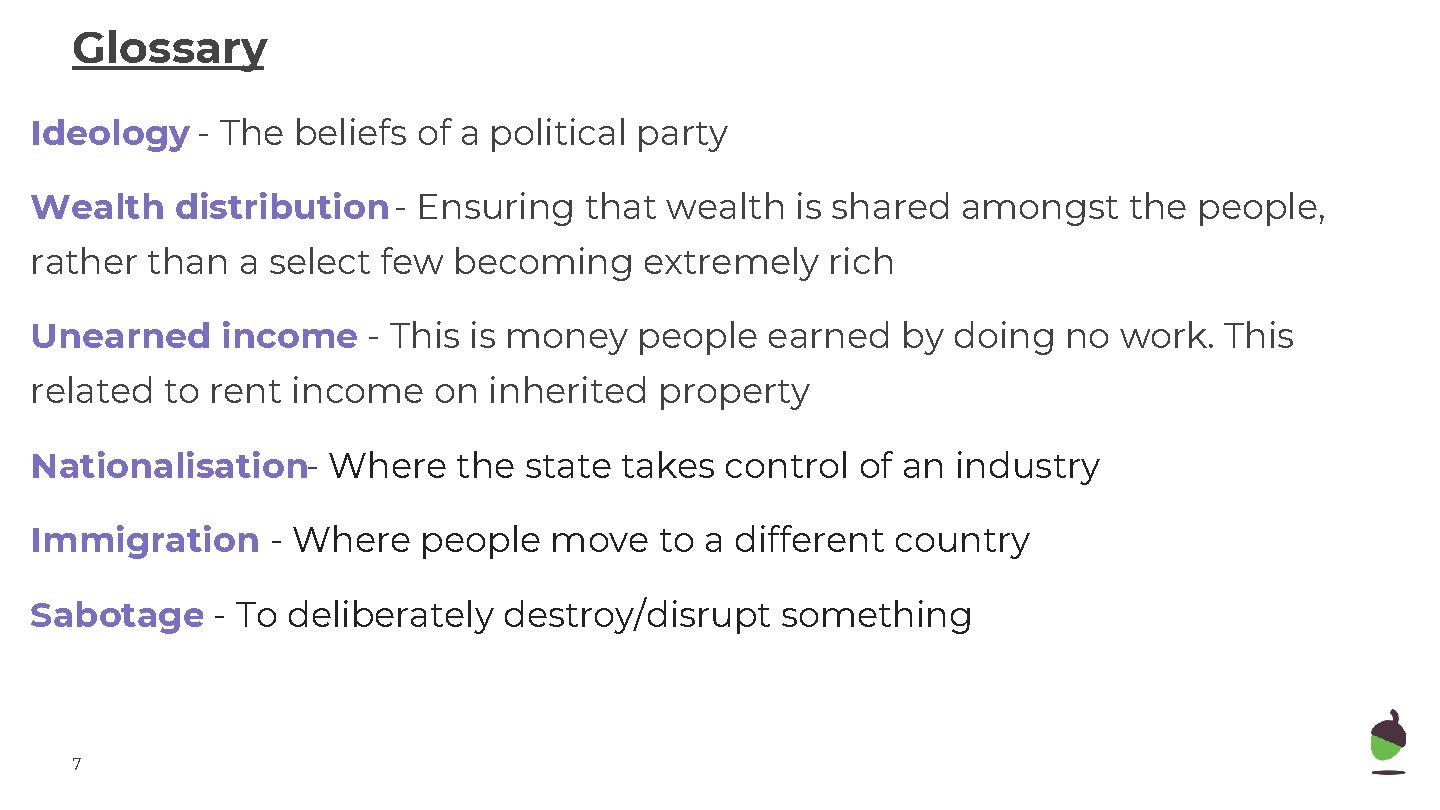
Glossary Ideology - The beliefs of a political party Wealth distribution - Ensuring that wealth is shared amongst the people, rather than a select few becoming extremely rich Unearned income - This is money people earned by doing no work. This related to rent income on inherited property Nationalisation- Where the state takes control of an industry Immigration - Where people move to a different country Sabotage - To deliberately destroy/disrupt something 7
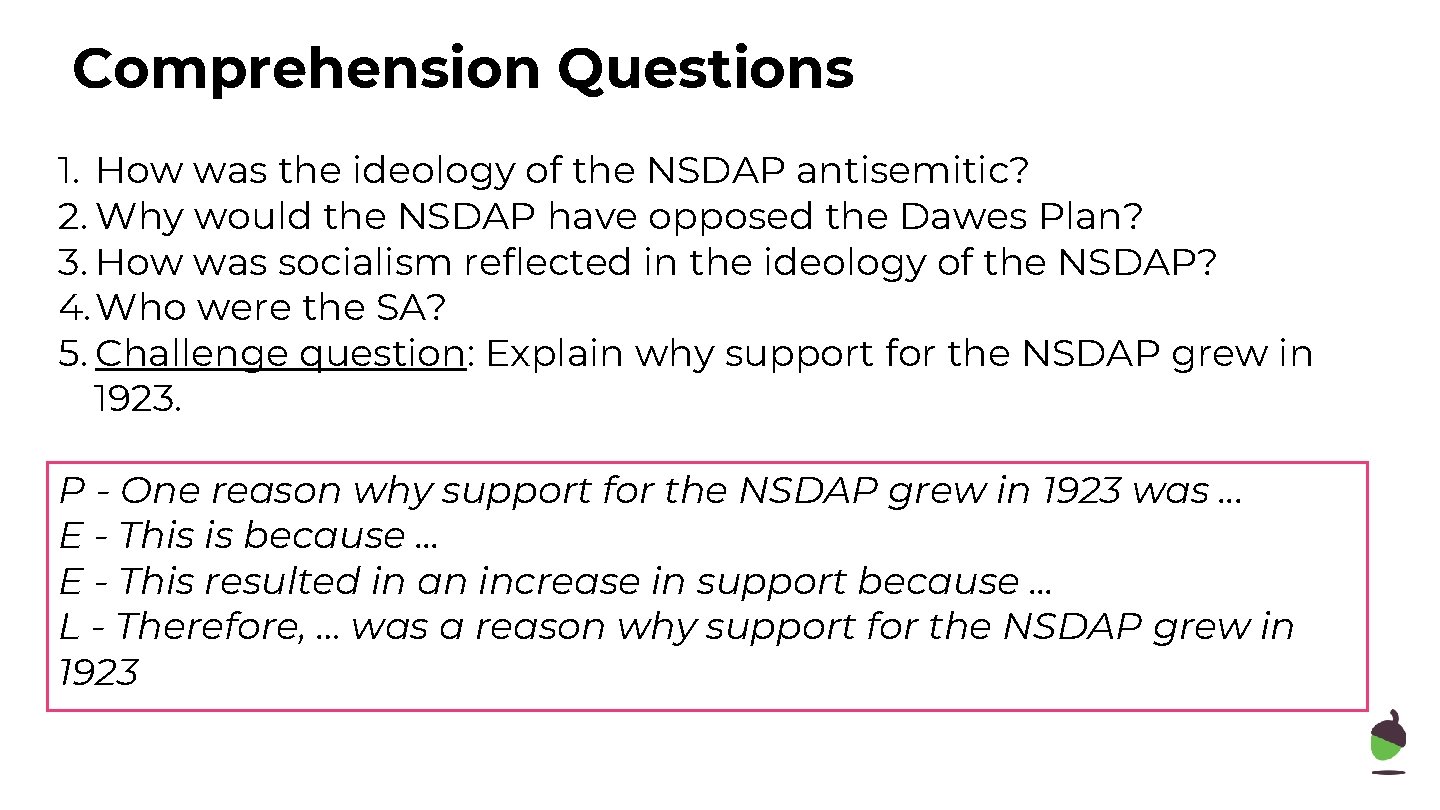
Comprehension Questions 1. How was the ideology of the NSDAP antisemitic? 2. Why would the NSDAP have opposed the Dawes Plan? 3. How was socialism reflected in the ideology of the NSDAP? 4. Who were the SA? 5. Challenge question: Explain why support for the NSDAP grew in 1923. P - One reason why support for the NSDAP grew in 1923 was. . . E - This is because. . . E - This resulted in an increase in support because. . . L - Therefore, … was a reason why support for the NSDAP grew in 1923