
History Topic Term 3 The Stone Age Vocabulary
History Topic Term 3: The Stone Age
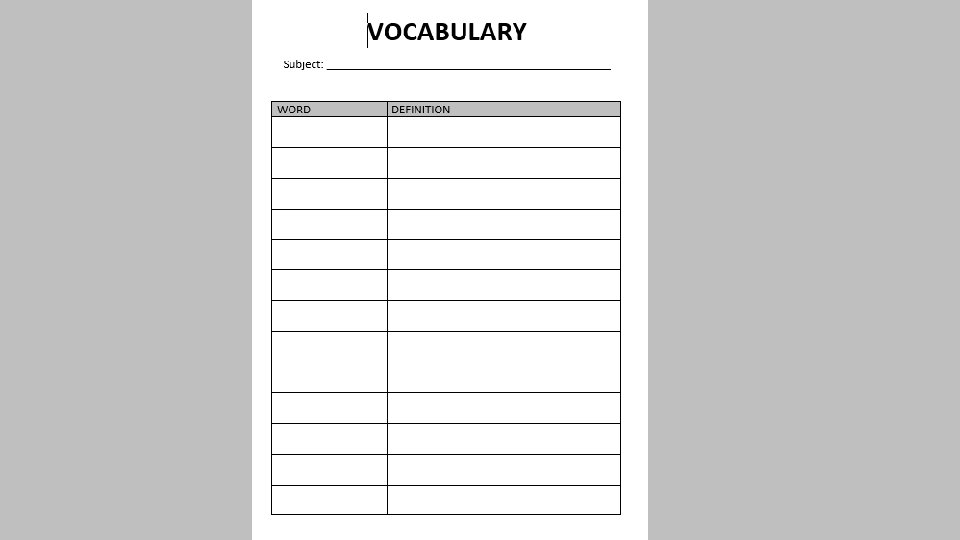
Vocabulary • Stick the Vocabulary sheet on the inside back cover of your Writing Books. • Where is says ‘Subject’, write the following: • The Stone Age to The Bronze Age • We will add unknown vocabulary to this sheet as we work our way through this topic.

History and Prehistory • Read pages 2 and 3 from The Study Book • Complete pages 2 and 3 from The Activity Book about primary and secondary sources. • Stick in the BACK of your Writing Books.

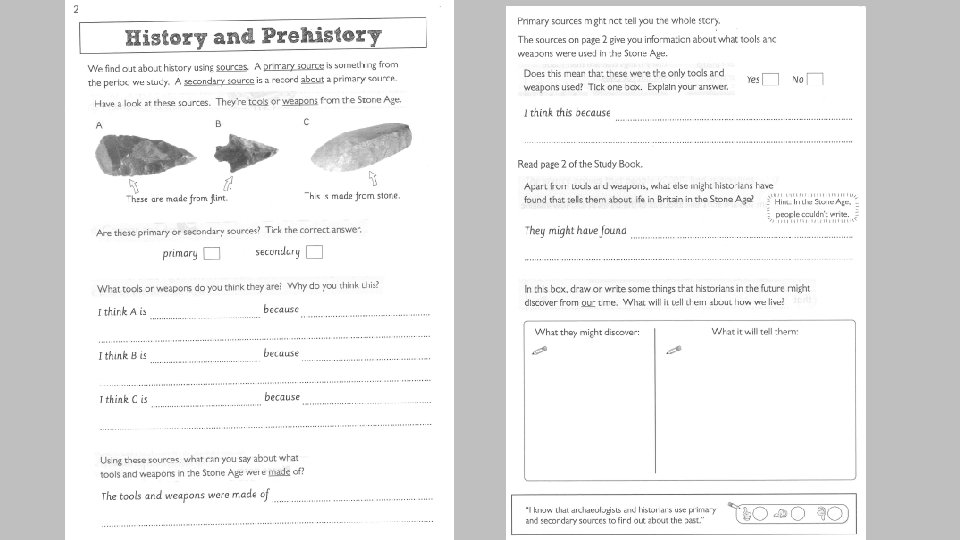
Glossary Primary source – a source of information that was created during the time of study, e. g. a diary or an object. Secondary source – is a record about a primary source, e. g. a fact book or a replica of an object.
Key Question: Why is The Stone Age called The Stone Age?
LO: I can investigate three periods of the Stone Age.

Glossary Period – a length or portion of time.

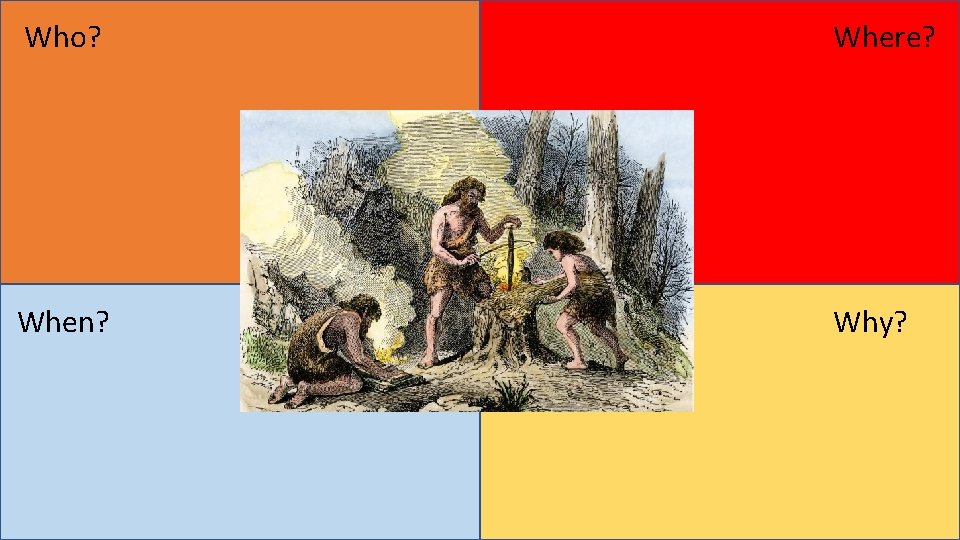
Look at the image on the following slide and answer the questions. Who? Where? When? Why? Complete the Initial Ideas Worksheet.
Who? Where? When? Why?
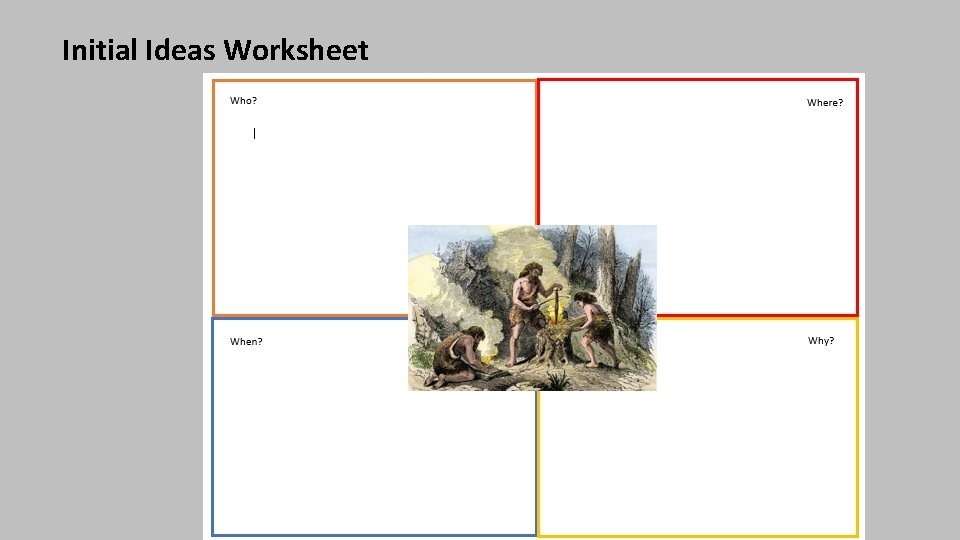
Initial Ideas Worksheet
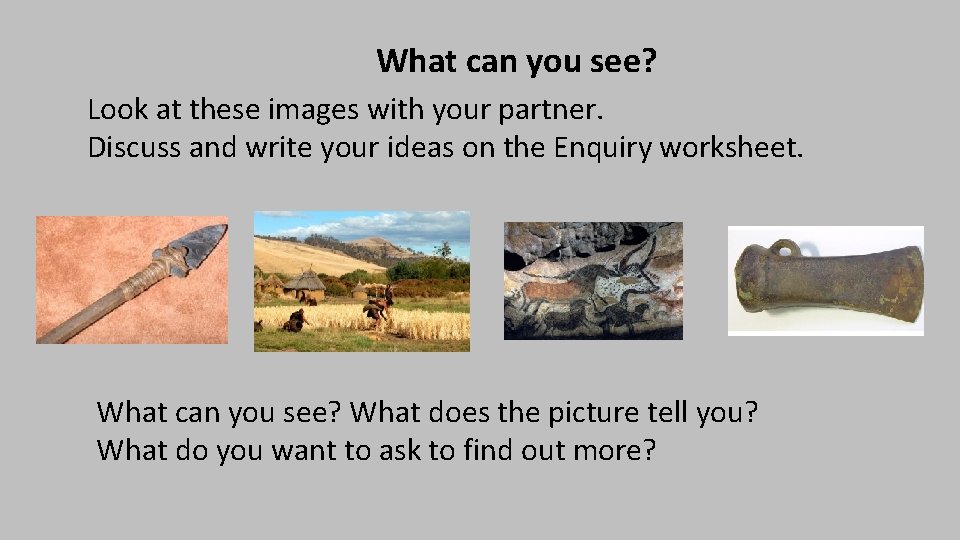
What can you see? Look at these images with your partner. Discuss and write your ideas on the Enquiry worksheet. What can you see? What does the picture tell you? What do you want to ask to find out more?
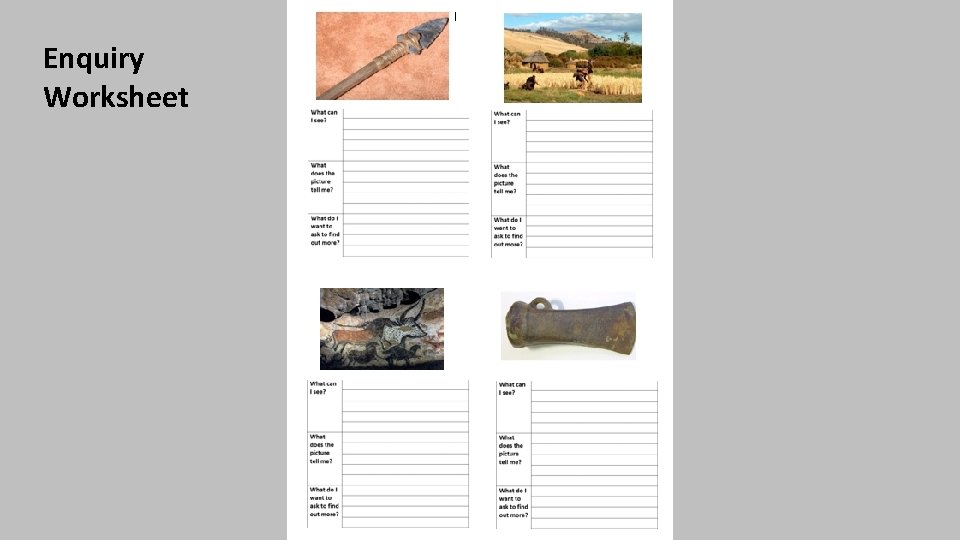
Enquiry Worksheet
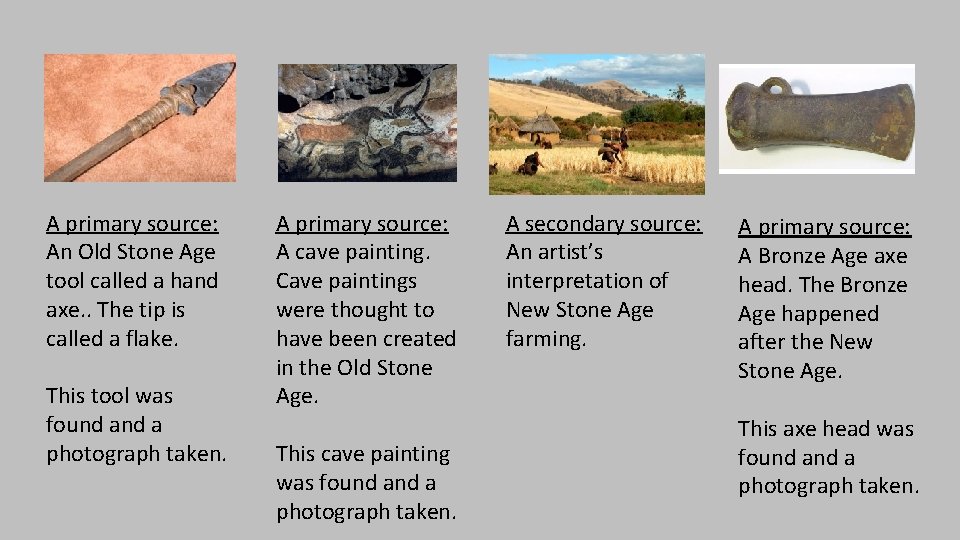
A primary source: An Old Stone Age tool called a hand axe. . The tip is called a flake. This tool was found a photograph taken. A primary source: A cave painting. Cave paintings were thought to have been created in the Old Stone Age. This cave painting was found a photograph taken. A secondary source: An artist’s interpretation of New Stone Age farming. A primary source: A Bronze Age axe head. The Bronze Age happened after the New Stone Age. This axe head was found a photograph taken.
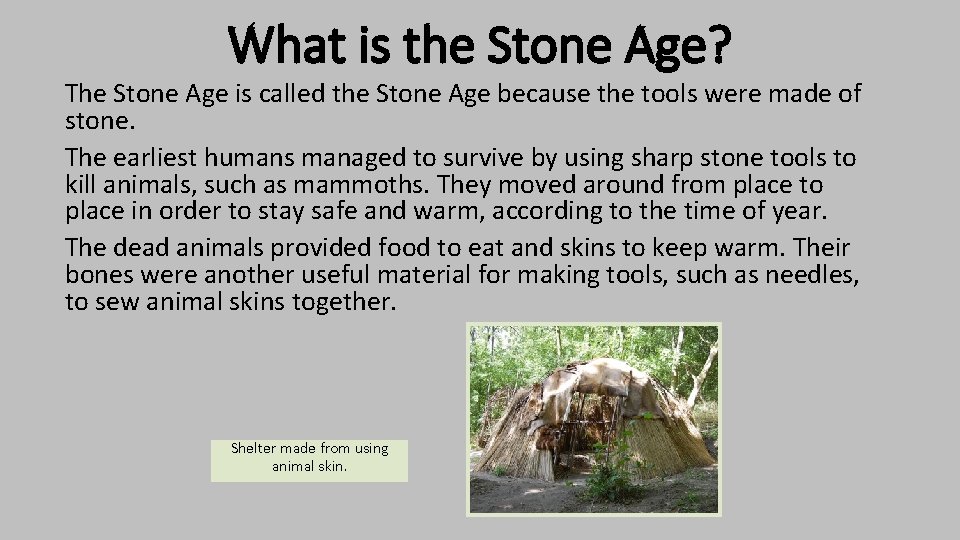
What is the Stone Age? The Stone Age is called the Stone Age because the tools were made of stone. The earliest humans managed to survive by using sharp stone tools to kill animals, such as mammoths. They moved around from place to place in order to stay safe and warm, according to the time of year. The dead animals provided food to eat and skins to keep warm. Their bones were another useful material for making tools, such as needles, to sew animal skins together. Shelter made from using animal skin.
The Stone Age is divided into three periods: 1. Palaeolithic (Old Stone Age: 2, 500, 000 - 8, 000 BCE) 2. Mesolithic (Middle Stone Age: 8, 000 - 4, 500 BCE) In 6000 BC, Britain became an island as the land bridge joining Britain to Europe flooded as the sea level rose. https: //www. bbc. co. uk/programmes/p 01 zfxnh 3. Neolithic (New Stone Age: 4, 500 - 2, 300 BCE) https: //www. bbc. co. uk/programmes/p 01 zfxgg
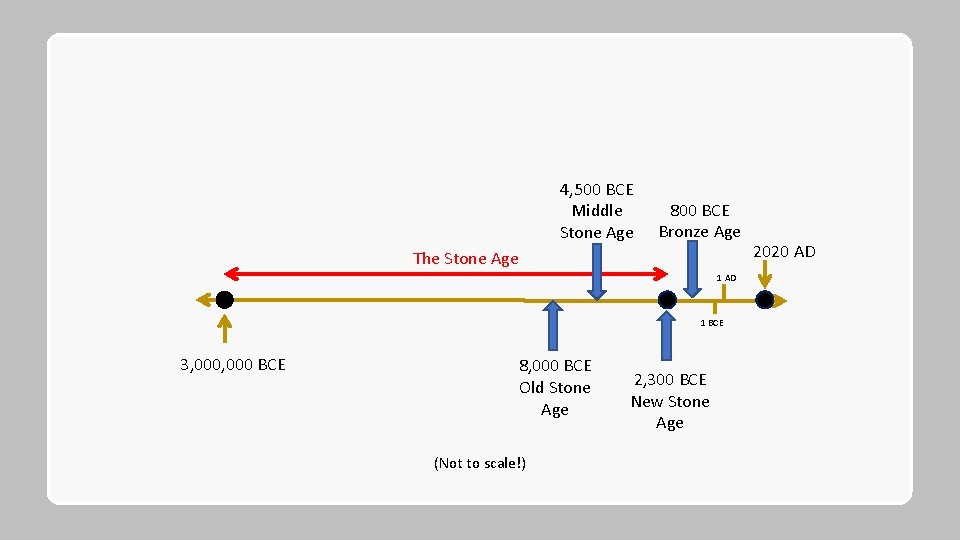
4, 500 BCE Middle Stone Age 800 BCE Bronze Age The Stone Age 1 AD 1 BCE 3, 000 BCE 8, 000 BCE Old Stone Age (Not to scale!) 2, 300 BCE New Stone Age 2020 AD
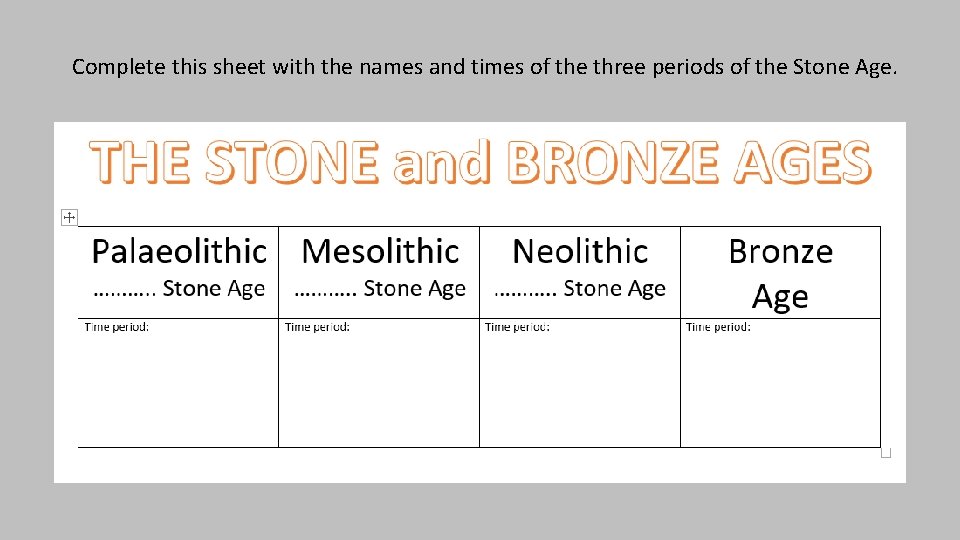
Complete this sheet with the names and times of the three periods of the Stone Age.
- Slides: 20