
History on the Organization of Elements Antoine Lavoiser


- Slides: 28
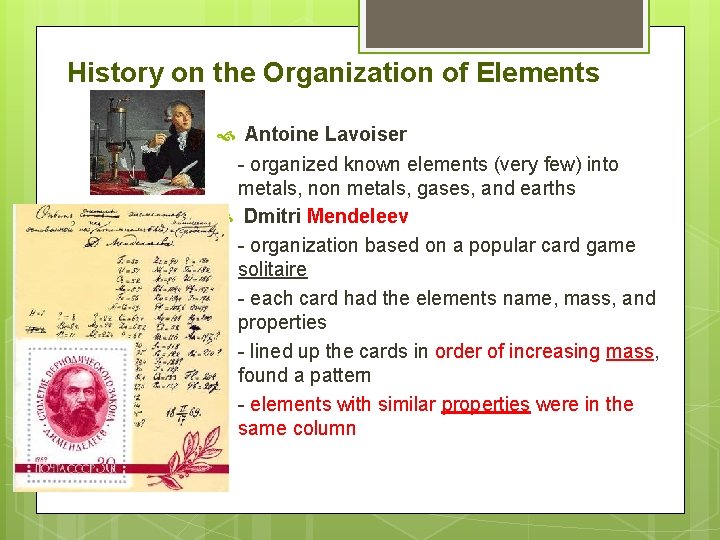
History on the Organization of Elements Antoine Lavoiser - organized known elements (very few) into metals, non metals, gases, and earths Dmitri Mendeleev - organization based on a popular card game solitaire - each card had the elements name, mass, and properties - lined up the cards in order of increasing mass, found a pattern - elements with similar properties were in the same column
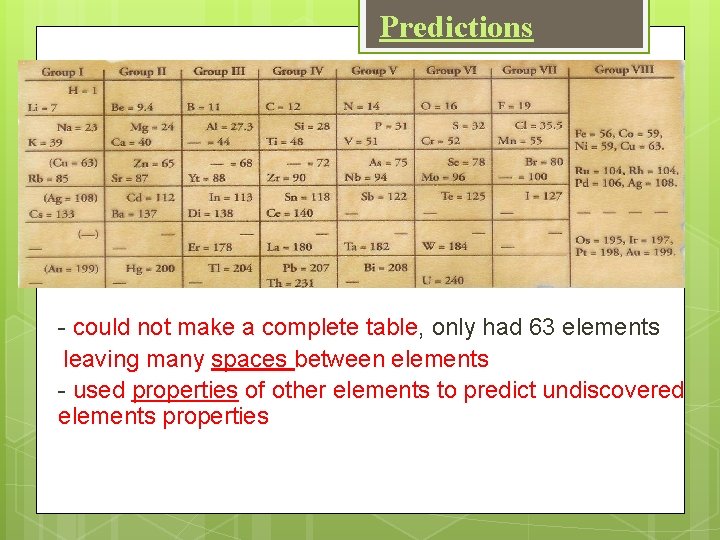
Predictions Mendeleev - could not make a complete table, only had 63 elements leaving many spaces between elements - used properties of other elements to predict undiscovered elements properties
Mendeleev - Evidence named some of the missing elements, and predicted some of their properties as elements were found scientists were able to verify properties and even explain chemical behaviors of elements in groups
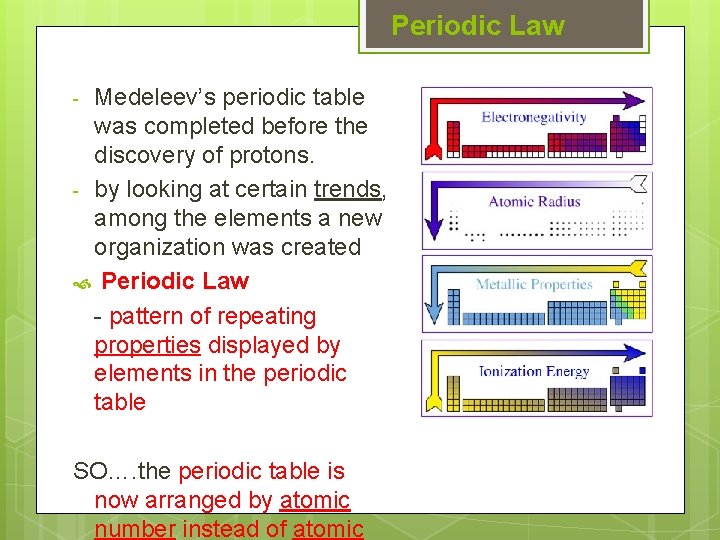
Periodic Law Medeleev’s periodic table was completed before the discovery of protons. - by looking at certain trends, among the elements a new organization was created Periodic Law - pattern of repeating properties displayed by elements in the periodic table - SO…. the periodic table is now arranged by atomic number instead of atomic
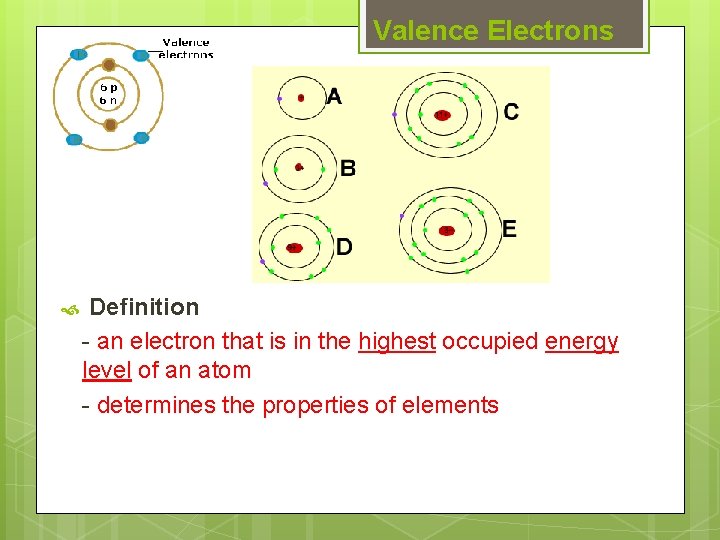
Valence Electrons Definition - an electron that is in the highest occupied energy level of an atom - determines the properties of elements
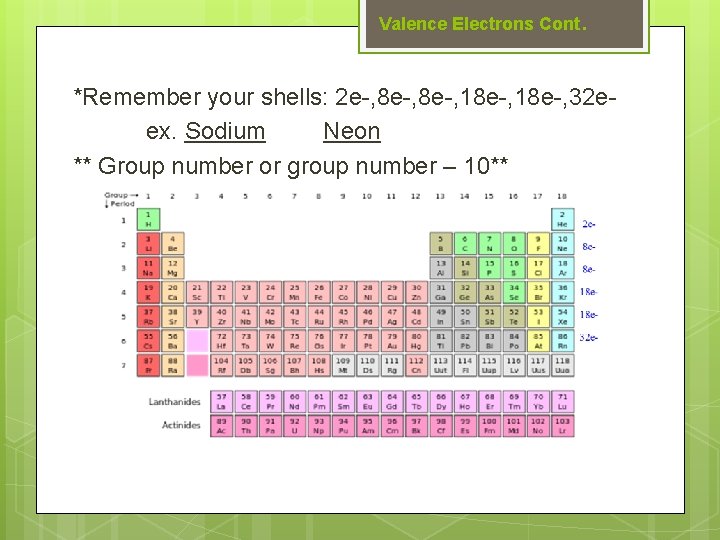
Valence Electrons Cont . *Remember your shells: 2 e-, 8 e-, 18 e-, 32 eex. Sodium Neon ** Group number or group number – 10**
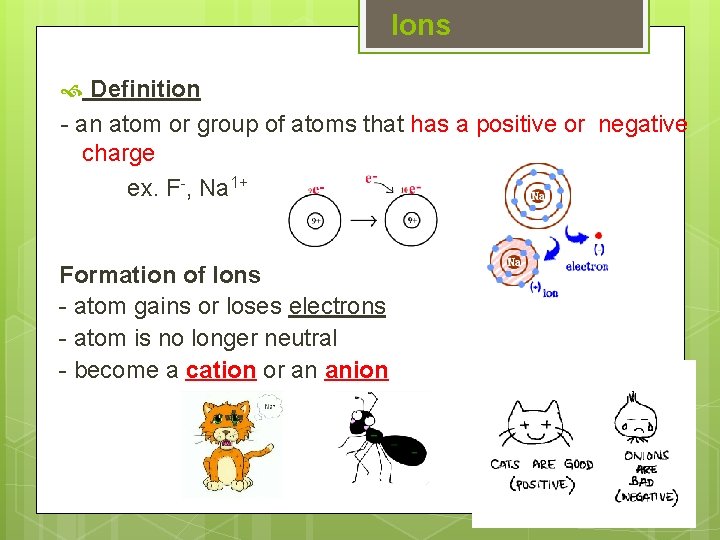
Ions Definition - an atom or group of atoms that has a positive or negative charge ex. F-, Na 1+ Formation of Ions - atom gains or loses electrons - atom is no longer neutral - become a cation or an anion
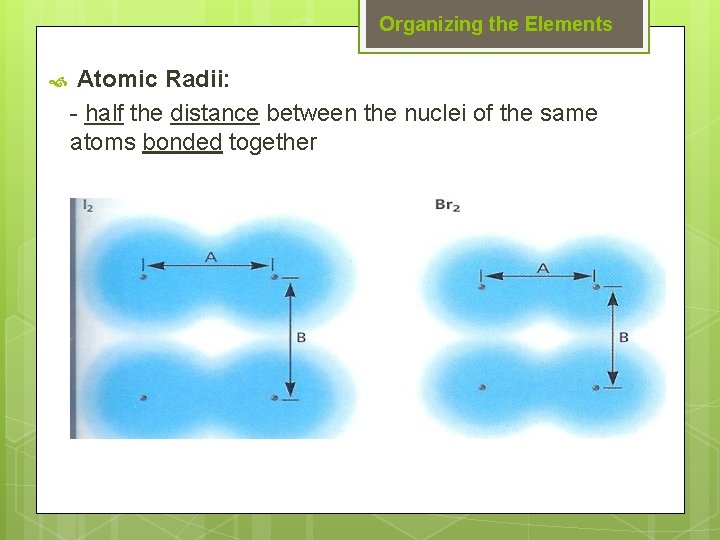
Organizing the Elements Atomic Radii: - half the distance between the nuclei of the same atoms bonded together
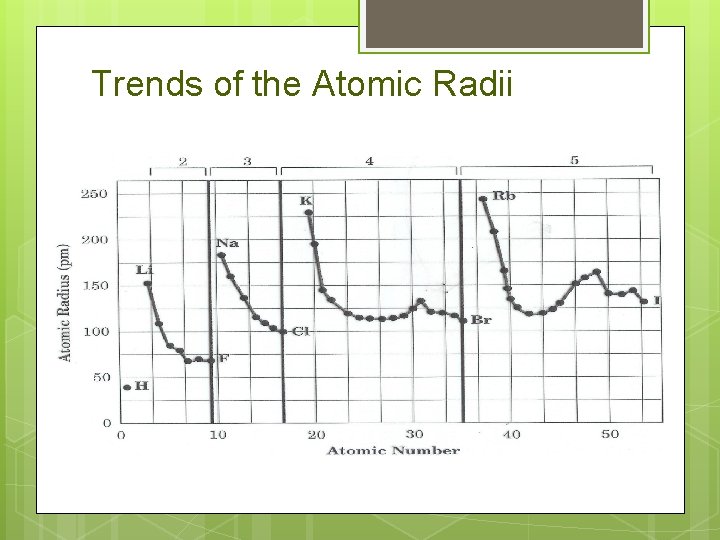
Trends of the Atomic Radii - at certain intervals, atomic radii is dramatically greater than that of the previous element
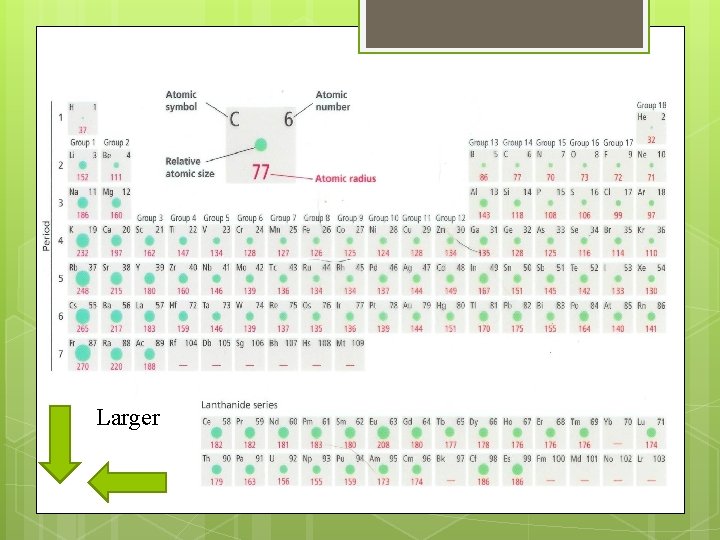
Trends of the Atomic Radii Larger
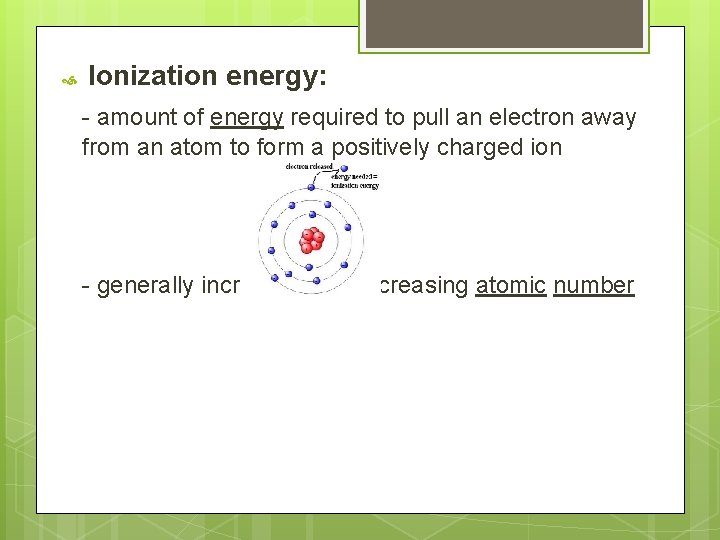
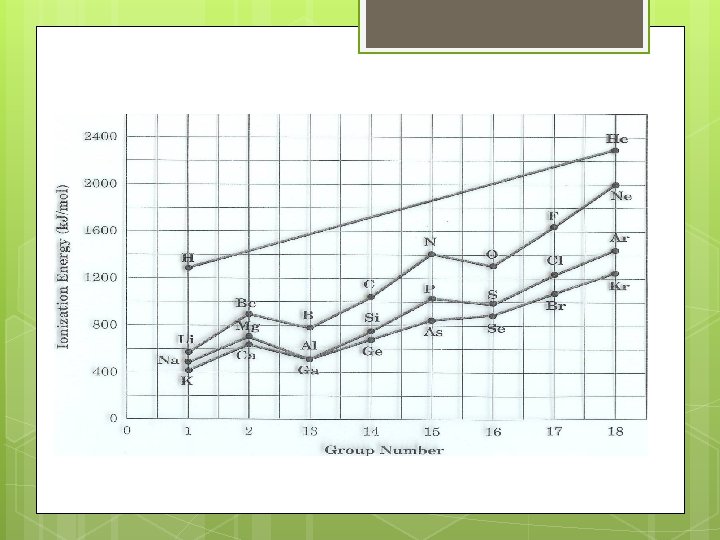
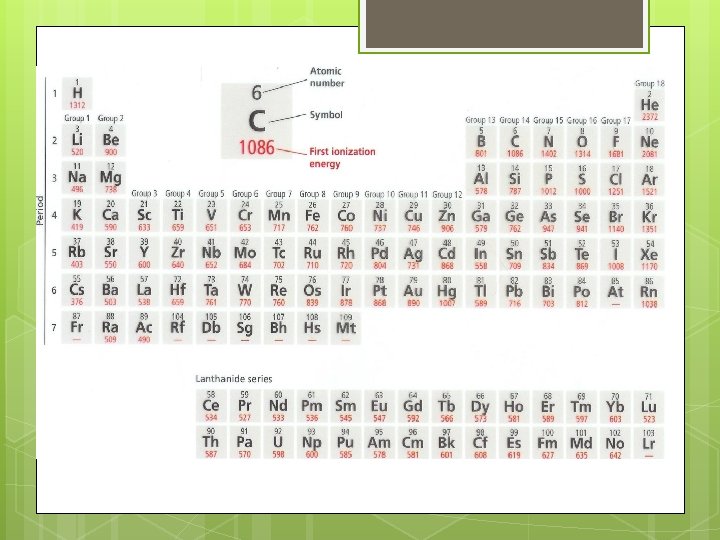
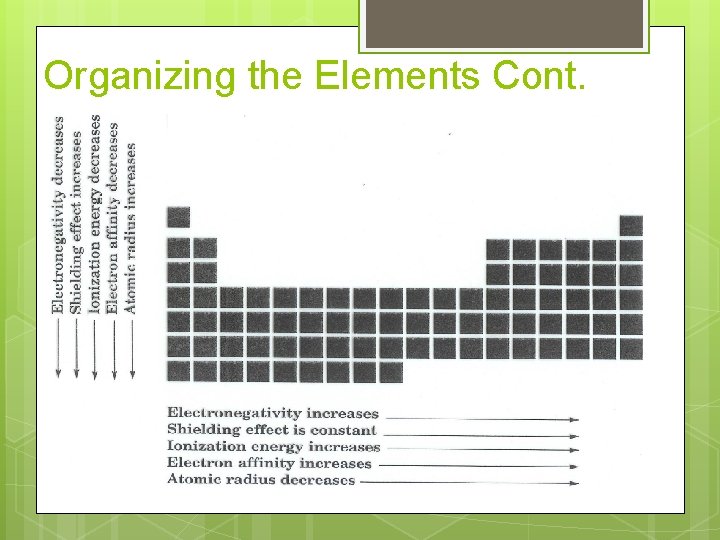
Ionization energy: - amount of energy required to pull an electron away from an atom to form a positively charged ion - generally increases with increasing atomic number
Trends of Ionization Energy
Trends of Ionization Energy
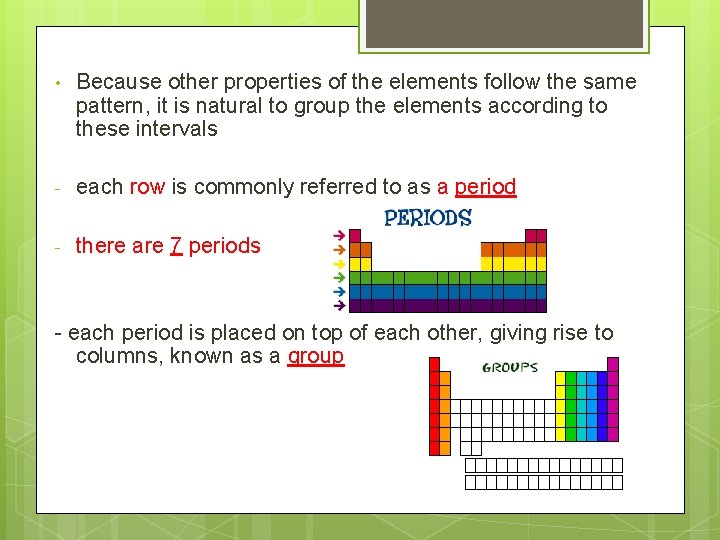
• Because other properties of the elements follow the same pattern, it is natural to group the elements according to these intervals - each row is commonly referred to as a period - there are 7 periods - each period is placed on top of each other, giving rise to columns, known as a group
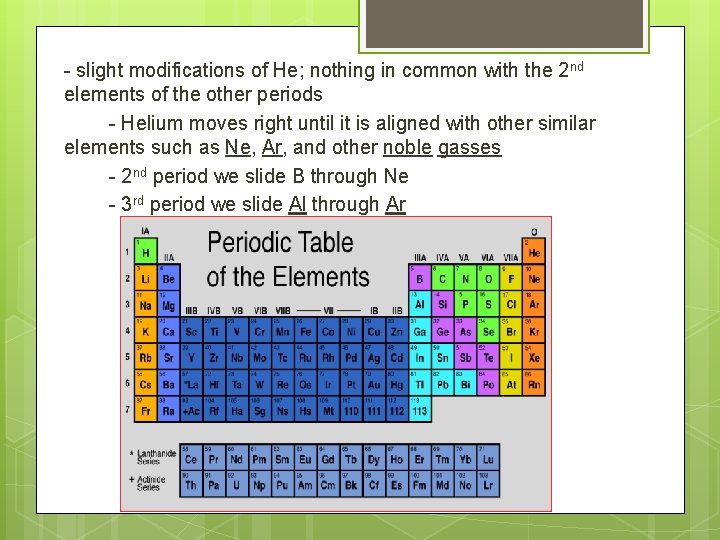
- slight modifications of He; nothing in common with the 2 nd elements of the other periods - Helium moves right until it is aligned with other similar elements such as Ne, Ar, and other noble gasses - 2 nd period we slide B through Ne - 3 rd period we slide Al through Ar
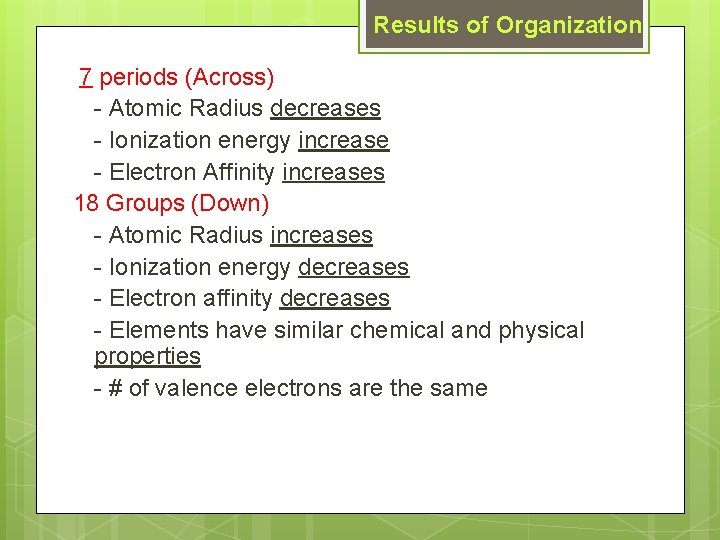
Results of Organization 7 periods (Across) - Atomic Radius decreases - Ionization energy increase - Electron Affinity increases 18 Groups (Down) - Atomic Radius increases - Ionization energy decreases - Electron affinity decreases - Elements have similar chemical and physical properties - # of valence electrons are the same
Organizing the Elements Cont.
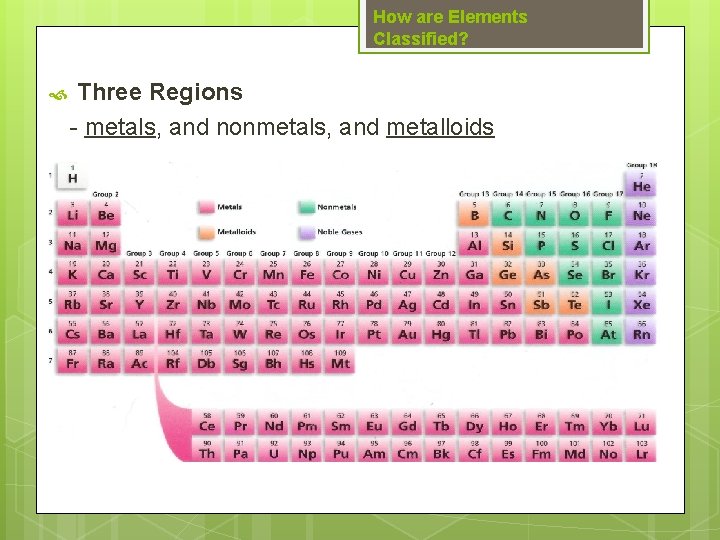
How are Elements Classified? Three Regions - metals, and nonmetals, and metalloids
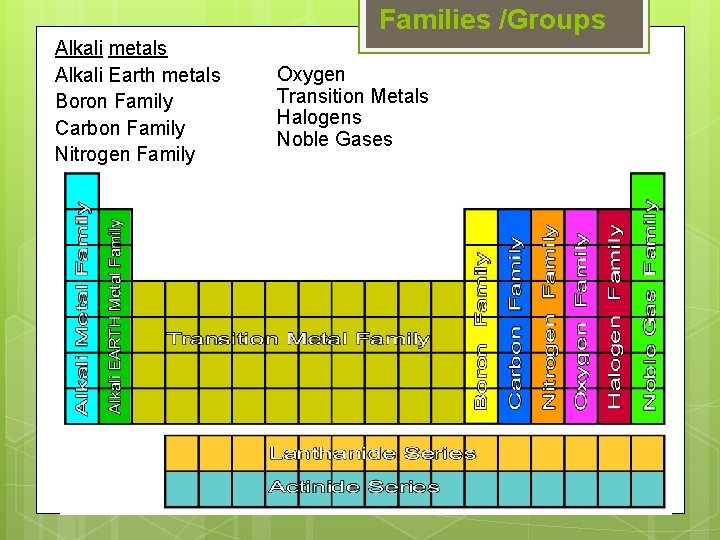
Families /Groups Alkali metals Alkali Earth metals Boron Family Carbon Family Nitrogen Family Oxygen Transition Metals Halogens Noble Gases
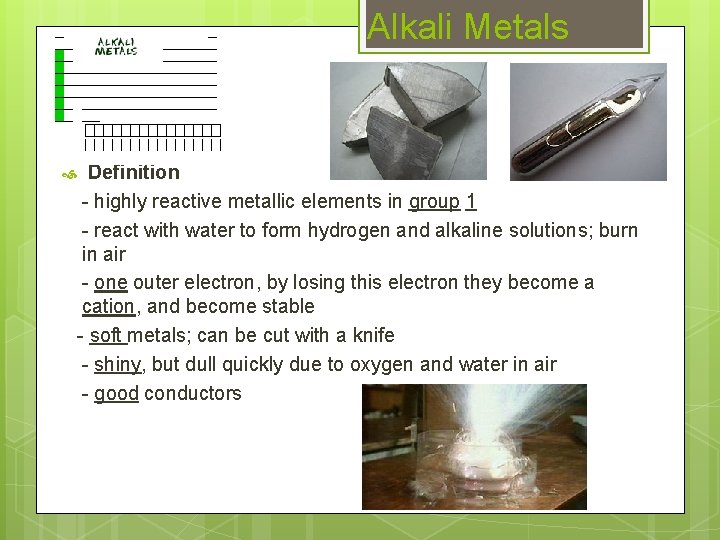
Alkali Metals Definition - highly reactive metallic elements in group 1 - react with water to form hydrogen and alkaline solutions; burn in air - one outer electron, by losing this electron they become a cation, and become stable - soft metals; can be cut with a knife - shiny, but dull quickly due to oxygen and water in air - good conductors
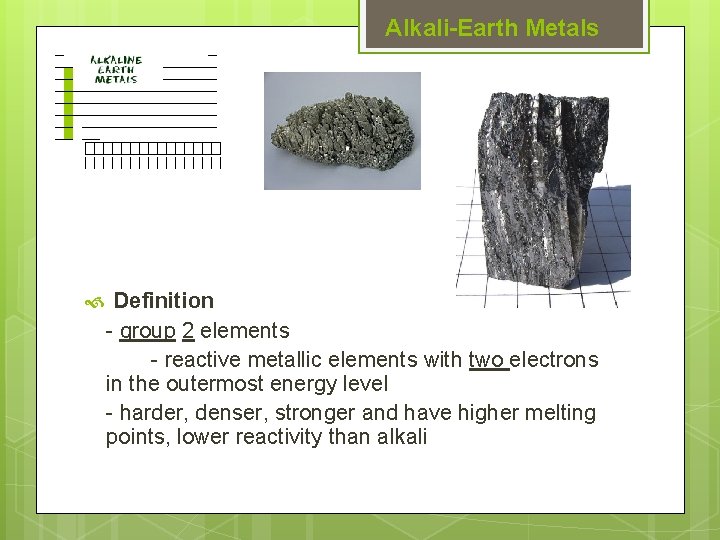
Alkali-Earth Metals Definition - group 2 elements - reactive metallic elements with two electrons in the outermost energy level - harder, denser, stronger and have higher melting points, lower reactivity than alkali
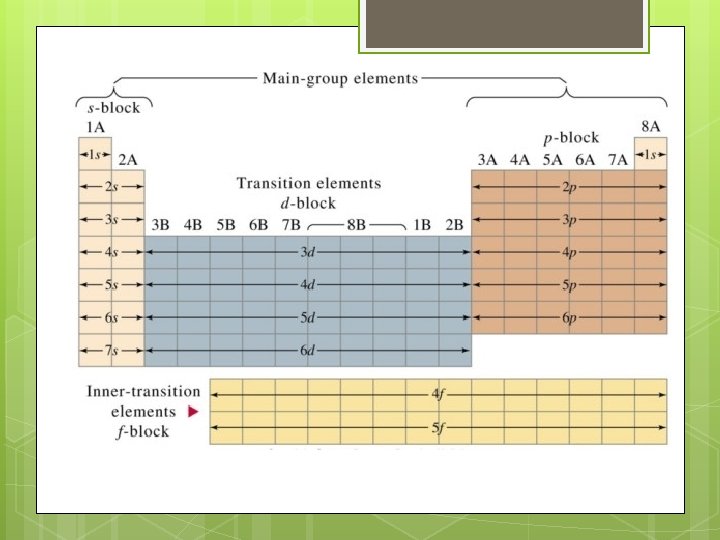
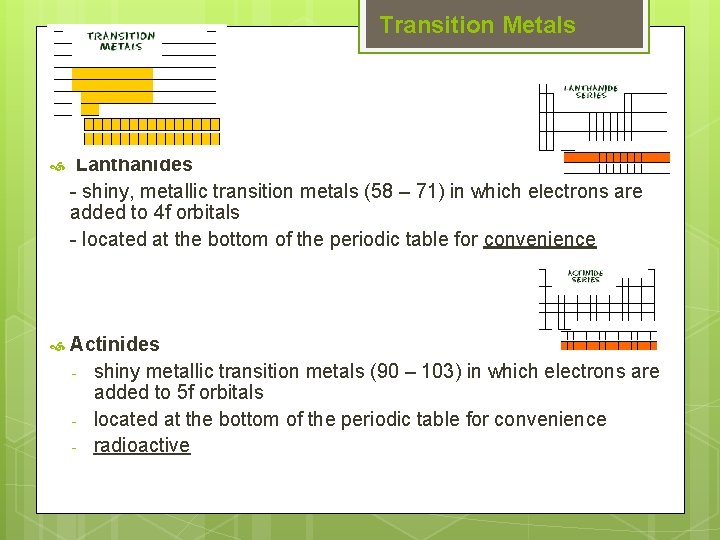
Transition Metals Lanthanides - shiny, metallic transition metals (58 – 71) in which electrons are added to 4 f orbitals - located at the bottom of the periodic table for convenience Actinides - shiny metallic transition metals (90 – 103) in which electrons are added to 5 f orbitals - located at the bottom of the periodic table for convenience - radioactive
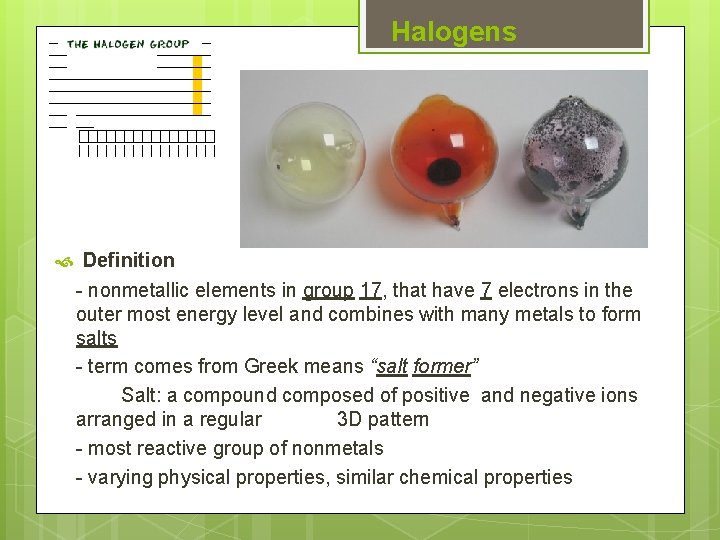
Halogens Definition - nonmetallic elements in group 17, that have 7 electrons in the outer most energy level and combines with many metals to form salts - term comes from Greek means “salt former” Salt: a compound composed of positive and negative ions arranged in a regular 3 D pattern - most reactive group of nonmetals - varying physical properties, similar chemical properties
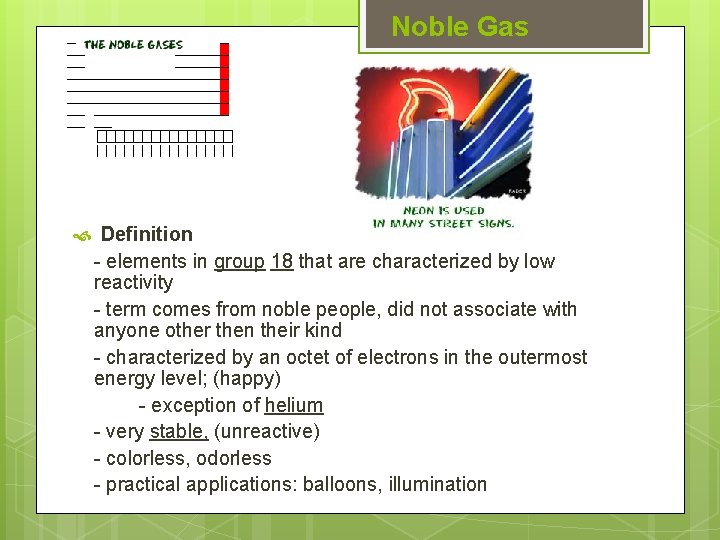
Noble Gas Definition - elements in group 18 that are characterized by low reactivity - term comes from noble people, did not associate with anyone other then their kind - characterized by an octet of electrons in the outermost energy level; (happy) - exception of helium - very stable, (unreactive) - colorless, odorless - practical applications: balloons, illumination
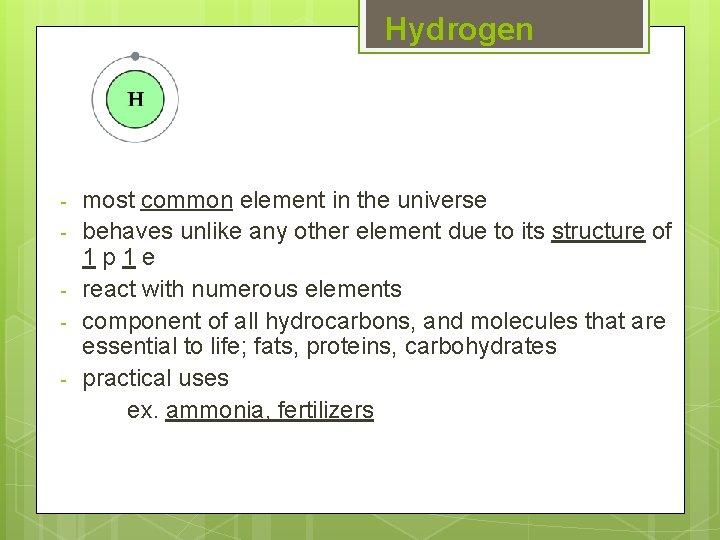
Hydrogen - most common element in the universe behaves unlike any other element due to its structure of 1 p 1 e react with numerous elements component of all hydrocarbons, and molecules that are essential to life; fats, proteins, carbohydrates practical uses ex. ammonia, fertilizers