
History of US Education Timeline By Kelsey Jankowski
History of US Education Timeline By: Kelsey Jankowski
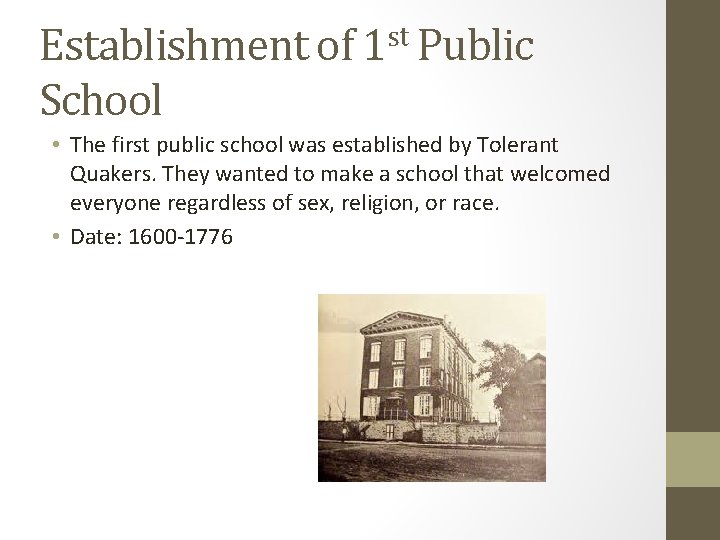
Establishment of 1 st Public School • The first public school was established by Tolerant Quakers. They wanted to make a school that welcomed everyone regardless of sex, religion, or race. • Date: 1600 1776

Young Ladies Academy • The Young Ladies Academy opened in Philadelphia and becomes the first academy for girls in America. • Date: 1787
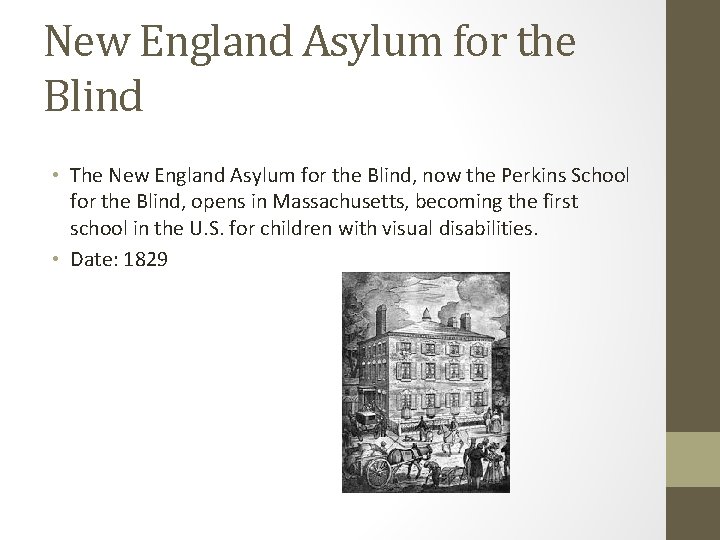
New England Asylum for the Blind • The New England Asylum for the Blind, now the Perkins School for the Blind, opens in Massachusetts, becoming the first school in the U. S. for children with visual disabilities. • Date: 1829
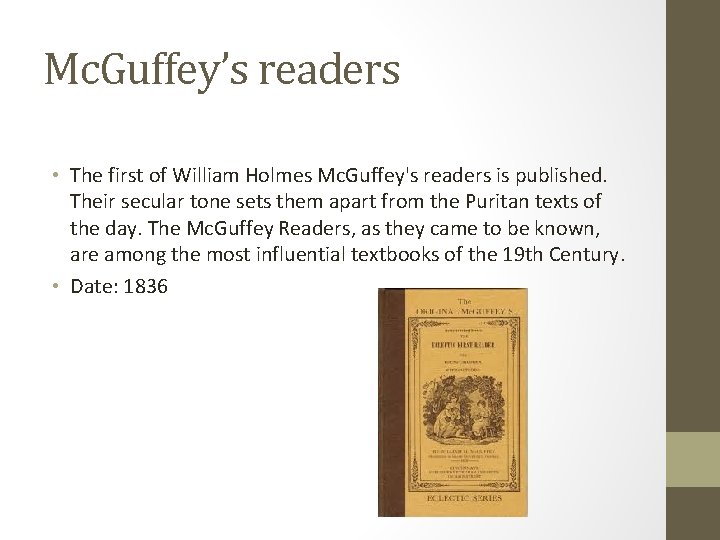
Mc. Guffey’s readers • The first of William Holmes Mc. Guffey's readers is published. Their secular tone sets them apart from the Puritan texts of the day. The Mc. Guffey Readers, as they came to be known, are among the most influential textbooks of the 19 th Century. • Date: 1836

Mandatory Attendance Law • Massachusetts enacts the first mandatory attendance law. By 1885, 16 states have compulsory attendance laws, but most of those laws are sporadically enforced at best. All states have them by 1918. • Date: 1852
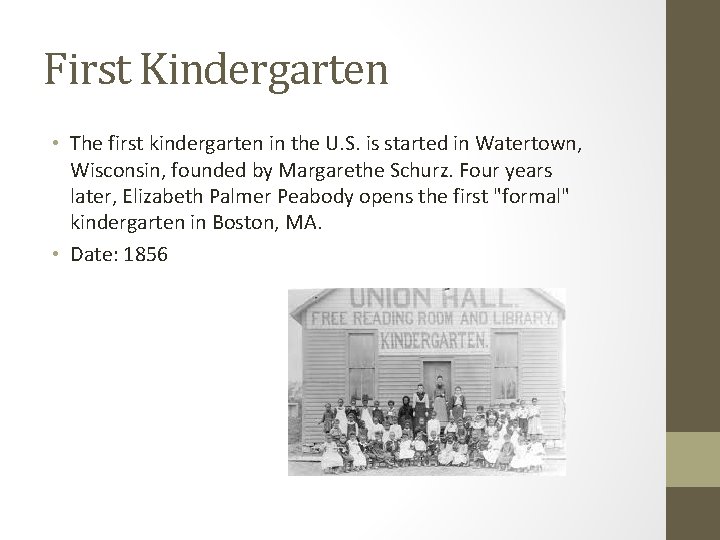
First Kindergarten • The first kindergarten in the U. S. is started in Watertown, Wisconsin, founded by Margarethe Schurz. Four years later, Elizabeth Palmer Peabody opens the first "formal" kindergarten in Boston, MA. • Date: 1856
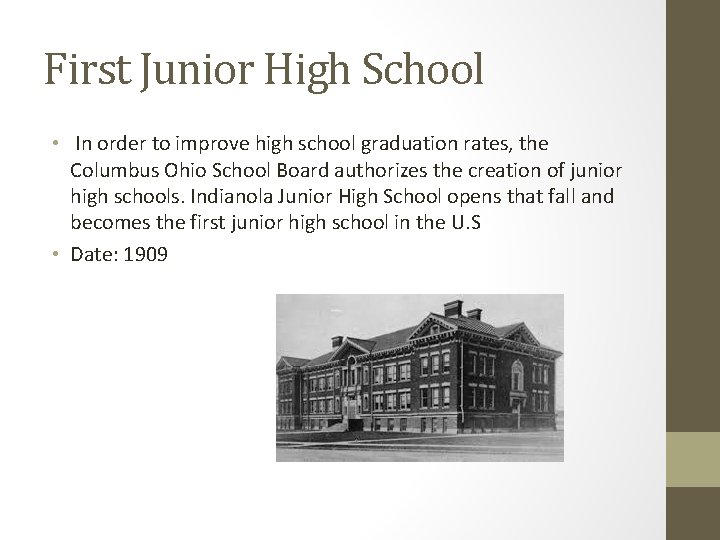
First Junior High School • In order to improve high school graduation rates, the Columbus Ohio School Board authorizes the creation of junior high schools. Indianola Junior High School opens that fall and becomes the first junior high school in the U. S • Date: 1909
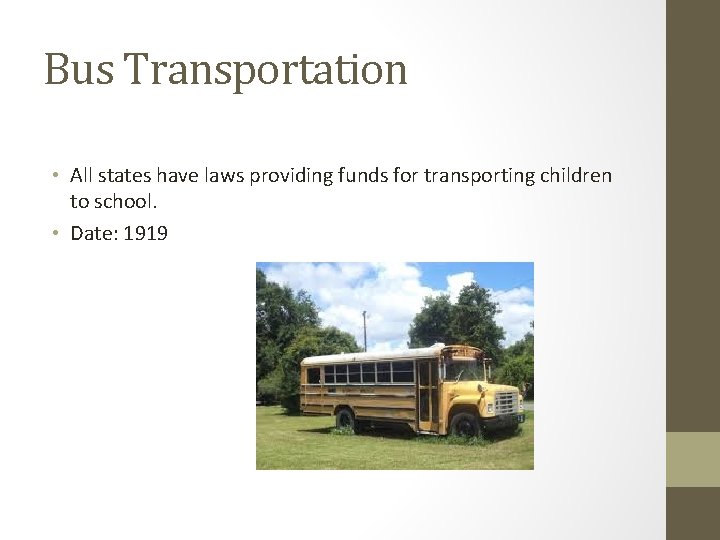
Bus Transportation • All states have laws providing funds for transporting children to school. • Date: 1919

First SAT • The Scholastic Aptitude Test (SAT) is first administered. It is based on the Army Alpha test. • Date: 1926
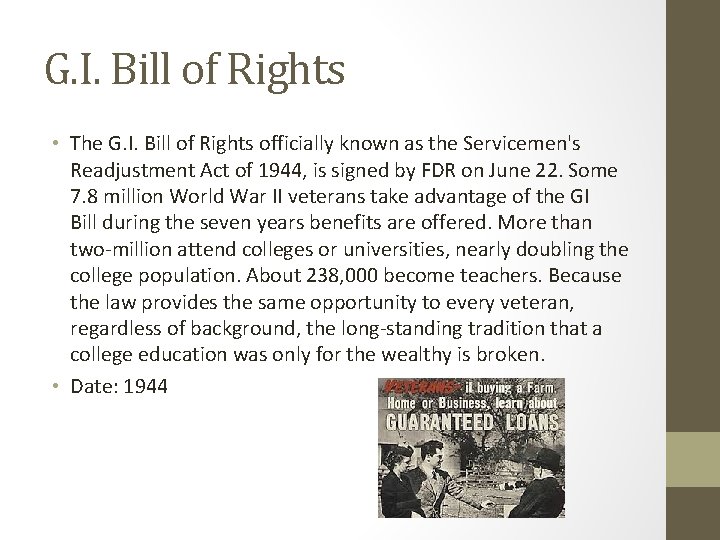
G. I. Bill of Rights • The G. I. Bill of Rights officially known as the Servicemen's Readjustment Act of 1944, is signed by FDR on June 22. Some 7. 8 million World War II veterans take advantage of the GI Bill during the seven years benefits are offered. More than two million attend colleges or universities, nearly doubling the college population. About 238, 000 become teachers. Because the law provides the same opportunity to every veteran, regardless of background, the long standing tradition that a college education was only for the wealthy is broken. • Date: 1944
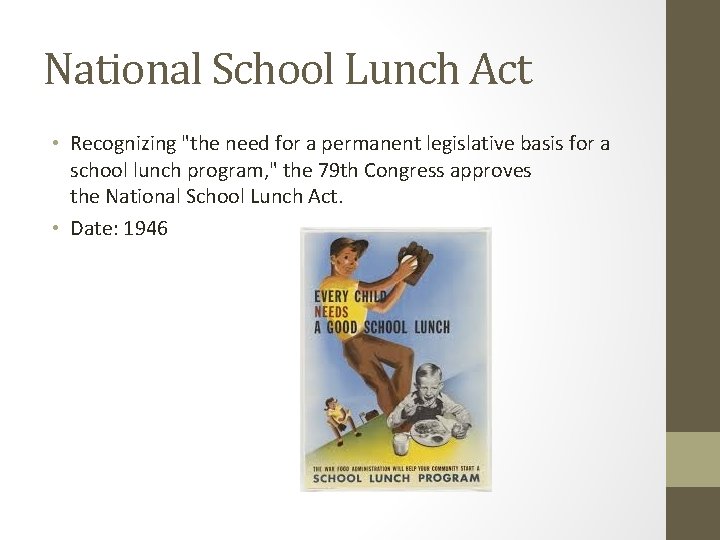
National School Lunch Act • Recognizing "the need for a permanent legislative basis for a school lunch program, " the 79 th Congress approves the National School Lunch Act. • Date: 1946
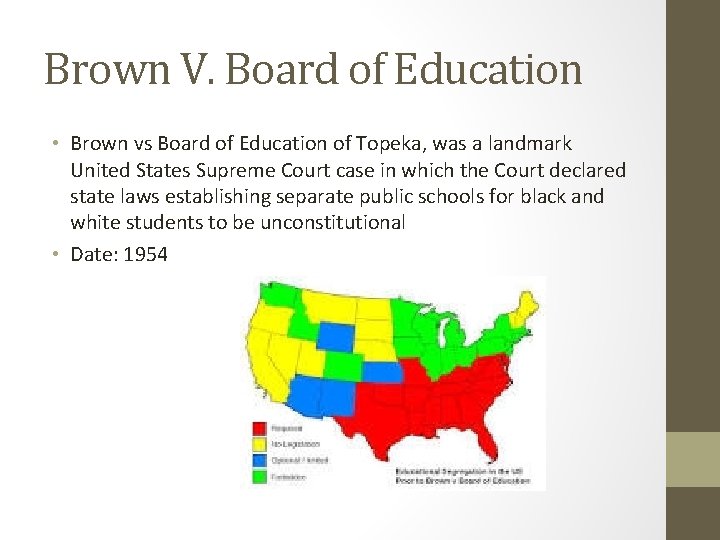
Brown V. Board of Education • Brown vs Board of Education of Topeka, was a landmark United States Supreme Court case in which the Court declared state laws establishing separate public schools for black and white students to be unconstitutional • Date: 1954
TITLE IX • Title IX is a law passed that requires gender equity for boys and girls in every educational program that receives federal funding. • Date: 1972
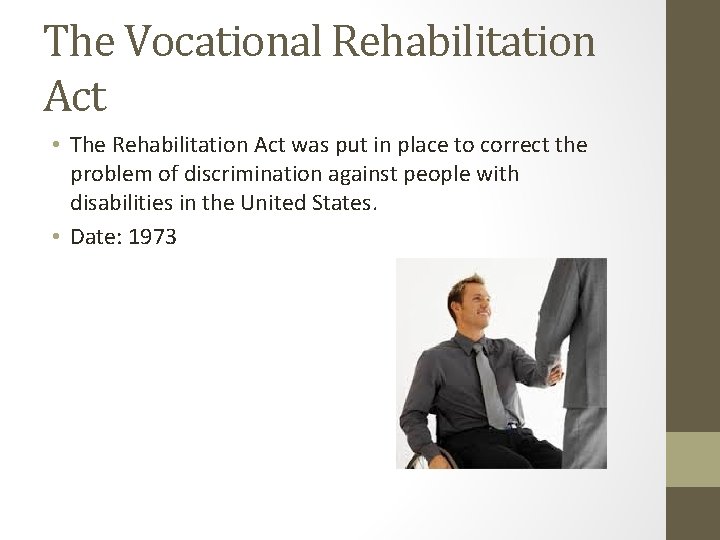
The Vocational Rehabilitation Act • The Rehabilitation Act was put in place to correct the problem of discrimination against people with disabilities in the United States. • Date: 1973
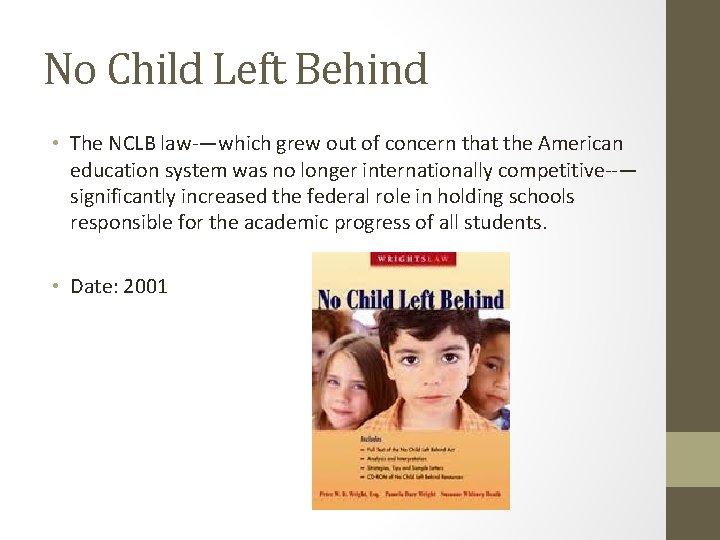
No Child Left Behind • The NCLB law —which grew out of concern that the American education system was no longer internationally competitive — significantly increased the federal role in holding schools responsible for the academic progress of all students. • Date: 2001
Works Cited • http: //www. eds resources. com/educationhistorytimeline. html • http: //www. slideshare. net/melboutin/timeline of us education 4474399 • Google Images
- Slides: 17