
History of Theatre Rome Important to Know Rome

- Slides: 42
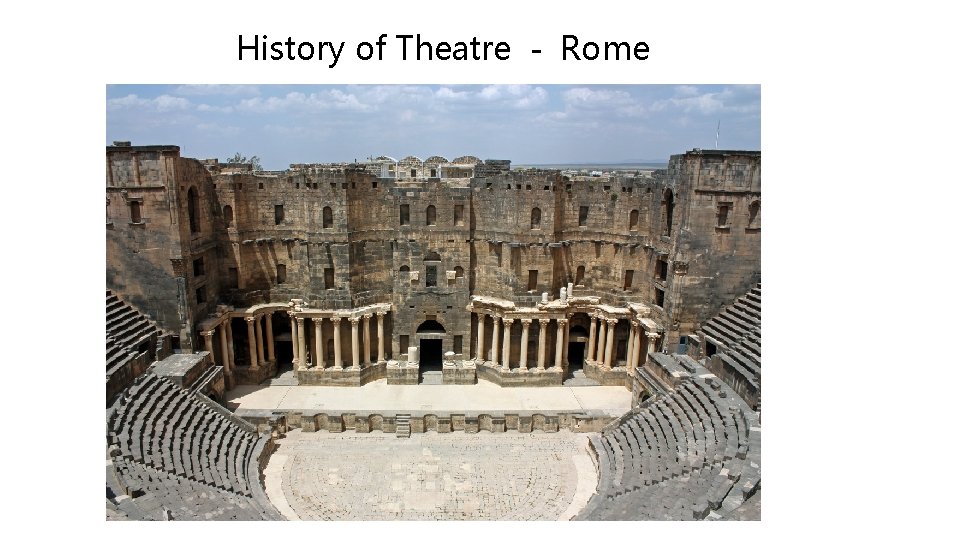
History of Theatre - Rome
Important to Know • Rome is not known for many contributions to theatre as an art. They are significant more for elevating theatre as a form of popular entertainment
Two forms of Theater from South for Rome pre-dated Written Drama.
Two forms of Theater from South for Rome pre-dated Written Drama. • Mime – adapted from the widespread Greek Theatre practice.
Two forms of Theater from South for Rome pre-dated Written Drama. • Mime – adapted from the widespread Greek Theatre practice. often improvised entertainments provide by a small group of masked performers
Two forms of Theater from South for Rome pre-dated Written Drama. • Mime – adapted from the widespread Greek Theatre practice. often improvised entertainments provide by a small group of masked performers • Atellan farce – improved and dealt with exaggerated family problems; they also made fun of historical or mythological figures.
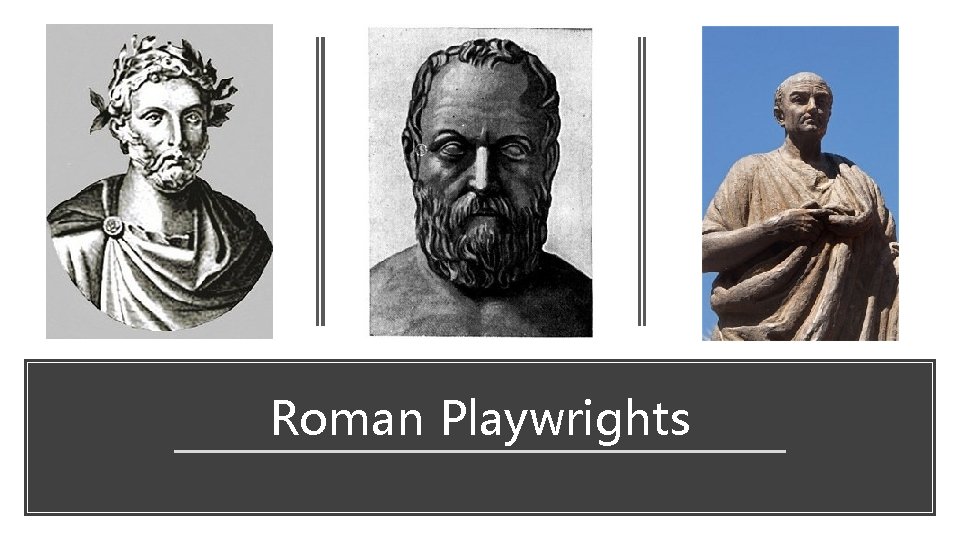
Roman Playwrights
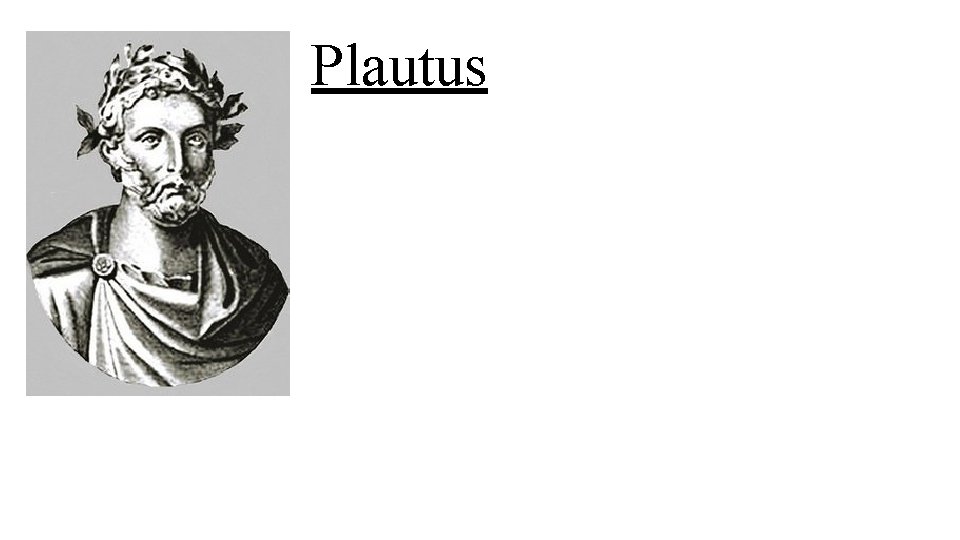
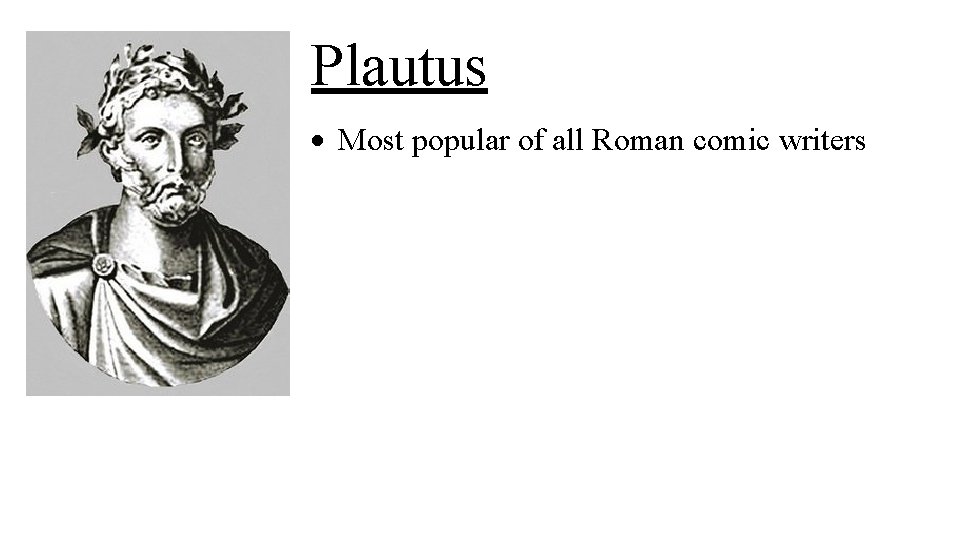
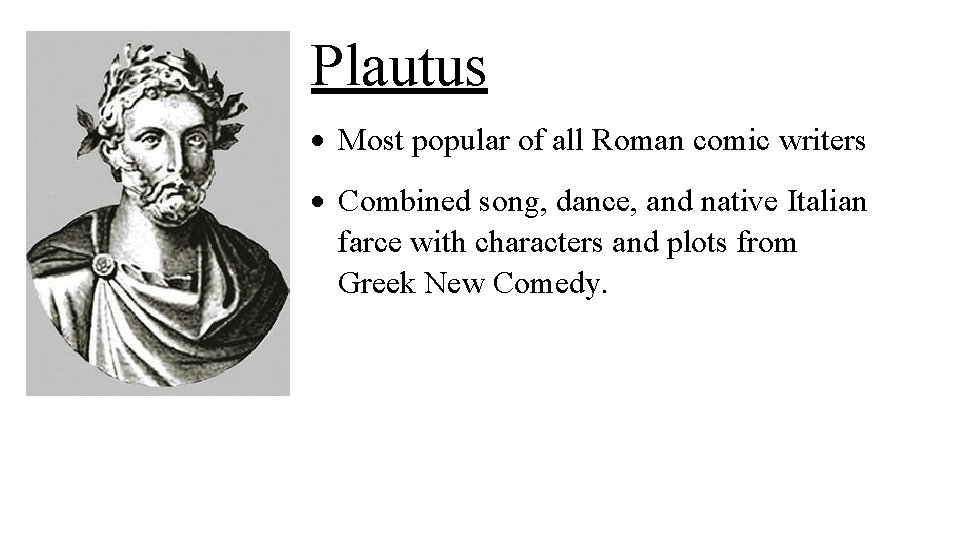
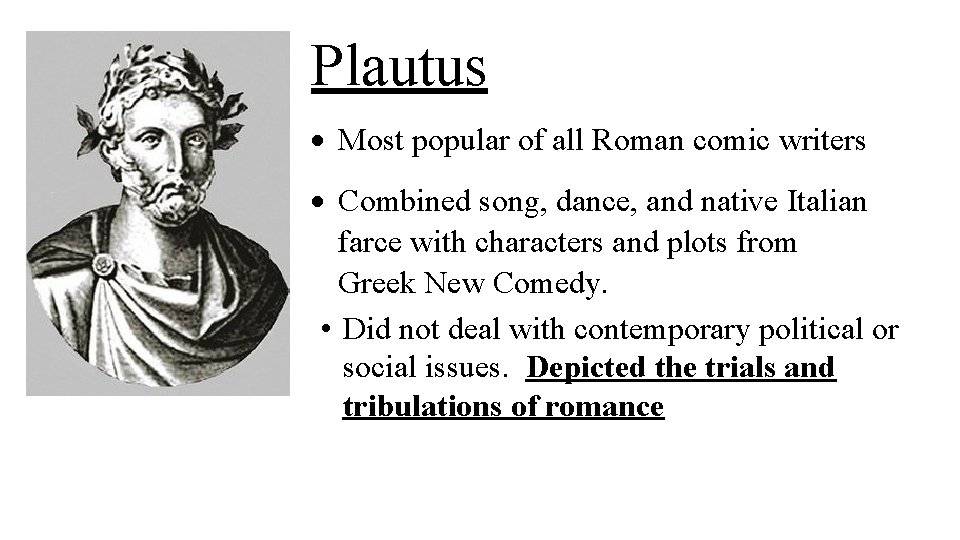
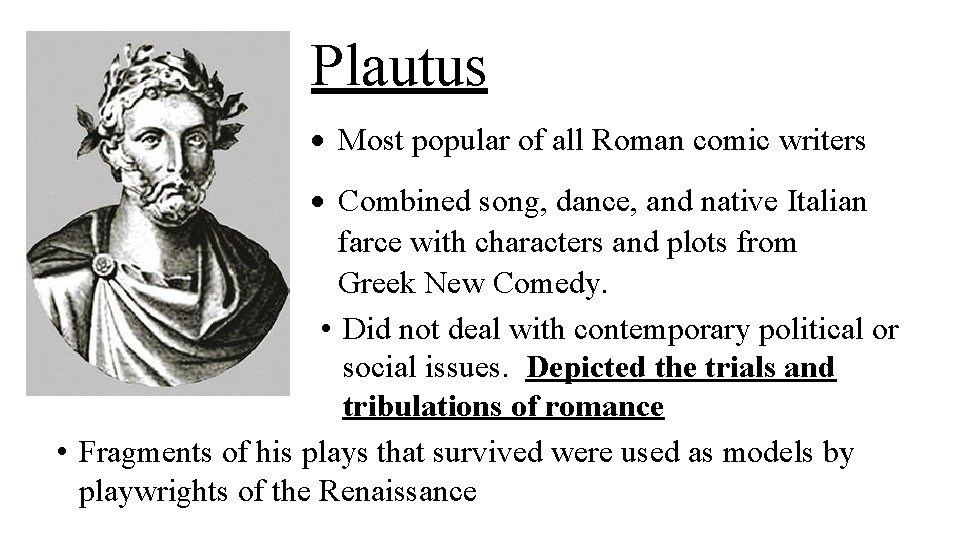
Plautus
Plautus Most popular of all Roman comic writers
Plautus Most popular of all Roman comic writers Combined song, dance, and native Italian farce with characters and plots from Greek New Comedy.
Plautus Most popular of all Roman comic writers Combined song, dance, and native Italian farce with characters and plots from Greek New Comedy. • Did not deal with contemporary political or social issues. Depicted the trials and tribulations of romance
Plautus Most popular of all Roman comic writers Combined song, dance, and native Italian farce with characters and plots from Greek New Comedy. • Did not deal with contemporary political or social issues. Depicted the trials and tribulations of romance • Fragments of his plays that survived were used as models by playwrights of the Renaissance
the Menaechmi by Plautus
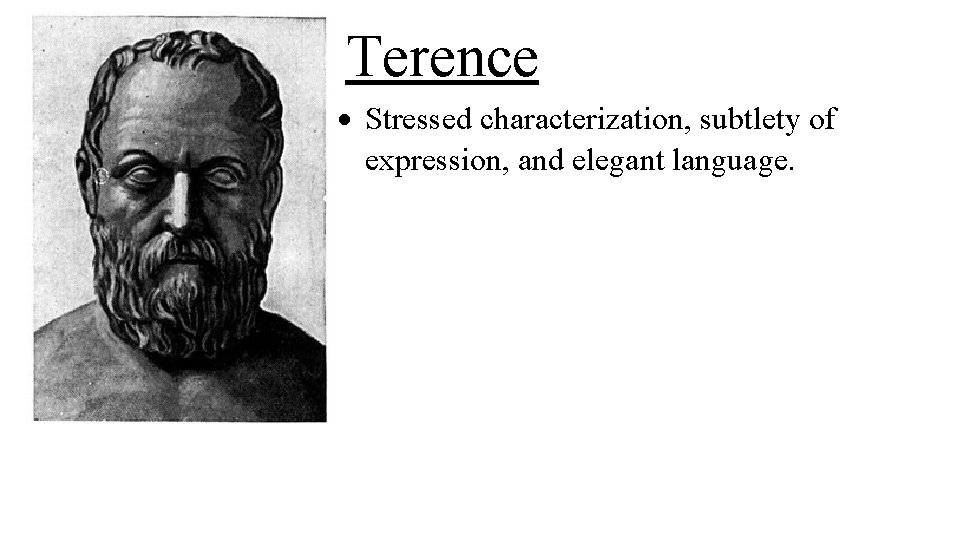
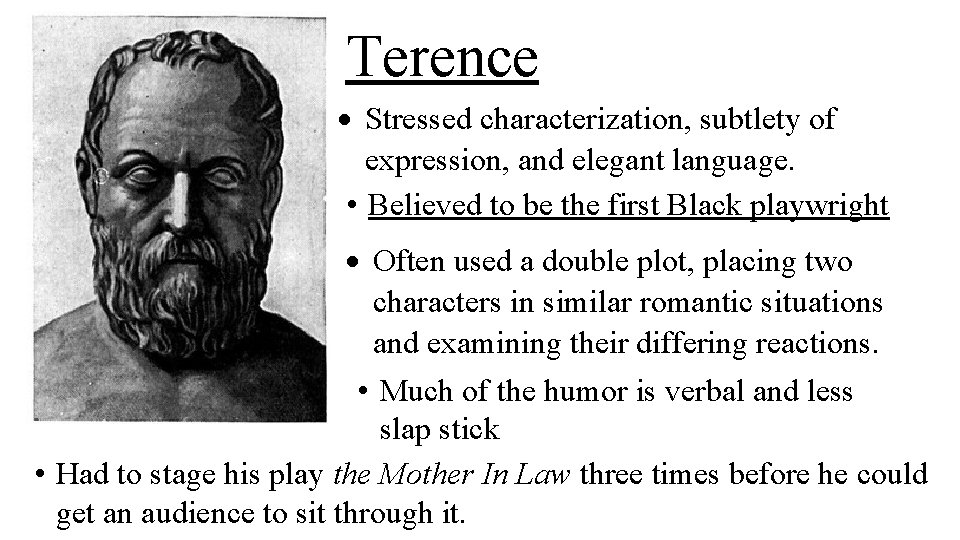
Terence Stressed characterization, subtlety of expression, and elegant language.
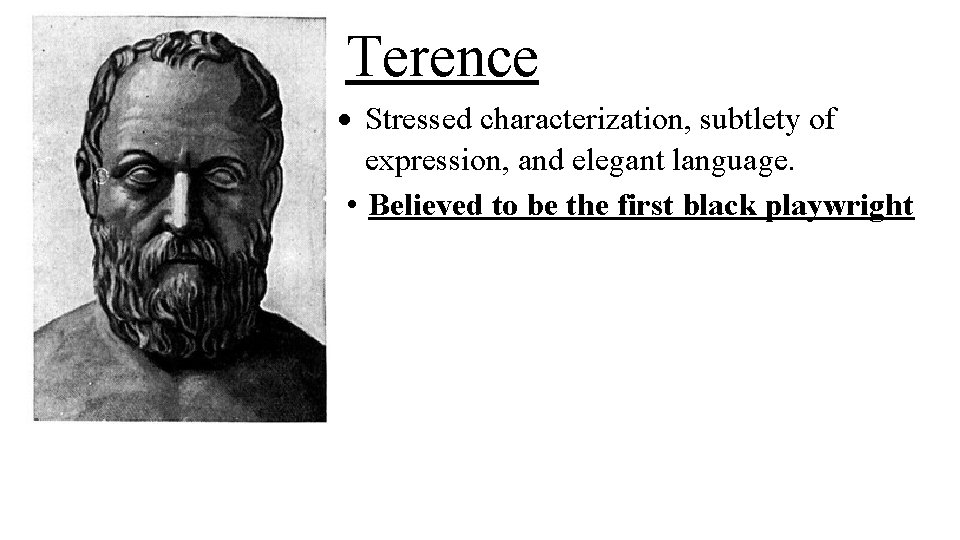
Terence Stressed characterization, subtlety of expression, and elegant language. • Believed to be the first black playwright
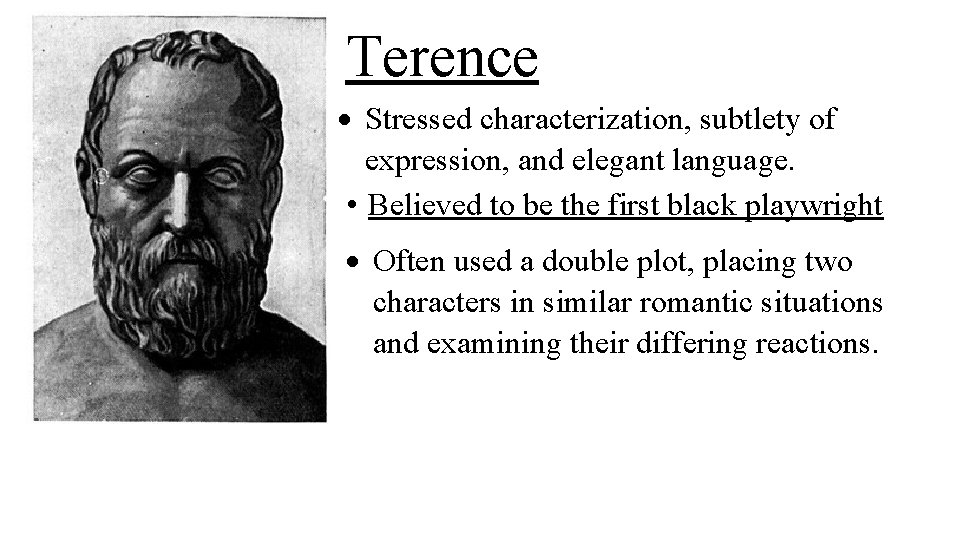
Terence Stressed characterization, subtlety of expression, and elegant language. • Believed to be the first black playwright Often used a double plot, placing two characters in similar romantic situations and examining their differing reactions.
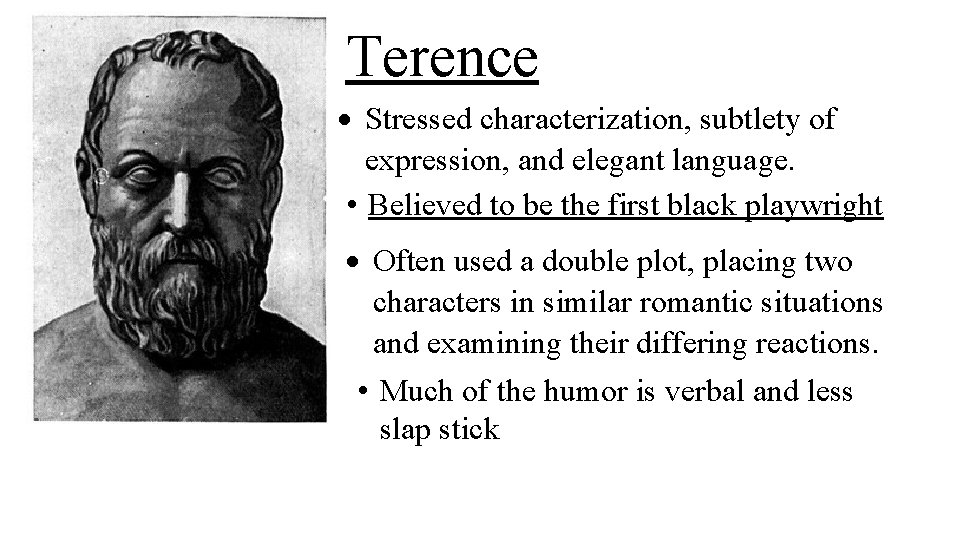
Terence Stressed characterization, subtlety of expression, and elegant language. • Believed to be the first black playwright Often used a double plot, placing two characters in similar romantic situations and examining their differing reactions. • Much of the humor is verbal and less slap stick
Terence Stressed characterization, subtlety of expression, and elegant language. • Believed to be the first Black playwright Often used a double plot, placing two characters in similar romantic situations and examining their differing reactions. • Much of the humor is verbal and less slap stick • Had to stage his play the Mother In Law three times before he could get an audience to sit through it.
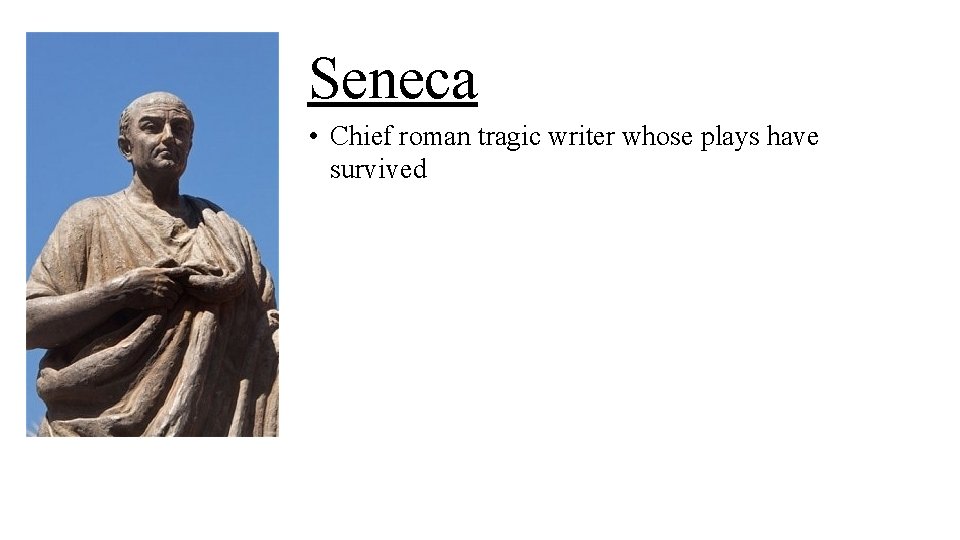
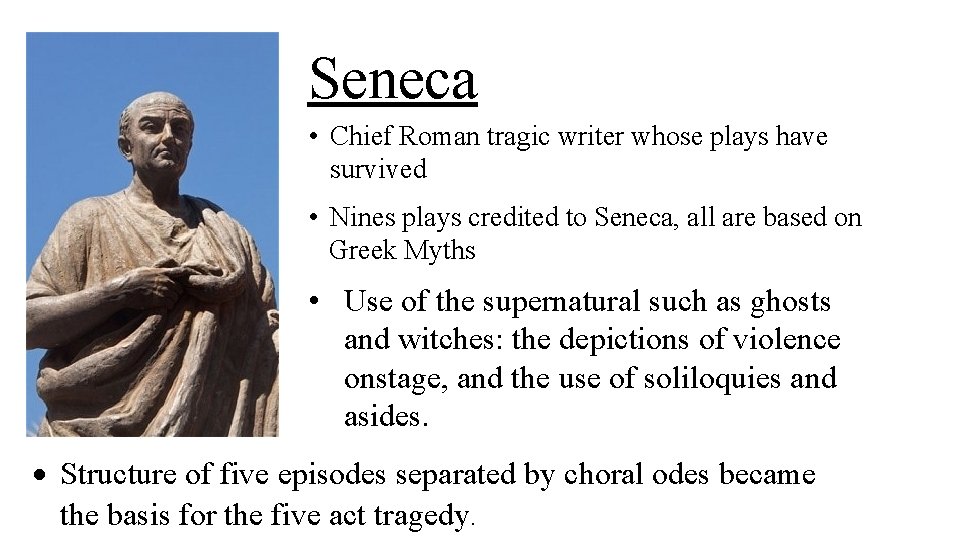
Seneca • Chief roman tragic writer whose plays have survived
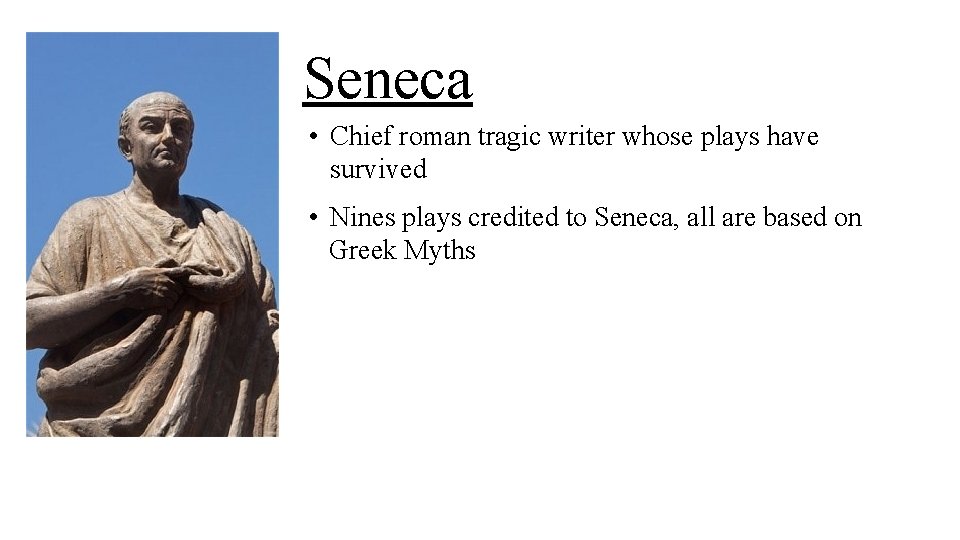
Seneca • Chief roman tragic writer whose plays have survived • Nines plays credited to Seneca, all are based on Greek Myths
Seneca • Chief roman tragic writer whose plays have survived • Nines plays credited to Seneca, all are based on Greek Myths • Use of the supernatural such as ghosts and witches: the depictions of violence onstage, and the use of soliloquies and asides.
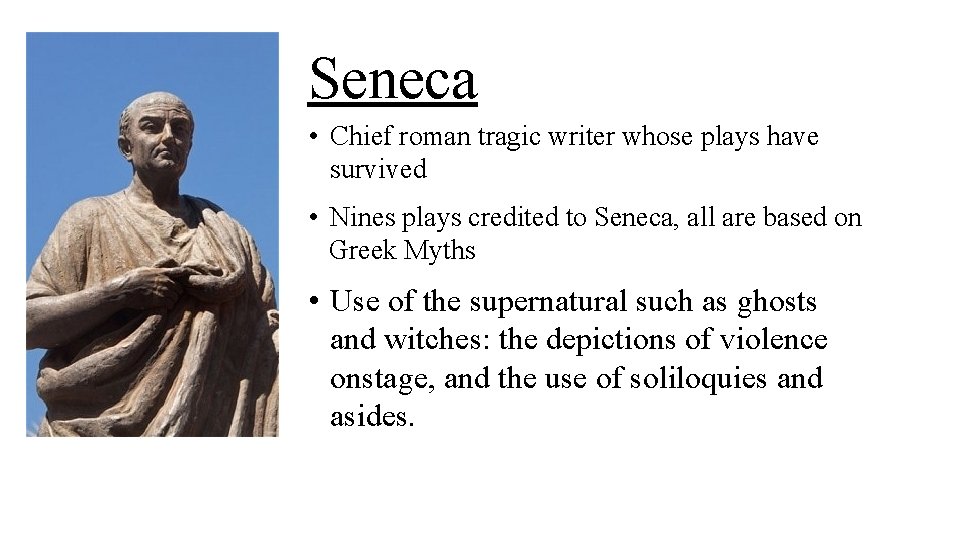
Seneca • Chief Roman tragic writer whose plays have survived • Nines plays credited to Seneca, all are based on Greek Myths • Use of the supernatural such as ghosts and witches: the depictions of violence onstage, and the use of soliloquies and asides. Structure of five episodes separated by choral odes became the basis for the five act tragedy.
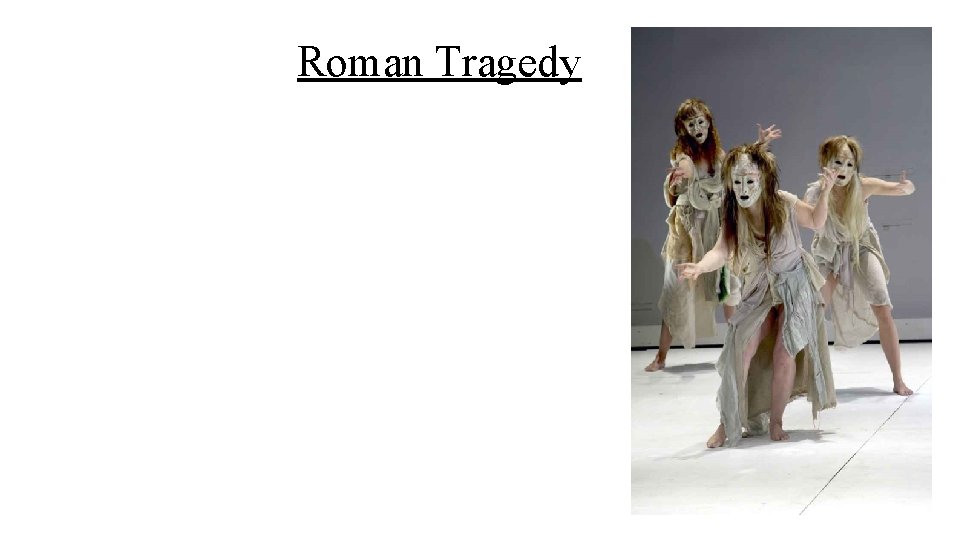
Roman Tragedy
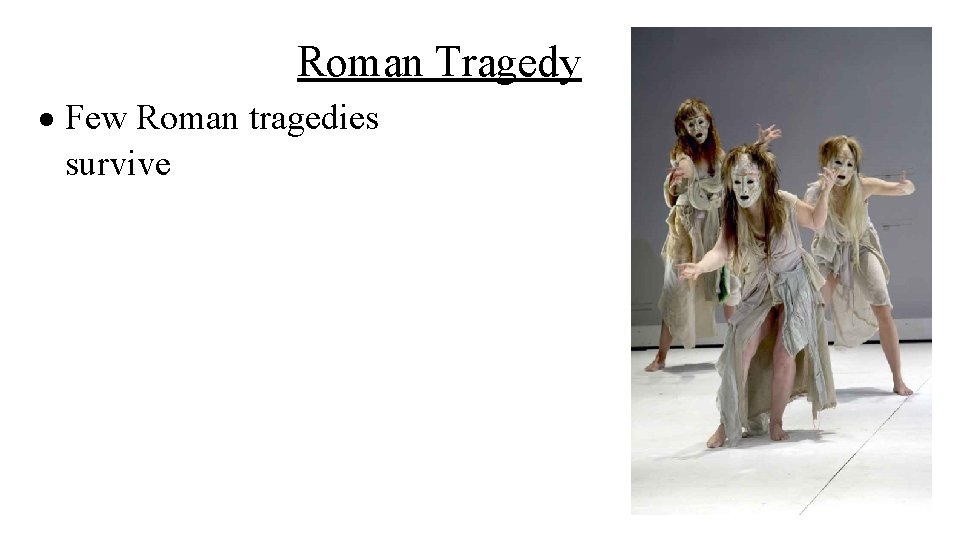
Roman Tragedy Few Roman tragedies survive
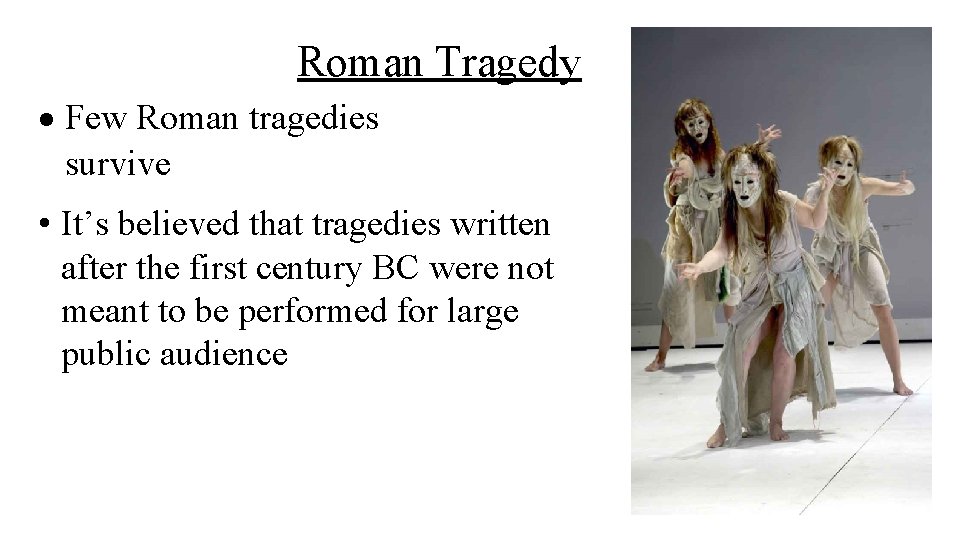
Roman Tragedy Few Roman tragedies survive • It’s believed that tragedies written after the first century BC were not meant to be performed for large public audience
Popular Entertainment in Rome
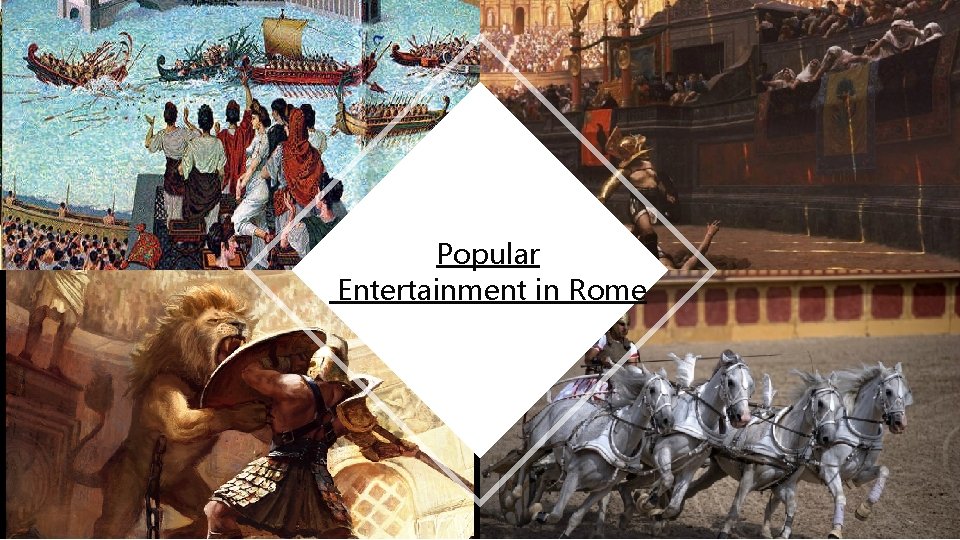
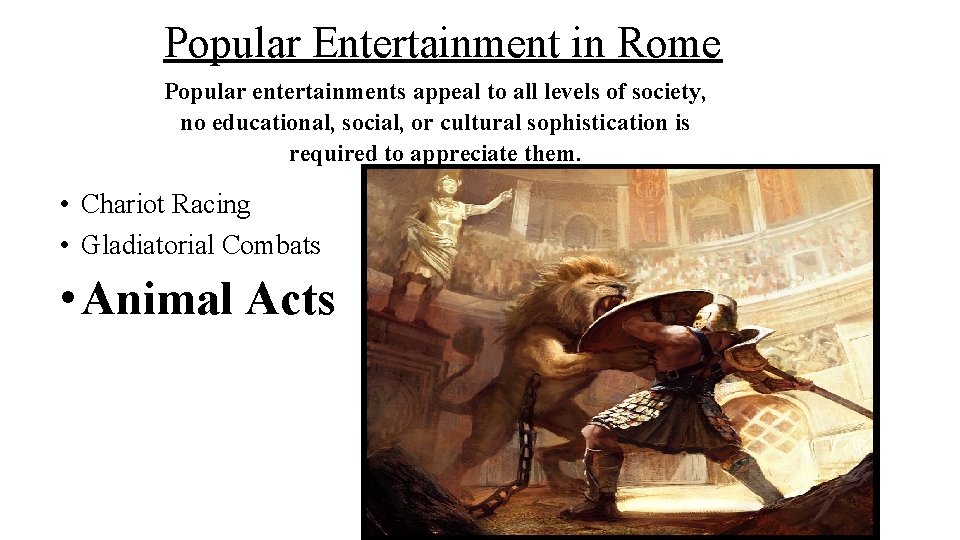
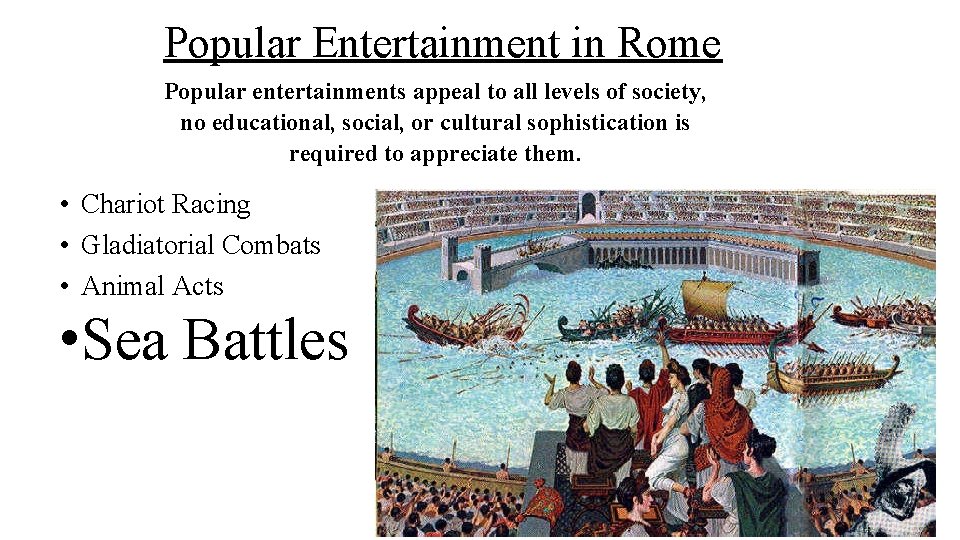
Popular Entertainment in Rome Popular entertainments appeal to all levels of society, no educational, social, or cultural sophistication is required to appreciate them.
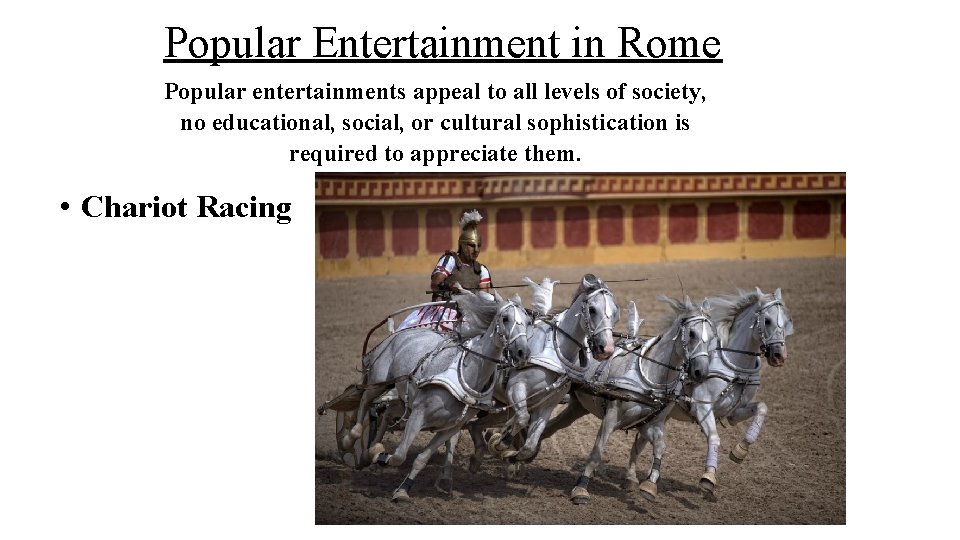
Popular Entertainment in Rome Popular entertainments appeal to all levels of society, no educational, social, or cultural sophistication is required to appreciate them. • Chariot Racing
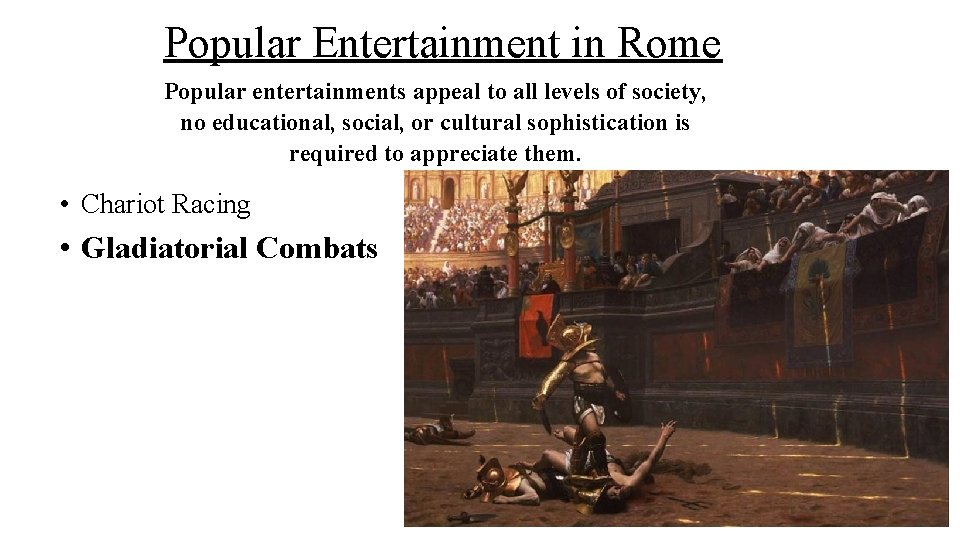
Popular Entertainment in Rome Popular entertainments appeal to all levels of society, no educational, social, or cultural sophistication is required to appreciate them. • Chariot Racing • Gladiatorial Combats
Popular Entertainment in Rome Popular entertainments appeal to all levels of society, no educational, social, or cultural sophistication is required to appreciate them. • Chariot Racing • Gladiatorial Combats • Animal Acts
Popular Entertainment in Rome Popular entertainments appeal to all levels of society, no educational, social, or cultural sophistication is required to appreciate them. • Chariot Racing • Gladiatorial Combats • Animal Acts • Sea Battles
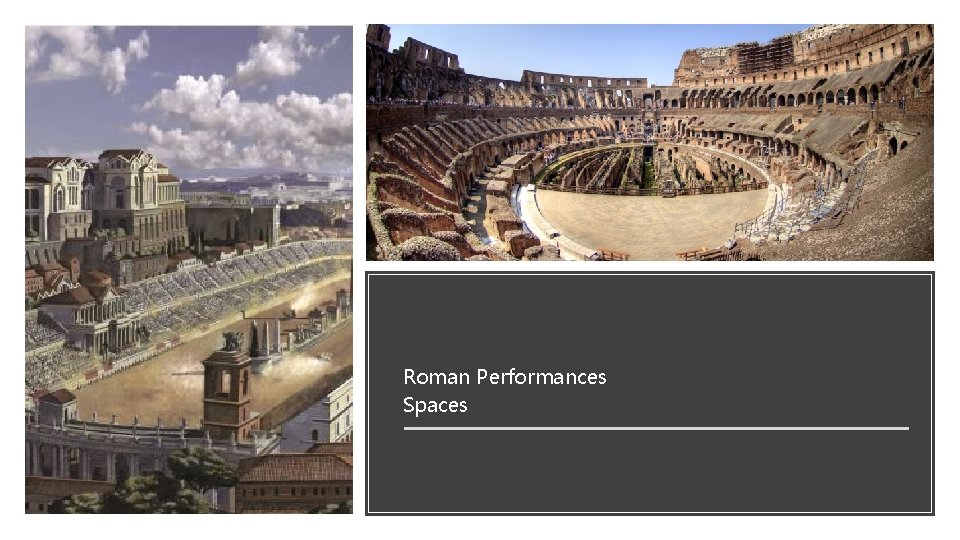
Roman Performances Spaces
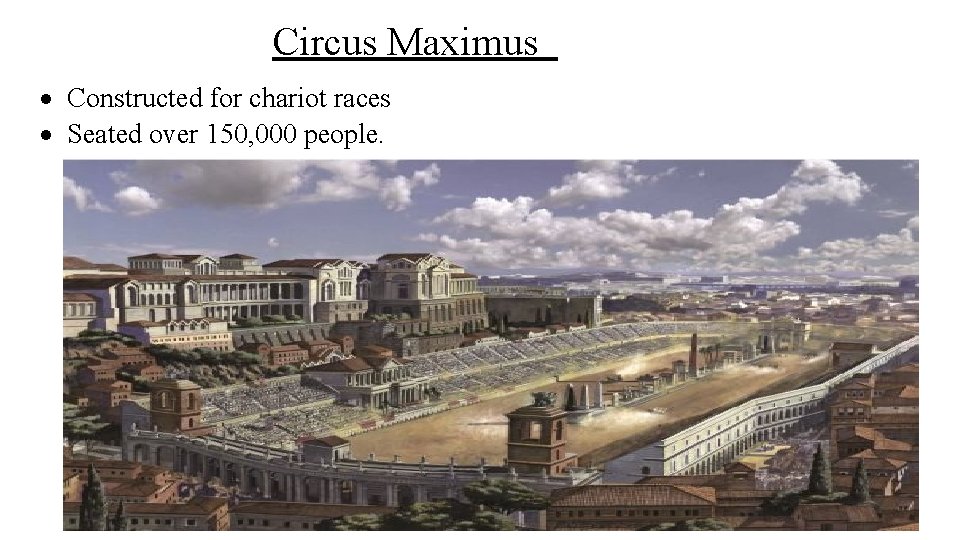
Circus Maximus Constructed for chariot races Seated over 150, 000 people.
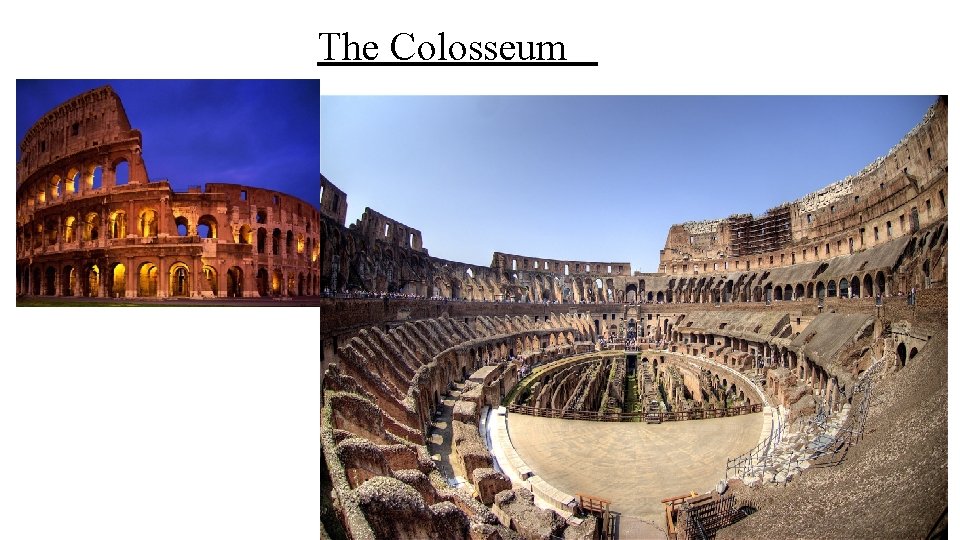
The Colosseum
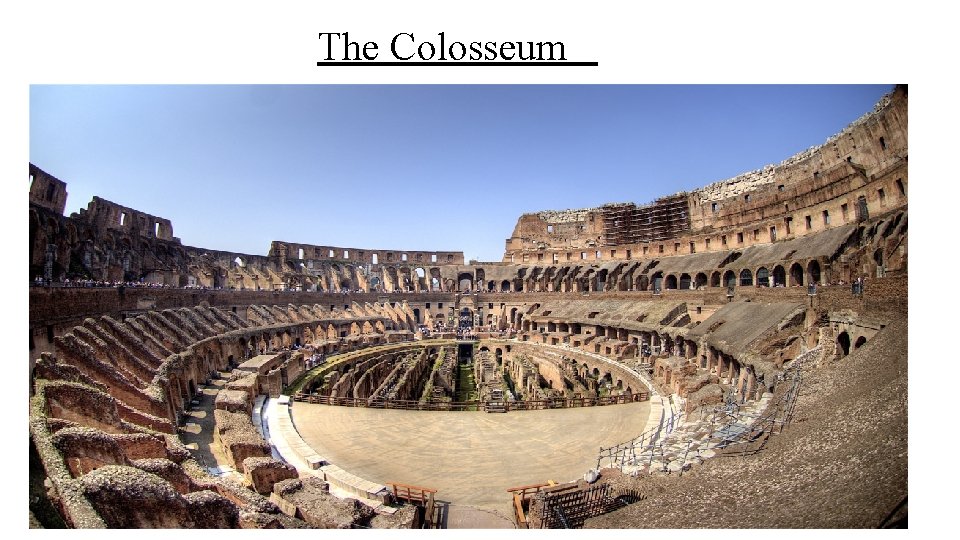
The Colosseum
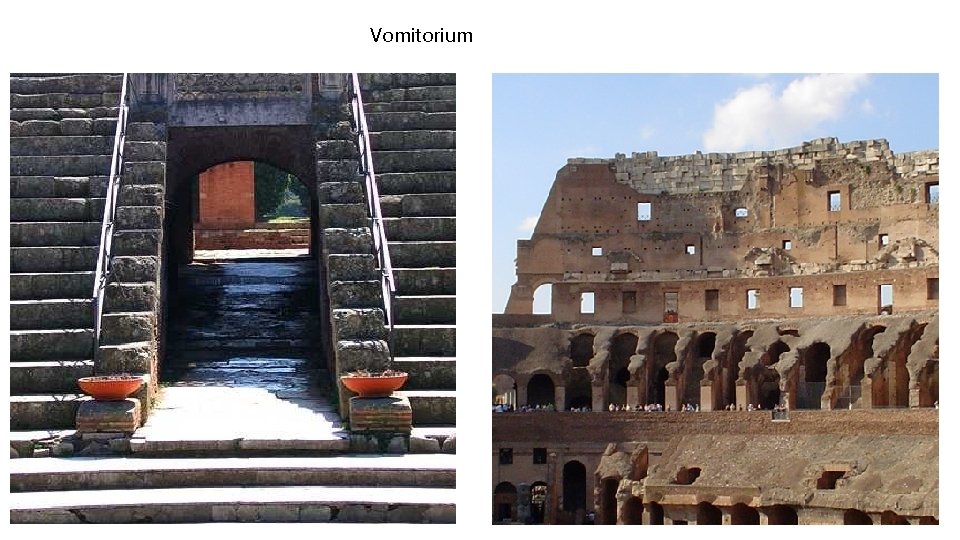
Vomitorium
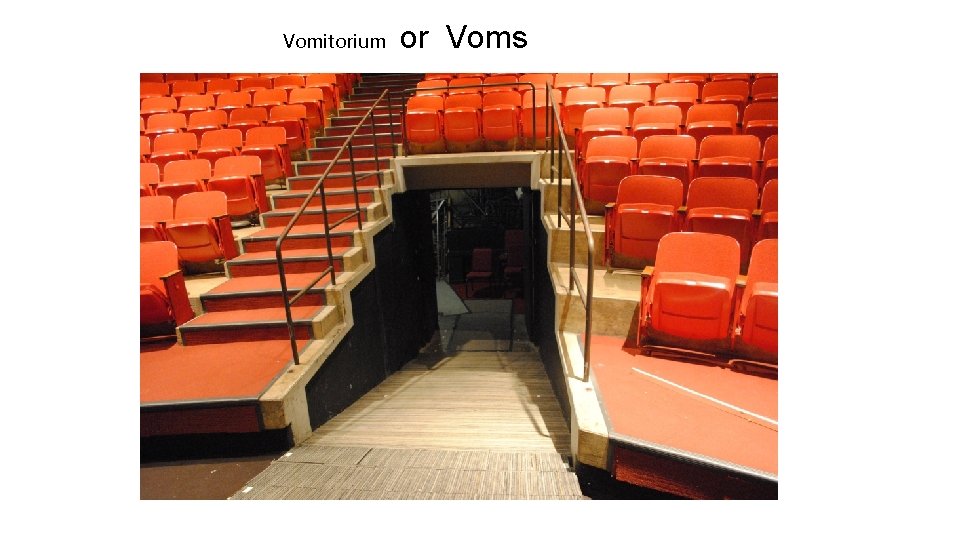
Vomitorium or Voms
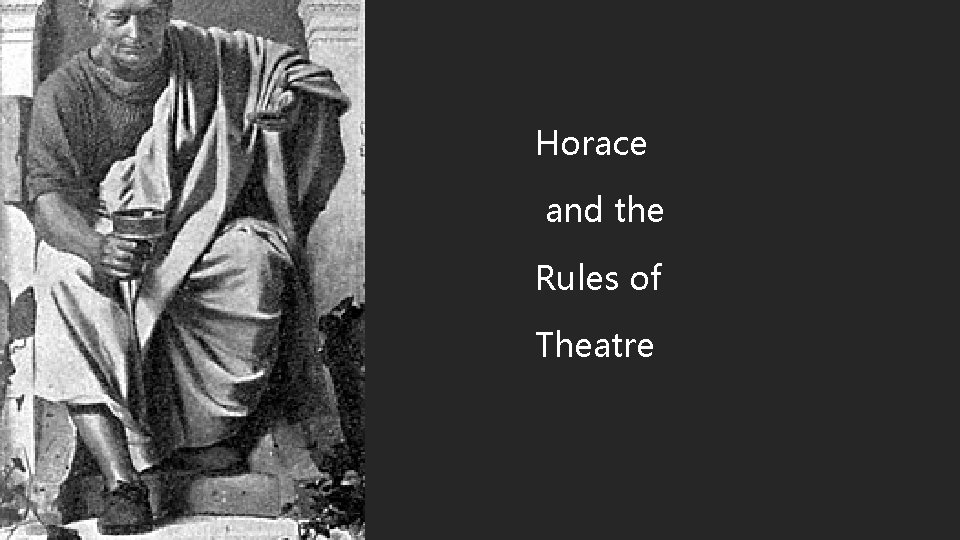
Horace and the Rules of Theatre
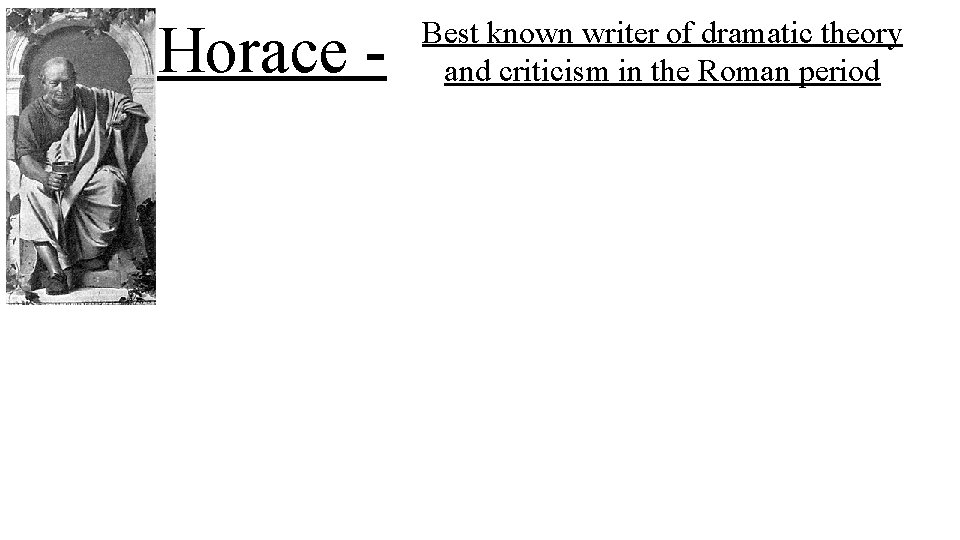
Horace - Best known writer of dramatic theory and criticism in the Roman period
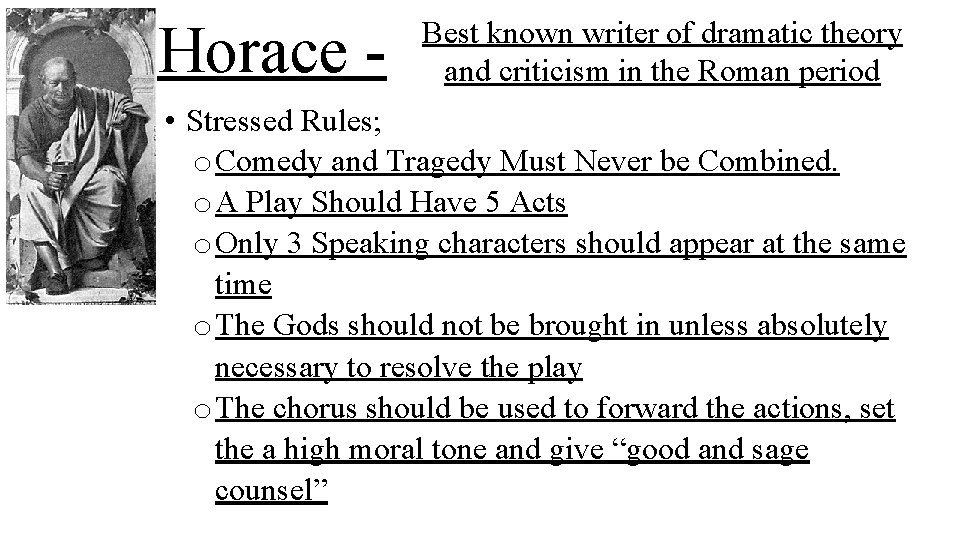
Horace - Best known writer of dramatic theory and criticism in the Roman period • Stressed Rules; o Comedy and Tragedy Must Never be Combined. o A Play Should Have 5 Acts o Only 3 Speaking characters should appear at the same time o The Gods should not be brought in unless absolutely necessary to resolve the play o The chorus should be used to forward the actions, set the a high moral tone and give “good and sage counsel”
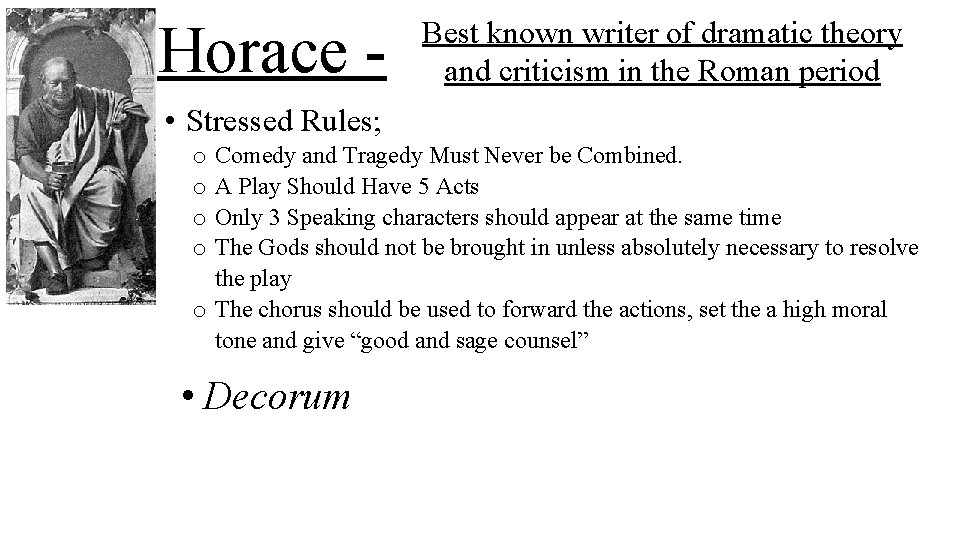
Horace - Best known writer of dramatic theory and criticism in the Roman period • Stressed Rules; Comedy and Tragedy Must Never be Combined. A Play Should Have 5 Acts Only 3 Speaking characters should appear at the same time The Gods should not be brought in unless absolutely necessary to resolve the play o The chorus should be used to forward the actions, set the a high moral tone and give “good and sage counsel” o o • Decorum
Vocabulary Decorum – the language and actions of character must fit traditional ideas of suitable behavior for their age, gender, social status, and emotional state.