
History of the Scientific Thought and Origins of

- Slides: 32
History of the Scientific Thought and Origins of Life
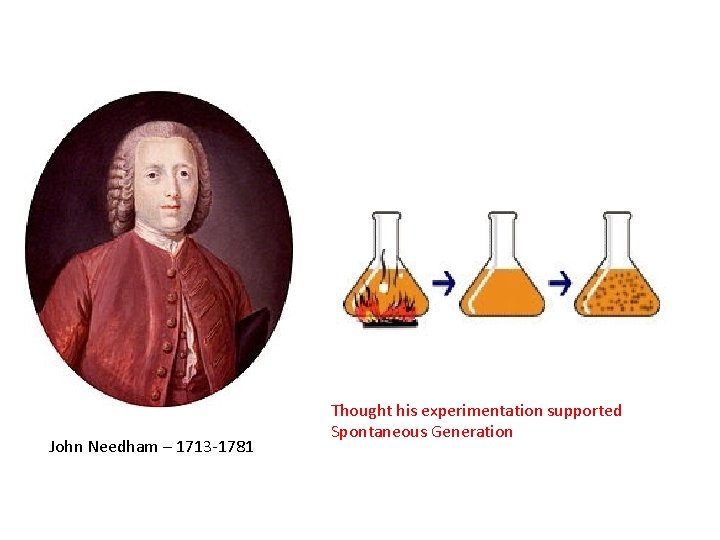
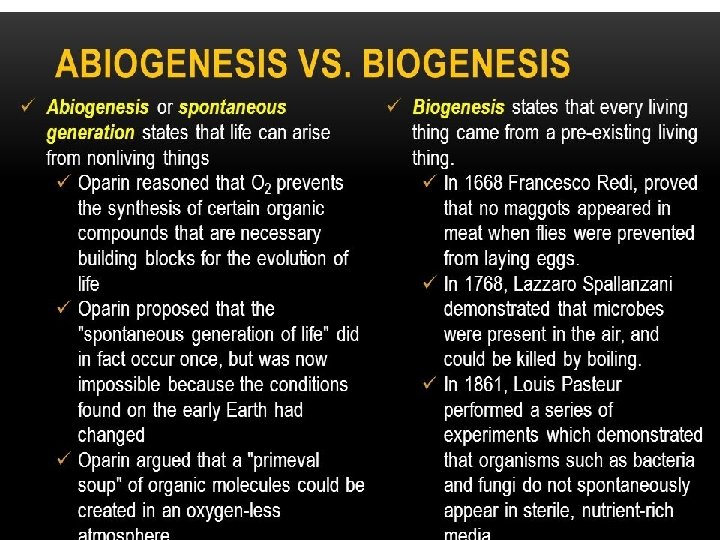
John Needham – 1713 -1781 Thought his experimentation supported Spontaneous Generation
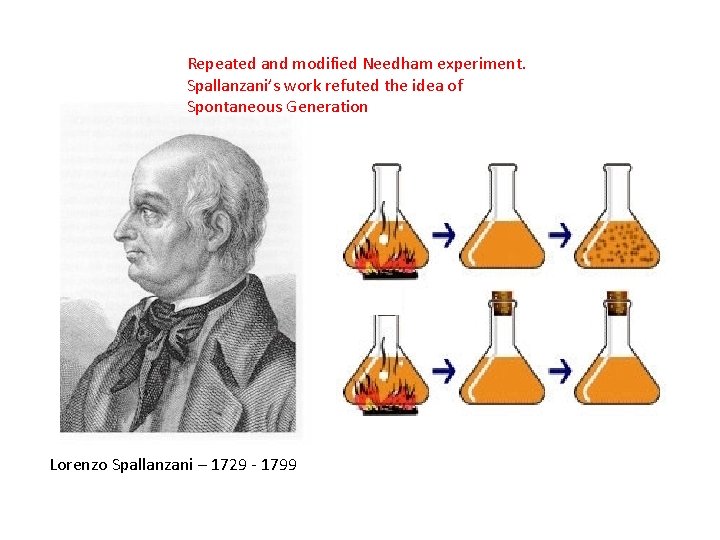
Repeated and modified Needham experiment. Spallanzani’s work refuted the idea of Spontaneous Generation Lorenzo Spallanzani – 1729 - 1799
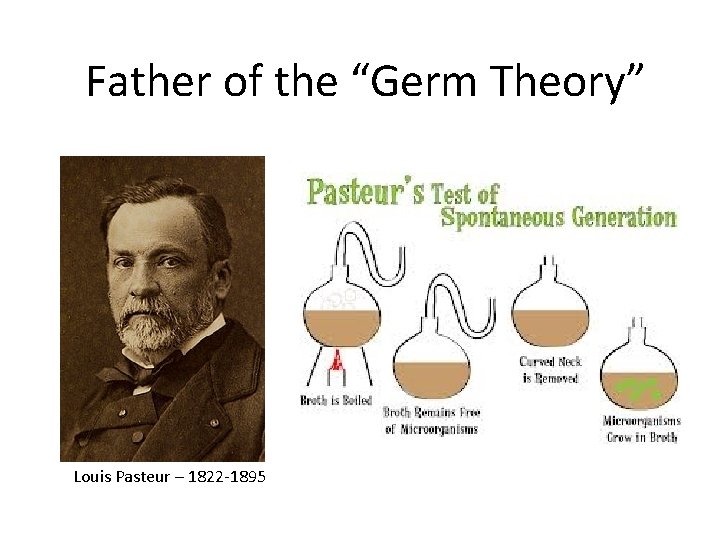
Father of the “Germ Theory” Louis Pasteur – 1822 -1895
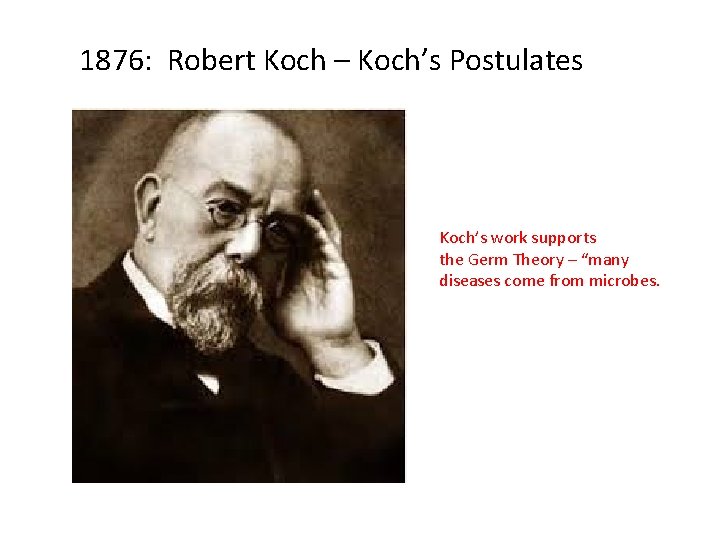
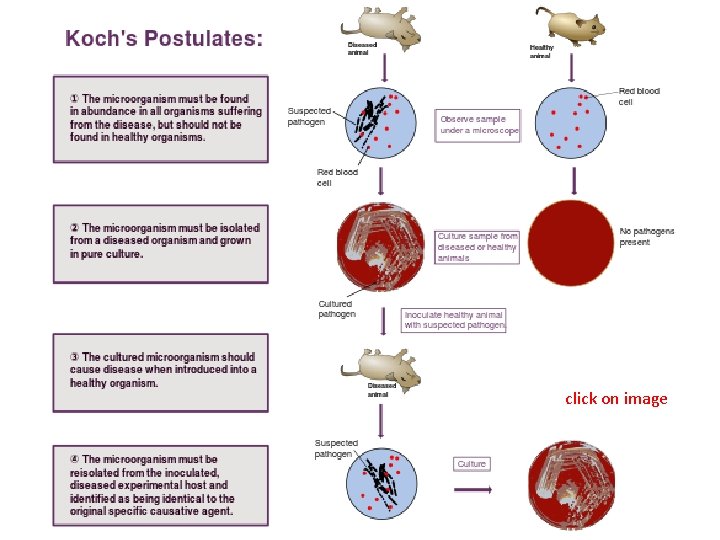
1876: Robert Koch – Koch’s Postulates Koch’s work supports the Germ Theory – “many diseases come from microbes.
click on image
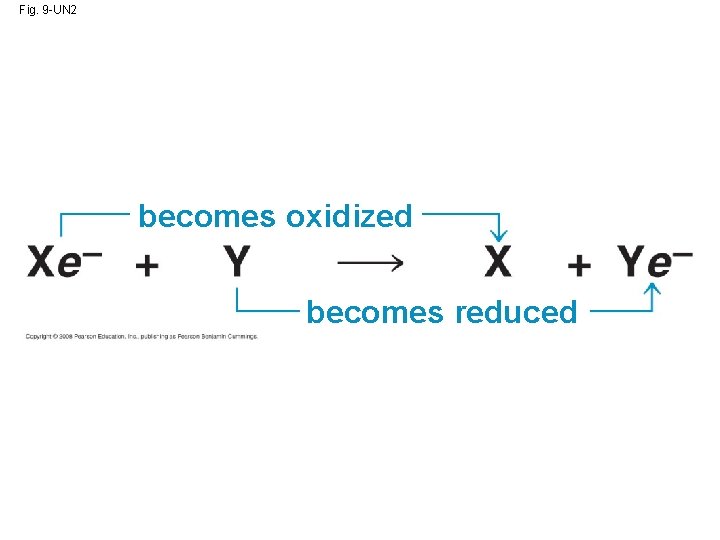
Fig. 9 -UN 2 becomes oxidized becomes reduced
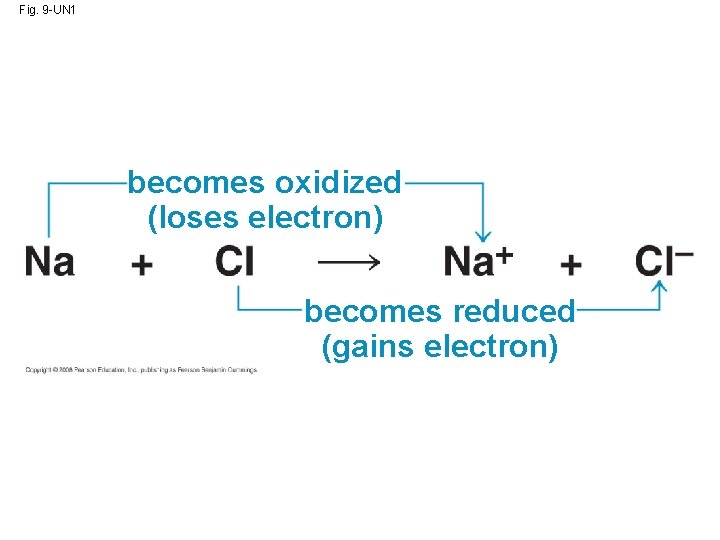
Fig. 9 -UN 1 becomes oxidized (loses electron) becomes reduced (gains electron)
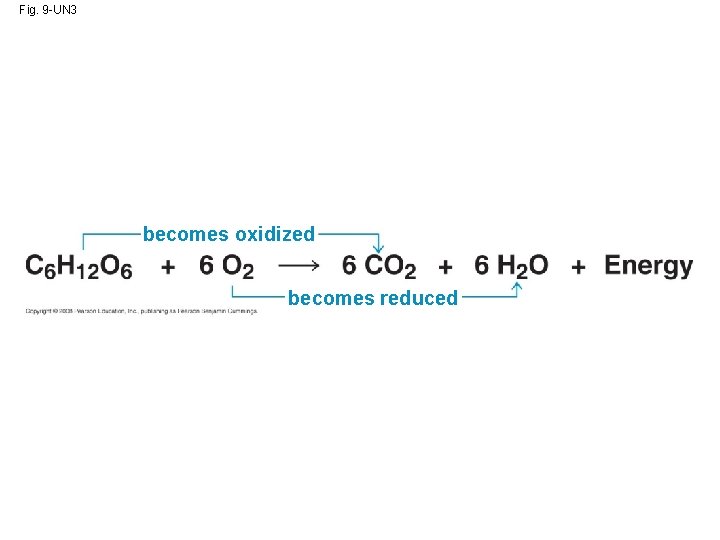
Fig. 9 -UN 3 becomes oxidized becomes reduced
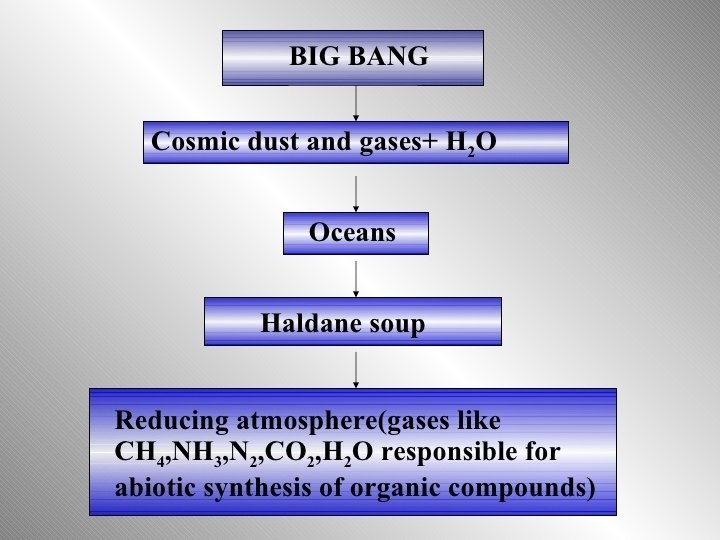
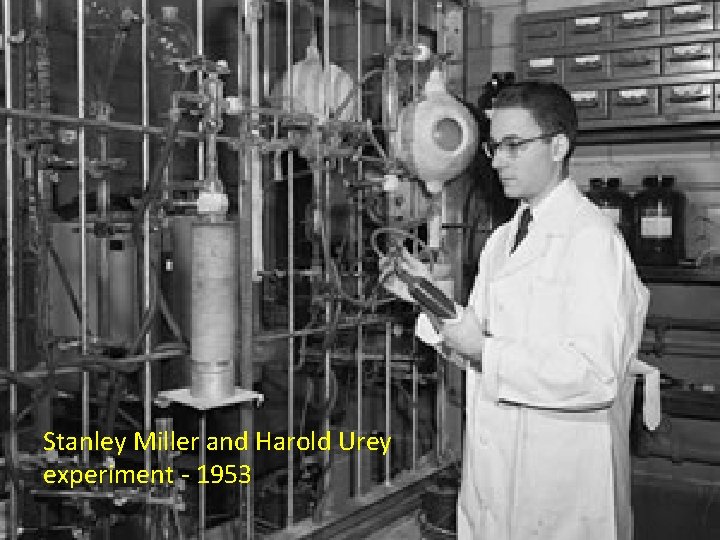
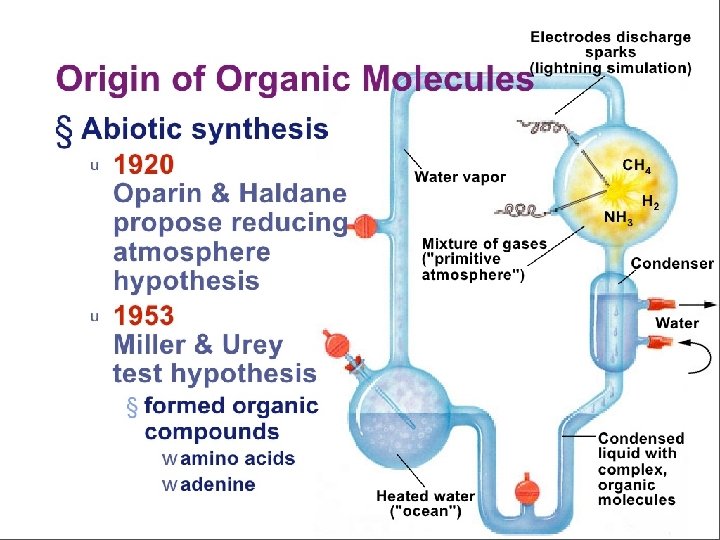
Stanley Miller and Harold Urey experiment - 1953
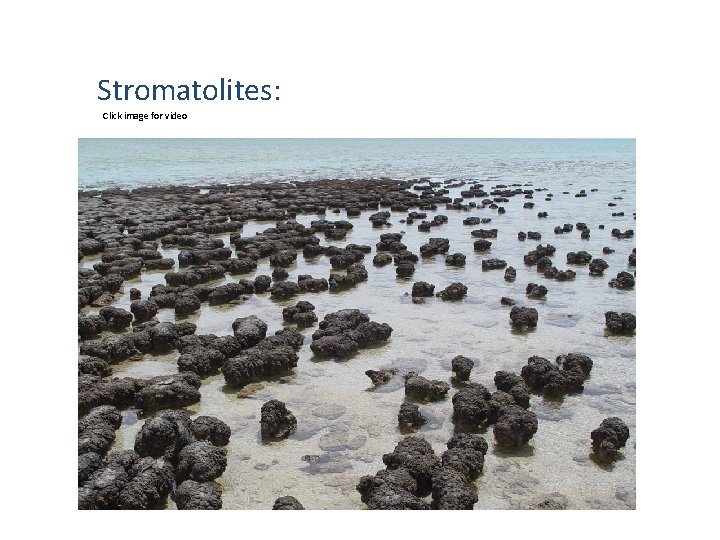
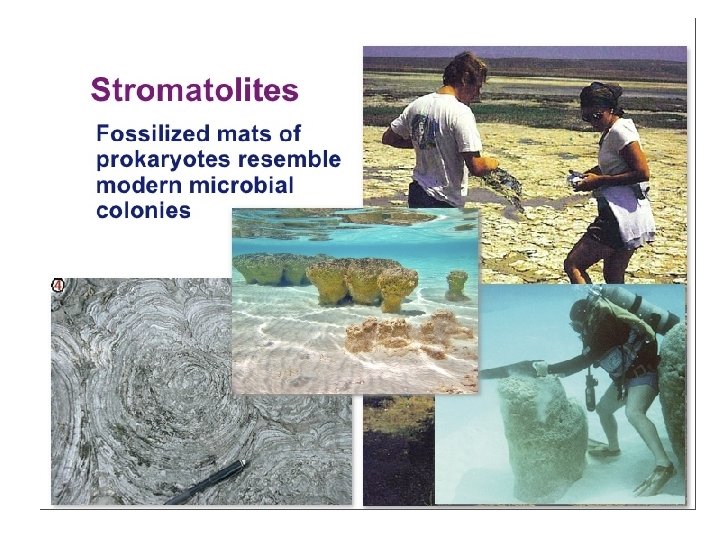
Stromatolites: Click image for video
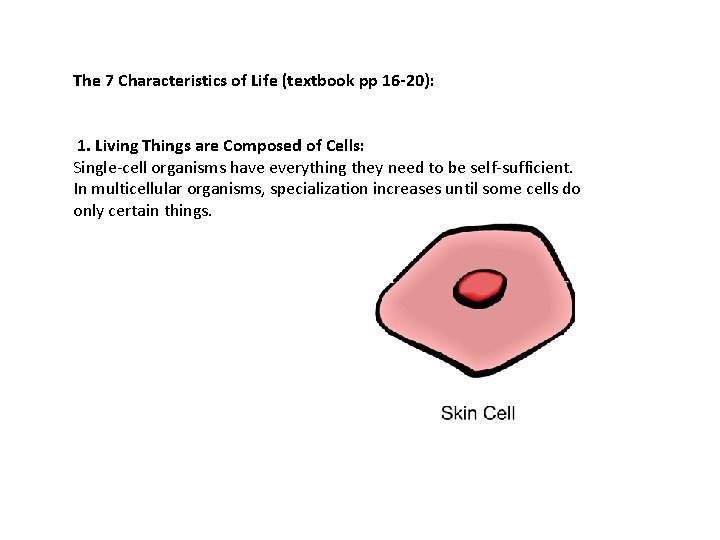
The 7 Characteristics of Life (textbook pp 16 -20): 1. Living Things are Composed of Cells: Single-cell organisms have everything they need to be self-sufficient. In multicellular organisms, specialization increases until some cells do only certain things.
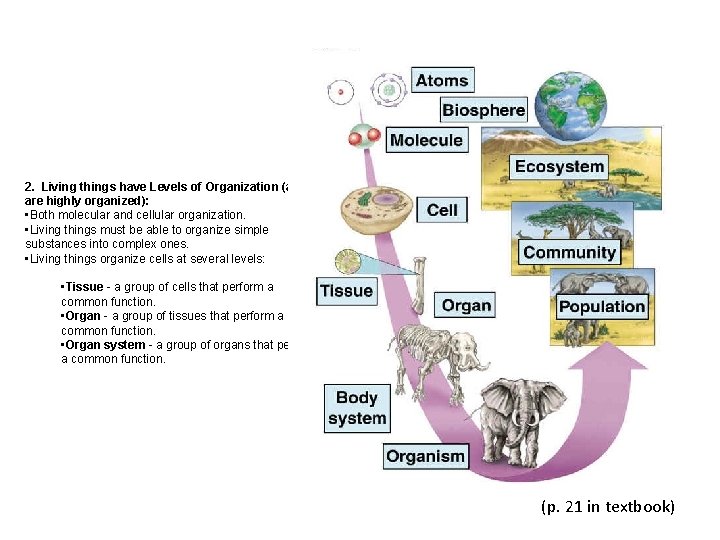
2. Living things have Levels of Organization (and are highly organized): • Both molecular and cellular organization. • Living things must be able to organize simple substances into complex ones. • Living things organize cells at several levels: • Tissue - a group of cells that perform a common function. • Organ - a group of tissues that perform a common function. • Organ system - a group of organs that perform a common function. (p. 21 in textbook)
Living Things Obtain and Use Energy: • Living things take in energy and use it for maintenance and growth.
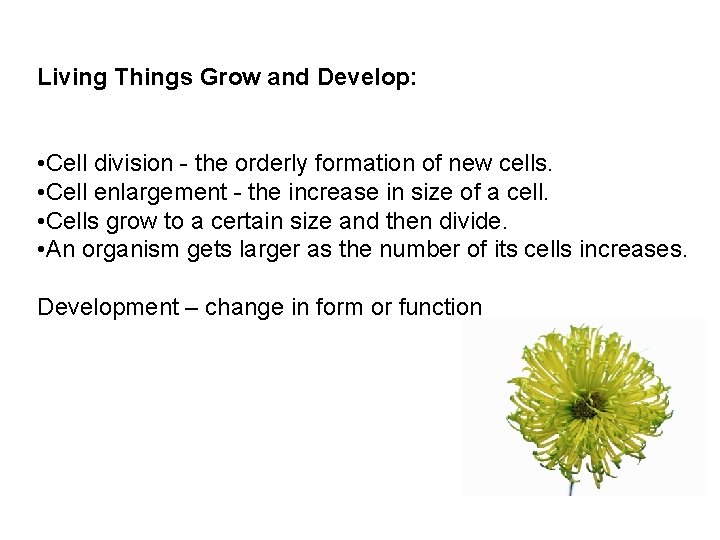
Living Things Grow and Develop: • Cell division - the orderly formation of new cells. • Cell enlargement - the increase in size of a cell. • Cells grow to a certain size and then divide. • An organism gets larger as the number of its cells increases. Development – change in form or function
Living Things Reproduce: • All living things reproduce in one of the following ways: • Asexual repoduction - Producing offspring without the use of gametes. • Sexual reproduction - Producing offspring by the joining of sex cells. • Reproduction is not essential for the survival of individual organisms, but must occur for a species to survive.
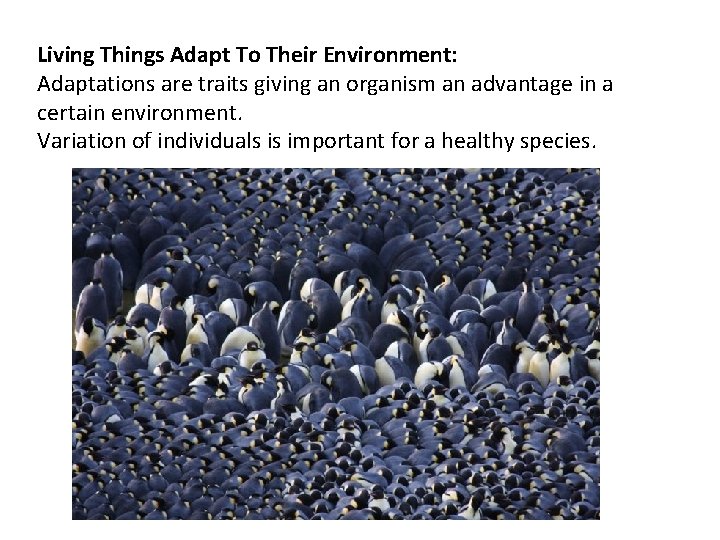
Living Things Adapt To Their Environment: Adaptations are traits giving an organism an advantage in a certain environment. Variation of individuals is important for a healthy species.
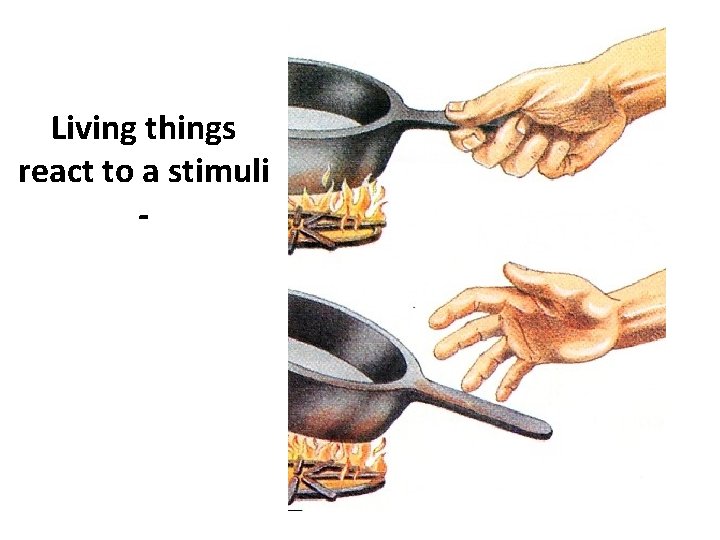
Living things react to a stimuli -
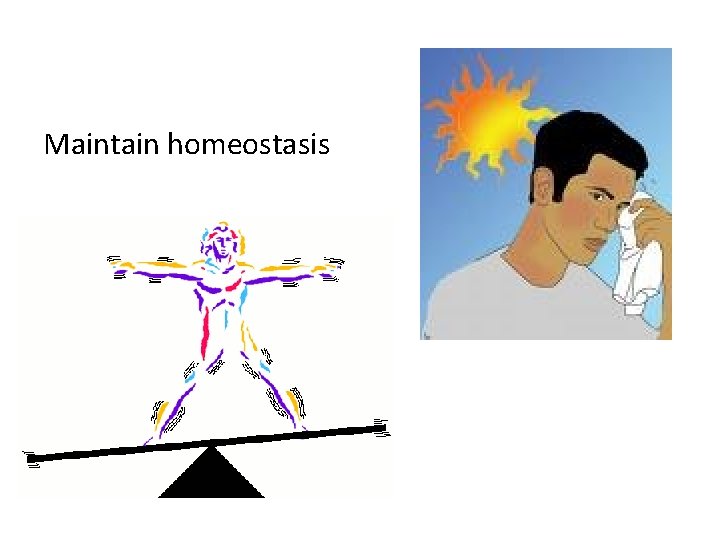
Maintain homeostasis