
History of the Earth Lecture History of the
- Slides: 48
History of the Earth Lecture
History of the earth in 5 minutes https: //www. youtube. com/watch? v=8 qnnoe. Pe. Hlk
300 million years of continental drift https: //www. youtube. com/watch? v=c. QVo. Sy. Vu 9 rk
The great history of Earth https: //www. youtube. com/watch? v=cab. UQ 09 NT 8 Q
Geologic Time Geologic time can be measured in two ways - relative time: subdivisions of the Earth’s History in a specific order based upon relative age relationships -Absolute time: numerical ages in “millions of years” or some other measurement
Geologic Time Scale The geologic time scale is based on relative time, and it ALWAYS writing with the oldest part at the bottom
Divisions of Pre-Cambrian Times The Precambrian is the longest divisions of Earth’s history (87%) of all time). There are three major subdivisions of Precambrian time -hadean -Archaean -Proterozoic -Vendian
Hadean Time (4. 5 – 3. 8 Billions Years Ago) This is the time when the solar system was forming from a nebula -the age of the formation of the solar system (and earth) come from the ages of the oldest meteorites The earth formed, and was problem a hot ball of molten rock There are NO ROCKS (and therefore, no fossils) from Haden Time.
Archaean Time (3. 8 – 2. 5 billion years ago) The Earth cooled enough so that rock could form Earth’s atmosphere was much different than it is now -little to no O 2 -more CO 2
The oldest fossils The oldest Fossils are approximately 3. 7 billion years old. -the first fossils: Bacteria -the only fossil found for the first billion years of biological history on the Earth are bacteria The first bacteria were probably responsible for creating oxygen in the atmosphere through photosynthesis
Bacteria Single-celled organisms They currently live in almost every environment on Earth’s surface today
Stromatolites Mounds of algae and bacteria with layers of sediment Still found in some few areas today’s oceans -Shark Bay, Australia
Proterozoic Time (2. 5 billion to 544 million years ago) Most fossils from the Proterozoic are single-celled organisms -prokaryote (no nucleus) and Eukaryote (with a nucleus) cells. -Stromatolites are still very common In the late Proterozoic (Vendian) some “soft” organisms began to appear Most of these organisms died out at the end of the Proterozoic
End of the Precambrian The end of the Precambrian is marked with the extinction of several of the “strange” animals and the first appearance of hard shells on Cambrian animals
Continental Drift 3. 3 Billion Years https: //www. youtube. com/watch? v=Uw. WWuttntio
The Structure of the Earth and Plate Tectonics
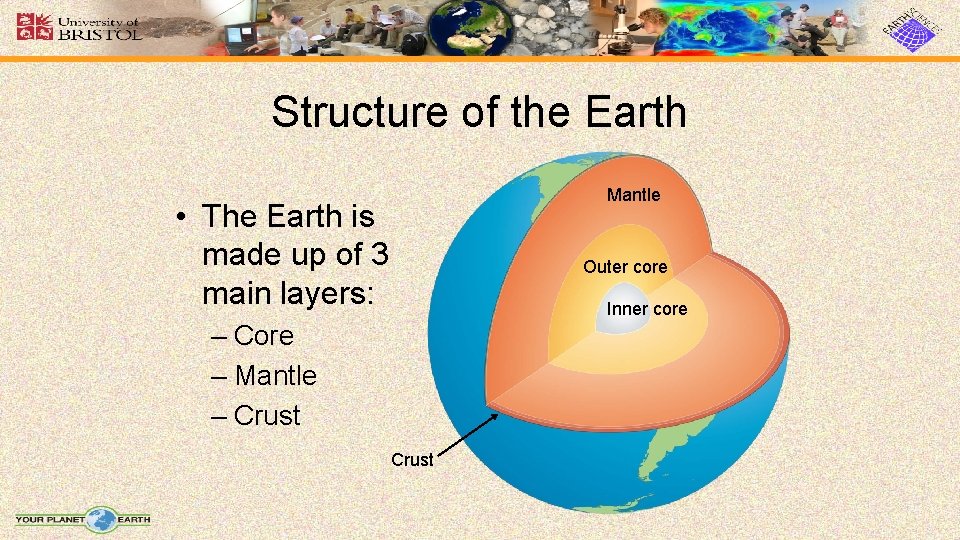
Structure of the Earth Mantle • The Earth is made up of 3 main layers: Outer core Inner core – Core – Mantle – Crust
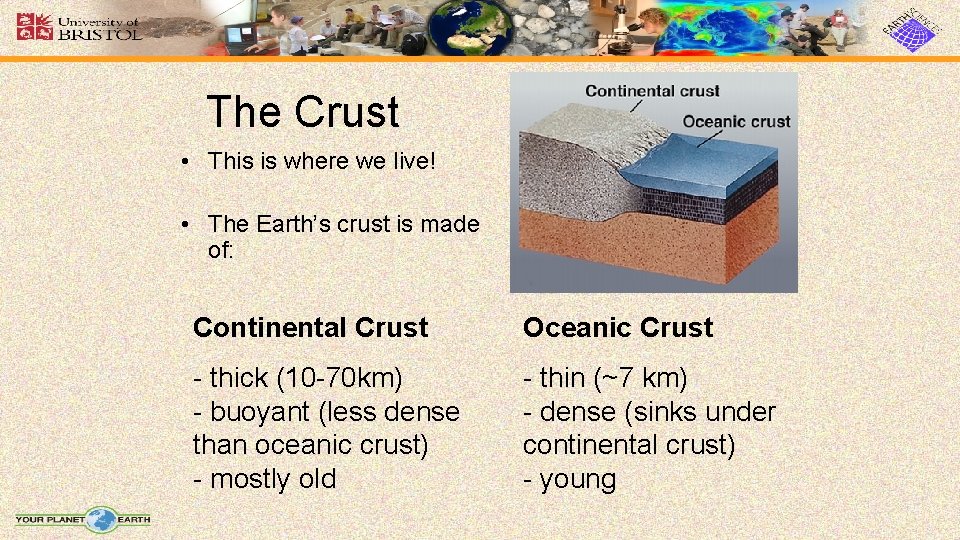
The Crust • This is where we live! • The Earth’s crust is made of: Continental Crust Oceanic Crust - thick (10 -70 km) - buoyant (less dense than oceanic crust) - mostly old - thin (~7 km) - dense (sinks under continental crust) - young
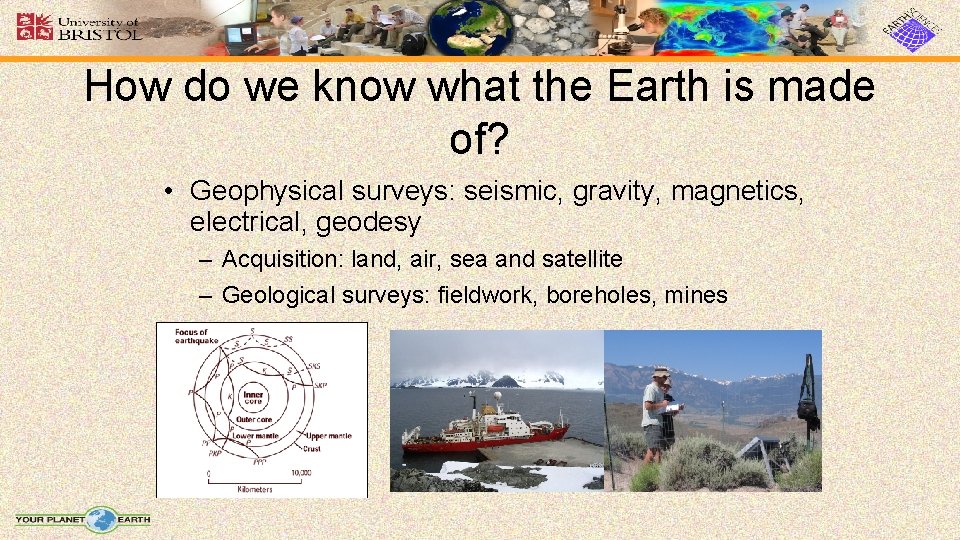
How do we know what the Earth is made of? • Geophysical surveys: seismic, gravity, magnetics, electrical, geodesy – Acquisition: land, air, sea and satellite – Geological surveys: fieldwork, boreholes, mines
What is Plate Tectonics?
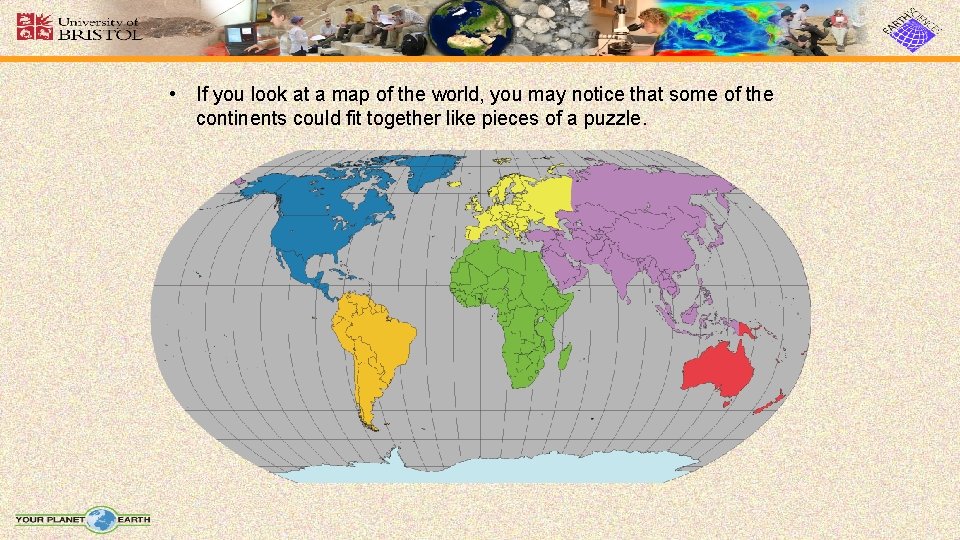
• If you look at a map of the world, you may notice that some of the continents could fit together like pieces of a puzzle.
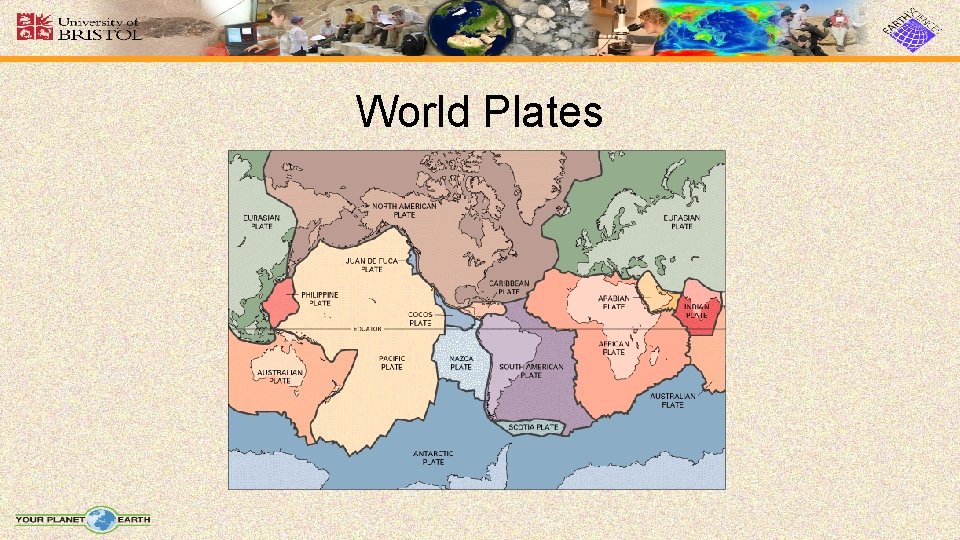
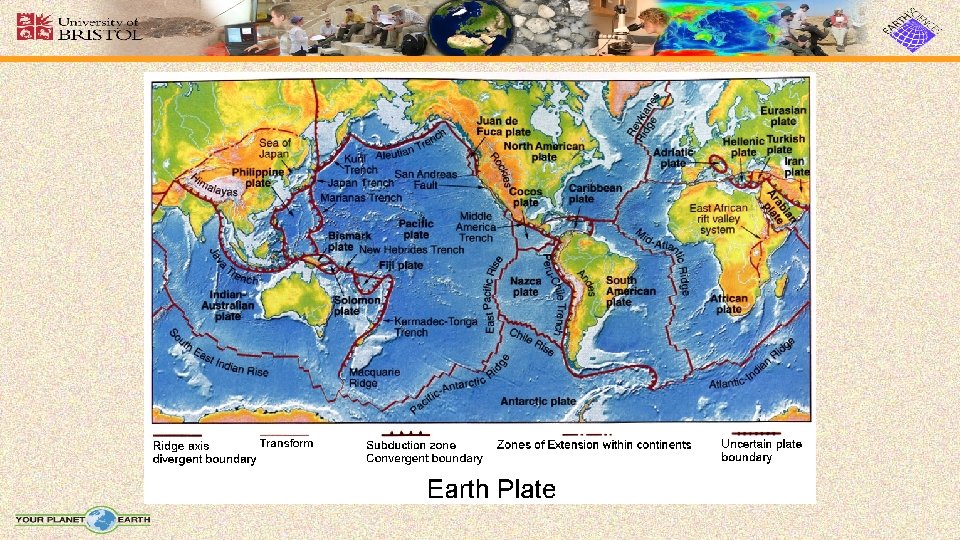
Plate Tectonics • The Earth’s crust is divided into 12 major plates which are moved in various directions. • This plate motion causes them to collide, pull apart, or scrape against each other. • Each type of interaction causes a characteristic set of Earth structures or “tectonic” features. • The word, tectonic, refers to the deformation of the crust as a consequence of plate interaction.
World Plates
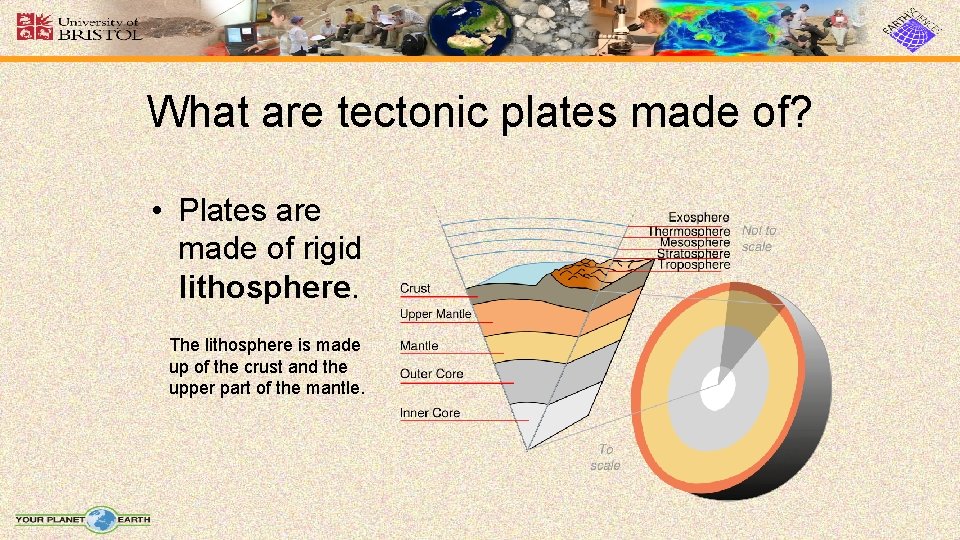
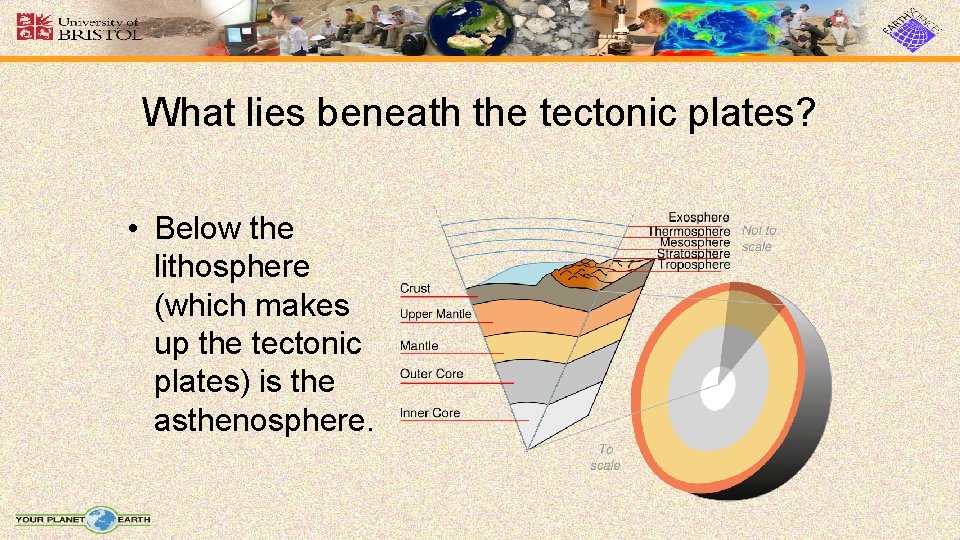
What are tectonic plates made of? • Plates are made of rigid lithosphere. The lithosphere is made up of the crust and the upper part of the mantle.
What lies beneath the tectonic plates? • Below the lithosphere (which makes up the tectonic plates) is the asthenosphere.
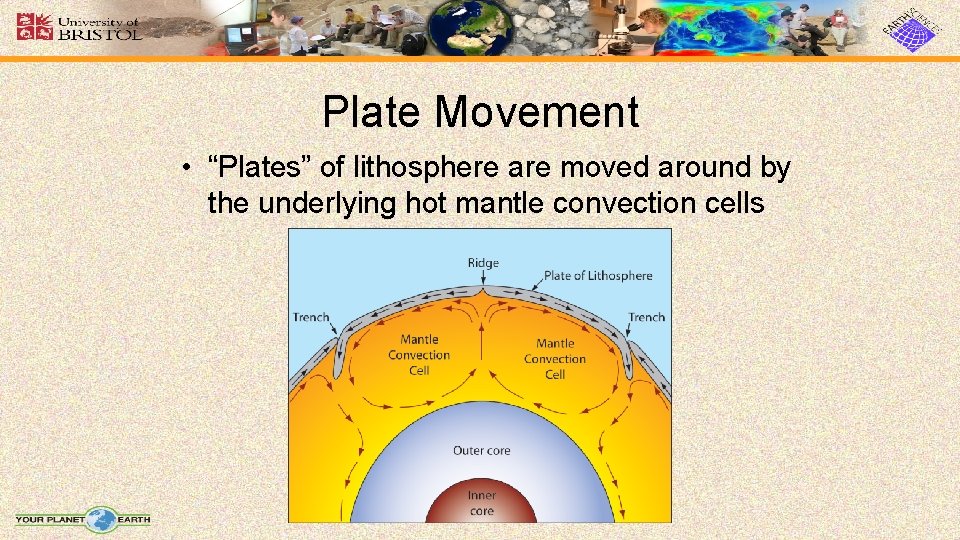
Plate Movement • “Plates” of lithosphere are moved around by the underlying hot mantle convection cells
What happens at tectonic plate boundaries?
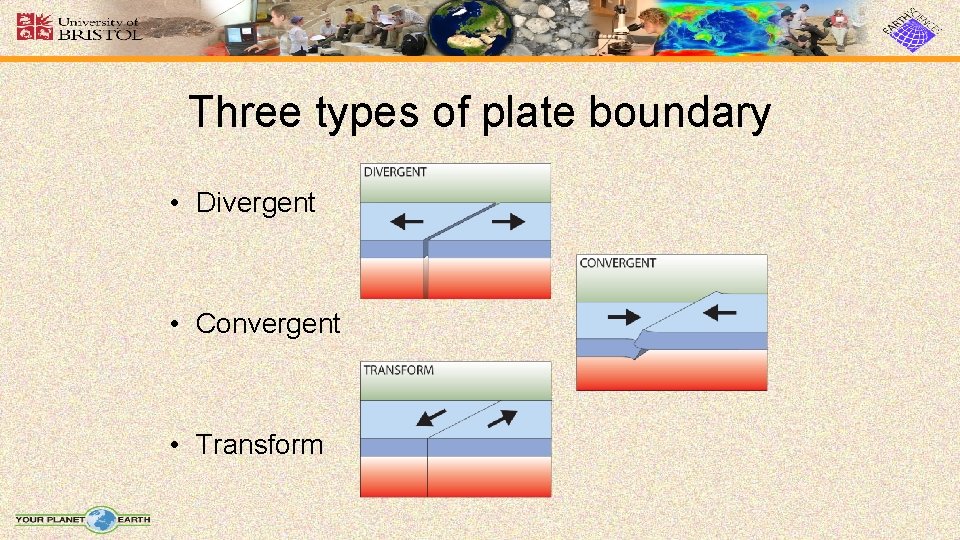
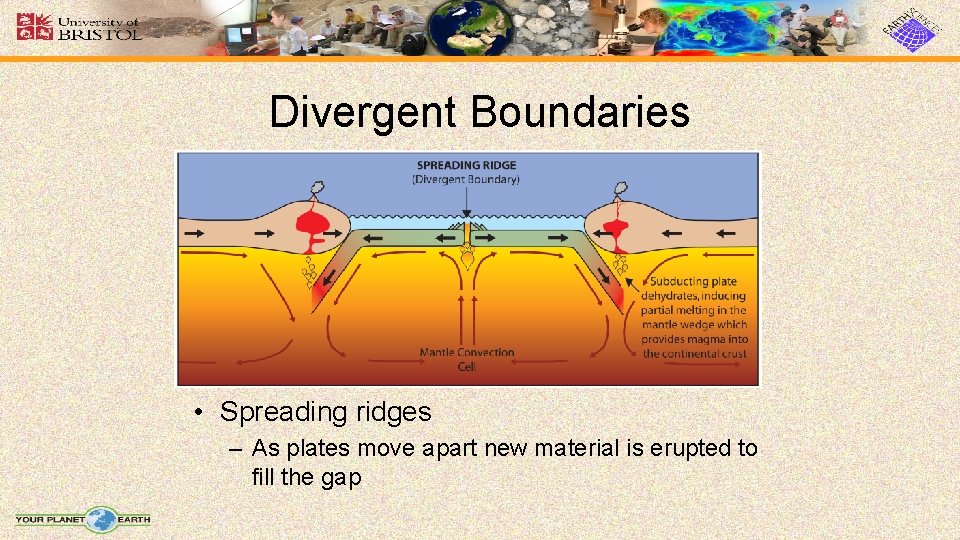
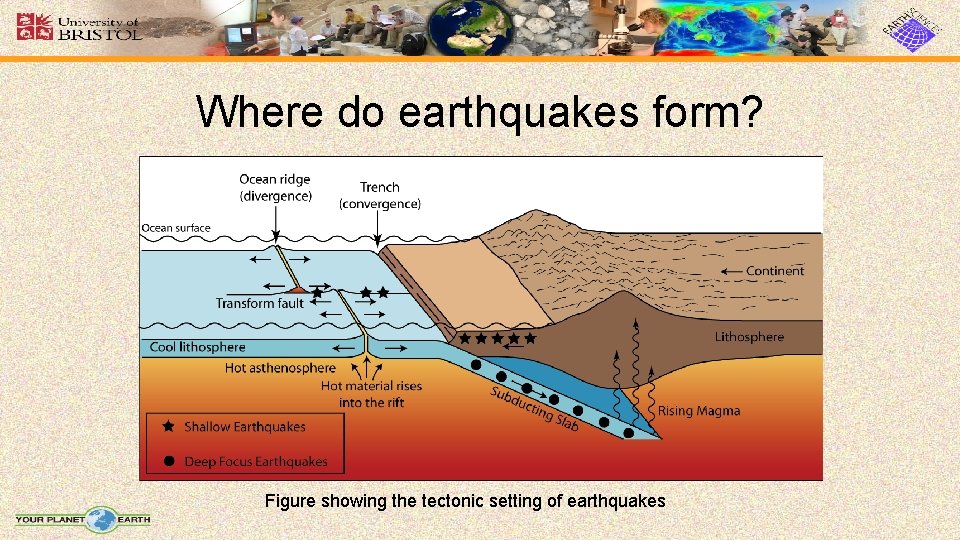
Three types of plate boundary • Divergent • Convergent • Transform
Divergent Boundaries • Spreading ridges – As plates move apart new material is erupted to fill the gap
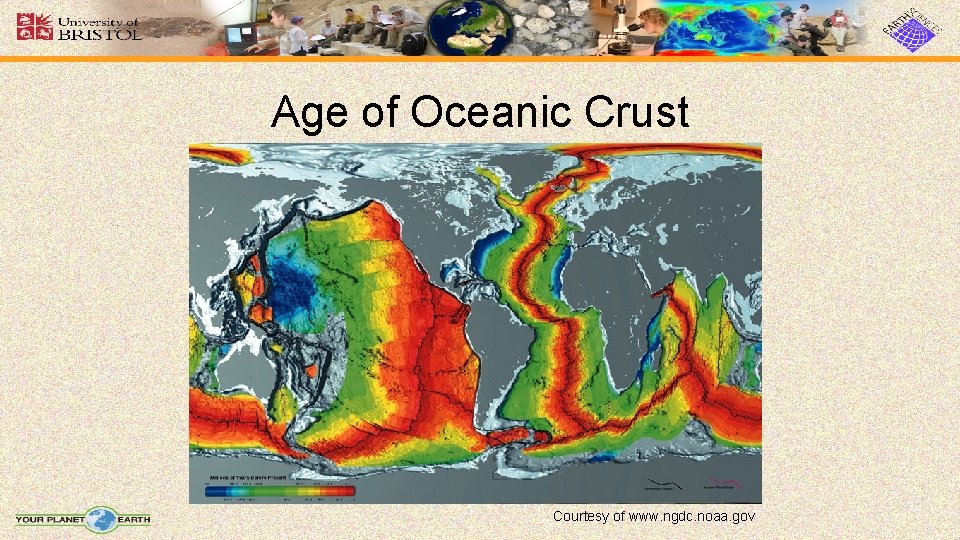
Age of Oceanic Crust Courtesy of www. ngdc. noaa. gov
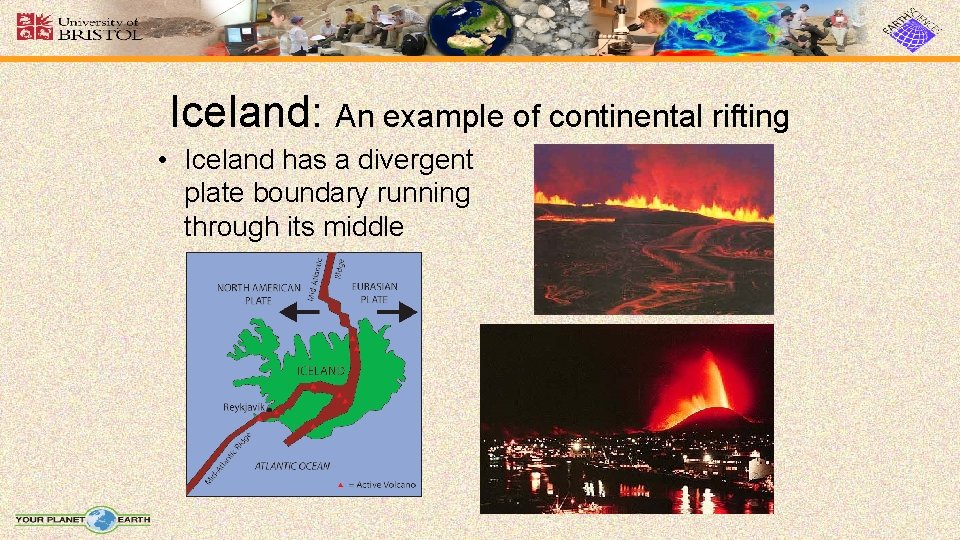
Iceland: An example of continental rifting • Iceland has a divergent plate boundary running through its middle
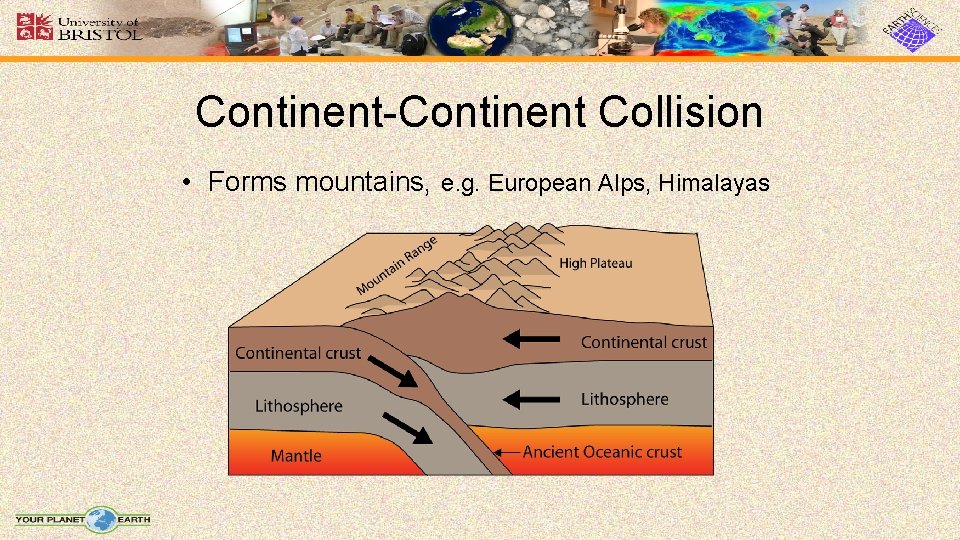
Convergent Boundaries • There are three styles of convergent plate boundaries – Continent-continent collision – Continent-oceanic crust collision – Ocean-ocean collision
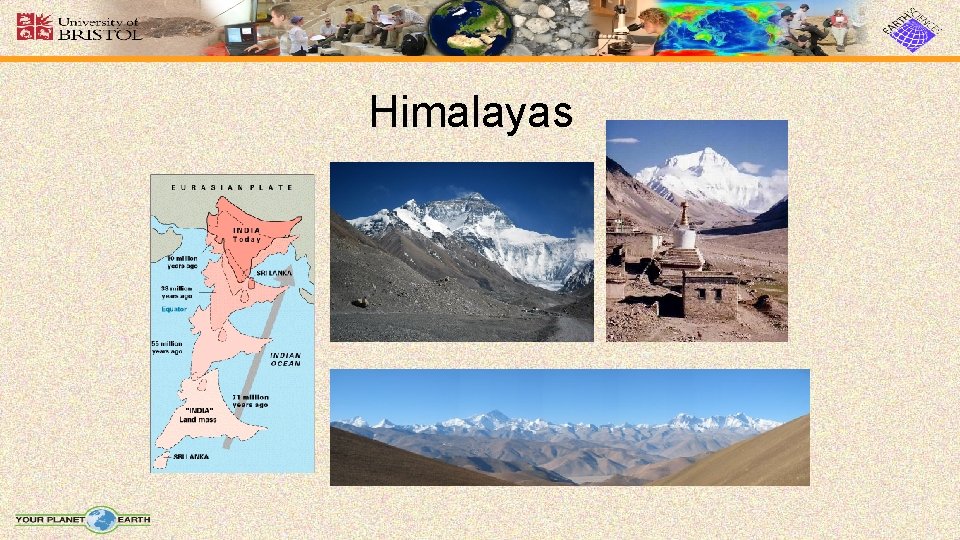
Continent-Continent Collision • Forms mountains, e. g. European Alps, Himalayas
Himalayas
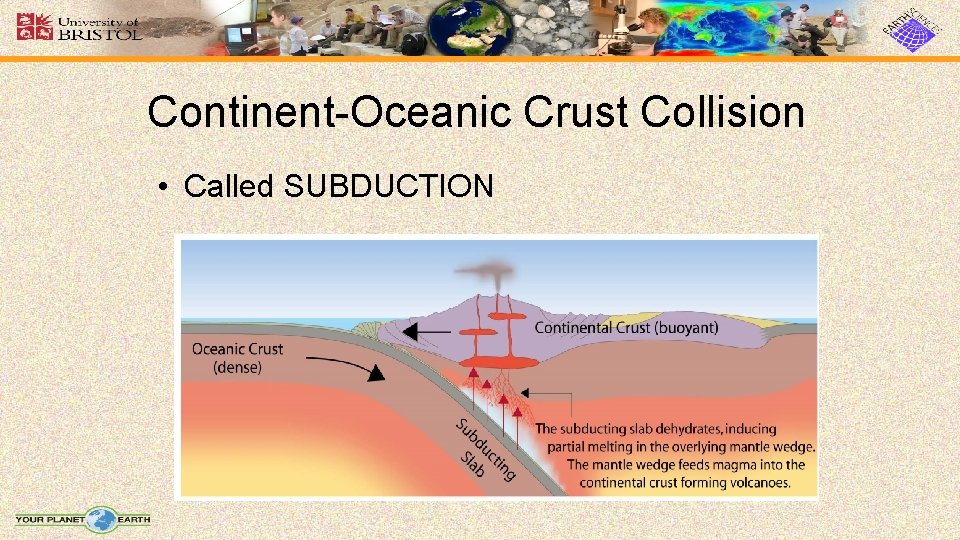
Continent-Oceanic Crust Collision • Called SUBDUCTION
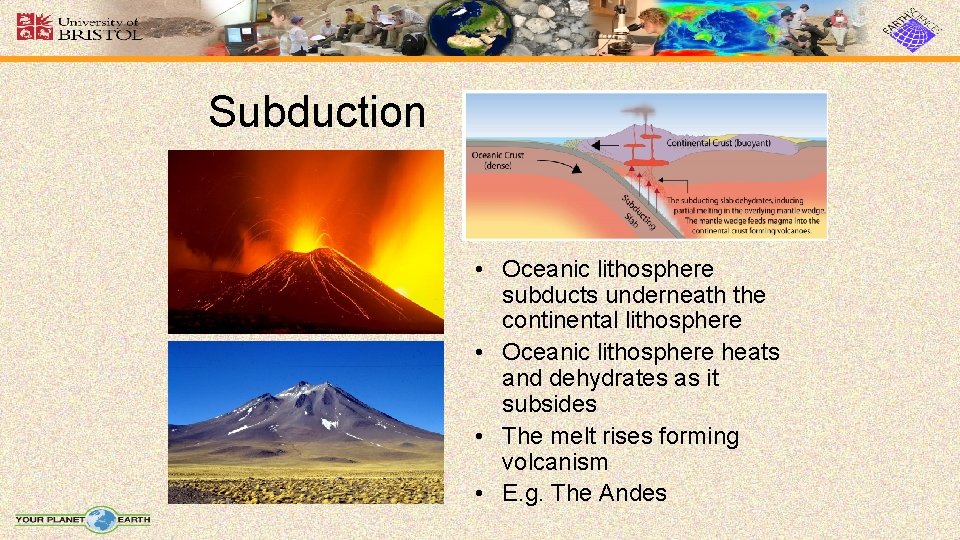
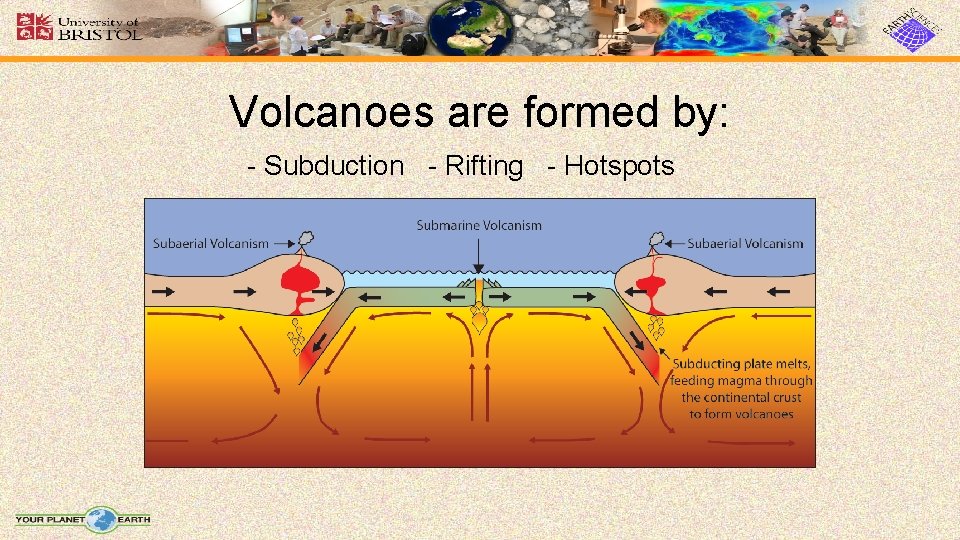
Subduction • Oceanic lithosphere subducts underneath the continental lithosphere • Oceanic lithosphere heats and dehydrates as it subsides • The melt rises forming volcanism • E. g. The Andes
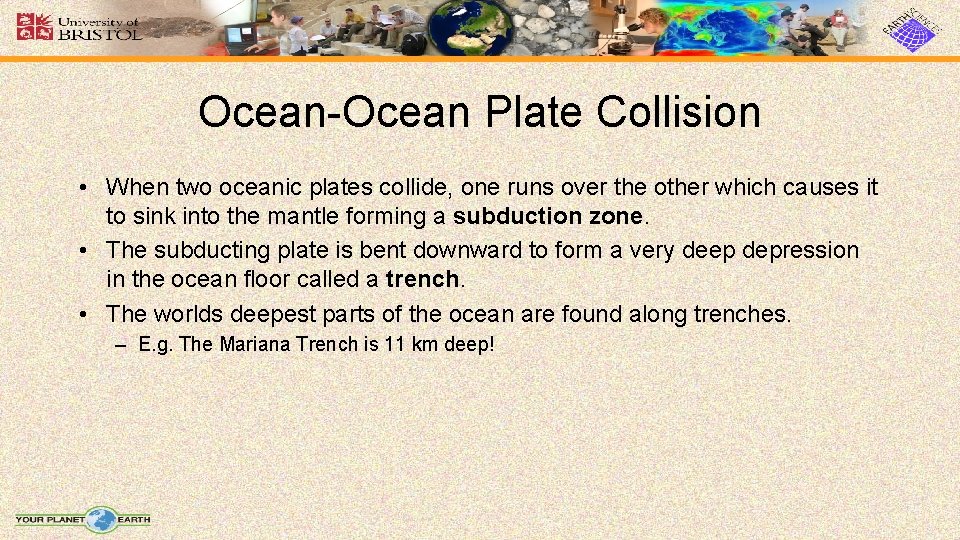
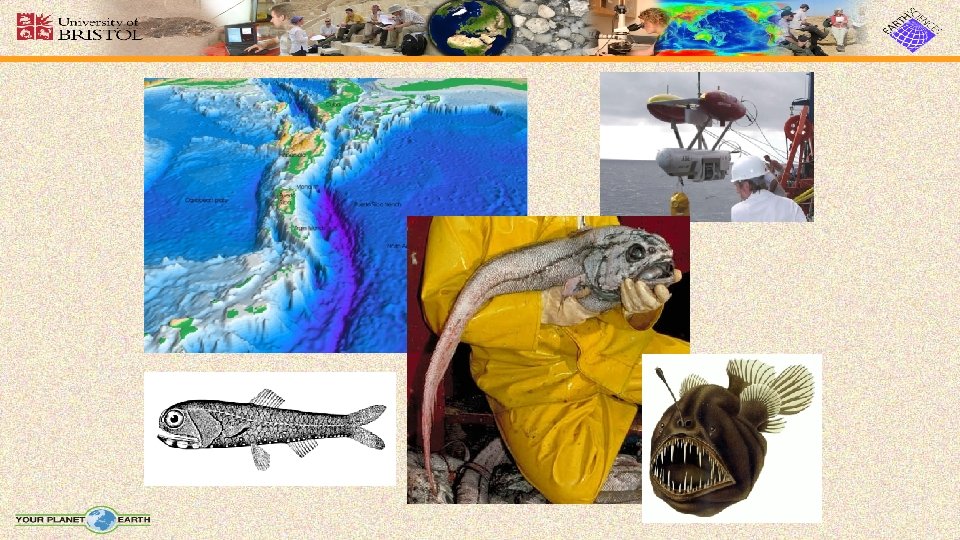
Ocean-Ocean Plate Collision • When two oceanic plates collide, one runs over the other which causes it to sink into the mantle forming a subduction zone. • The subducting plate is bent downward to form a very deep depression in the ocean floor called a trench. • The worlds deepest parts of the ocean are found along trenches. – E. g. The Mariana Trench is 11 km deep!
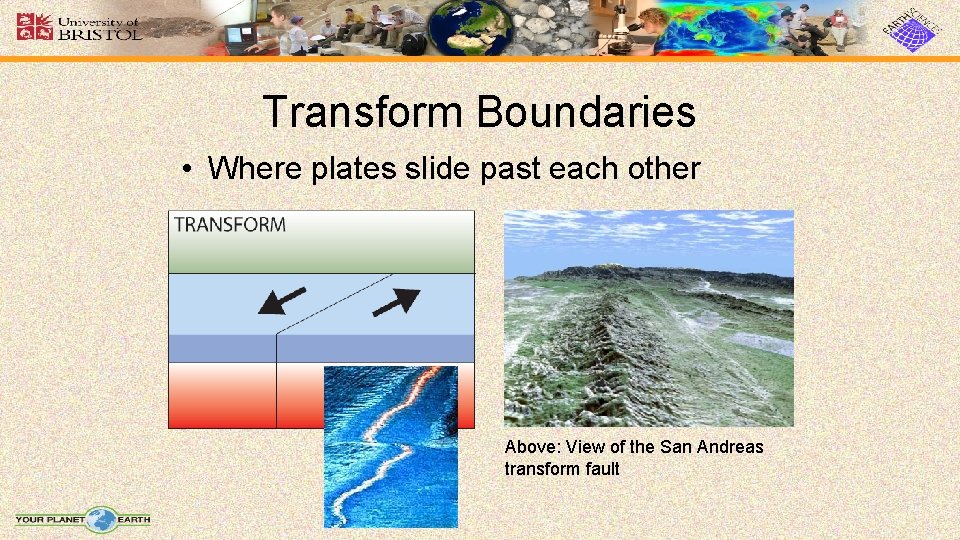
Transform Boundaries • Where plates slide past each other Above: View of the San Andreas transform fault
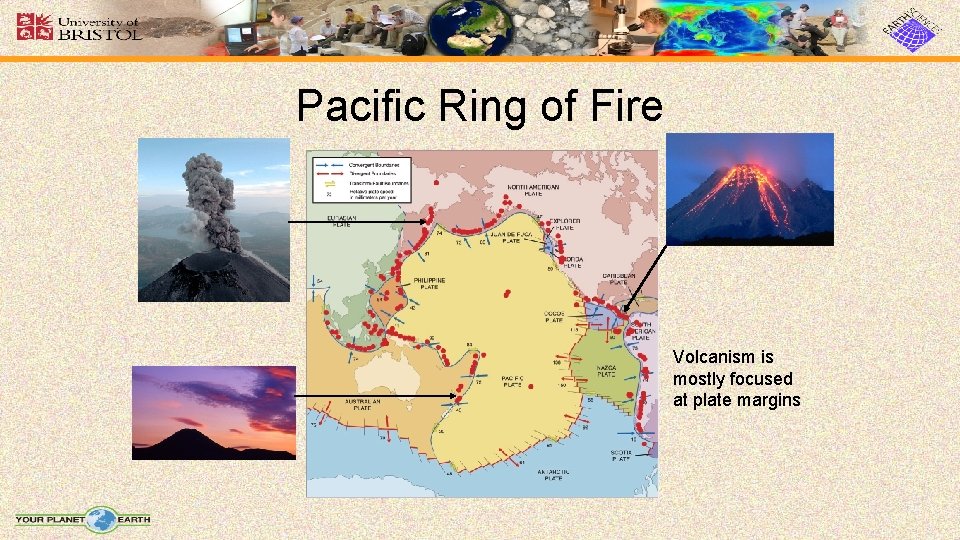
Pacific Ring of Fire Volcanism is mostly focused at plate margins
Volcanoes are formed by: - Subduction - Rifting - Hotspots
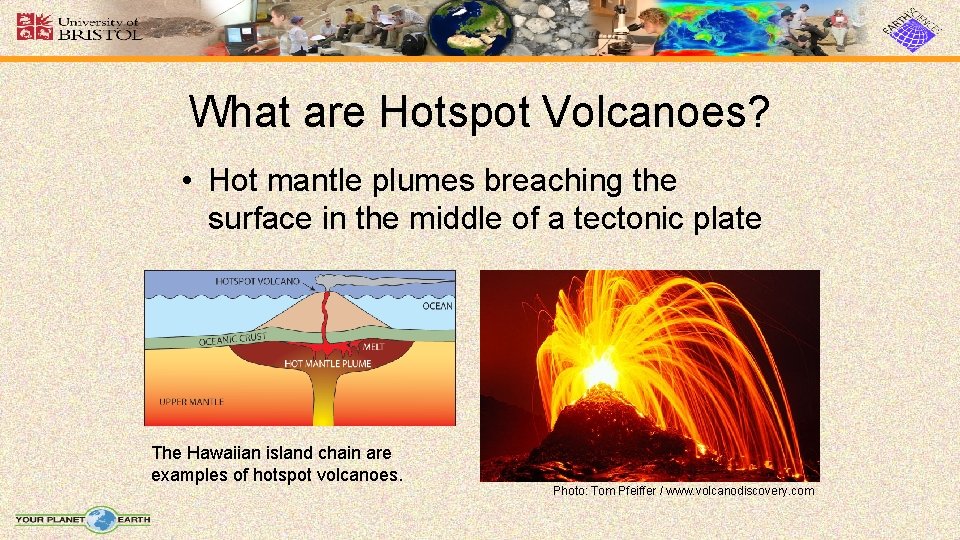
What are Hotspot Volcanoes? • Hot mantle plumes breaching the surface in the middle of a tectonic plate The Hawaiian island chain are examples of hotspot volcanoes. Photo: Tom Pfeiffer / www. volcanodiscovery. com
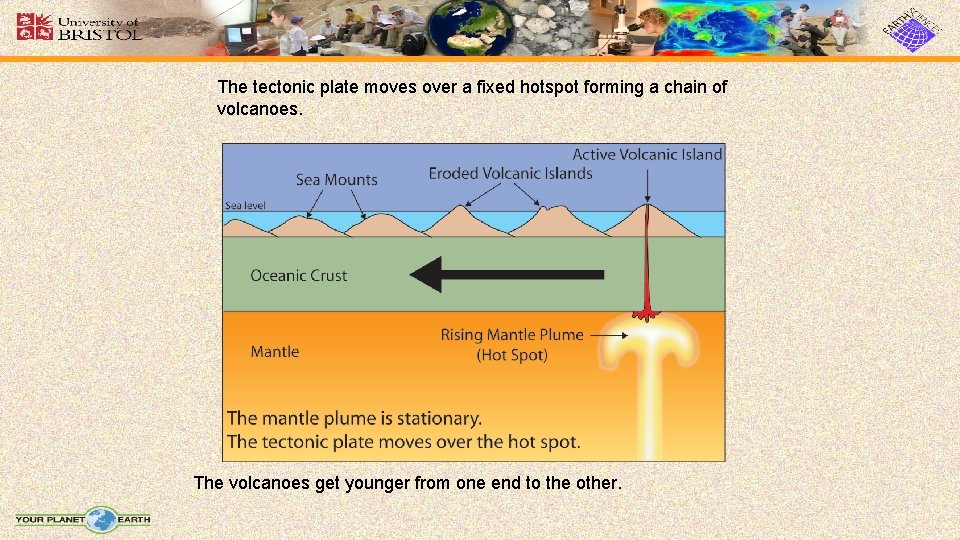
The tectonic plate moves over a fixed hotspot forming a chain of volcanoes. The volcanoes get younger from one end to the other.
Earthquakes and Plate Tectonics… …what’s the connection?
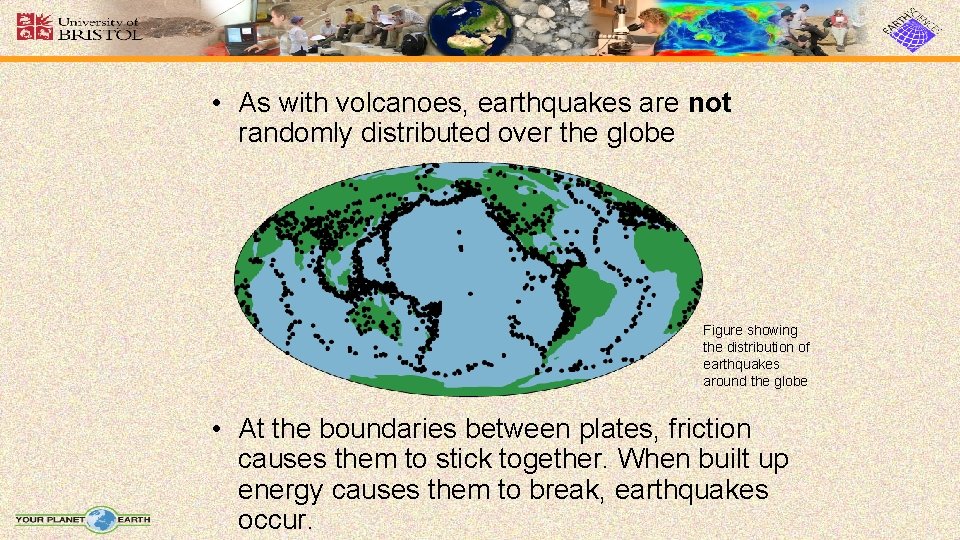
• As with volcanoes, earthquakes are not randomly distributed over the globe Figure showing the distribution of earthquakes around the globe • At the boundaries between plates, friction causes them to stick together. When built up energy causes them to break, earthquakes occur.
Where do earthquakes form? Figure showing the tectonic setting of earthquakes
Plate Tectonics Summary • The Earth is made up of 3 main layers (core, mantle, crust) • On the surface of the Earth are tectonic plates that slowly move around the globe • Plates are made of crust and upper mantle (lithosphere) • There are 2 types of plate • There are 3 types of plate boundaries • Volcanoes and Earthquakes are closely linked to the margins of the tectonic plates