
History of Speech Communication Models and Messages Lee



- Slides: 26
History of “Speech Communication”: Models and Messages Lee & Baldwin
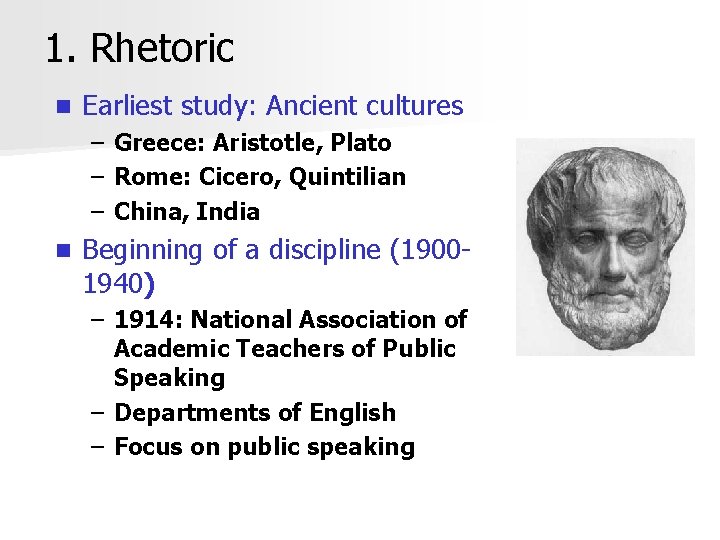
1. Rhetoric n Earliest study: Ancient cultures – Greece: Aristotle, Plato – Rome: Cicero, Quintilian – China, India n Beginning of a discipline (19001940) – 1914: National Association of Academic Teachers of Public Speaking – Departments of English – Focus on public speaking
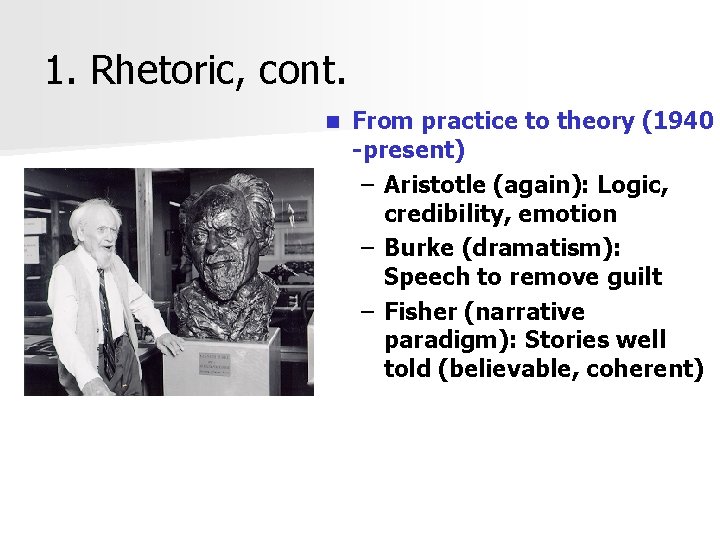
1. Rhetoric, cont. n From practice to theory (1940 -present) – Aristotle (again): Logic, credibility, emotion – Burke (dramatism): Speech to remove guilt – Fisher (narrative paradigm): Stories well told (believable, coherent)
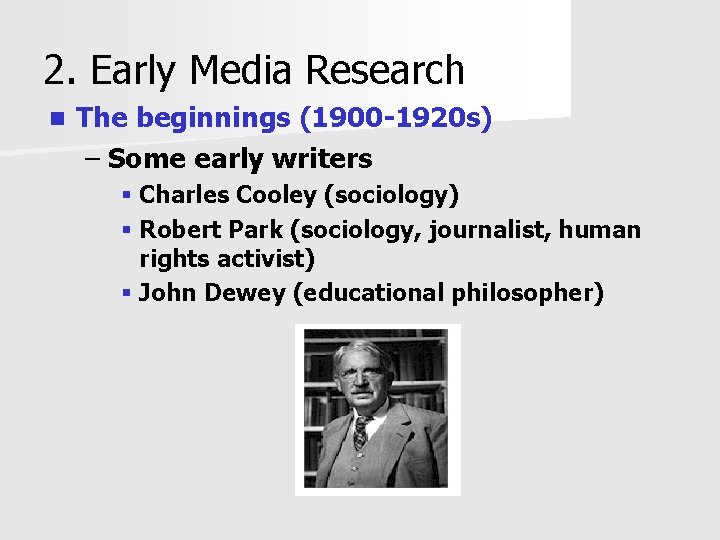
2. Early Media Research n The beginnings (1900 -1920 s) – Some early writers § Charles Cooley (sociology) § Robert Park (sociology, journalist, human rights activist) § John Dewey (educational philosopher)
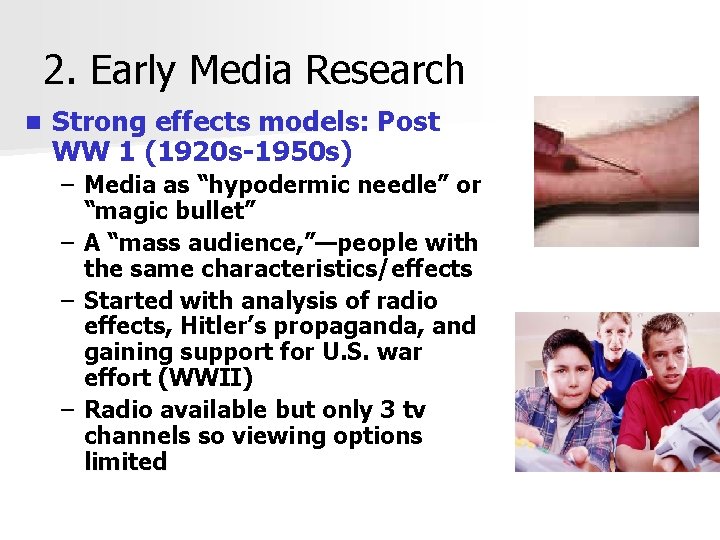
2. Early Media Research n Strong effects models: Post WW 1 (1920 s-1950 s) – Media as “hypodermic needle” or “magic bullet” – A “mass audience, ”—people with the same characteristics/effects – Started with analysis of radio effects, Hitler’s propaganda, and gaining support for U. S. war effort (WWII) – Radio available but only 3 tv channels so viewing options limited
2. Early Media Research n Limited effects models (1950 s to 1960 s) – Post WW 2—a move from focus on mass audience to demographic groups – People were seen as choice-makers—not “sponges” soaking up media’s influence – Origin of Uses and Gratifications Theory
2. Early Media Research n Summary thoughts – Strongest influence from sociology, psychology, social psychology – Strong basis in scientific method, “media effects” paradigm – A change over the years in how strong media’s influence is – Began in early 1900 s, but focus continues today
3. Scientific View of Face-to-Face Communication n Persuasion – A move from “rhetoric” (analysis of speeches) to “variables” § Both in change of attitudes/beliefs (traditional persuasion) and change in behavior (compliance gaining—more recently) – Some early writers (1930 s-1950 s) § Kurt Lewin: Small group interaction, group leadership, gatekeeping, networks § Carl Hovland: Persuasion, source credibility, 2 -sided messages
3. Scientific View of Face-to-Face Communication n Relationship research – Self-disclosure (Jourard, 1960 s) – Relational growth: (1970 s) § Altman & Taylor: Social penetration theory § Thibaut & Kelley: Social exchange theory § Berger & Calabrese: Uncertainty reduction theory
3. 5 Sociological View of Face-to. Face Communication (Metts add) n Goffman – Face and facework n Brown & Levinson (socio-linguists) – Politeness theory n Scheflen – Quasi-courtship behaviors – Body language and social order: Communication as behavioral control
4. Sociology of Culture n Chicago School (of Sociology) – View: communication creates culture – Social reality as process, not effect; “social construction of reality” (Berger & Luckmann, 1969) n Symbolic Interactionism & Media – We co-create reality through messages – Media messages are part of the process of reality construction
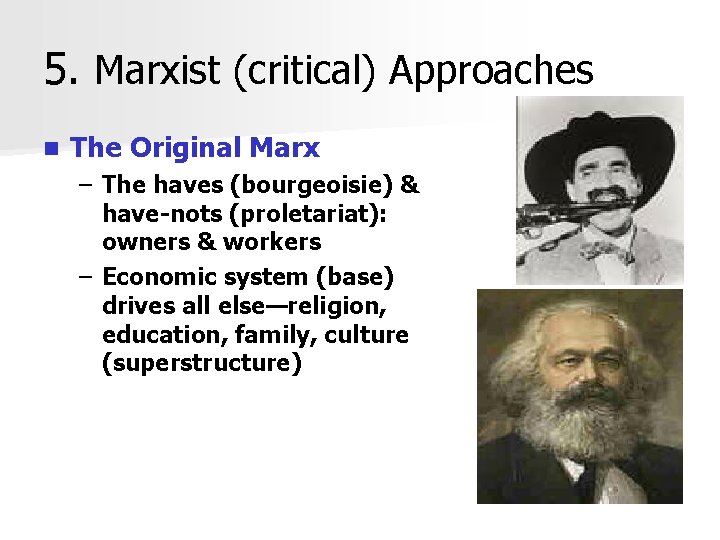
5. Marxist (critical) Approaches n The Original Marx – The haves (bourgeoisie) & have-nots (proletariat): owners & workers – Economic system (base) drives all else—religion, education, family, culture (superstructure)
5. Marxist (critical) Approaches, cont. n Modified Marxism (1970’s to present) – – It’s not just class, but race, sex, etc. Oppression not always deliberate Cultural studies, feminism, semiotics Focus on group-held power, oppression (racism, classism, sexism), empowerment, resistence – Media studies take a humanistic and critical turn!
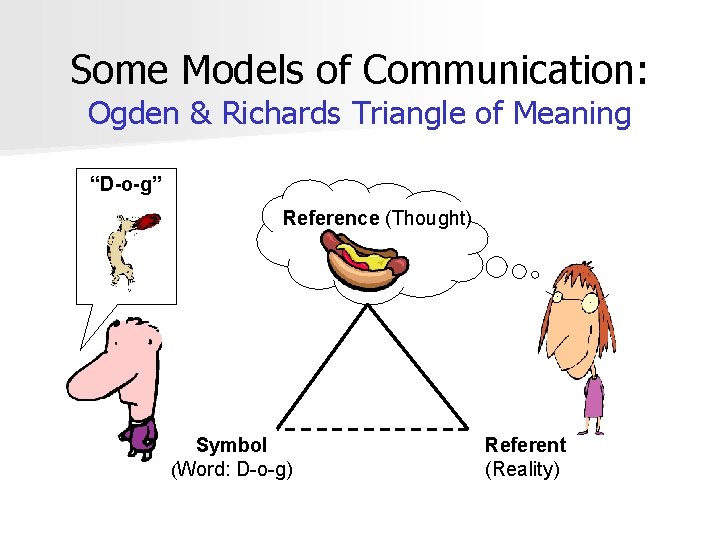
Some Models of Communication: Ogden & Richards Triangle of Meaning “D-o-g” Reference (Thought) Symbol (Word: D-o-g) Referent (Reality)
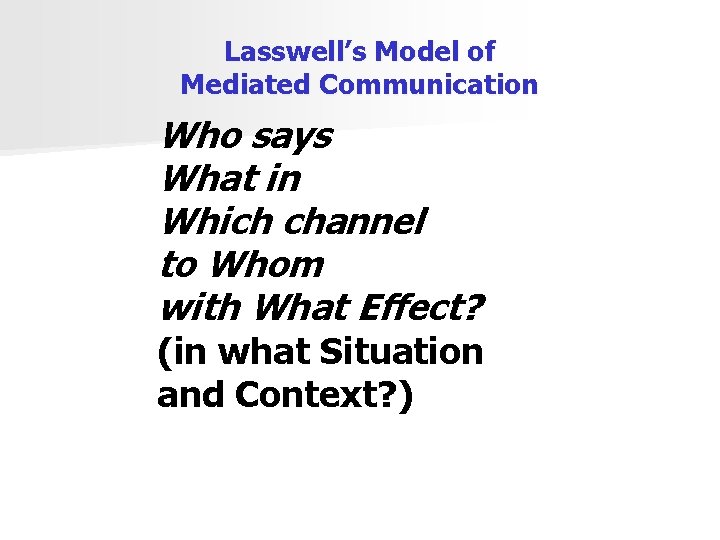
Lasswell’s Model of Mediated Communication Who says What in Which channel to Whom with What Effect? (in what Situation and Context? )
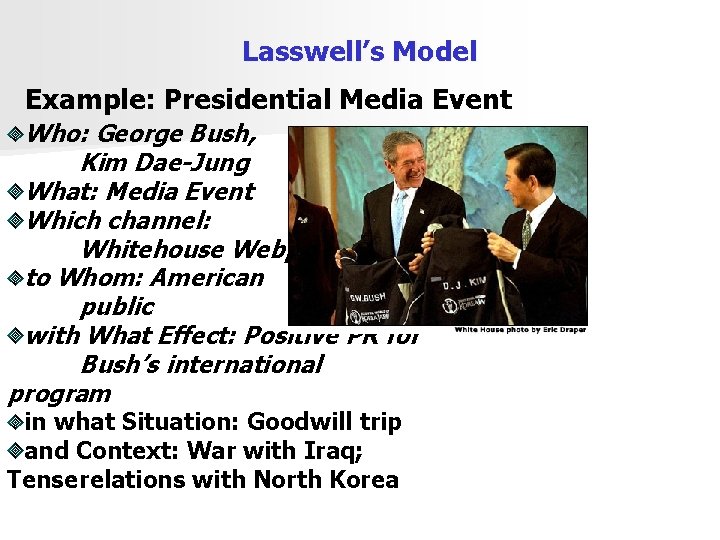
Lasswell’s Model Example: Presidential Media Event Who: George Bush, Kim Dae-Jung What: Media Event Which channel: Whitehouse Webpage to Whom: American public with What Effect: Positive PR for Bush’s international program in what Situation: Goodwill trip and Context: War with Iraq; Tenserelations with North Korea
Extensions of Lasswell n Technological Determinism (Mc. Luhan): “The medium is the message” (medium (influences) everything else) n Media Ecology Theory: TV (and other changes in media) harmful societal effects (e. g. , texting, SNS relationships? )
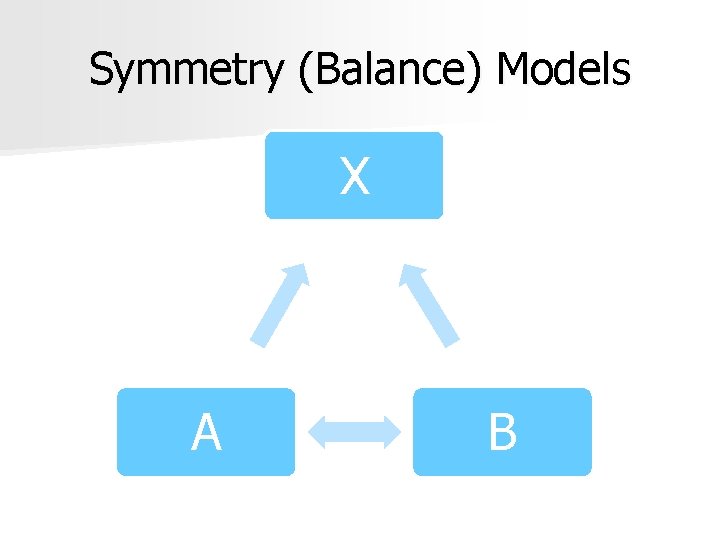
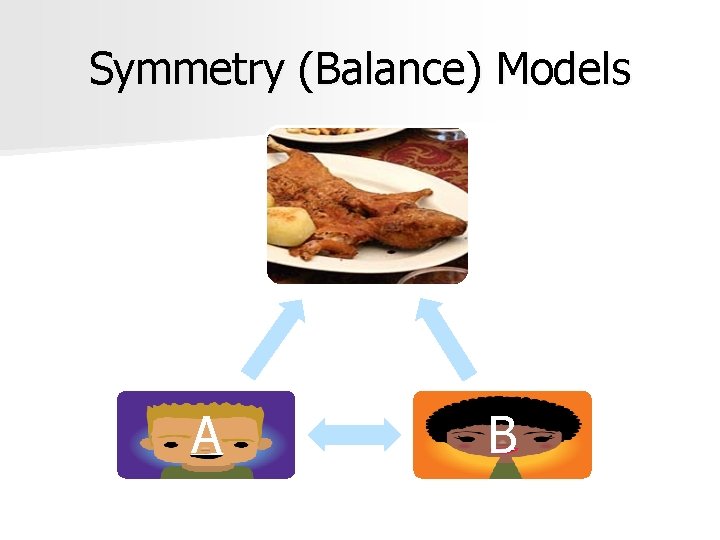
Symmetry (Balance) Models X A B
Symmetry (Balance) Models A B
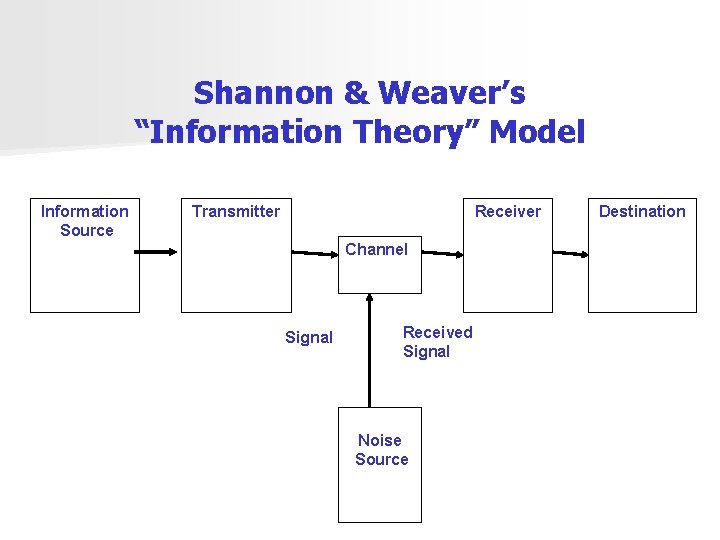
Shannon & Weaver’s “Information Theory” Model Information Source Transmitter Receiver Channel Signal Received Signal Noise Source Destination
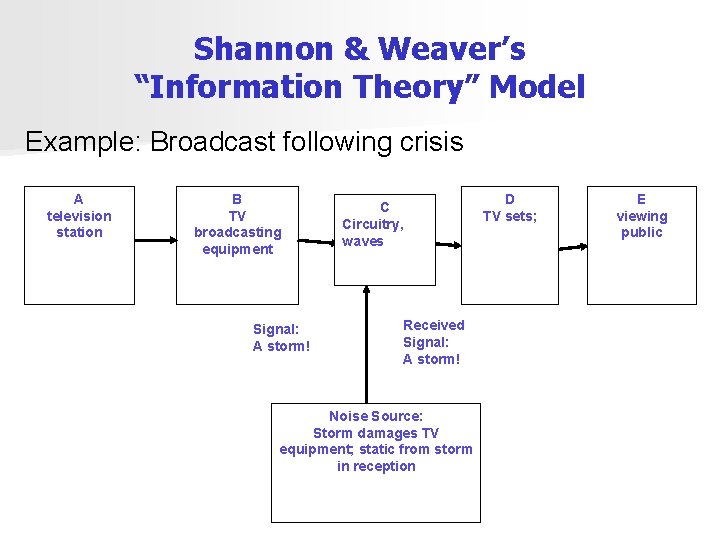
Shannon & Weaver’s “Information Theory” Model Example: Broadcast following crisis A television station B TV broadcasting equipment Signal: A storm! C Circuitry, waves Received Signal: A storm! Noise Source: Storm damages TV equipment; static from storm in reception D TV sets; E viewing public
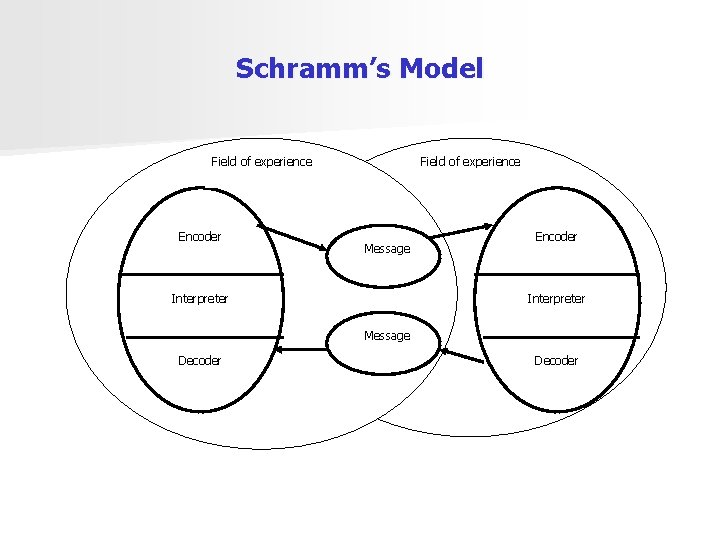
Schramm’s Model Field of experience Encoder Field of experience Message Interpreter Encoder Interpreter Message Decoder
Schramm’s Model Example: Broadcast Reporting (medical) Field of experience: Limited medical experience Field of experience: Expertise in medical field Encoder Message Interpreter Encoder Interpreter Message Decoder
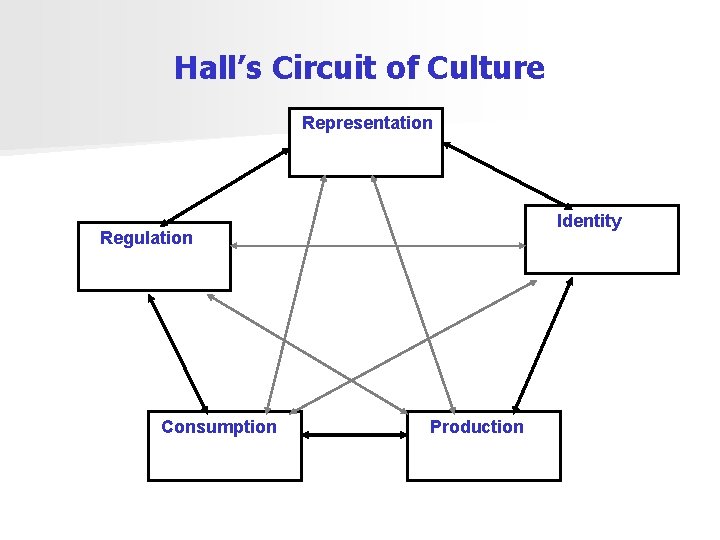
Hall’s Circuit of Culture Representation Identity Regulation Consumption Production
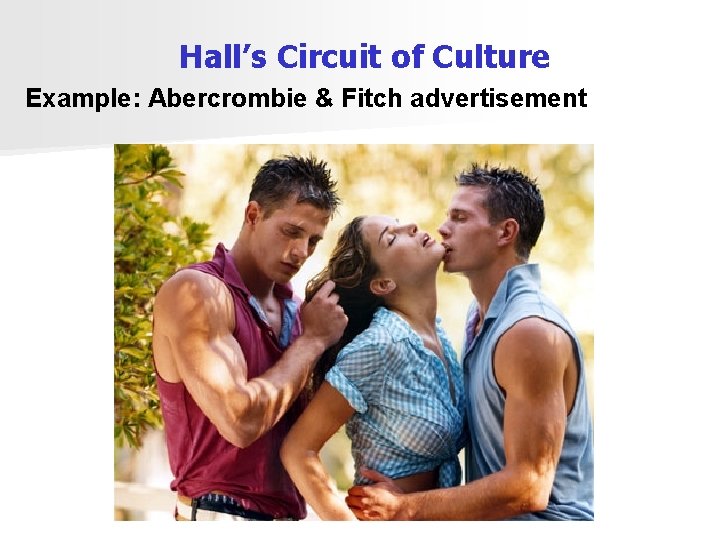
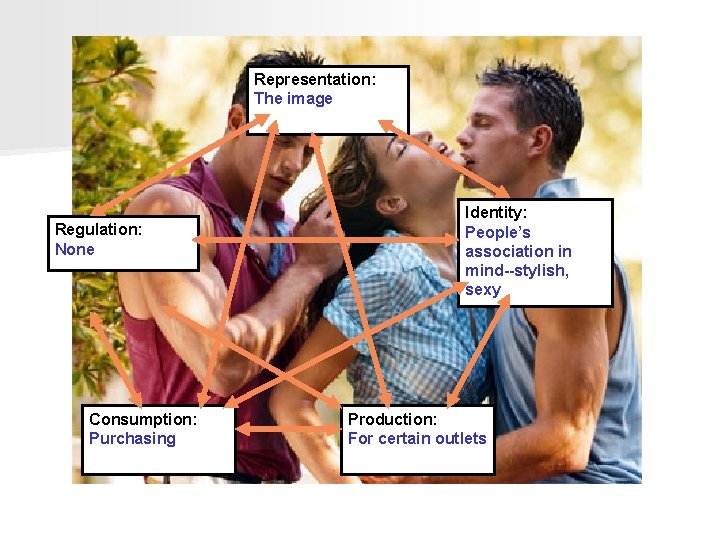
Hall’s Circuit of Culture Example: Abercrombie & Fitch advertisement
Representation: The image Regulation: None Consumption: Purchasing Identity: People’s association in mind--stylish, sexy Production: For certain outlets