
History of Psychology and Research Methods What is


- Slides: 54
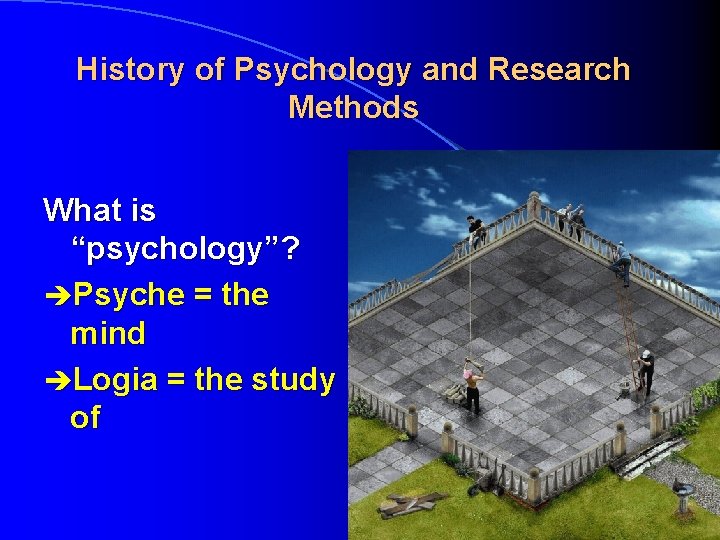
History of Psychology and Research Methods What is “psychology”? èPsyche = the mind èLogia = the study of
Encompasses: èBehavior, motivation, and emotion èSenses and perception èBiological processes (brain and nervous system) èIntelligence èPersonality èMemory èAbility to learn èConsciousness èMaladaption and its treatment
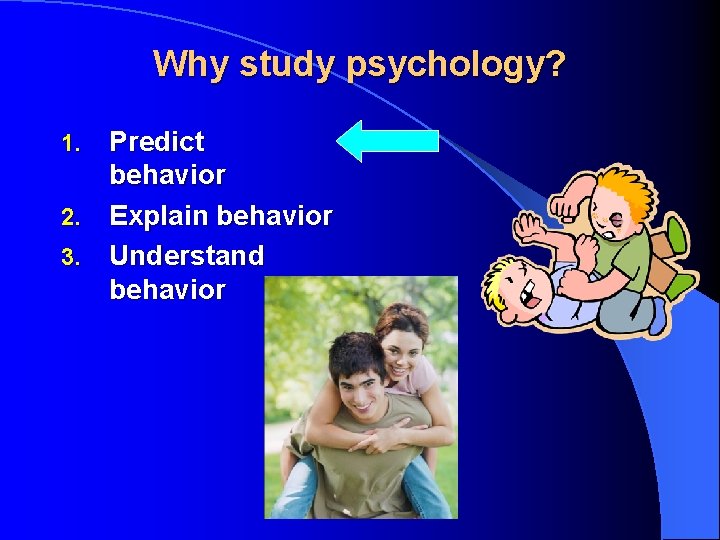
Why study psychology? Predict behavior 2. Explain behavior 3. Understand behavior 1.
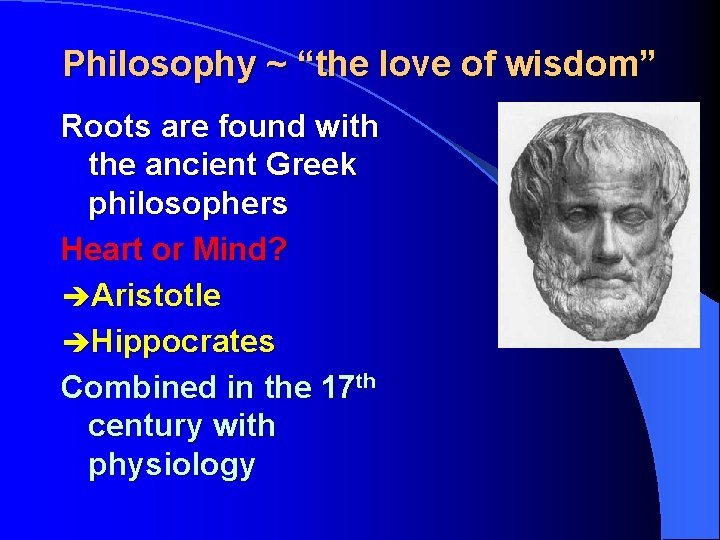
Philosophy ~ “the love of wisdom” Roots are found with the ancient Greek philosophers Heart or Mind? èAristotle èHippocrates Combined in the 17 th century with physiology
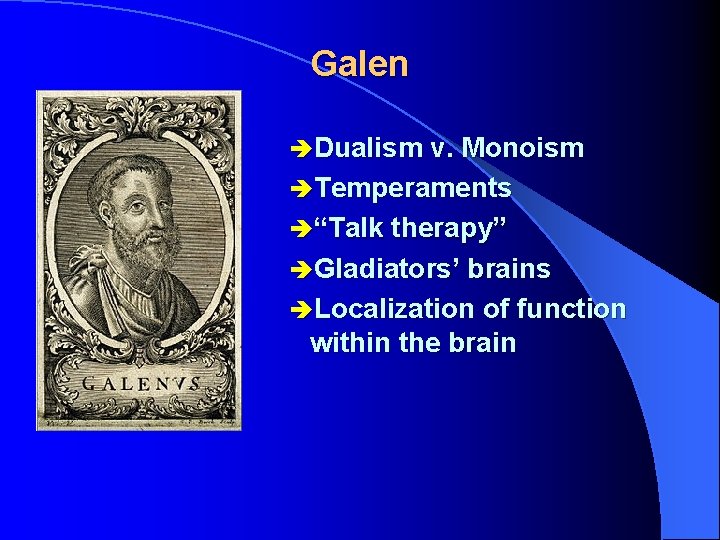
Galen èDualism v. Monoism èTemperaments è“Talk therapy” èGladiators’ brains èLocalization of function within the brain
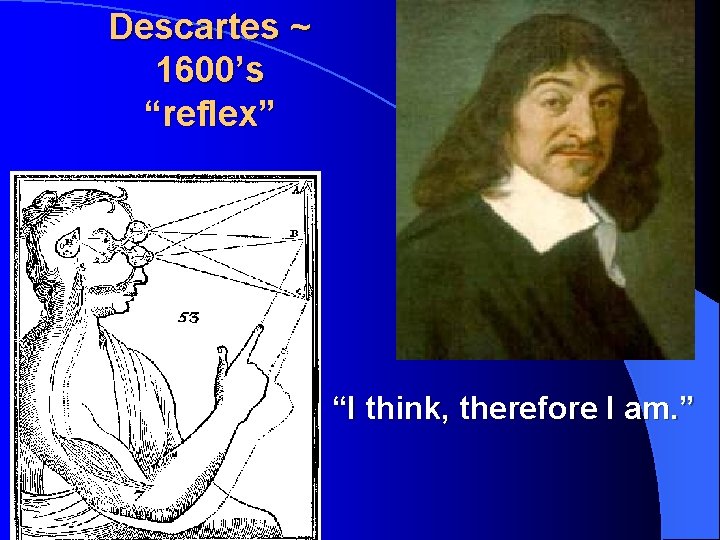
Descartes ~ 1600’s “reflex” “I think, therefore I am. ”
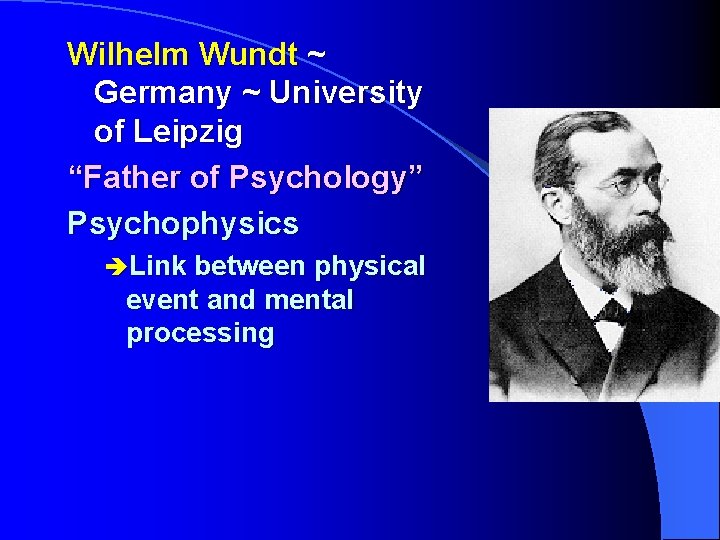
Wilhelm Wundt ~ Germany ~ University of Leipzig “Father of Psychology” Psychophysics èLink between physical event and mental processing
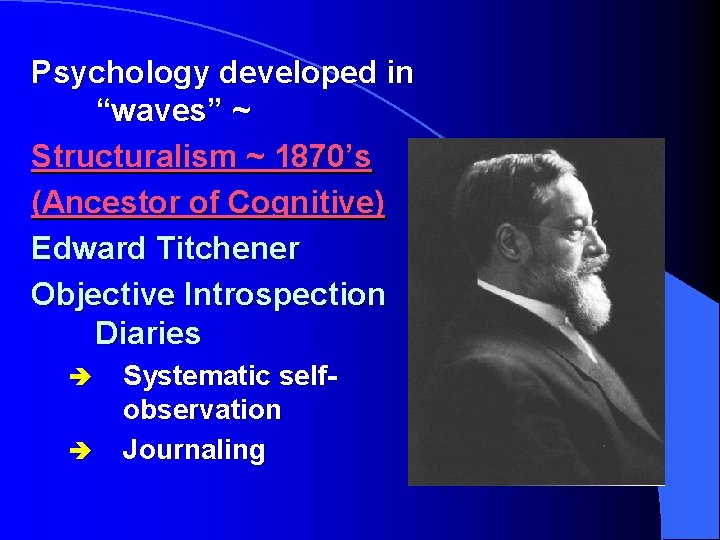
Psychology developed in “waves” ~ Structuralism ~ 1870’s (Ancestor of Cognitive) Edward Titchener Objective Introspection Diaries è è Systematic selfobservation Journaling
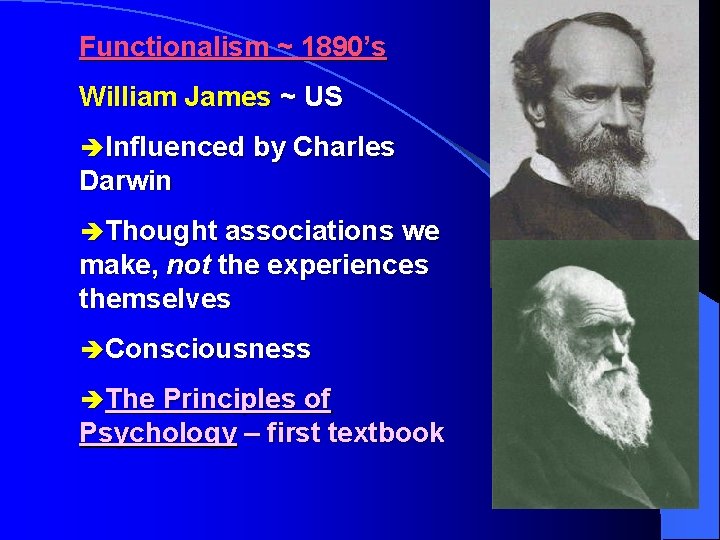
Functionalism ~ 1890’s William James ~ US èInfluenced by Charles Darwin èThought associations we make, not the experiences themselves èConsciousness èThe Principles of Psychology – first textbook
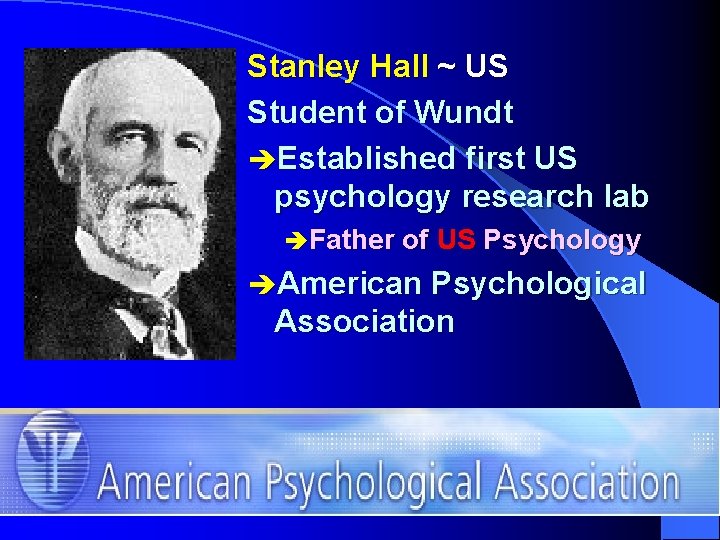
Stanley Hall ~ US Student of Wundt èEstablished first US psychology research lab èFather of US Psychology èAmerican Psychological Association
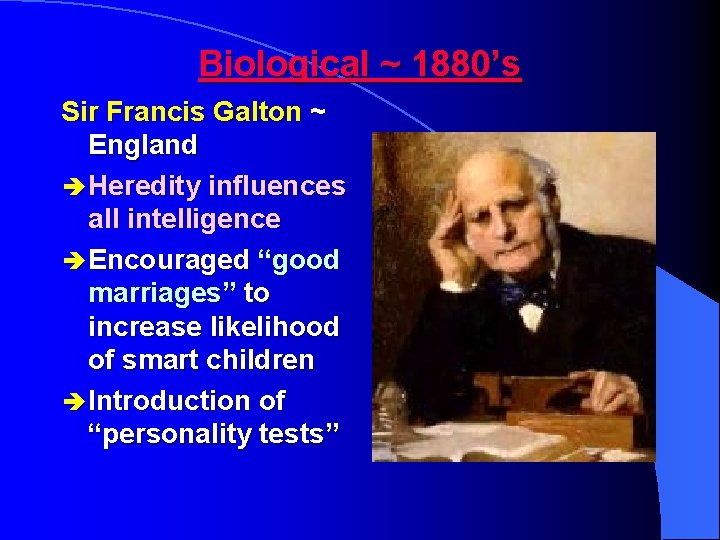
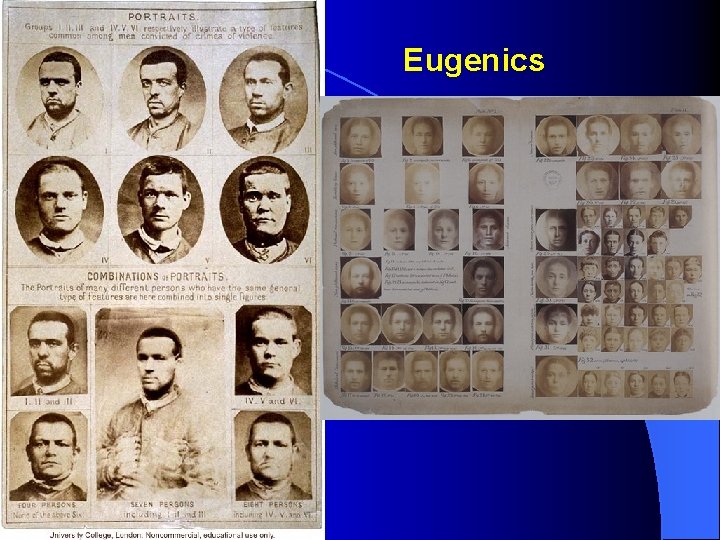
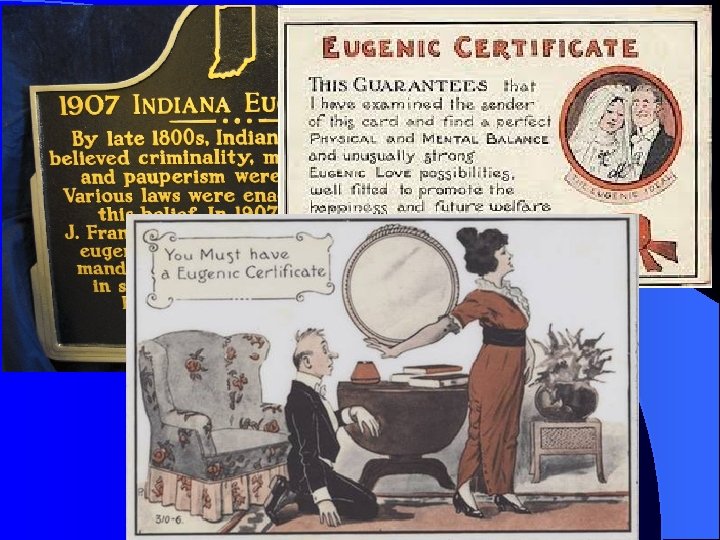
Biological ~ 1880’s Sir Francis Galton ~ England è Heredity influences all intelligence è Encouraged “good marriages” to increase likelihood of smart children è Introduction of “personality tests”
Eugenics
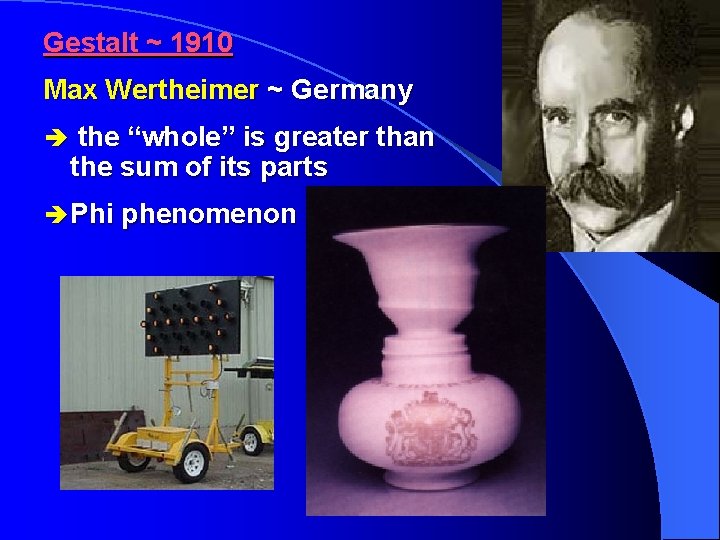
Gestalt ~ 1910 Max Wertheimer ~ Germany è the “whole” is greater than the sum of its parts è Phi phenomenon
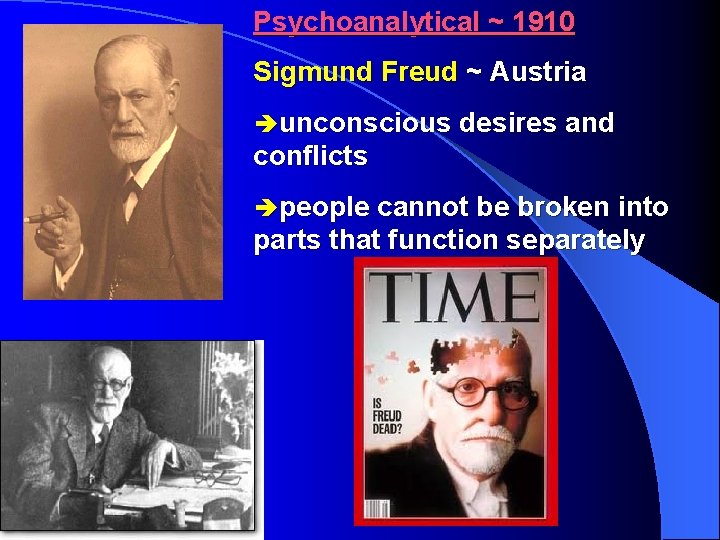
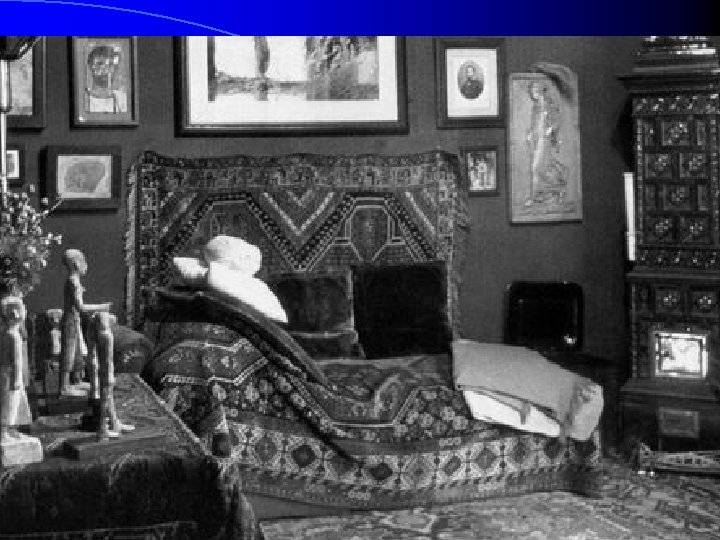
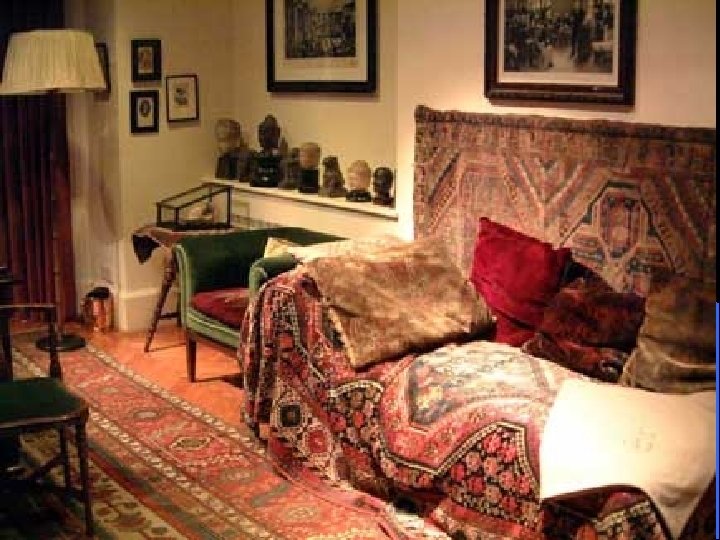
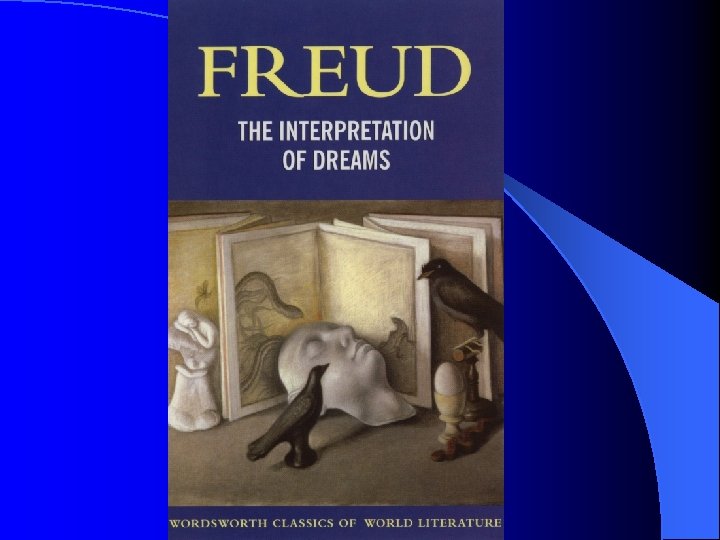
Psychoanalytical ~ 1910 Sigmund Freud ~ Austria èunconscious desires and conflicts èpeople cannot be broken into parts that function separately
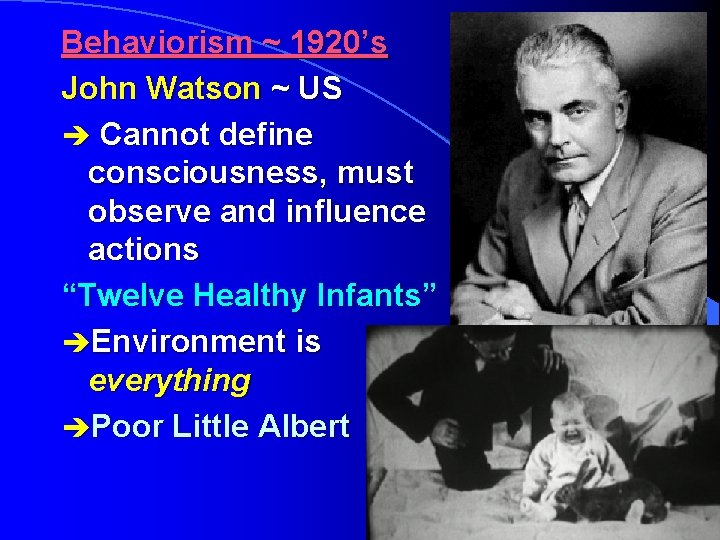
Behaviorism ~ 1920’s John Watson ~ US è Cannot define consciousness, must observe and influence actions “Twelve Healthy Infants” èEnvironment is everything èPoor Little Albert
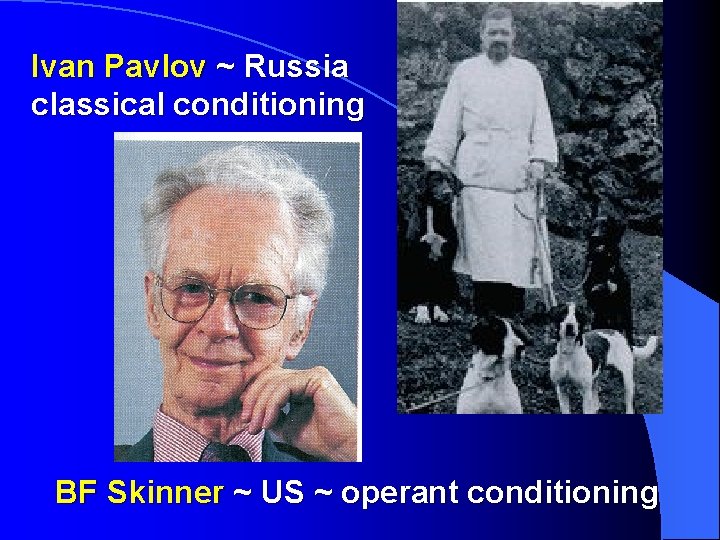
Ivan Pavlov ~ Russia classical conditioning BF Skinner ~ US ~ operant conditioning
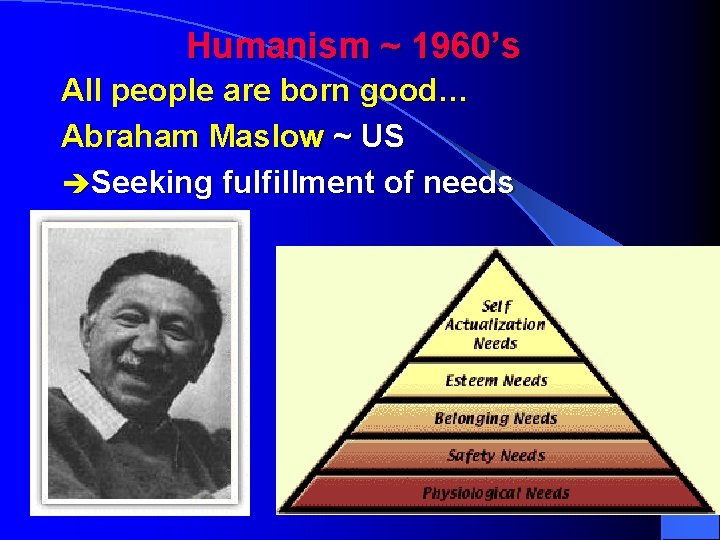
Humanism ~ 1960’s All people are born good… Abraham Maslow ~ US èSeeking fulfillment of needs èHierarchy
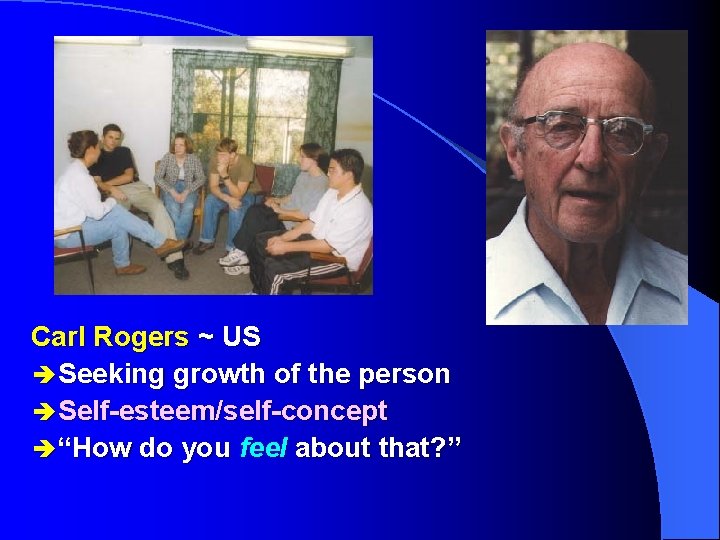
Carl Rogers ~ US è Seeking growth of the person è Self-esteem/self-concept è “How do you feel about that? ”
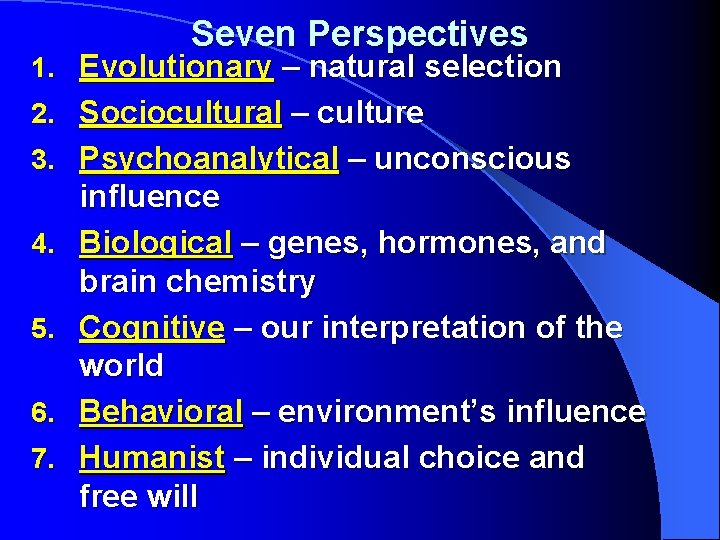
Seven Perspectives 1. Evolutionary – natural selection 2. Sociocultural – culture 3. Psychoanalytical – unconscious 4. 5. 6. 7. influence Biological – genes, hormones, and brain chemistry Cognitive – our interpretation of the world Behavioral – environment’s influence Humanist – individual choice and free will
Types of Psychology 1. Developmental – human physical and mental growth 2. Physiological – biological bases for behavior è Neuropsychologist- brain/nervous system (structure) è Psychobiologist – biochemistry è Behavior geneticist – nature/nurture
3. Practicing è Counseling (Masters) – normal adjustments è Clinical (Ph. D) – diagnosis/more severe cases è Psychiatrist (MD) – medical doctor (see most severe cases) 4. 5. 6. Social – people influencing one another Industrial/Organizational – productivity Cognitive – human thought process 7. Educational 8. Forensic – applied to crime
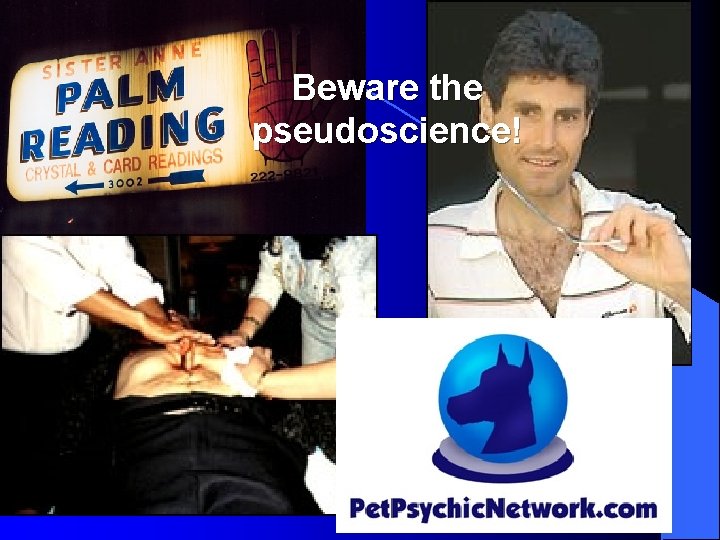
Beware the pseudoscience!
Basic science. Scientific research for the sake of advancing knowledge Applied science. Research focused on improving conditions or solving problems
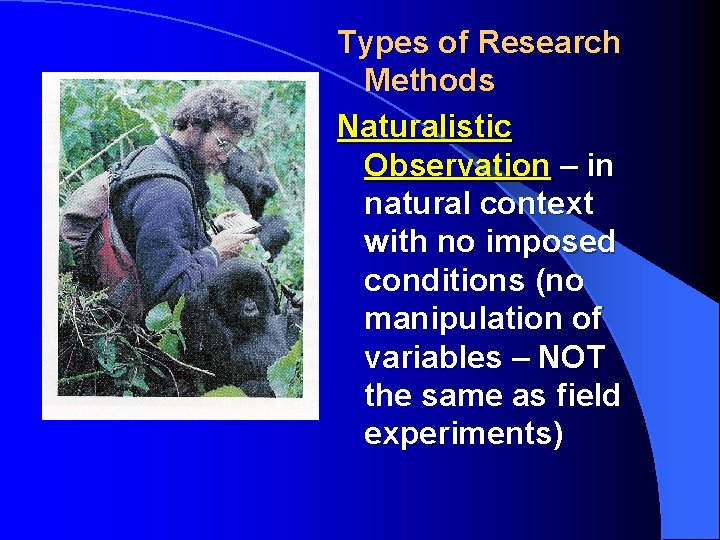
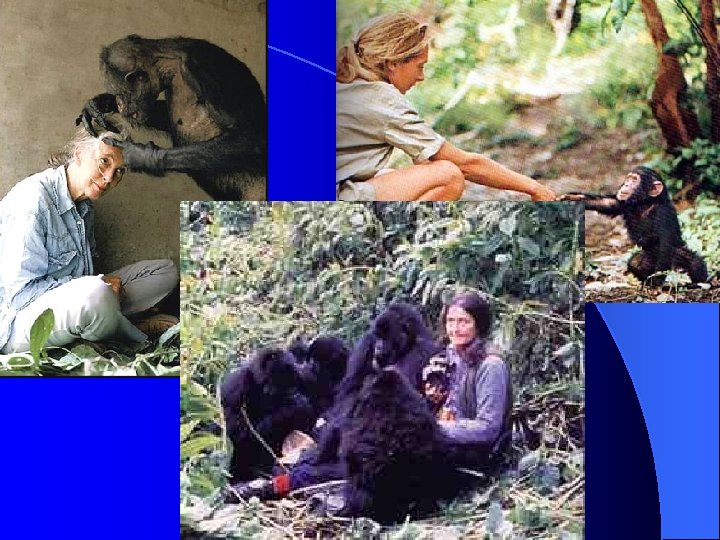
Types of Research Methods Naturalistic Observation – in natural context with no imposed conditions (no manipulation of variables – NOT the same as field experiments)
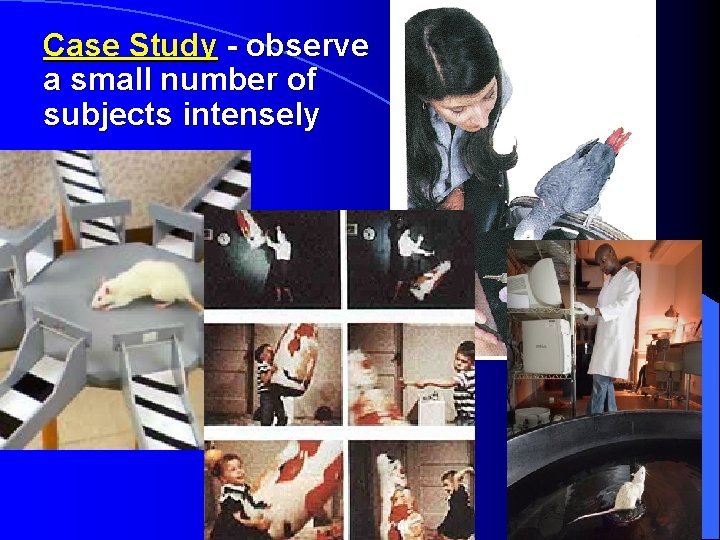
Case Study - observe a small number of subjects intensely
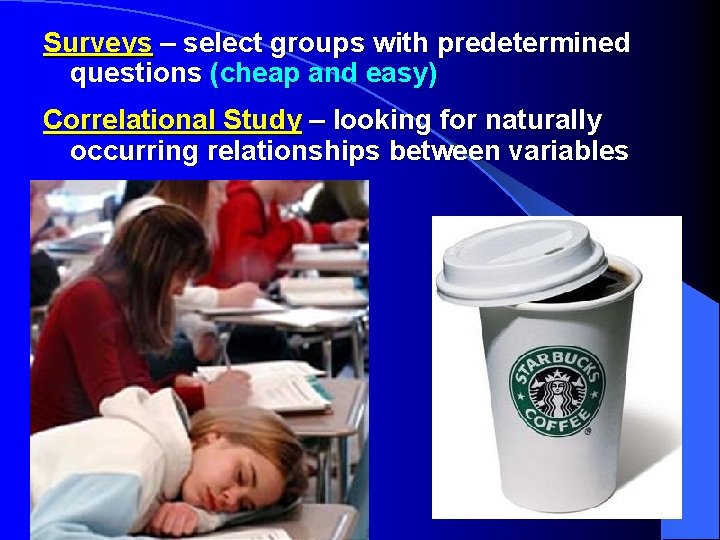
Surveys – select groups with predetermined questions (cheap and easy) Correlational Study – looking for naturally occurring relationships between variables
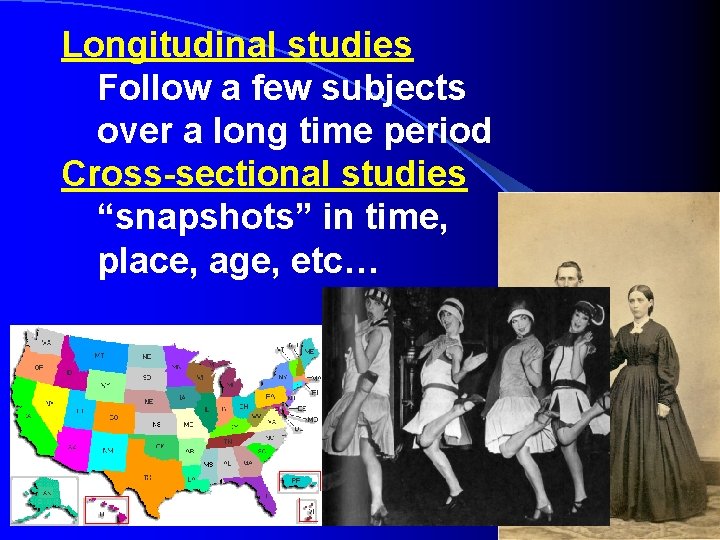
Longitudinal studies Follow a few subjects over a long time period Cross-sectional studies “snapshots” in time, place, age, etc…
Experiments èValidity = measures what you set out to measure • Criteria – predictive • Content – achievement èReliability = is it consistent • Test/Retest • Split half • Correlation coefficient
Experimentation in psychology The Scientific Method Theory ~ set of principles that organize and predict behavior/event ~ often leads to: Hypothesis ~ prediction of a relationship between two variables
Let’s run through this…. èTheory! “Studying might lead to better grades in school. ” èHypothesis – “The amount of time spent reviewing lecture notes has a positive correlation with class grades. ”
Research ~ preparation (Has this been done before? ) Experiment è Lab ~ controlled environment, but not always realistic è Field ~ more realistic results, but hard to control Examine results Rule of “T H R E E”
Meta-analysis (Replication) Following another’s work to re-examine results “Does therapy cure mental illness? ” v. “Does therapy improve lives of people with mental illness? ”
Research terms to know: Independent variable – manipulated Dependent variable – watched for changes Operationalize (Operational Definition) – explaining the variable in SPECIFIC terms
Experimental group – subjects that are changed Control group – subjects that are used only for comparison **Remember that the goal of research is NOT to PROVE a hypothesis – it is to support or disprove one.
Selecting your sample (group of subjects): Population – who/what will be included in the study Representative sample - reflects the larger population – allows researchers to generalize results Selections: èSHOULD be random (all must have equal chance to be picked!) ècan be representational (proportional) ècan be stratified (using statistics to assure sample is representative)
Look out for: Experimenter bias ~ tendency of researcher to treat control/experimental groups differently – not always conscious (Hawthorne effect) Subject bias ~ try to give answers the researcher wants to hear (social desirability) Hindsight bias ~ “I knew it all along!”
Confounding variable ~ Influence you didn’t anticipate Pygmalion Effect ~ teacher sees in students exactly what she wishes to see Placebo Effect ~ if you think it works, it just might
Ways to control bias Single blind procedure ~ subject is unaware Double blind procedure ~ eliminates both experimenter and subject bias Rosenthal & Jacobson Study
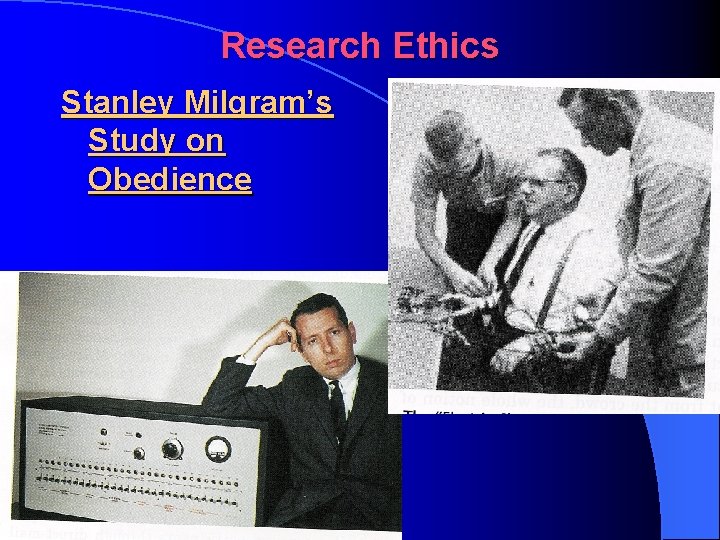
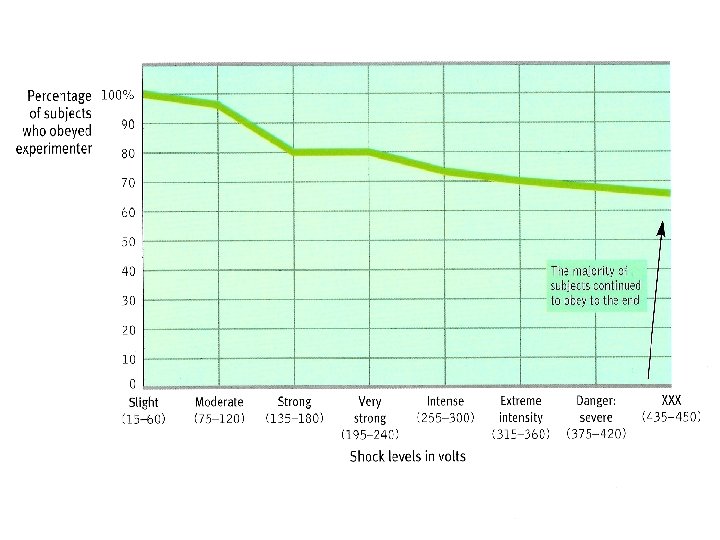
Research Ethics Stanley Milgram’s Study on Obedience
APA Guidelines for Human Research: èInformed consent èNo deception on nature of study èNo coercion èParticipants’ identities must be protected èNo significant risk of physical/mental harm èParticipants must be told of purpose and results “First, do no harm”
APA Guidelines for Animal Research: Can be placed at greater risk, including mortality èMust be acquired legally èHoused and cared for humanely èOnly necessary pain èEuthanized humanely
Statistical Analysis Frequency distribution – summarize data – easy to turn into graphs, histograms, etc. . Mean - average Median – “middle” number Mode – most frequent
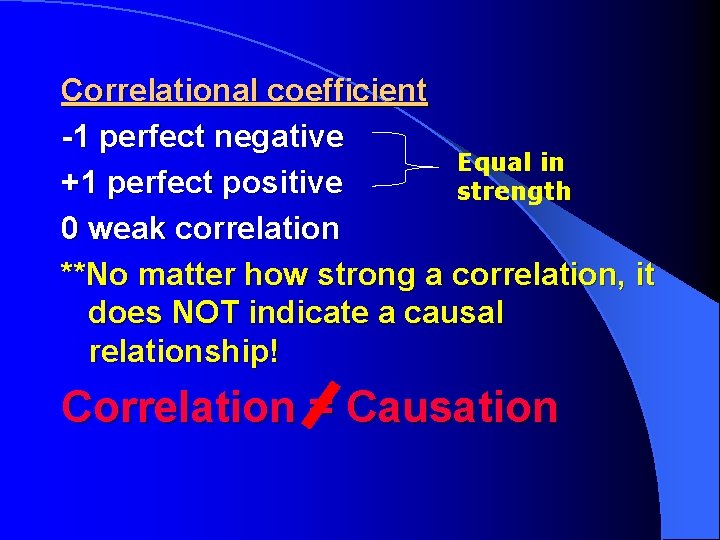
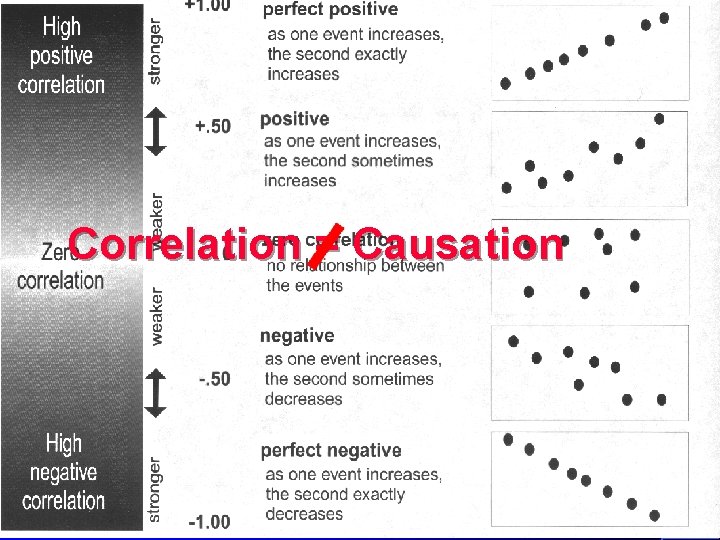
Correlational coefficient -1 perfect negative Equal in +1 perfect positive strength 0 weak correlation **No matter how strong a correlation, it does NOT indicate a causal relationship! Correlation = Causation
Correlation = Causation
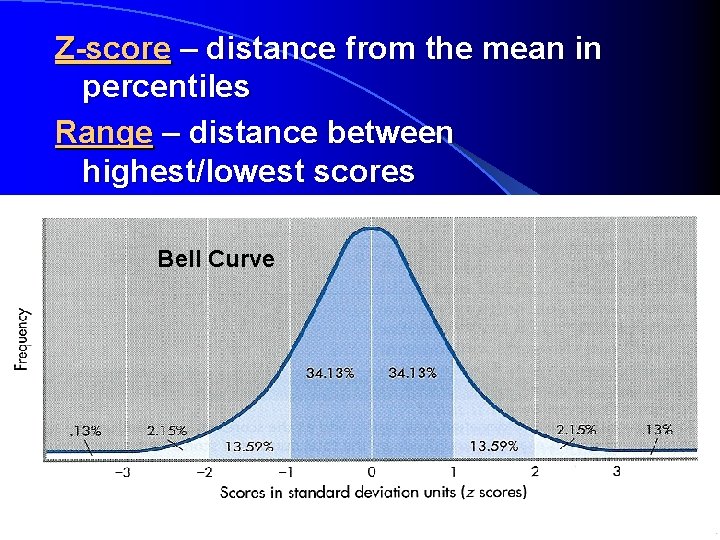
Z-score – distance from the mean in percentiles Range – distance between highest/lowest scores Bell Curve
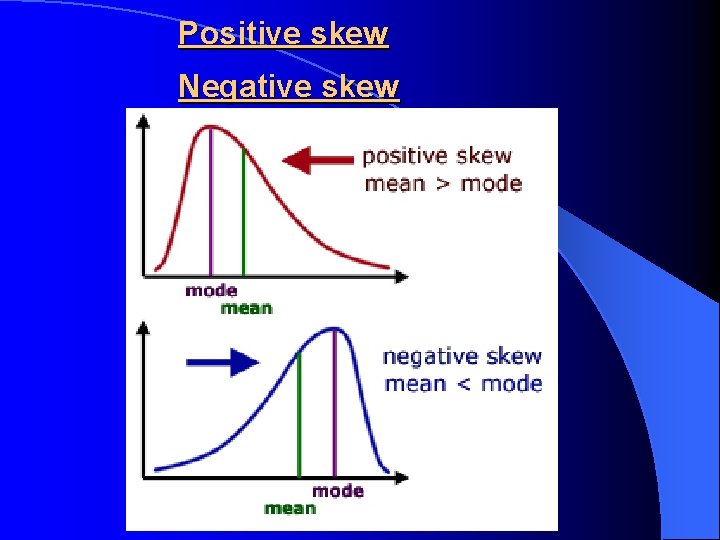
Positive skew Negative skew
Statistical Measurement èUse to determine the probability that an observed difference between two conditions is due to chance èYou want a measure of p<. 05 for validity èLevels of p <. 01 are significant