
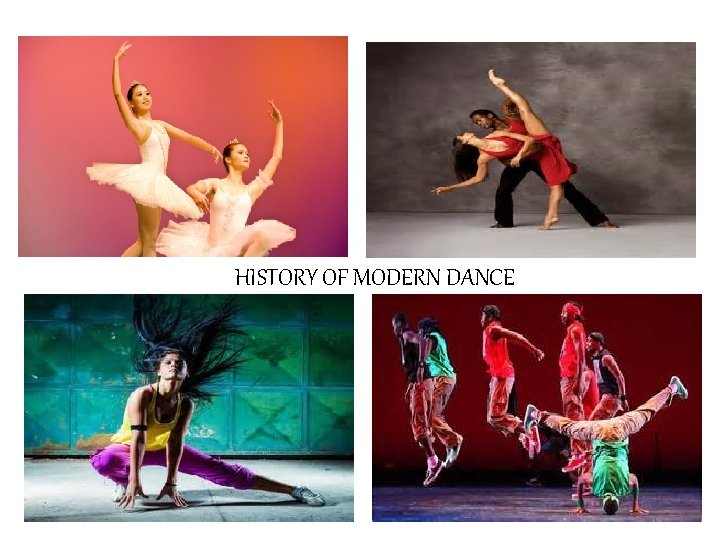
HISTORY OF MODERN DANCE History of Modern Dance
- Slides: 14
HISTORY OF MODERN DANCE
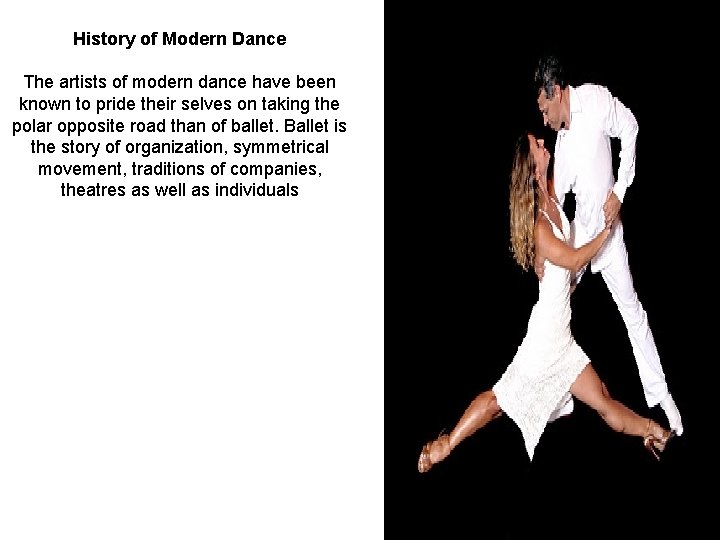
History of Modern Dance The artists of modern dance have been known to pride their selves on taking the polar opposite road than of ballet. Ballet is the story of organization, symmetrical movement, traditions of companies, theatres as well as individuals
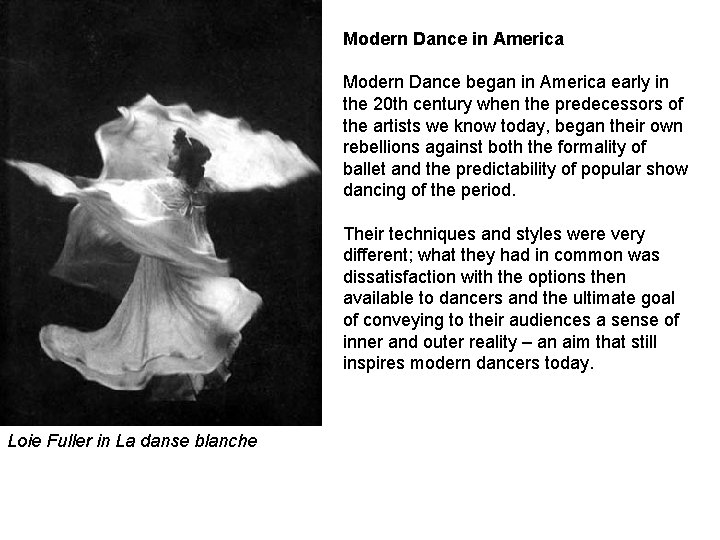
Modern Dance in America Modern Dance began in America early in the 20 th century when the predecessors of the artists we know today, began their own rebellions against both the formality of ballet and the predictability of popular show dancing of the period. Their techniques and styles were very different; what they had in common was dissatisfaction with the options then available to dancers and the ultimate goal of conveying to their audiences a sense of inner and outer reality – an aim that still inspires modern dancers today. Loie Fuller in La danse blanche
The First Generation of Modern Dance During the 1920 s, a passion for interpretive dancing swept America. The studies of excessive gesture had school children, college students and people all over the country performing a sort of simplified ballet in bare feet and flowing robes. Isadora Duncan’s fame and Denishawn’s tours had introduced audiences and dancers alike to the concept of a new form of serious theatrical dancing. The ground work had been laid for the first generation of modern dancers who began developing the art as we know it today.
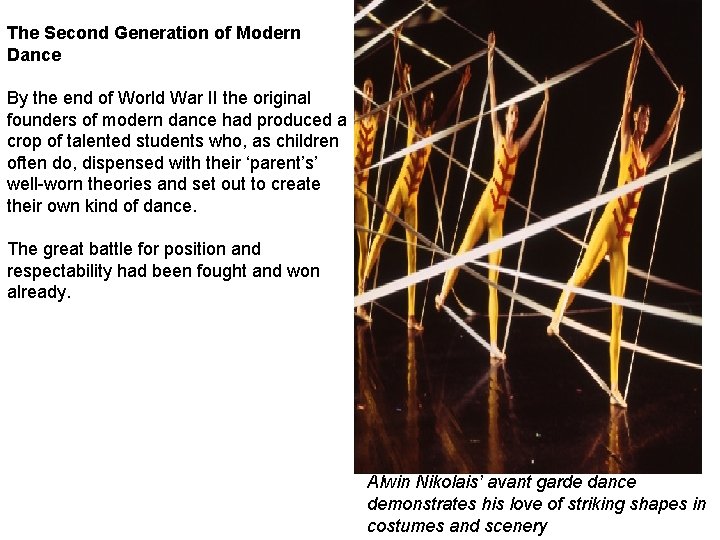
The Second Generation of Modern Dance By the end of World War II the original founders of modern dance had produced a crop of talented students who, as children often do, dispensed with their ‘parent’s’ well-worn theories and set out to create their own kind of dance. The great battle for position and respectability had been fought and won already. Alwin Nikolais’ avant garde dance demonstrates his love of striking shapes in costumes and scenery
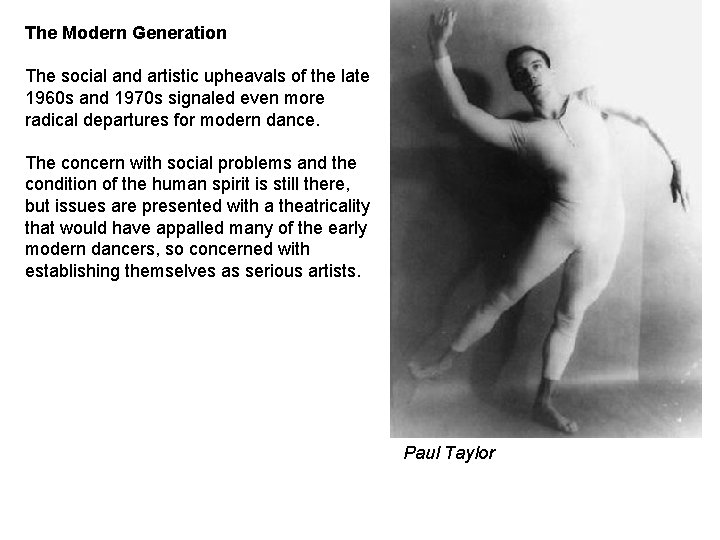
The Modern Generation The social and artistic upheavals of the late 1960 s and 1970 s signaled even more radical departures for modern dance. The concern with social problems and the condition of the human spirit is still there, but issues are presented with a theatricality that would have appalled many of the early modern dancers, so concerned with establishing themselves as serious artists. Paul Taylor
TYPES OF MODERN DANCE
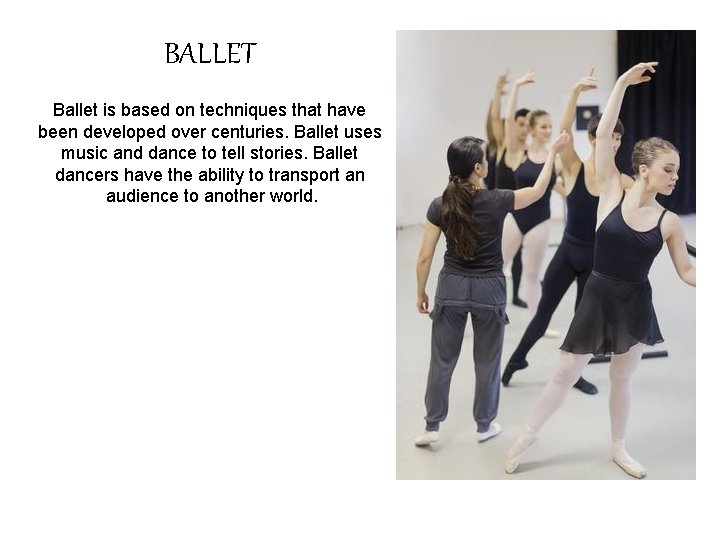
BALLET Ballet is based on techniques that have been developed over centuries. Ballet uses music and dance to tell stories. Ballet dancers have the ability to transport an audience to another world.
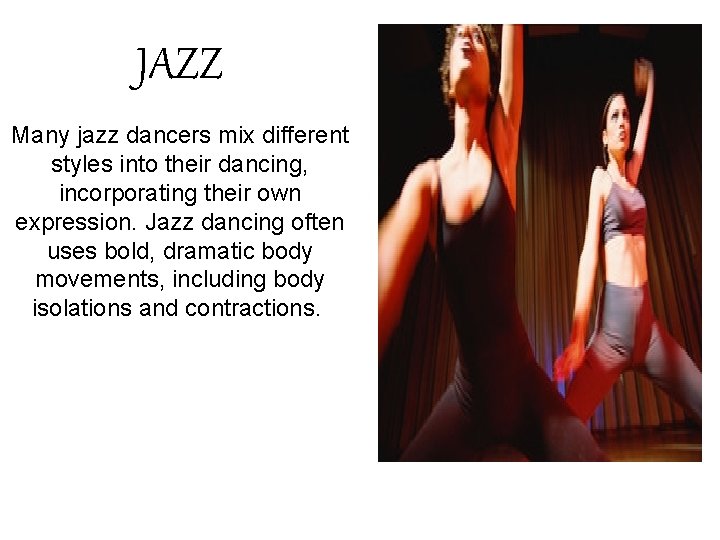
JAZZ Many jazz dancers mix different styles into their dancing, incorporating their own expression. Jazz dancing often uses bold, dramatic body movements, including body isolations and contractions.
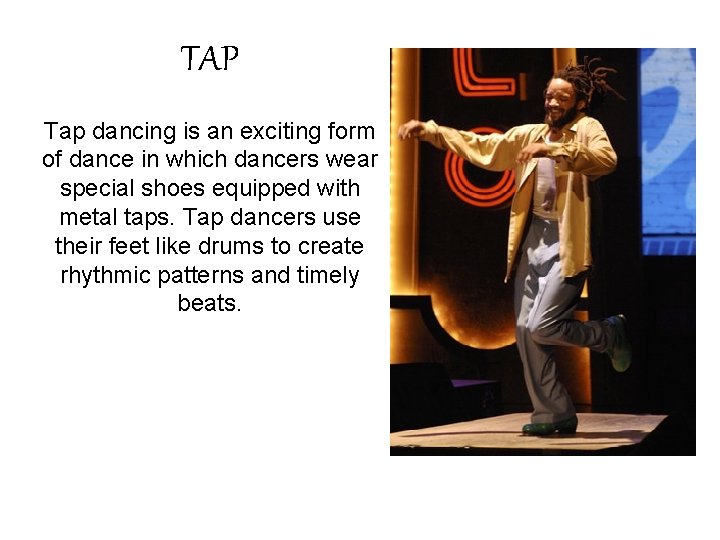
TAP Tap dancing is an exciting form of dance in which dancers wear special shoes equipped with metal taps. Tap dancers use their feet like drums to create rhythmic patterns and timely beats.
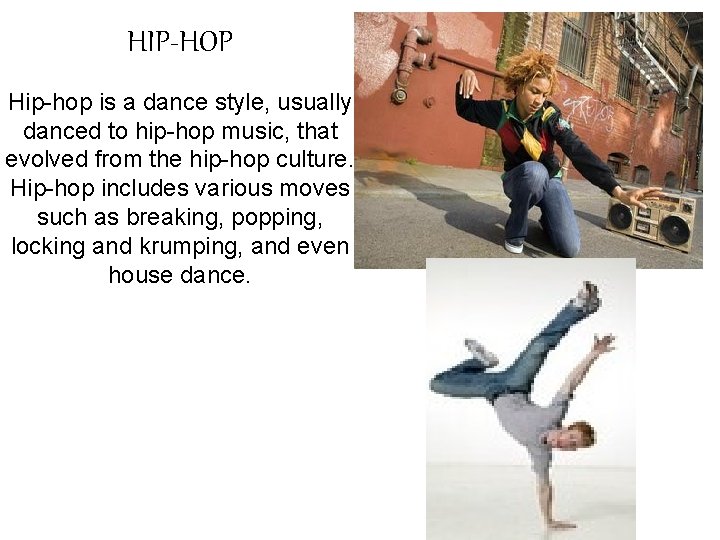
HIP-HOP Hip-hop is a dance style, usually danced to hip-hop music, that evolved from the hip-hop culture. Hip-hop includes various moves such as breaking, popping, locking and krumping, and even house dance.
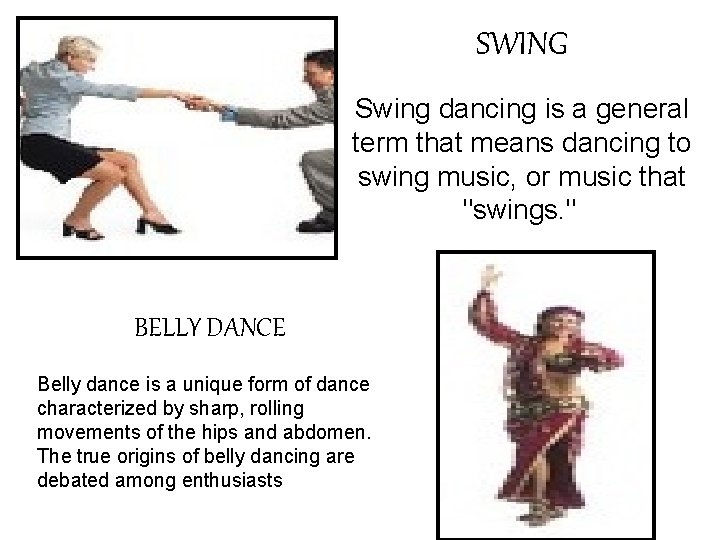
SWING Swing dancing is a general term that means dancing to swing music, or music that "swings. " BELLY DANCE Belly dance is a unique form of dance characterized by sharp, rolling movements of the hips and abdomen. The true origins of belly dancing are debated among enthusiasts
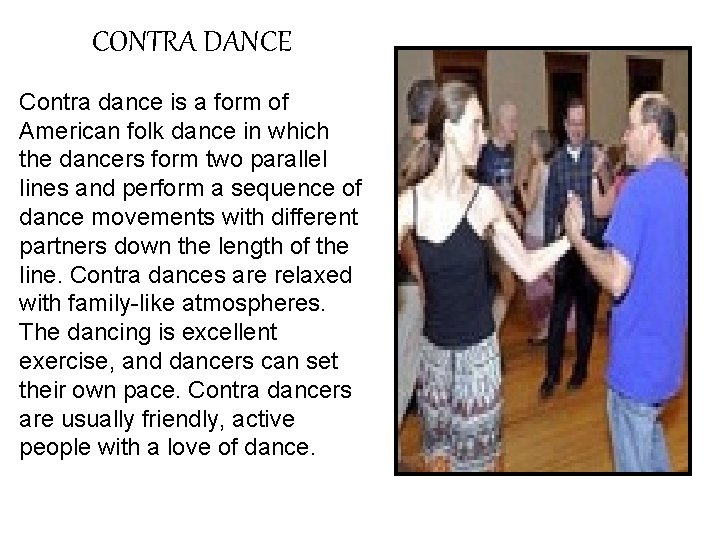
CONTRA DANCE Contra dance is a form of American folk dance in which the dancers form two parallel lines and perform a sequence of dance movements with different partners down the length of the line. Contra dances are relaxed with family-like atmospheres. The dancing is excellent exercise, and dancers can set their own pace. Contra dancers are usually friendly, active people with a love of dance.
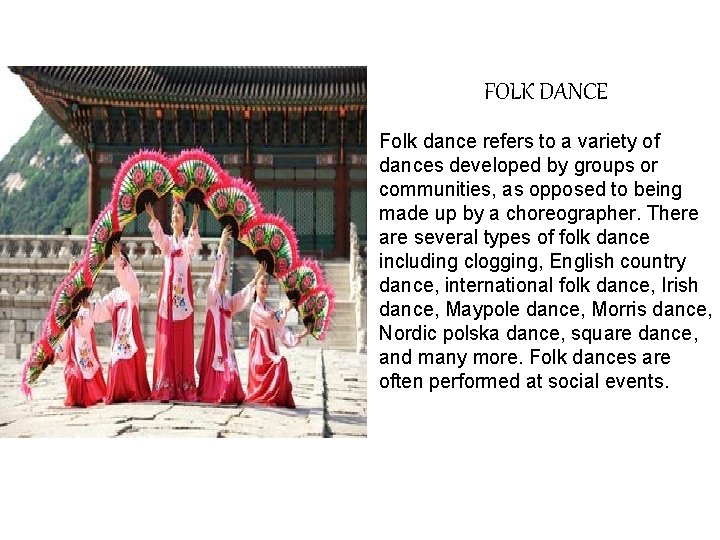
FOLK DANCE Folk dance refers to a variety of dances developed by groups or communities, as opposed to being made up by a choreographer. There are several types of folk dance including clogging, English country dance, international folk dance, Irish dance, Maypole dance, Morris dance, Nordic polska dance, square dance, and many more. Folk dances are often performed at social events.