
History of Microprocessors and Microcontrollers Lecture 1 1

- Slides: 43
History of Microprocessors and Microcontrollers Lecture 1. 1
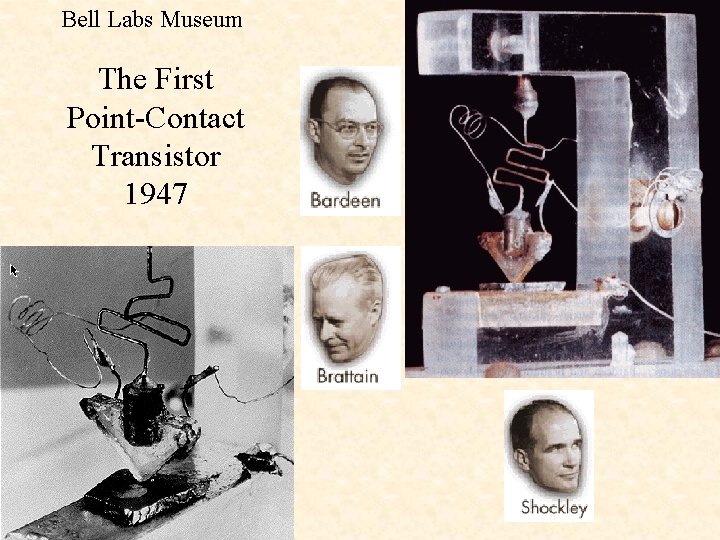
Bell Labs Museum The First Point-Contact Transistor 1947
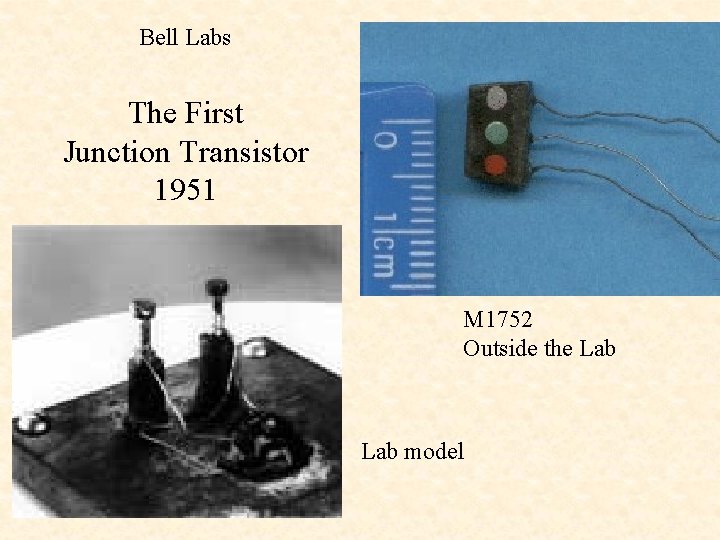
Bell Labs The First Junction Transistor 1951 M 1752 Outside the Lab model
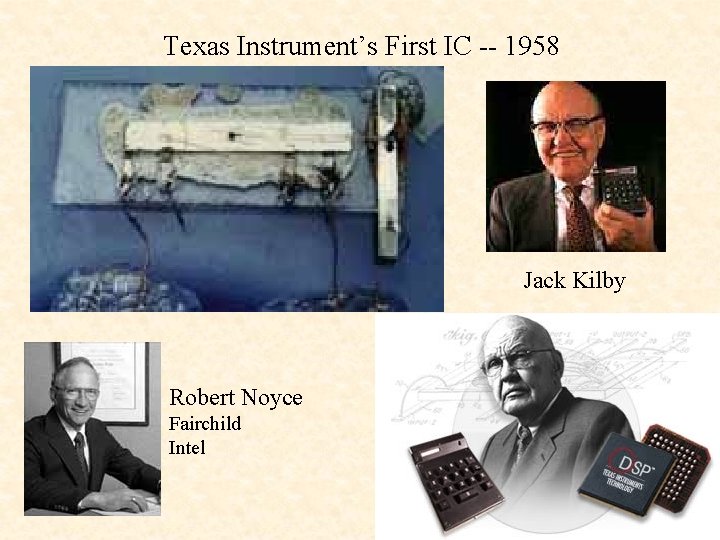
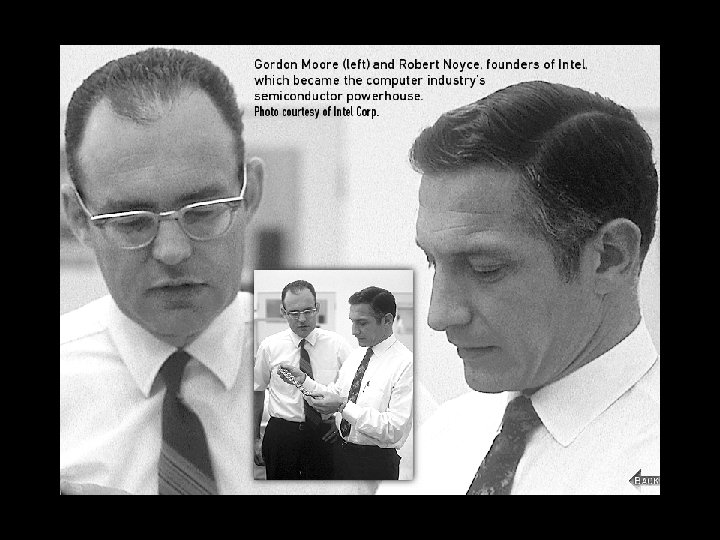
Texas Instrument’s First IC -- 1958 Jack Kilby Robert Noyce Fairchild Intel
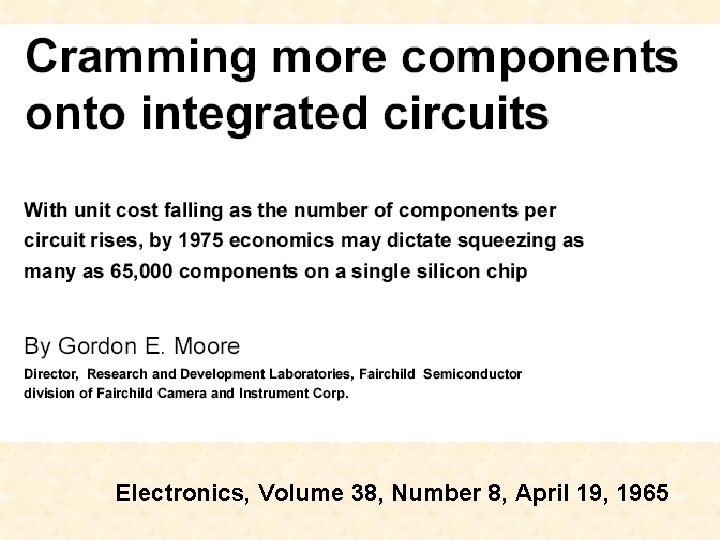
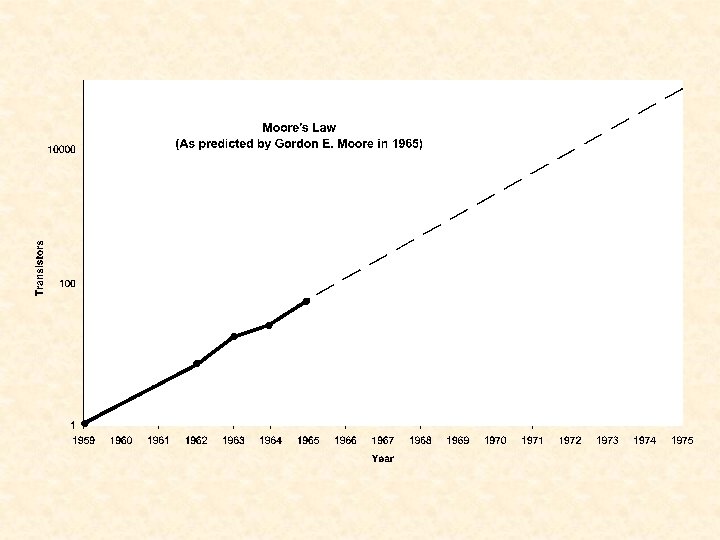
Electronics, Volume 38, Number 8, April 19, 1965
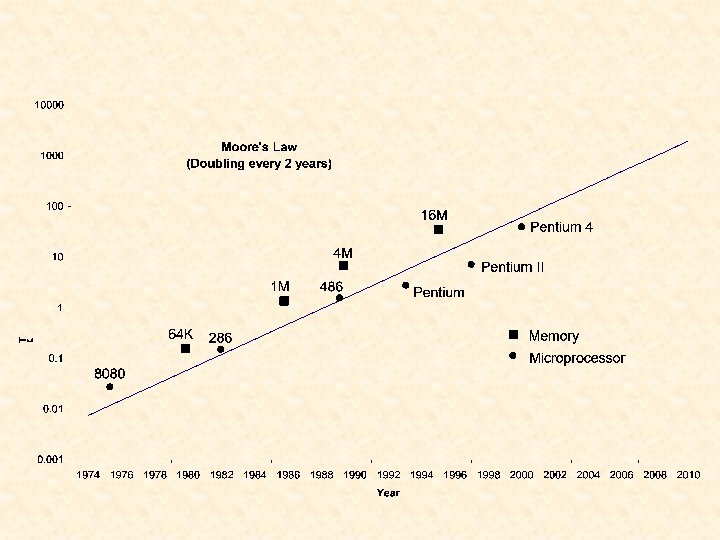
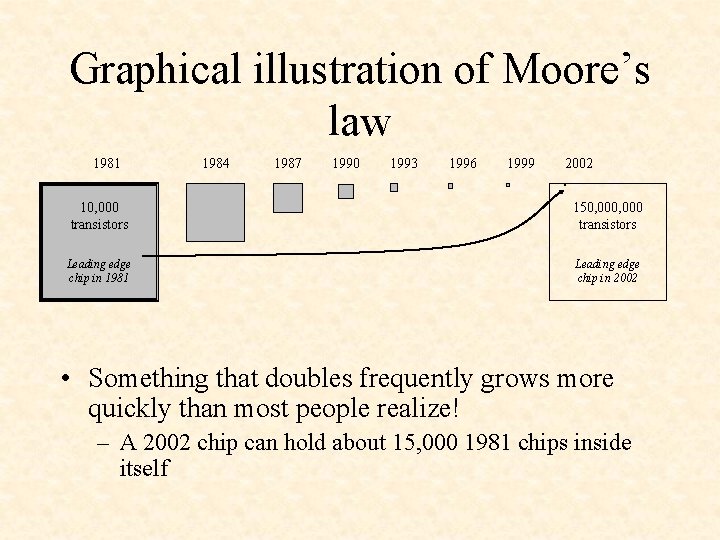
Graphical illustration of Moore’s law 1981 1984 1987 1990 1993 1996 1999 2002 10, 000 transistors 150, 000 transistors Leading edge chip in 1981 Leading edge chip in 2002 • Something that doubles frequently grows more quickly than most people realize! – A 2002 chip can hold about 15, 000 1981 chips inside itself
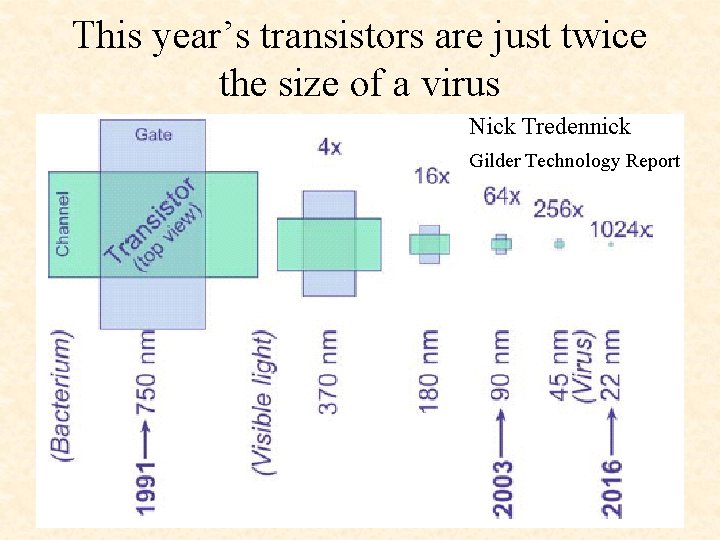
This year’s transistors are just twice the size of a virus Nick Tredennick Gilder Technology Report
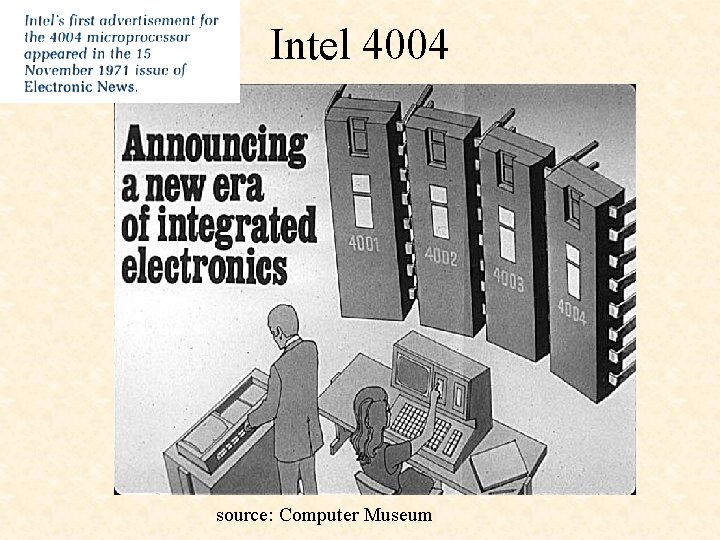
Intel 4004 source: Computer Museum
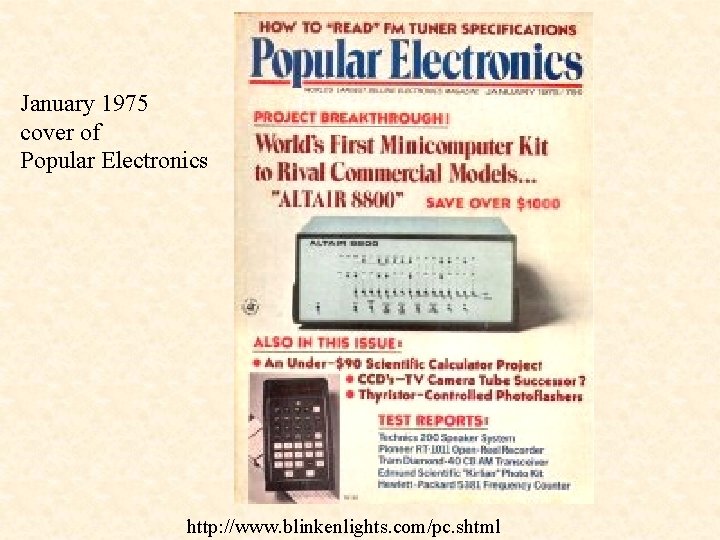
January 1975 cover of Popular Electronics http: //www. blinkenlights. com/pc. shtml
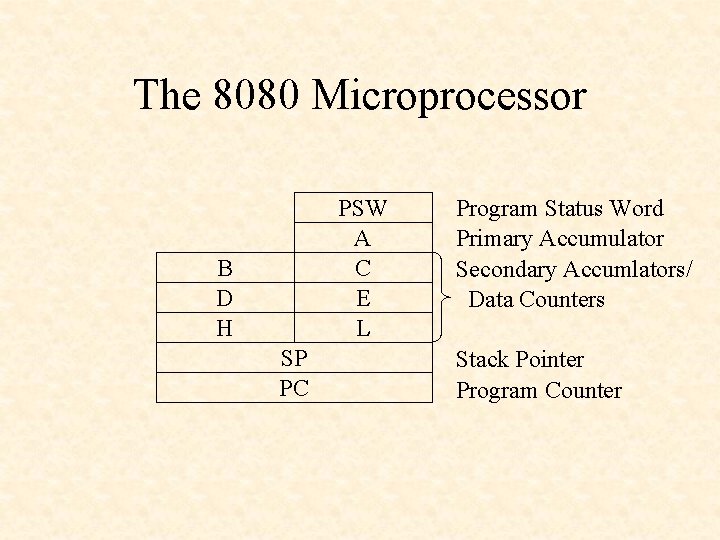
The 8080 Microprocessor • 40 -pin chip • Developed by Intel in 1974 • 16 Address Lines – Can address 216 = 64 Kbytes of memory • 8 Data Lines • Required +5 V, +12 V and -5 V • First microprocessor to become widely used
The 8080 Microprocessor PSW A C E L B D H SP PC Program Status Word Primary Accumulator Secondary Accumlators/ Data Counters Stack Pointer Program Counter
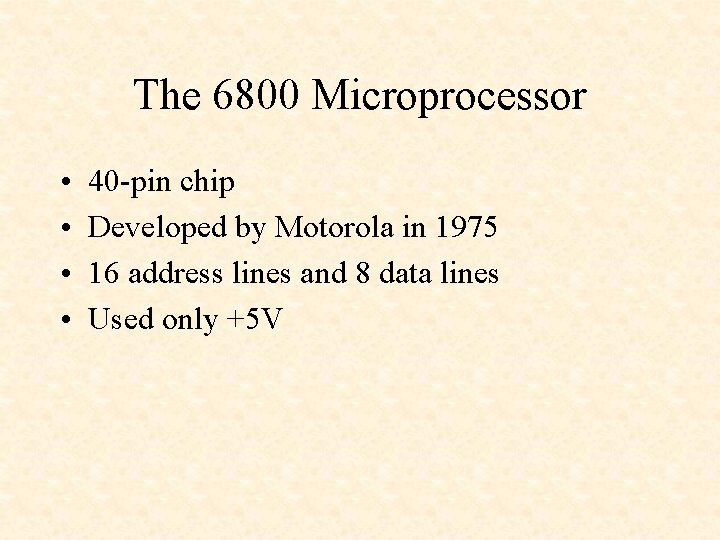
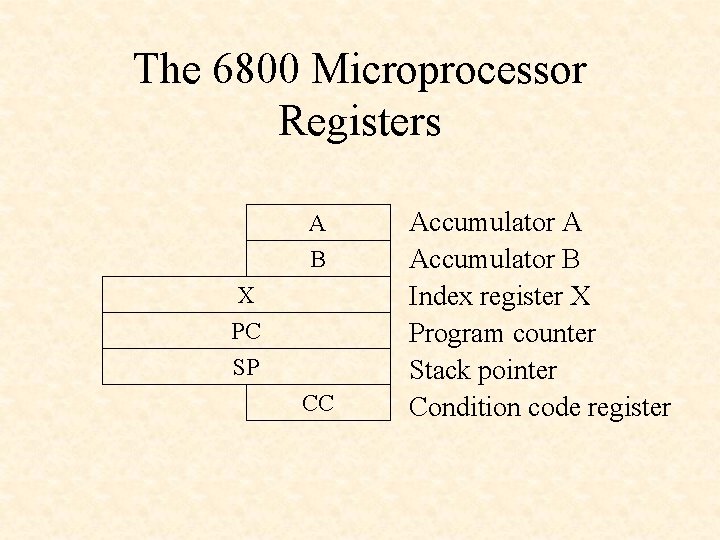
The 6800 Microprocessor • • 40 -pin chip Developed by Motorola in 1975 16 address lines and 8 data lines Used only +5 V
The 6800 Microprocessor Registers A B X PC SP CC Accumulator A Accumulator B Index register X Program counter Stack pointer Condition code register
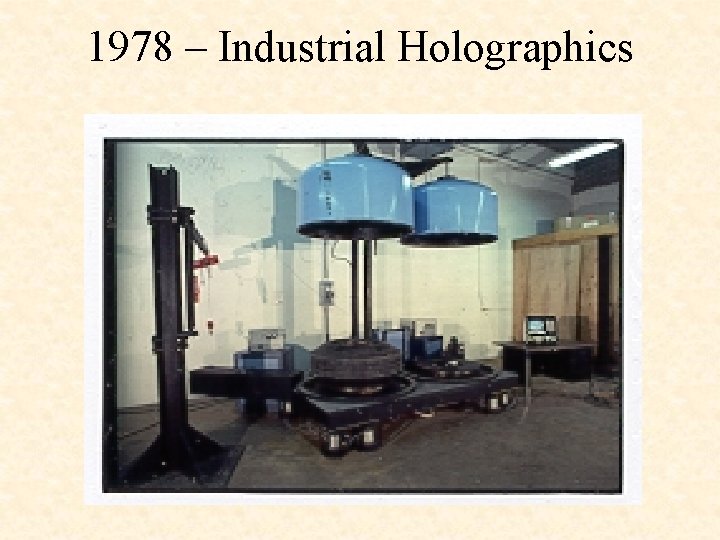
1978 – Industrial Holographics
The 6502 Microprocessor • • • 40 -pin chip Developed by MOS Technology, Inc. in 1976 16 address lines and 8 data lines Based on the Motorola 6800 Used in many home computers including the – Apple II – Commodore PET – Atari
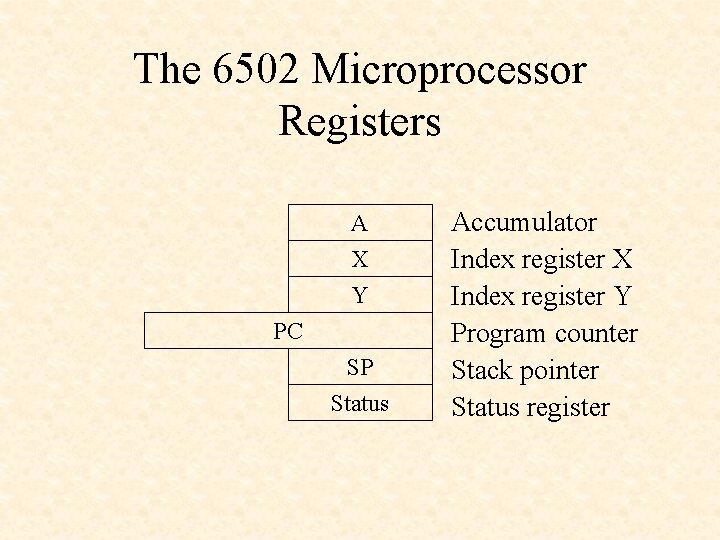
The 6502 Microprocessor Registers A X Y PC SP Status Accumulator Index register X Index register Y Program counter Stack pointer Status register
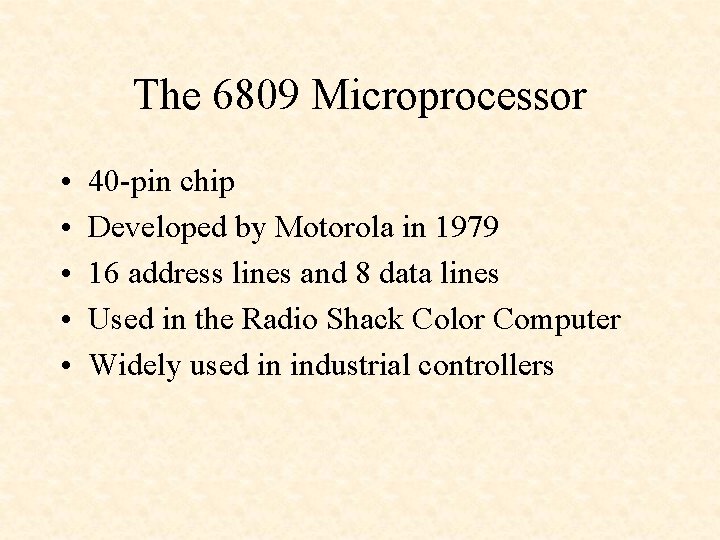
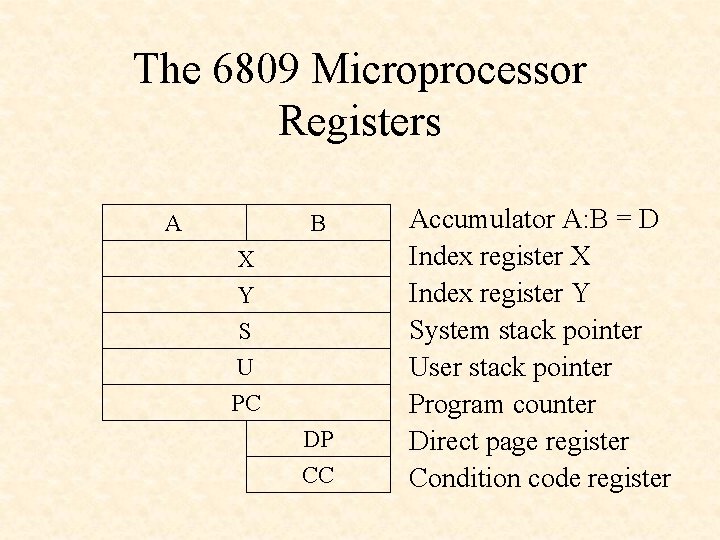
The 6809 Microprocessor • • • 40 -pin chip Developed by Motorola in 1979 16 address lines and 8 data lines Used in the Radio Shack Color Computer Widely used in industrial controllers
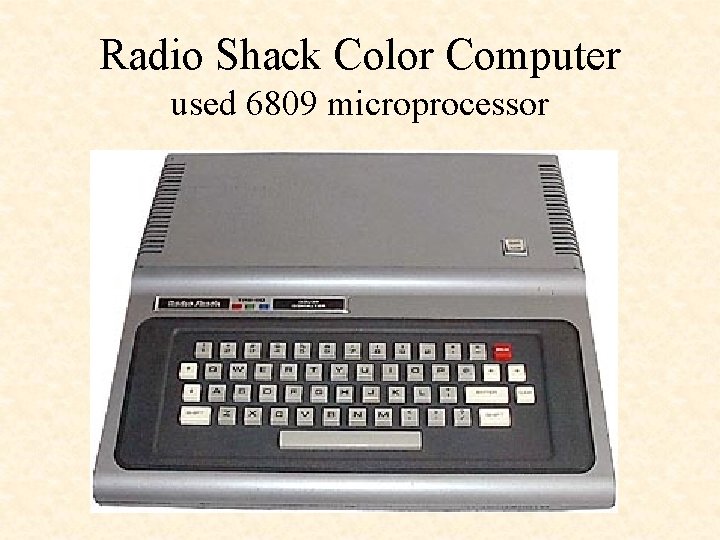
Radio Shack Color Computer used 6809 microprocessor
The 6809 Microprocessor Registers A B X Y S U PC DP CC Accumulator A: B = D Index register X Index register Y System stack pointer User stack pointer Program counter Direct page register Condition code register
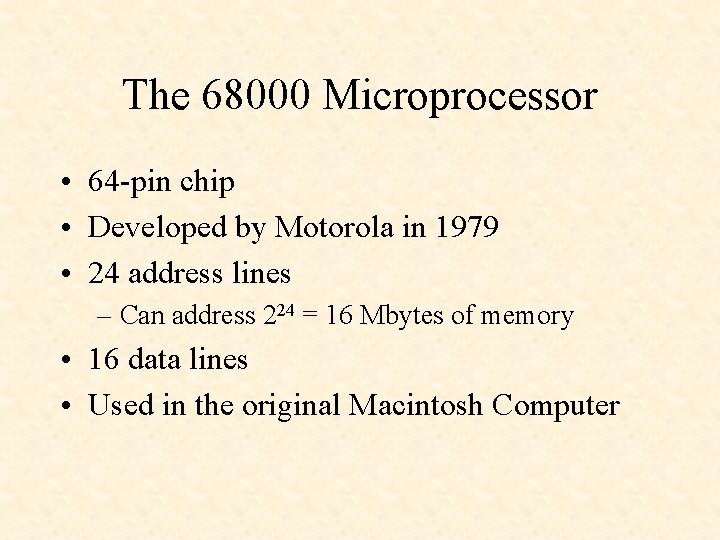
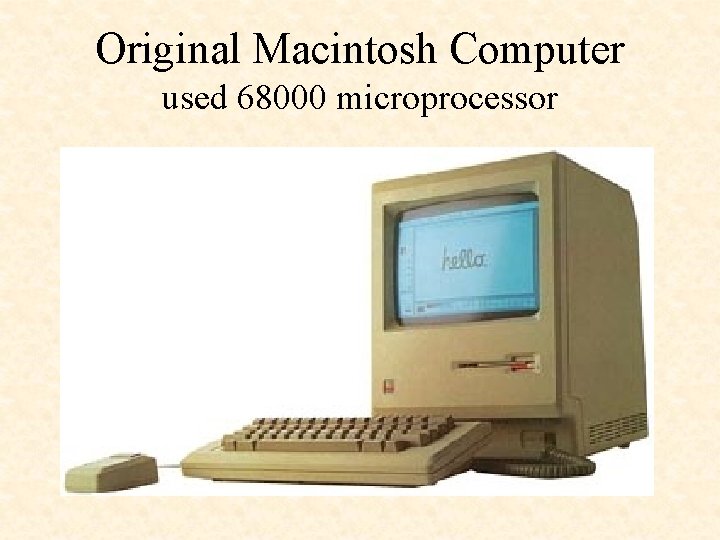
The 68000 Microprocessor • 64 -pin chip • Developed by Motorola in 1979 • 24 address lines – Can address 224 = 16 Mbytes of memory • 16 data lines • Used in the original Macintosh Computer
Original Macintosh Computer used 68000 microprocessor
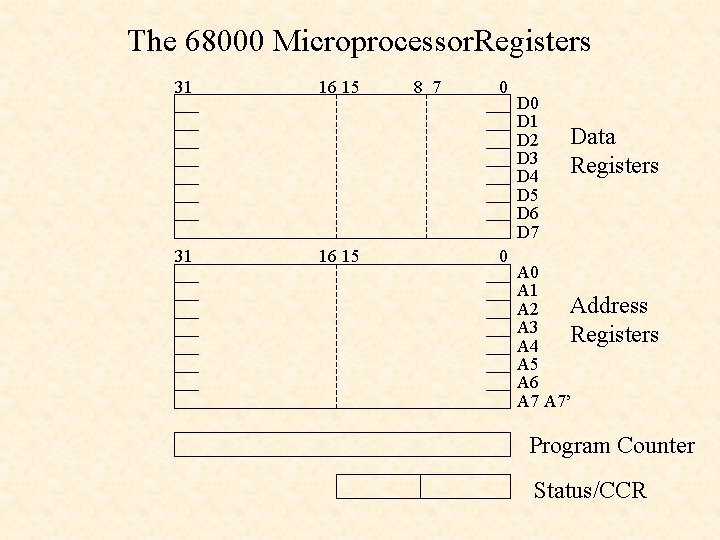
The 68000 Microprocessor. Registers 31 16 15 8 7 0 31 16 15 0 D 1 D 2 D 3 D 4 D 5 D 6 D 7 Data Registers A 0 A 1 Address A 2 A 3 Registers A 4 A 5 A 6 A 7’ Program Counter Status/CCR
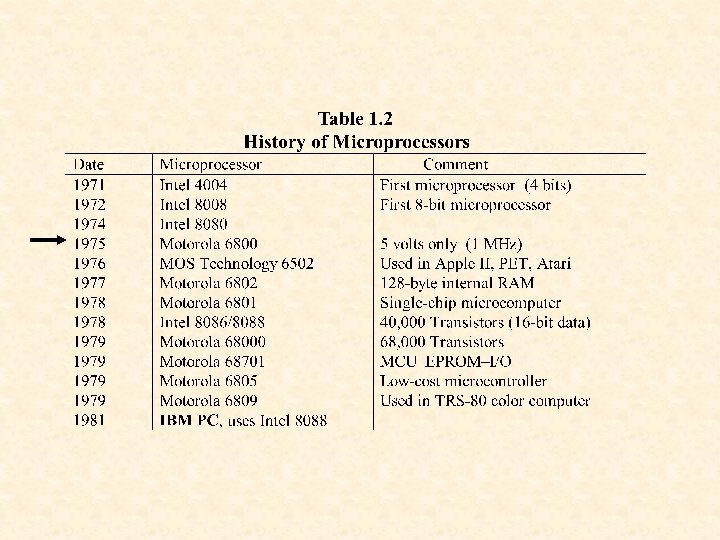
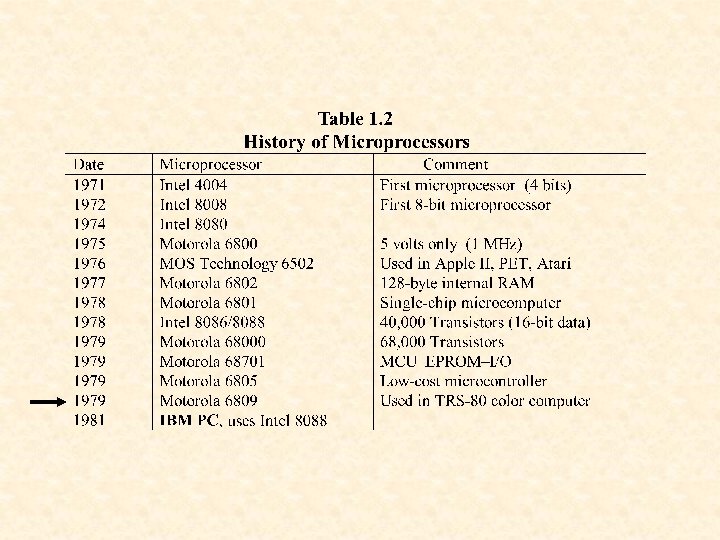
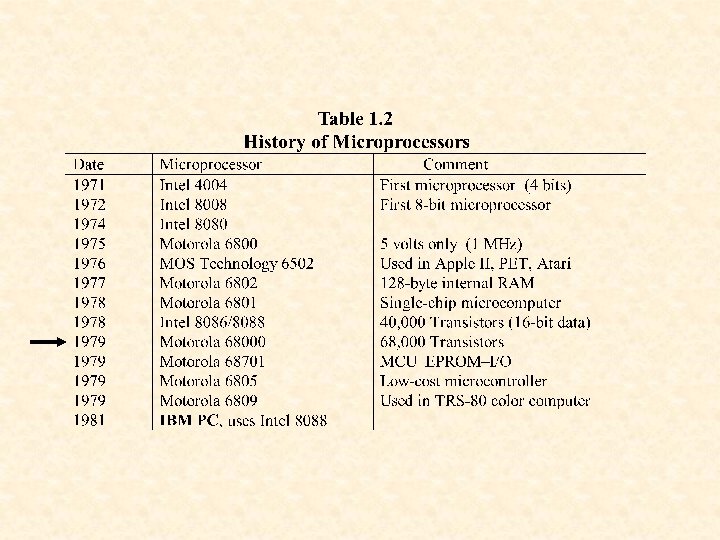
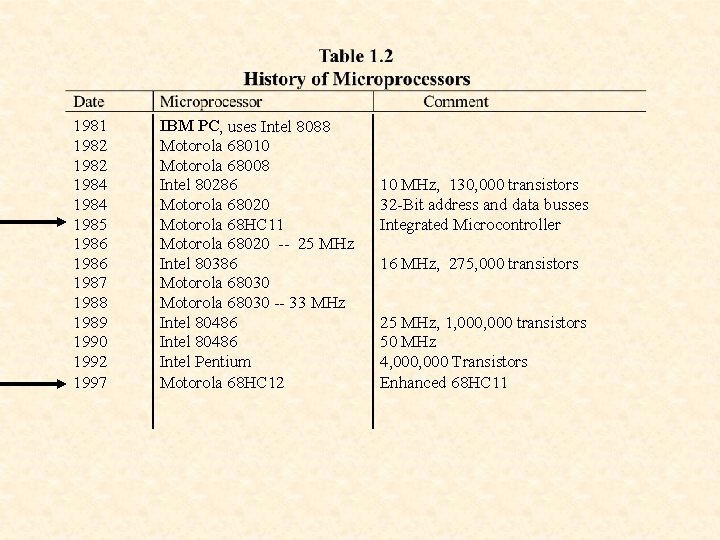
1981 1982 1984 1985 1986 1987 1988 1989 1990 1992 1997 IBM PC, uses Intel 8088 Motorola 68010 Motorola 68008 Intel 80286 Motorola 68020 Motorola 68 HC 11 Motorola 68020 -- 25 MHz Intel 80386 Motorola 68030 -- 33 MHz Intel 80486 Intel Pentium Motorola 68 HC 12 10 MHz, 130, 000 transistors 32 -Bit address and data busses Integrated Microcontroller 16 MHz, 275, 000 transistors 25 MHz, 1, 000 transistors 50 MHz 4, 000 Transistors Enhanced 68 HC 11
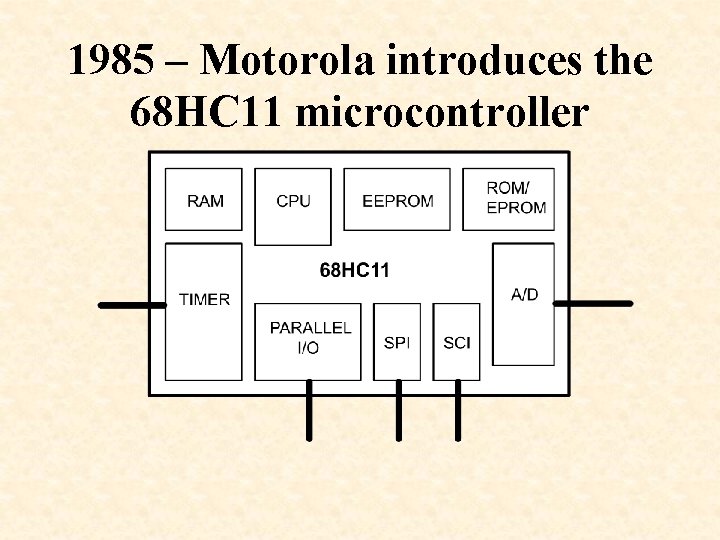
1985 – Motorola introduces the 68 HC 11 microcontroller
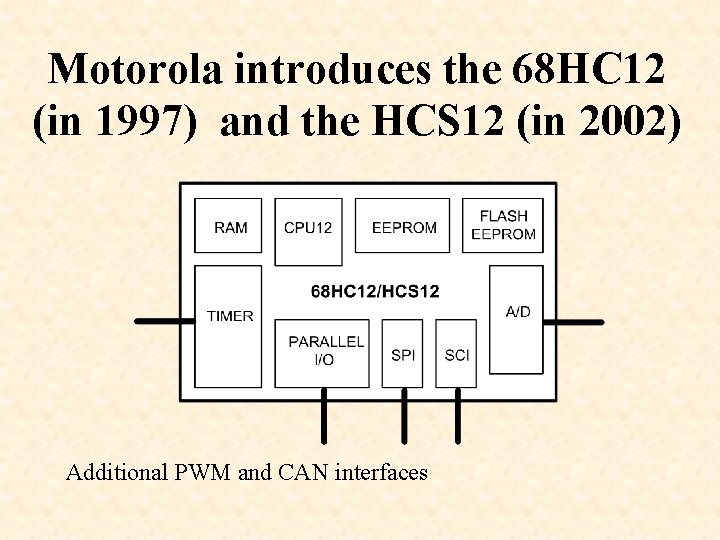
Motorola introduces the 68 HC 12 (in 1997) and the HCS 12 (in 2002) Additional PWM and CAN interfaces
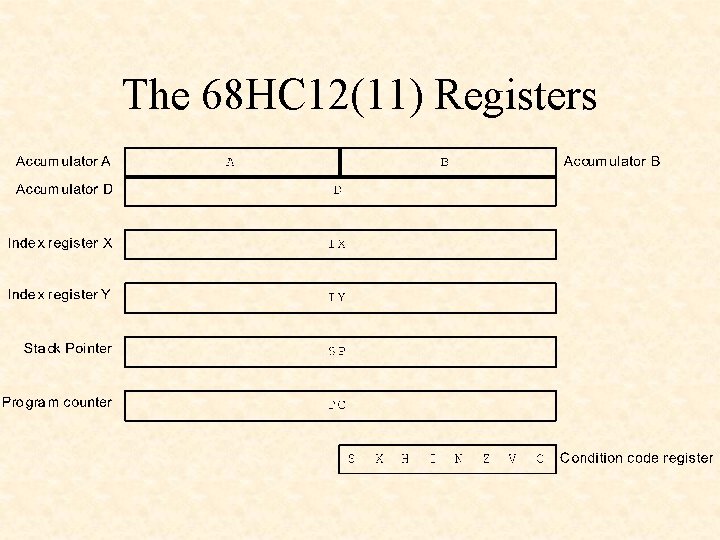
The 68 HC 12(11) Registers
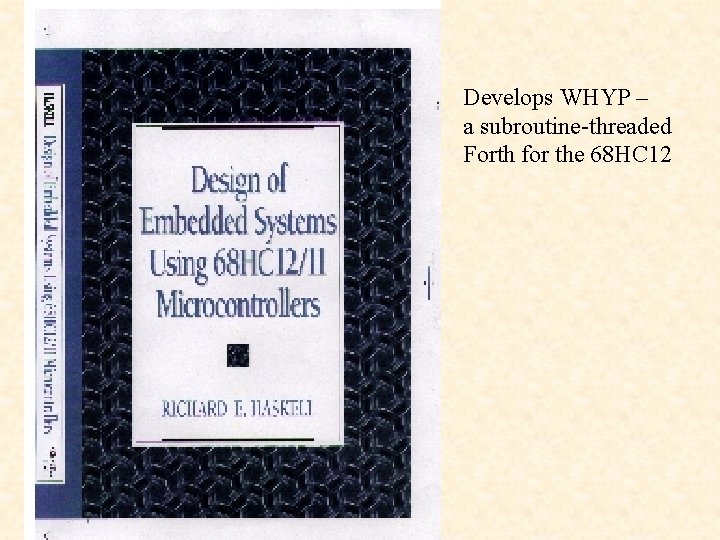
Develops WHYP – a subroutine-threaded Forth for the 68 HC 12
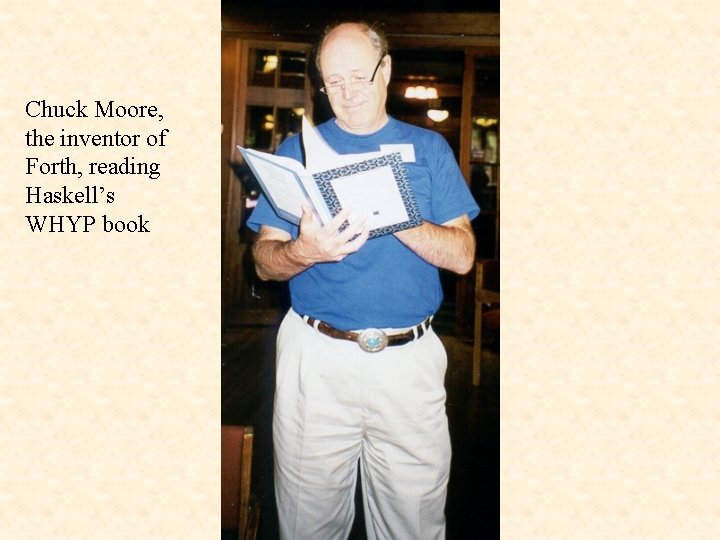
Chuck Moore, the inventor of Forth, reading Haskell’s WHYP book
Learning By Example Using C -- Programming the HCS 12 Microcontroller Using Code. Warrior Richard E. Haskell Oakland University, Rochester, Michigan Copyright 2006. All rights reserved
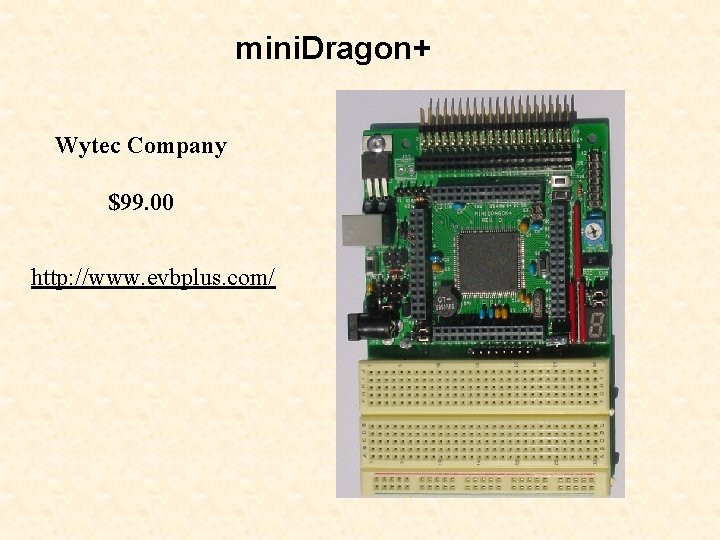
mini. Dragon+ Wytec Company $99. 00 http: //www. evbplus. com/
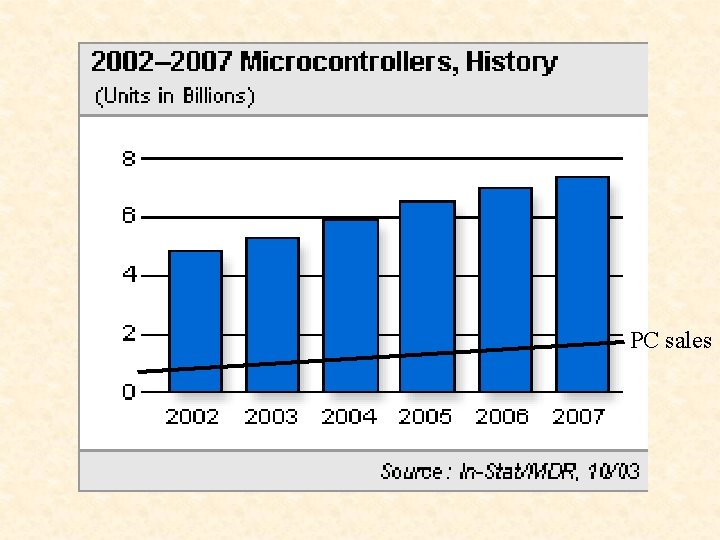
PC sales