
History of Microbiology Dr Debalina Basu Aristotle Proposed
History of Microbiology Dr. Debalina Basu
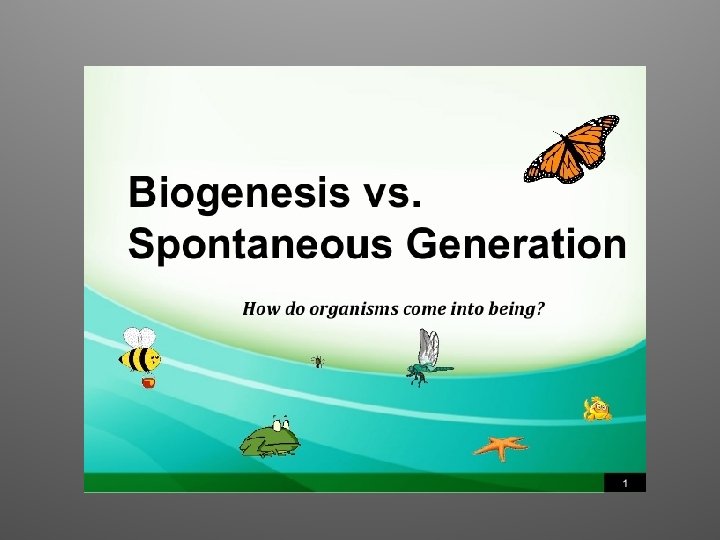
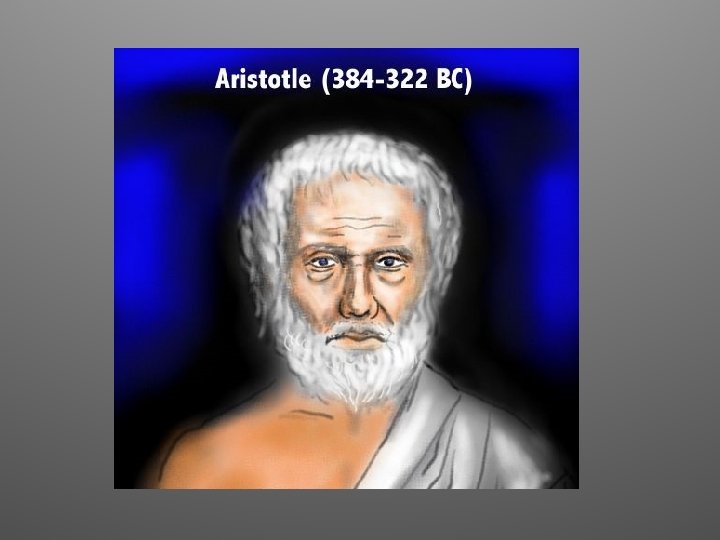
Aristotle • Proposed theory of spontaneous generation • Also called abiogenesis • Idea that living things can arise from nonliving matter • Idea lasted almost 2000 years
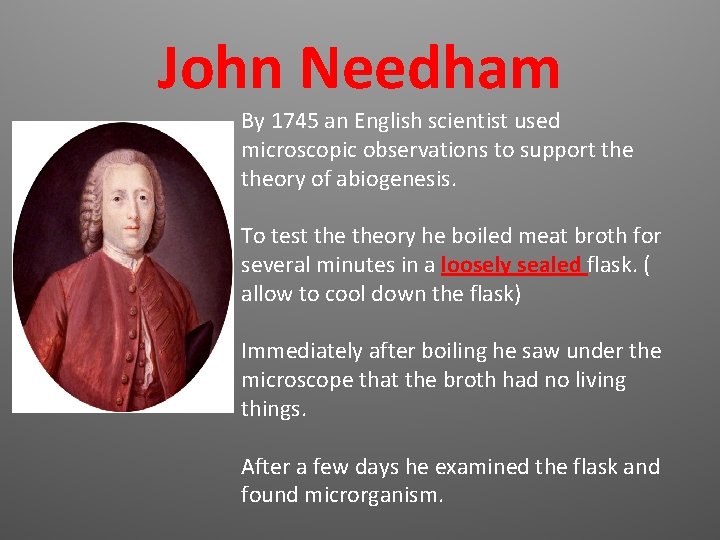
John Needham By 1745 an English scientist used microscopic observations to support theory of abiogenesis. To test theory he boiled meat broth for several minutes in a loosely sealed flask. ( allow to cool down the flask) Immediately after boiling he saw under the microscope that the broth had no living things. After a few days he examined the flask and found microrganism.
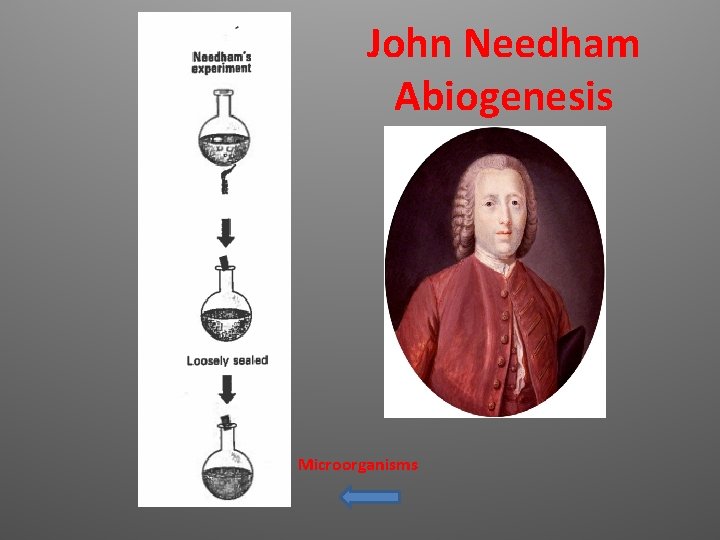
John Needham Abiogenesis Microorganisms
Disproving Spontaneous Generation

Francesco Redi (1668) • In 1668, Francesco Redi, an Italian physician, did an experiment with flies and widemouth jars containing meat
Redi’s Experiment • Redi used open & closed flasks which contained meat. • His hypothesis was that rotten meat does not turn into flies. • He observed these flasks to see in which one(s) maggots would develop.

Redi’s (1626 -1697) Experiments Evidence against spontaneous generation: 1. Unsealed – maggots on meat 2. Sealed – no maggots on meat 3. Gauze – few maggots on gauze, none on meat
Redi’s Findings • He found that if a flask was closed with a lid so adult flies could not get in, no maggots developed on the rotting meat within. • In a flask without a lid, maggots soon were seen in the meat because adult flies had laid eggs and more adult flies soon appeared.
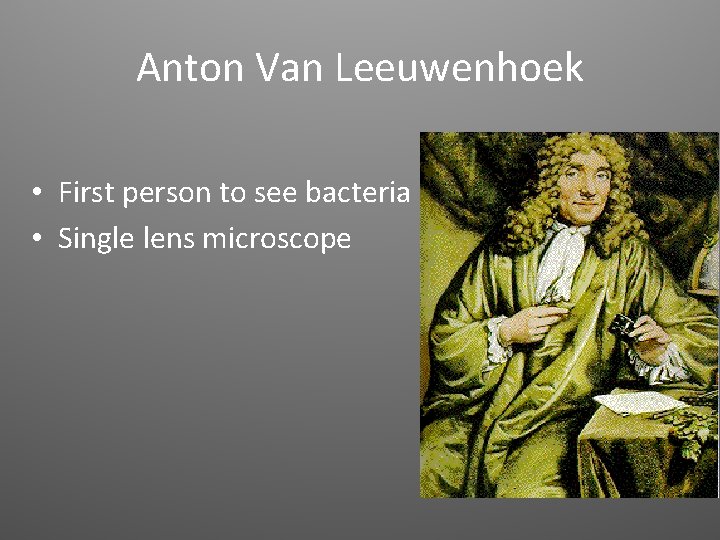
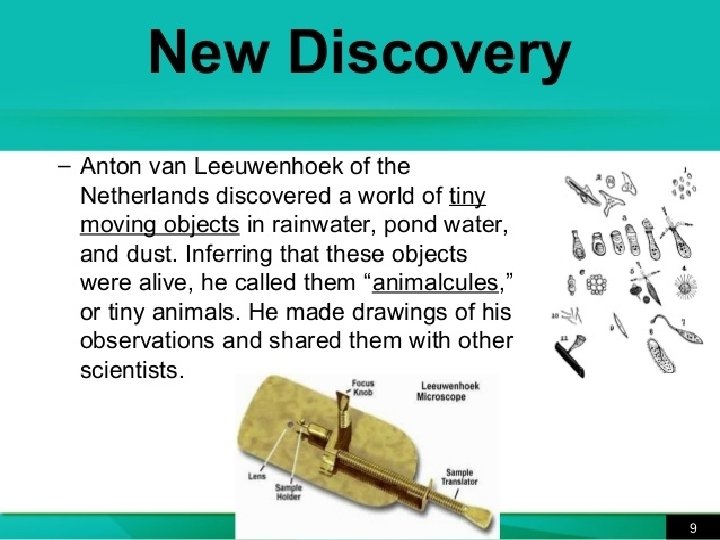
Anton Van Leeuwenhoek • First person to see bacteria • Single lens microscope
Antonie Philips van Leeuwenhoek (24 October 1632 – 26 August 1723) was a Dutchbusinessman and scientist in the Golden Age of Dutch science and technology. A largely self-taught man in science, he is commonly known as "the Father of Microbiology", and one of the first microscopists and microbiologists. Van Leeuwenhoek is best known for his pioneering work in microscopy and for his contributions toward the establishment of microbiology as a scientific discipline. He was also the first to document microscopic observations of muscle fibers, bacteria, spermatozoa, red blood cells, crystals in gouty tophi, and blood flow in capillaries.

Early Compound Microscope
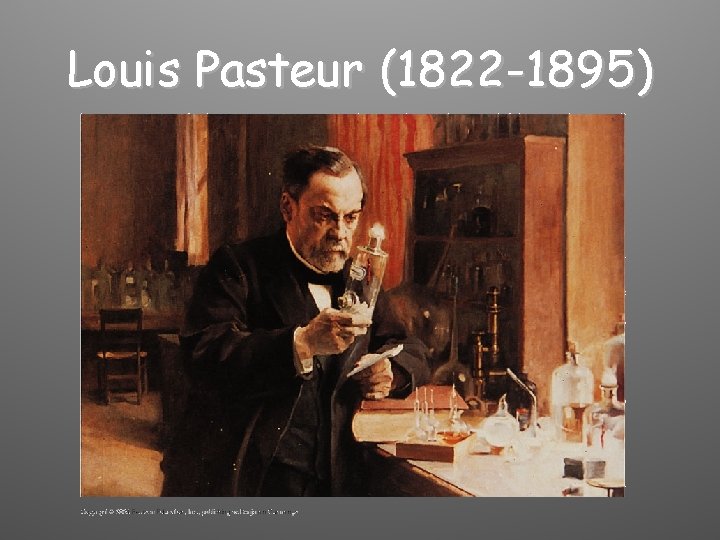
Louis Pasteur (1822 -1895)
Pasteur's Experiment • Hypothesis: Microbes come from cells of organisms on dust particles in the air; not the air itself. • Pasteur put broth into several special S-shaped flasks • Each flask was boiled and placed at various locations
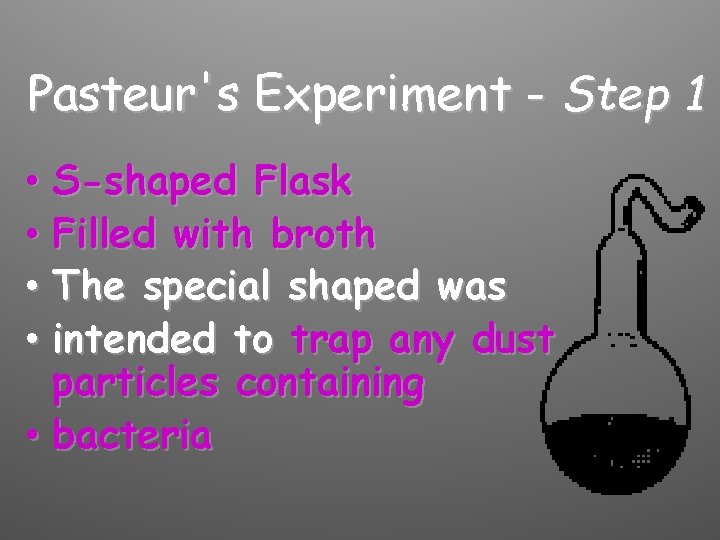
Pasteur's Experiment - Step 1 • S-shaped Flask • Filled with broth • The special shaped was • intended to trap any dust particles containing • bacteria
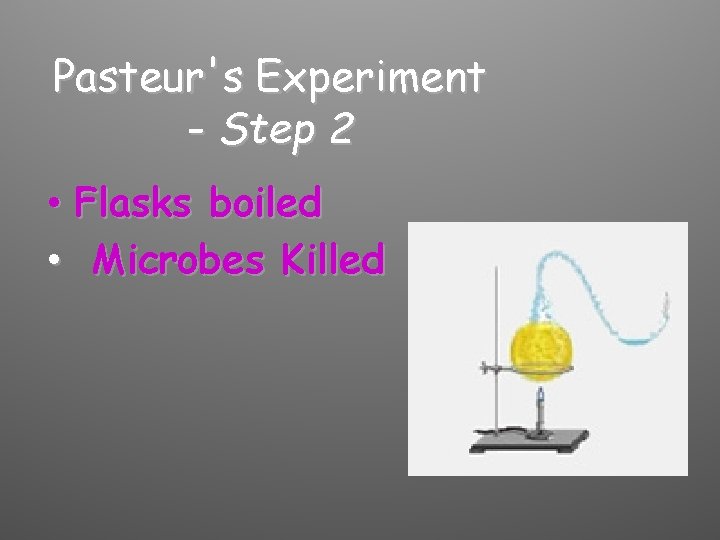
Pasteur's Experiment - Step 2 • Flasks boiled • Microbes Killed
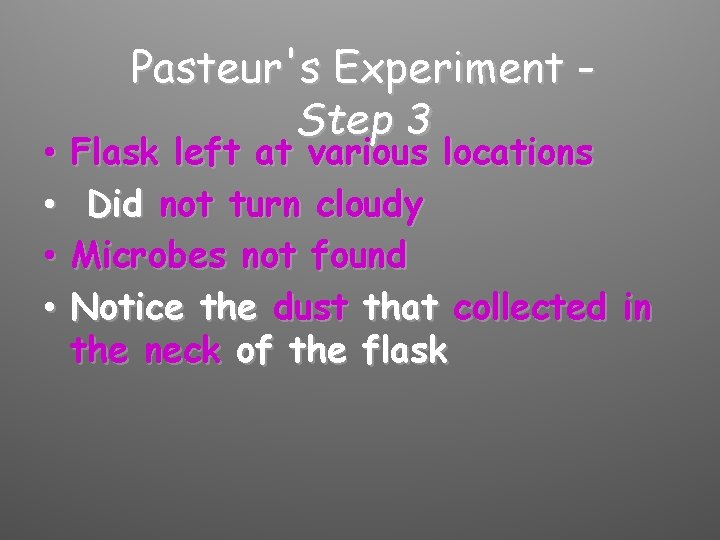
• • Pasteur's Experiment Step 3 Flask left at various locations Did not turn cloudy Microbes not found Notice the dust that collected in the neck of the flask

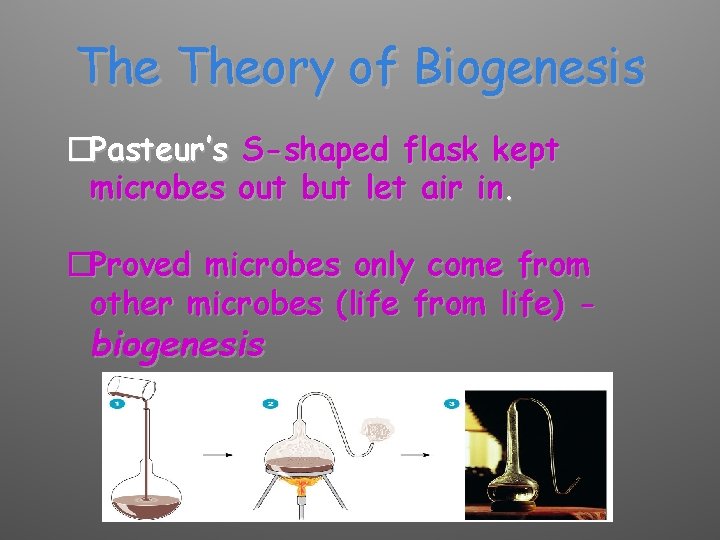
The Theory of Biogenesis �Pasteur’s S-shaped flask kept microbes out but let air in. �Proved microbes only come from other microbes (life from life) - biogenesis
The Theory of Biogenesis 1864 • Pasteur’s S-shaped flask kept microbes out but let air in. • Proved microbes only come from other microbes (life from life) - biogenesis
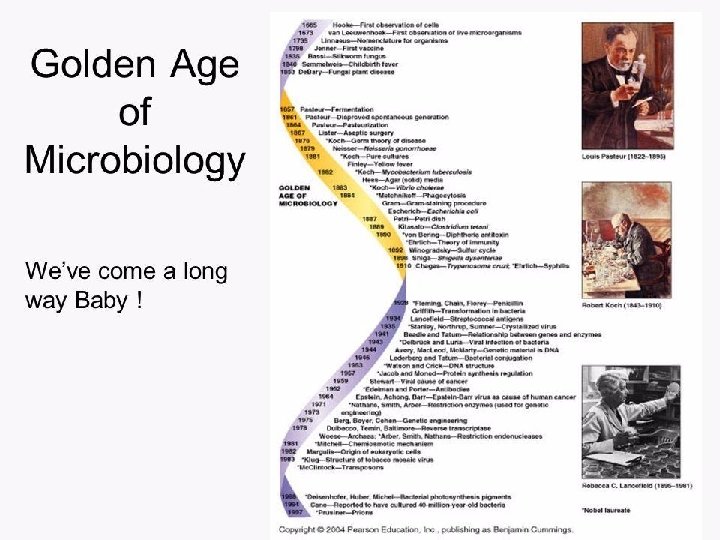
GOLDEN AGE OF MICROBIOLOGY The period from 1860 to 1900 is often named the Golden Age of Microbiology. During this period, rapid advances, spear-headed by Louis Pasteur and Robert Koch, led to the establishment of microbiology as a science.
The Golden Age of Microbiology (1857 -1914) • Many disease producing organisms were discovered • Microbial metabolism studies undertaken • Microbiological techniques refined • A better understanding of the role of immunity and ways to control and prevent infection by microbes
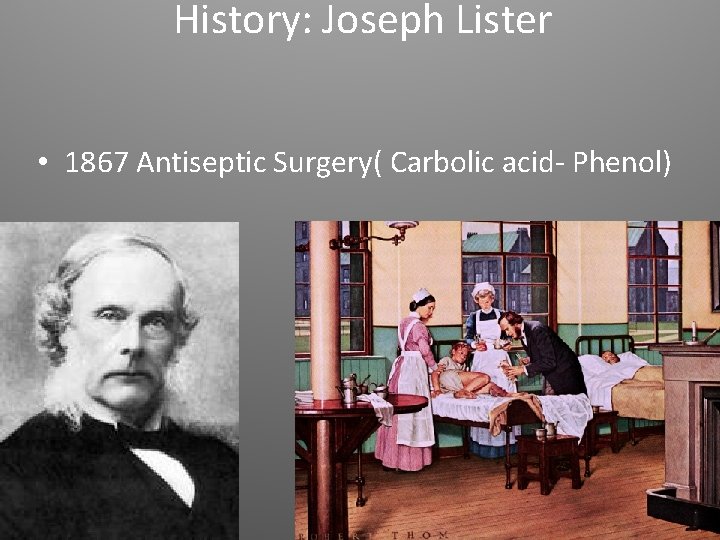
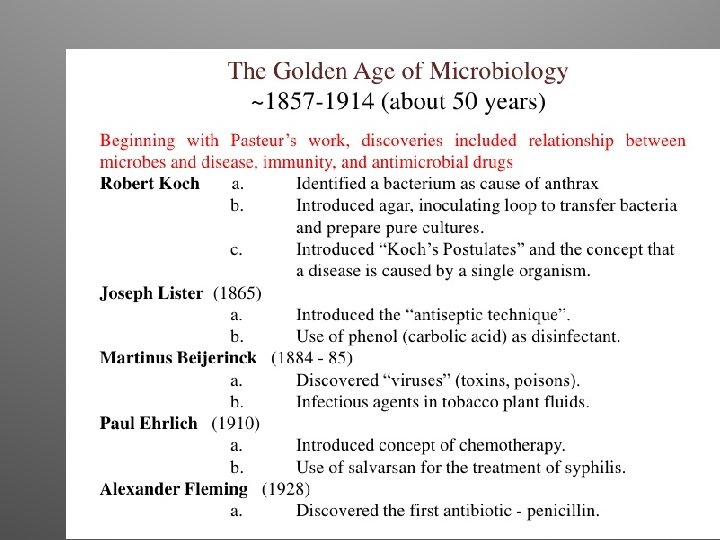
History: Joseph Lister • 1867 Antiseptic Surgery( Carbolic acid- Phenol)
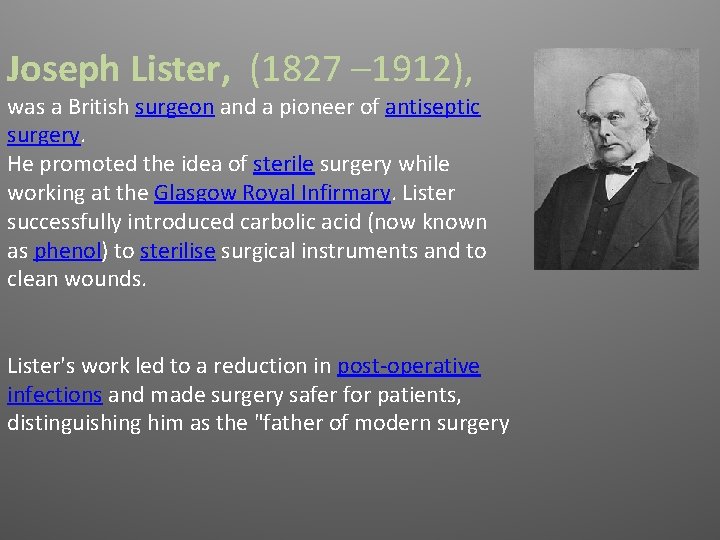
Joseph Lister, (1827 – 1912), was a British surgeon and a pioneer of antiseptic surgery. He promoted the idea of sterile surgery while working at the Glasgow Royal Infirmary. Lister successfully introduced carbolic acid (now known as phenol) to sterilise surgical instruments and to clean wounds. Lister's work led to a reduction in post-operative infections and made surgery safer for patients, distinguishing him as the "father of modern surgery
Other evidences Joseph Lister: • provided indirect evidence that microorganisms were the causal agents of disease • developed a system of surgery designed to prevent microorganisms from entering wounds as well as methods for treating instruments and surgical dressings • his patients had fewer postoperative infections
Joseph Lister • Joseph Lister was known as the ‘father of antiseptic surgery’ during the 19 th century. He was always interested in surgery at a young age. • In the 1840 s, operations became more common. Most were successful, but soon after the patient would die from an infection called ward fever. The reason was unclear, but it was believed that it had something to do with the air. In 1864, he read Pasteur’s work on micro-organisms and decided to experiment using one of Pasteur’s techniques. He decided to use a chemical to destroy germs that entered the body through open wounds. • That same year, Lister read in the newspaper that the treatment of sewage with a chemical called carbolic acid had led to a reduction of diseases among the people of England. He then developed a successful method of using this chemical during operations to apply to wounds, spray in the air, and sterilize instruments. This process was very effective and the rate of infection dramatically reduced in the patients treated. Operations could now be carried out safely. Even though his antiseptic method was later replaced by the use of aesepsis, his work marked the beginning for a new era.
Joseph Lister Social Impacts: o Lister’s antiseptic method helped recover patients dying from ward fever. o Antiseptic method was used in many hospitals. o The rate of infection and death rate of many patients were dramatically reduced. o The mouthwash, Listerine, was named after him for his work in antisepsis.
Germ Theory of Disease • Causal relationship between microbes and disease • Disinfection controls surgical infection • Microbes cause disease
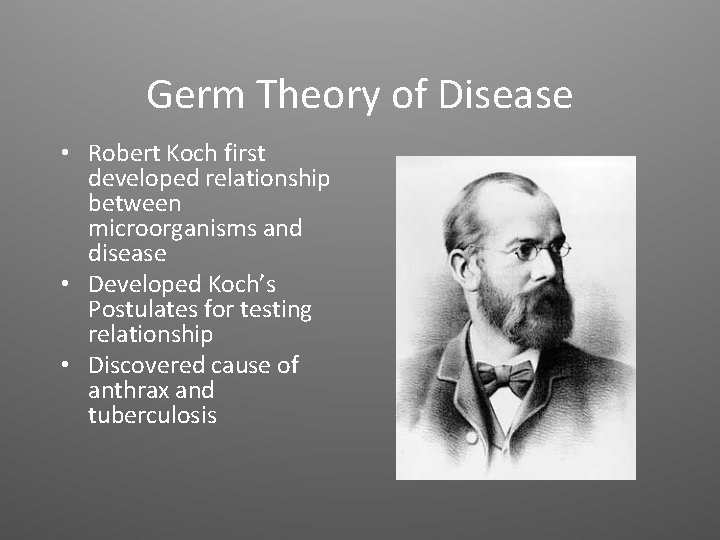
Germ Theory of Disease • Robert Koch first developed relationship between microorganisms and disease • Developed Koch’s Postulates for testing relationship • Discovered cause of anthrax and tuberculosis
Germ Theory of Disease • Observation on causative agents of potato blight and diseases of silkworms led to hypothesis • Formalized through work of Pasteur and Koch (and others) led to theory that germs or microorganisms may cause disease
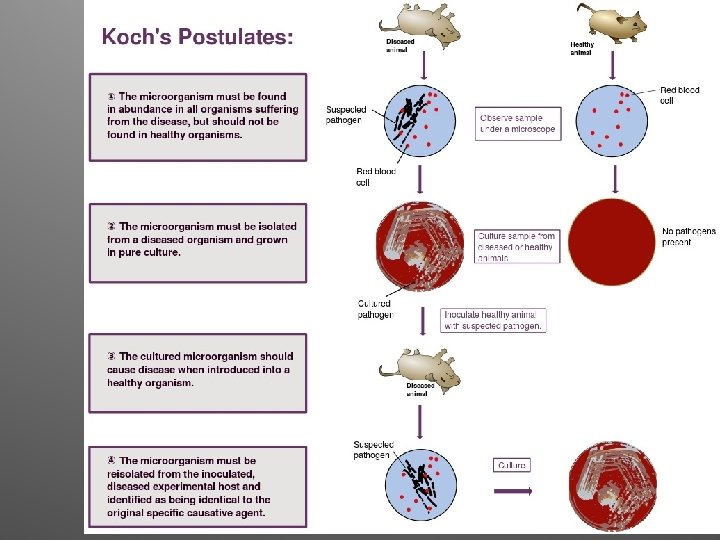
Germ Theory of Disease • Koch’s Postulates: – Same microorganism must be observed in every instance of disease – Organism must be isolated from diseased host and grown in pure culture – Specific disease must be reproduced when pure culture is reintroduced into host
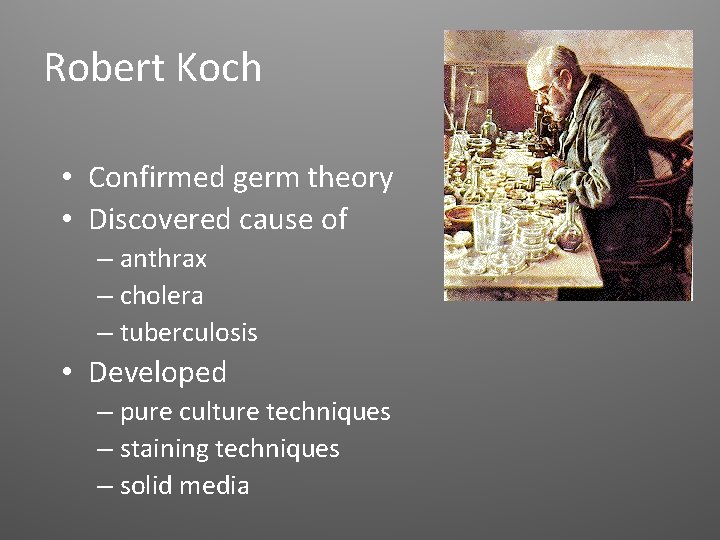
Robert Koch • Confirmed germ theory • Discovered cause of – anthrax – cholera – tuberculosis • Developed – pure culture techniques – staining techniques – solid media
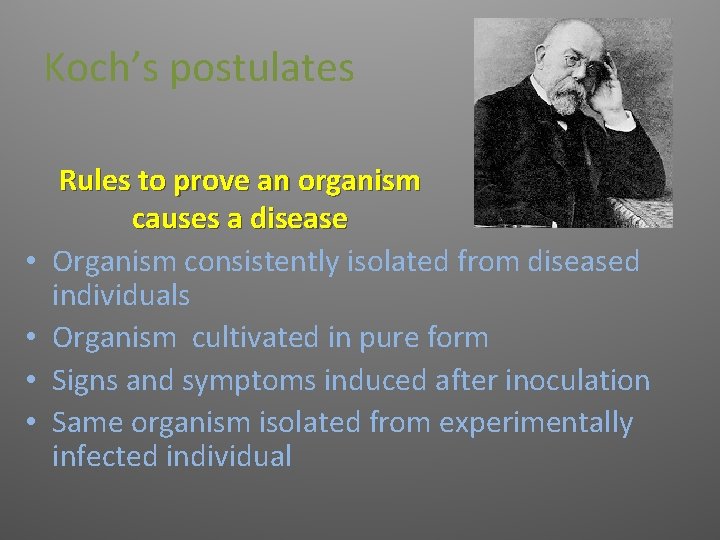
Koch’s postulates • • Rules to prove an organism causes a disease Organism consistently isolated from diseased individuals Organism cultivated in pure form Signs and symptoms induced after inoculation Same organism isolated from experimentally infected individual
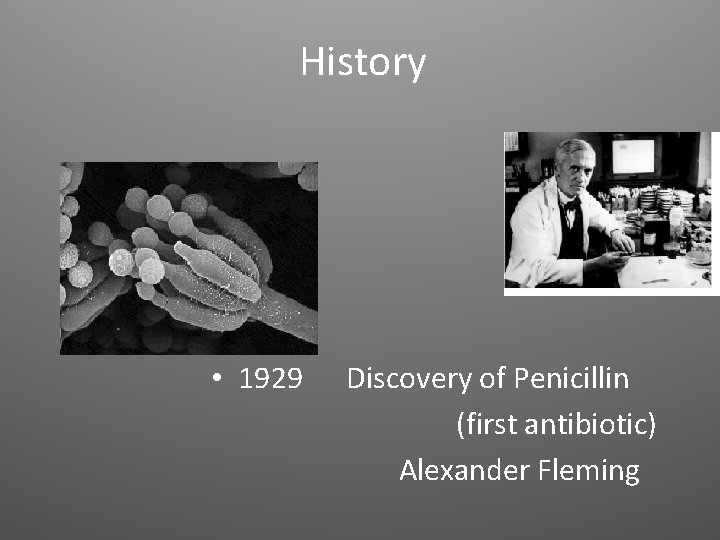
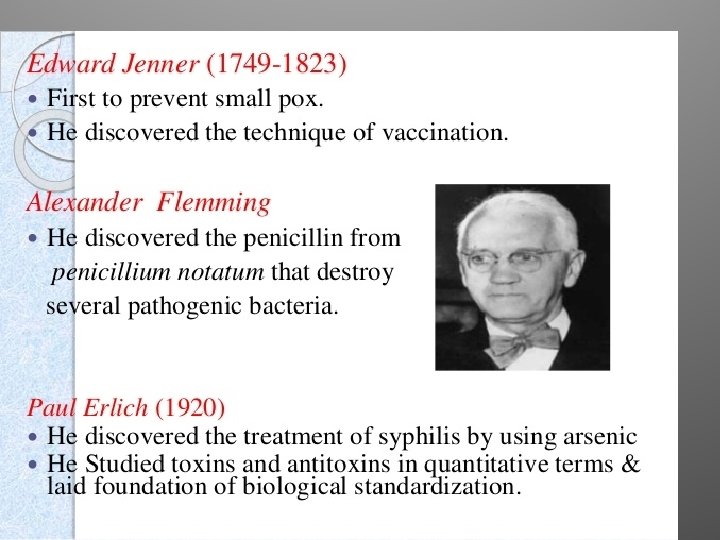
History • 1929 Discovery of Penicillin (first antibiotic) Alexander Fleming
Alexander Fleming
Fleming Disagrees • Based on Lister’s theory, physicians of the time generally believed that if antiseptics killed germs they were therefore useful in treating wound infections • Fleming strongly disagreed with this idea • Fleming and his mentor, Wright, argued that the best way to treat wound infections was to enhance the body’s natural immune response
ALEXANDER FLEMING In 1928 Fleming observed that the growth of the bacterium staphyloccus aureus was inhibited in the areas surrounding the colony of a mold that had contaminated a Petri plate. The mold was identified as Penicillium notatum, and its active compound was named penicillin.
Alexander Fleming • This scientist was named Alexander Fleming and was the founder of penicillin. It was during 1922 when Fleming was wondering if there ways of killing strong bacteria and tried many experiments to prove it true. One day while working with some harmful bacteria, some mucous from Fleming’s nose, which had a chemical called lysozyme, had dropped on to one of his Petri dishes and had destroyed most of the bacteria on it • This had assured him that there ways to kill strong bacteria. • In 1928 as Fleming was going through some Petri dishes, he had found one particular dish that had the Staphylococcus aureus mold but was completely wiped off from one whole section from another mold that was in the Penicillium mold family. This mold happened to have antibacterial chemicals that were able to clean off all the bad mold on the Petri dish. This mold was later called penicillin from Fleming because of its strong antibacterial powers found in the Penicillium mold.
Discovery. . . • In 1928 after returning to his lab following a two week vacation Fleming encountered the place in its usual disarray • Fleming had a inoculated a number of petri dishes with staphylococci prior to leaving on vacation • He hadn’t placed them in an incubator because he knew that the staph would sufficiently multiply over the long vacation • Little did he know that penicillium mold grows well at room temperature
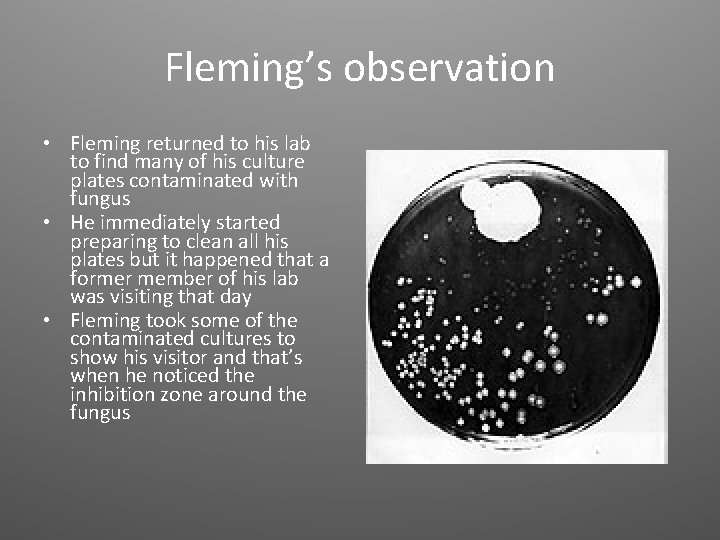
Fleming’s observation • Fleming returned to his lab to find many of his culture plates contaminated with fungus • He immediately started preparing to clean all his plates but it happened that a former member of his lab was visiting that day • Fleming took some of the contaminated cultures to show his visitor and that’s when he noticed the inhibition zone around the fungus
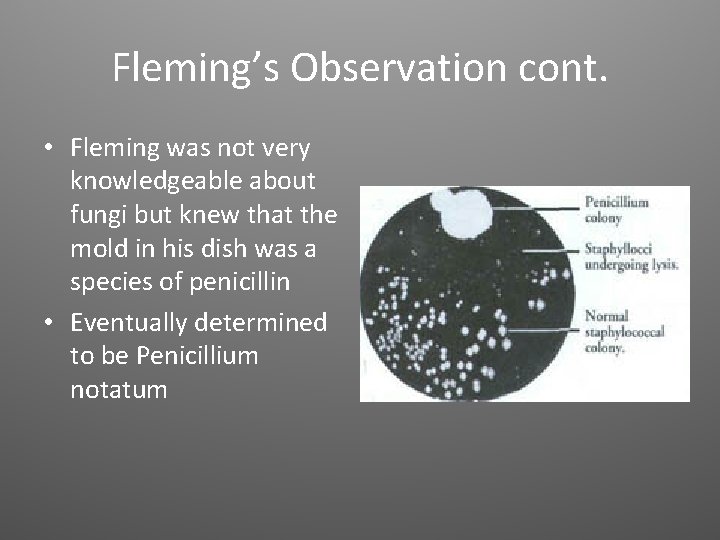
Fleming’s Observation cont. • Fleming was not very knowledgeable about fungi but knew that the mold in his dish was a species of penicillin • Eventually determined to be Penicillium notatum
Accidental? • Fleming’s observation was made under some accidental circumstances but clearly made sense in light of Fleming’s research background • Fleming had the sophistication to realize that anti-bacterial agents existed – this view was really fueled by his background in lysozyme research
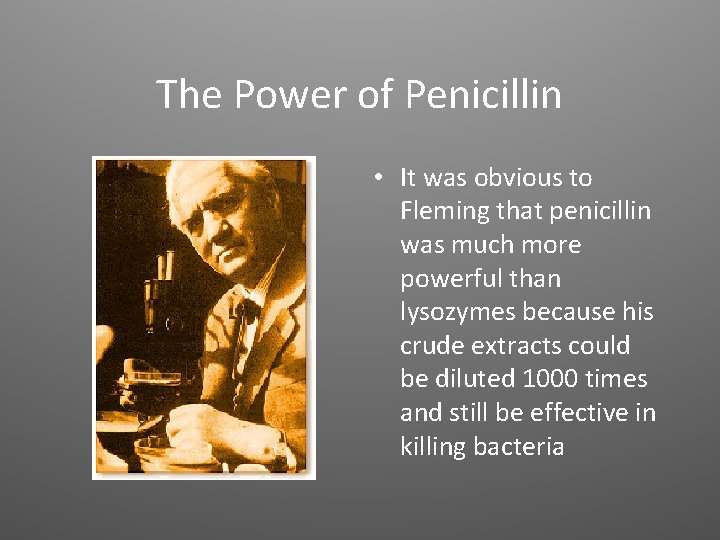
The Power of Penicillin • It was obvious to Fleming that penicillin was much more powerful than lysozymes because his crude extracts could be diluted 1000 times and still be effective in killing bacteria
ALEXANDER FLEMING Social Impacts: o Penicillin was able to cure diphtheria, gangrene, pneumonia, syphilis, and tuberculosis. o Was able to cure bacterial infections and major/minor wounds during World War II. Political Impact: o Because Fleming had found penicillin, which was a mass production during the World War II o It had saved lives of the soldiers who had minor injuries during that time.
• There are two types of microorganisms: – Prokaryotes • have a relatively simple morphology and lack a true membrane-bound nucleus – Eukaryotes • are morphologically complex and have a true, membrane-bound nucleus
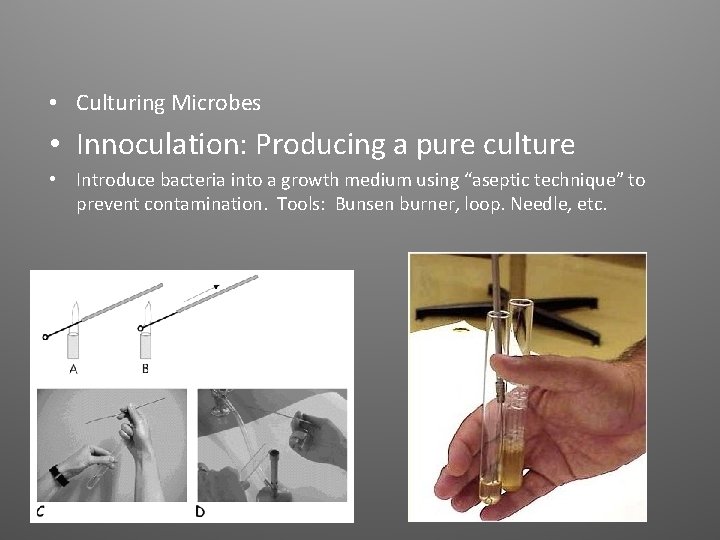
• Culturing Microbes • Innoculation: Producing a pure culture • Introduce bacteria into a growth medium using “aseptic technique” to prevent contamination. Tools: Bunsen burner, loop. Needle, etc.
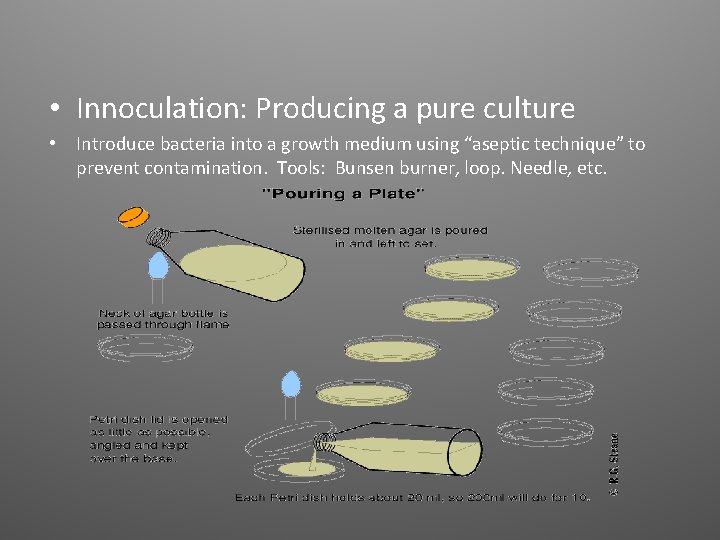
• Innoculation: Producing a pure culture • Introduce bacteria into a growth medium using “aseptic technique” to prevent contamination. Tools: Bunsen burner, loop. Needle, etc.
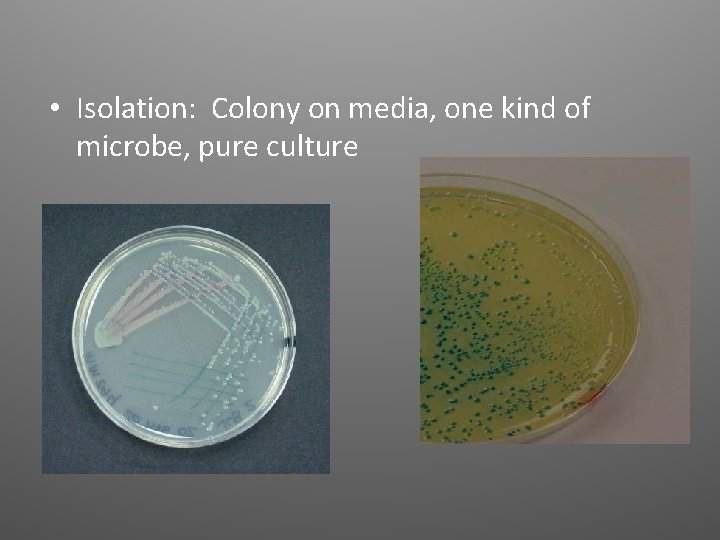
• Isolation: Colony on media, one kind of microbe, pure culture
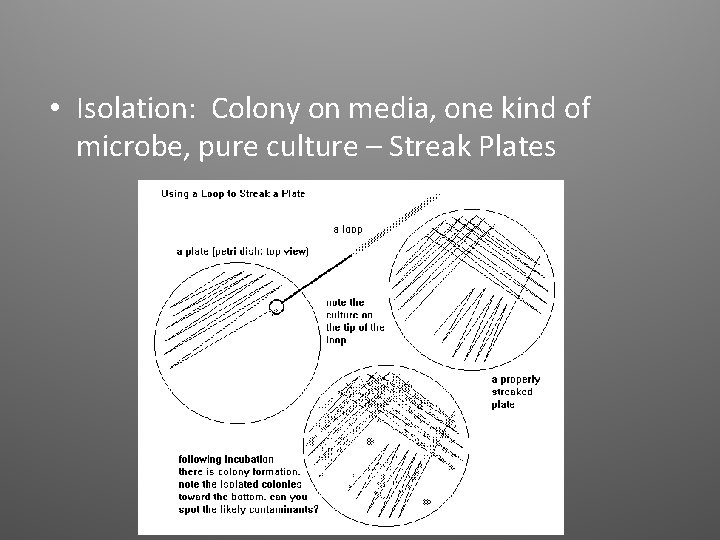
• Isolation: Colony on media, one kind of microbe, pure culture – Streak Plates
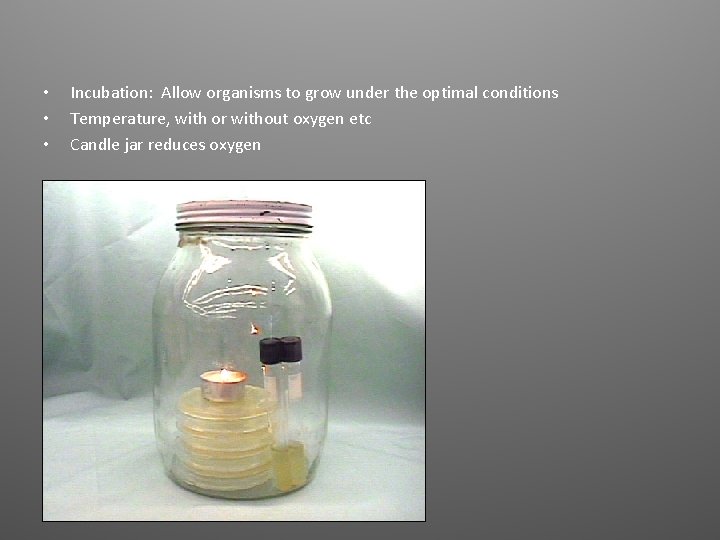
• • • Incubation: Allow organisms to grow under the optimal conditions Temperature, with or without oxygen etc Candle jar reduces oxygen
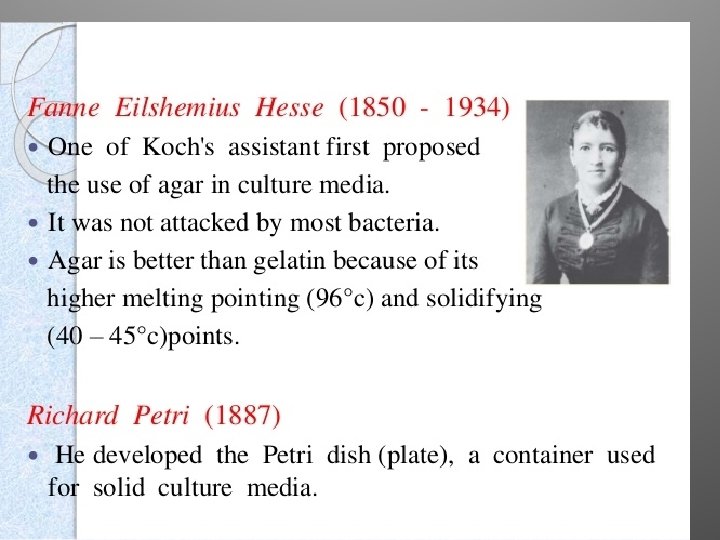
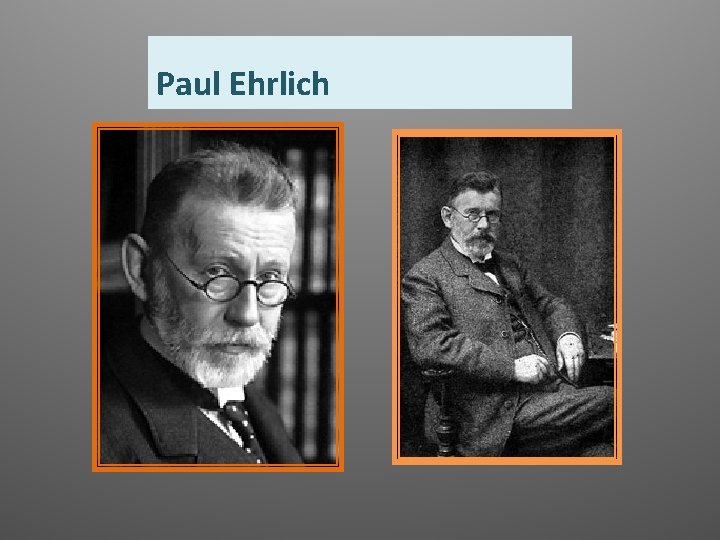
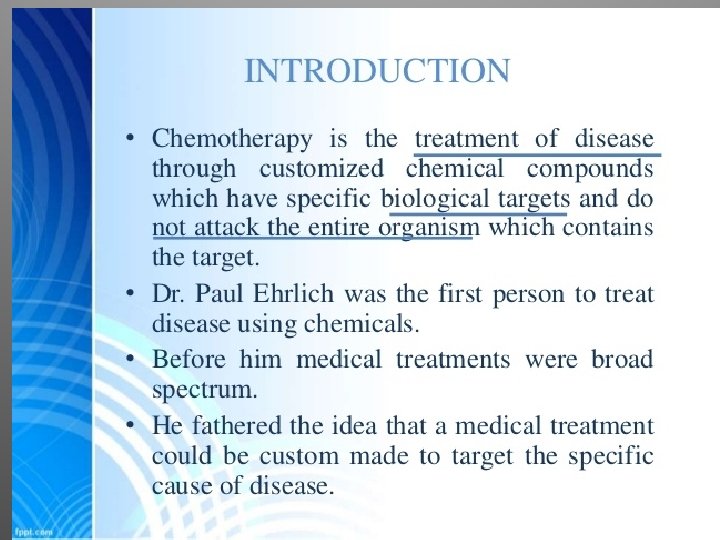
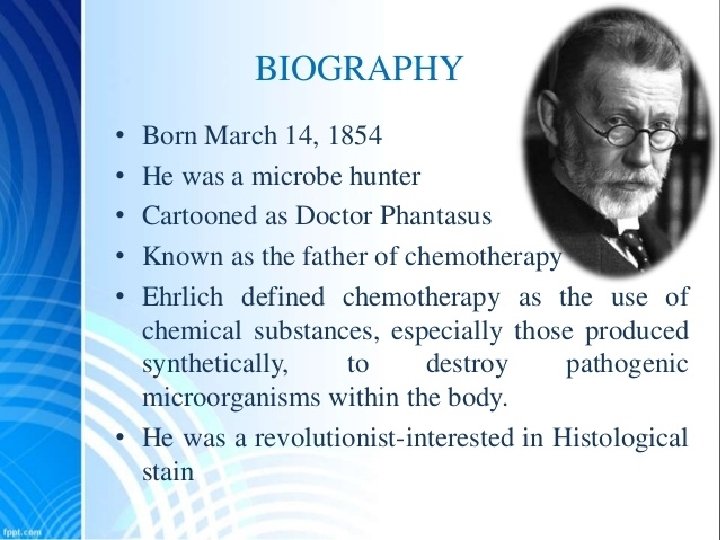
Paul Ehrlich
PAUL EHRLICH In the 1890’s Ehrlich proposed a theory of immunity in which antibodies were responsible for immunity( Antitoxin). In addition, he is known as the father of modern chemotherapy. He speculated about some “magic bullet” that would selectively find and destroy pathogens but not harm the host (Selective Toxicity). He also develop a staining procedure to identify tubercle bacilli.
Paul Ehrlich • • • Paul Ehrlich was a doctor during the mid 19 th century and early 20 th century. After his studies, he went to research more about how some cells had an attraction to certain chemicals. As time went on, Ehrlich got more interested in finding the cure for “sleeping sickness. ” He worked hard to find a chemical less stronger than Atoxyl because, even though it worked fine, it was an arsenic compound, which was poisonous. Ehrlich tried to find many alternatives for Atoxyl, more than 900, but later went back to. As he tested this alternative again with his colleague, they discovered that it didn’t work with the sleeping disease, but worked with a newly discovered disease called syphilis. This 606 th drug had cured the infectious disease among most of the black Americans. Social Impact: o During World War I, there was a social disturbance which started a widespread of syphilis among people. With the discovery of a cure for syphilis, it treated the many people who were affected with the disease.
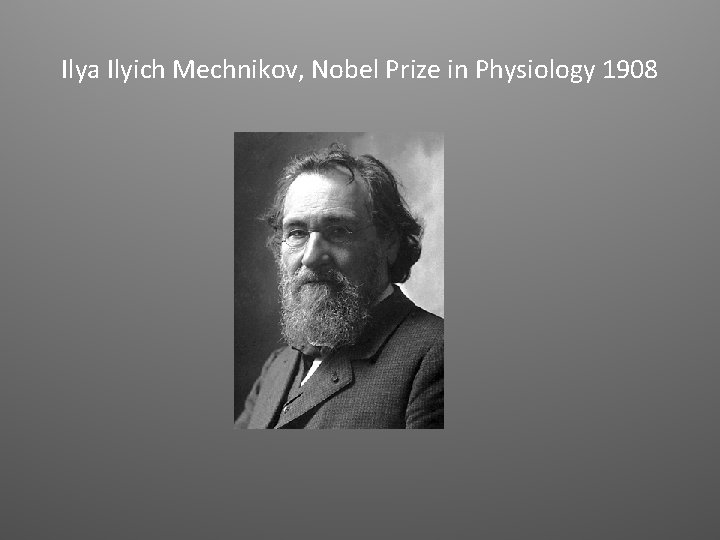
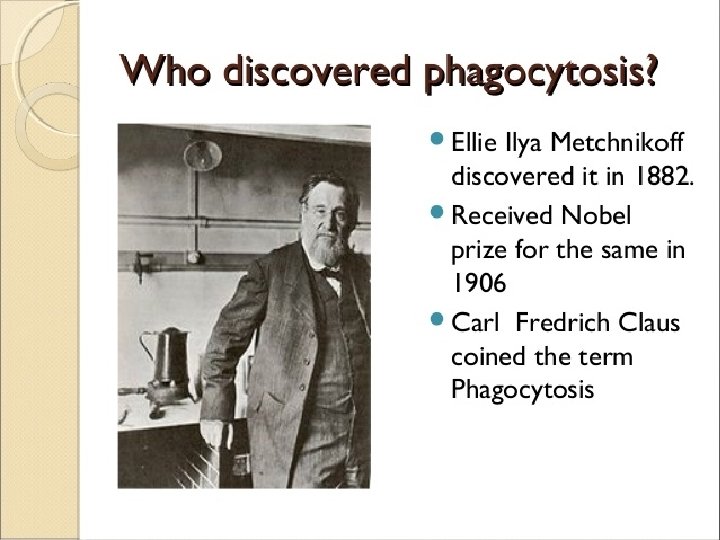
Ilya Ilyich Mechnikov, Nobel Prize in Physiology 1908
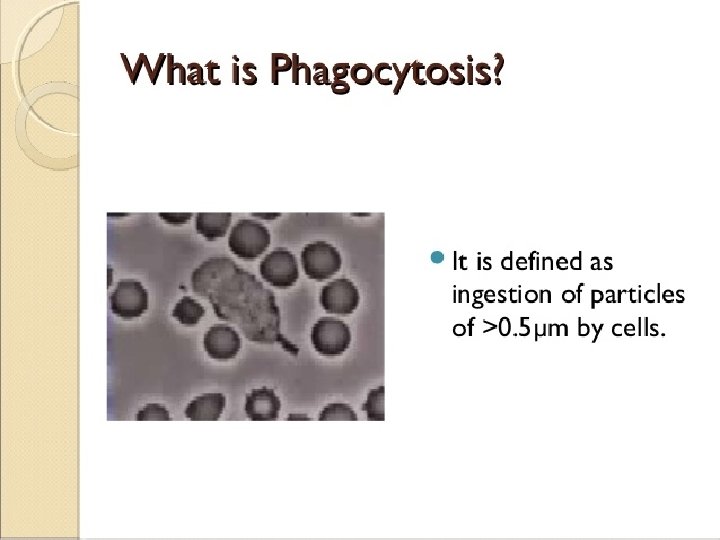
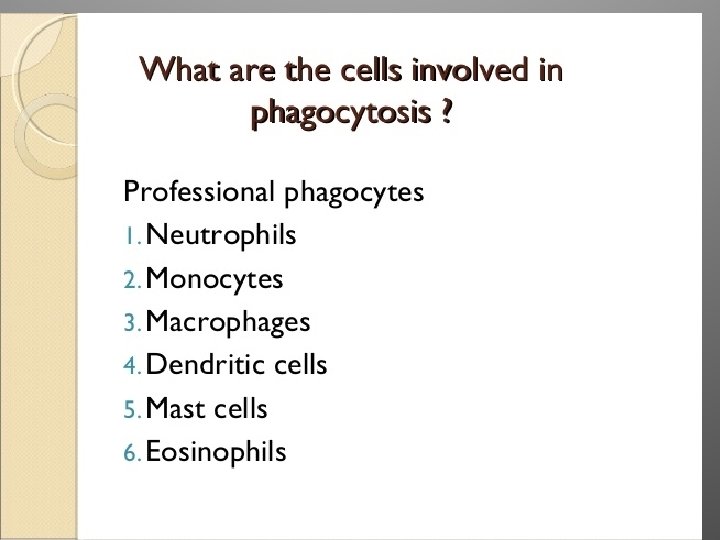
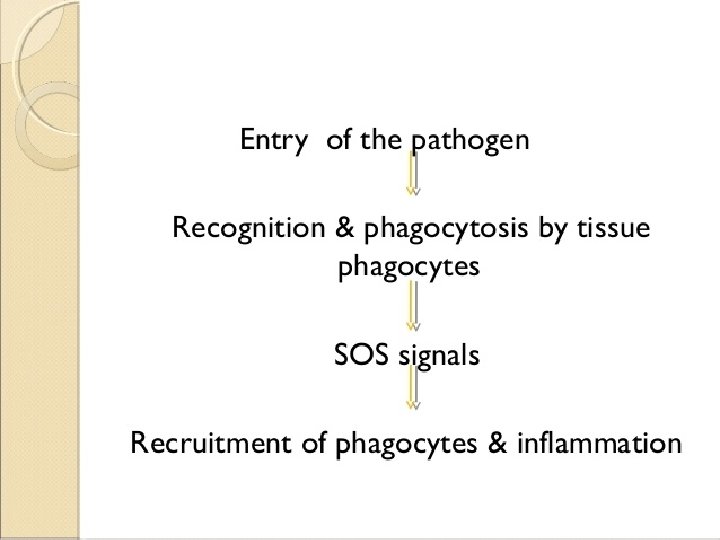
Ilya Ilyich Mechnikov (15 May 1845 – 15 July 1916) was a Russian zoologist best known for his pioneering research in immunology. In particular, he is credited with the discovery of phagocytes (macrophages) in 1882. This discovery turned out to be the major defence mechanism in innate immunity. He and Paul Ehrlich were jointly awarded the 1908 Nobel Prize in Physiology or Medicine "in recognition of their work on immunity".
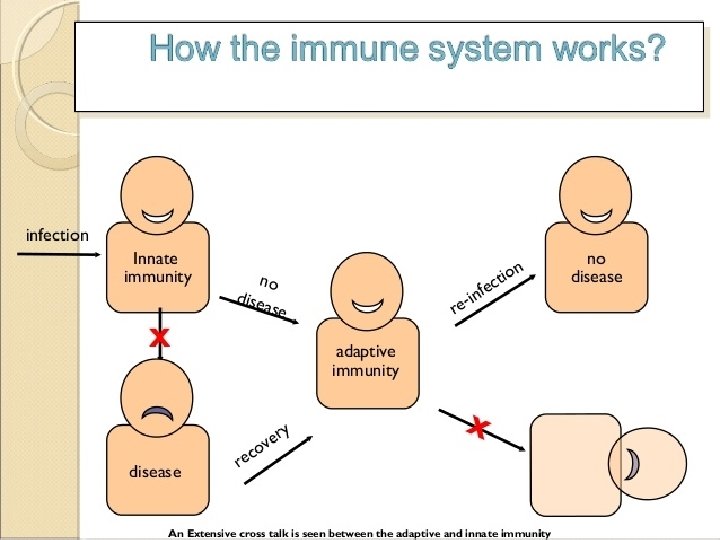
The innate immune system, also known as the nonspecific immune system or in-born immunity system, is an important subsystem of the overall immune system that comprises the cells and mechanisms involved in the defense of the host from infection by other organisms. The cells of the innate system recognize and respond to pathogens in a similar way, but, unlike the adaptive immune system, the system does not provide long-lasting immunity to the host. Innate immune systems are the first and immediate line of defense against infection, all classes of plant and animal life are endowed with.


u o y k n a Th
- Slides: 89