
History of Health Care 4000 BC 3000 BC

History of Health Care
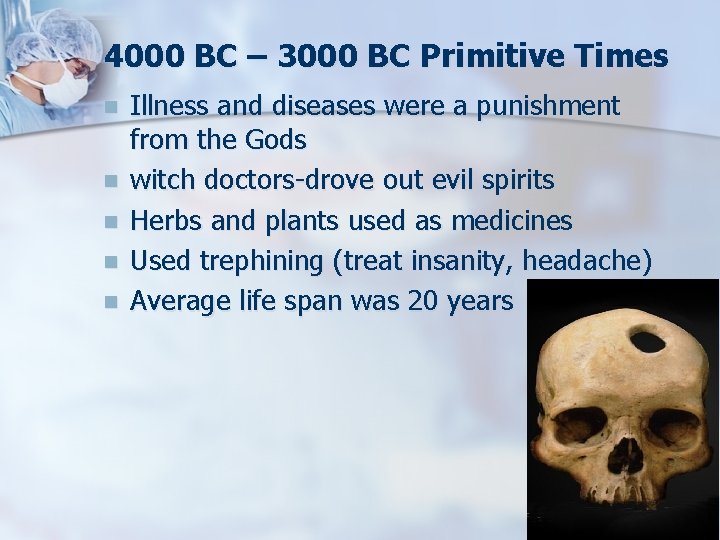
4000 BC – 3000 BC Primitive Times n n n Illness and diseases were a punishment from the Gods witch doctors-drove out evil spirits Herbs and plants used as medicines Used trephining (treat insanity, headache) Average life span was 20 years
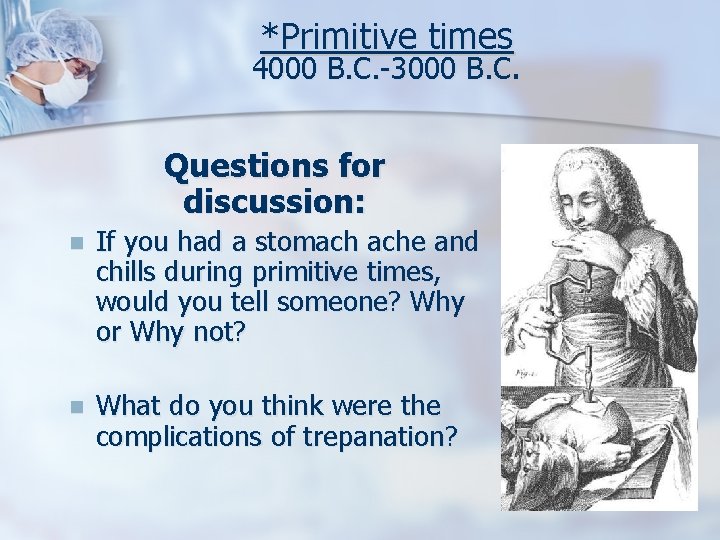
*Primitive times 4000 B. C. -3000 B. C. Questions for discussion: n If you had a stomach ache and chills during primitive times, would you tell someone? Why or Why not? n What do you think were the complications of trepanation?

3000 BC – 300 BC Ancient Egyptians n Physicians were priests n Bloodletting or leeches used n First to record health records n Average life span was 20 -30 years
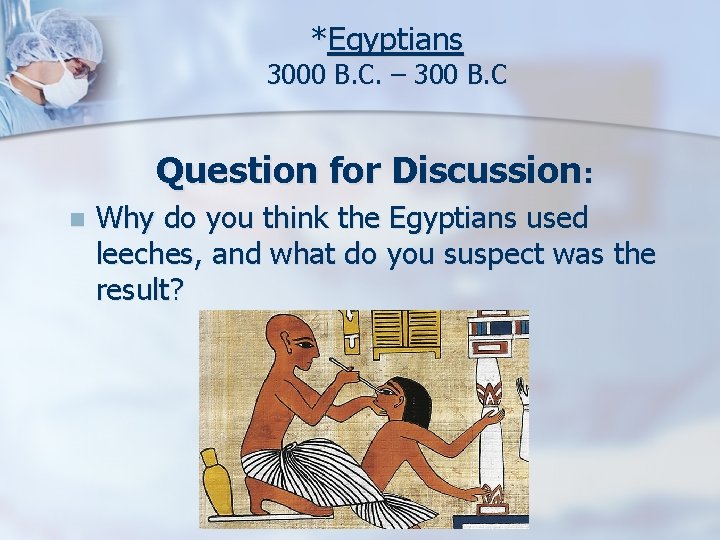
*Egyptians 3000 B. C. – 300 B. C Question for Discussion: n Why do you think the Egyptians used leeches, and what do you suspect was the result?
1700 BC – AD 220 Ancient Chinese n n Used acupuncture Believed to cure the whole body by treating mind, body, and spirit. Began to search for medical reasons for illness Average life span was 20 -30 years
1200 BC – 200 BC Ancient Greeks n n n First to observe the human body and the effects of disease – “founders of modern medical sciences”. Believed illness is a result of natural causes First to require licensing of physicians Used therapies such as massage and herbal treatment Average life span was 25 -35 years

753 BC – AD 410 Ancient Romans n n Established first hospitals by providing care for injured soldiers in their homes. First public health by building sewers and aquaducts Built sanitation systems to prevent disease Life span was 25 -35 years
AD 400 – AD 800 Dark Ages Emphasis on saving the soul--study of medicine was prohibited n Prayer was used to treat illness & disease n Monks and priests provided custodial care for ill people n Average life span was 20 -30 years n
AD 800 – AD 1400 Middle Ages n n Renewed interest in medical practices of Greek and Romans Bubonic Plague killed 75% of population in Europe and Asia Major diseases included smallpox, diptheria, tuberculosis, typhoid, the plague, and malaria Average life span was 20 -35 years
AD 1350 – AD 1650 Renaissance Known as the “rebirth of the science of medicine” n Dissection of body led to increased understanding of anatomy and physiology n Invention of printing press n First anatomy book n Average life span was 30 -40 years n
16 th and 17 th Centuries n Leading cause of death from infections n Invention of the microscope and discovery that disease was caused by microorganisms. n Apothecaries (early pharmicists) made, prescribed, and sold medications n Average life span 35 -45 years
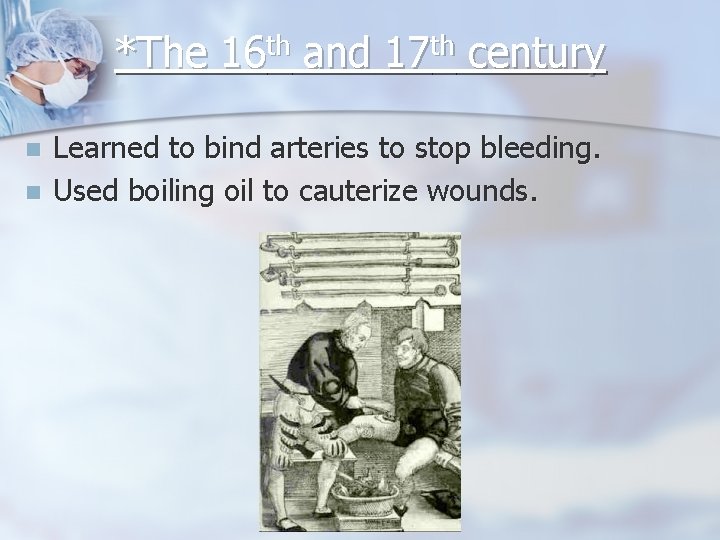
*The 16 th and 17 th century n n Learned to bind arteries to stop bleeding. Used boiling oil to cauterize wounds.
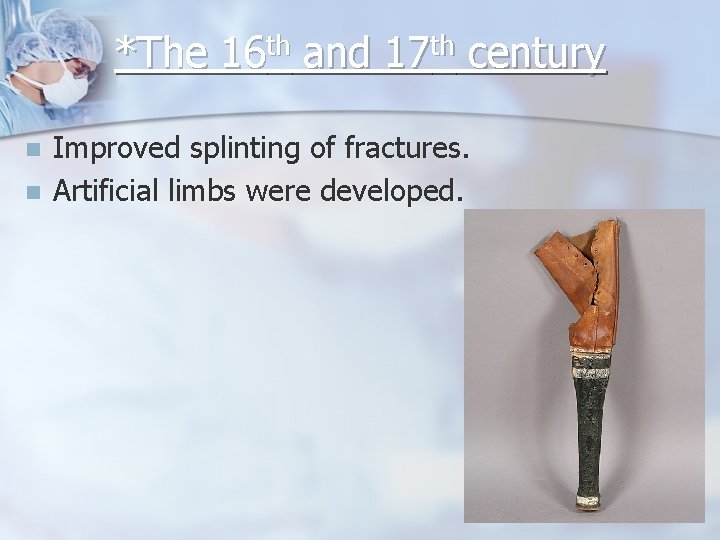
*The 16 th and 17 th century n n Improved splinting of fractures. Artificial limbs were developed.
18 th Century Gabriel Fahrenheit created the first mercury thermometer n First scientific surgical procedures n Benjamin Franklin invented bifocals n Average life span 40 -50 years n
19 th Century n n n Discoveries of microorganisms, anesthesia, and vaccinations Infection control developed Formal training for nurses began Women became active participants in health care Average life span 40 -60 years

20 th Century n Role of blood in the body ABO blood groups discovered n New medications were developed n n n Insulin: treat diabetes Antibiotics: fight infection Vaccines developed New machines developed n n Kidney Dialysis Machine Heart Lung Machine

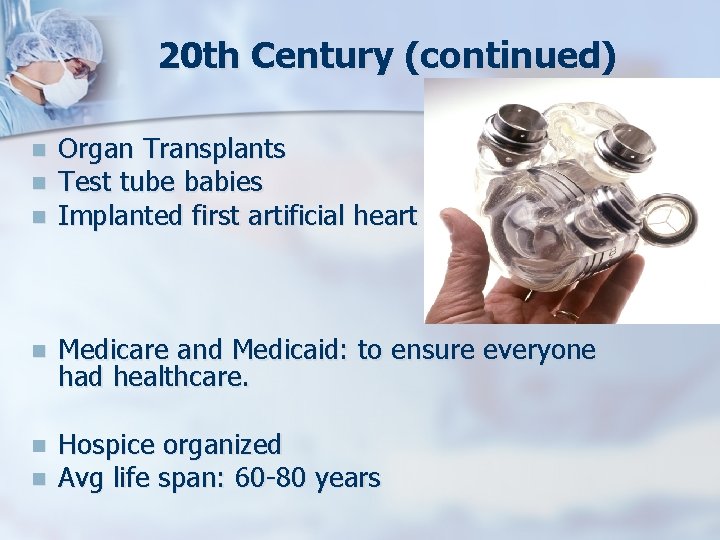
20 th Century (continued) n n n Organ Transplants Test tube babies Implanted first artificial heart n Medicare and Medicaid: to ensure everyone had healthcare. n Hospice organized Avg life span: 60 -80 years n
21 st Century n The first totally implantable artificial heart n The Netherlands first country in the world to legalize euthanasia n The Human Genome Project to identify all 20, 000 to 25, 000 genes in the body n Stem cell research
21 st Century n Health Insurance Portability and Accountability Act (HIPAA) went into effect n Vaccinations for cervical cancer and shingles n Average life span 60 -80 years
Potential for Beyond n Cures for AIDS, cancer, and heart disease n Nerves in the brain and spinal cord are regenerated to prevent paralysis n Average life span 90 -100 years

Current Trends in Health Care
Cost Containment n Cost of health care is rising due to: n n Technological advances Aging population Health-related lawsuits Cost Containment measures include: n n Combination of services Outpatient services Mass or bulk purchasing Early intervention and preventive services

n Specialized health care facilities include: n Home health care (care at home) n Hospice care (terminally ill) n Geriatric care (elderly) n Telemedicine

n Emphasis on promoting wellness of the whole individual: “Holistic Health” n Physical wellness n Emotional wellness n Social wellness n Mental and intellectual wellness n Spiritual Wellness

Individual Contributions

Hippocrates (460 – 377 BC) n Greek physician “Father of Medicine” n “Hippocratic Oath” n Believed illness was not caused by evil spirits
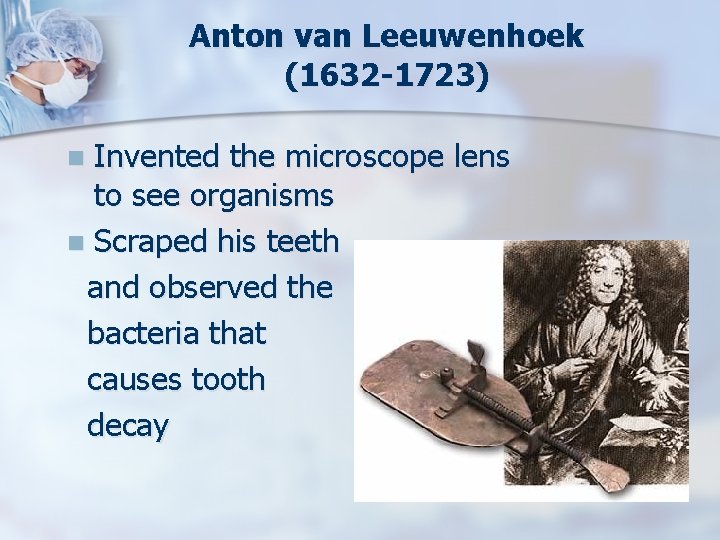
Anton van Leeuwenhoek (1632 -1723) Invented the microscope lens to see organisms n Scraped his teeth and observed the bacteria that causes tooth decay n
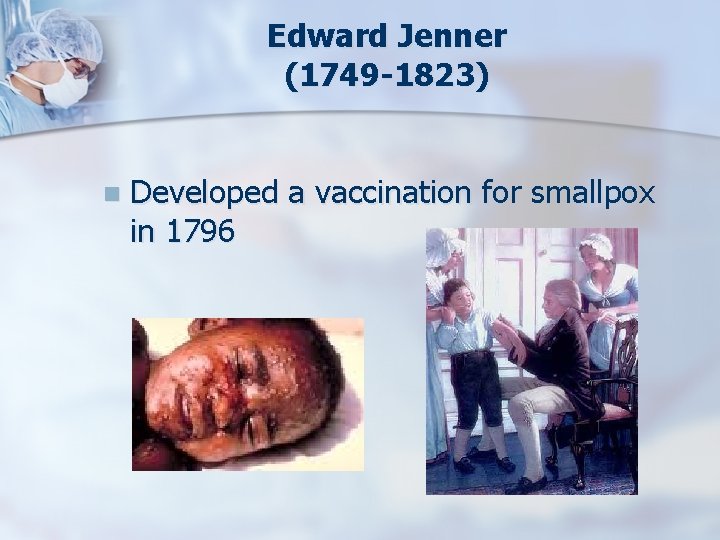
Edward Jenner (1749 -1823) n Developed a vaccination for smallpox in 1796
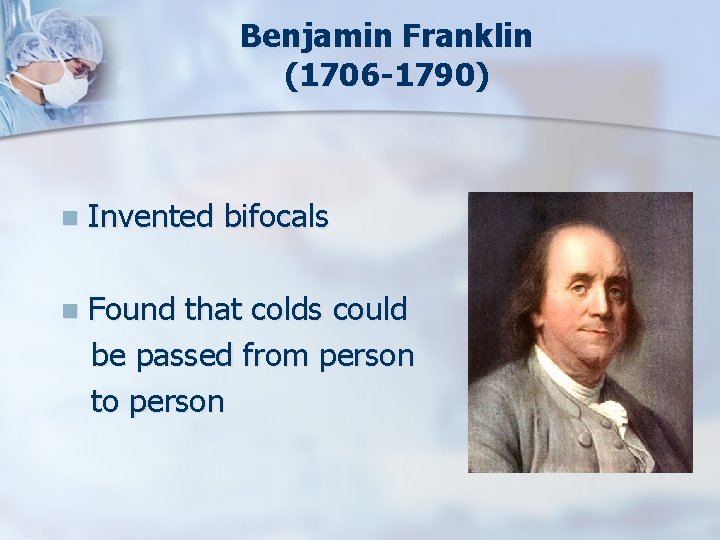
Benjamin Franklin (1706 -1790) n Invented bifocals n Found that colds could be passed from person to person
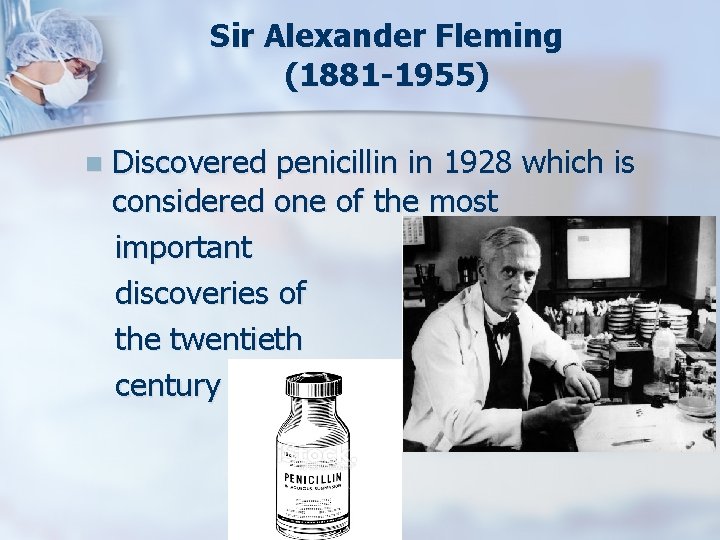
Sir Alexander Fleming (1881 -1955) n Discovered penicillin in 1928 which is considered one of the most important discoveries of the twentieth century
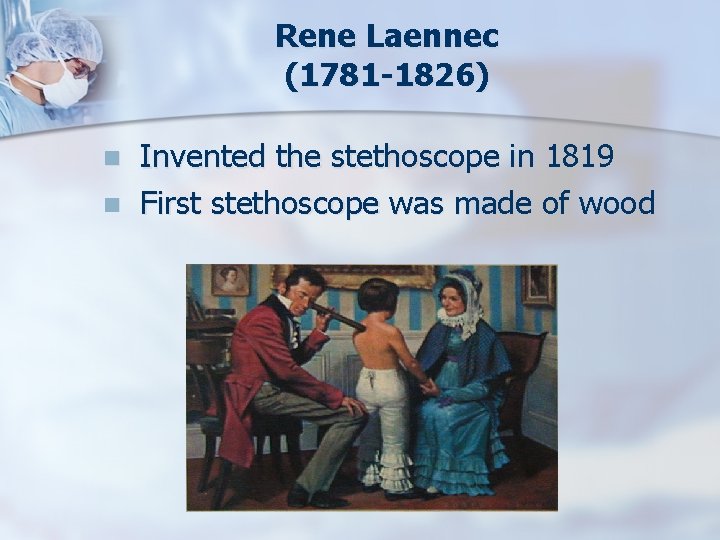
Rene Laennec (1781 -1826) n n Invented the stethoscope in 1819 First stethoscope was made of wood
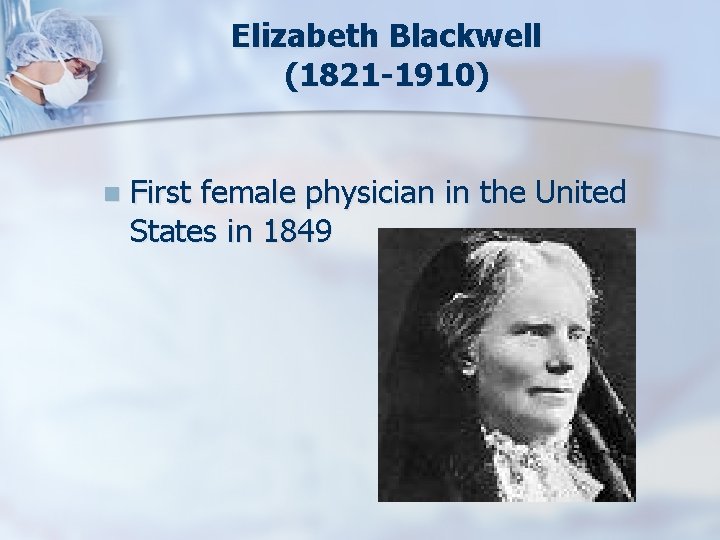
Elizabeth Blackwell (1821 -1910) n First female physician in the United States in 1849
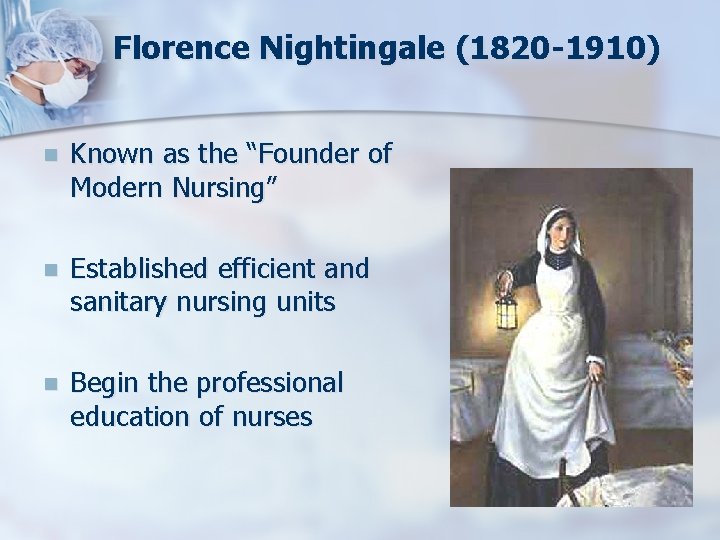
Florence Nightingale (1820 -1910) n Known as the “Founder of Modern Nursing” n Established efficient and sanitary nursing units n Begin the professional education of nurses
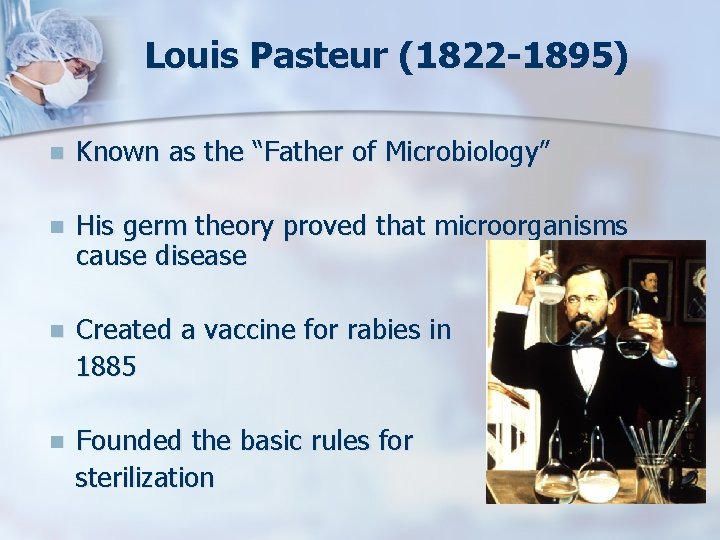
Louis Pasteur (1822 -1895) n Known as the “Father of Microbiology” n His germ theory proved that microorganisms cause disease n Created a vaccine for rabies in 1885 n Founded the basic rules for sterilization
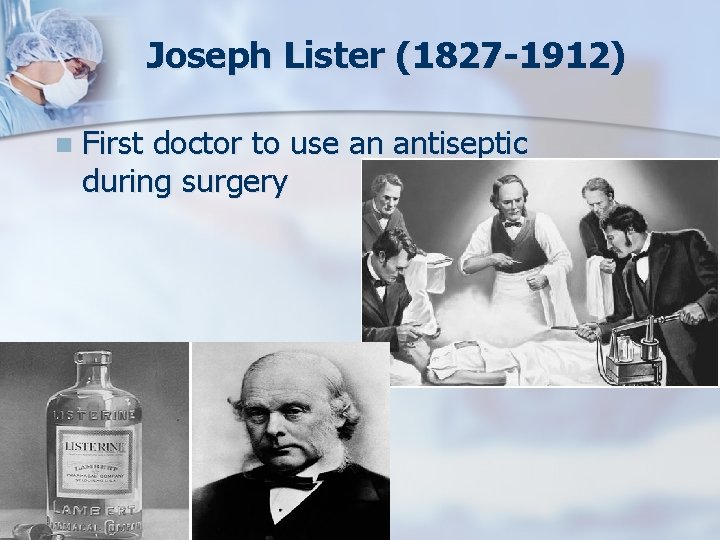
Joseph Lister (1827 -1912) n First doctor to use an antiseptic during surgery
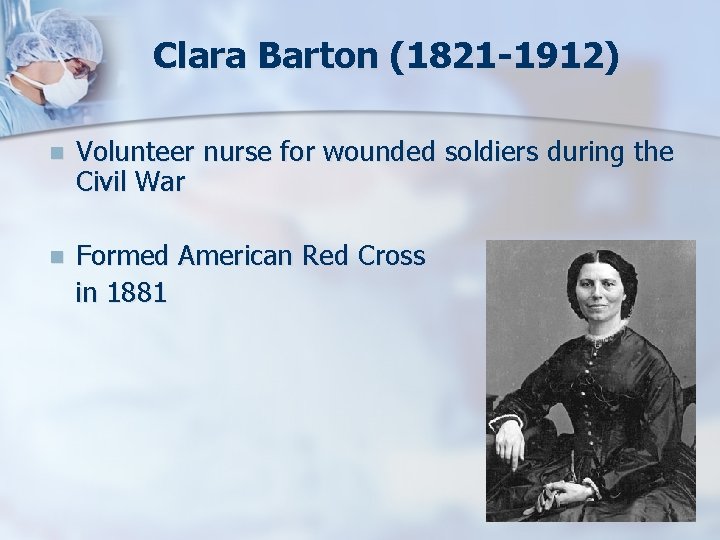
Clara Barton (1821 -1912) n Volunteer nurse for wounded soldiers during the Civil War n Formed American Red Cross in 1881
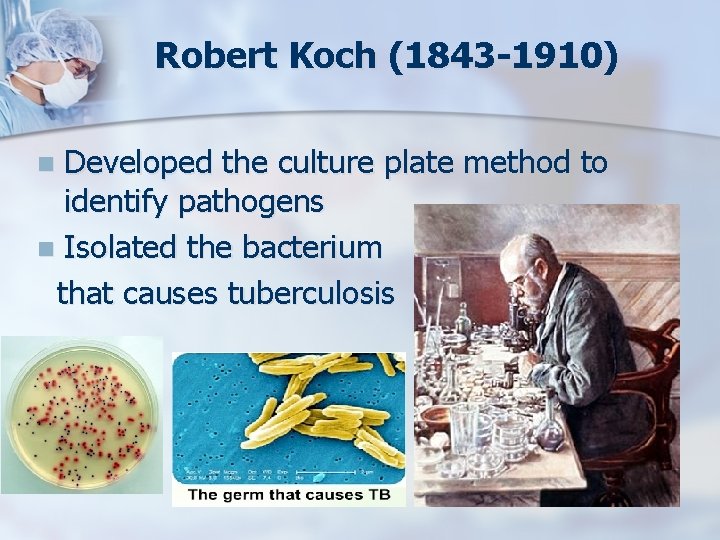
Robert Koch (1843 -1910) Developed the culture plate method to identify pathogens n Isolated the bacterium that causes tuberculosis n
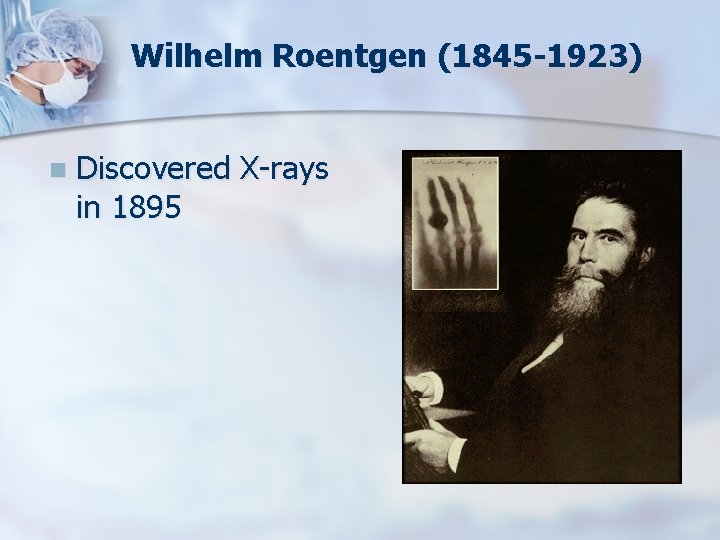
Wilhelm Roentgen (1845 -1923) n Discovered X-rays in 1895
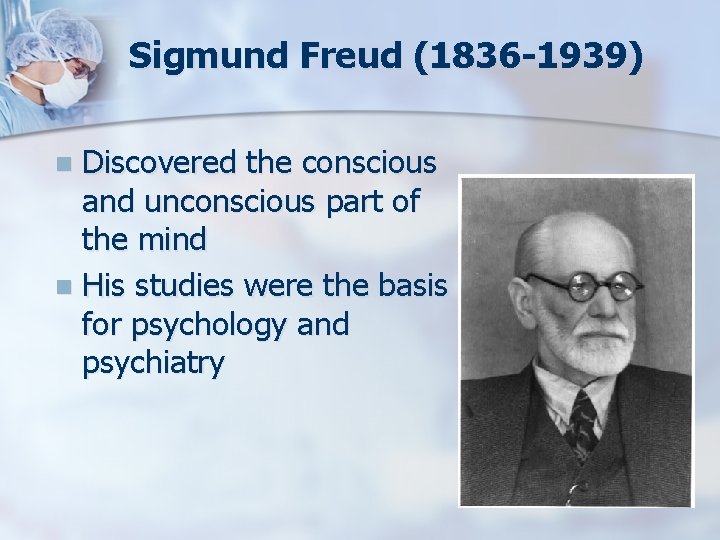
Sigmund Freud (1836 -1939) Discovered the conscious and unconscious part of the mind n His studies were the basis for psychology and psychiatry n
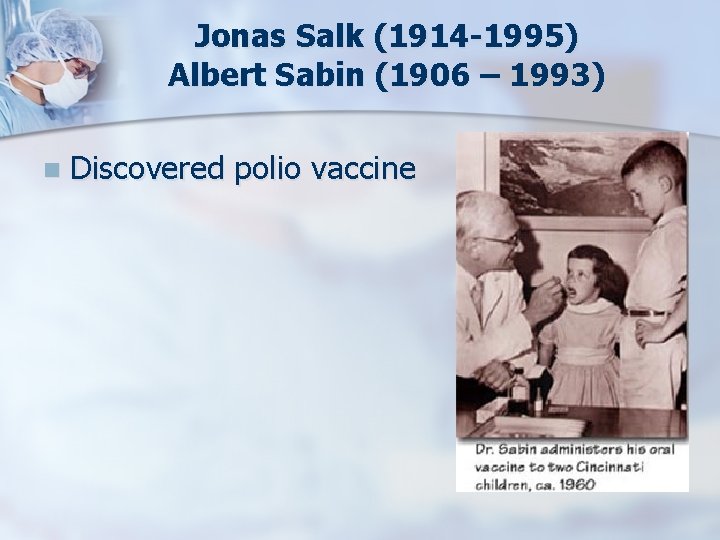
Jonas Salk (1914 -1995) Albert Sabin (1906 – 1993) n Discovered polio vaccine
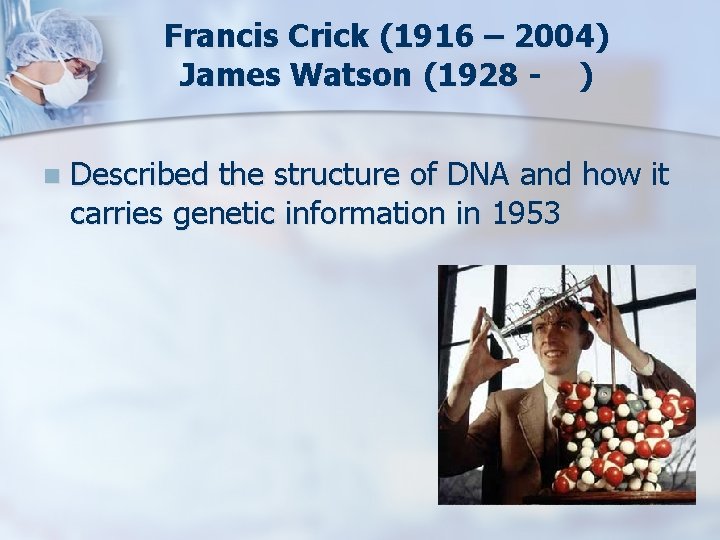
Francis Crick (1916 – 2004) James Watson (1928 - ) n Described the structure of DNA and how it carries genetic information in 1953
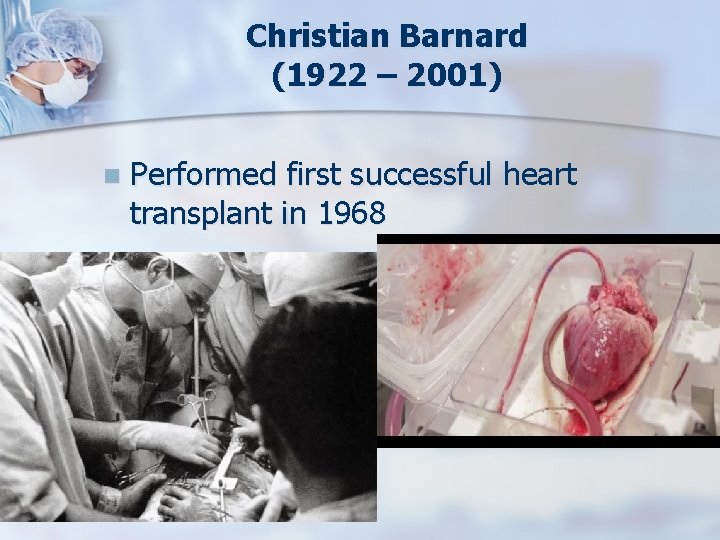
Christian Barnard (1922 – 2001) n Performed first successful heart transplant in 1968
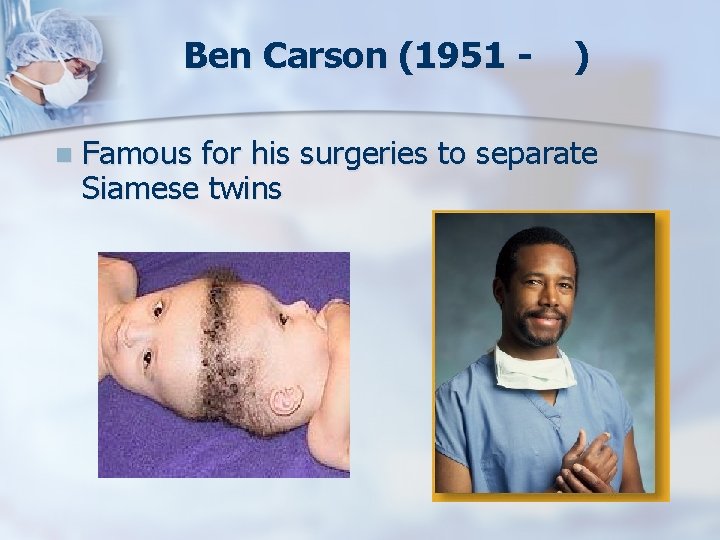
Ben Carson (1951 n ) Famous for his surgeries to separate Siamese twins
Robert Jarvik n Creator of the first artificial heart n December 2, 1982, lived for the next 112 days n The second patient lived for 620 days
- Slides: 46