
History of Europe Ch 11 Section 1 Part
- Slides: 11
History of Europe Ch. 11, Section 1 Part 1: Ancient Europe
Today’s Main Idea • Which two ancient civilizations laid the foundation of European civilization? – Ancient Greece and Rome • “Classical World”
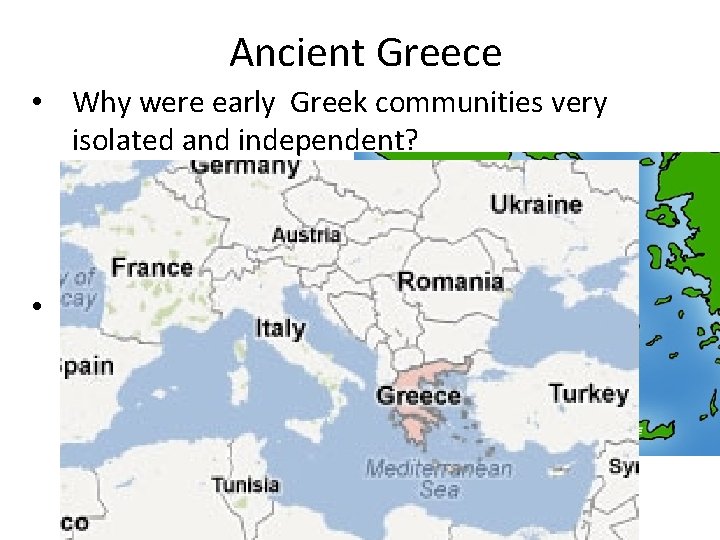
Ancient Greece • Why were early Greek communities very isolated and independent? • • • Mountains Islands Seas • City-States • • • Independent territories Made of a city and its surrounding area Shared a common language and culture
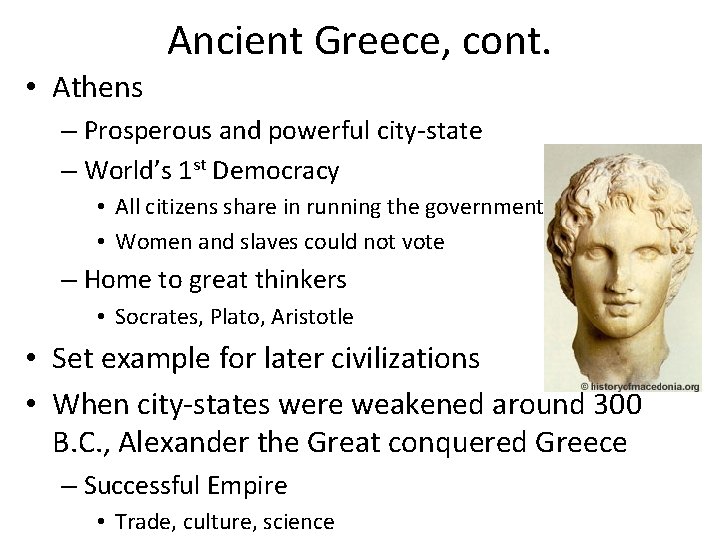
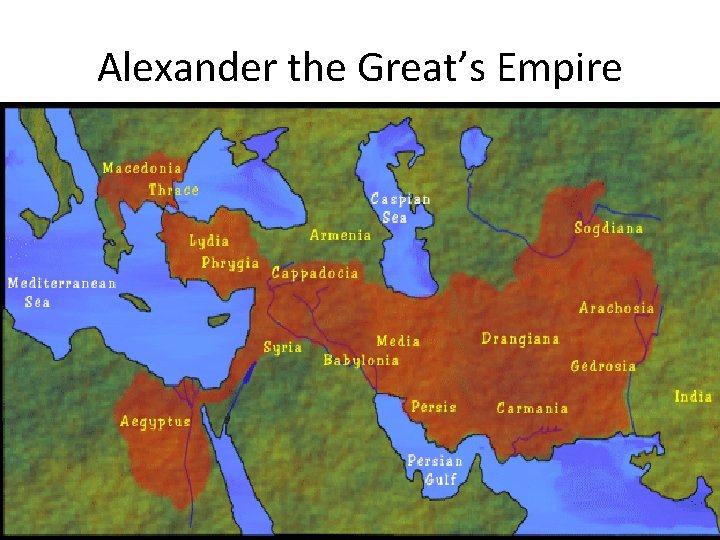
Ancient Greece, cont. • Athens – Prosperous and powerful city-state – World’s 1 st Democracy • All citizens share in running the government • Women and slaves could not vote – Home to great thinkers • Socrates, Plato, Aristotle • Set example for later civilizations • When city-states were weakened around 300 B. C. , Alexander the Great conquered Greece – Successful Empire • Trade, culture, science
Alexander the Great’s Empire
Roman Empire • Began on Italian Peninsula • Republic – People elected their leaders • Consuls • Senate • Code of Laws – All free citizens had the right to be treated equally • “innocent until proven guilty” • 200 B. C. - began expanding empire – Allowed conquered people to become citizens • Why was this important? – Loyalty
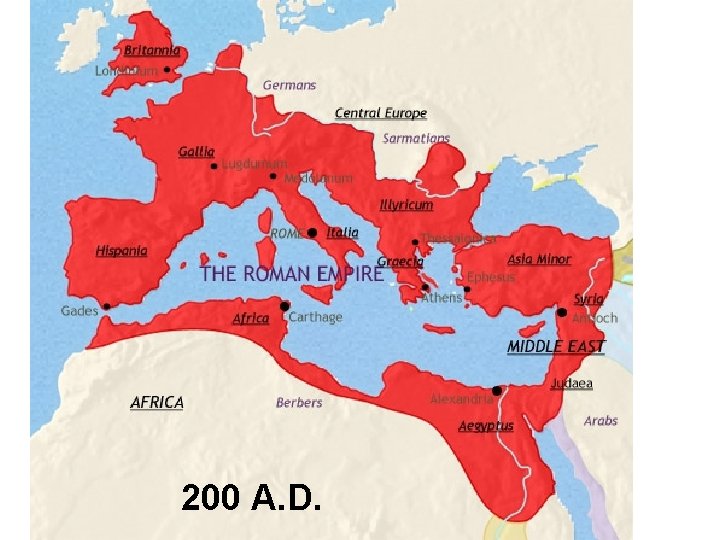
1 A. D. 200 A. D. B. C. 200
Roman Empire (cont. ) • • Expanded into a MASSIVE empire Julius Caesar takes over as dictator (44 BC) First Emperor = Augustus (27 BC) Pax Romana – “Roman Peace” – Time of artistic growth and expanded trade – Lasted 200 years
Roman Empire (cont. ) • Christianity – Romans crucified Jesus – Persecution of Christians – Became Rome’s official religion in 392 A. D. • Why did the Roman Empire decline? – Power struggle to become emperor – Germanic groups (Barbarians) attacked from the north
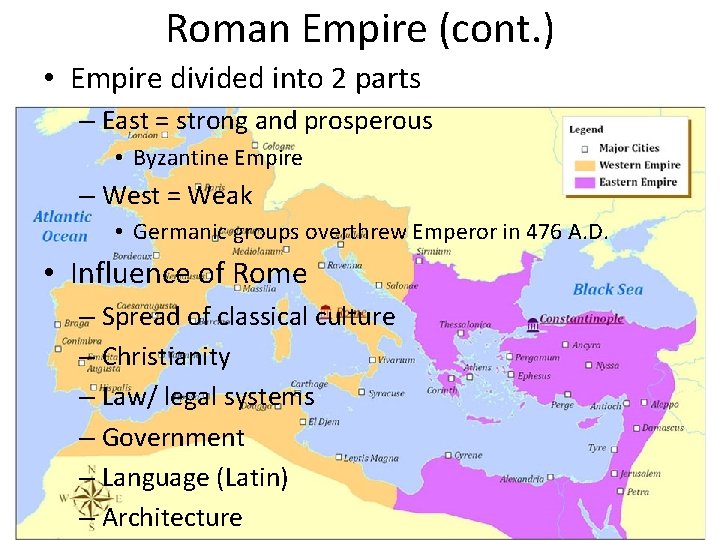
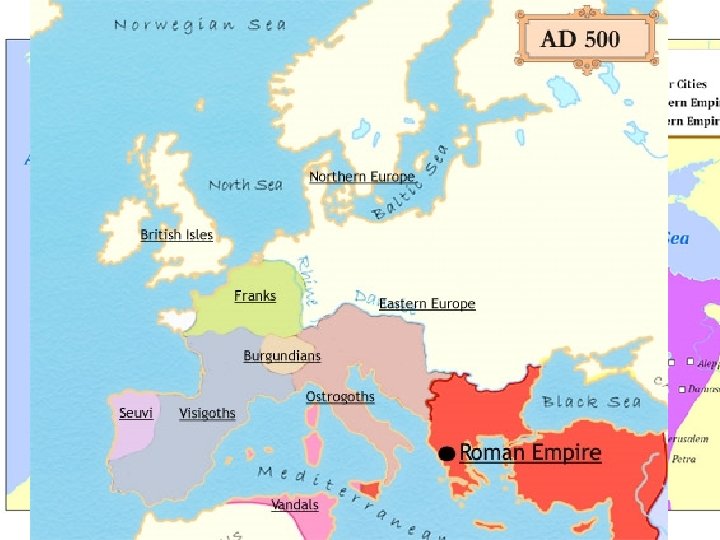
Roman Empire (cont. ) • Empire divided into 2 parts – East = strong and prosperous • Byzantine Empire – West = Weak • Germanic groups overthrew Emperor in 476 A. D. • Influence of Rome – Spread of classical culture – Christianity – Law/ legal systems – Government – Language (Latin) – Architecture
200 A. D.