
History of Education By Seoyoung An First public

History of Education By Seoyoung An
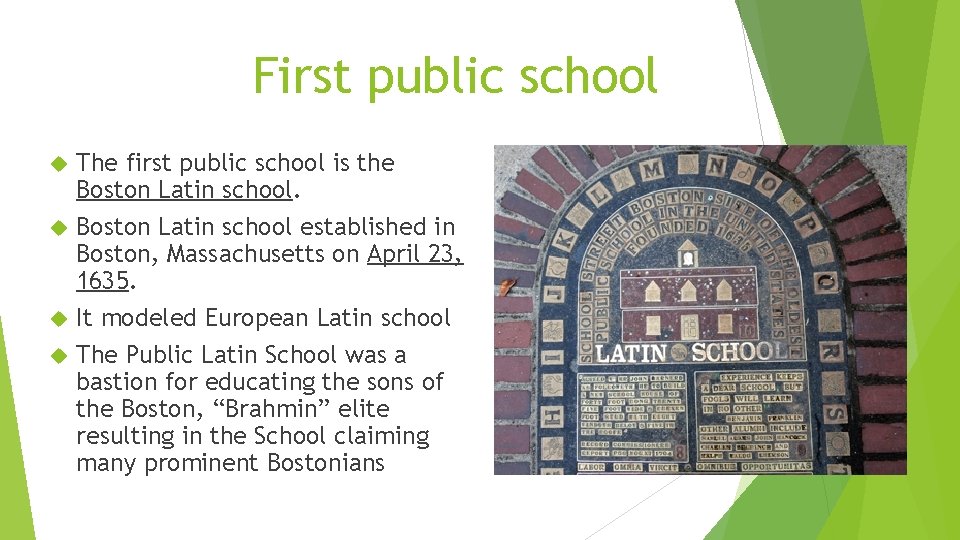
First public school The first public school is the Boston Latin school established in Boston, Massachusetts on April 23, 1635. It modeled European Latin school The Public Latin School was a bastion for educating the sons of the Boston, “Brahmin” elite resulting in the School claiming many prominent Bostonians
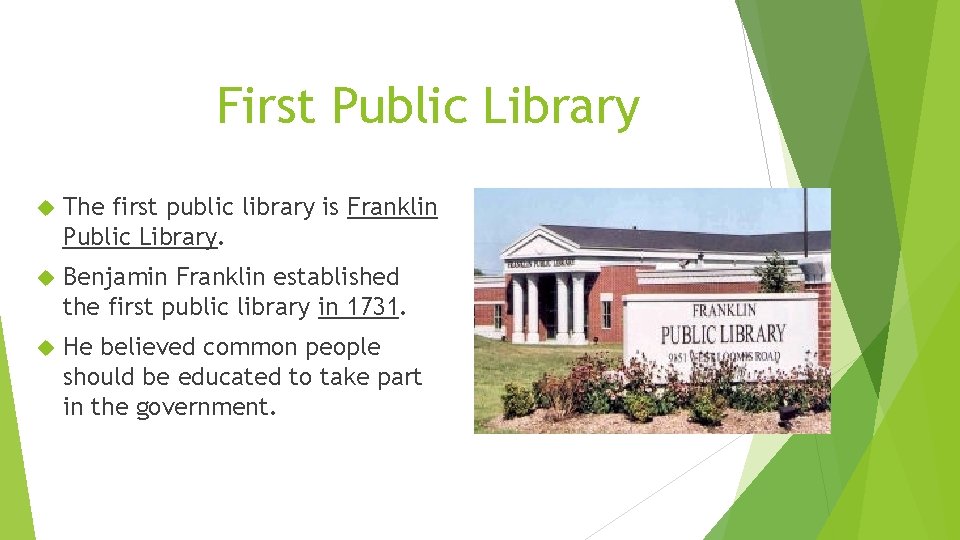
First Public Library The first public library is Franklin Public Library. Benjamin Franklin established the first public library in 1731. He believed common people should be educated to take part in the government.
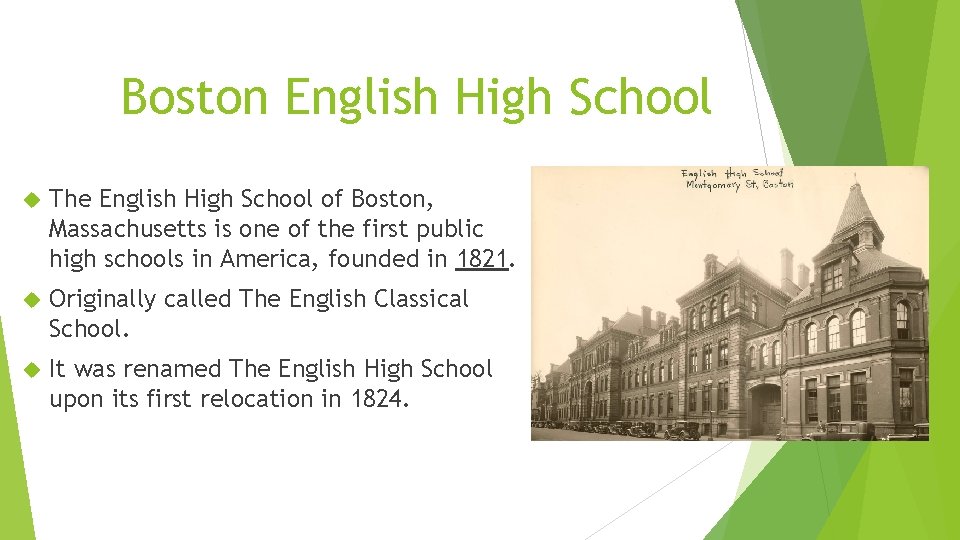
Boston English High School The English High School of Boston, Massachusetts is one of the first public high schools in America, founded in 1821. Originally called The English Classical School. It was renamed The English High School upon its first relocation in 1824.
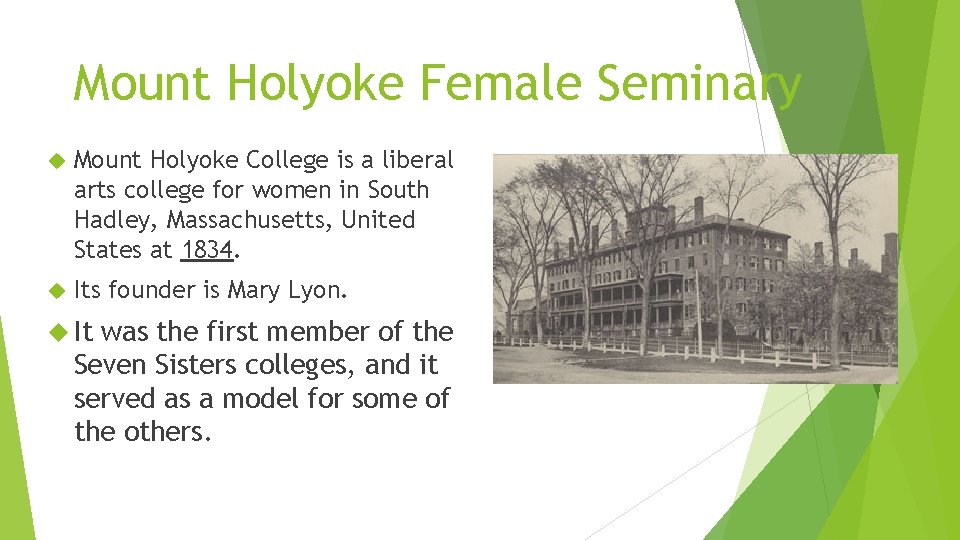
Mount Holyoke Female Seminary Mount Holyoke College is a liberal arts college for women in South Hadley, Massachusetts, United States at 1834. Its founder is Mary Lyon. It was the first member of the Seven Sisters colleges, and it served as a model for some of the others.
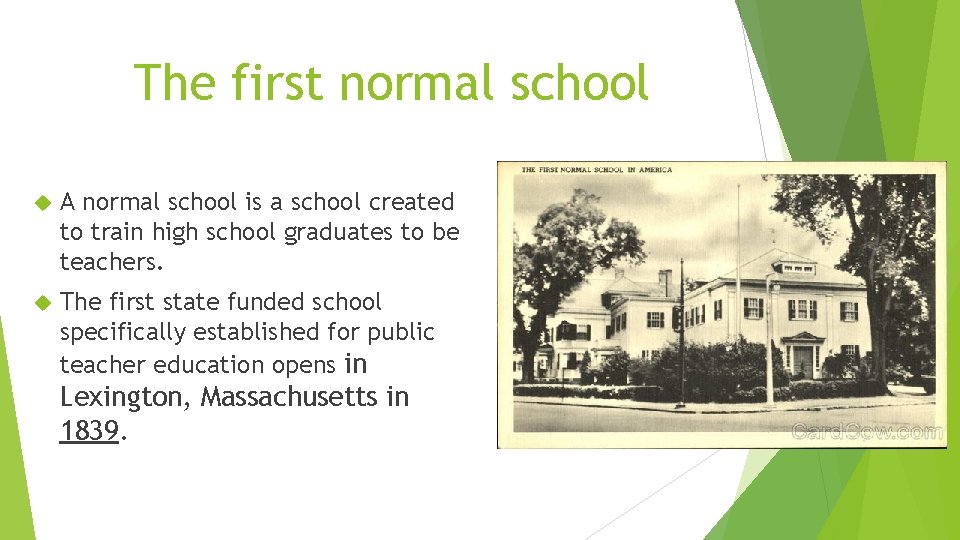
The first normal school A normal school is a school created to train high school graduates to be teachers. The first state funded school specifically established for public teacher education opens in Lexington, Massachusetts in 1839.
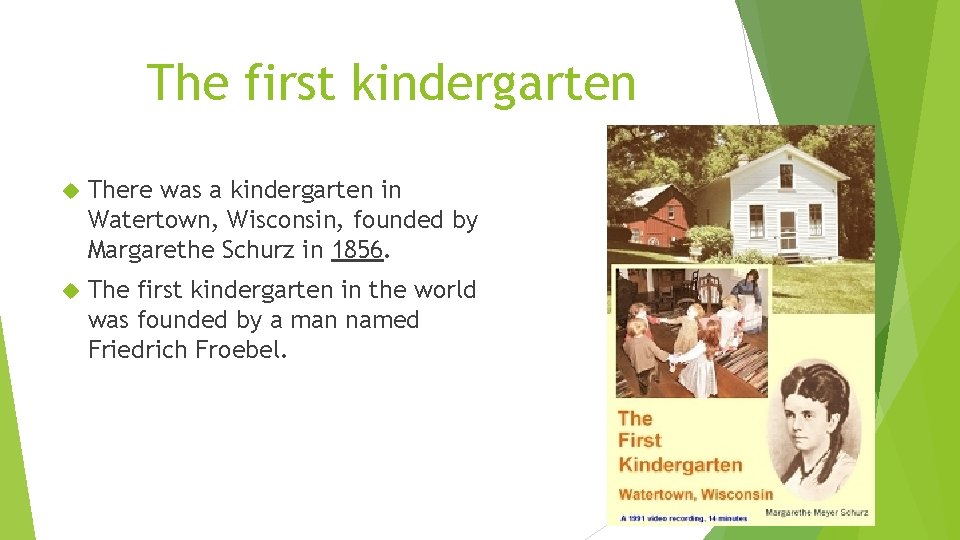
The first kindergarten There was a kindergarten in Watertown, Wisconsin, founded by Margarethe Schurz in 1856. The first kindergarten in the world was founded by a man named Friedrich Froebel.
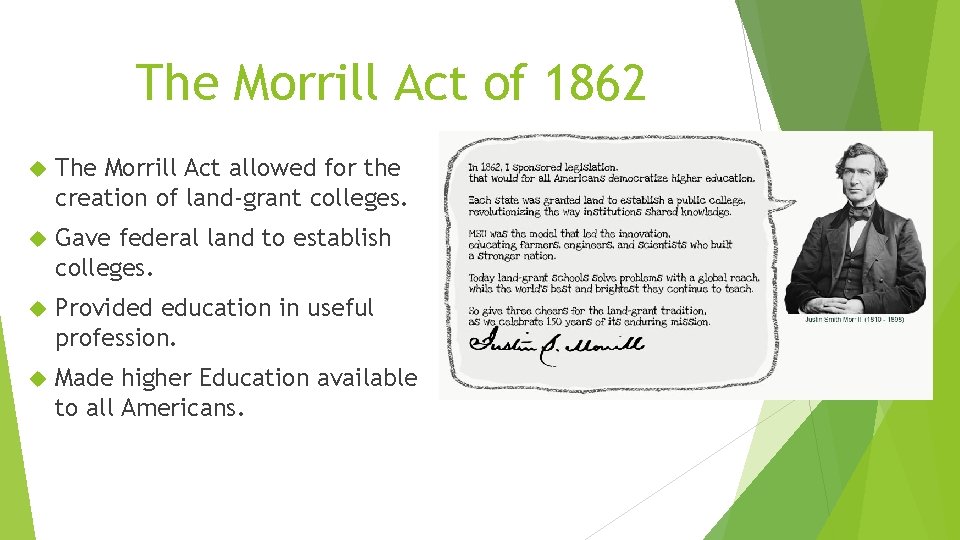
The Morrill Act of 1862 The Morrill Act allowed for the creation of land-grant colleges. Gave federal land to establish colleges. Provided education in useful profession. Made higher Education available to all Americans.
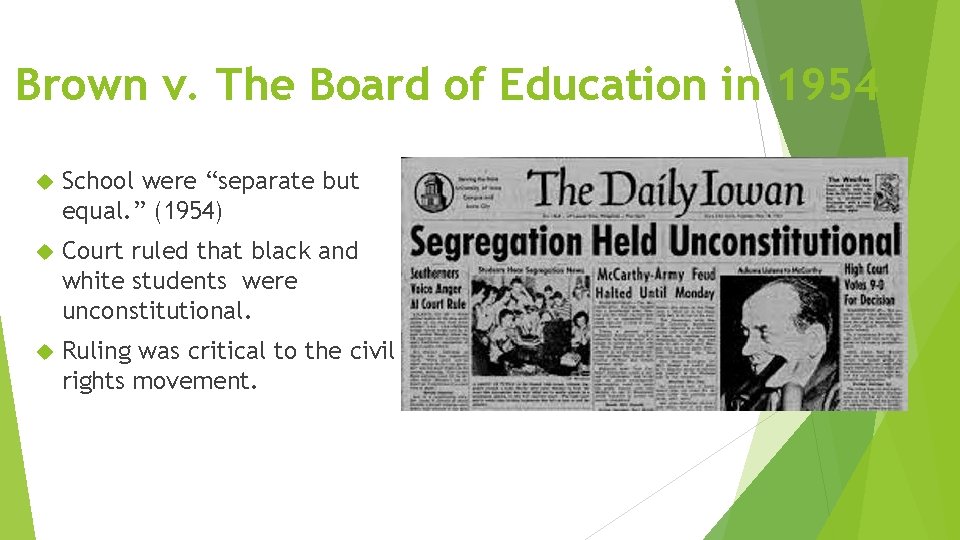
Brown v. The Board of Education in 1954 School were “separate but equal. ” (1954) Court ruled that black and white students were unconstitutional. Ruling was critical to the civil rights movement.
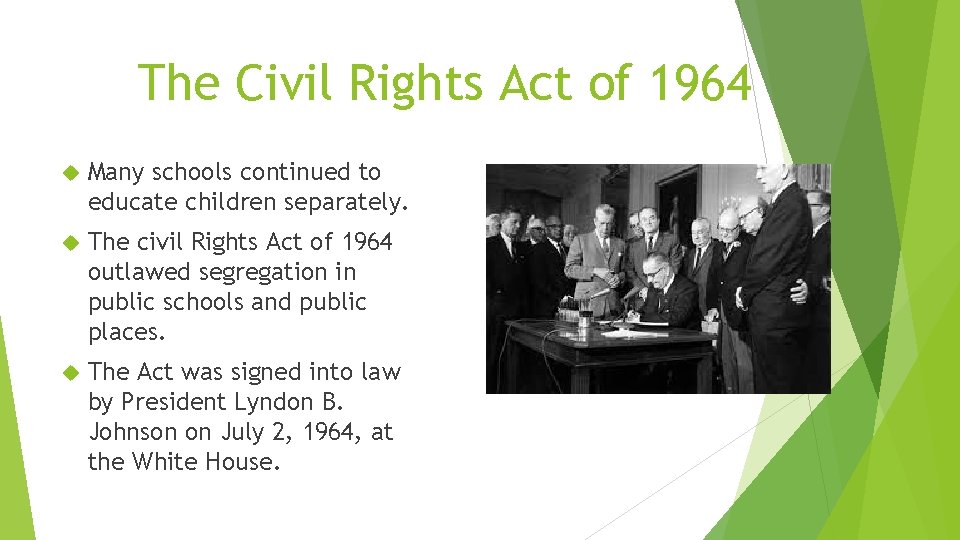
The Civil Rights Act of 1964 Many schools continued to educate children separately. The civil Rights Act of 1964 outlawed segregation in public schools and public places. The Act was signed into law by President Lyndon B. Johnson on July 2, 1964, at the White House.
Elementary and Secondary Education Act of 1965 On April 9, 1965 Congress enacted the Elementary and Secondary Education Act of 1965, the most expansive federal education bill ever passed. It is significant to note the bill was enacted less than three months after it was introduced, as part of President Lyndon B. Johnson’s “War on Poverty. ”
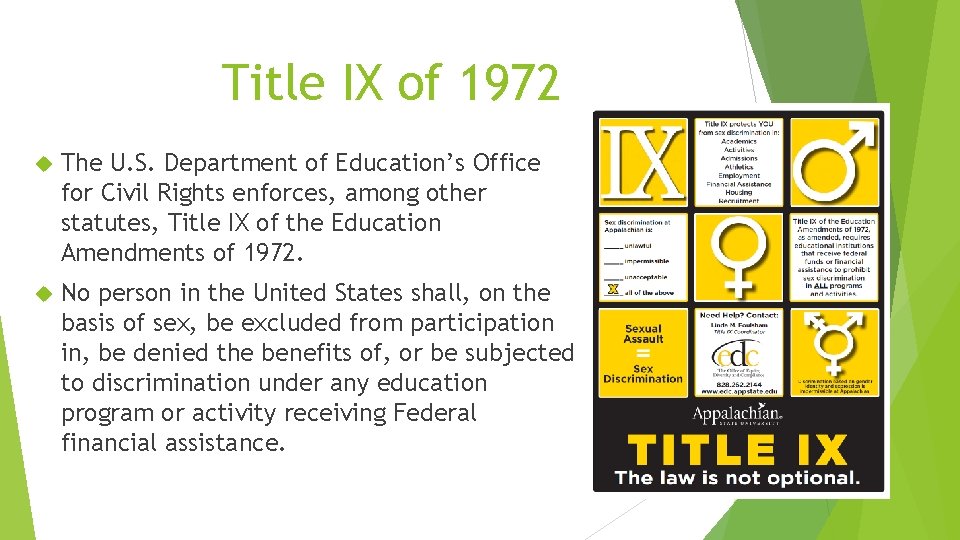
Title IX of 1972 The U. S. Department of Education’s Office for Civil Rights enforces, among other statutes, Title IX of the Education Amendments of 1972. No person in the United States shall, on the basis of sex, be excluded from participation in, be denied the benefits of, or be subjected to discrimination under any education program or activity receiving Federal financial assistance.
Vocational Rehabilitation Act of 1973 The Vocational Rehabilitation Act of 1973 was put in place to correct the problem of discrimination against people with disabilities in the US. Individuals who qualify as having a disability have experienced discrimination because negative attitudes in regards to their ability to be an effective employee.
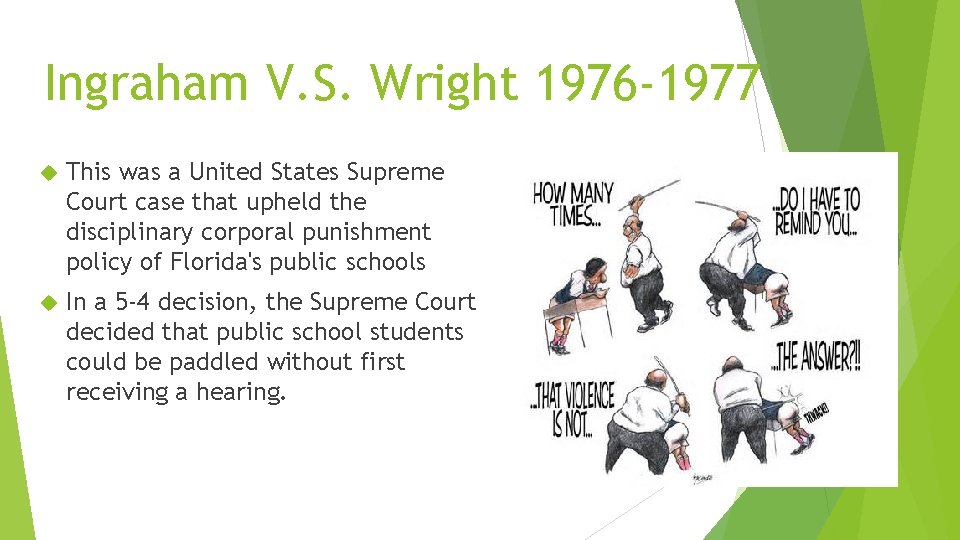
Ingraham V. S. Wright 1976 -1977 This was a United States Supreme Court case that upheld the disciplinary corporal punishment policy of Florida's public schools In a 5 -4 decision, the Supreme Court decided that public school students could be paddled without first receiving a hearing.
The Goals 2000: Educate America Act The Goals 2000 was signed into law on March 31, 1994, by President Bill Clinton. The National educational Goals were set by the U. S. Congress in the 1990 s to set goals for standards-based education reform. Many of these goals were based on the principles of outcomes-based education, and not all of the goals were attained by the year 2000 as was intended.
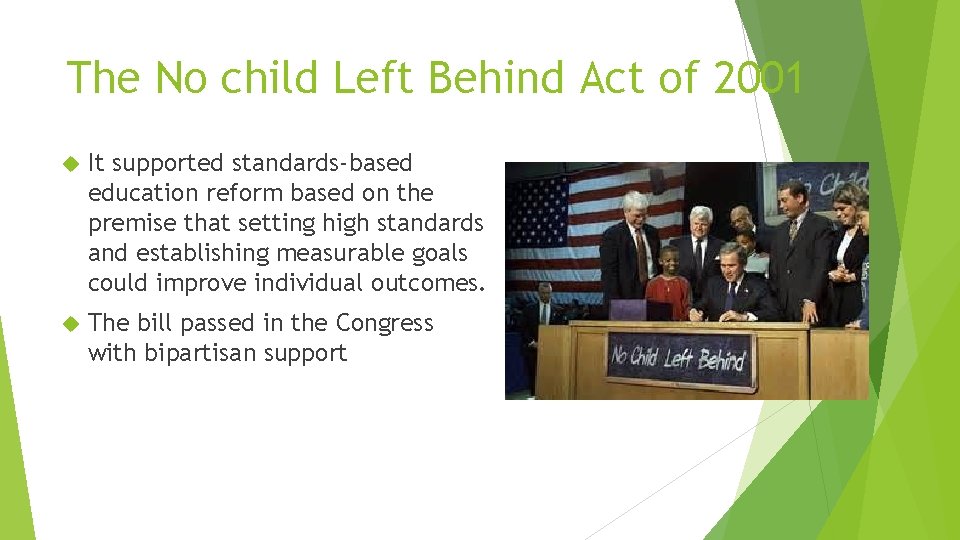
The No child Left Behind Act of 2001 It supported standards-based education reform based on the premise that setting high standards and establishing measurable goals could improve individual outcomes. The bill passed in the Congress with bipartisan support
Source https: //www. boston. gov/departments/tourism-sports-and-entertainment/things-do-aroundboston https: //www. oyez. org/cases/1976/75 -6527 http: //www. loc. gov/rr/program/bib/ourdocs/Morrill. html http: //www. titleix. info/ http: //www 2. ed. gov/about/offices/list/ocr/docs/tix_dis. html http: //www 2. ed. gov/legislation/GOALS 2000/The. Act/index. html http: //education. laws. com/elementary-and-secondary-education-act http: //www. eds-resources. com/educationhistorytimeline. html#1800 https: //www. mtholyoke. edu/about/history http: //www 3. nd. edu/~rbarger/www 7/normal. html https: //www 3. nd. edu/~rbarger/www 7/kindergarten. html
- Slides: 17