
History of Early Earth Earths Age The earth
- Slides: 17
History of Early Earth
Earth’s Age The earth is 4. 6 billion years old! Scientists and theologians thought the earth was very young. We know the earth’s age by performing radiometric dating on the oldest parts of the planet we can find.
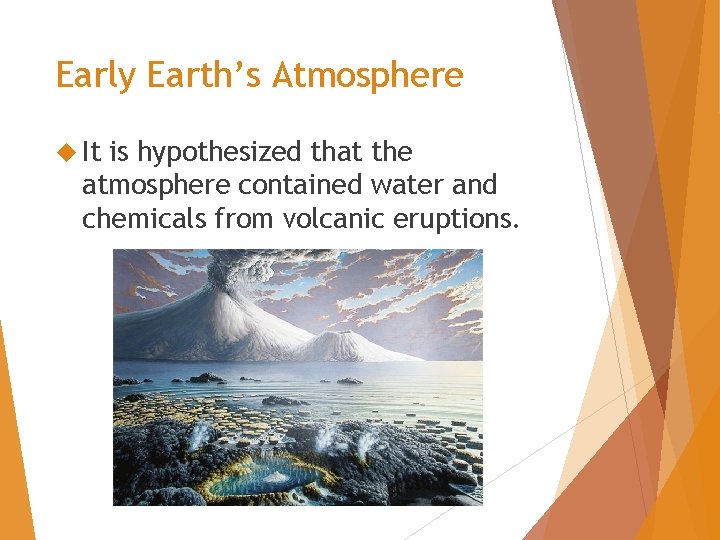
Early Earth’s Atmosphere It is hypothesized that the atmosphere contained water and chemicals from volcanic eruptions.
Early Earth’s Atmosphere It is hypothesized that the atmosphere contained water and chemicals from volcanic eruptions. Methane So and ammonia (inorganic) how did organic molecules (amino acids, DNA) develop from inorganic compounds? ?
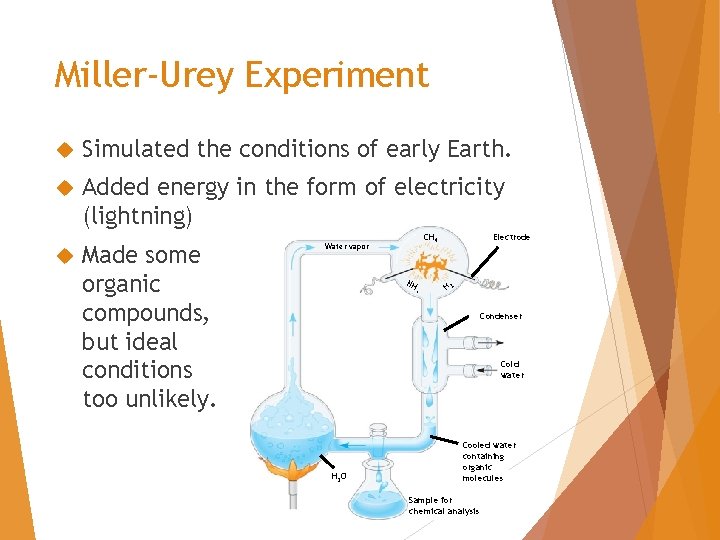
Miller-Urey Experiment Simulated the conditions of early Earth. Added energy in the form of electricity (lightning) Made some organic compounds, but ideal conditions too unlikely. CH 4 Water vapor NH 3 Electrode H 2 Condenser Cold water H 2 O Cooled water containing organic molecules Sample for chemical analysis
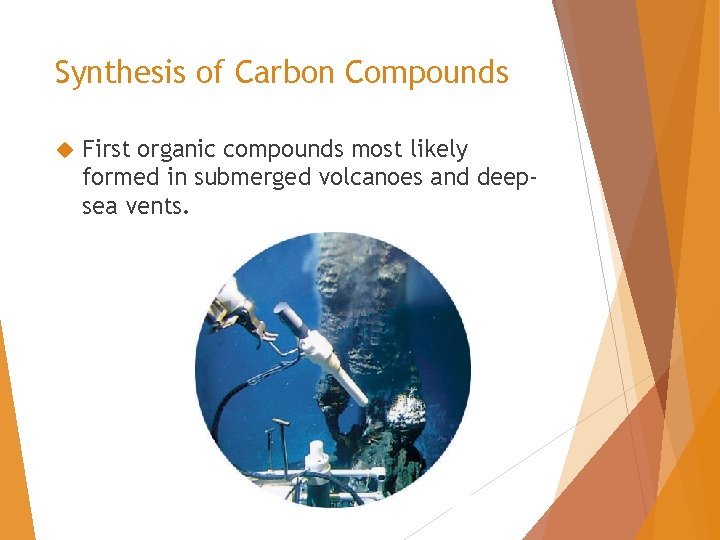
Synthesis of Carbon Compounds First organic compounds most likely formed in submerged volcanoes and deepsea vents.
Synthesis of Carbon Compounds Some carbon-based compounds may have come from meteorites from space.
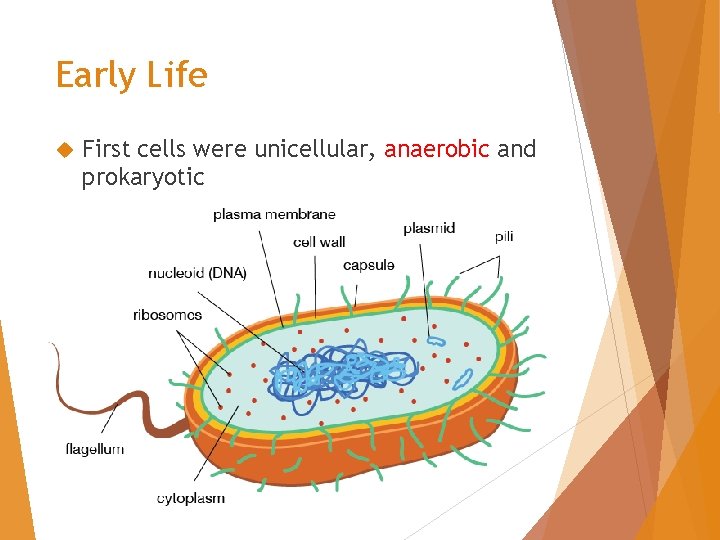
Early Life First cells were unicellular, anaerobic and prokaryotic
Early Life First cells were unicellular, anaerobic and prokaryotic Autotrophic Chemosynthesis, photosynthesis
Early Life First cells were unicellular, anaerobic and prokaryotic Autotrophic Chemosynthesis, photosynthesis Why do you think photosynthetic organisms evolved before heterotrophic organisms?
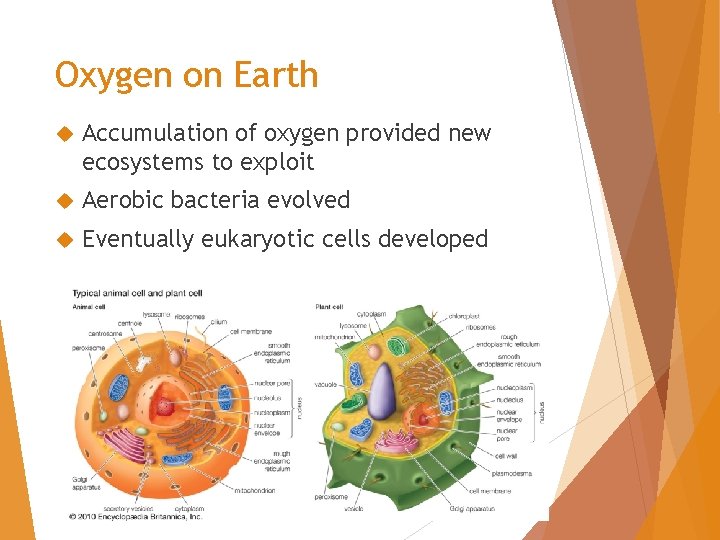
Oxygen on Earth Accumulation of oxygen provided new ecosystems to exploit Aerobic bacteria evolved Eventually eukaryotic cells developed
Endosymbiotic Theory How DID eukaryotic cells develop from prokaryotic cells?
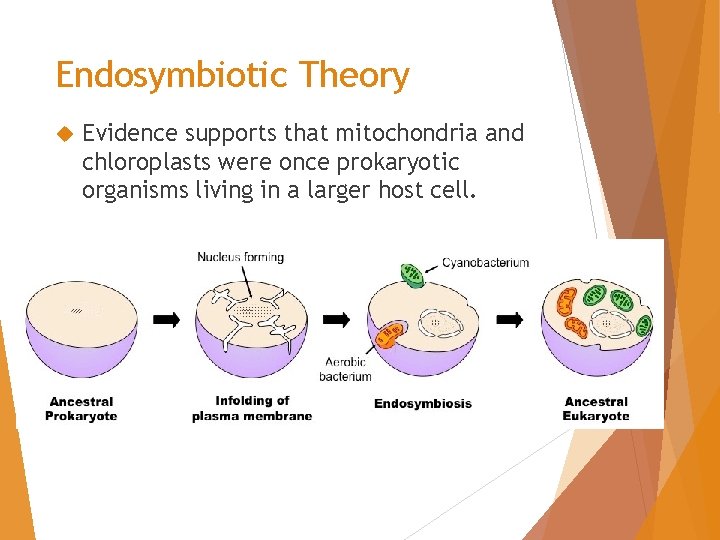
Endosymbiotic Theory Evidence supports that mitochondria and chloroplasts were once prokaryotic organisms living in a larger host cell.
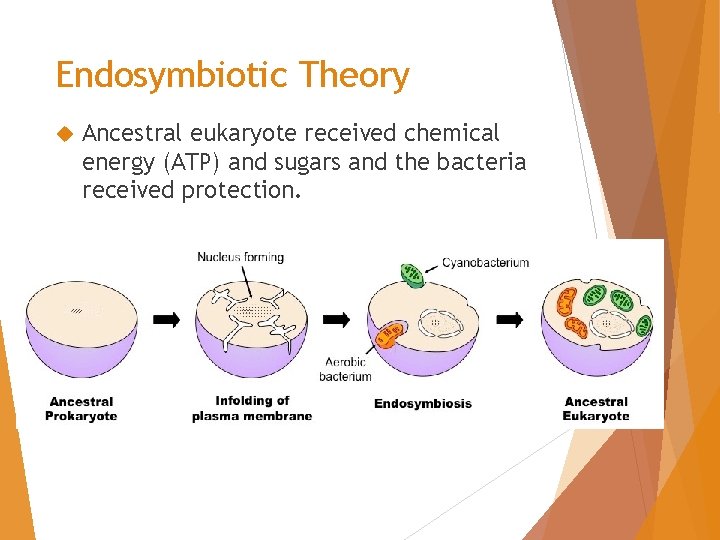
Endosymbiotic Theory Ancestral eukaryote received chemical energy (ATP) and sugars and the bacteria received protection.
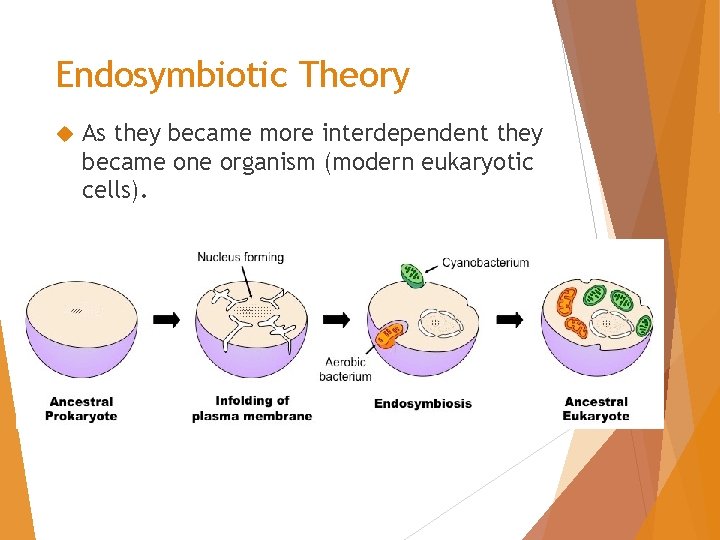
Endosymbiotic Theory As they became more interdependent they became one organism (modern eukaryotic cells).
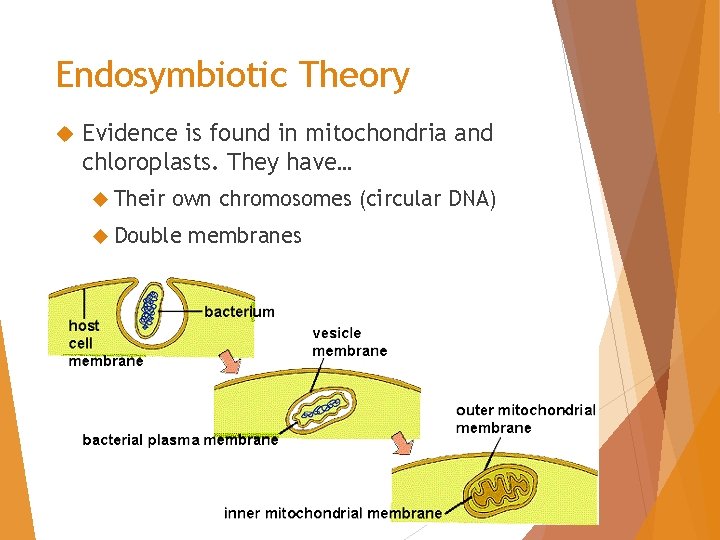
Endosymbiotic Theory Evidence is found in mitochondria and chloroplasts. They have… Their own chromosomes (circular DNA) Double membranes
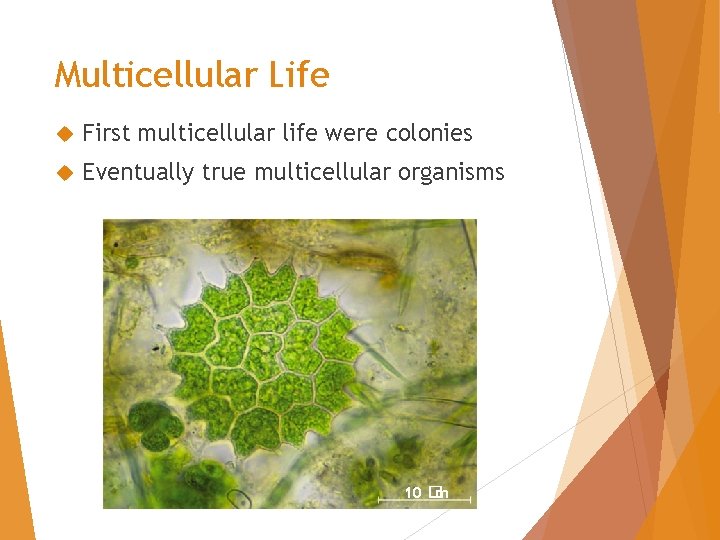
Multicellular Life First multicellular life were colonies Eventually true multicellular organisms 10 �m