
History of DNA The Genetic Material AP Biology
History of DNA The Genetic Material AP Biology 2006 -2007

Scientific History § The march to understanding that DNA is the genetic material T. H. Morgan (1908) u Frederick Griffith (1928) u Avery, Mc. Carty & Mac. Leod (1944) u Hershey & Chase (1952) u Watson & Crick (1953) u Meselson & Stahl (1958) u AP Biology

1908 | 1933 Genes are on chromosomes § T. H. Morgan working with Drosophila (fruit flies) u genes are on chromosomes u but is it the protein or the DNA of the chromosomes that are the genes? u § through 1940 proteins were thought to be genetic material… Why? AP Biology What’s so impressive about proteins? !
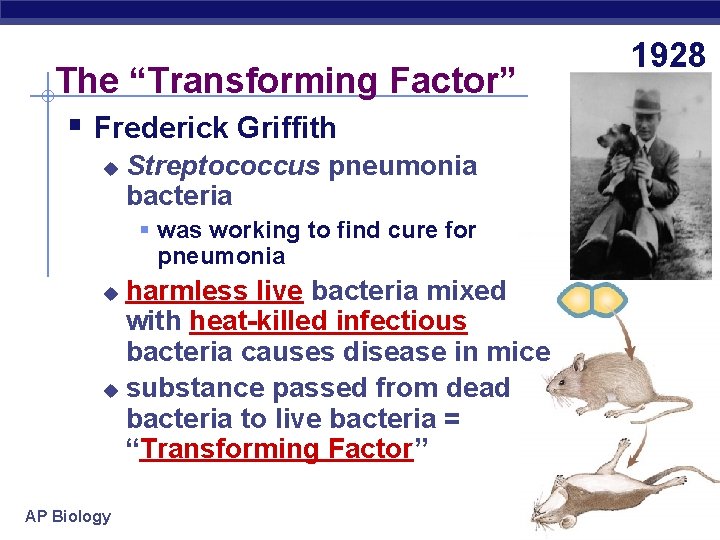
The “Transforming Factor” § Frederick Griffith u Streptococcus pneumonia bacteria § was working to find cure for pneumonia harmless live bacteria mixed with heat-killed infectious bacteria causes disease in mice u substance passed from dead bacteria to live bacteria = “Transforming Factor” u AP Biology 1928
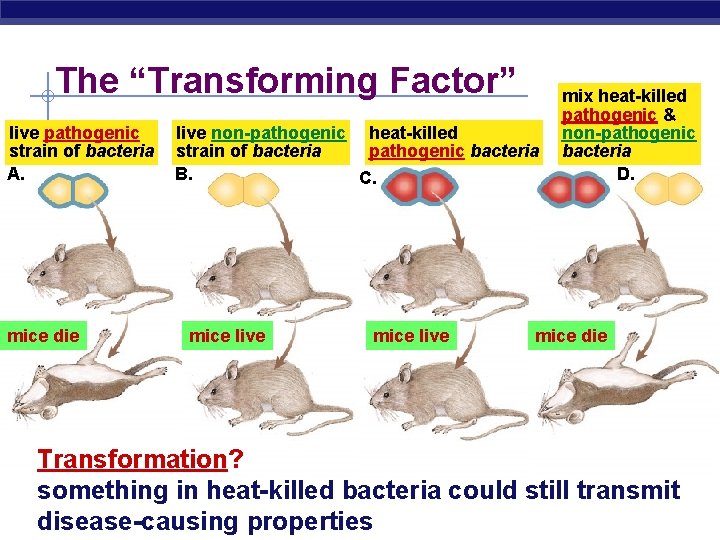
The “Transforming Factor” live pathogenic strain of bacteria A. mice die live non-pathogenic heat-killed strain of bacteria pathogenic bacteria B. C. mice live mix heat-killed pathogenic & non-pathogenic bacteria D. mice die Transformation? something in heat-killed bacteria could still transmit AP Biology disease-causing properties

1944 DNA is the “Transforming Factor” § Avery, Mc. Carty & Mac. Leod u purified both DNA & proteins from Streptococcus pneumonia bacteria § which will transform non-pathogenic bacteria? u injected protein into bacteria § no effect u injected DNA into bacteria § transformed harmless bacteria into virulent bacteria What’s the conclusion? AP Biology
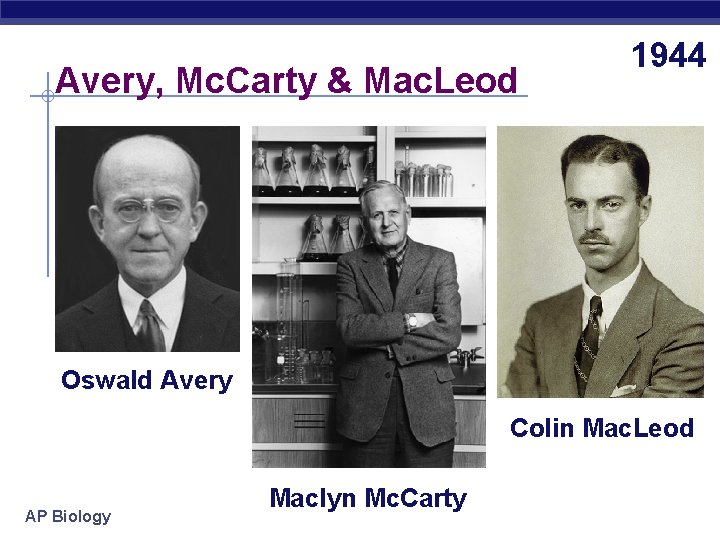
Avery, Mc. Carty & Mac. Leod 1944 Oswald Avery Colin Mac. Leod AP Biology Maclyn Mc. Carty
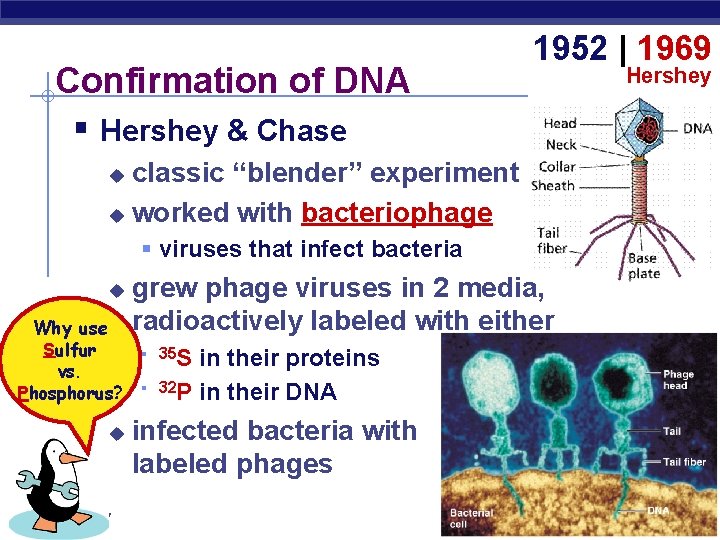
Confirmation of DNA § Hershey & Chase 1952 | 1969 classic “blender” experiment u worked with bacteriophage u § viruses that infect bacteria u grew phage viruses in 2 media, radioactively labeled with either Why use Sulfur § 35 S vs. Phosphorus? § 32 P u AP Biology in their proteins in their DNA infected bacteria with labeled phages Hershey
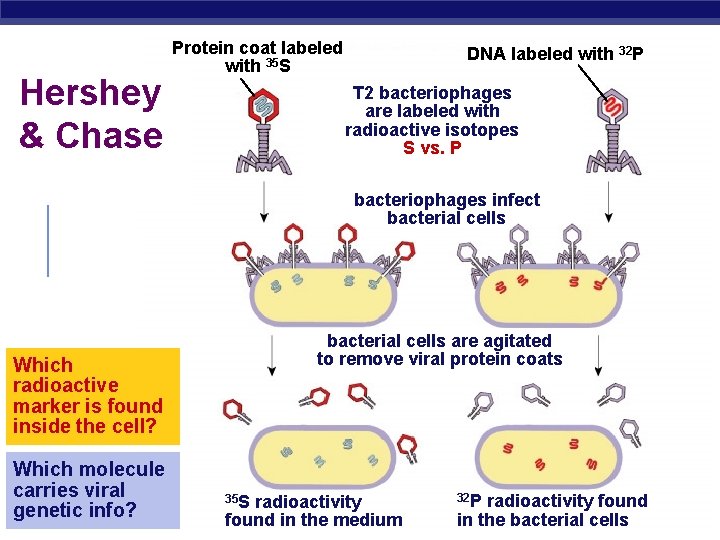
Hershey & Chase Protein coat labeled with 35 S DNA labeled with 32 P T 2 bacteriophages are labeled with radioactive isotopes S vs. P bacteriophages infect bacterial cells are agitated to remove viral protein coats Which radioactive marker is found inside the cell? Which molecule carries viral genetic info? AP Biology 35 S radioactivity found in the medium 32 P radioactivity found in the bacterial cells

AP Biology
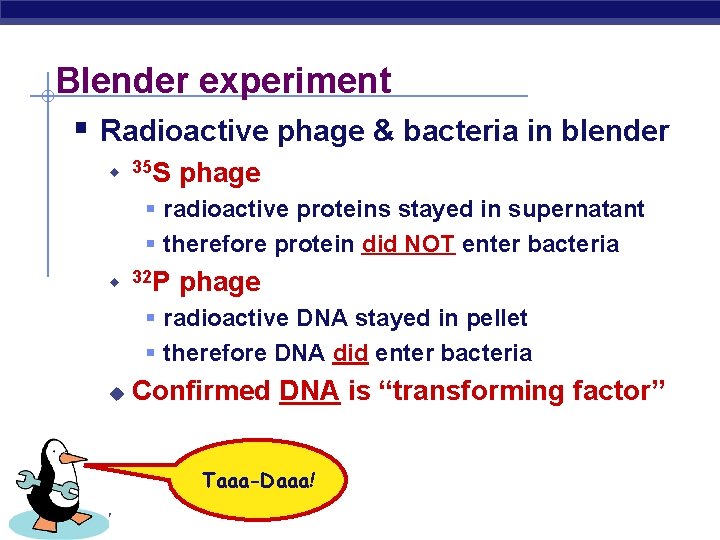
Blender experiment § Radioactive phage & bacteria in blender u 35 S phage § radioactive proteins stayed in supernatant § therefore protein did NOT enter bacteria u 32 P phage § radioactive DNA stayed in pellet § therefore DNA did enter bacteria u Confirmed DNA is “transforming factor” Taaa-Daaa! AP Biology
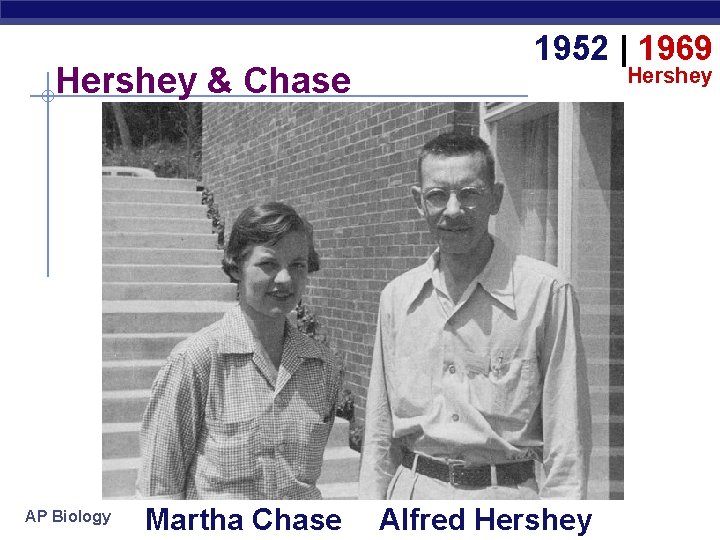
Hershey & Chase AP Biology Martha Chase 1952 | 1969 Hershey Alfred Hershey
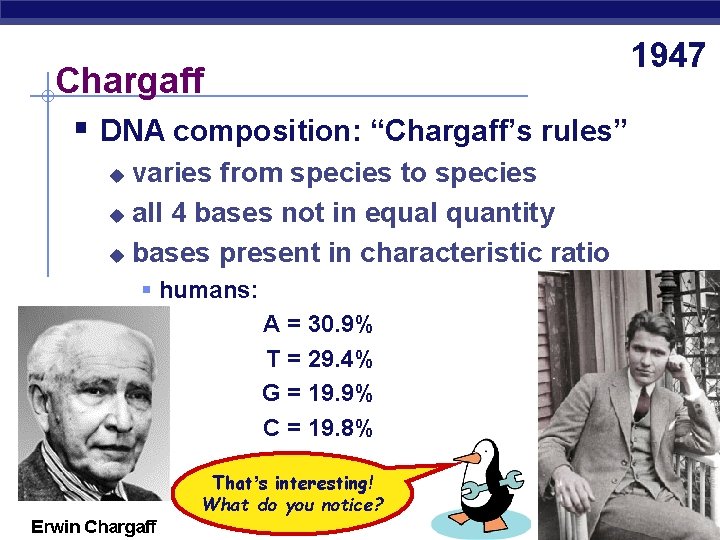
Chargaff § DNA composition: “Chargaff’s rules” varies from species to species u all 4 bases not in equal quantity u bases present in characteristic ratio u § humans: A = 30. 9% T = 29. 4% G = 19. 9% C = 19. 8% AP Biology That’s interesting! What do you notice? 1947
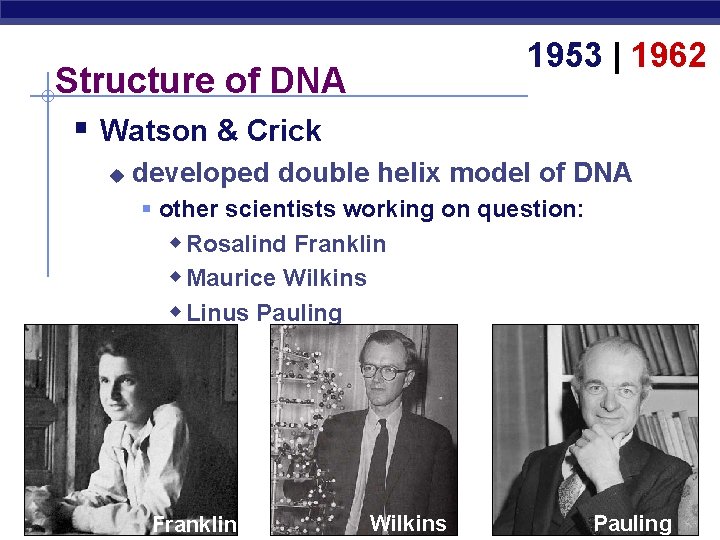
1953 | 1962 Structure of DNA § Watson & Crick u developed double helix model of DNA § other scientists working on question: w Rosalind Franklin w Maurice Wilkins w Linus Pauling AP Biology Franklin Wilkins Pauling
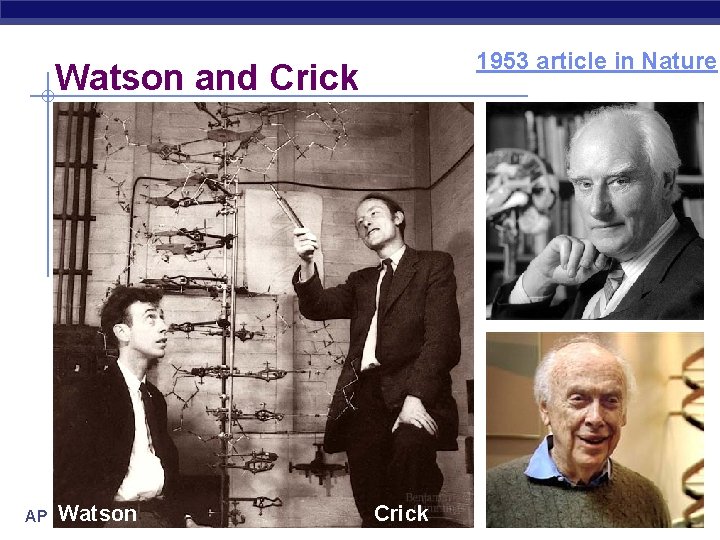
1953 article in Nature Watson and Crick Watson AP Biology Crick
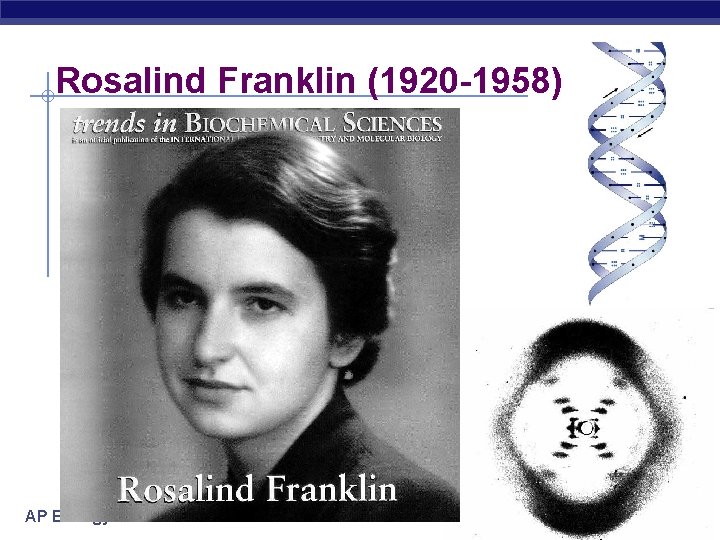
Rosalind Franklin (1920 -1958) AP Biology
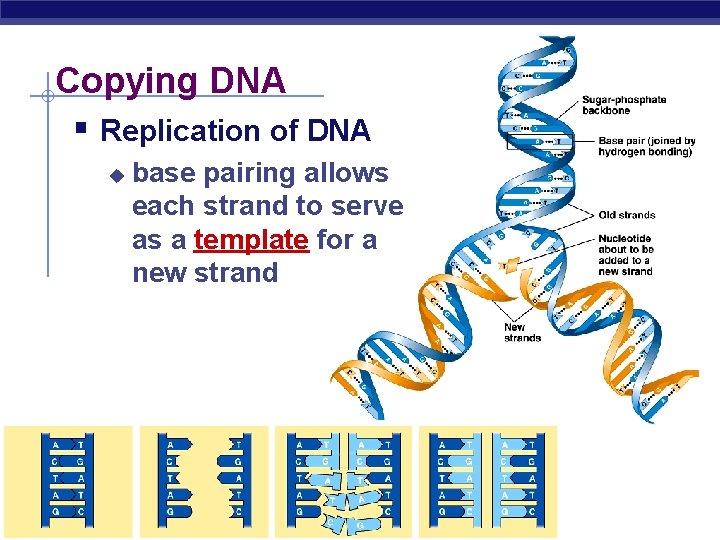
Copying DNA § Replication of DNA u AP Biology base pairing allows each strand to serve as a template for a new strand
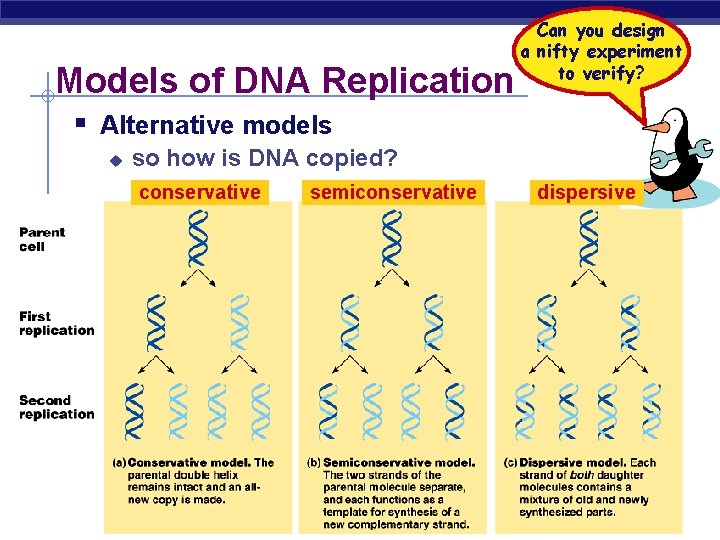
Models of DNA Replication Can you design a nifty experiment to verify? § Alternative models u so how is DNA copied? conservative AP Biology semiconservative dispersive
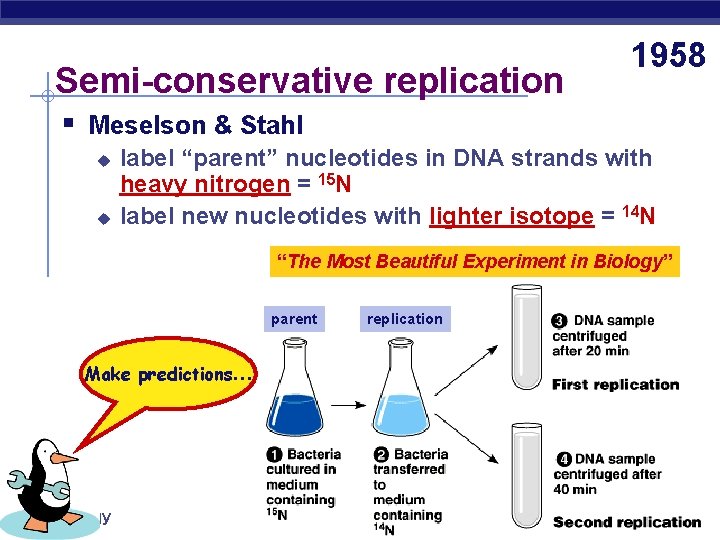
Semi-conservative replication 1958 § Meselson & Stahl u u label “parent” nucleotides in DNA strands with heavy nitrogen = 15 N label new nucleotides with lighter isotope = 14 N “The Most Beautiful Experiment in Biology” parent Make predictions… AP Biology replication
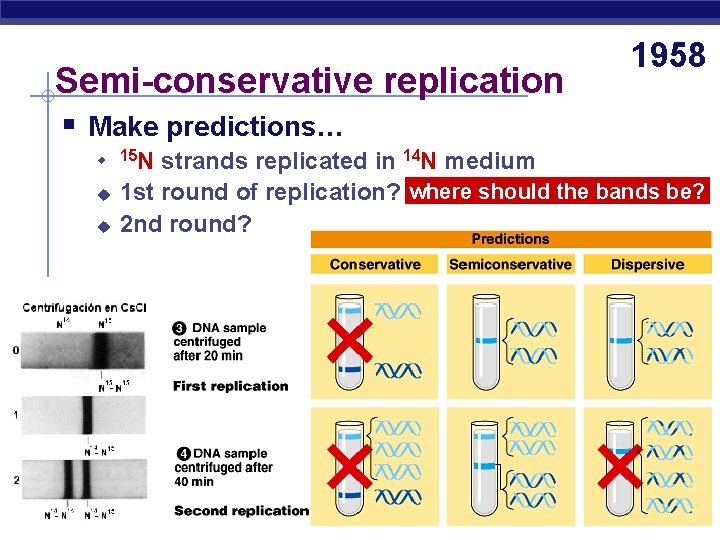
Semi-conservative replication 1958 § Make predictions… u u u AP Biology 15 N strands replicated in 14 N medium 1 st round of replication? where should the bands be? 2 nd round?
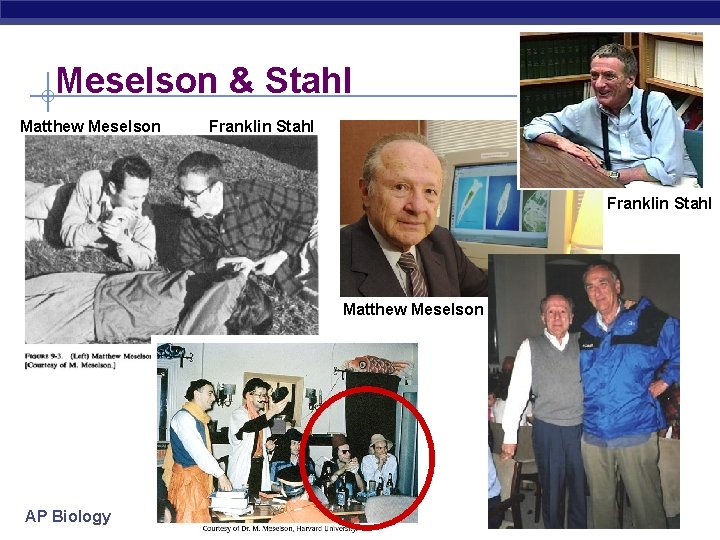
Meselson & Stahl Matthew Meselson Franklin Stahl Matthew Meselson AP Biology
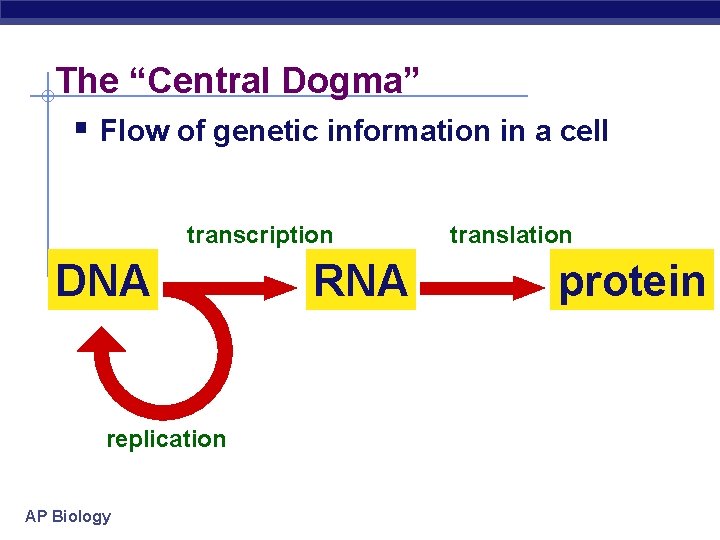
The “Central Dogma” § Flow of genetic information in a cell transcription DNA replication AP Biology RNA translation protein
Science …. Fun Party Time! Any Questions? ? AP Biology 2006 -2007
- Slides: 23