
History Of Computers Courtney Nielsen What are computers
- Slides: 9
History Of Computers Courtney Nielsen
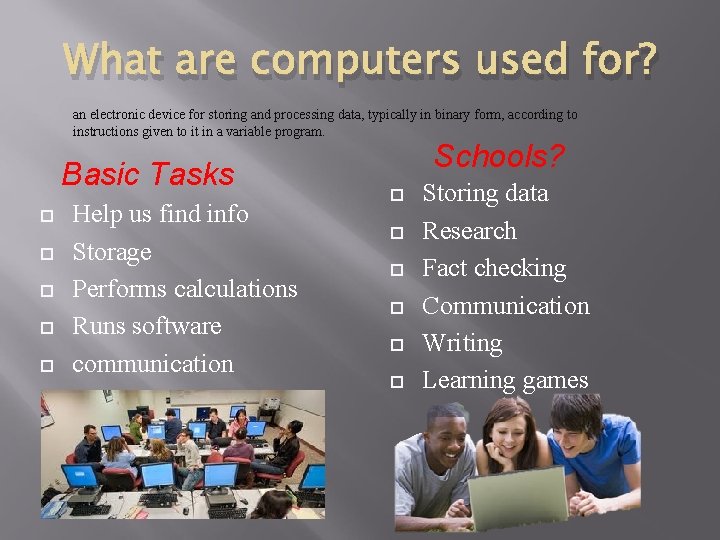
What are computers used for? an electronic device for storing and processing data, typically in binary form, according to instructions given to it in a variable program. Basic Tasks Help us find info Storage Performs calculations Runs software communication Schools? Storing data Research Fact checking Communication Writing Learning games
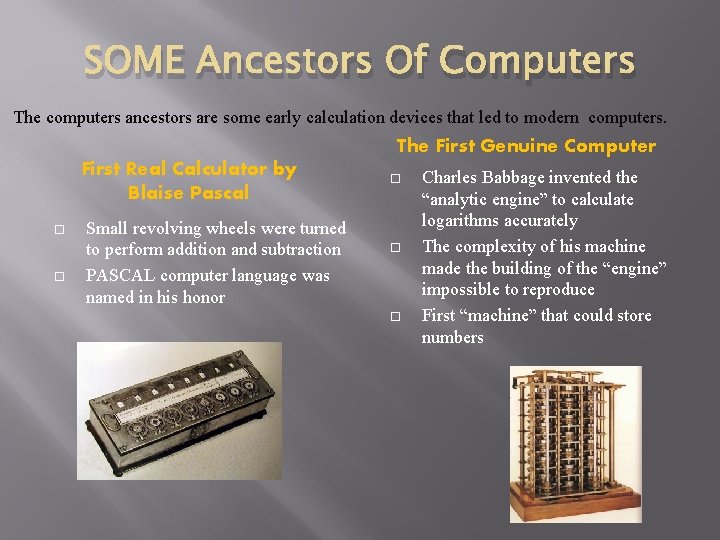
SOME Ancestors Of Computers The computers ancestors are some early calculation devices that led to modern computers. The First Genuine Computer First Real Calculator by Blaise Pascal Small revolving wheels were turned to perform addition and subtraction PASCAL computer language was named in his honor Charles Babbage invented the “analytic engine” to calculate logarithms accurately The complexity of his machine made the building of the “engine” impossible to reproduce First “machine” that could store numbers
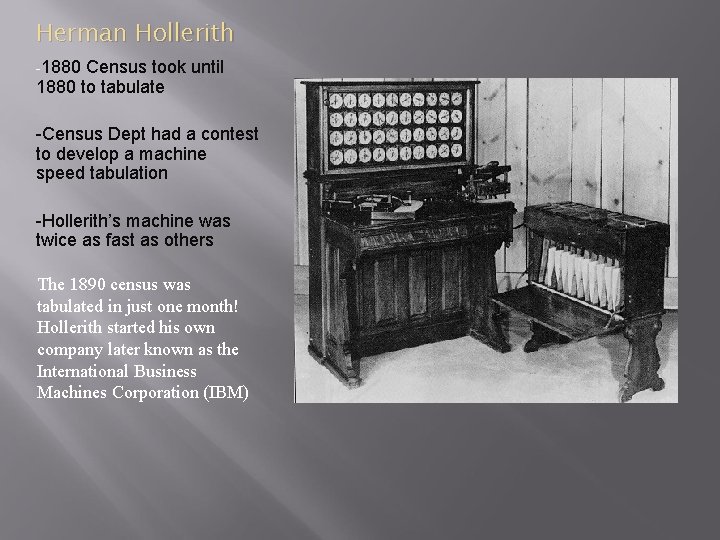
Herman Hollerith -1880 Census took until 1880 to tabulate -Census Dept had a contest to develop a machine speed tabulation -Hollerith’s machine was twice as fast as others The 1890 census was tabulated in just one month! Hollerith started his own company later known as the International Business Machines Corporation (IBM)
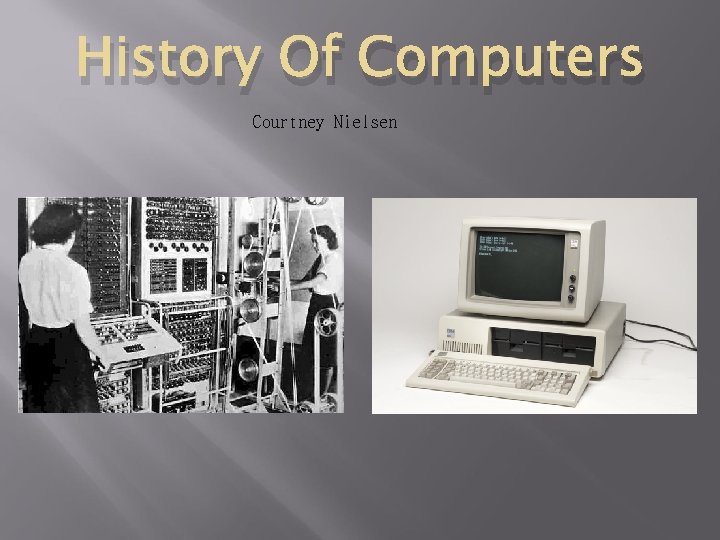
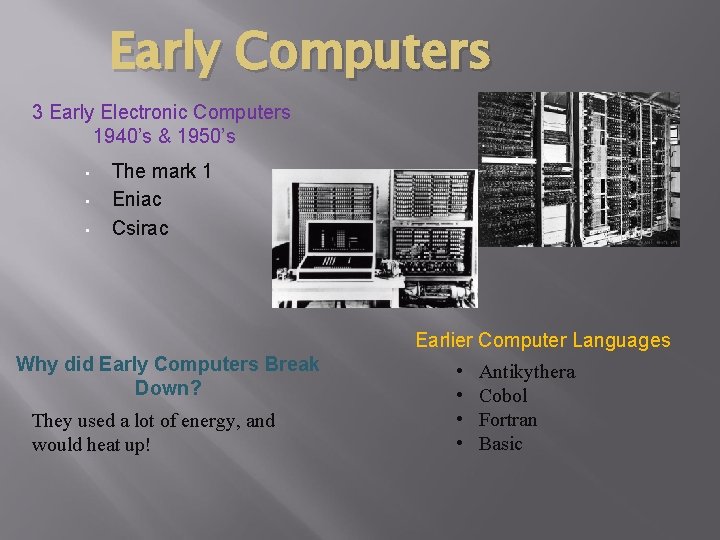
Early Computers 3 Early Electronic Computers 1940’s & 1950’s • • • The mark 1 Eniac Csirac Earlier Computer Languages Why did Early Computers Break Down? They used a lot of energy, and would heat up! • • Antikythera Cobol Fortran Basic
2 nd Generation Computers 1956 -1963 Transistors replaced vacuum tubes and ushered in the second generation of computers. The transistor was invented in 1947 but did not see widespread use in computers until the late 1950 s. The transistor was far superior to the vacuum tube, allowing computers to become smaller, faster, cheaper, more energyefficient and more reliable than their first-generation predecessors. Though the transistor still generated a great deal of heat that subjected the computer to damage, it was a vast improvement over the vacuum tube. Second-generation computers still relied on punched cards for input and printouts for output. 3 rd Generation Computers 1964 -1971 The development of the integrated circuit was the hallmark of the third generation of computers. Transistors were miniaturized and placed on silicon chips, called semiconductors, which drastically increased the speed and efficiency of computers. Instead of punched cards and printouts, users interacted with third generation computers through keyboards and monitors and interfaced with an operating system, which allowed the device to run many different applications at one time with a central program that monitored the memory. Computers for the first time became accessible to a mass audience because they were smaller and cheaper than their predecessors
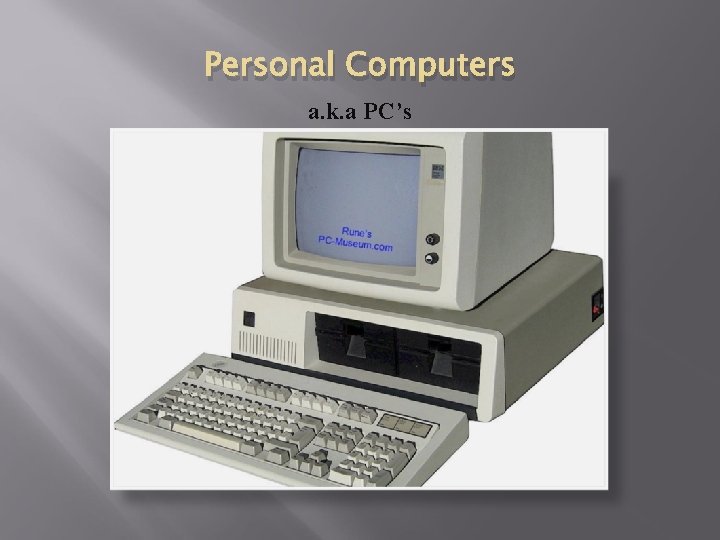
Personal Computers a. k. a PC’s
What is a PC? A personal computer (PC) is a general-purpose computer, whose size, capabilities and original sale price makes it useful for individuals, and which is intended to be operated directly by an end-user with no intervening computer operator. This contrasted with the batch processing or time-sharing models which allowed larger, more expensive minicomputer and mainframe systems to be used by many people, usually at the same time. Large data processing systems require a full-time staff to operate efficiently. Who made PC’s? Philip Don Estridge First large scale production PC? Apple 2 PC users gained access to the world wide web in mid 1990’s. Visi. Calc? Visi. Calc was the first spreadsheet computer program, originally released for the Apple II. It is often considered the application that turned the microcomputer from a hobby for computer enthusiasts into a serious business tool, and is considered the Apple II's killer app. Visi. Calc sold over 700, 000 copies in six years, and as many as 1 million copies over its history.
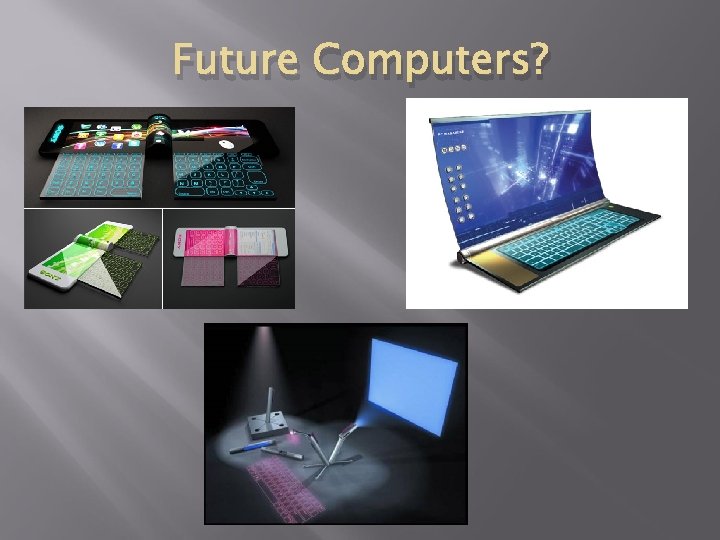
Future Computers?