
History of Computers Counting Man started off by
History of Computers
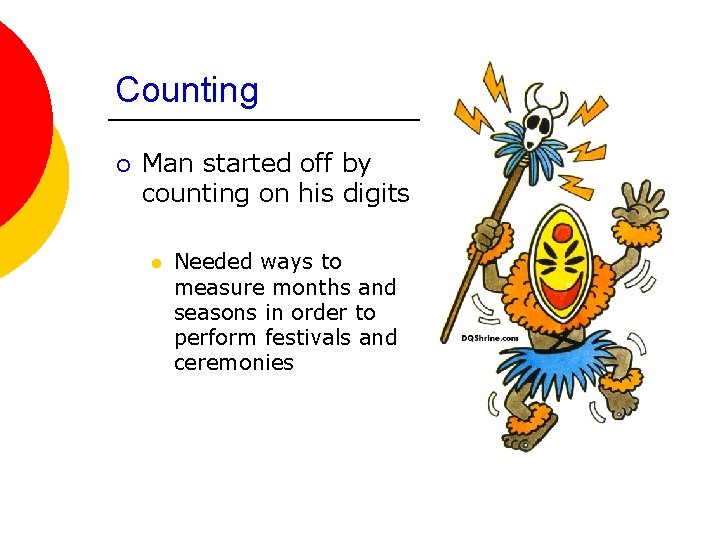
Counting ¡ Man started off by counting on his digits l Needed ways to measure months and seasons in order to perform festivals and ceremonies
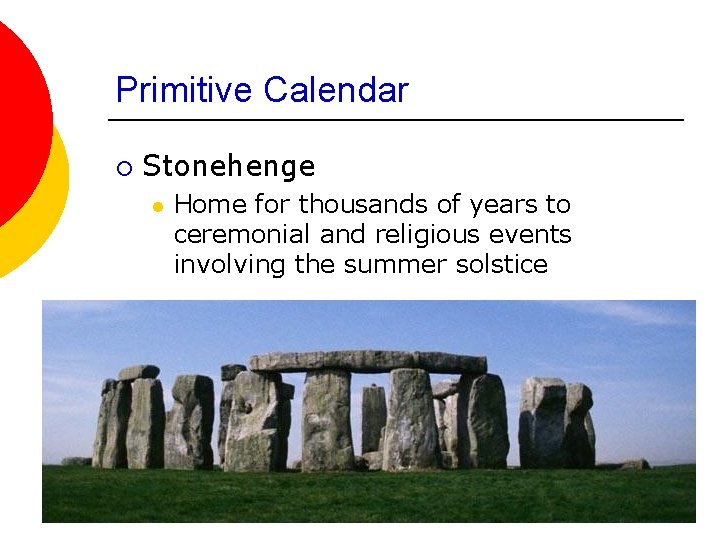
Primitive Calendar ¡ Stonehenge l Home for thousands of years to ceremonial and religious events involving the summer solstice
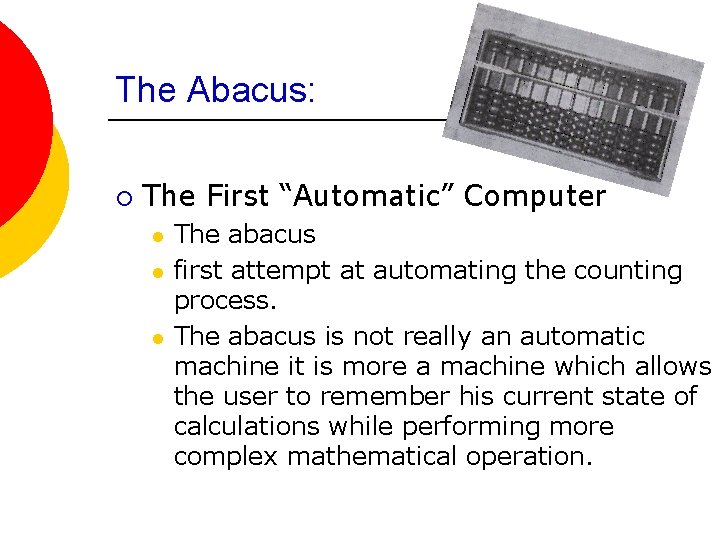
The Abacus: ¡ The First “Automatic” Computer l l l The abacus first attempt at automating the counting process. The abacus is not really an automatic machine it is more a machine which allows the user to remember his current state of calculations while performing more complex mathematical operation.
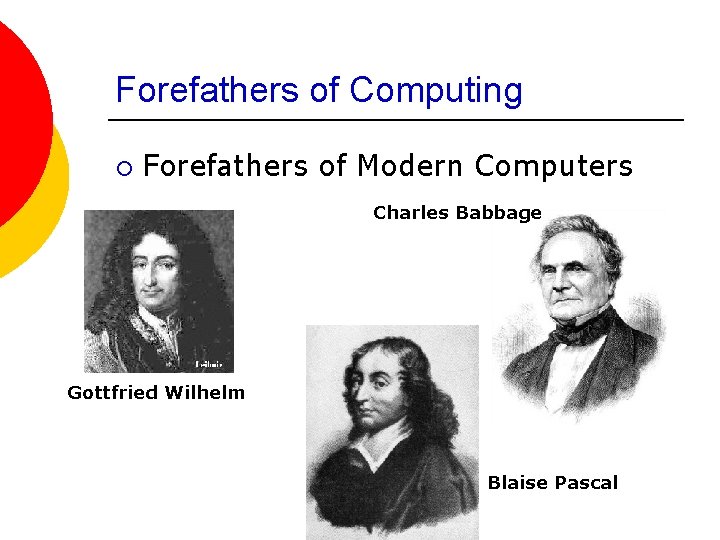
Forefathers of Computing ¡ Forefathers of Modern Computers Charles Babbage Gottfried Wilhelm Blaise Pascal
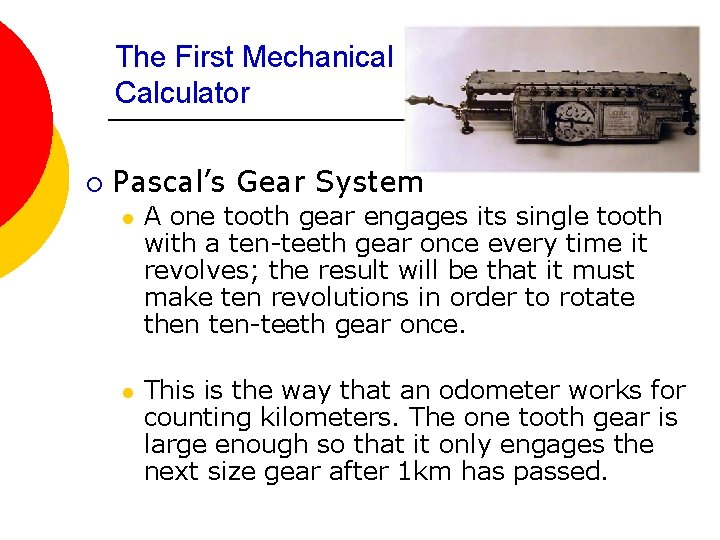
The First Mechanical Calculator ¡ Pascal’s Gear System l A one tooth gear engages its single tooth with a ten-teeth gear once every time it revolves; the result will be that it must make ten revolutions in order to rotate then ten-teeth gear once. l This is the way that an odometer works for counting kilometers. The one tooth gear is large enough so that it only engages the next size gear after 1 km has passed.
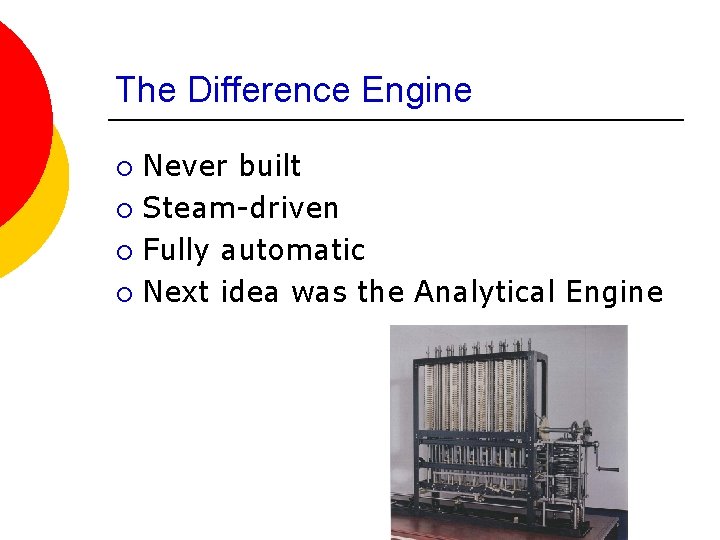
The Difference Engine Never built ¡ Steam-driven ¡ Fully automatic ¡ Next idea was the Analytical Engine ¡
The Conditional ¡ Babbage’s Conditional l The conditional point allows us to check to see what the current value of “S” is. If “s” is greater than “ 3”, then we want the computer to output the value of “s” (4 in this case. ) If “s” is less than or equal to 3, then we want the computer to output the value “ 0”
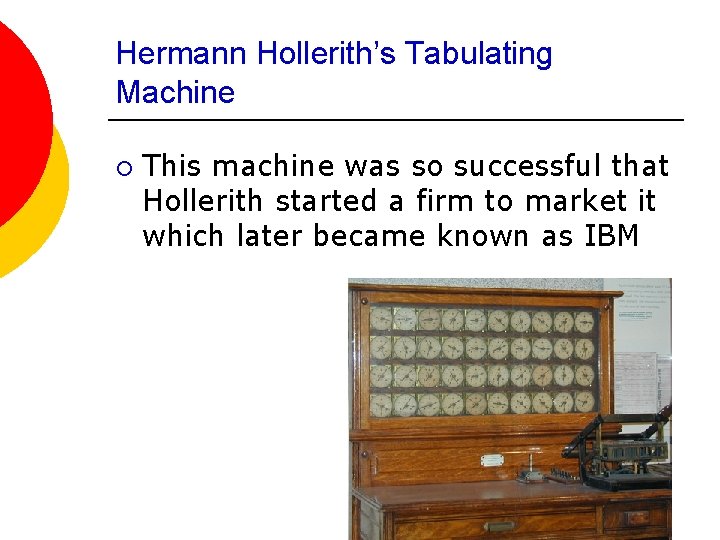
Hermann Hollerith’s Tabulating Machine ¡ This machine was so successful that Hollerith started a firm to market it which later became known as IBM
Binary Representations Numbers can be converted to decimal to adding together the values of the holes, given that the first hole = 1 and the second 2, etc. ¡ For example, 26=2^5+2^3+2^1+2^0 ¡ Holes represent an “on” signal. ¡ With 6 holes permissible, 2^6 numbers possible. ¡
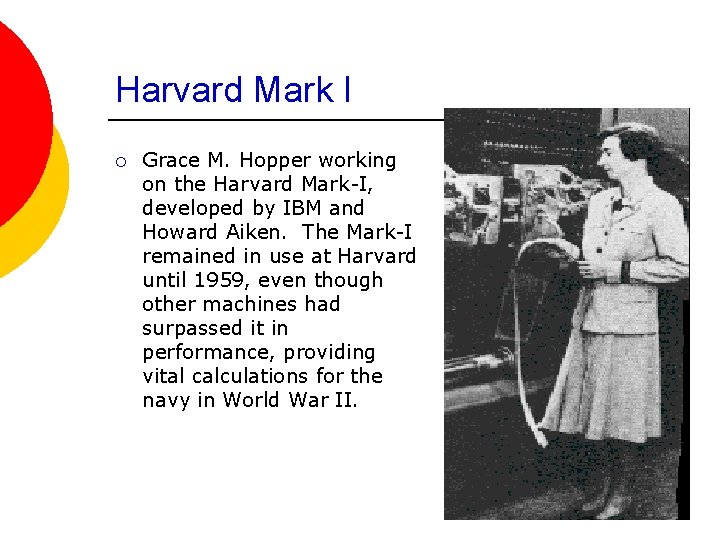
Harvard Mark I ¡ Grace M. Hopper working on the Harvard Mark-I, developed by IBM and Howard Aiken. The Mark-I remained in use at Harvard until 1959, even though other machines had surpassed it in performance, providing vital calculations for the navy in World War II.
Alan Turing ¡ Sample Turing Machine l Problem: Output a 1 if 3 or more ones in a row encountered; otherwise )
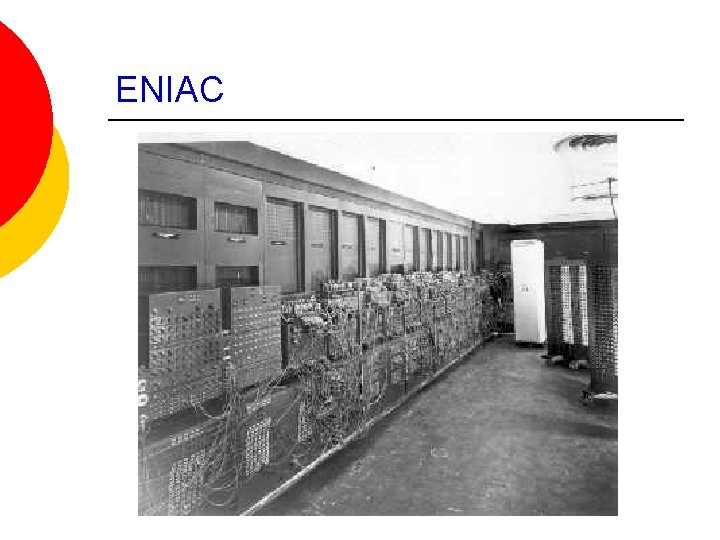
ENIAC
John Von Neumann ¡ The Von Neumann Machine l l Data and program can be stored in the same space. Thus, the machine itself can alter either its program or its internal data. Conditional goto’s to other points in the code Von Neumann worked with Mauchly and Eckert on the design for EDVAC Also a contributor to the fields of game theory and cellular automata
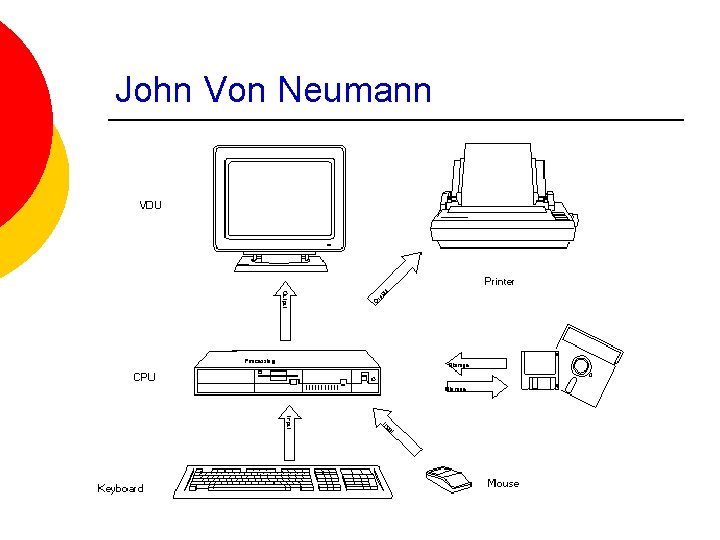
John Von Neumann
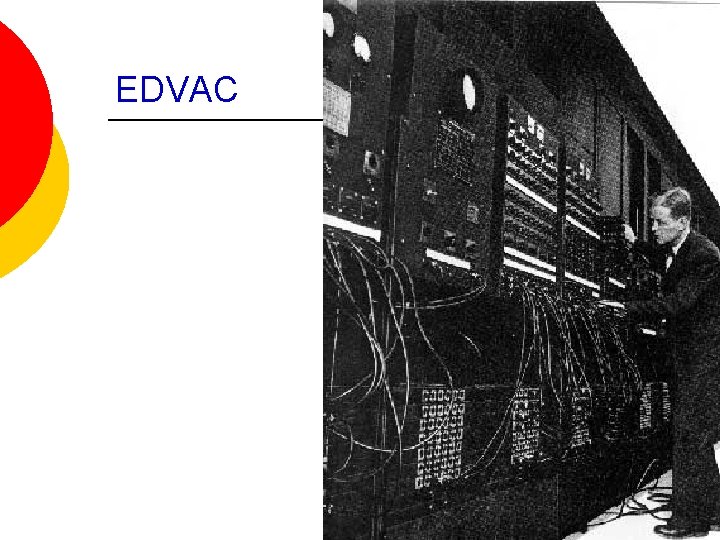
EDVAC
Advances in the 1950’s ¡ Transistors l l Freedom from vacuum tubes, which were extremely bulky Integrated Circuits ¡ l Allowed the placement of many transistors into a small area. Both these advances enables machines to become smaller and more economical to build and maintain
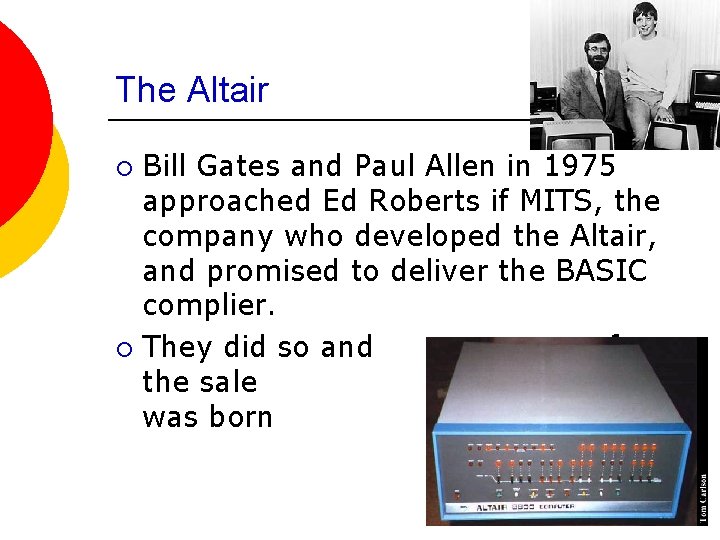
The Altair Bill Gates and Paul Allen in 1975 approached Ed Roberts if MITS, the company who developed the Altair, and promised to deliver the BASIC complier. ¡ They did so and from the sale Microsoft was born ¡
Creation of Microsoft ¡ BASIC- Beginner’s All-Purpose Symbolic Instruction Code l l l Developed by Kemeny and Kurtz in 1964. two mathematicians at Dartmouth Simple, easy-to-understand syntax allowed students to quickly learn it. Provided ease of programming and easier debugging than machine code or assembly
Other Languages ¡ FORTRAN l l ¡ PASCAL l l ¡ FORmula Translator Used for science, math, & engineering Developed by Niklaus Wirth in the 60’s Disciplined approach to structure and data description COBOL l Common Business Oriented Language ¡ l C ¡ ¡ Data description stored separately from the pgram. Derivative of ALGOL It and its decendant’s very popular today for system programming
The PC Explosion ¡ IBM l l l ¡ Apple l l ¡ Acorn released under the unassuming name PC in 1981 1984, 286 -AT Whole Host of clones introduced & Compaq releases a portable Apple II, 1977 Apple III, 1980 Lisa, 1983; first machine with a mouse and graphical user interface Macintosh introducted in 1984 Other l l l TRS-80 from Radio Shack 1977 Commodore PET 1980’s 1981, journalist Adam Osborn commissions design of Osborne I which used CP/M
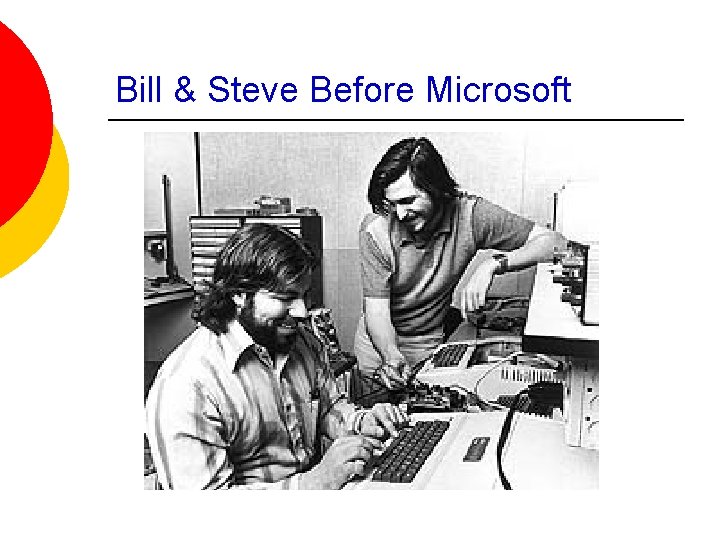
Bill & Steve Before Microsoft
PCs Today Fast ¡ Graphical User Interfaces (GUI) ¡ l l Allows you to use a mouse to control the computer Can run thousands of different sets of instructions (programs)
The Web ¡ The Web can be used for: l l ¡ Looking up information on publications Shopping for books, computers, or CD’s Investigating staff or research at universities Downloading pictures, games, or other files/ The Web (World Wide Web) was developed at CERN lab in Zurich, Switzerland
Internet New form of communicating ¡ 2 things needed to view the internet ¡ l l Internet connection Browser
- Slides: 25