
HISTORY OF CLASSIFICATION SPECIES OF ORGANISMS According to
- Slides: 11
HISTORY OF CLASSIFICATION
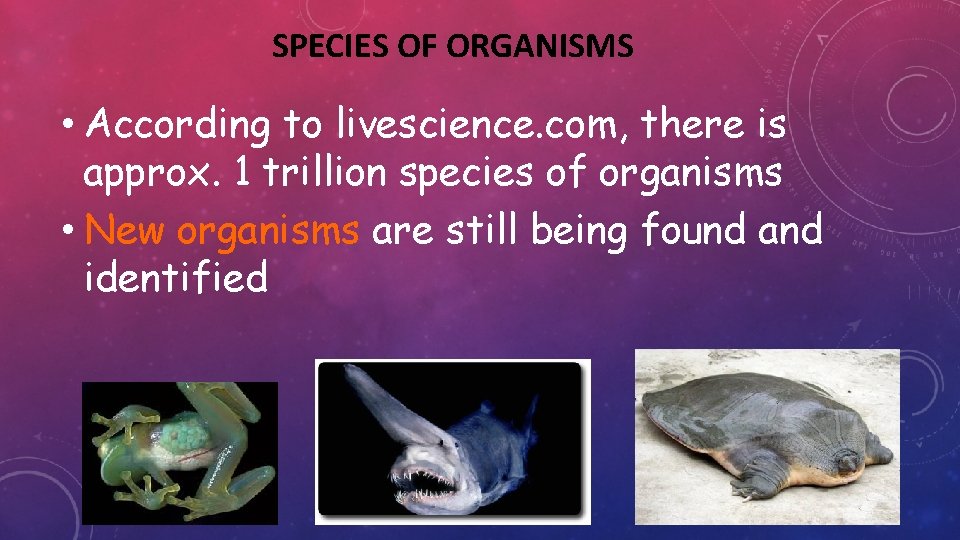
SPECIES OF ORGANISMS • According to livescience. com, there is approx. 1 trillion species of organisms • New organisms are still being found and identified
EARLY TAXONOMISTS • Aristotle is given credit for developing the first widely accepted system of biological classification • Aristotle divided organisms into plants & animals • Plants he classified into 3 groups, herbs, shrubs, and trees depending on the size and structure • Animals were classified according to various characteristics including habitat and physical differences • Aristotle’s system was not based on evolutionary history of animals
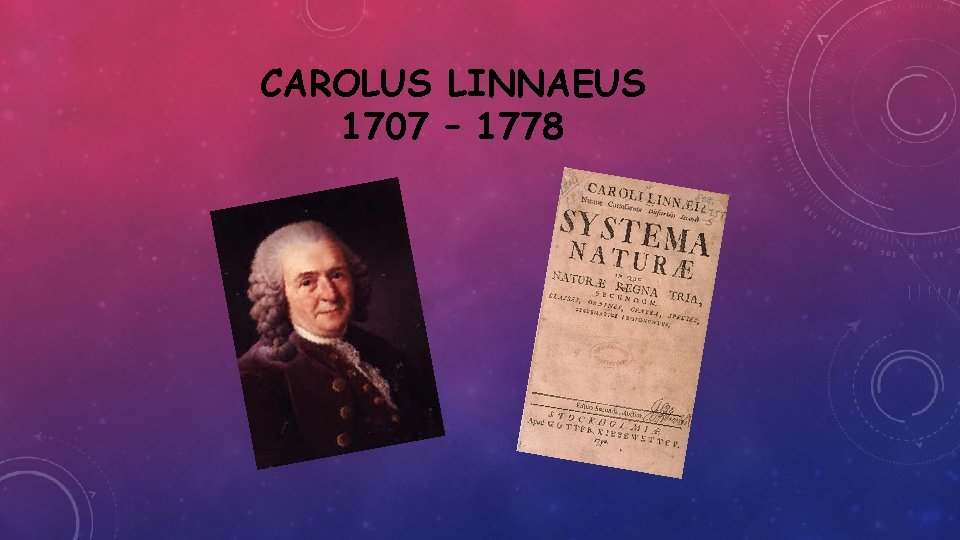
CAROLUS LINNAEUS 1707 – 1778
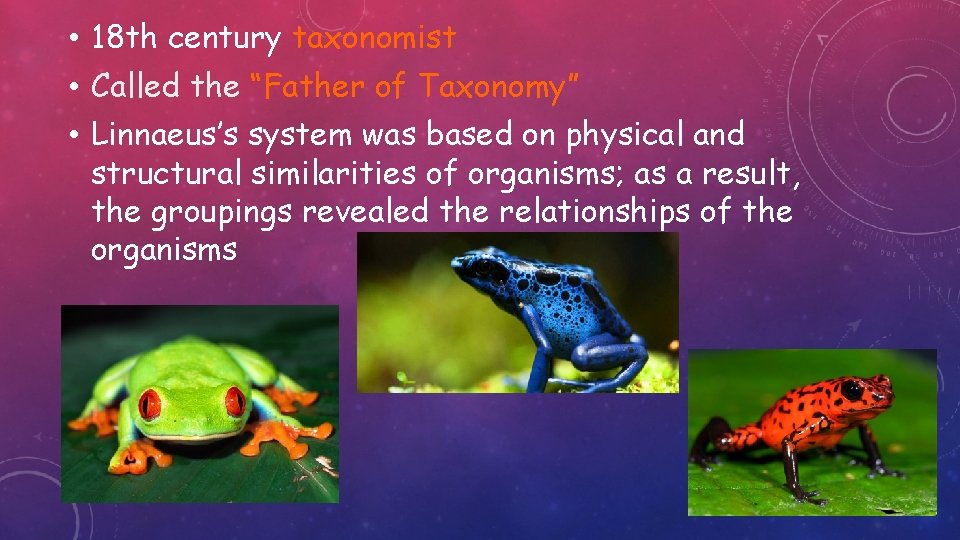
• 18 th century taxonomist • Called the “Father of Taxonomy” • Linnaeus’s system was based on physical and structural similarities of organisms; as a result, the groupings revealed the relationships of the organisms
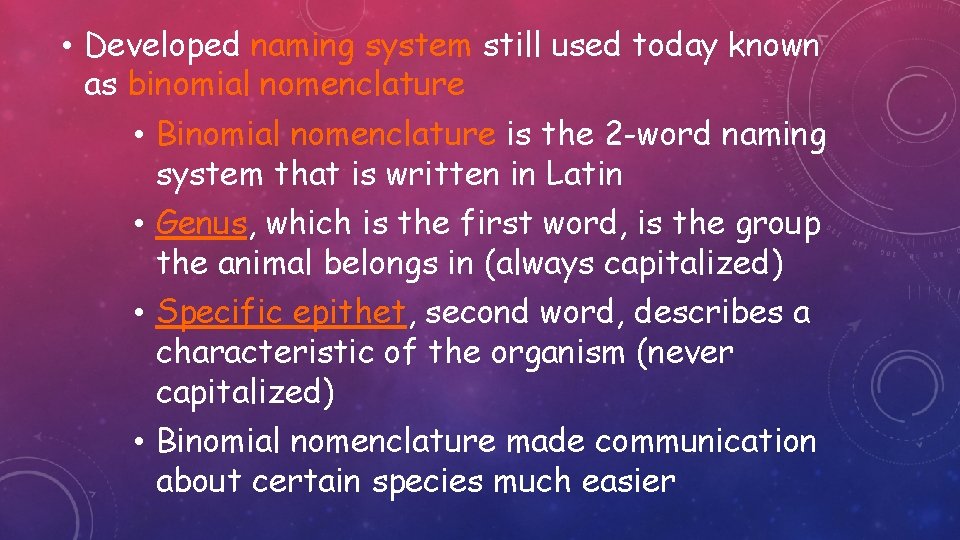
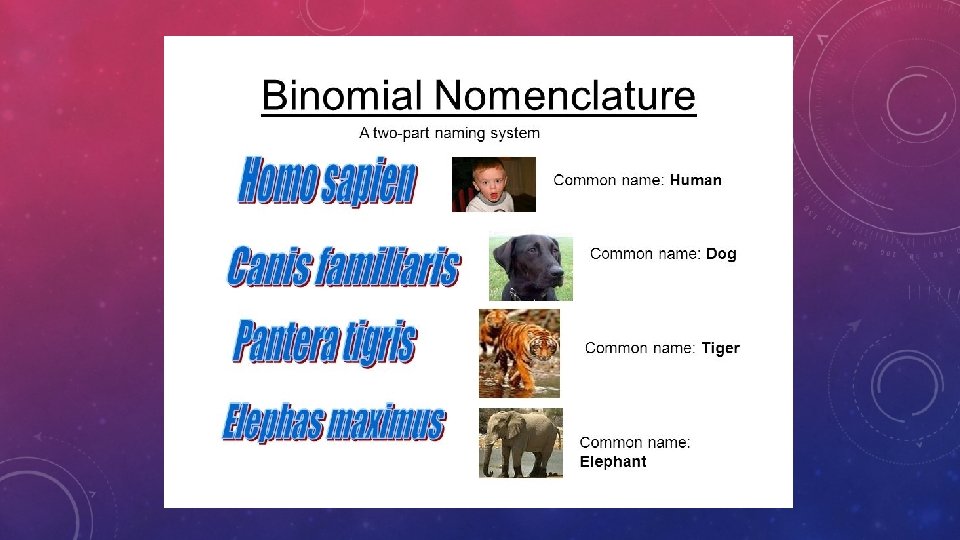
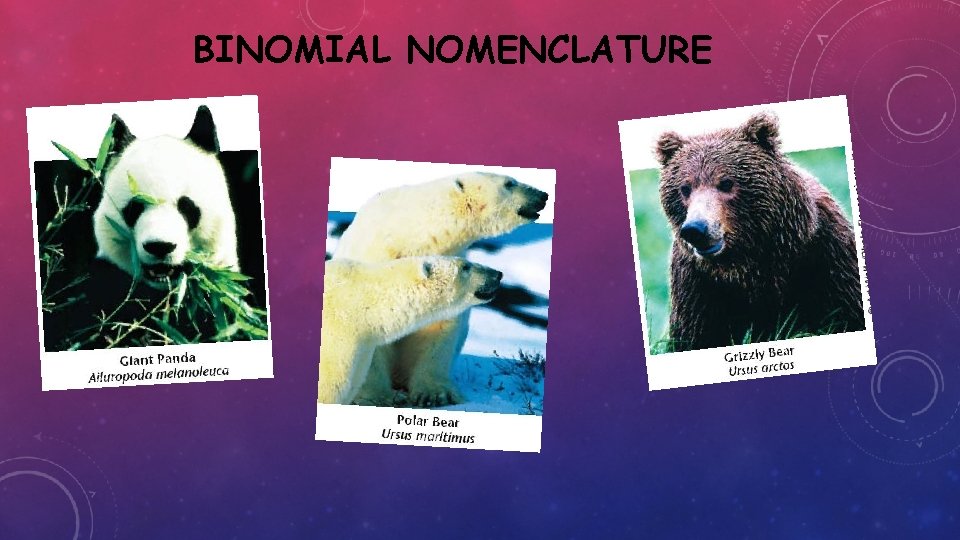
• Developed naming system still used today known as binomial nomenclature • Binomial nomenclature is the 2 -word naming system that is written in Latin • Genus, which is the first word, is the group the animal belongs in (always capitalized) • Specific epithet, second word, describes a characteristic of the organism (never capitalized) • Binomial nomenclature made communication about certain species much easier
BINOMIAL NOMENCLATURE
DICHOTOMOUS KEY • Sometimes just having a little bit of information can help identify organisms, but it doesn’t always help you get to the answer that you want to get to • Taxonomists have developed a tool called a dichotomous key to help identify organisms when there is only a little bit of information provided • A dichotomous key asks a series of questions that can be answered in only 2 ways; the questions gradually help to narrow down the list of possible organisms
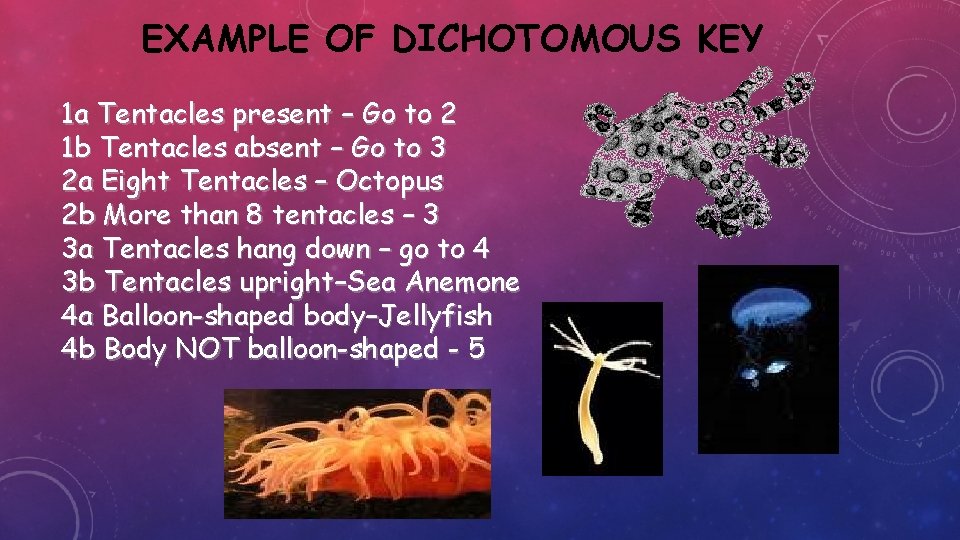
EXAMPLE OF DICHOTOMOUS KEY 1 a Tentacles present – Go to 2 1 b Tentacles absent – Go to 3 2 a Eight Tentacles – Octopus 2 b More than 8 tentacles – 3 3 a Tentacles hang down – go to 4 3 b Tentacles upright–Sea Anemone 4 a Balloon-shaped body–Jellyfish 4 b Body NOT balloon-shaped - 5