
History of Cellular Unit 0 Intro to Wireless
- Slides: 17
History of Cellular Unit: 0 Intro to Wireless This document is licensed with a Creative Commons Attribution 4. 0 International License © 2017
Objectives • Define how frequencies are allocated • Explain how near channel interference occurs • Apply principles of guard bands to allocate frequencies This document is licensed with a Creative Commons Attribution 4. 0 International License © 2017
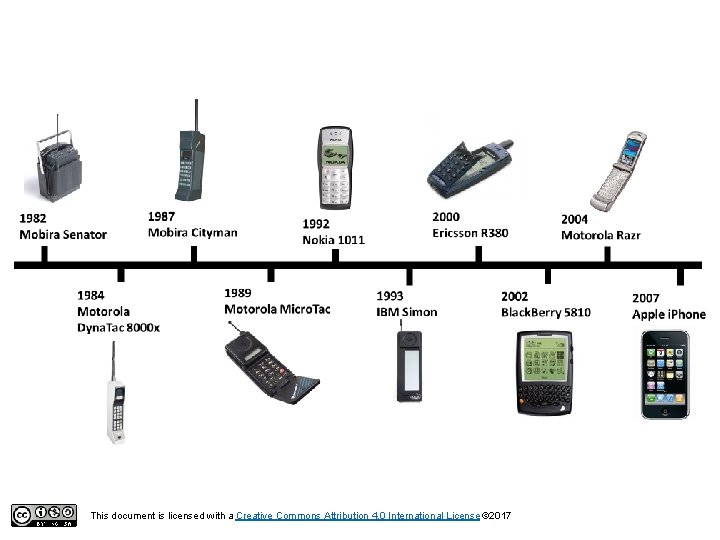
There was a time… • …in which we used our phones to call people… This document is licensed with a Creative Commons Attribution 4. 0 International License © 2017
How far we’ve come • 1880, first realistic radio communications • 1879, transmission reached 18+ mile mark • 1934, FCC formed • 1946, First phone that didn’t need wires pops up • 1983, Cellular communications sort of appear in the US This document is licensed with a Creative Commons Attribution 4. 0 International License © 2017
This document is licensed with a Creative Commons Attribution 4. 0 International License © 2017
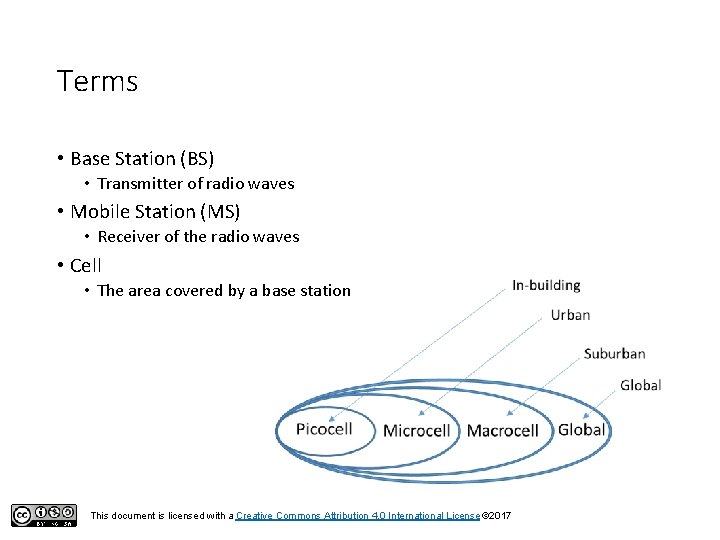
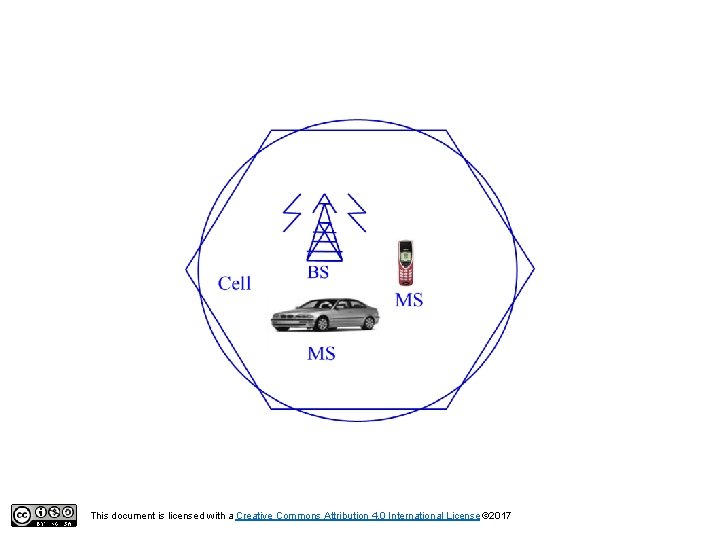
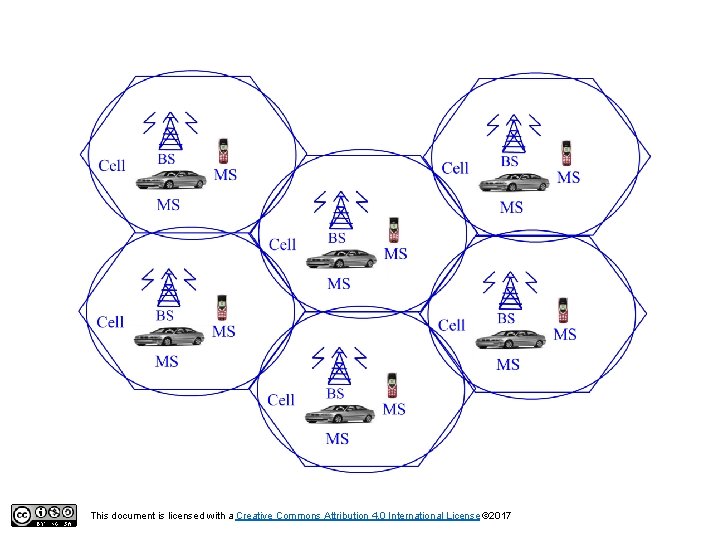
Terms • Base Station (BS) • Transmitter of radio waves • Mobile Station (MS) • Receiver of the radio waves • Cell • The area covered by a base station This document is licensed with a Creative Commons Attribution 4. 0 International License © 2017
Cells • Cells need to be different sizes • In rural regions, cells are very large • More farming = less people • Less people = less devices on the network • Metro regions, smaller cells exist • Less farming = more people • More people = more devices on the network This document is licensed with a Creative Commons Attribution 4. 0 International License © 2017
This document is licensed with a Creative Commons Attribution 4. 0 International License © 2017
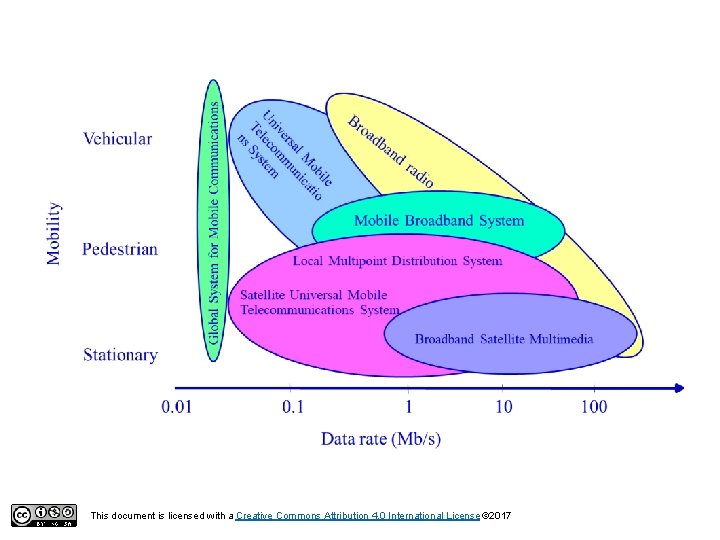
Other Cell Considerations • Data transmission hates mobility • Every base station handoff disrupts transmission • The faster we’re moving, the less data we can transmit • OR • The faster we’re moving, the more expensive data transmission is This document is licensed with a Creative Commons Attribution 4. 0 International License © 2017
This document is licensed with a Creative Commons Attribution 4. 0 International License © 2017
Frequencies • We measure these in hertz… • We don’t want to overlap • Try it: get a bunch of 900 Mhz cordless phones in one place • You’ll eventually run into troubles • The good part: the base stations in everyone’s house is low power …or at least it’s supposed to be… • Bandwidth is important! This document is licensed with a Creative Commons Attribution 4. 0 International License © 2017
This document is licensed with a Creative Commons Attribution 4. 0 International License © 2017
FM Radio Stations • 104. 7 <- is this a legit station? • 98. 8 <- is this a legit station? This document is licensed with a Creative Commons Attribution 4. 0 International License © 2017
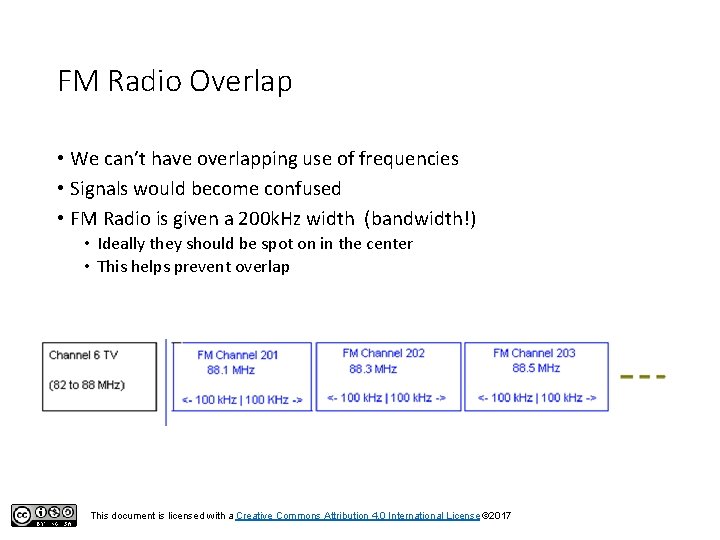
FM Radio Overlap • We can’t have overlapping use of frequencies • Signals would become confused • FM Radio is given a 200 k. Hz width (bandwidth!) • Ideally they should be spot on in the center • This helps prevent overlap This document is licensed with a Creative Commons Attribution 4. 0 International License © 2017
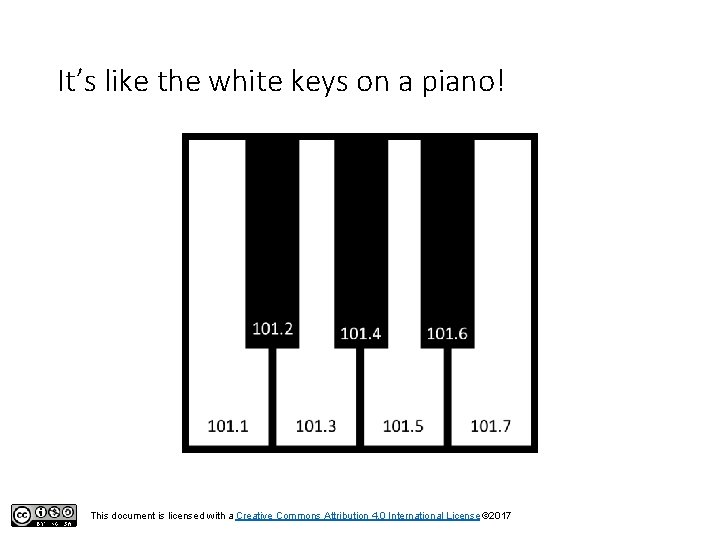
It’s like the white keys on a piano! This document is licensed with a Creative Commons Attribution 4. 0 International License © 2017
Bandwidth • Difference in the upper/lower frequencies • For us, we’ll focus on a single channel • The same bandwidth can carry equal data • Example: 3 k. Hz for a phone conversation • So, the band 1 k. Hz-4 k. Hz can be the same as 100002 k. Hz – 100005 k. Hz This document is licensed with a Creative Commons Attribution 4. 0 International License © 2017
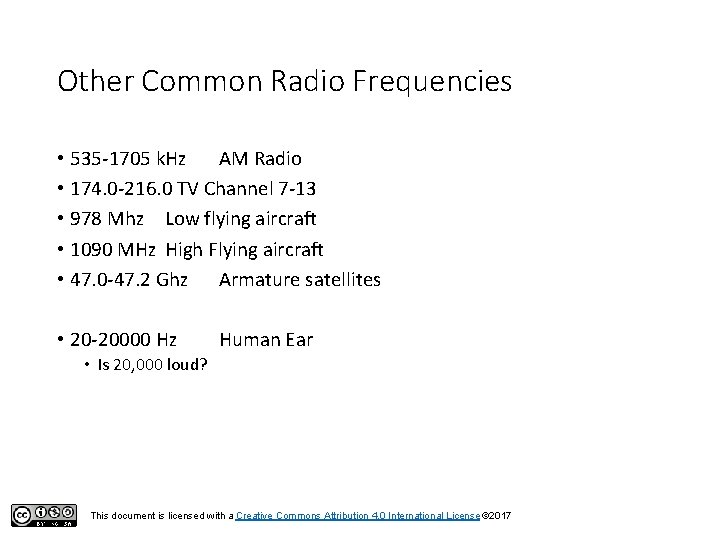
Other Common Radio Frequencies • 535 -1705 k. Hz AM Radio • 174. 0 -216. 0 TV Channel 7 -13 • 978 Mhz Low flying aircraft • 1090 MHz High Flying aircraft • 47. 0 -47. 2 Ghz Armature satellites • 20 -20000 Hz Human Ear • Is 20, 000 loud? This document is licensed with a Creative Commons Attribution 4. 0 International License © 2017