
HISTORY OF ATOMIC STRUCTURE Page 49 Democritus Particles
- Slides: 15
HISTORY OF ATOMIC STRUCTURE Page 49
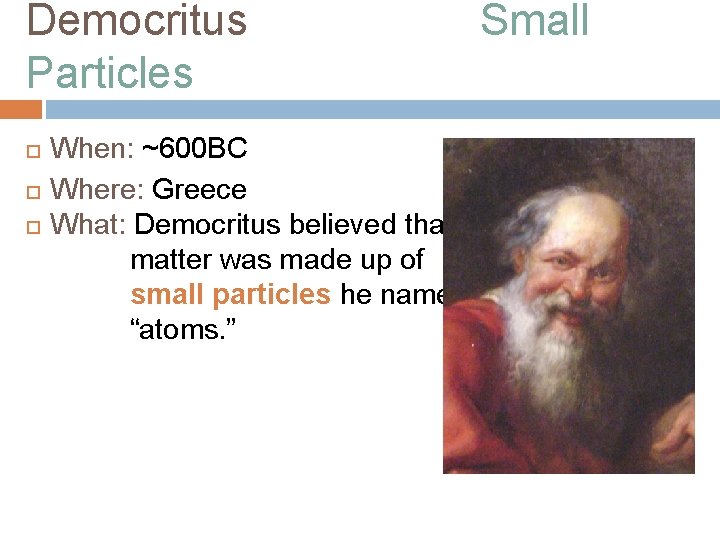
Democritus Particles When: ~600 BC Where: Greece What: Democritus believed that matter was made up of small particles he named “atoms. ” Small
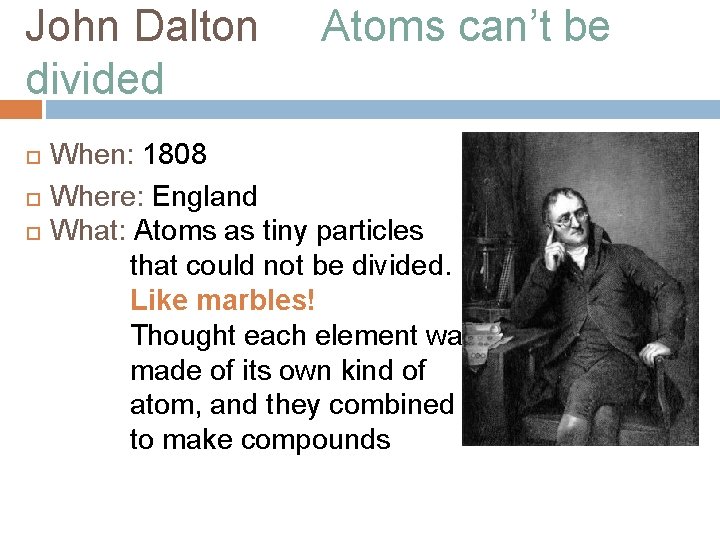
John Dalton divided Atoms can’t be When: 1808 Where: England What: Atoms as tiny particles that could not be divided. Like marbles! Thought each element was made of its own kind of atom, and they combined to make compounds
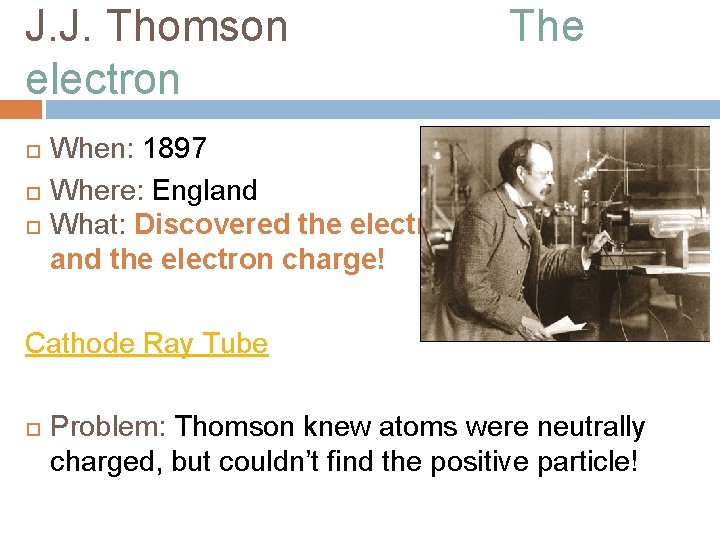
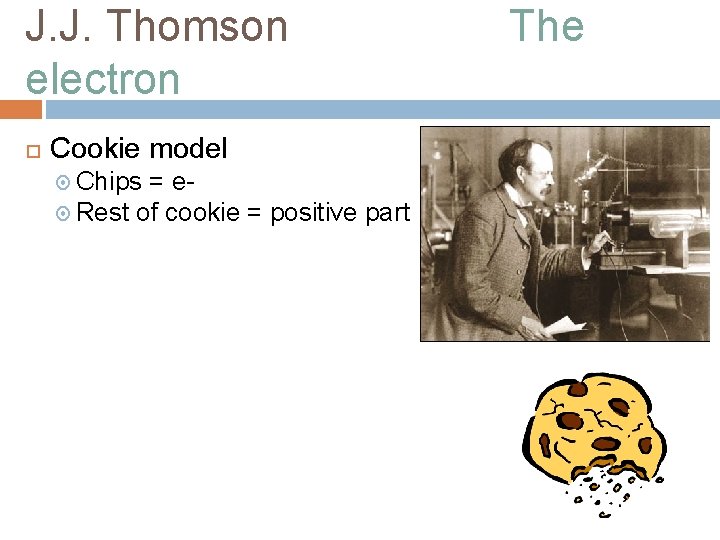
J. J. Thomson electron The When: 1897 Where: England What: Discovered the electron and the electron charge! Cathode Ray Tube Problem: Thomson knew atoms were neutrally charged, but couldn’t find the positive particle!
J. J. Thomson electron Cookie model Chips = e Rest of cookie = positive part The
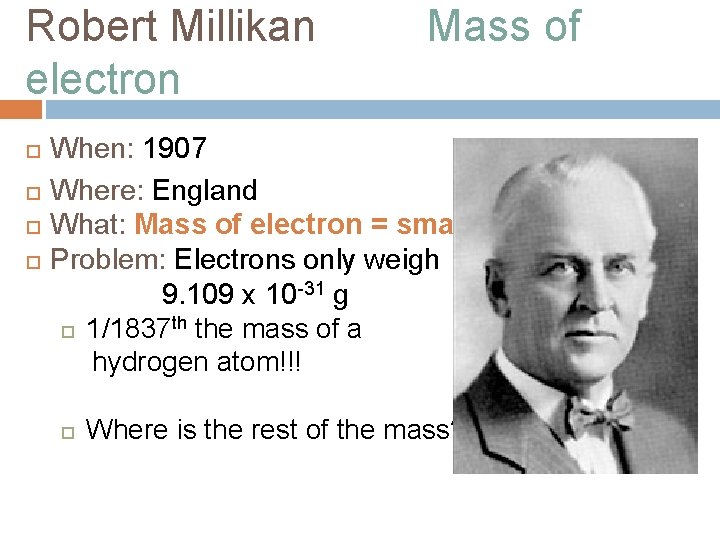
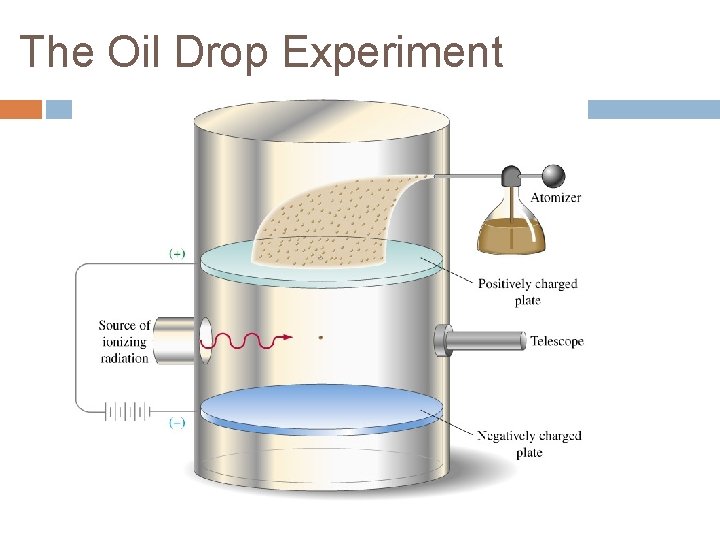
Robert Millikan electron Mass of When: 1907 Where: England What: Mass of electron = small!!! Problem: Electrons only weigh 9. 109 x 10 -31 g 1/1837 th the mass of a hydrogen atom!!! Where is the rest of the mass? ? ?
The Oil Drop Experiment
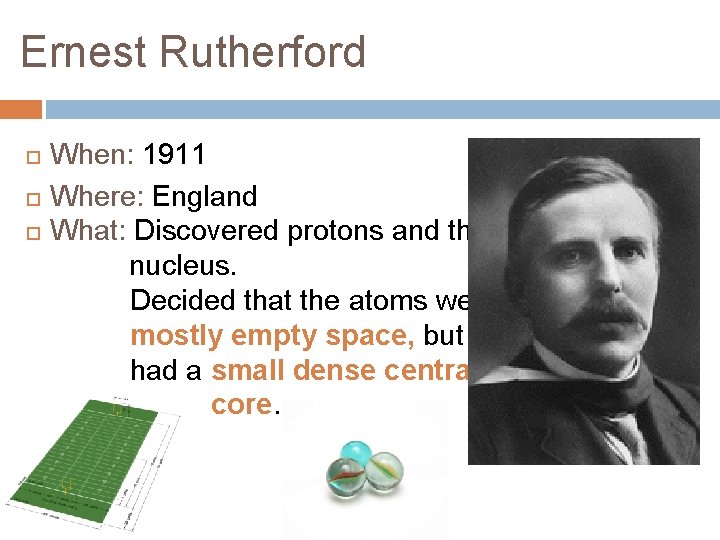
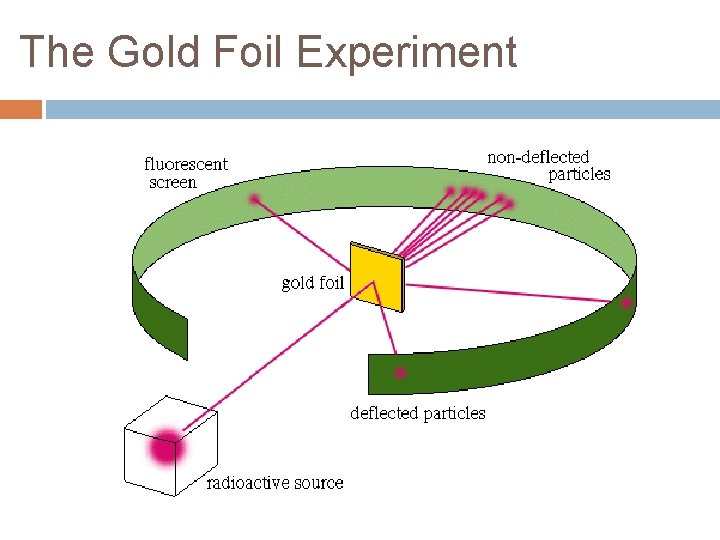
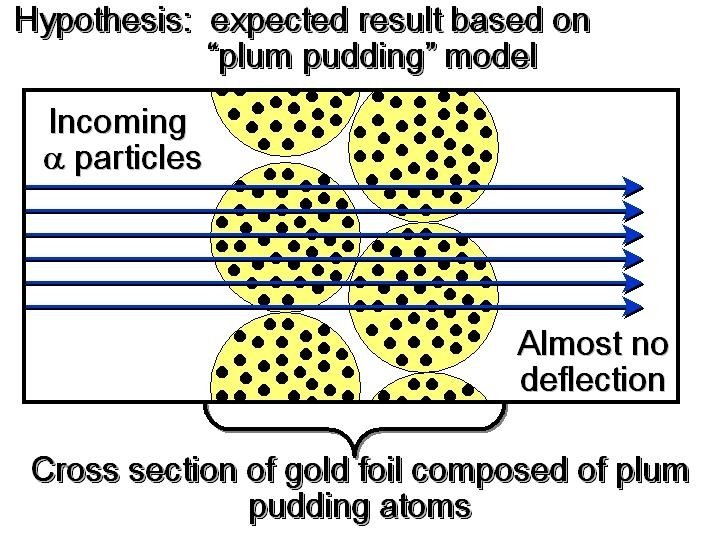
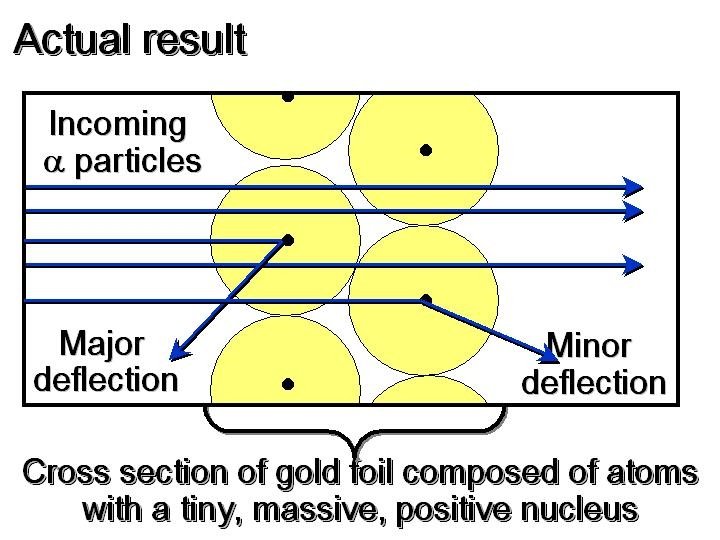
Ernest Rutherford When: 1911 Where: England What: Discovered protons and the nucleus. Decided that the atoms were mostly empty space, but had a small dense central core.
The Gold Foil Experiment
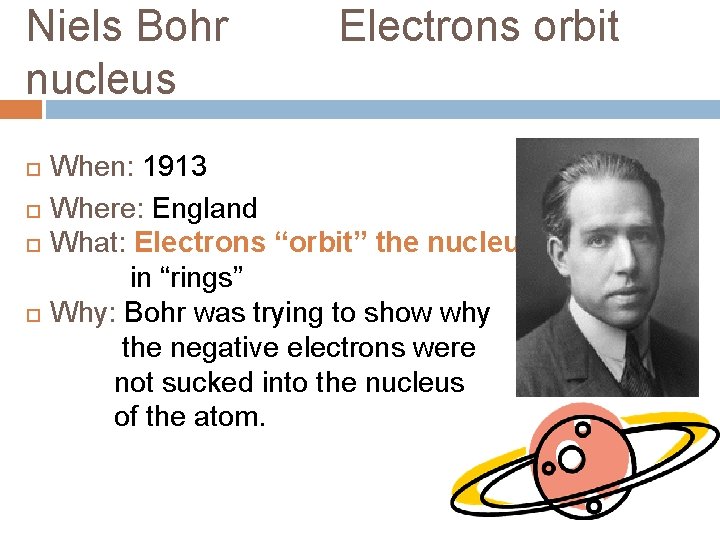
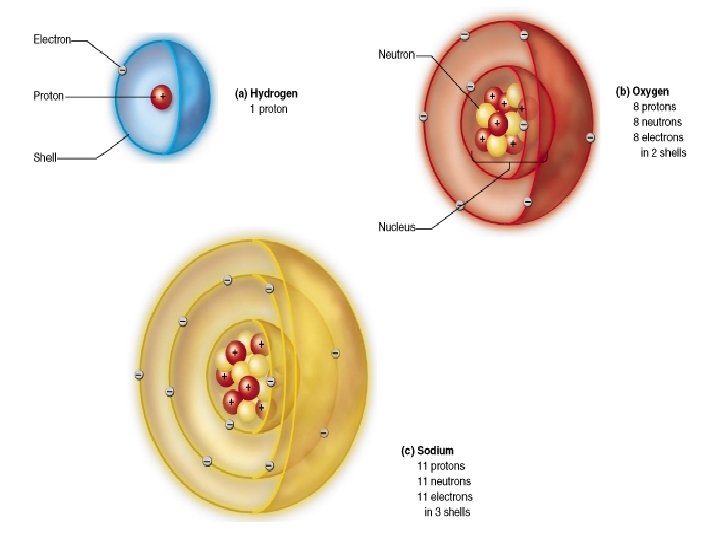
Niels Bohr nucleus Electrons orbit When: 1913 Where: England What: Electrons “orbit” the nucleus in “rings” Why: Bohr was trying to show why the negative electrons were not sucked into the nucleus of the atom.
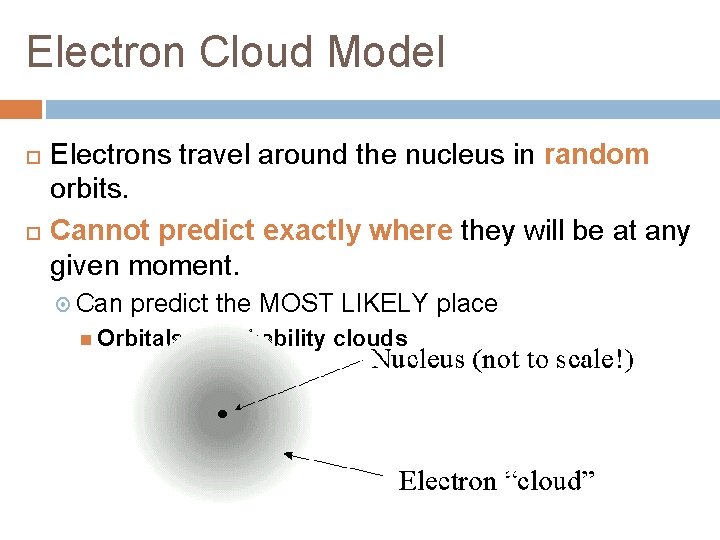
Electron Cloud Model Electrons travel around the nucleus in random orbits. Cannot predict exactly where they will be at any given moment. Can predict the MOST LIKELY place Orbitals – probability clouds
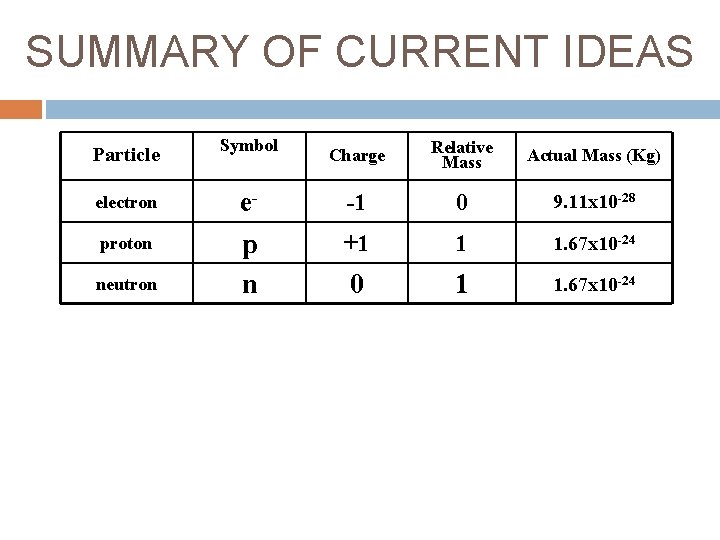
SUMMARY OF CURRENT IDEAS Particle Symbol electron ep n proton neutron Charge Relative Mass Actual Mass (Kg) -1 0 9. 11 x 10 -28 +1 1 1. 67 x 10 -24 0 1 1. 67 x 10 -24