
HISTORY OF ART ARCHITECTURE 3 PAGODA China Art
- Slides: 3
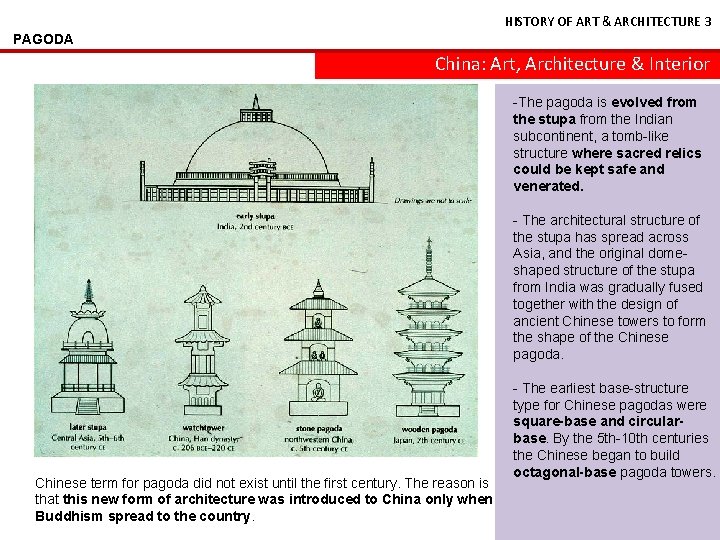
HISTORY OF ART & ARCHITECTURE 3 PAGODA China: Art, Architecture & Interior -The pagoda is evolved from the stupa from the Indian subcontinent, a tomb-like structure where sacred relics could be kept safe and venerated. - The architectural structure of the stupa has spread across Asia, and the original domeshaped structure of the stupa from India was gradually fused together with the design of ancient Chinese towers to form the shape of the Chinese pagoda. Chinese term for pagoda did not exist until the first century. The reason is that this new form of architecture was introduced to China only when Buddhism spread to the country. - The earliest base-structure type for Chinese pagodas were square-base and circularbase. By the 5 th-10 th centuries the Chinese began to build octagonal-base pagoda towers.
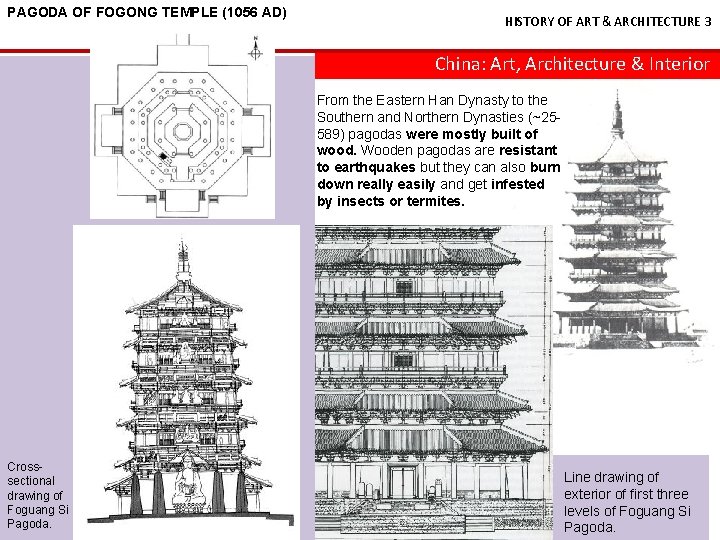
PAGODA OF FOGONG TEMPLE (1056 AD) HISTORY OF ART & ARCHITECTURE 3 China: Art, Architecture & Interior From the Eastern Han Dynasty to the Southern and Northern Dynasties (~25589) pagodas were mostly built of wood. Wooden pagodas are resistant to earthquakes but they can also burn down really easily and get infested by insects or termites. Crosssectional drawing of Foguang Si Pagoda. Line drawing of exterior of first three levels of Foguang Si Pagoda.
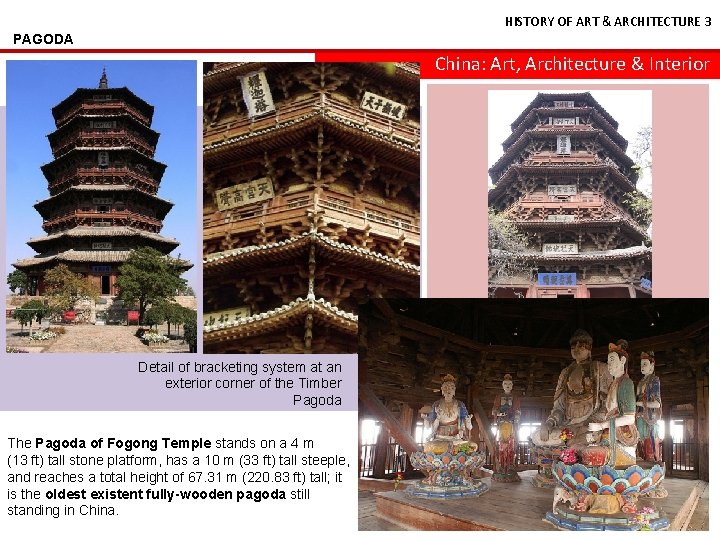
HISTORY OF ART & ARCHITECTURE 3 PAGODA China: Art, Architecture & Interior Detail of bracketing system at an exterior corner of the Timber Pagoda The Pagoda of Fogong Temple stands on a 4 m (13 ft) tall stone platform, has a 10 m (33 ft) tall steeple, and reaches a total height of 67. 31 m (220. 83 ft) tall; it is the oldest existent fully-wooden pagoda still standing in China.